 Greetings again from the darkness. My ‘old school’ nature causes me to cringe at the thought of classic films being remade. Why mess with something that’s already beloved? However, since we know this happens (and will continue to happen), let’s at least breathe a sigh of relief that a true lover of cinema and one of our legendary filmmakers, Steven Spielberg, is responsible for this one. Teaming once again with screenwriter Tony Kushner (MUNICH, LINCOLN), the love and admiration of the 1957 stage production, its music, and the 1961 film (by Robert Wise) shine through in this beautiful presentation. It’s Spielberg’s 35th movie, yet it’s his first musical. You will note a few changes from the stage production and 60 year old movie, but the timing of a couple of songs, more realistic brawling, and additional on-location scenes all blend seamlessly into this lovely version.
Kushner’s adaption of Arthur Laurents’ original work contributes to the contemporary, yet nostalgic feeling. It maintains the “Romeo and Juliet” story of star-crossed lovers at the core of a turf battle between the Sharks (Puerto Ricans) and Jets (white immigrants), which is driven by a prejudice stirring the hatred that leads to conflict. Sound familiar? It could be taken from the local news headlines just about any day over the past few years. What also hasn’t changed is that the Sharks and Jets are so blinded by hate and pride that they can’t see how much they have in common, with the same loss looming. In fact, the point is driven home in the film’s opening. Cinematographer and two-time Oscar winner Janusz Kaminski (SCHINDLER’S LIST, SAVING PRIVATE RYAN) has his camera soaring and swooping to show us the neighborhood and ongoing demolition before zeroing in on a sign “Property Purchased by New York City for Slum Clearance”. It comes in like a wrecking ball (literally). The two factions are fighting over turf that will soon be transitioned to Lincoln Center and high dollar real estate.
Ansel Elgort stars as Tony, the former leader of the Jets attempting to find a new path for his life after spending a year in prison for nearly killing an Egyptian immigrant in a rumble. Rachel Zegler, in a remarkable silver screen debut, stars as Maria, a bright-eyed Puerto Rican who sees the upside to limitless opportunity. Early on, we get our first conflict between the rival gangs, which introduces us to Riff (a terrific Mike Faist) as the quick-tempered Jets leader so desperate to protect the neighborhood, and Bernardo (a dynamic David Alvarez), Maria’s older brother and proud leader of the Sharks – whose goal is to carve out a place in the new land as equal citizens. That first brawl gives Spielberg a chance to show off the choreography, as well as the new approach to fight scenes, which are less balletic and more bone-crunching. It’s also the first run-in with local cops, Officer Krupke (Brian d’arcy James) and Lt. Schrank (Corey Stoll), neither of whom have much empathy or respect for the two gangs.
Tony (Ansel Elgort has a physical resemblance to Richard Beymer from the original film) and Maria get their ‘eyes lock across the gymnasium during the dance’ moment that really lights the candle for the big rumble. Of course, this is one of the most famous musicals of all-time, and the songs have become iconic. Elgort is handsome and has a smooth singing voice, but it’s Ms. Zegler whose voice transcends and sounds heaven sent. If there is a negative, it’s that no one will be able to sing along with her, as she hits notes most can only dream of. Listening to her sing is reward enough. Beyond the singing, it’s the dance choreography that most recall, and although eclipsing what we saw in the original movie is beyond reach, the work of this cast will not likely disappoint anyone. The dance numbers are exhilarating and colorful. It’s energized entertainment with a message.
Ariana DeBose is outstanding as Anita, and takes the lead on “America”, one of the most inspiring and fun musical numbers ever on screen. In addition to her singing and dancing, Ms. DeBose delivers a superb performance in the role that won an historic Oscar for Rita Moreno in the 1961 film. Sixty years later, the now 89 year old Ms. Moreno appears as Valentina, the widow of Doc. She now runs Doc’s Drug Store and is acting as surrogate mother to Tony. It’s certainly no cameo, and though Ms. Moreno doesn’t have a dance number, she does get to sing “Somewhere”, and this time is on the heroic end of the rape scene. She is the connective fiber to the original film and delivers a heart-warming performance, and is a strong presence where needed.
Other key supporting roles are Chino, Maria’s would-be suitor, played by Josh Andres Rivera, and ‘Anybodys’, played by Iris Menas in a non-binary rather than tomboyish portrayal of the one skulking in the shadows. It’s no surprise that Riff and Bernardo and Anita are the heftiest roles, and all three actors nail their parts. The big (and pleasant) surprises are newcomer and future star Rachel Zegler and the return of Ms. Moreno. Zegler sings “I Feel Pretty” while working the cleaning crew at Gimbel’s, and her divine sweetness gets blown away in the finale, exhibiting an acting range that complements that voice.
The always stunning score from composer Leonard Bernstein sounds amazing as performed by the New York Philharmonic, and much of original choreographer Jerome Robbins’ work is reproduced here. It’s unfortunate that renowned lyricist Stephen Sondheim passed away mere days before the premiere, but his work lives on through new voices. “Tonight” and “Cool” both receive fresh treatments and are standouts in this version. The 1961 film won 10 Oscars, including Best Picture, and there is little doubt this remake will receive consideration in numerous categories, including Production Design and Costume Design. Spielberg opted to go with a more ethnically appropriate cast (no Natalie Wood-type in heavy make-up), and there is some Spanish dialogue without subtitles (the acting and situation keep us clear). It’s a nostalgic, yet contemporary version that may not have you singing, “Krup You!”, but will have you in awe with the story, dancing, music, acting, and story.
Opening in theaters on December 10, 2021
WATCH THE TRAILER
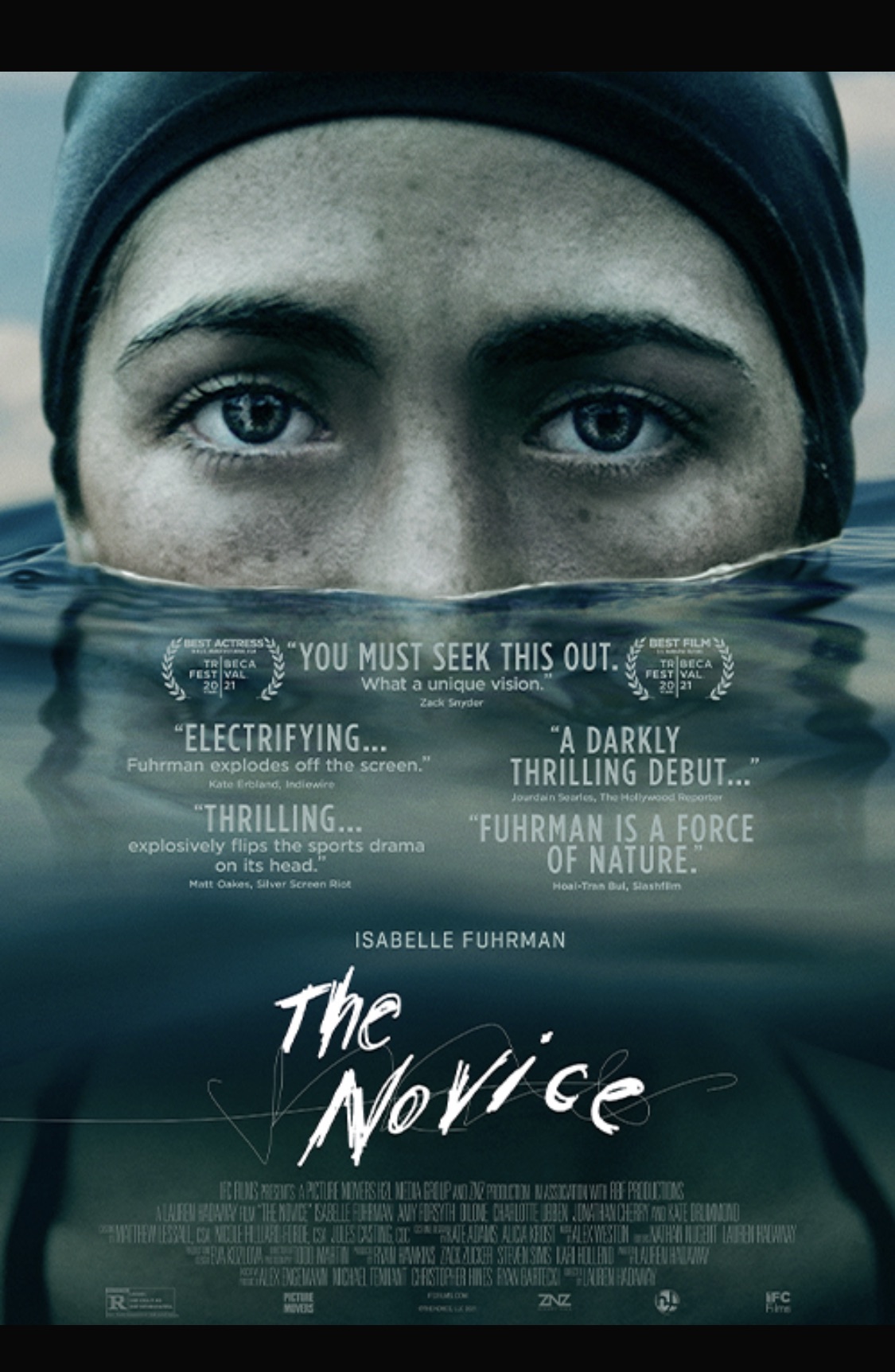 Greetings again from the darkness. The debut feature film from writer-director Lauren Hadaway is not the inspirational sports movie we’ve come to expect. There are no last second heroics. No Gatorade showers. No coaches being hoisted on the players’ shoulders. In fact, despite being centered on a college rowing team, this is much more of a disturbing psychological thriller than a sports movie. And it’s a pretty darn good one at that.


 Posted by David Ferguson
  Greetings again from the darkness. What would happen if human survival depended on the Griswolds (from the VACATION movies) battling the rogue robots programmed to take over the planet? Filmmakers Michael Rianda and Jeff Rowe answer to that scenario is hyper-active, frenetic, overly-busy visual chaos that attempts to blend apocalyptic science fiction, extreme action sequences, and dysfunctional family comedy-drama. It’s a lot to tackle, and for the most part, it works.
 Greetings again from the darkness. What happens if Chicken Little was right, and the sky really is falling? Writer-director, and Oscar winner, Adam McKay proved with THE BIG SHORT (2015) and VICE (2018) what occurs when he turns his unique commentary towards a target. Two questions remain. Is political or social satire just too easy these days? Has insanity permeated our globe to the degree that pointing out the lunacy has become ho-hum? McKay wrote the script from journalist David Sirota’s story, and it’s even more extreme than his previous work, and likely meant as a wake-up call to all of us.
 Greetings again from the darkness. You don’t have to be one of the 60 million who, between 1951 and 1957, tuned in each week to watch the latest episode of “I Love Lucy” to feel like you know Lucy, Desi, Ethel, and Fred. Most of us have watched the syndicate re-runs over the past 70 years, and that fact added challenges to this project for writer-director Aaron Sorkin – not the least of which was casting the role of Lucille Ball. Everyone had an opinion, and when you go to cast a true icon, it’s a slippery slope.
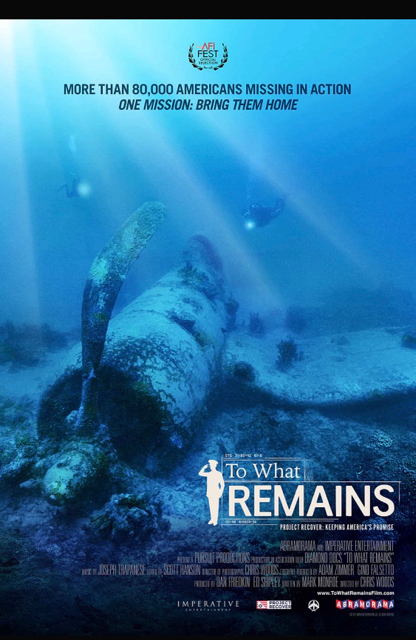 Greetings again from the darkness. Sometimes it feels pointless to write about a film, while sometimes it seems that the right words escape me. I don’t have the right words for this documentary from Chris Woods, yet I do know that it should be seen by as many folks as possible. As the divisiveness of our country continues to fester, this story about real people takes us to a time when heroes fought for freedom against real enemies, while so many families sacrificed for the benefit of all. Millions lost their lives in World War II, and Woods focuses on one small organization doing everything possible to bring closure to the especially brutal Battle of Peleliu.
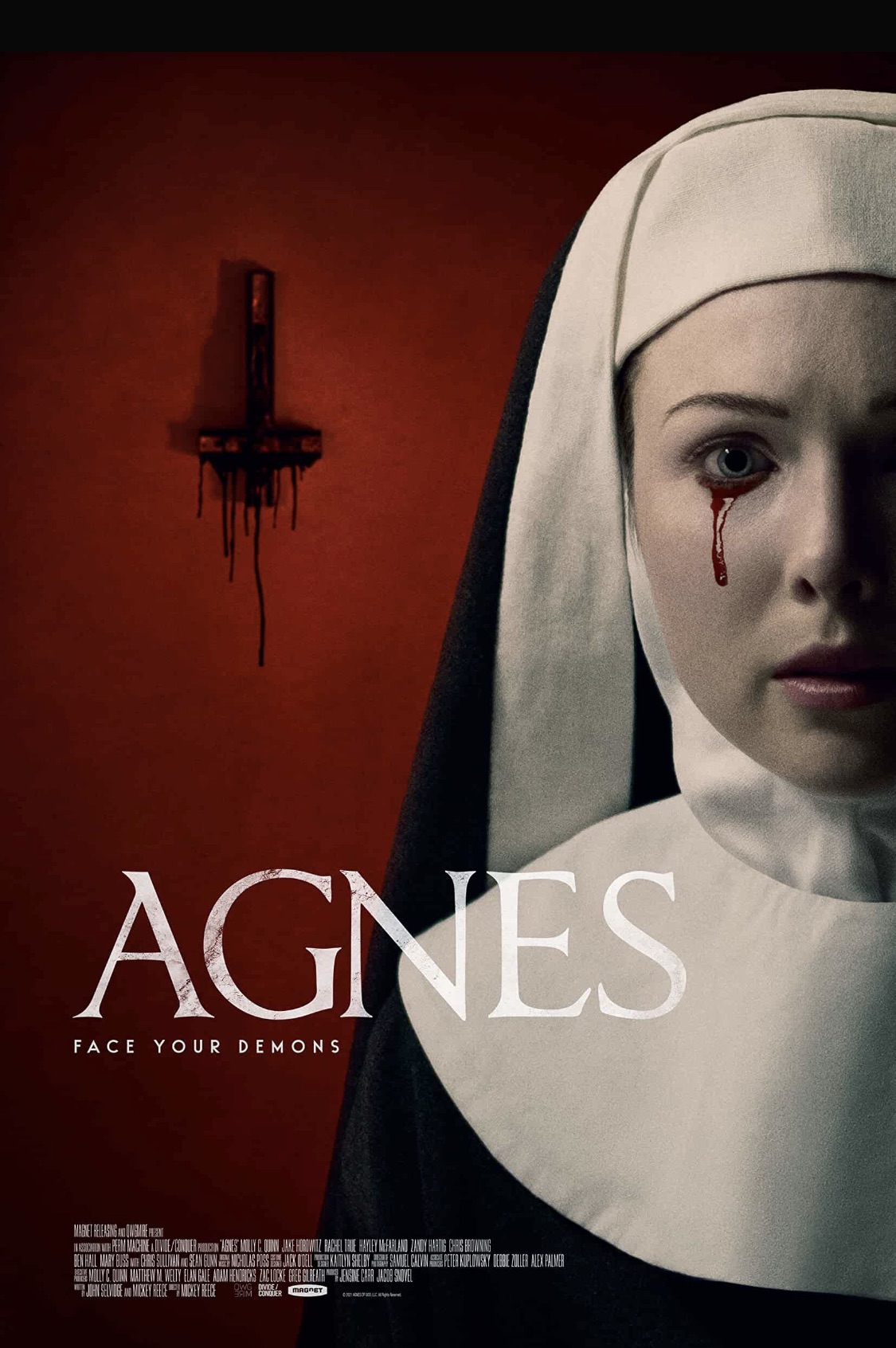 Greetings again from the darkness. William Friedkin’s 1973 movie THE EXORCIST, adapted from William Peter Blatty’s novel, shook the movie world at the time. It even garnered 10 Oscar nominations, winning two (Best Sound, Best Adapted Screenplay). Over the nearly 50 years since, there have been five sequels in the franchise, and it has inspired countless genre movies, including parodies and knock-offs. Writer-Director Mickey Reece and co-writer and frequent collaborator John Selvidge deliver a set-up that leads us to believe we are in for yet another faith-based horror film focusing on demonic possession. Instead, what follows is more like two distinct stories.
 Greetings again from the darkness. Capturing a kid’s attention is difficult enough, but these days, it’s a real challenge to hold that attention for 90 minutes. You best offer something extremely entertaining, which is exactly what first time (co-) directors Harry Cripps and Clare Knight have done. Ms. Knight previously worked as the Editor on the MADIGASCAR and KUNG FU PANDA movies, and is married to actor Wayne Knight (Newman from “Seinfeld”). Mr. Cripps previously wrote the screenplay to THE DRY (2020) and here he co-wrote the script with producer Gregory Lessans. Of course making animals the center of a kids’ story is nothing new, and neither are the central topics of respect and family, yet this is quite an entertaining way to do so.
 Greetings again from the darkness. Don’t mess with the smart ones, as brains often outlast brawn. I’m conflicted on how best to describe this film. Perhaps … It’s nuanced storytelling at its finest. Jane Campion won an original screenplay Oscar for THE PIANO (1993), while also becoming only the second woman to receive a nomination as Best Director. This is her 8th feature film to direct, and the first since the underrated BRIGHT STAR (2009). Ms. Campion is such a smooth filmmaker, and her latest is so expertly crafted and so beautifully filmed, that some may find themselves not recognizing the underlying tension between characters. I urge you to remain diligent and take note of the subtle gestures and facial expressions, as the emotions run deep.
 Greetings again from the darkness. Growing up, I loved watching Jimmy Connors and John McEnroe play tennis. Their talent was unmistakable and they had a certain flair for dramatic moments. But even as a kid, I was more drawn to the personalities of Bjorn Borg and Arthur Ashe – two champions who carried themselves with a quiet dignity and respect for the game and their opponents. They acted like grown-ups, not petulant kids. It wasn’t until later that I really understood the obstacles Ashe faced, and co-directors Rex Miller and Sam Pollard expertly handle this remarkable man’s story.
