 Greetings again from the darkness. He’s not an easy man to figure out. His many written and spoken words can be challenging to interpret, and his art comes in many forms: poems, novels, drawings, and songs. Leonard Cohen was an enigma, yet also a treasure trove of thought-provoking work crafted over fifty years. Collaborators for more than 25 years, documentarians Daniel Geller and Dayna Goldfine knew tackling Cohen as a subject would be too much, so by taking inspiration from Alan Light’s book, “The Holy or the Broken: Leonard Cohen, Jeff Buckley, and the Unlikely Ascent of ‘Hallelujah’”, they were able to approach him through his most recognizable and most oft-covered song, “Hallelujah.” The result is a captivating two hours that will appeal to Leonard Cohen devotees and enlighten those new to his work.
We open on December 21, 2013 in Auckland, New Zealand. Leonard Cohen is on stage and sings the immediately recognizable first “secret chord” line of “Hallelujah.” This would be his final live performance. Someone offers the description of LC as “a spiritual seeker”, and that appears to have been the case most of his life. Perhaps there is no better evidence of this than his pursuit of writing lyrics to “Hallelujah.” We see the dozens of notebooks filled with his handwritten lyrics. We know there are multiple versions of the song, and Leonard admits the song was never finished … it was ever-evolving, same as the writer. Although Cohen passed away in 2016 and was not interviewed for this film, precious archival footage allows us to see him expressing his own thoughts alongside new and recorded interviews of those who knew him for so long.
The great Judy Collins tells of the time she encouraged Leonard to come on stage and sing his song “Suzanne” with her. It was 1966 and though to that point, he had been mostly a poet, he now immersed himself and his words into songwriting. In regards to his poetry, so many believe one must suffer to have anything of value to say; however, Leonard was born into a wealthy family, and he created reems of meaningful passages as a deep thinker and observer. Other terrific interviews come courtesy of music journalist “Ratso” Sloman (who also shared tapes of his own Leonard interviews with the filmmakers), long time back-up singer and co-writer Sharon Robinson, Cohen’s former girlfriend and renowned photographer Dominique Isserman, lifelong friend and fellow Canadian Nancy Bacal, Canadian journalist and lifelong friend Adrienne Clarkson, and John Lissauer who first produced “Hallelujah” and also composed the score to this documentary.
The song itself took a journey worth exploring. Leonard initially worked on the lyrics for years. Once the song was recorded, it (and the entire album, ‘Various Positions’) was rejected by Columbia, the record label that had already paid for it. The album and song were finally released on a small independent label. Ultimately, Bob Dylan began performing the song in concert, and it was gradually adopted by other artists, and reached mainstream status when it was included in the animated hit movie, SHREK. How is that for an unusual journey for a song?
Even the SHREK saga wasn’t straightforward. Rather than use Cohen’s version of the song, the director chose the version sung by Rufus Wainwright, but then decided it didn’t fit, and shifted to the John Cale version. As a final twist, it’s Wainwright’s version on the released movie soundtrack. It’s not just the lyrics that have multiple versions. As of last count, more than 200 artists have their own version, with those of John Cale and Jeff Buckley being the most frequently listened to. Both get their due in this documentary, and it’s quite moving to compare the different approaches … one’s mood must be the determining factor on which fits the moment, as it’s impossible to say one is “better” than the other. We also hear from other artists who testify to the song’s personal importance to them. And to reinforce the point of how the song has become part of the fabric of society, there is a montage of TV contestants singing their version in hopes of moving on to the next stage.
Although the filmmakers use “Hallelujah” as the structural force for this film, they expertly weave in Leonard Cohen’s personal history throughout. They remind us that his early song “Suzanne” was written well before he met and married Suzanne Elrod. We hear a bit from the cringe-inducing partnership with producer Phil Spector for one album. The filmmakers highlight Cohen’s 1993 decision to isolate at the Mount Baldy Zen Center through 1999, before returning ‘back down the hill’ to write more songs. It was in 2005 when Cohen discovered that his long time manager had bilked him out of his earnings and assets. This sent Leonard back on tour for the first time in 15 years … he performed 379 shows over 5 years, thrilling his fans and introducing many new ones to his music.
There have been other documents focusing on Leonard Cohen, most notably, LEONARD COHEN: I’M YOUR MAN (2005), and MARIANNE & LEONARD: WORDS OF LOVE (2019). Both have their merits, yet neither capture the remarkable story of this ‘spiritual seeker’ as thoroughly as this one. He was an unusual and remarkable man who wrote, “I did my best. It wasn’t much.” Maybe the only false words he ever penned.
Opens in theaters beginning July 1, 2022


 Posted by David Ferguson
  Greetings again from the darkness. Writer-director John Michael McDonagh (older brother of Oscar winner Martin McDonagh) has delivered a couple of fine movies in the past: CALVARY (2014) and THE GUARD (2011), and he’s never been one to shy away from controversial characters or topics. This time, he has adapted the 2012 novel from British writer Lawrence Osborne, and in this process, has continued his fascination with the all-too-human dark nature of some folks. Somewhat surprisingly, most of this is so obvious and blatant, only those who prefer thoughts be spoon-fed will appreciate the lack of subtlety.
 Greetings again from the darkness. At this point, I believe it’s fair to say we have a Jane Austen sub-genre for film, TV, and books. After all, it’s been more than 200 years, and her novels have remained in print, have also been adapted too many times to count, and inspired countless writers and filmmakers to follow in her footsteps. The success of the “Bridgerton” series is a testament to the Jane Austen realm, despite being adapted from the novels of Julia Quinn. For this first feature film from director Emma Holly Jones, Suzanne Allain has adapted the screenplay from her own novel, and interestingly, this is a feature length version of Ms. Jones’ 2019 short film, with most of the cast and crew returning.
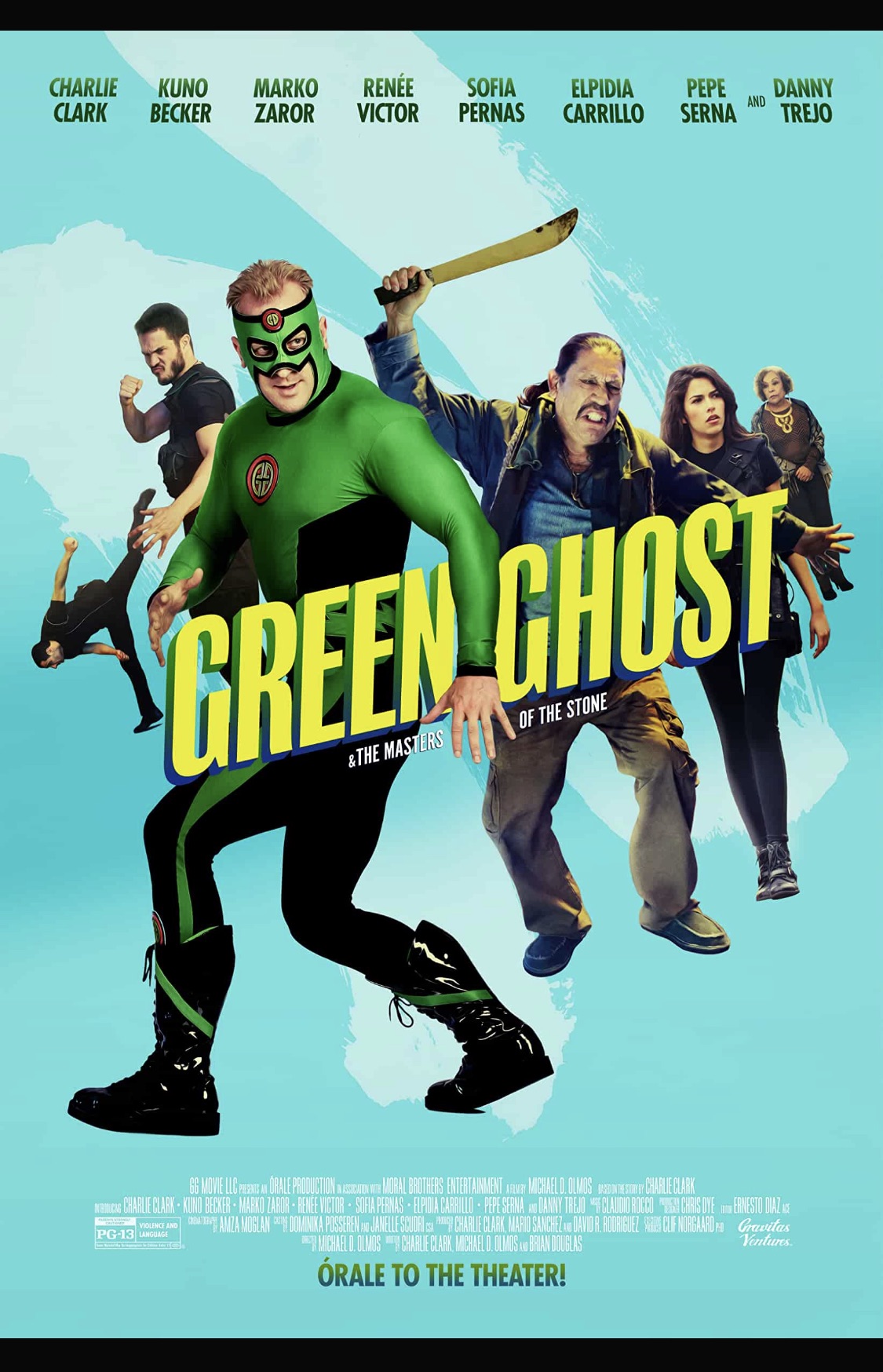 Greetings again from the darkness. Next up in this prime era for Superheroes comes “Green Ghost”, a struggling south Texas car dealer who moonlights as a Lucha Libre wrestler with untapped mystical powers linked to the Mayan Apocalypse! Does that sound preposterous? Sure it does. But really, is it any more ridiculous than Thanos’ Infinity Gauntlet? With an overall budget that was likely less than that AVENGERS powerful glove prop, writer-director Michael D Olmos and co-writers Charlie Clark and Brian Douglas deliver their version of a gently comical, semi-serious genre film saturated with martial arts moments and finding meaning in life. While certainly no cinematic masterpiece, what’s obvious about the film is that it was a labor of love … a true passion project.
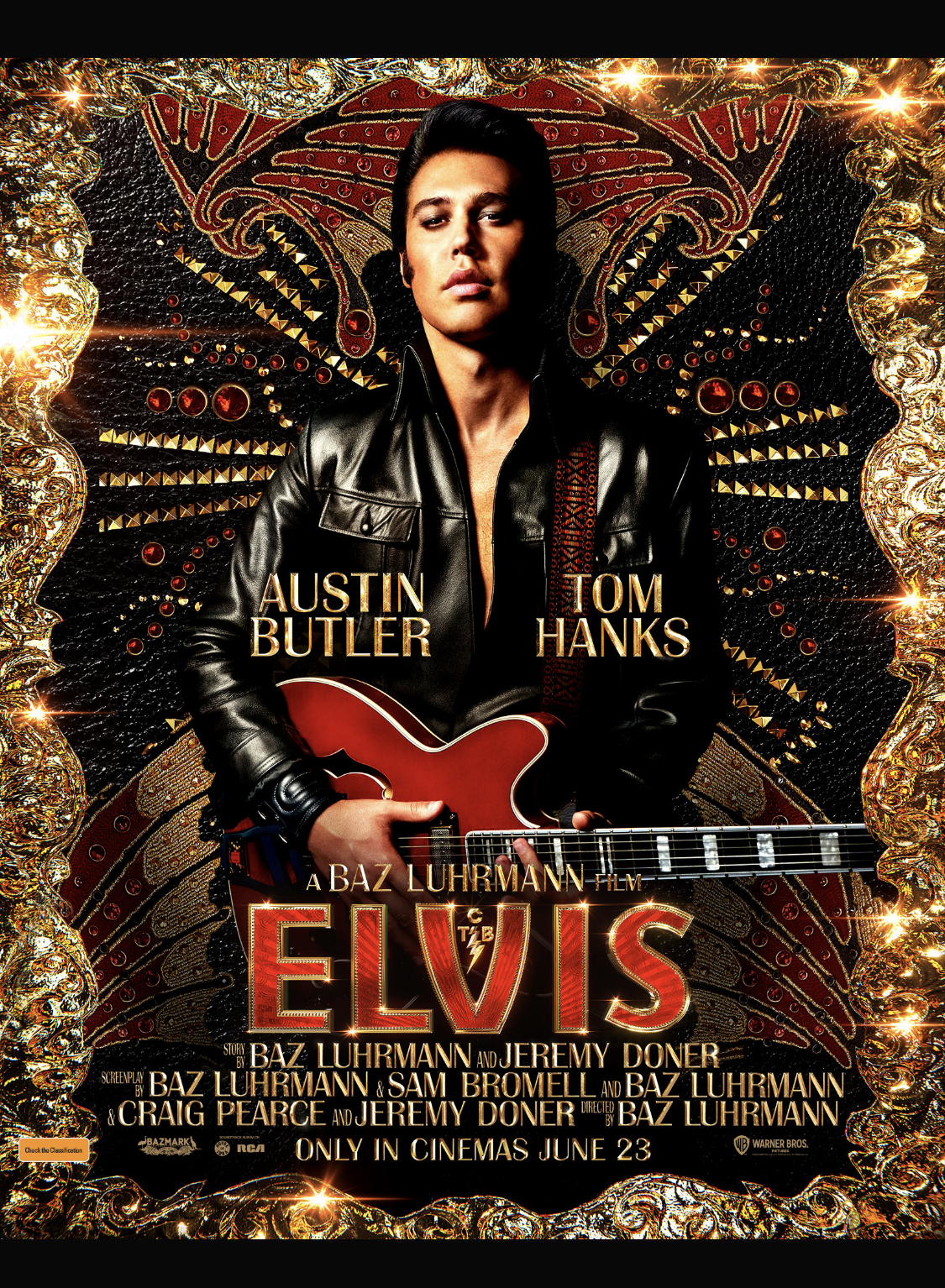 Greetings again from the darkness. I’m one who grew up spinning my mother’s Elvis 45s and LPs for hours on end. Long before I ever saw one of his movies, I had memorized and mimicked the vocals and stylings of his early recordings. For me, the love of his music was ingrained before any understanding of the cultural influence and impact that had occurred years prior. This background undoubtedly played a significant role in my enjoyment of this film. Many will find bashing this movie to be easy and justified, and I do understand. There are those who view Elvis Presley as little more than a punchline – a drug addicted fat guy chomping on peanut butter and banana sandwiches and forgetting lyrics on stage. Then there are those who view writer-director Baz Luhrmann (THE GREAT GATSBY, MOULIN ROUGE) as a cinematic trickster more committed to flashy visuals than facts and story. For me, the visuals and music of this spectacle were driven by a fully committed actor and a filmmaker serving up a tribute to a cultural icon.
 Greetings again from the darkness. At the beginning of the film we are informed that this is a movie about the story that made Andy want a Buzz Lightyear action figure in the first TOY STORY (1995). It’s fair to ask – is this a spin-off, a prequel, or an origin story? The answer is a dash of all the above, yet also not exactly any of those. As with all Pixar features, the pedigree is beyond reproach. Writer-director Angus MacLane was the co-director on FINDING DORY (2016), while his co-writer here was Jason Headley (ONWARD, 2020), and the story was developed by Matthew Aldrich (COCO, 2017).
 Greetings again from the darkness. Satire is one of the most challenging cinematic genres to get right. The script and performances are crucial, and the director must walk a fine line between too subtle and over-the-top. The long-time collaborative filmmaking team of co-writers and co-directors Mariano Cohn and Gaston Duprat, along with co-writer Andres Duprat, strike just the right chord and deliver a gem that is funny, insightful, and quite entertaining. The film was well received at last year’s Venice Film Festival, but is only now getting distribution.
 Greetings again from the darkness. Normally when we see a movie where the focus is almost entirely on two characters conversing while in one room, we expect it to feel like something better served in live theater. But director Sophie Hyde does succeed in keeping it cinematic, despite the dialogue-centric script from writer Katy Brand and a setting that is 95 percent within the confines of a single hotel room. An extraordinary performance from two-time Oscar winner Emma Thompson and solid complimentary work from Daryl McCormack keep us interested in the characters.
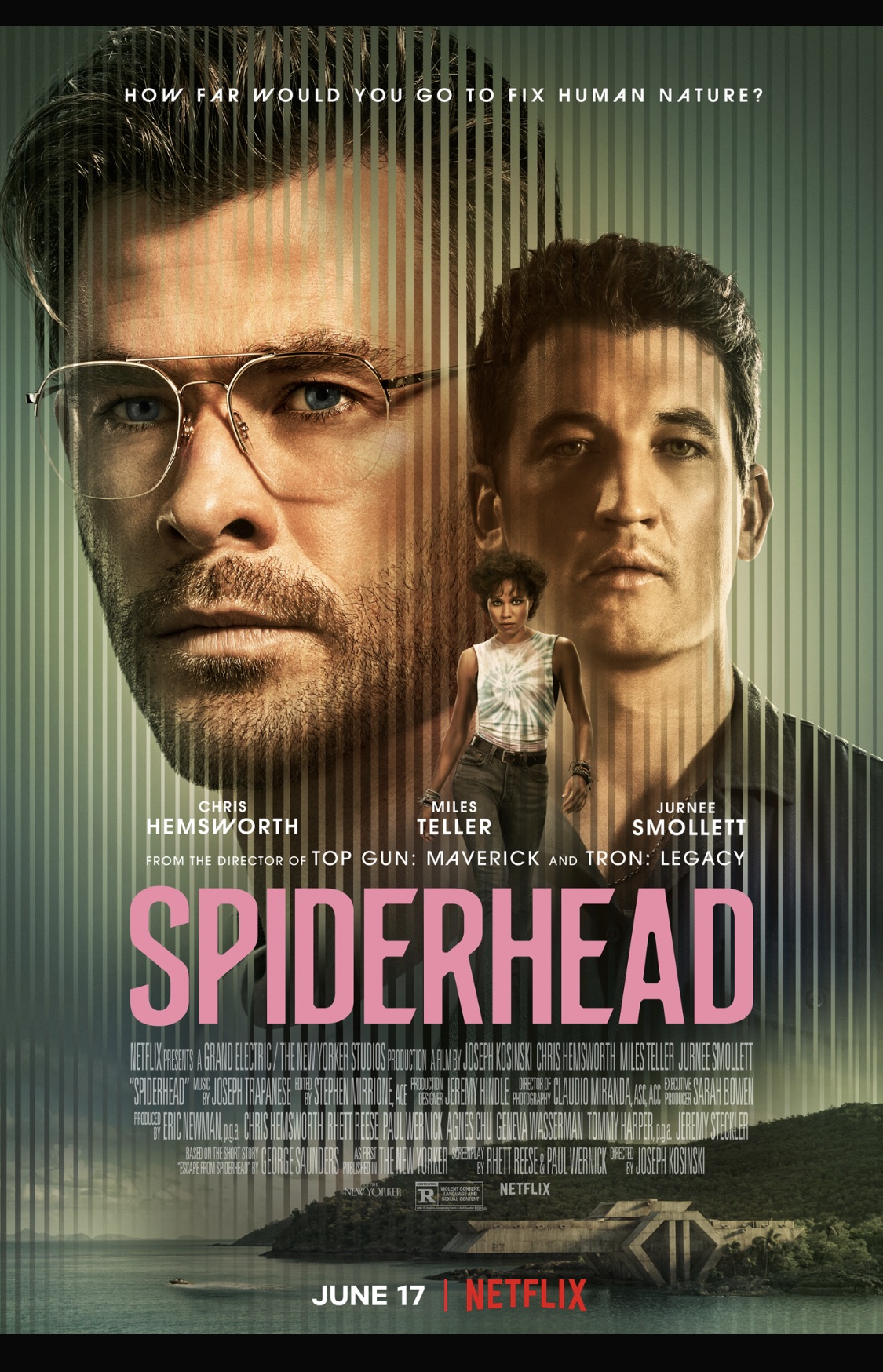 Greetings again from the darkness. “We are changing the world!” These days, those words tend to be more chilling than hopeful. More cautionary than exciting. Spoken a few times by scientist Steve Abnesti (Chris Hemsworth), those words have long ago lost the intended impact with his assistant Mark (Mark Paguio).
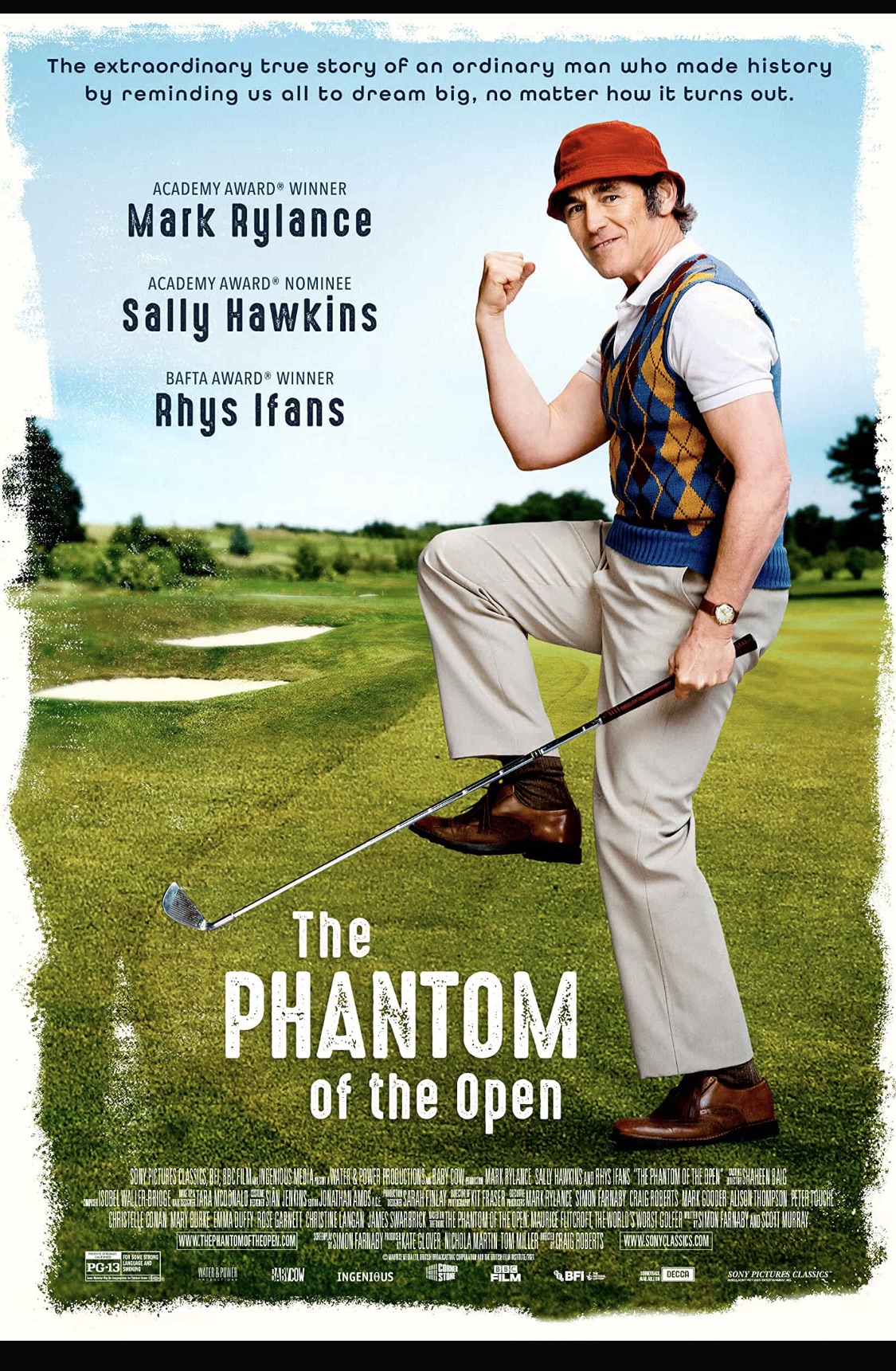 Greetings again from the darkness. Scott Farnaby co-wrote the book with Scott Murray and then adapted that book into the screenplay directed here by Craig Roberts (ETERNAL BEAUTY, 2019). Mr. Farnaby also wrote the excellent screenplay for PADDINGTON 2 (2017), as well as for the upcoming Disney version of PINOCCHIO. Director Roberts is also known for his acting, taking the lead in the underrated SUBMARINE (2010).
 Movie Reviews from the Dark