FEDERICO FELLINI (1920-93) is revered as one of the most influential filmmakers of the twentieth century. He was married for 50 years to Giulietta Masina (pictured together). She was his creative muse and was cast in many of his films, most notably La Strada (1954) and Nights of Cabiria (1957). “Felliniesque” is a film term used to describe baroque, dream-like sequences such as those Fellini produced. The term paparazzi was derived from the character, Paparazzo, who photographs celebrities in the Fellini classic La Dolce Vita (1960). He had four films nominated for Oscars as Best Foreign Film: La Strada (1954), Nights of Cabiria (1957), 8 ½ (1963), and Amarcord (1973) … all four won the award. Additionally, he was nominated for twelve other Oscars (writing, directing). Speaking (tongue-in-cheek) as a stereotypical Italian lover, he once said “It’s easier to be faithful to a restaurant than it is to a woman.” Sadly, his wife of 50 years died a mere five months after he passed away.
Greetings again from the darkness. One can’t help but wonder how differently this Oscar nominated documentary would have turned out had its subject, Pina Bausch, not passed away from cancer just days before filming commenced. Instead of direct insight from the famously creative choreographer, we witness the tributes she earned … dancing from those who brought her work to life.
Director Wim Wenders had planned for years to document Ms. Bausch and her fascinating interpretative dance company. When 3D technology became portable enough to work with, he knew it was time. Unfortunately, Pina was diagnosed with cancer and passed away just a few days later. What we see on screen are re-creations of her work by those dancers who worked so closely with her. The reverence is obvious during the brief statements from the key dancers. Wenders presents these segments, not as talking heads, but instead of live head shots with voice-overs. A very nice touch.
The earthy elements of water, soil and rock are on full display, as are the street scenes Pina utilized over the years. The dances are brought to life for the first time without Pina’s direction. It’s clear her presence and spirit remain with the dancers. The interpretive dance numbers may not be to everyone’s taste, but the talent of the dancers, and especially the famed choreographer are quite obvious and impressive.
SEE THIS MOVIE IF: you want to witness the lasting impact of a most influential choreographer of interpretative modern dance
SKIP THIS MOVIE IF: you are looking for concrete insight and biographical details on Pina Bausch
CLINT EASTWOOD was almost 30 years old when he got his first big break and was cast in the TV series “Rawhide”. In 1964, director Sergio Leone picked Eastwood for his “Man with no Name” trilogy of low-budget Italian westerns: A Fistful of Dollars (1964), For a Few Dollars More (1965) and The Good, The Bad and The Ugly (1966). In 1971, Eastwood directed his first film Play Misty for Me, and also starred in Dirty Harry, as a new breed of anti-establishment hero. Clint became a huge international movie star, but never strayed far from his love of directing films. To date, he has directed 33 films and even starred in most of them. His directorial efforts cross many genres: Westerns, Action, Thrillers, Cop Dramas, Family Dramas, War, Biographies, Comedies, Love Stories, and even Sci-fi. He also writes music for many of his movies and is quite an accomplished pianist. After Gran Torino (2008), Eastwood proclaimed himself as retired from acting, but it was recently announced that he will be playing a veteran baseball scout in Trouble with the Curve (2013), directed by his longtime assistant director Robert Lorenz, and co-starring Amy Adams and Justin Timberlake. Even though his Hollywood career spans 57 years, his Oscar recognition has come relatively recently. He was nominated for Best Actor and won for Best Director and Best Picture for Unforgiven (1992), nominated for Best Director and Best Picture for Mystic River (2003), nominated for Best Actor and won for Best Director and Best Picture for Million Dollar Baby (2004), and nominated for Best Director and Best Picture for Letters from Iwo Jima (2006)
trivia: with Warren Beatty, they are the only two to receive Best Actor and Best Director Oscar nominations for two films. While directing, instead of “cut”, he has been known to say “that’s enough of that s**t”
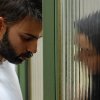
Greetings again from the darkness. This one finally made it to Dallas and it’s now clear why it is not only the Oscar favorite for Best Foreign Language Film, but also received a Best Original Screenplay nomination. It’s truly that good … and powerful … and thought provoking. I caught myself changing my mind more than once on some of the issues these characters faced.
The film opens with Nader and Simin (Peyman Moadi and Leila Hatami) in front of a judge to determine if they will be granted a divorce. Simin wants to take their daughter Termeh (Sarina Farhadi, the director’s daughter) to study abroad. Nader doesn’t disagree with the plan, only the timing. He refuses to leave his Dad, who suffers from Alzheimer’s, alone in Iran. In a poignant moment, Nader points out that while his dad may not know him, he still certainly knows his dad. This is the first of a recurring theme throughout … there are numerous ways to look at every issue.
When Simin moves in with her mother, Nader hires Razieh (Sareh Bayat) to be his dad’s caregiver. After a few days, Nader and Razieh have a heated argument and he pushes her out of the apartment. Next thing he knows, she is in the hospital after a miscarriage. She and her husband (Shahab Hosseini) file a claim saying Nader pushed her down the stairs causing the miscarriage. The core of the story is the actions of the key characters during the inquisition process by the judge/inspector. Nothing seems clear cut, and each character’s recall and statements vary from moment to moment.
A key point is that these are all basically good and moral people. Muslim believers in various stages. None would purposefully sin, yet each is trying to protect something or someone. The script is fascinating in its detail and subtlety. It moves like real life rather than a movie trying to get crammed into a 2 hour window. Written and directed by Asghar Farhadi, the film deserves all accolades and acclaim. Let’s hope it finds an audience in the U.S. We could certainly use more stories and films like this. My reasoning for keeping my comments short here is that I believe this movie is most effective when one can watch this movie with few pre-conceived notions. Let your mind follow its own path.
SEE THIS MOVIE IF: if you want to see one of the best films of 2011 OR you would like an example of superb and complex screenwriting
SKIP THIS MOVIE: if you prefer movies that don’t require you to engage the decision-making part of your brain (this one keeps you working!)
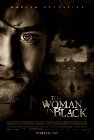
Greetings again from the darkness. The quest for quality horror films is a never-ending project. Since low budget fright fests are the easiest way to make money in Hollywood, most take shortcuts that leave us feeling cheated. This remake of a 1989 British TV horror film actually has wonderful production design … the Gothic mansion is a sight to behold. Unfortunately, the shortcut here was a story that offers little substance, despite being based on Susan Hill‘s novel.
Daniel Radcliffe (yes, Harry Potter himself) plays a young, widowed solicitor named Arthur Kipps, who is still grief stricken, and now on the verge of losing his job. He is given one last chance to prove his mettle to the firm by going to a remote village to settle the affairs of recently deceased client. His young son (Misha Handley) and his nanny are to meet him in the village a few days later.
The local townspeople clearly don’t want him there and are constantly trying to shoo him back to London. Of course, no one ever bothers to tell him why they are frightened and why they are so angry with him for going to the old house. This mansion is a work of art. It has the necessary creep factor to star in a real horror film. The furnishings and fixtures and decor are really the star of the movie. In fact, the DVD should include a segment on the antique mechanical toys. It’s not giving away anything to say that every time Radcliffe sees this mysterious woman in black, something bad happens in the village. The mystery is solved easily enough as we read along while Radcliffe organizes the letters.
The annoying thing about the film is that whenever we get a chill-inducing moment like a shadow in the background or a figure passing by a mirror, it is immediately followed up by a cheap parlor trick involving a sonic blast of music and an ear-piercing scream. It’s as if the director (James Watkins) is convinced movie goers are too ignorant to know when to be scared. His solution: provide clues to say “Scream now!” Ciaran Hinds and Janet McTeer add a touch of class to the film as Mr.and Mrs. Daily, who recently lost their son. Mr. Daily has found solace in the bottle, while Mrs. Daily teeters on the brink of insanity. My theory that no film featuring Mr. Hinds can be all bad is tested here, and Ms. McTeer was seen recently as the best thing about the Albert Nobbs film.
On a positive note, this is a nice transition movie for Daniel Radcliffe. He has quite a career challenge as he tries to break loose of the Harry Potter clamp. He succeeds here with quite a different physical appearance, though he really has little to do but alternate between a distantly forlorn look and peering cautiously around dark corners. A couple of interesting notes: the boy playing his son is Radcliffe’s real life godson; and the actor who played Radcliffe’s role in the 1989 original is Adrian Rawlins, who played Harry Potter’s father in those movies.
By the way, how long until Daniel Radcliffe realizes he should just steer clear of train stations?
SEE THIS MOVIE IF: you are desperately seeking a horror film that isn’t a slasher … even if it’s not very good OR you are anxious to see Daniel Radcliffe first real step towards a film career outside of “Harry Potter” OR you just want to see a beautifully creepy haunted house
SKIP THIS MOVIE IF: you are expecting a classic horror story in the vein of Poe OR you have had your fill of cheap tricks designed with no purpose other than to cause viewers to jump
DUNCAN JONES is a young, emerging sci-fi writer / director. His first two feature films were the independent Moon (2009) and the box office surprise Source Code (2010). Both were critically acclaimed. He is the son of rock star David Bowie, and served as the Best Man at Bowie’s 1992 wedding to supermodel Iman. His original name was Zowie Bowie, but later went by Joe Jones – Jones is David Bowie’s original surname – and finally Duncan Jones. He has not announced his next film project, but was recently passed over for the Superman re-boot, Man of Steel. Zack Snyder will direct instead.
FRANK CAPRA (1897-1991) As a child, he and his family came to the U.S. from Sicily. He was hired as a gag writer by Hal Roach for the “Our Gang” series in 1924, and later spent time as a writer for Mack Sennett. In the 1930’s he became a full time director and was responsible for such classics as It Happened One Night (1934), Mr. Deeds Goes to Town (1936), You Can’t Take it With You (1938), Mr. Smith Goes to Washington (1939), Meet John Doe (1941). Of course, his 1946 film It’s a Wonderful Life, has recovered from its initial box office failure to become one of the all-time favorite holiday classics. His final theatrical film was Pocketful of Miracles (1961), which features the screen debut of Ann-Margret. He was nominated six times for a Best Director Oscar, winning three. Capra once said of James Stewart: his “appeal lay in being so unusually usual”
BILLY WILDER (1906–2002) wrote many German scripts prior to Hitler’s coming to power. Being Jewish, Wilder fled Germany. Both of his parents died at Auschwitz. He collaborated closely with Steven Spielberg on the script for Schindler’s List (1993) but refused a screen credit. Wilder was nominated for eight Best Director Oscars (second most to William Wyler’s 12), winning twice: The Lost Weekend (1945) and The Apartment (1960). Wilder is one of only seven filmmakers to win Oscars for Best Picture, Best Director and Best Screenplay for the same film. He won all three for The Apartment (1960). He made 7 films with his favorite actor, Jack Lemmon, including Wilder’s final film Buddy Buddy (1981). Wilder was such a versatile filmmaker, he won recognition for his film work in comedies, drama, war and film noir. He directed four films that consistently show up on lists for the 100 best movies of all time: Double Indemnity (1944), Sunset Blvd (1950), Some Like it Hot (1959), The Apartment (1960). He once said of Marilyn Monroe: “breasts like granite, and a brain like Swiss cheese”
ALFRED HITCHCOCK (1899-1980) directed more than 50 feature films in a career spanning six decades. He used very distinctive camera movement and pioneered a film editing style that created a new viewing experience. He was married to Alma Reville from 1926 until his death. She was his most valued behind-the-scenes collaborator on his films. If Alma didn’t like something, Hitch changed it. Hitchcock was nominated five times for a Best Director Oscar, but remarkably never won. In fact, the only two Oscars won for his films were: Best Actress for Joan Fontaine in Suspicion (1941), and Best Song for “Whatever Will Be, Will Be (Que sera, sera)” from The Man Who Knew Too Much (1956). One of his trademarks was a small cameo in most of his movies. He overcame the challenge of Lifeboat (1944), which is filmed entirely on a small boat. Watch closely and you’ll see Hitchcock in a newspaper advertisement for weight loss … he was both the “Before” and “After” picture. His classic films include: Rebecca (1940), Lifeboat (1941), Suspicion (1941), Shadow of a Doubt (1943), Spellbound (1945), Notorious (1946), Strangers on a Train (1951), Dial M for Murder (1954), Rear Window (1954), To Catch a Thief (1955), Vertigo (1958), North By Northwest (1959), Psycho (1960), The Birds (1963)
WILHELM SCREAM – first used in the 1951 film Distant Drums, this stock sound effect has taken on a life of its own. The name comes from the scream character Private Wilhelm makes after being shot by an arrow in the 1953 film The Charge at Feather River. The actual scream was recorded in studio by Sheb Wooley, a well-known character actor of the day, who is probably best known as the singer of the 1958 novelty song “The Purple People Eater”. Including the Wilhelm Scream has become somewhat of an “inside joke” in Hollywood as it has been used in more than 225 films … including those of Steven Spielberg, George Lucas and Quentin Tarantino.
This compilation includes Private Wilhelm in The Charge at Feather River, as well as Star Wars and Indiana Jones.WARNING: Once you have it in your head, you can’t help but notice it in movies and TV shows (and even video games)
 FEDERICO FELLINI (1920-93) is revered as one of the most influential filmmakers of the twentieth century. He was married for 50 years to Giulietta Masina (pictured together). She was his creative muse and was cast in many of his films, most notably La Strada (1954) and Nights of Cabiria (1957). “Felliniesque” is a film term used to describe baroque, dream-like sequences such as those Fellini produced. The term paparazzi was derived from the character, Paparazzo, who photographs celebrities in the Fellini classic La Dolce Vita (1960). He had four films nominated for Oscars as Best Foreign Film: La Strada (1954), Nights of Cabiria (1957), 8 ½ (1963), and Amarcord (1973) … all four won the award. Additionally, he was nominated for twelve other Oscars (writing, directing). Speaking (tongue-in-cheek) as a stereotypical Italian lover, he once said “It’s easier to be faithful to a restaurant than it is to a woman.” Sadly, his wife of 50 years died a mere five months after he passed away.


 Posted by David Ferguson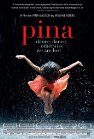








 Movie Reviews from the Dark