 Hey, Hey … When the announcement came down that Davy Jones had passed away on Wednesday, fond memories flooded back for many in my age group (the optimal demographic of 20 to 85). For the last 4-5 years, my “ideas” list has included writing a tribute to The Monkees, and I feel guilty that it took this sad event to motivate me to finish. Despite my procrastinating, this story deserves to be told, as their impact should not be ignored (yes, I am serious).
Going back to the mid-60’s, there was an entertainment revolution occurring that impacted TV and music. In 1964, the Beatles while at their chart-topping peak, released their first movie … A Hard Day’s Night. Caught up in Beatle-mania, producers Bert Schneider and Bob Rafelson were inspired to capture that same frenetic pace for a TV show, with comedic elements enveloped by pop songs. Schneider later produced Easy Rider, and Rafelson directed the 70’s classic Five Easy Pieces. With this idea, the “pre-fab four” was born as The Monkees, what some people call the first boy band. After a huge casting call, three Americans (Mike Nesmith, Micky Dolenz, Peter Tork) and one Englishman (Davy Jones) were cast as the musical group.
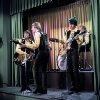 The series had strong ratings and ran for three years (1966-68) in Monday primetime. Re-runs then became a fixture on Saturday morning TV until 1973, keeping the group in front of an audience for eight total years. James Frawley directed 28 of the 58 episodes, and the series would lead to 11 albums (over 65 million sold), a TV special, a feature film (Head 1968), and numerous reunion tours. It all began with the ground-breaking TV series that really clicked with kids. The offbeat series seemed to prove that different personalities could do more than co-exist. Mickey was the class clown. Mike was the quiet, soulful one. Peter was the hyper-dork. Davy was the cool popular one. This disparate group managed to have fun as friends and make great sounding music together. Kids could relate to these misfits and it provided hope, as well as some popular music.
Ahh … the music. The music is what caught everyone by surprise. The four lads had limited musical backgrounds, so the plan was to use mostly studio musicians. What music producer Don Kirshner discovered was that, at least vocally, there was plenty of talent in the group. With harmony groups very popular at the time (The Beatles, Beach Boys, Crosby Stills Nash, The Hollies), The Monkees created a smooth, distinctive sound without the edge or political statements that were all over the radio. Despite being surrounded by the constant claims that they weren’t real musicians, their first album “The Monkees” (1966) stayed number one for 13 weeks, and was the first of four consecutive number one albums for the group. Here is a brief recap of the four actors:
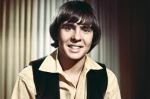 DAVY JONES was born in England and at 5’3, had intentions on become a jockey. He stumbled into stage acting and was nominated for a Tony, as The Artful Dodger in a Broadway production of “Oliver!”. As a matter of fact, when The Beatles made their U.S. debut on “The Ed Sullivan Show” on February 9, 1964, Davy Jones was also on that same show as a member of the acting troupe performing a scene from “Oliver!” Jones had four daughters and continued acting and singing throughout his life. He had performed just two nights prior to his fatal heart attack.
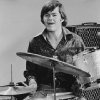 MICKY DOLENZ was a child star on the TV series “Circus Boy” (1956-58). When he was cast in The Monkees, he learned the drums well enough to play on some of their albums. He has since managed to grind out a pretty successful showbiz career with acting, singing, voice acting (cartoons), directing, and even as a radio DJ. Toni Basil’s 1982 hit “Hey Mickey” was named after Dolenz, as she had choreographed The Monkees’ movie Head (1968).
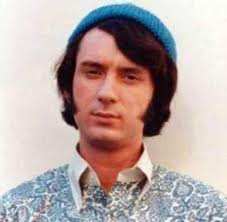
 MICHAEL NESMITH was a self-described “do-nothing” teenager. He was very involved in the production of music for The Monkees, and was the driving force behind the group’s break with music producer Don Kirshner. After leaving the group, Nesmith invented and sold the concept of 24-hour Music Television to Time Warner, and it eventually evolved into MTV. His mother, Bette, invented Liquid Paper, from which stemmed a $50 million inheritance for Michael when she passed away. Nesmith has stayed active in music production and has even written a couple of novels.
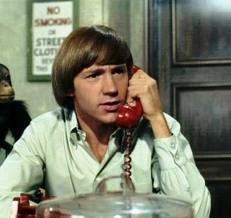
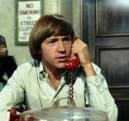 PETER TORK – was a Greenwich Village folk musician and Stephen Stills’ roommate prior to being cast in The Monkees. He was the most gifted musician of the four and played multiple instruments across various music styles. Peter was diagnosed with a rare form of head and neck cancer, and in 2009 had successful surgery to remove the growth from his tongue.
After the series ended, Rafelson teamed with Jack Nicholson (credited as co-writer) to create a feature film with The Monkees. Head was released in 1968 and featured cameo/pop-in performances by such well known personalities as Annette Funicello, Dennis Hopper, Teri Garr, Victor Mature, Sonny Liston and Frank Zappa. Though not a box office success, the film has developed quite a cult following, and the soundtrack has fared very well with critics over the years. Nesmith still claims the movie was designed to “kill off” The Monkees.
 Throughout the years since, there have been numerous incarnations of reunion tours and special appearances that featured 2-4 of the original group. The 1996 “Justus” album was the first since 1968 on which all four members performed, produced, wrote and played all instruments (thus the name Justus = Just Us).
The Monkees’ music remains a staple on “oldies” radio, and has been recorded and covered by numerous bands over the years, including: Run DMC, Smash Mouth (for Shrek), The Replacements, and Susan Boyle. Many of their songs were written by the Boyce-Hart team, but also such well known songwriters as Neil Diamond, Carole King and Harry Nilsson. Despite all the controversy, the group has numerous songs that have held up well over 45 years. Their influence is clear and they deserve a place in TV and musical history.
**NOTE: The rumor that Charles Manson auditioned for the show was false, as he was in prison at the time.
Here is a list of some of The Monkees’ finest songs. Some of these are live links so you can see the early music videos while you listen to the pleasant sounds of The Monkees:
A Little Bit Me, A Little Bit You
Daydream Believer
Girl
I’m a Believer
I’m Not Your Steppin’ Stone
Last Train to Clarksville
Listen to the Band
Look Out (Here Comes Tomorrow)
Mary Mary
Monkees theme
Pleasant Valley Sunday
Shades of Grey
She
Sometime in the Morning
The Day We Fall in Love
Valleri
When Love Comes Knockin’ at Your Door
Your Auntie Grizelda – Ok, not one of their best, but certainly one of the funniest
Your Auntie Grizelda
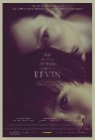 Greetings again from the darkness. The Brady Bunch, this isn’t. It’s also not the place to look for helpful parenting tips. In fact, the story revolves around Eva, a woman (Tilda Swinton) who apparently didn’t want to have a child … at least not at this time, and certainly not THIS child. If you have seen The Omen, you probably gave thanks that you didn’t have a child like Damien. At least we knew Damien was the spawn of Satan. Eva’s son Kevin, is instead a good old fashioned psychopath. One who has an inherent need to cause pain and misery for his mother.
 My favorite part is actually how director Lynne Ramsay structured the storytelling. It goes beyond non-linear and actually bounces throughout three key periods: Kevin as a baby/toddler, Kevin as a 6-8 year old (Jason Newell), and Kevin as a teenager (Ezra Miller). Each age is progressively more frightening and disenchanting … and all of the “Kevin” actors glare with the same lifeless eyes. The film begins with what is an undetermined catastrophe. This event is slowly revealed over the course of the movie, though we witness events leading up to it, as well as the resulting fallout.
 There are recurring scenes where Eva is scrubbing the exterior of her house in an attempt to remove the red paint that was purposefully splattered. As a viewer, we understand that she has blood on her hands and she seems resigned to the fact that she is now a social outcast, even a pariah. We spend much of the movie in Eva’s jumbled thoughts as she tries to piece together what has happened and why. Of course, there is no simple answer. The title explains what was missing all along. There was no communication and no willingness to confront the problem … a psychopathic son born to a disenchanted woman who refuses to get past her lost dreams. To say they all paid the price is an understatement.


 Posted by David Ferguson







 Movie Reviews from the Dark