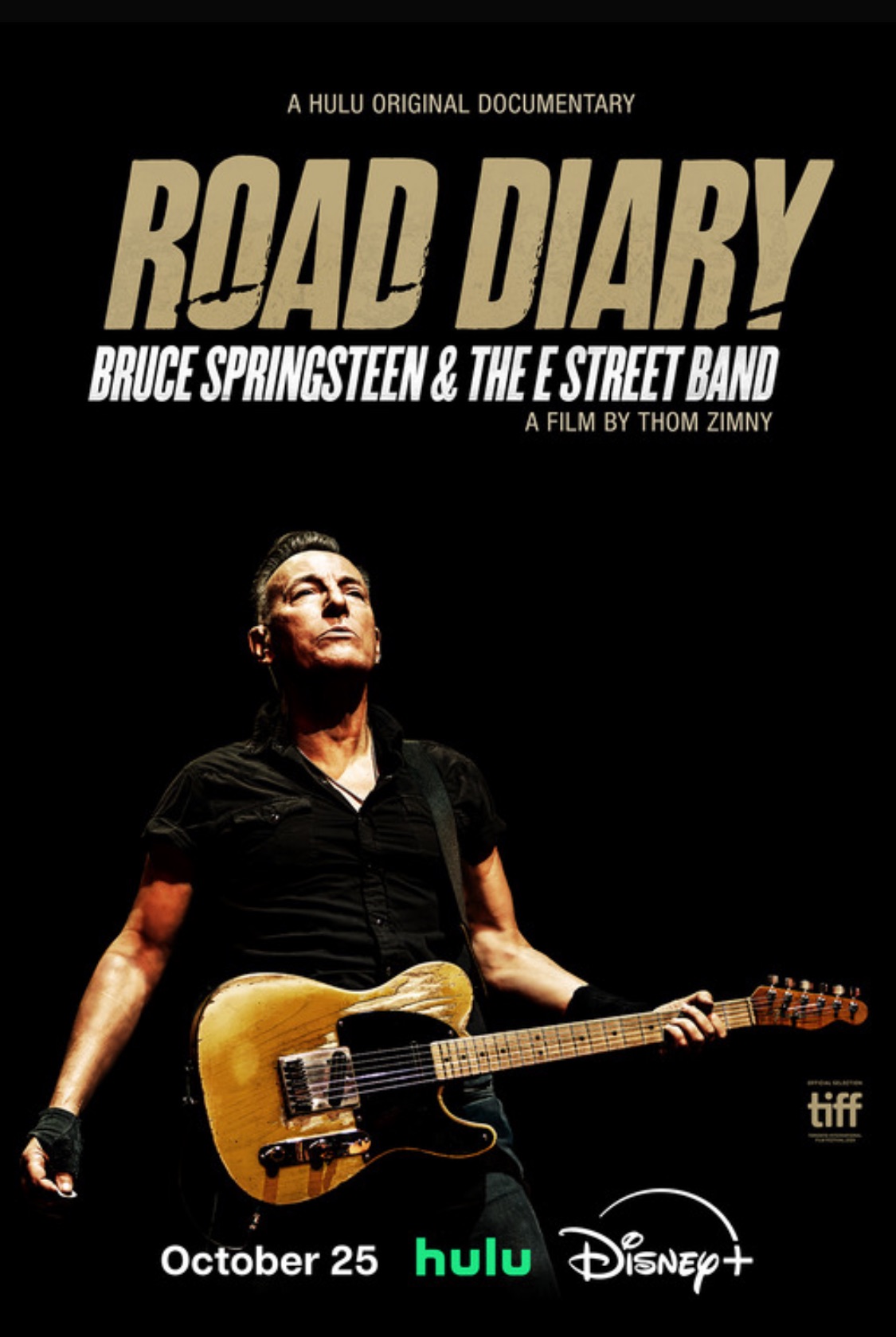
 Greetings again from the darkness (on the edge of town). What keeps a band together for decades? It could be the shared love of music … although many bands have split up with members continuing on in solo careers. It could be a love of performing … but again, a band isn’t needed for that. It could be friendship or family … lifelong friends Paul and John couldn’t save The Beatles, and a brotherly feud broke up Creedence Clearwater Revival. Certainly “luck” plays a role … too many deaths to count have caused the demise of bands through the years. Although no clear answer exists, it’s likely a blend of all the above combined with a certain spiritual bonding. Nowhere is that more evident than with the E Street Band. Of course, the band has a dynamic leader in (the once shy) Bruce Springsteen, but it’s obvious these musicians like and respect each other, and very much value what they have built together.
Having been a Springsteen fan since the early 1970’s, I can’t possibly be overly objective towards Thom Zimny’s documentary, so you’ve been warned. Zimny released THE BEACH BOYS documentary earlies this year, and he has a long-standing affiliation with Springsteen on music videos and other documentaries, including LETTER TO YOU (2020) and WESTERN STARS (2019). This latest is centered on the band’s 2023 tour, their first in six years and first since the pandemic. However, rather than a traditional concert flick, Zimny takes us behind the scenes for the band’s reunion, early rehearsals, and process while on the road. Most insightful are the musings from the individual band members, while Bruce’s narration provides some structure to the film.
Bruce kicks us off by recalling that as a kid, he dreamed of playing music in front of screaming fans. It’s hard to imagine his dreams were ever as big as the reality he’s living. What inspired this documentary was his promise that when the pandemic ended, he’d throw “a big party”. That’s what led to the E Street Band’s reunion for their first tour in six years. We learn bits and pieces of history as it pertains to how the band came together, and though the rehearsal time is short, Bruce explains his goals are to “shake the dust off the band” and establish the playlist for the tour. While it’s only hinted at a few times, it seems clear that his run on Broadway influenced the vision he had for this tour.
Opening night in Tampa is as exciting for the band as it is for the fans. A recurring theme for this film is the crowd shots – often close-ups of fans and their emotional reaction (tears flow freely). We can’t help but view this as spiritual for so many – the Church of E Street, if you will. Bruce is crystal clear in his desire to tell a story with the show; a story long-time manager Jon Landau describes as ‘living life now’. The show pays tribute to bandmembers lost – Clarence Clemons and Danny Federici, and Bruce’s wife and bandmate Patty Scialfa briefly discusses the health scare that has her cautiously participating in shows whenever possible.
One of the highlights is the anticipation of the tour arriving in Barcelona. Whatever you’ve heard about the crowds in Europe, what we witness goes even beyond. These fans remind me so much of those early days as they express their pure appreciation and raw emotion driven by the music. Another aspect that becomes obvious as the tour progresses is that, despite being a huge band on stage, the E Street Band is remarkably talented and incredibly tight musically. This entertainment spectacle is first and foremost a musical gem, and Steve Van Zandt (as Musical Director) probably doesn’t receive the recognition he deserves from the fans for his attention to musical details.
The segment on the cover of “Nightshift” is particularly telling on how things come together for both the music and the stage presentation. It’s noted that the song has turned into a ‘showstopper’ on tour and the film makes it obvious why. Insights from band members throughout the film infer a blended magic with influences of Jazz, R & B, Soul, and Jazz, and the music provides the proof. Piano work from Professor Roy Bittan and sax work from Clarence’s nephew Jake cover multiple styles, and when the band cuts loose, rock music has rarely been better. The film leaves us with a bit of uncertainty. Alone on stage with his acoustic guitar, Bruce (now 75 years old) sings “Last Man Standing” (noting the recent passing of George Theiss leaves Bruce as the only survivor of his original band, The Castiles). As narrator he refers to “yesterdays and goodbyes”, and then proclaims he’ll continue “until the wheels come off.” If it’s his goodbye, the legacy spans over 50 years. If the wheels stay on, we’ll chomp at the bit to see what the Boss brings us next.
Premieres on Hulu and Disney+ on October 25, 2024


 Posted by David Ferguson
  Greetings again from the darkness. As parents we fool ourselves into believing we know our children and what they are up to. After all, they live in the same house and eat the same meals. Norwegian documentarian Benjamin Ree shows us quite a contrast to this theory. What happens when a loving family discovers their son’s secret life much too late?
 Greetings again from the darkness. Spy-thrillers typically fall into one of two categories: complex and smart (TINKER TAILOR SPY, 2011) or action-packed (KANDAHAR, 2023), although many combine the two elements quite successfully (MISSION: IMPOSSIBLE, 1996). This film from director Roel Reine and screenwriter Bob Derosa slams us with action sequences while only teasing us with bits of what could have been a clever story.
 Greetings again from the darkness. As a lonely woman, being told you have the look of a model is a welcome compliment. As a runaway living on the streets, having a young man show an interest in you is a welcome development. As a single woman moving into an apartment and having a charming young man help move your furniture is a welcome occurrence. As a struggling actress, getting cast on a hit show is a welcome gig. What do all of these situations have in common? They feature vulnerable women who crossed paths with Rodney Alcala, an infamous serial rapist and murderer. This is the first feature film directed by uber-talented Anna Kendrick and it’s a doozy.
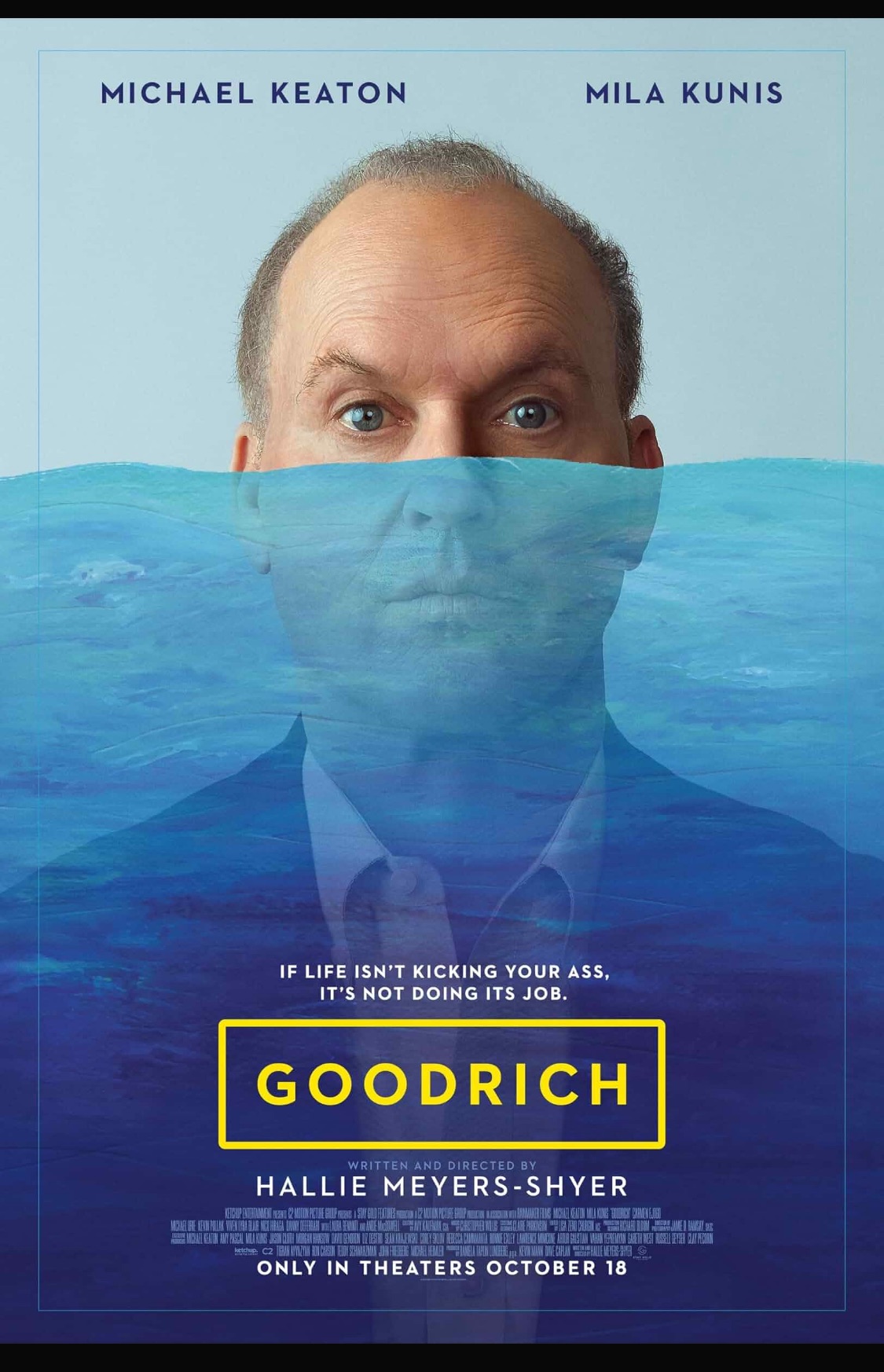 Greetings again from the darkness. The heart definitely skips a beat when the phone rings late in the night, awakening us from a deep slumber. Andy Goodrich groggily answers the call to hear his wife inform him that she’s checked herself into rehab and then ending the call with, “I’m leaving you”. It doesn’t take long for us to realize the real problem. Andy seems to be the only one unaware that his wife too frequently swallowed prescription drugs and chased them down with a bit of booze. Over the next few days, Andy is almost too late in recalling that his 9-year-old son has a peanut allergy, and discovers that his 9-year-old daughter (yep, twins) hates to be late for school and likes a glass of water on her bedstand at night.
 Greetings again from the darkness. There are very few topics more frustrating than when the drive for profits exceeds the importance of care and treatment. Documentarian Helene Kladawsky details how this has occurred in Canada by focusing on the efforts of dedicated attorney Melissa Miller. Of course, we all know this issue is not isolated to Canada, but in fact, is an ongoing problem in the United States, as well as other countries. However, the decision to narrow the coverage allows for a clearer understanding of the challenges.
 Greetings again from the darkness. There is no reason for me to write much about this one. I’m clearly not part of the target audience, and if I had realized ahead of time that writer-director Susannah Grant was also responsible for CATCH AND RELEASE (2006), I likely would have passed on the opportunity to review. There is a market for romantic fantasy movies, however, typically at least some of the characters are likable. Regardless, my job is not to become angry at a film (even if it happens sometimes).
 Greetings again from the darkness. Many questions remain unanswered, but one point is clear … Donald Trump was not ‘born’ this way. Ali Abbasi directs a script from journalist Gabriel Sherman (Vanity Fair, New York Magazine) and it’s meant to explain the foundation of the man who would become President. Two distinct parts of the film are divided into the 1970’s and then the 1980’s, and that first part is infinitely more interesting and better presented.
 Greetings again from the darkness. They consider themselves “the guardians of the sea”. My guess is that most of us have never heard of the haenyeos, the women divers on Jeju Island in South Korea. Director Sue Kim introduces us to these remarkable women who are carrying on a tradition that dates back to the 14th century.
 Greetings again from the darkness. Is it nostalgia? Is it history? Is it activism? Is it entertainment? This documentary from Erik Nelson is all of the above and more. It’s an incredible treat for viewers as well as providing a snapshot in time of a week that influenced changes in daytime television talk shows. In 1972, the host of the most popular daytime TV show invited John Lennon and Yoko Ono to co-host “The Michael Douglas Show”. Was it a clash of cultures? Yes it was. Was it TV magic? Absolutely.
 Movie Reviews from the Dark