The sun sets on JUSTIFIED

April 21, 2015


justified2 Greetings again from the darkness. The reason I don’t typically write about television shows is that very few justify (sorry!) the effort .  However, the series finale of “Justified” aired last week, and it’s a series I will definitely miss.

Many people disregarded it immediately assuming it was just another western – you know, since the lead character wears a hat and holsters his gun. But at its core, it’s a story of good guys vs. bad guys … only the good guy had some flaws and the bad guys were anything but the backwoods hillbillies they appeared to be. The three categories that elevated the show above typical TV fluff were: Writing, Characters, and Acting.

WRITING

Let’s start with Elmore Leonard. His novella “Fire in the Hole” is the source material for the show, and provided the emphasis on character and dialogue that was so crucial to its unique feel and style.

Ahh yes … those words. The majestic verbosity was spread across all characters – lawmen, judges, and the hardened criminals. Heck, even the teenage girl, bartender, BBQ pitmaster, and hired gunslinger were loquacious in their ability to turn a phrase.

For those of us who strain and sweat over the use of a particular word or the structure of a sentence, the show humbled us weekly through the apparent ease with which the English language was played like a finely tuned instrument.

As for the story, it was remarkable that the battle of guns and wits between Raylan and Boyd endured for the entire series run; and it was fascinating to see how each season brought a new criminal element and challenge … some tying into current characters, while others were more standalone.

CHARACTERS

justified A few of the characters managed to stick around for the series run … some more regular than others. Raylan Givens and Boyd Crowder will both go down as iconic TV characters, but it’s important to note the other regulars such as Raylan’s boss and father figure Art Mullens, the other two Deputy U.S. Marshals Tim and Rachel, and of course, Ava Crowder whose character arc was broader and more diverse than any other on the show.

There was also a group of recurring characters who felt like regulars, which speaks again to the sterling writing: Raylan’s on-again-off-again squeeze Winona, the smarmy Wynn Duffy, Boyd’s cousin Johnny, the comical Dewey Crowe and Dickie Bennett, and the memorable Arlo Givens (Raylan’s shifty father).

The third group of characters to mention includes those that had a dramatic impact on only one or two seasons: the isolated pitmaster Limehouse, Loretta the teenage survivor, the good-hearted hooker Ellen May, smooth talking Ty Walker, the lovable Constable Bob, the not so lovable Bo Crowder (Boyd’s dad) and criminal masterminds such as Robert Quarles from Detroit, Katherine Hale and Avery Markham who sometimes worked together and other times not, and most importantly Mags Bennett – the driving force behind the peak of season two.

Twenty two. That’s how many characters are named in the previous three paragraphs. And it’s pretty easy to name another 15 or more characters that played key roles. It’s not just the sheer quantity of characters, but rather the fact that they were so well written that we felt like we immediately knew them … plus they were fun to watch.

ACTING

Every actor dreams of being cast in a well written show. Take those extraordinary lines of dialogue and really good actors never have to over-do it … in fact, they can let the scenes breathe. As filled with tension as any show you’ve seen, it still managed to have a slow pace that matched what we expected from Harlan County Kentucky.

It’s difficult to imagine anyone else in the roles of Raylan Givens (Timothy Olyphant), Boyd Crowder (Walton Goggins), Chief Deputy US Marshal Art Mullins (Nick Searcy), or smarmy Wynn Duffy (Jere Burns). All four of these actors embodied their particular characters so completely that we viewers fully accepted them. A similar comparison would be James Gandolfini as Tony Soprano. It’s rare for TV shows, but “Justified” had four!

The supporting roles never disappointed, though the survival rate varied immensely. Joelle Carter as Ava saw her screen time grow as the show progressed, though Erica Tazel (Rachel) and Jacob Pitts (Tim) are probably the only two who could offer up any kind of argument that they had to work to get noticed. Natalie Zea as Winona bounced in and out from season to season, and her presence never failed to bring about a change in Raylan just when he most needed one. Raymond J Barry as Arlo Givens was one of the show’s most colorful figures, though Damon Herriman and Jeremy Davies, as Dewey Crowe and Dickie Bennett respectively, gave him a run for the title.

As each season brought focus to a new criminal lead, the acting was varied and spectacular at times thanks to Neal McDonough, Michael Rappaport, Mykelti Williamson, M.C. Gainey, and of course, the final season with Garrett Dillahunt, Mary Steenburgen and Sam Elliott. Special mention goes to Margo Martindale for her Emmy Award winning performance as Mags Bennett in Season Two.

THE REST OF THE STORY

Hand-in-hand with the importance of Leonard’s writing is the work of show creator, producer and director, Graham Yost. Wisely working with Leonard those first few seasons (Mr. Leonard passed away in 2013), Yost ensured the weekly scripts were packed with the expected lines of dialogue, and his feel for the material allowed him to never miss with his casting.

The brilliant first scene of the first season introduces us to Raylan as he squares off against a bad guy while poolside in Miami. It’s this quick wit, quick draw and quick trigger that gets Raylan shipped back to the area of his youth, Harlan County Kentucky. The rest of the show taught us never to get comfortable around a hillbilly drawl, bring your own glass if someone offers you their “apple pie”, and the toughest bond to break is when you “dig coal together” with a buddy.

WWED


CAS & DYLAN (2015)

April 21, 2015

Cas Dylan Greetings again from the darkness. Jason Priestley is well known for his acting career, and his first feature film as a director combines two of the more familiar movie paths – the odd couple and the road trip. Writer Jessie Gabe jolts the screenplay with enough comedy and poignancy that we overlook the air of familiarity and instead concentrate on the mismatched titular characters. Ms. Gabe also makes a memorable onscreen appearance as a snippy receptionist.

Richard Dreyfuss plays Dr. Cas Pepper … yep, he is Dr. Pepper (I suspect that’s why he goes by Cas). Thanks to the narration and early scenes, we quickly learn Cas is a widower, a 30 year doctor, and recently discovered to be terminally ill. Cas has perfectly worked out a plan to “head west” and go out on his own terms … if only he wasn’t experiencing writer’s block on his suicide note.

Worlds collide as Cas agrees to give Dylan Morgan (Tatiana Maslany, “Orphan Black”) a ride to her boyfriend’s trailer. Cas wrongly assumes that the energetic and fast-talking Dylan was visiting a relative at the hospital, and soon learns that she was experiencing “suffering vicariously through patients”. See, Dylan fancies herself a writer and has developed a new genre, Action Romanture, which she is convinced will secure a publishing deal and rescue her from a world that doesn’t appreciate her in the least.

An unexpected turn leaves Cas and Dylan on the road together, and quibbling like an old (and odd) couple. Nothing that follows is especially ground-breaking, and in fact, is mostly quite familiar; yet the two leads somehow captivate us with their banter and the understanding that this is leading right where we know it must lead.

Director Priestley wisely utilizes the stunning landscapes of western Canada, and allows the two actors to go at each other in a way that two different generations must – all the while building a friendship that we see long before they do. There are some interesting and effective song choices, but it’s Ms. Maslany’s spunk and depth as Dylan that allows the interactions to click. The legacy note may be the goal here, but the lesson is that no one should be alone … no matter if they be a 22 year old social misfit, or a sixty-something doctor near the end of life.

watch the trailer:


DIFF 2015 – Day 9

April 21, 2015


DALLAS INTERNATIONAL FILM FESTIVAL

Day 9 – Saturday April 18

FRAME BY FRAME (documentary)

DIFF 2015 Silver Heart Award Winner

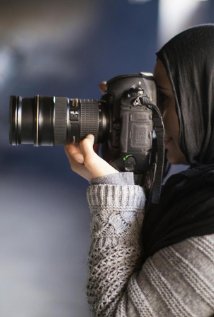
frame by frame Greetings again from the darkness. Sitting comfortably in our recliners or desk chairs, we have come to take for granted the exceptional work of photojournalists from inside locations we ourselves would never risk going. These folks risk their lives to capture otherwise unimaginable conditions and injustice from around the world.  Co-directors Alexandria Bombach and Mo Scarpelli profile four courageous photographers from Afghanistan.

Documenting the truth with a camera seems so simple; however, as one of the photographers explains, he often finds himself running towards the spot from which everyone else is running away. Put yourself in this situation … you are taking photos of a solemn religious ceremony when suddenly a bomb explodes and bodies, limbs, blood and destruction are everywhere. Do you stay to record the fallout and help the injured, or do you run away from the scene in case another bomb is set to detonate? This film doesn’t judge, but instead it matter-of-factly points out that these photographers understand the role they play in exposing such evil and cruelty.  In other words, they stay.

One of the photographers profiled is Massoud, a Pulitzer Prize winner for his stunning photo of “The Girl in Green”. Massoud is now head photographer of AP – Kabul, and he remains in touch with the girl and her family, while maintaining his mission of documenting history in his country.

The most heart-breaking and anger-inducing segment involves Massoud’s wife Farzana, who is also a photojournalist. Yes, a female photojournalist in Afghanistan. Her personal story is so touching as she was a mere 13 year old girl when she had her first run-in with The Taliban, which had seized control in 1996 – making photography, education, history and any semblance of women’s rights a thing of the past. She shares her story which serves as her inspiration to record the injustices toward women that remain in the country, despite the social improvements since The Taliban was ousted from Kabul in 2001.

This review is no place for all the details covered in this emotional and powerful and informative documentary, but to paraphrase one of the photographers … “my heart was crying but my eyes had no tears left”. Please don’t mistake what these brave people do with the personal infringements of the celebrity paparazzi. The only similarities are the cameras they carry. These photojournalists and the others like them around the globe understand that their “empathy brings meaning to their photographs”, and that photographs are the only assurance that a segment of the population will never again be “voiceless”.


DIFF 2015 Award Winning Short Films

The last few days of a film festival allow the opportunity to catch up with the award-winning films that we may have missed. Below is a recap of the six award winning short films from this year’s Dallas International Film Festival:

WORLD OF TOMORROW (USA)

Directed by Don Hertzfeldt. The animated winner jumps ahead 227 years to show us a world where cloning provides everlasting life and perseverance of history and memories. It also depicts a world where financial status remains important, and leaves us with the philosophical thought … “Now is the envy of all dead”.

CAST IN INDIA (India/USA)

Directed by Natasha Reheja. Have you ever noticed that the manhole covers in NYC are stamped “Made in India”? Ms. Reheja noticed and thus began her journey to foundry where the bronze plates are crafted. It turns out these are highly skilled workers who take great pride in their work, face labor union issues, and sacrifice their hands, feet and backs for the manually intensive manufacturing process.

THE FACE OF UKRAINE (Australia)

Directed by Kitty Green. We see a stream of auditions from girls of various ages wanting the highly coveted role of the Ukrainian legendary figure skater Oksana Baiul – former World Champion and Olympic Gold Medalist.

ONE HITTA QUITTA (USA)

Directed by Ya Ke Smith. This provides a look at the despicable fascination of some high school kids regarding videos of violence … especially a “one hitta”, which is blindsiding some innocent with a punch to the face. It also takes us inside a classroom where a teacher pays the price for being in a no-win situation with a punk kid named Jason, whose clueless mother only contributes to his sickening actions.

THE CHICKEN (Germany/Croatia)

Directed by Una Gumjak. It is a pristine example of how a short film can so quickly capture our attention and shift tone from comedy to danger to heartfelt. During war-torn 1993 Sarajevo, a girl receives the gift of a live chicken from her soldier father, and what follows is worthy of the film’s award.

MELVILLE (USA)

Directed by James M. Johnston. The combination of a bleak diagnosis and pregnant wife lead to open mic night at a local hangout, and the unforgettable lyrics of “F Cancer”.


RADIATOR

DIFF 2015 – Grand Jury Winner

radiator Greetings again from the darkness. The feature film debut of writer/director Tom Browne might be best suited to live theatre, though it works just fine on the silver screen. So fine in fact, that is was named the Grand Jury winner at the Dallas International Film Festival. On the surface it looks like yet another glimpse at the miseries of aging; however, it doesn’t take long before we viewers are entangled in this three-headed web of marriage, family, dominance and the struggles of growing old and losing control.

Fortunately the bleak subject matter is juiced with enough dark comedy that we actually laugh out loud periodically, while other times we manage at a smile for the smattering of sweet moments. Daniel (played by co-writer Daniel Cerqueira) is beckoned to the rural family home by his mother Maria (Gemma Jones) as she finds herself at a loss on how best to deal with Leonard (Richard Johnson), her husband and his dad.

This is a towering performance from Mr. Johnson, and he plays it full hilt as some odd type of tyrannical tragedy. See, Leonard’s reign as a force in family and life is now relegated to wallowing in his own sorrow, pain and feces while committed only to lying prone on the sofa and bossing his wife about the house with menial tasks for which he demands perfection. When Daniel arrives, he is taken aback by the squalor and demeanor of his once powerful father. He does what any of us would do … he takes control by ordering a hospital bed, getting dad cleaned up, etc.

As viewers we initially see things through the eyes of Daniel and Maria – on the wrong end of Leonard’s demeaning abuse. Somewhere along the way, there is a subtle shift in viewpoint and tone. The roots of love and marriage are revealed to run inordinately deep after so many years. An act of cruelty can somehow be forgotten and life can move on … even after situations that might never survive a shorter-term relationship. This shift is brilliant writing, and at a level we don’t typically see in movies.

In fact, the film seems to disprove one of its more poignant lines: “The black moments smother any flicker of light”, and instead builds on another: “Just because someone changes, doesn’t mean you stop loving them”. You will likely recognize all three lead actors, and each of them deliver excellent performances. Despite the subject matter, my takeaway is actually summed up in yet another line from the film … “I remember so much pleasure”.


TRUE STORY (2015)

April 17, 2015

true story Greetings again from the darkness. “Sometimes the truth isn’t believable. But that doesn’t mean it’s not true”. These words are spoken by Christian Longo, the man accused of brutally murdering his wife and 3 kids in 2001. The line between truth and lies is at the core of this real life story directed by Rupert Goold and based on journalist Michael Finkel’s memoir and recollections of his conversations with Longo.

The New York Times investigative reporter Michael Finkel (Jonah Hill) is introduced to us as he is researching the story which ultimately leads to his dismissal, after it’s discovered he played fast and loose with details in order to present a more impactful story. Soon he receives an odd phone call from an Oregon writer (Ethan Suplee) who informs Finkel that his name is being used by Longo (James Franco), the suspected murderer who was recently captured in Mexico. As a disgraced journalist, Finkel seizes the opportunity to connect with Longo, and soon enough the two morally-compromised men are locked in psychological warfare, where we as viewers aren’t sure just who is using who in this oddball “friendship”.

Hill and Franco are best known for their raunchy and raucous comedies, and both deliver much “quieter” performances than what we have come to expect from them. While it’s a bit of stretch to buy Jonah Hill as a renowned writer, Franco is absolutely chilling as a manipulative psychopath. Franco is so good in the role that he overpowers Hill, which undermines what was supposed to be an intricate game of cat and mouse.

Franco is a frightening figure on the courtroom witness stand as he tells his version of that fateful night, and he is equally unnerving to watch in general conversation with Finkel. However, the single best scene in the film comes when Felicity Jones unleashes the wrath of truth on Franco’s Longo. Ms. Jones is otherwise underutilized for most of the film, as her relationship with Finkel is never really explored.

Rather than provide any substantive background on what makes either Finkel or Longo tick, we are instead left to make our own assumptions based on the framed magazine covers and the spurts of flashbacks. And thus the film’s biggest flaw is cheating us out of the backstory that might help explain the otherwise fascinating conversations/showdowns between these two flawed gents … one significantly more flawed than the other.

It’s impossible not to compare this to Truman Capote’s “In Cold Blood” and the subsequent films based on his writing experience: Capote (2005), and Infamous (2006). Stretching and bending the truth are common themes, as are intriguing and disturbing insights from the writers and the accused.

There are times True Story comes off as little more than a made for TV movie, but the best moments more than make up for it, and Franco’s portrayal will stick with you long after Finkel finally understands who and what he is dealing with. It’s also a reminder that there are people who “want the truth so badly” they “will lie to get it”. Try saying that with a wink.

watch the trailer:


DIFF 2015 – Days 6 and 7

April 17, 2015

DALLAS INTERNATIONAL FILM FESTIVAL

Days 6 and 7, Wednesday and Thursday April 15 and 16

Below is a recap of the four movies I saw over these two days. I am counting the six Documentary Shorts as one movie since it was one block on the festival programming:

DOCUMENTARY SHORTS – DIFF 2015

The Dallas International Film Festival is a great place to catch up with those hard to find short films. It’s not unusual for short films to be later developed into feature films, but regardless, the short film format requires a unique skill set for writers, directors and actors. A connection must be made immediately with the viewer because there is no time for gradual acceptance or interest.

Short films come in three flavors: live action, animated, and documentary. Below is a recap of the six documentary short films at this year’s DIFF.

Crooked Candy (USA)

Directed by Andrew Rodgers. Kinder eggs are illegal in the United States as they are considered a choking hazard for kids. However, this collector has hundreds of the miniature figures/toys thanks to decades of pursuing the eggs through his global travels.

(The And) Marcella & Rock (USA)

Directed by Topaz Adizes. A couple face off against each other with some extremely personal questions. In a matter of minutes, the audience is as uncomfortable listening as the participants are in revealing very private thoughts.

Spearhunter (USA)

Directed by Adam Ruffman, Luke Poling. The story of Gene Morris who successfully fought to get spearhunting approved as an acceptable form of hunting in Alabama. Guns and bows lacked the challenge that Morris desired.  We even visit his legacy – a Spearhunting museum that houses some of the trophies from his 592 kills. His ex-wife labels the late Mr. Morris a serial animal killer.

Master Hoa’s Requiem (USA)

Directed by Scott Edwards. Master Hoa was one of the hundreds of thousands who fled South Vietnam by boat in 1975. In the process, he lost his family. We see how he re-established a new life, and we go with him on a heart-breaking search for the graves of his family.

Cast in India (India/USA)

Directed by Natasha Reheja. Have you ever noticed that the manhole covers in NYC are stamped “Made in India”? Ms. Reheja noticed and thus began her journey to foundry where the bronze plates are crafted. It turns out these are highly skilled workers who take great pride in their work, face labor union issues, and sacrifice their hands, feet and backs for the manually intensive manufacturing process.

The Face of Ukraine: Casting Oksana Baiul (Australia)

Directed by Kitty Green. We see a stream of auditions from girls of various ages wanting the highly coveted role of the Ukrainian legendary figure skater Oksana Baiul – former World Champion and Olympic Gold Medalist.

That’s it for the documentary shorts. Below are the three features I watched in addition to the previous doc shorts.

ECHOES OF WAR

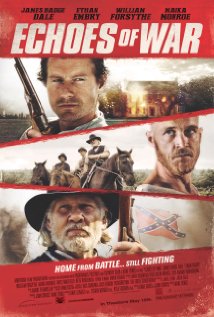
echoes of war Greetings again from the darkness. The fallout from war goes beyond the violence and massive loss of life. Returning soldiers often struggle to regain a sense of normalcy, and are often labeled as PTSD: Post Traumatic Stress Disorder.  And what of the families … those left behind with a gaping hole in their heart from the loss of a loved one, and those having to adjust to the “affected” surviving soldiers? This is the heart-breaking story of two families at the convergence of all of the above.

With the Civil War ending, Wade (James Badge Dale, “The Pacific”) returns home in search of “peace”. He shows up at the house of his brother-in-law Seamus (Ethan Embrey) and is greeted with open arms by his niece Abigail (Maika Monroe, It Follows) and nephew Samuel (Owen Teague), who clearly worship him as their favorite Uncle.

Though it’s not a Hatfield and McCoys extreme, it doesn’t take long for Wade to figure out the awkward and mostly silent unbalanced relationship between Seamus’ family and the McCluskey neighbors. Randolph McCluskey (William Forsythe) is a bitter man who lost a son in the war, has an unresponsive wife (Beth Broderick) due to that loss, and two sons: Dillard (Ryan O’Nan) who is a bit slow-witted, and Marcus (Rhys Wakefield) who is far too sensitive to be accepted by his crusty old father.

Wade’s best intentions of protecting his family turn a barely tolerable arrangement into an all-out war. On top of that, we get a bit of Romeo and Juliet to go along with Wade’s slow-drip meltdown as he is simply unable to handle what the war has made him. The connection between Abigail and Marcus is exciting to watch, though we all recognize a romance facing a heavily stacked deck. Wakefield was previously seen in The Purge, and Ms. Monroe was stunning in It Follows. Both are young actors to keep an eye on.

It’s almost unbelievable to accept that this is the first feature film from director Kane Senes and his co-writer John Chriss. There is so much going on here with multiple layers of conflict and personalities … plus the movie is beautifully shot with an air of artistic flair that lightens a mood when necessary, or makes an analogy of nature and man either through plants, critters or the sky. Religious overtures play a role, and it’s fascinating to watch the various interactions … each more complex than the previous, culminating with Wade and Seamus who seemingly couldn’t be more different.

The film explores the comparison of bravery versus cowardice and it challenges our beliefs. There is also a theme of survival – just what makes a life worth living? The acting here is something to behold. All eight are exceptional and contribute to the film’s ultra-serious approach, broken by brief moments of pure joy. With a terrific and complex story, stellar acting, and a talented director, this is one that serious film goers should seek out and embrace.

NOWITZKI: THE PERFECT SHOT (documentary)

nowitzki Greetings again from the darkness. Dallas loves Dirk. The reasons why become obvious during this biopic that takes us from Dirk’s youth basketball league in Germany through his NBA Finals, while including significantly more information on his family and personal life than we have previously seen. Interviews come courtesy of such well known faces as Kobe Bryant, Don Nelson, Michael Finley, Mark Cuban, Yao Ming, Jason Kidd and former NBA commissioner David Stern.

Contrary to many sports documentaries, this is no shrine to its subject. Of course, we can’t help but be charmed by the “great guy” superstar, but it’s through his life challenges that we come to truly respect Dirk as a man. Director Sebastian Denhardt is one of the most prolific documentarians and filmmakers in Germany, but this look at Germany’s most popular and successful athlete is his best and most accessible work to date.

The most interesting segments involve Dirk’s long time personal coach Holger Geschwindner, plus insight from Dirk’s father, mother, sister, and childhood friend. It’s during these times that we realize Dirk’s “posse” is made of the people who he has always trusted – family and friends. The only two newcomers to his group of “insiders” are Lisa Tyner and Dirk’s wife Jessica. Ms. Tyner is the Mavericks staffer who took Dirk under her wing when he was a youngster transitioning to life in the United States.

While the film drills home the importance of Dirk’s work ethic and commitment to excellence, the most entertaining moments include: Dirk’s first meeting with Steve Nash, Dirk as a stick figure on Holger’s software, Dirk in a tennis skirt (for Halloween), Dirk dominating on the court as a teenager, Dirk’s mother discussing his move to the U.S., and best of all, Dirk stretching the truth a bit while meeting with former German Chancellor Helmut Schmidt … and then admitting it!

These days, disappointment seems to be the most common reaction when the curtain gets pulled back on celebrities and heroes. It’s refreshing to look into the life and see that the biggest scandals were when Dirk was the one cheated by a former girlfriend, and he stood by in full support of a friend going through an investigation for tax evasion. Dirk shows he is as impressive as a human being as he is a basketball player. What he definitely isn’t? A singer … we re-live his “We are the Champions” rendition from the parade. Dirk rocks!

DARE TO DRUM (documentary)

dare to drum Greetings again from the darkness. D’Drum. Stewart Copeland. Gamelan. Most viewers might be familiar with one of these – Stewart Copeland is the world famous Rock drummer and co-founder (with Sting) of The Police. D’Drum is a Dallas area based ensemble of percussionists who have been playing together for two decades. Gamelan is the traditional percussion based music so important to Java and Bali in Indonesia.

If you are curious how these three pieces might fit together, let’s make it more challenging and unlikely by blending in world class conductor Maestro Jaap Van Zweden and the Dallas Symphony Orchestra. Yes, this really happened and the result was a show-stopping 2011 performance of “Gamelan D’Drum”, a symphony composed by Copeland, conducted by the Maestro, and performed by the D’Drum fellows and the musicians of the Dallas Symphony Orchestra.

John Bryant is one of the drumming members of D’Drum, and in very impressive fashion, he also directed, edited and produced the film. He perfectly captures the process of these passionate musicians (insert drummer joke here) and their never-ending quest for new percussion instruments, no matter the part of the world. Their multi-cultural approach led to a stage filled with dozens of instruments, including those custom-made for the performance.

Inspirational seems to fall short in describing what unfolds on screen. Mr. Copeland’s enthusiasm towards the project was obvious in the post-screening Q&A as he energetically answered any question even remotely directed his way. See, he is what one would call a courageous musician – one not intimidated by the traditions of the world of symphonies and orchestras. He understands that the foundation of art is creating something new, and he brilliantly manages this without losing the audience.

While Copeland’s creativity and D’Drums eagerness are commendable and a joy to watch, none of this happens without the (risky) support of Maestro Jaap Van Zweden. So many conductors are tied to the traditions, and hesitant at best, to take risks with music that has been played the same basic way for sometimes hundreds of years. Instead, his positive attitude and willingness to push boundaries delivered one of the most exciting evenings ever for the Dallas Symphony Orchestra … not to mention Stewart Copeland and the members of D’Drum.  Should you have the opportunity to see this one, take it. And afterwards … “Do it again, man”!


DIFF 2015 – Days 4 and 5

April 16, 2015

DALLAS INTERNATIONAL FILM FESTIVAL

Days 4 and 5, Monday and Tuesday April 13, 14

My recap of the (only) three movies I watched over these two days (hey, a guy has to earn a living!)


DIVINE ACCESS

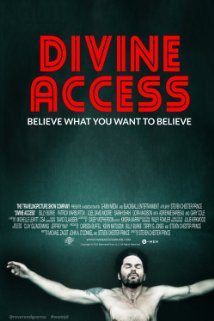
divine access Greetings again from the darkness. Meet Jack. Thanks to a mother who dragged him around as a kid to a stream of religious events and retreats, he has grown into an adult who has vast knowledge about various religions and approaches to spirituality. Yet, despite this, he is a slacker and self-anointed underachiever … a man living the simple life of fishing, drinking beer and morning skinny dips in the lake.

As a favor to his friend Bob (Patrick Warburton), Jack (Billy Burke) agrees to appear on a cable access show. It turns out Bob wants Jack to humiliate the current host … Reverend Guy Roy Davis (Gary Cole). The stunt works sending Guy Roy off the deep end, and turning Jack into an oddball spiritual leader.

The film balances some extremely funny segments and moments with the drama that typically accompanies anything religious. As the film points out, a great many people are looking for something to believe in. Jack’s simple talks revolve around philosophical bits such as: Believe you are loved. Why are you certain you are right and other are wrong? Tell your story and listen to others tell theirs.

When Jack hits the road to give his talks across Texas, he undergoes a personal transformation that is tied to Marian (Sarah Shahi) who he can’t quite figure out whether she is real or a vision. His travel buddies include Nigel (Joel David Moore) and Amber (Dora Madison Burge). The interaction between these three characters makes for the best scenes in the film.

The casting and acting is superb. Gary Cole is both painful and hilarious to watch as Guy Roy, a man committed to spreading the gospel through his ventriloquism with a creepy “Mini Jesus” doll. Sarah Shahi brings the necessary level of mysticism to her role, and Adrienne Barbeau is spot on as Jack’s mom. Patrick Warburton delivers his deadpan one-liners with aplomb, while Joel David Moore and Dora Madison Burge make for a quirky couple of passengers on the road trip. Even the multi-talented Turk Pipkin has a cameo as the leader of the Esoteric Fellowship. But it’s Billy Burke who owns the movie as the reluctant spiritual leader who is fighting his own transformation. Burke delivers a subtle and nuanced performance while also being downright cynical and funny.

The religious overtones are pretty clear with Jesus, Matthew the Apostle, and Mary Magdalene, but that should in no way lead you to believe this is one of those sneaky Christian message movies. Actually, director Steven Chester Prince and his three co-writers do a nice job at asking “Is everyone doing the best they can?” and “Do you believe what you say?” The message seems to be that we all have doubts, but it’s best to start with yourself before you start trying to fix others.

MOST LIKELY TO SUCCEED (documentary)

most likely Greetings again from the darkness. When people discuss the U.S. public education system, most agree (at least to a certain degree) that it’s broken. The impassioned and creative debates occur over how best to “fix” it. The ideas are infinite, but as with any problem in need of a solution, it’s wise to consider the desired end result.  What do we need and expect of our education system?  And who is “we” in that question?  Are we satisfying societal needs or those of the individual … and who decides?

It is not feasible to expect an 86 minute documentary to answer all of these questions and solve one of the biggest issues facing society, but skilled documentarian Greg Whiteley does his best to advance the conversation. “Teach to the test” is the widely accepted curriculum these days, and it’s defined as daily lessons and assignments structured to prepare each student for the standardized tests utilized for determining a student’s knowledge base, grading teacher effectiveness, ranking schools and school districts, and of course, determining the acceptability of certain students at particular colleges.

With a basic structure that has not changed in 124 years, it seems clear that our education system is not properly preparing students for a world that has changed drastically in the past 3 decades. Many make the argument that the future success of students will be determined by what are called “soft skills”: confidence, ability to collaborate, creativity, time management, critical thinking, and decision making. There are interviews from managers at Google and Khan Academy stressing that these are the skills they already seek in new hires.

There are defenders of the current system. They claim it’s all part of the game we play, and that students must survive the grind … just as their parents and their grandparents did. Opponents say students are being treated as data points, not people or future contributors. Whiteley takes us inside of High Tech High in San Diego. It’s an experimental campus committed to finding new ways to teach, so that students learn and retain and accomplish. One of their most impactful evaluation points come from group projects that are presented to faculty, parents and the community. It’s fascinating to watch the students work towards their goal, and equally interesting to hear the parents talk about personal growth of the students.

Whiteley includes the spot on quote from John Dewey: “If we teach today’s students as we taught yesterday’s, we rob them of tomorrow”. Though the film doesn’t touch on the highly charged political landscape or the importance of teacher education and preparation, it is quite effective in generating thought and discussion about what responsibility we have towards students, and how we can improve the odds that they will grow into contributing members of society. For more information on the film, or to schedule a screening at your school or organization, go to www.mltsfilm.org

THE WOLFPACK (documentary)

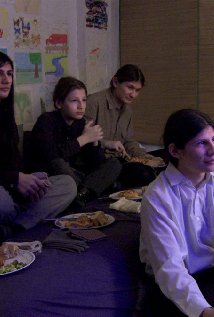
wolfpack Greetings again from the darkness. In what is one of the oddest real life stories I have ever seen, director Crystal Moselle takes her camera inside the Lower East Side apartment of the Angulo family – 6 brothers, one sister, and their parents. In their spare time, the kids re-enact movies within the apartment using elaborate costumes, sets and props. And no, that’s not the odd part.

Despite being mostly teenagers, these siblings have only left their apartment a few times in their life – a very few times … maybe once or twice a year, and not at all one year. They have been home schooled by their mother and are quite charming and articulate, despite the quasi-prison environment. The kids are not abused in the physical sense, but an argument can be made that mental anguish is in play here.

Their movie scenes are fun to watch, especially given their Tarantino leanings with Reservoir Dogs and Pulp Fiction. Ms. Moselle manages to capture a significant amount within the confines of the apartment. Her interviews with the boys are enlightening, but it’s the mother that provides the most context. Her regrets and dashed dreams for her kids cause her much pain, and it’s quite clear that the dad has some type of psychological vice grip on the family. The dad raises some eyebrows when he states “My power is influencing people”. As viewers, we don’t see this, but there is physical proof to his claim.

With no shortage of powerful moments, there are still two that jump off the screen. The first occurs as the boys head out on their own to watch their first movie in a real theatre, and then have such a fan boy moment after watching The Fighter. The second involves the mom having a conversation with her mother after not speaking for more than two decades. It’s an emotional moment.

We can’t help but like the boys and pull for them to find some normalcy outside the walls of the apartment. Their final film project needs no additional commentary as the lead character watches various emotions travel past his window … fitting since a NYC apartment window provided this family its only glances at the real world for so many years.


DIFF 2015 – Day 3

April 13, 2015


DALLAS INTERNATIONAL FILM FESTIVAL

Day 3 – Sunday April 12

Below is a recap of films I watched on Day 3:


CARTEL LAND (2015, doc)

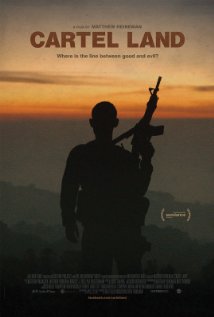
cartel land Greetings again from the darkness. Even in this digital age where information exists from all sides of a conflict … often with corresponding video, the general public somehow remains complacent to issues that don’t directly and obviously affect their lifestyle. Skilled documentarian Matthew Heineman ignores the rhetoric of political speeches and plops the war against drug cartels right into our lap.

This is a different approach to a topic with which we are all at least somewhat familiar. The involved parties include the affected communities (in Mexico and Arizona), the governments and affiliated agencies (DEA, Border Patrol), the ever-expanding vigilante groups of citizens (Arizona Border Recon, AutoDefensas), and of course the cartels (focus on Knights Templar).

Intimacy is the key here, as Mr. Heineman takes us inside these groups with an up-close look at leaders. Especially fascinating is Dr. Mireles who is the face of the AutoDefensas – a group he pledges will protect communities from the cartels, who clearly have no regard for human life. The film doesn’t shy away from the expected issues: citizen pushback, greed, abuse of power, and corruption. As AutoDefensas teams with the Mexican government to create the Rural Defense Force, we can’t help but wonder if the rumors of differing goals are at play in the drug battles. Citizens want safety, but what is it that the government wants? Is the goal drug-free streets or is it a cut of the action.

Learning how desperate the vigilantes are to protect their homes, turf and way of life, we are left with little doubt of their mission. It’s everyone else that we must keep questioning and holding accountable. This is not an easy documentary to watch, but it’s necessary if you have previously lost interest as the next politician proclaims he will continue “the war on drugs”.

ASCO (2015)

Greetings again from the darkness. A broken heart is one of most powerful triggers of human emotion. Clarity of thought is often lacking during this period, and mental images explode as a rational reaction is rarely able to break through the swirling alternatives.

Brazilian writer/director Alexandre Paschoalini presents the story of broken-hearted Ela (Sol Faganello) in expressionistic hyper-kinetic Black and White mode. After Ele (Guto Nogueira) crushes his emotions and attempt at connection, he begins a psychotic mission with the goal of causing her to feel the same pain that her actions brought to him.

Many of Ela’s actions are outside the boundaries of the law, but he will not be deterred. Ele’s shock of white hair adds a visual that perfectly contrasts with Ela’s dark and brooding features and moods. White hat vs Black hat – only no one told the white hat that she was in a demented duel.

With almost no dialogue, the story is told through both stark and outlandish visuals, and is often accompanied by music that harkens to 1960’s era rock music. A masked woman and a faceless man ensure that we understand just how removed from rational thought that Ela has become. It’s quite a build up with a startling climax that features a terrific last line … explaining all.

LADYGREY (2015)

Greetings again from the darkness. Alain Choquart has had a long and successful career as a top cinematographer, and though this is his first feature film as director, his eye with a camera is obvious in just how beautifully this film is shot.

Filmed and set in post-apartheid South Africa, this little village has an undercurrent of secrecy and misery. We realize that some tragic event has engulfed the citizens with a bleak perspective, and each day seems pretty much as dark as the last. Slow-witted Mattis (Jeremie Renier) brings tremendous energy and spirit to an otherwise downbeat environment. Sadly Mattis fluctuates between ecstasy, frustration and outright anger … each shift seemingly occurring over the smallest detail.

The synergy between characters played by Liam Cunningham, Emily Mortimer, Peter Sarsgaard and Sibongile Mlambo is so uncomfortable that we never know what form the next round of broken trust will take. These are not happy people and none of the relationships even border on healthy.

The beautiful Green River plays a vital role in the story, both as a carrier of secrets and a vision of hope, and the torrential rain storms tend to bring about the next infusion of misery. The excellent cast does their best to overcome a lacking script, but mostly the film is more enjoyable to look at than actually watch.


DIFF 2015 – Day 2

April 12, 2015


DALLAS INTERNATIONAL FILM FESTIVAL

Day 2 – Saturday April 11

Below is my recap of the three films I caught on Day 2 of this year’s festival:


THE AMINA PROFILE (2015, doc)

DIFF 2015

Social Media has changed so much about society: how information is dispersed, how we present ourselves, how we argue points of view, and even how relationships are structured. This documentary from Sophie Deraspe explores each of these points by dissecting a real world chain of events.

With events taking place during Syria’s Arab Spring of 2011, Amina Arraf started a blog entitled “A Gay Girl in Demascus”, where she wrote about both the dangers of being a lesbian in Syria, and the larger societal issues being faced by the populace living in the shadows of a dominating government regime. Her brave words garnered many followers, while also instigating an online romance with Sandra from Canada.

A few months later, Amina’s blog entries suddenly halt and the concern from Sandra and other readers spreads to international media outlets. Ms. Deraspe offers an interesting blend of styles in her approach. On one hand, some of the first images we see come across as a deep artsy film; and then next thing we are getting is talking head interviews with reporters and other concerned followers mixed with actual TV newscasts from the period.

In order to avoid any spoilers, suffice to say that the story comes in two distinct parts. The second half provides some fascinating psychological studies in regards to trust and narcissism, while also forcing us to further question the complacency of news outlets in this new age of readily available information. As the proverbial onion layers are peeled back, we can’t help but wonder who can be trusted and what steps are sufficient for verification.

Probably the biggest takeaway stems from the realization of just how easily we are manipulated and distracted by media outlets who determine what is “news” (what brings ratings) and what can be overlooked … the often more serious topics such as the Syrians who are still “dying in the dark”. This excellent documentary will provide no shortage of material for discussion and soul-searching.


THUNDER BROKE THE HEAVENS (2015)

DIFF 2015

thunder Very few things in life bother me more than seeing kids mistreated. It seems so simple: if we want productive caring adults, it’s our responsibility to raise, train, and treat kids accordingly.

In writer/director Tim Skousen’s film, 13 year old Sam (Alexandra Peters) and her 6 year old brother William Paul (Gavin Howe) manage to escape an unthinkable and violent family tragedy that leaves them without parents. This of course leads to foster parents, and though we have seen worse, it’s clear that Sam and William Paul are viewed as little more than a paycheck in their new home. The two kids are never allowed to work through their devastating loss, and instead cling to each other for security.

In fear of being split from her brother and suffering another unbearable loss, Sam takes charge and leads her brother into the woods where she believes she can take care of him and protect him. As smart as she is, 13 year olds have limited survival skills and soon enough the siblings are in need of food and medicine. They cross paths with an understanding bar owner played by Tom Nowicki, and his kindness can be questioned by viewers – is he doing the right thing?

The spirit of the story is alive in each scene thanks to a remarkable performance from Alexandra Peters as Sam. She is stunning in the strength and vulnerability she displays, while also maintaining a childlike curiosity that perfectly captures the notion that every child “deserves a life”. Mr. Skousen has a keen eye for camera work, and it’s especially effective during the Thanksgiving Day in-home tragedy.  And with his heavenly approach to good (and never ending) parenting, it’s a reminder for us to constantly ask if we as parents are making things better or worse for kids.


SHE’S THE BEST THING IN IT (2015, doc)

DIFF 2015

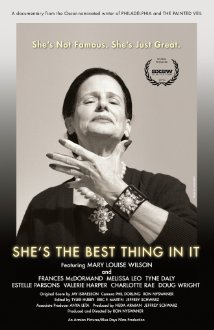
shes the best thing If you follow the live theatre, you are likely familiar with Tony winner Mary Louise Wilson. Everyone else will likely recognize her face (not her name) from various TV and movie appearances – ranging from “One Day at a Time” to Nebraska (2013). Ms. Wilson is one of the very few who have enjoyed a fifty plus year career as a character actor. Her own differentiation between a star and an actor: Stars are themselves playing others, while character actors disappear into the role. For her, this is heart of acting.

Director Ron Nyswaner is a well known writer (Philadelphia, The Painted Veil), and this is his first documentary. It would be incorrect to label this as a biopic. Though Ms. Wilson is the main focus of the project, it seems more accurate to call this a portrait of acting … especially female actors. How and why do actors do what they do? What makes them keep going? Mr. Nyswaner admitted during the Q&A that he “loves” and appreciates actors … not something we always hear from writers.

The cameras follow Ms. Wilson to her first teaching gig in New Orleans (where she was raised). Watching this energetic and passionate octogenarian work so hard to connect with a class of twenty year olds is intriguing, and as frustrating at times for the viewer as it is for her pupils. They struggle to comprehend her directions and critiques, as do we. She brings her 50 years experience and the knowledge of her legendary acting mentor Sanford Meisner to a group who mostly seem more in love with the idea of stardom, rather than a desire to develop a craft.

The real insight here comes courtesy of interviews with such actresses as Tyne Daly, Frances McDormand, Valerie Harper, Estelle Parson, and Melissa Leo. These extremely successful people come clean on the hard work, dedication, insecurities and the pain (“That’s the point” according to Ms. McDormand). Though they touch on the topic, I was anxious for more discussion on the challenges women face in the industry. One thing was clear for each … they LOVE acting.

Another enjoyable piece revolves around the reuniting of Ms. Wilson with her sister, a local playhouse actress herself. The two ladies reminisce about their childhood, and what motivated them to escape into “play pretend”. They both agree that being peculiar and feeling inadequate provided the natural desire to escape into roles.

This is one of the best looks at acting that you will find. The struggles, the motivation, the ups and downs, are all captured here in a perfectly titled film.


DIFF 2015 – Day 1

April 11, 2015


DALLAS INTERNATIONAL FILM FESTIVAL 2015

Day 1 – Friday April 10

I missed the Opening Night Gala at the Majestic Theatre last night, but took in three films on the first full day of this year’s festival.

Below is the day’s recap, and a reminder that I seek out the deep cut indies and documentaries that may or may not gain mass market distribution.


RED ON YELLA, KILL A FELLA (2015)

DIFF – Texas film series

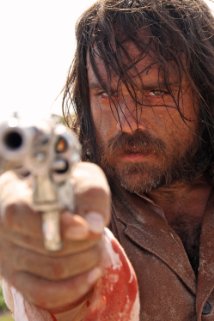
Red on yella Co-writers and co-directors Duane Graves (from San Antonio) and Justin Meeks manage to hit all extremes with comedy, violence and drama as they trek across some of the roughest Texas terrain. Tongue-in-cheek westerns are rare, and this one never falls into true parody, but instead uses hyper-dramatic music and dialogue delivery to balance the gun play and hardened outlaw activities.

Mr. Meeks also stars as Claude “Sweet Tooth” Barbee, who is leading his band of outlaws across Texas in an attempt to re-claim the gold from a previously botched train robbery. The character name is from a real life outlaw and the actions are loosely based on real life train robber Sam Bass. Meeks is clearly having a ball playing the type of colorful bad guy that actors dream about.

Screen veteran Pepe Serna has a brief but memorable role, and one that is crucial to story development. He too, seems to relish the chance to play a nasty guy. The rest of the cast, many of whom were present at the screening, all seem to have bought into the vision … whether their character is quickly filled with lead or manages to eke out a line or two or three. Every movie lover will quickly recognize the actor playing the Doc as Michael Berryman from The Hills Have Eyes (1972).

The ringing of a bell, a young ventriloquist, twins, prairie land nightmares, a hooker with an ulterior motive, and family revenge all play a role as this group of outlaws is hunted by more than just the Sheriff as they make their way to the coast. With unusual lines of dialogue such as “Shut that puppet up”, and a misleading sign that reads “Lodgers Welcome”, Graves and Meeks deliver an unusual look at the old west and those that inhabited this rugged land.


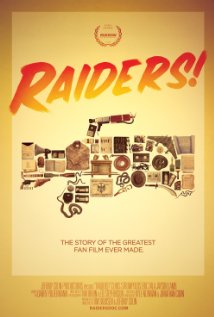
RAIDERS! THE STORY OF THE GREATEST FAN FILM EVER MADE (2015, doc)

DIFF 2015

raiders! Most documentaries are pretty simple to recap: A filmmaker makes a movie about a topic or person. However, simplicity just doesn’t fit here. Filmmakers Jeremy Coon and Tim Skousen made a movie about the making of a movie that is a movie re-made in honor of a movie that was already made.  This isn’t Coppola’s Hearts of Darkness which portrays his difficulty in making Apocalypse Now. Far from it. This is a modern day look back at two/three geeky eleven year old boys making a shot-for-shot remake of Steven Spielberg’s classic Raiders of the Lost Ark.

Coon and Skousen catch up with forty-somethings Eric Zala, Chris Strompolos and Jayson Lamb as they are trying to put together the financing and logistics to film the final scene of their unfinished movie Raiders of the Lost Ark: The Adaptation. These are the same boy that started the process in 1982 and filmed each of the next seven summers until they graduated from high school.

If you are a total film geek, you have probably heard of their film and know that it has been an underground film favorite for years. But you may not know the real life details behind it and certainly not the modern day drama of Eric and Chris as they try to complete it. How about some interviews with their mothers? How about the real world possibility that Eric risks losing his job to complete this thirty plus year old kid’s summer project? How about the personal struggles of Chris over the years, or the fallout with Jayson as he is left out of this final chapter?

Director Eli Roth was instrumental in spreading the word of this film project throughout Hollywood, and the boys even got invited to meet with Spielberg. Mostly we are left with the fascination that young boys can have such passion and persistence over so many years. When asked about whether they missed out on their childhood, Chris responds “We filmed childhood”. A true and fitting response, that doesn’t tell the whole story. Fortunately, Coon and Skousen do.


THIS ISN’T FUNNY (2015)

DIFF 2015

Yes, it is funny. And it’s also not funny. This little relationship gem breaks down into 3 chapters … conveniently and obviously noted with title placards: Before, Together, After.

The story follows Juice Bar manager Jamie and stand-up comedian Eliot as their worlds literally collide in a chance meeting that doesn’t, on the surface, set the stage for love ever after. Director and co-writer Paul Ashton plays Jamie and co-writer Katie Page plays Eliot, and their natural onscreen rapport comes courtesy of their real life relationship (as they disclosed in the post screen Q&A).

Don’t mistake this for some simple rom-com. There is a lot going on here and it swirls around not just their budding romance, but also their individual lives. It’s very interesting how the story offers commentary on such topics as how young adults still use their parents as an excuse for their own lack of career success and/or happiness. In an interesting twist, it also allows us to view those same parents (including Mimi Rogers and David Pasquesi) as real people with their own issues, rather than just a drag on the “kids”. And speaking of parenting, Jamie and Eliot go through some rather unique soul-searching on the topic.

If that’s still not enough subject matter for you, we also witness Eliot’s struggles with anxiety. Her trips to a therapist are a battleground for medication levels – Eliot wants to be free of them, and wonders if they are a crutch or actually help. No judgments here, just wonderful material for further discussion.

On top of all that, we are treated to some sterling stand-up from Beth Stelling and Ahmed Bharoocha who are both extraordinarily talented comics. Plus Ms. Page more than holds her own at the microphone, as she brings Eliot’s personal life (and poor Jamie’s mishaps) to her material.  You should also be prepared for the most outrageous performance of Anthony LaPaglia’s career. He’s a riot.

It’s a joy to see an indie with such depth, insight and commentary on what relationships are like in today’s ever-changing world.


BROKEN HORSES (2015)

April 9, 2015

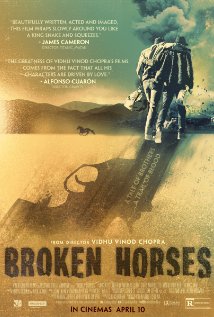
broken horses Greetings again from the darkness. The old adage “blood is thicker than water” has always been fruitful movie fodder. Writer/director Vidhu Vinod Chopra takes the theme to a small, dusty town on the Mexico border. He introduces us to the sons of the local sheriff … Buddy is the slow-witted eldest and Jakey the bespectacled musical prodigy.

Buddy is flashing his dead-eye aim at the shooting range when his father (Thomas Jane) is murdered right in front of him. Local mobster Mr. Hench (Vincent D’Onofrio) seizes the opportunity to utilize young Buddy’s need for revenge. Jump ahead 15 years, and Jakey (Anton Yelchen, Star Trek) is engaged to Vittoria (Maria Valverde) and living in New York City as a classical violinist. Things get interesting when Buddy (Chris Marquette) entices Jakey to come visit after being away for eight years.

Jake isn’t in town very long before he fully understands that Hench has a grip on Buddy, who is now a full-fledged hitman (in a Rainman kind of way) engulfed in the various border gang wars. Here is where the brotherly bond kicks in. Watching it play out against the manipulative power of Hench provides the meatiest conflict within the film. The brothers admit to living on “different planets”, but it’s clear that their traumatic childhood has connected them in a manner that time and distance can’t break … even though one of them more readily identifies “bad men”.

Sean Patrick Flanery (Boondock Saints) has an odd, but hyper-energetic small role, but most of the screen time is taken by D’Onofrio, Yelchin and Marquette. A better written role for Ms. Valverde would have been advantageous, but mostly this is a solid little crime drama with an emphasis on brotherly bond.

watch the trailer: