Greetings again from the darkness. The 1970’s brought a wave of new filmmakers who not only changed the way films were made, but also the type and style of stories for the big screen. Due to the abundance of interesting movies from this era, it’s easy to see how, over time, a few gems can slip and fall into the ‘forgotten’ category. One of these is this personal favorite from the infamous writer/director Michael Cimino, who passed away just a couple of months ago (July 2016).
The opening shot has a car in the distance kicking up dust on a country road as it approaches a small rural church seemingly plopped in the middle of pasture. Once parked, the driver of the car steps inside the church and begins spraying bullets throughout the intimate wooden structure – his target being a bespectacled slow talking preacher played by Clint Eastwood who ducks out a side door.
As you might guess, John Doherty, nicknamed The Thunderbolt, (Eastwood’s character) is no real preacher. The man shooting at him is one of his old partners in crime, and he’s seeking revenge on Doherty for stealing the gang’s money from their last job. While Eastwood is dodging bullets in the pasture, a young wise-cracking Jeff Bridges is stealing a car from a local dealership. In short order Bridges (Lightfoot) has run over the guy shooting at Eastwood, and Clint is hanging onto the car for dear life as Bridges speeds off. And that’s how this inauspicious titular partnership begins.
What follows is a blend of buddy flick, road trip and heist movie. It’s spiced up with Thunderbolt’s other partners (played by George Kennedy and Geoffrey Lewis) first chasing them down, and then reluctantly agreeing to partner up again to repeat their previous robbery. In the process, we travel through Hell’s Canyon along the Snake River in Idaho and listen to a lot of tough talk between the four key players. Kennedy’s character is especially hard on the young Bridges, and that’s what kicks off the pseudo father-son relationship at the core of the film – tough guy and loner Thunderbolt genuinely grows to like the fast-talking Lightfoot, who manages to quell a bit of Thunderbolt’s world weary bitterness.
The dialogue is filled with put-downs, smack-downs and threats, and is accompanied by some unusual visuals. In addition to the stunning countryside, seeing Kennedy and Lewis co-occupy a small ice cream truck is itself entirely worth the effort of tracking this one down. But that’s not all … how about Jeff Bridges in full dress, wig, heels and make-up? It’s all for his part in the heist, but it certainly nails down the closeness of he and Eastwood and they hide as a couple at a drive-in movie theatre … that is, until they are forced into a high-speed chase scene over the familiar speed humps that anyone from the drive-in era will recall. We also get the colorful wardrobe – Eastwood and Bridges spend much of the film in disco-type clothes stolen from the back of a car. Other standout visual moments include a woman on a motorcycle using a hammer to pound on Bridges’ van while both are driving over a bridge; comedian Don Rickles on TV; and a woman exposing herself to Bridges through a sliding glass door as he works his manual labor job.
These fabulous moments all fit perfectly into 1970’s cinema and are courtesy of the terrific cast, as well as the vision of writer/director Michael Cimino in his first feature film. Cimino’s story is the ultimate fall-from-grace. As a Yale graduate, he became a Madison Avenue advertising star with his unique and creative TV commercials. His script polishing of Magnum Force (the second Dirty Harry movie) so impressed Eastwood, that it led to the two collaborating on Thunderbolt and Lightfoot. With the success of this first film, Cimino moved on to the Vietnam picture The Deer Hunter, released in 1978. That film won 4 Oscars including Best Picture and Best Director (for Cimino). This propelled him to the top of the Hollywood mountain, and the rare opportunity for full control of his next project. The result was the legendary critical and box office flop Heaven’s Gate. It’s the flop by which all others are measured, and very nearly destroyed United Artists (a studio founded in 1919 by Mary Pickford, Charlie Chaplin, Douglas Fairbanks and DW Griffith). Cimino’s reputation and career never fully recovered and though he only made five more films, he did write two successful novels. Upon hearing of his passing, many of those he worked with had nothing but praise for Cimino as a writer, director and artist … especially Eastwood and Robert DeNiro.
Even casual movie watchers are somewhat familiar with the long (more than 60 years) and decorated career of Clint Eastwood. His impact on the entertainment world has come via acting, writing, directing, producing and composing. He has won four Oscars (two each for Million Dollar Baby and Unforgiven), while being nominated eleven times. His last acting role was Trouble with the Curve (2012), but he continues to direct films … including the recently released Sully, with Tom Hanks playing Captain Chesley Sullenberger who piloted the “miracle on the Hudson”. Eastwood’s big break came with the TV show “Rawhide”, which led to the spaghetti westerns of the 1960’s, and then to the 1970’s-80’s tough guy and action star Dirty Harry, before mixing in action/comedy with Every Which Way But Loose (1978) and the like. Although he continued to act, it seemed Eastwood’s passion lay behind the camera, where he has been able to make the films he wanted and include some of his personal views (not always popular with the Hollywood elite). Given the two high profile lawsuits, he probably wishes he had never met Sondra Locke, but Eastwood’s influence and legacy stretches across decades and multiple genres in the movie world.
In 1974, Jeff Bridges was still known mostly as the son of Lloyd Bridges, though he had also made a name for himself with a Best Supporting Oscar nomination for The Last Picture Show (McMurtry, Bogdanovich, 1971). As Lightfoot, Bridges dons leather pants and a brash attitude while flaunting his acting style of just making everything look so darn easy … and receiving another Best Supporting Oscar nomination. Since then, Bridges has received Oscar nominations for Starman (1984), The Contender (2001), True Grit (2010) and of course for his Oscar winning performance in Crazy Heart (2009). Beyond these, Bridges has brought life to some incredibly unique and interesting characters: Kevin Flynn/Clu in Tron (1982), former NFL’er Terry Brogan in Against All Odds (1984), Preston Tucker in the underrated Tucker: The Man and his Dream (1988), with brother Beau in The Fabulous Baker Boys (1989), another lost gem The Fischer King (1991), the “highly” popular Dude in The Big Lebowski (1998), the suspicious neighbor in Arlington Road (1999), Tony Stark’s nemesis Obadiah Stone in Iron Man (2008), and most recently as the retiring Texas Ranger in Hell or High Water … one of the best films of 2016. And yes, he did appear in Cimino’s Heaven’s Gate.
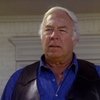 In addition to Eastwood and Bridges, another key to why the film works is the presence of George Kennedy as Red, the grumpy, burly, hayfever-stricken guy who trusts no one. Prior to acting, Kennedy served under General George S Patton and was awarded 2 bronze stars. Like Eastwood, he broke in during the era of Westerns and moved on to tough guy roles in the 1960’s. The difference, of course, was that Eastwood was one of the biggest movie stars on the planet, while Kennedy was simply one of the best character actors in Hollywood history. He won a Best Supporting Oscar for his memorable work opposite Paul Newman in Cool Hand Luke (1967). In the 1970’s Kennedy appeared in the popular disaster films (the “Airport” franchise, Earthquake, etc), before turning his career on its ear by jumping into the Naked Gun spoof films. Never one to shy away from work, whether TV or movies, Kennedy appeared in 74 episodes (1988-91) of the immensely popular TV series “Dallas”. His role of Carter McKay breathed new life into the series. As a rancher/oilman from Colorado who bought a ranch from viewer favorite Ray Krebbs, Kennedy’s McKay became the ultimate nemesis for J.R. Ewing. Watching Kennedy and Larry Hagman go head-to-head was some of the best TV viewers could ask for. In fact it was Kennedy’s character who tricked J.R. into losing control of Ewing Oil. Kennedy also appeared in the two CBS “Dallas” movies that followed the end of the series. His final role was that of Mark Wahlberg’s grandfather in The Gambler (2014). Mr. Kennedy died in February 2016 at the age of 91, after more than 50 years of acting and nearly 200 screen credits. Fans of his work may remember his often gruff persona, but those who worked with him claim Kennedy was just about the nicest guy they had known.
The fourth cog in this Thunderbolt and Lightfoot wheel was Eddie played by familiar face Geoffrey Lewis. In the film, he was the good-hearted guy who seemed to be out of place, which allowed for the perfect contrast with hard-nosed George Kennedy. Mr. Lewis appeared in many movies with Clint Eastwood, and TV audiences may remember his as part of the series “Flo” (1980). Lewis, who is the father of actress Juliette Lewis, died in 2015 after more than 200 acting roles … including Heaven’s Gate.
The rest of Cimino’s first film is literally filled with one scene appearances by faces we either recognized at the time, or would come to know very well in the near future. These include: a 20 year old Catherine Bach, known also as Daisy Duke in “The Dukes of Hazzard”; Gary Busey in a quick scene with Bridges; Burton Gilliam of Blazing Saddles fames; Dub Taylor (appeared in multiple films by both Sam Peckinpah and Robert Zemekis) is the gas station attendant who rants about US economics; Bill McKinney (much too memorable in Deliverance, numerous films with Eastwood) is the crazy driver who, along with his pooping raccoon, picks up a hitchhiking Eastwood and Bridges; Claudia Lennear (the inspiration for The Rolling Stones “Brown Sugar”, part of Twenty Feet from Stardom) is the secretary who asks Eastwood for his social security number; Jack Dodson (Howard Sprague on “The Andy Griffith Show”) plays the vault manager and home invasion victim; Roy Jenson (in Chinatown, he’s the guy holding Nicholson when Polanski slices his nose) is Dunlop, the early church shooter; Gregory Walcott (Plan 9 From Outer Space) is the car salesman who Bridges dupes; Scott Eastwood (Clint’s kid) is the 5 year old boy at the ice cream truck; and Vic Tayback and Beth Howland, known for their work as Mel and Vera on “Alice”. Should you need more, that’s Paul Williams singing the theme song (that he wrote).
Admittedly, Michael Cimino’s directorial debut Thunderbolt and Lightfoot does not rank among the best of the truly great films released during the 1970’s: The Godfather I and II, Jaws, Chinatown, Taxi Driver, All the President’s Men, Annie Hall, One Flew Over the Cuckoo’s Nest, Star Wars … just to name a few. However, it does belong on a list of forgotten gems – movies from the 1970’s that are still worth watching today. Where else can you watch Clint Eastwood preaching the gospel or George Kennedy bullying Jeff Bridges?
***This is part of the “Darlin’ Dallas Blogathan” running September 21-23, 2016 at https://weegiemidget.wordpress.com/

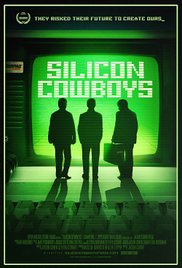 Greetings again from the darkness. After countless projects spotlighting Steve Jobs and Apple, it’s about time the tech-nerdy Texas entrepreneurs behind Compaq get their moment on the silver screen. Filmmaker Jason Cohen turns his camera on Rod Canion, Bill Murto, and Jim Harris … none who have the persona or magnetism of Mr. Jobs … and tells the story of how they took on Goliath IBM at a time when most wouldn’t dare.


 Posted by David Ferguson