NO SMALL MATTER (2020, doc)

March 26, 2020

 Greetings again from the darkness. Perpetuating the species is one goal, but improving the species … specifically, improving the possibilities for each child … is truly a worthwhile pursuit. The research is presented, and the film is co-directed by Danny Alpert, Greg Jacobs, and Jon Siskel (Gene’s son). We are told “Beginnings matter”, and then we are shown why and how.

Birth to age 5 is critical for what is called “the Learning Brain.” Unfortunately, in today’s society, fewer parents are spending a significant amount of time with their youngsters. We are told that in the U.S., 11 million kids under age 5 are spending greater than 50% of waking hours with someone other than their own parents. Daycares and pre-schools have become the most important link in the early brain development of these young kids. And because of that, the high income versus low income gap is creating vastly different results for the age group. Higher income tends to offer better options for early development, and statistics show these kids hear and learn more words, and visit more libraries and museums. We are informed that in 28 states, daycare costs are now greater than public college tuition.

Research and input is offered by Professors, researchers and children educators. We follow one particularly enthusiastic pre-school teacher who is clearly very talented, but due to low salary (she has a second job bartending), she decides to head back to graduate school. It turns out the challenges at this younger level are the same faced throughout the education system. Teachers are underpaid and overworked, and it’s the students who suffer. However, unlike older ages, this younger age group isn’t yet capable of taking on more learning opportunities on their own. They require assistance.

The Abecedarian Project in Chapel Hill, North Carolina and the Avance group in Waco, Texas are highlighted as organizations working to provide assistance to those at risk of not being able to provide adequate early childhood learning opportunities. We also see the military’s approach of “Investing in Quality” so that the kids of military families have stimulating learning programs. Educators stress the importance of ‘executive function’ – the learned skill of kids being able to pay attention and cooperate in a classroom environment. It’s not all about reading and writing. The need goes deeper. The film does a nice job of presenting information most of us are aware of, in a way that makes the solutions clear and importance known. The idea of referring to this as ‘brain building’ rather than ‘babysitting’ makes a lot of sense. Not investing in our kids from day one means we are choosing perpetuation over than improvement.

watch the trailer:


LOST GIRLS (2020)

March 25, 2020

 Greetings again from the darkness. The Long Island serial killer is a famous unsolved case, yet very few filmmakers would take on a true murder mystery that has no ending (The Boston Strangler and Zodiac excepted). Liz Garbus long ago established herself as an expert documentarian, and has earned Oscar nominations (WHAT HAPPENED, MISS SIMONE? 2015; THE FARM: ANGOLA, USA 1998). My guess is she was initially attracted to this story as a documentary, but transitioned to her first narrative feature out of necessity. Working from the book by Robert Kolker and a screenplay from Michael Werwie (EXTREMELY WICKED, SHOCKINGLY EVIL AND VILE, 2019), Ms. Garbus and her talented cast offer up a different viewpoint of the crimes … the viewpoint of a mother who refuses to give up her daughter a second time.

Amy Ryan (Oscar nominated for GONE BABY GONE, 2007) gives a fierce and compelling performance as Mari Gilbert. Mari is a struggling single mom holding down two jobs – one as a construction worker, and one in a local diner. She is raising two daughters: Sherri (rising star Thomasin McKenzie, JOJO RABBIT, 2019) and Sarra (Oona Laurence, THE BEGUILED, 2017). Mari takes a phone call from her eldest daughter Shannan, expressing delight that the girl will visit for dinner, and with little hesitation, asks her daughter for some money to fill the gap left by reduced work hours.

Shannan never shows up, and a mysterious phone call the next morning sends Mari and her daughters into investigative mode. Daughter Sherri uncovers the secrets her mom has been keeping from her, while at the same time watching her mom tear into the cops for their apparent lack of interest in finding Shannan. Dean Winters (“Mayhem” from the insurance commercials) plays Detective Bostick, who barely hides his contempt for Mari and her missing ‘prostitute’ daughter. Police Commissioner Dormer (Gabriel Byrne) deals directly with Mari, and bears the brunt of her aggressive fight to keep her daughter’s case from fading.

Mari is wrestling with her own emotions regarding Shannan, and it’s really daughter Sherri (Ms. McKenzie) who becomes the most interesting character in the saga. Other key players are Kevin Corrigan as conspiracy theorist Joe Salise, Reed Birney as creepy Dr. Peter Hackett, and Lola Kirke (daughter of Bad Company drummer Simon Kirke, and GONE GIRL) as Kim, the sister of one of the missing sex workers. With Mari pushing the cops, four bodies are discovered near a wealthy gated community called Oak Beach. There is a tremendous sequence involving 911 calls, and it plays right into the debate of whether this was incompetent police work or a cover-up. The lack of interest regarding missing girls seems to make it clear that the cops were hardly motivated to find the sex workers, and when Mari reminds them that these are daughters and sisters, it’s a powerful moment.

Director Garbus includes some actual news clips, and at the film’s conclusion we see a 2016 press conference with the real Mari Gilbert. Shannan disappeared in 2010, and 10-16 bodies have since been attributed to the Long Island serial killer – though the cases have never been solved. As a police procedural, the film has far too many gaps and skims over details and evidence. However, as a personal drama and commentary on police attitudes, it succeeds.

The film is now available on Netflix.

watch the trailer:


BLOW THE MAN DOWN (2020)

March 20, 2020

 Greetings again from the darkness. Who better to sing the title song than Gloucester, Massachusetts singer David Coffin … while wearing the attire of the local fishermen of fictional Easter Cove, Maine? Mr. Coffin’s rich vocals (and face) pop up periodically throughout the film and provide an unusual bit of story structure to the feature film debut of co-writers and co-directors Bridget Savage Cole and Danielle Krudy. It’s a nifty little indie film that’s fun to watch, despite some gaps in the storytelling that keep it from ‘what could have been.’

Sophie Lowe and Morgan Saylor star as the Connolly sisters, Priscilla and Mary Beth. Their mother Mary Margaret Connolly has just died, and it appears they may lose their family home as well as the family business – a local fish market. Priscilla is the reserved, level-headed one, while Mary Beth (who put off college for a year) is impulsive and reactionary. A poor decision made while drinking with bad boy Gorski (Ebon Moss-Bachrach) leads to a violent confrontation involving a harpoon, a brick and cole slaw. Well, technically the cole slaw comes in during the clean-up being orchestrated by Priscilla.

There are some Coen Brothers and neo-noir elements at play here, which, along with the intriguing small town characters keeps us connected to the story and wondering how things will end up. An interesting twist has Easter Cove with a Matriarchal town structure, one of which the recently deceased Mary Margaret Connolly was instrumental. Three elderly ladies played with glee by June Squibb, Marceline Hugot, and Annette O’Toole take it upon themselves to continue the behind-the-scenes power brokering, while at the same time ‘cleaning up’ the town a bit. After the murder of a local prostitute, the triumvirate of senior women confront Enid Nora Devlin (yet another scene-stealing turn from Margot Martindale), who runs Ocean View B&B, the town’s brothel. Enid listens to their request to shutter the doors … or at least transition into a traditional bed and breakfast.

A found bag of money plays a role, as does Priscilla’s carving knife, and Alexis (Gayle Rankin), a friend of the murdered girl. Will Brittain plays Officer Justin Brennan, a young policeman who fancies Priscilla and is committed to solving the crime(s). All of these interactions are quite something to watch, as most every character has their own secrets and motivations. As mentioned, the story structure may remind some of Coen Brothers projects, however as fun as it is to watch, it’s lacking the sharp and witty dialogue of the Coens. Also, while many of us enjoy movies that don’t fill in every detail, there are gaps crucial to understanding the actions of these characters … gaps that probably should have been colored in a bit more.

Harpswell, Maine poses as Easter Cove, and there is something about this small fishing community on the northeast coast that creates a unique and appealing setting for a movie. Additionally, the dialect and personalities make for entertaining cinema. It’s a nice first feature for Ms. Cole and Ms. Krudy and we look forward to more of their work.

*available on AMAZON PRIME

watch the trailer:


FACING EAST (2020, doc)

March 17, 2020

 Greetings again from the darkness. The story of the Eastern Cemetery in Louisville, Kentucky is disheartening, yet somehow not overly surprising. It’s known as the most over-buried cemetery in America, and while the practice of over-burying – more than one body per plot – can be traced to greed, the shocking part here is the length of time it has evidently been business-as-usual at this particular cemetery.

The sign posted at the entrance states Eastern Cemetery was founded in 1848. In 1885 the “Louisville Journal” was reporting on mass pauper graves at the site, with 2-3 bodies per grave. This is Tommy Baker’s first feature length documentary and he provides us the statistics we need to fully comprehend the story. Eastern Cemetery is 29.6 acres, and the industry standard is 1000 bodies per acre. Records indicate 138,000 bodies can be traced to the cemetery, including the mass pauper graves from the mid-19th century. So yes, Eastern exceeds the standard by more than 100,000 bodies.

Mr. Baker opens the film with archival footage of a courtroom case involving the cemetery, but as we learn, despite ceasing operations in 1989, no one has been held accountable. Three chapters provide the film’s structure: History, Interrogation, and Friends of Eastern. History is important to establish the foundation of what occurred, but it’s the words of those interviewed who make this an emotional story to follow. The impact really strikes a chord when a family member reminds us that our society strives to bury the dead with dignity. She proclaims that at Eastern, a loved one’s final resting place is neither final nor restful.

We hear from the director of Cave Hill Veterans Cemetery, a graveyard that shares a property boundary/wall with Eastern, and has ten times the land. We hear of the ownership and involvement of the Methodist Church, as well as the affiliation with Greenwood Cemetery. Eastern housed Louisville’s first crematorium, and in 1989 when the re-using of plots became public knowledge, the cemetery ceased operations. It was at this point where things somehow got worse. The graveyard fell into disrepair due to neglect, and a sad situation turned shameful.

As is often the case, money provided an answer. A misappropriation of perpetual care trust funds meant there was no money for upkeep. Family members were angry and frustrated. After 25 years of failed court cases and legal wranglings, a non-profit organization called Friends of Eastern began to clean-up the site and re-store it to a proper condition. Frank Whitaker is our narrator through this sad saga with heart-breaking segments like “babyland”, and we come to understand how Eastern became the most over-buried cemetery in America … but we are discouraged to learn there are others.

Watch the trailer:


SAINT FRANCES (2020)

March 17, 2020

 Greetings again from the darkness. The old saying goes, “Fake it till you make it.” Well when it comes to life and adulting, no one ever really makes it. Everyone has their doubts and troubles and challenges. And by everyone, this means every single person, regardless of whether you think they have it all figured out. This is the first feature film for director Alex Thompson and the first feature length screenplay from Kelly O’Sullivan, who is also the lead actress here. The script is so smart and intimate that we tend to believe she included at least some of her own experiences. Either way, this is superb independent filmmaking … the type usually reserved for festival runs.

Ms. O’Sullivan plays Bridget, a 34 year old “server” who seems cloaked in a type of sadness or melancholy that elicits first disinterest, and then attraction from the two guys we see her meet at a party. Once a promising writer, Bridget’s life has started to slip away. As often happens when things aren’t going well, life gets more complicated for Bridget. Her casual relationship (“This is NOT a relationship!”) with uber-nice guy Jace (Max Lipchitz) leads to an unwanted pregnancy, followed by an abortion. Jace is very supportive during the process, and seems to be a wonderful guy. Rather than giving him a split personality with an evil side, the film allows Jace to be Jace, while Bridget treats him as a convenience (can you say turned tables?).

Bridget soon takes on her first ever nanny job, even though it’s pretty clear she is clueless when it comes to caring for kids. Her “job” is rambunctious and whip-smart 6 year old Frances (Ramona Edith Williams), daughter of mixed race lesbian couple Marin (Charin Alvarez) and Annie (Lily Mojekwu). Marin recently gave birth and is suffering from postpartum depression, while Annie is a stressed-out attorney. In other words, they are all a mess. What stands out here, and throughout the movie, is that these characters all seem like real people … folks we could know. That’s why we immediately click with the story and the characters, especially Bridget and Frances.

There are times the film gives off the vibe of a feminist handbook, as it touches on modern world dating and sex, depression, sexual orientation, contemporary societal standards, the conflicting role of religion, and the challenges faced both professionally and personally in a world that is slow to accept the new normal. Despite that, the film never loses focus on what makes it work … the budding relationship between Bridget and Frances, and the forces at work around them (including Joan Jett and a fulsome music teacher/poet played by Jim True-Frost).

One of the more impactful moments occurs when Bridget’s mother (Mary Beth Fisher) is recollecting an emotion she experienced when Bridget was a baby. It’s a terrifying and honest moment that most movies wouldn’t touch. Kelly O’Sullivan wrote a terrific script, but it’s her performance that sticks with you. She reminded me of Brie Larson in SHORT TERM 12 in that the character seems so real … so authentic. There is also a lesson here in that our lives can be impacted by anyone we meet – even a precocious 6 year old.

watch the trailer:


THE HUNT (2020)

March 12, 2020

 Greetings again from the darkness. Let’s face it. It was a brilliant marketing strategy. In the wake of mass shootings, the release date of this film was delayed when its subject matter was deemed controversial, even scandalous The film’s new marketing slogan became, “The most talked about movie of the year is one that no one’s actually seen.” Of course, it wasn’t really true, as very few were actually talking about it. But that’s what made it genius marketing … they created interest amidst controversy that has since proven unnecessary. Director Craig Zobel (Z FOR ZACHARIAH, 2015) has delivered the least controversial, non-polarizing film of the year. It basically laughs at extremes on the left and right, and reminds us how laughing at something can often take away its power. And regardless of your “side”, you’ll find some laughs here.

If you’ve seen the trailer, you know that the premise has a group of liberal elites hunting a hand-selected group of social media-active MAGA deplorables. It’s a twist on Richard Connell’s 1924 short story “The Most Dangerous Game”, although the modern day rich aren’t hunting for sport, but rather for political affiliation – gun lovers and climate change deniers. That may sound politically charged, but in fact, it plays as more comedy than comeuppance. Sure, the violence is over-the-top and often quite graphic, but this is a skewering of both red and blue.

Preventing the project from falling into B-movie muck is a standout performance from Betty Gilpin (“Glow”) as Crystal. She’s a Rambo-type who speaks (with a southern drawl) only when necessary, and seems to have learned a lot while serving in Afghanistan. Most of the time she looks like she has “a pinch between her cheek and gum” (a tip of the Stetson to Walt Garrison), and she also hums to herself and tosses down some unusual facial expressions. This is a seriously oddball performance that is the film’s highlight.

One of the best sequences of the film comes quite early as the dozen or so ‘deplorables’ slowly wake-up and find themselves gagged in a field. A container of weapons leads to an early massacre that allows the filmmaker to tease us with numerous familiar faces taking turns as the heir-apparent lead. Some of the faces that pop up include Ike Barinholtz, Wayne Duvall, Ethan Suplee, Emma Roberts, Christopher Berry, Sturgill Simpson, Kate Nowlin, Amy Madigan, Reed Birney, Glenn Howerton, Hannah Alline (flight attendant), and Usman Ally.

Of course we know this is headed to a showdown between Crystal and Athena (2-time Oscar winner Hilary Swank), the ringleader of the hunting party. A fight scene reminiscent of the KILL BILL movies (sans Samurai swords) takes place at Athena’s “manor”, and it is stunningly staged and executed. Unfortunately this scene also highlights the mostly inadequate dialogue that exists throughout the film. Some of the quips click, but many fall flat – surprising since the co-writers Nick Cuse and Damon Lindelof have previously collaborated on “Watchmen” and “The Leftovers.”

Blumhouse Productions keeps cranking out these offbeat genre films, and this one likely benefits from a misplaced scandal, and it strives for self-importance by comparing itself to George Orwell’s “Animal House” and with an obscure reference to TEARS OF THE SUN (2013). It’s not at the level of last year’s gem READY OR NOT, and it missed the opportunity to make some political points, but it’s a hoot to watch and as an added bonus, Hilary Swank teaches us the proper way to make a grilled cheese sandwich!

watch the trailer:


HUMAN NATURE (2020, doc)

March 12, 2020

 Greetings again from the darkness. That feeling when you start up a 95 minute documentary and a black and white clip of a Biologist giving a speech in 1966 fills the screen … it’s a moment of dread, which fortunately, filmmaker Adam Bolt quickly turns into a fascinating education. The fellow giving the 1966 speech (I missed his name) states that someday we will be able to alter human genes. More than 50 years later, Mr. Bolt’s film shows us that scientists are beyond that, and on the verge of developments that demand some serious and literally life-altering discussions.

Deep science and cinematic story-telling aren’t typically a good mix, but here we have a blending of journalists, researchers, and many types of scientists working with a knowledgeable filmmaker. They succeed in explaining the ‘why’ and ‘what for’ of gene-editing in a way that even a simpleton such as yours truly could follow. Going in, the concept of CRISPR (Clustered Regularly Interspaced Short Palindromic Repeats) was vague at best (for me), and those involved with the film explain how this has opened the scientific door to the building blocks of life through gene-editing.

For structure, the film is divided into six chapters: Needle in a Haystack, CRISPR, The Gene Machine, Brave New World, The Good Gene, and Playing God. These chapters touch on the story of young David Sanchez (afflicted with Sickle Cell Anemia), food and bacteria, Aldous Huxley’s book, eugenics, and morality. With so much to cover, the film excels in providing just enough for viewers, and putting the spotlight on those who can best explain their area of expertise or what results might mean.

Science often complements humanity while simultaneously standing opposed to nature. The film even shows the infamous JURASSIC PARK clip where Dr. Ian Malcolm (Jeff Goldblum) tries to confront the idea of genetic altering by stating, “Scientists were so preoccupied with whether or not they could, they didn’t stop to think if they should.” There are also clips from BLADE RUNNER and GATTACA, and they all lead us to the question on everyone’s mind … should we play God?  Most agree that stopping genetic diseases is a worthy goal, but how about designer babies? That’s where discussion of Huxley’s “Brave New World” and Hitler come in. Should we be architecting the “perfect human being”? When Dr. Jennifer Doudna asks, “What have I done?”, she’s smiling on the outside as a scientist, but surely has doubts as a person.

Keegan DeWitt’s score is top notch for a documentary, but a film about isolating individual and specific strands of DNA isn’t really about style. Listening to bioengineers discuss their own work and that of others in the field, gives us the basics of the science involved; however, as a society we must come to grips with that big question. Do we play the hand we’re dealt, or do we stack the deck and keep one up the sleeve? At some point very soon, we must decide. As the film states, after 2 billion years, this is the end of the beginning. What does the next stage look like?

watch the trailer:


WENDY (2020)

March 12, 2020

 Greetings again from the darkness. When you think of Peter Pan, you likely envision either the 1953 animated Disney film classic or the writings of J.M. Barre, who first introduced the character in his 1902 adult novel, “The Little White Bird.” Whatever your impressions and memories of Peter Pan, they likely differ from those of filmmaker Benh Zeitlin, who was Oscar nominated for his stunning 2012 film, BEASTS OF THE SOUTHERN WILD.

The story begins at a small town greasy spoon diner nestled along railroad tracks. Birthday boy Thomas (Krzysztof Meyn) is devouring a plate of bacon and taking ribbing from the locals who are teasing him with tales of his future working at the diner. He storms out yelping “I ain’t gonna be no mop and broom man”. Toddler Wendy watches as Thomas jumps on the passing train and disappears with the wind. A few years later, Wendy (newcomer Devin France) and her older twin brothers James and Douglas (Gage and Gavin Naquin) are awakened by a passing train and spot a giggling Peter (Yashua Mack) running along the top of the cars. The siblings climb out the window and leap to join Peter. Soon, they are on an adventure to an island (we assume is Neverland) which seems to be populated with kids who run and jump and play all day. Among them is Thomas, who hasn’t aged a day since his birthday bacon.

Any re-imagining of a classic comes with risks. Messing with people’s childhood memories inevitably leads to push-back. Benh Zeitlin gives the impression that he’s a passion-project only type of filmmaker. This interpretation means something to him, and it’s obvious in the detail and creativity. The similarities in visual style to his previous “Beasts” film are obvious, and render quite a different look and feel than we are accustomed to with fantasy movies. But then, this is not a Peter Pan for kids. It’s really a philosophical analysis of life. Everything is an adventure for kids, and then somewhere along the way, we lose ourselves and start the ‘adulting’ portion of life – leaving our childhood dreams behind.

Buzzo represents the once young boy who lost faith. He’s now an old guy dreaming of recapturing his youth. Mr. Zeitlin’s film, which he co-wrote with his sister Eliza Zeitlin, includes magical elements, fantasies, realism, life lessons, hardships, and the importance of personal connections. The score from Dan Romer is exceptional, as are the performances from youngsters Devin France and Yashua Mack. It was filmed on the volcanic island of Montserrat, and thanks to the mythical “Mother” who lives underwater, it becomes a fable about keeping the faith and never growing old. J.M. Barre’s famous first line was “All children, except one, grow up.” Are you that one child, or have you lost faith?

watch the trailer:


MARCEL DUCHAMP: ART OF THE POSSIBLE (doc, 2020)

March 11, 2020

 Greetings again from the darkness. The familiar phrase is “Art is in the eye of the beholder”, but do you know the full quote?  Author E.A. Bucchianeri actually wrote, “Art is in the eye of the beholder, and everyone will have their own interpretation.” Perhaps no artist lived this philosophy more than Marcel Duchamp; a true artist who inspired so many, and who convinced the art world that even an ‘idea’ could be art. There may be no more perfect fit than Matthew Taylor creating a profile on an artist who touched so many art disciplines … not unlike the director himself.

“I have forced myself to contradict myself in order to avoid conforming to my own taste.” Marcel Duchamp spoke these words and seemed to live by them. He was born in the Normandy area of France, and his grandfather ensured that art surrounded family members. Marcel, his two older brothers, and their sister all became artists. Marcel became the one who inspired, influenced, and created controversy and debate.

Mr. Taylor’s film is, for the most part, a chronological profile of Duchamp. He effectively uses interviews to emphasize the impact. As an example, performance artist Marina Abramovic, filmmaker Michel Gondry, and singer David Bowie … each creative giants in their respective field … have clips crediting the influence of Duchamp. Others interviewed include: Art historians, researchers, critics, and other artists.

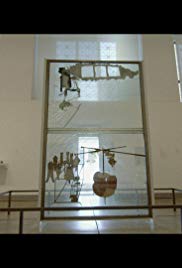
The film takes us through Duchamp’s association with Dada, Cubism, and Conceptualism – though he claimed none of these. We get a peek at his use of science, language, geometry and technology in his work, and also learn the stories behind his most famous works, including Nude Descending a Staircase (1912), 3 Standard Stoppages (1914), his Mona Lisa parody LHOOQ (1919), and The Large Glass (an 8-12 year project). His “Readymades” include the R Mutt urinal from 1917, which absolutely tested the boundaries of what could be art.

Duchamp had a long-time affair with Brazilian artist Maria Martins, while his second wife, Alexina Sattler, was the former daughter-in-law of renowned painter Henri Matisse, an artist he had once used as a prime example of “retinal art” – pleasing only to the eye. Clearly Duchamp felt art was ‘of the mind’ and he felt taste to be subjective, even an enemy of art. Sometimes referred to as the “Father of Conceptualism”, Duchamp gave a lecture in 1962 titled “Apropos of Myself”, of which the full text is available online.

Mr. Taylor’s film and Mr. Duchamp’s work are quite enlightening as to how the definition of art was expanded, and how that transformation is still impacting today’s artists. It’s mentioned that most every artist wants fame and fortune, and though Duchamp wanted neither, he ended up with both. By the film’s end, we are in agreement with Duchamp that what’s important isn’t the art, but rather the artist. And few have been more important than Marcel Duchamp.

watch the trailer:


THE MIMIC (2020)

March 11, 2020

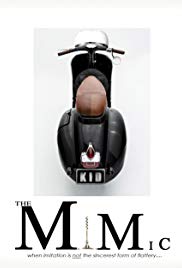
 Greetings again from the darkness. It has been said that “imitation is the sincerest form of flattery.” Writer-director Thomas F Mazziotti has not only based this story on his own real life experience, but with it proves that imitation can also be the sign of a psychopath. In fact, as the film begins, we are informed that 1 in 25 people are psychopaths, and also playing a role here is “The Sociopath Next Door: The Ruthless Versus the Rest of Us”, a 2005 book written by Martha Stout.

This is an unusual film with an offbeat rhythm. It reminds me a bit of CREEP, the 2014 movie starring Mark Duplass, in that the characters all seem like someone we could know, yet there’s something a bit off. Thomas Sadoski (“The Newsroom”) is Tony, a lead character, a widower, and our narrator. Tony has not adjusted to life without his wife, and part of the reason could be how his friends and neighbors are always bringing it up. Once the “Kid” shows up, Tony is taken on a ride that has him questioning not just other people, but reality.

“Kid” is actually Peter (Jake Robinson), a 31 year old, red pants wearing newcomer to town. He seems to fit right in with the elderly local newspaper ladies as they bicker about semi-colons, but his real attraction is to Tony – proclaiming “we’re on the same wavelength” after a few ‘coincidental’ meet-ups. It’s tempting to label this as a battle of nitwits, but neither of the men lack intelligence. They are both just awkward, and that includes Tony, our trusted narrator.

The film is basically a puzzle with numerous separate pieces loosely packaged as a series of vignettes that may or may not tie together. The segments certainly provide a showcase for a plethora of recognizable actors. The list includes: Austin Pendleton, Gina Gershon, Jessica Walter, Didi Conn, Marilu Henner, Tammy Blanchard, Matthew Maher, Jessica Keenan Wynn, Josh Pais, and Steve Routman. One segment I found particularly entertaining featured Doug Plaut and the legendary M Emmet Walsh as a writer and director discussing a project.

For the most part, it just seems the film, the writers, and the characters are all trying so desperately to be witty, clever, or funny, that whether it works as a cohesive project gets kind of pushed aside. The background circus music fits well and complements the theatrical pacing and cadence. Mazziotti’s film is certainly not cinema-as-usual, and it will likely find a cult following … perhaps among those bonding “on a personal pronoun basis.”