Greetings again from the darkness. If you have yet to experience a mid-life crisis, it only means you haven’t lived long enough. Of course, this ‘crisis’ often has little to do with age, and can seep into your marrow at any time … even when you think your life is plodding along just fine. These little thoughts or doubts or ideas start creeping in, and soon the only thing on your mind is a sports car, a younger partner, traveling the world, writing a novel, changing careers, or yes, starting a rock band.
Meet Bruce. He’s working a dead-end job as a 40-something year old paralegal. He’s married to the lovely Liz and they have two children and a fine house. Bruce’s boss takes advantage of his lack of ambition by assigning menial tasks and requiring overtime. When a burned-out Bruce arrives home in the evening, he sees the ‘To-do’ list his wife has posted on the fridge, and he guzzles a beer before heading down to the basement to play music and write songs. It’s his escape from life, but also his tie to younger years when he and his buddies had a legitimate band named The Incoherents.
Jeff Auer stars as Bruce, and he also wrote the screenplay. When his wife Liz (Kate Arrington) green-lights his dream of getting the band back together, Bruce contacts the Hamilton brothers, drummer Tyler (Ben Foster lookalike Casey Clark) and bass player Keith (Walter Hoffman), and they all meet up at the pub owned by their former lead guitarist Jimmy (Alex Emanuel, also the film’s Music Director and a Producer). The long-standing riff between Jimmy and Bruce dates back to the band’s initial run, but soon the chill warms and the band is rehearsing at Annette O’Toole’s studio. She calls them a “lost cause.”
The (middle-aged) boys enjoy playing gigs, but can’t seem to draw a crowd thanks to their utter ignorance of marketing or social media. Enter Jules (Vincent Lamberti), an agent of by-gone years who is blunt in his assessments, even if he seems to bring little else to the band. While all of this is happening, Liz is pushing to open her own long-wanted graphic design business. The idea of both spouses pursuing their dreams is quite intriguing, but the film misses a huge opportunity by focusing almost entirely on Bruce and the band. Liz is left with the scraps of a few reaction scenes (a waste of Ms. Arrington’s talent).
This is director Jared Barel’s first feature film, and it’s likely many of the missteps will be avoided in future projects. Bruce is front and center for most of the run time, but there are other characters who seem to be much more interesting – though most of their backstories are simple teases. On the bright side, the dream of being a rock star is the dream of many, as is recapturing the vitality of a youth long passed. So the relatability factor is present.
Bruce and Liz have 2 kids, which are treated mostly as after thoughts that only come in to play when both parents have something they want to do on the same weekend. Somehow the $80 for a babysitter becomes an obstacle that can’t be overcome … this despite the band’s numerous $30 per rehearsal hour in the studio and Liz’s plane trip to attend her sister’s book signing and put together a business plan. Very little of the real world stuff makes sense, which leaves the band part feeling a bit superfluous and hokey. Amy Carlson (“Blue Bloods”) has an awkward scene as a super-promoter, and we do get see Fiona Silver perform. There are some good ideas here, but it feels like the filmmakers were a bit too close to the project for it to ever really click.
Greetings again from the darkness. Trust in our national institutions may be at an all-time low, but it’s not like there haven’t been plenty of events over the years to make us wary enough to demand attention and oversight. This story of the 2002 Nassau County Schools scandal is a prime example. This is director Corey Finley’s follow up to his clever and twisted THOROUGHBREDS (2018), and the script is from writer Mike Makowski, who was a student in the district when the scandal hit.
Hugh Jackman plays Dr. Frank Tassone, the District Superintendent of Schools, while Oscar winner Allison Janney (I, TONYA) is Pam Gluckin, the Assistant Superintendent. Both are excellent, but Mr. Jackman delivers what might be his best ever performance. His Tassone is uber-charming, and clearly wants the best for the schools and students. We do notice some oddities about him. He seems to be overly concerned about his physical attractiveness – perfect business suits, facelifts, not a hair out of place, and big smiles to show the world he has it all under control. In contrast, if Ms. Janney’s Pam had a mustache, she would certainly twirl it as the story’s most obvious villain.
The film opens by informing us that the district has been evaluated as doing excellent in terms of student test scores, student admissions to prestigious schools, raising property values in the area, and with financial success that leads to a new construction project – one that appears to be more of an ego project than substantive for education. Ray Romano plays the President of the School Board, and we get glimpses of life at the school, and the challenges faced by the administrators. As with many things, if all is well, few questions are asked.
However, stuff hits the fan when a reporter for the school paper starts doing some basic research. Rachel (Geraldine Viswanathan, BLOCKERS) is writing a “fluff” piece on a new high dollar capital improvement project at the school, when she stumbles on irregularities in billing. It turns out Ms. Gluckin has been embezzling for years. When the discrepancies first come to light, the conversations with the school board and administrators is downright fascinating. The crime is obvious, but by going public, who does it help and who does it hurt? These people don’t want the kids to lose opportunities. They don’t want their property values to drop. And they don’t want the bad publicity that comes with being unaware fraud had been ongoing under their watch.
Once Ms. Gluckin’s scheme has been exposed, Jackman really kicks it into gear for Tassone. Any additional details would spoil the fun, but it becomes clear that he’s a master manipulator. Corrupt people have a way of convincing themselves their actions are justified, given the good work they do. You know the drill – underappreciated and underpaid. Solid support work comes from David Bhargava as Rachel’s father, who is also going through his own professional crisis. Alex Wolff is the editor of the school paper, and he faces his own moral dilemma in a scene where he knows the right thing to do will actually cause harm to his college opportunity. Finally, Rafael Casal stars as Kyle, a bartender/dancer and former student of Tassone, as they are reunited in Las Vegas.
Director Finley and cinematographer Lyle Vincent (THROUGHBREDS, A GIRL WHO WALKS HOME ALONE AT NIGHT) shoot in harsh light, never allowing the truth to hide behind soft filters. These are complex people with real lives and real families and real friends, all doing good things for the students. Watching a compromise of morals or a twisting of ethics is always a bit uncomfortable, but the film shows just how easy we can overlook the obvious. The film features brisk pacing with some dark humor in moments that least deserve humor. The trailer is a bit misleading, as the comedy is quite dark in nature. A low-key approach to filmmaking provides none of the over-the-top dramatic flair we expect. Instead it’s social commentary and a psychological study of pathological liars and manipulators … in positions that bring public trust.
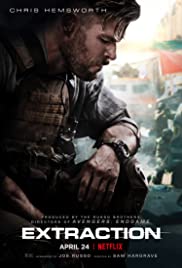
Greetings again from the darkness. The description for this movie labels lead character Tyler Rake “a fearless black market mercenary.” Now I’ve personally never shopped for a mercenary, but my assumption is that every one of them is ‘black market’, and none would likely self-identify as anything other than ‘fearless.’ My Facebook account is inundated with unwanted advertisements, and I’ve yet to see one for any mercenary, much less one that lacks courage. Now you likely find this to be worthless meanderings, but that’s where the first feature length film from director Sam Hargrave took me. Mr. Hargrave is a veteran stunt coordinator and stunt performer (he’s been the stunt double for Chris Evans’ Captain America), and he’s working from a script by Joe Russo (director and producer of the last two Avengers movies and the last two Captain America movies).
Chris Hemsworth (THOR) stars as the aforementioned Tyler Rake. It’s a role that would have just as easily worked for Jason Statham or, in past years, Bruce Willis, Sylvester Stallone, or Arnold Schwarzenegger. Rake is a live action hero, haunted by visions and dreams of better times. His fighting prowess, shooting skills, and willingness to play roulette with his own life, make him the perfect hire for imprisoned drug lords when their son is kidnapped by a rival drug lord. And that’s exactly what happens.
The film opens with Tyler in a bad spot. He’s injured and trying to shoot his way out of a mess where he’s badly outnumbered. The film then flashes back a couple of days where we witness the kidnapping of Ovi Jr (Rudrhaksh Jaiswal) by Amir Asif (Priyanshu Painyuli), the drug lord rival to Ovi Jr’s imprisoned father. We also see Tyler, after a few too many drinks, take a running leap off a 30 meter cliff into an Australian lake. Soon he’s visited by Nik (Golshifteh Farahani, Adam Driver’s wife in PATERSON). She acts as his handler for the dangerous jobs, and few are more risky than extracting Ovi Jr.
What follows are fast-paced car chases through the dusty streets of Dhaka, bone-crunching hand-to-hand combats, and more shootouts than we’ve seen in a while. Tyler’s job is to extract Ovi Jr and deliver him safely home. When things go sideways, the two end up on the run from an entire army, and take cover in a local sewer … with all the sights and smells you might imagine. Supporting roles are covered by David Harbor as Tyler’s old friend, and Randeep Hooda as Ovi Sr’s right-hand man.
As you might expect, there are double-crosses and plenty of opportunities for Tyler to show off his ‘fearless’ Samercenary skills. Ovi Jr is a bit of a nerd, but does offer up some life philosophy for his troubled protector: “You drown not by falling in the water, but by staying submerged in it.” The kill count here is extraordinarily high and literally thousands of rounds get fired. What’s most surprising, however, is that Tyler’s cell phone somehow survives his many falls, gunshots, sewage, and car collisions. It’s much more impressive than the old Timex commercials. Gifted cinematographer Newton Thomas Sigel (X-MEN movies, DRIVE, THREE KINGS, THE USUAL SUSPECTS) does an admirable job capturing the action sequences; it’s just that this is too similar to many movies we’ve seen before, though it serves as a chance for Hemsworth to be something other than Thor. For those in need of an action flick fix after all this social distancing, EXTRACTION should scratch the itch.
Greetings again from the darkness. The opening title card states “Nothing you are about to see is true” … and then it dissolves, leaving the word ‘true’ as the first word in the film’s title. Of course, some of the things we are about to see are true, though it is a dramatized version with a screenplay adapted by Shaun Grant (BERLIN SYNDROME, 2017) from Peter Carey’s 2000 novel. Director Justin Kurzel (MACBETH, 2015) takes a very artsy and stylistic approach in telling the story of the notorious Australian outlaw, Ned Kelly, while still including the expected violence and brutality.
Opening in 1867 Australia, we first see young Ned Kelly (Orlando Schwert) spying on his mother (Essie Davis, THE BABADOOK, 2014) as she provides service to Sgt. O’Neill (Charlie Hunnam). It’s the kind of service a young boy should never see his mother perform, especially as the father/husband (Ben Corbett) hovers outside the cabin with Ned’s siblings. Life is difficult for the Kelly family. Dad has some issues, so mom does what she has to in order to keep food on the table. Ned’s life and family dynamics change quickly when his dad takes the fall for a crime Ned committed.
Harry Power (played by hefty Russell Crowe) arrives on the scene, and becomes Ned’s mentor in song (a sing-a-long title that can’t be repeated here) and as a bushranger. It’s not long after this when the movie shifts from Ned as a boy, to Ned as a man (played by George Mackay, 1917), who spends a few years away from home. Ned crosses paths with Constable Fitzpatrick (Nicholas Hoult) numerous times, one which results in Ned meeting, and falling for, a young prostitute named Mary Hearn (Thomasin McKenzie, JOJO RABBIT). Ned and Mary return home to visit his mother, and they find she’s now engaged to a younger man, George King (Marlon Williams). George has been teaching his “trade” of horse-thieving to Ned’s brothers, including Dan (played by musician Nick Cave’s son, Earl Cave). It’s at this point we learn about how the Kelly Gang was formed, and why they took to wearing dresses … “Nothing scares a man like crazy.”
There is a lot going on in this story for the tale of a man who was executed at age 25. We see Ned evolve from a curious youngster to a bare-knuckle boxer to an outlaw who became an anti-hero cult icon. Witnessing the father figures he endured leaves little wonder why he turned out the way he did – an angry, cross-dressing outlaw leading the Irish rebellion in hopes of taking down the Crown. Ned is told that “a man can never outrun his fate”, and we know Ned’s fate upfront. We are there as Ned gives a motivational speech to the Kelly gang, and we watch in awe as they self-test their own body armor.
“My Dear Son …” are the first words we hear as Ned writes a letter promising to tell no lies about his history. The letter acts as somewhat of a framing device for the film, and covers the entirety of the Kelly Outbreak, as it’s now referred. There have been numerous projects (movies, mini-series, docu-dramas) over the years, including Mick Jagger (1970) and Heath Ledger (2003) as those who have portrayed Ned Kelly on screen. Director Kurzel and cinematographer Ari Wegner offer up quite a stylish look for this vast wasteland, and even utilizes some Terrence Malick-type editing for effect. Even the closing credit sequence is a work of art. It’s a family affair for director Justin Kurzel, as his brother Jed Kurzel delivers the music, and Justin’s wife Essie Davis plays Ned’s mother. It’s certainly not a typical western, and Ned is difficult to relate to as a character, but the look and style of the film keep us engaged. Perhaps the oddest decision was to have MacKay clean-shaven, as most of us have seen the photos of Ned Kelly and his beard … a beard that seemed to inspire modern day hipsters. Filming took place at Old Melbourne Gaol, which was the actual spot where Ned Kelly was hanged. His last words were: “Such is life.”
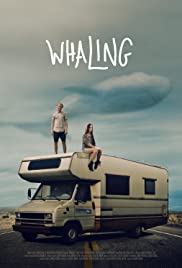
Greetings again from the darkness. Their mother amassed quite the collection of whale-related items from eBay prior to her recent passing. The brother needs the inheritance to continue his self-discovery course, which may or may not answer the question of whether or not he is gay. The estranged sister apparently abandoned her young daughter for fear of being a lousy mother. He admits to being ‘lost’, and she admits to being ‘broken’. Self-loathing is on full display in director Sean McEwen’s first feature film.
Tom Felton (Draco from the Harry Potter movies) plays Brandon Walker, and Tammin Sursok (“Pretty Little Liars”) plays his older sister Star Walker. They reunite for the reading of mom’s will, which includes the outlandish requirement for Brandon and Star to dispose of mom’s ashes in the belly of whale in order to receive their inheritance. Needing the money, they hop in mom’s old Winnebago for a 48 hour road trip to a public aquarium that houses the closest whale to Iowa.
The emotional impact of a story about a brother and sister finding common ground on a forced road trip boils down to two things: the chemistry between the two actors and the script. Mr. Felton and Ms. Sursok seem to be committed to the cause, and there are a couple of moments that strike the right chord, but overall the script is what prevents us from connecting to either the characters or the story. The attempts to inject humor tend to be in poor taste, while the dramatic elements either repeat themselves or don’t work because we simply don’t care enough about Brandon or Star.
Having the running gag of Brandon proclaiming “I’m not gay” while Star relentlessly peppers him on the topic comes across as not just dated, but also quite sad – seeing as Brandon is a thirty-something year old man. And worse than that is the stop over at Aunt Jackie’s (Wendi McLendon-Covey, BRIDESMAIDS, “The Goldbergs”) and Uncle Randal’s (David Koechner) house. This sequence of social commentary meant to bash extreme right-wing conservatives is simply embarrassing to watch. I actually felt terrible for the actors in these scenes. Comedy around homosexuality and racism must be handled with grace … whether it’s subtle or cartoonish.
The script was co-written by director Sean McEwen and his leading lady (and real life wife) Tammin Sursok. Respect is due to independent filmmakers who find a way to realize their project, but we do wish more time had been spent on the script. In fact, the whole production felt rushed and unpolished, leaving us with the most dreaded question any movie watcher might ask … how much longer?
Greetings again from the darkness. One might think that the only thing less interesting than watching someone read a book would be watching them talk about a book they are buying and not intending to read. Director-Editor-Producer DW Young somehow manages to make the topic quite engaging … due in no small part to the stream of bibliophiles and antiquarian booksellers we meet. The philosophy of the film is best expressed through one of the many spot-on quotes sprinkled throughout: “Books are a way of being fully human.”
It’s either cheating or hedging one’s bet when a director secures an interview with the eloquent Fran Lebowitz for a documentary. If the documentary is about books, well that’s even better. She perfectly describes the joy in “crawling around” bookstores in search of just the right one. She recalls the days when bookstores lined 4th Avenue, in what had been labeled “Book Row.” These days, only one remains – The Strand, which was founded in 1929. We learn that in the 1950’s, there were 358 bookstores in New York City, and now your search for a good read is limited to 79. The oldest remaining NYC bookstore is the stunning Argosy on E. 59th, and it’s being operated by the three daughters of Louis Cohen who opened the store in 1925. Ownership of the building is key to the bookstore remaining open for nearly 100 years.
Director Young takes us inside the beautiful and historic Park Avenue Armory for the NYC Antiquarian Book Fair. It’s here where we see a Fidel Castro doll (I guess everything is collectable!), and more importantly get a feel for how the rare book trade works. These collectors are obsessive about their books and compulsive in their mission of the next rare discovery. We see warehouses, apartments, offices, and stores jam packed with books, and to cap it off, we hear from the folks who have made this their passion. Not just bibliophiles like Ms. Lebowitz, Gay Talese, and Susan Orlean, but the boots-on-the-ground booksellers and collectors. There is even a segment on Martin Stone, the legendary book scout or bookrunner, who was also a rock ‘n roll guitarist.
“The internet killed the hunt.” A perfect example is given on how the world wide web changed book selling and collecting. In the old days, a collector could spend years assembling a full collection of Edith Wharton books, whereas today, a credit card and an afternoon on the internet would yield the same results. This is ‘buying’ contrasted with ‘collecting’, and the old school collectors have either adjusted or are struggling. Even auctions have changed, and Bill Gates’ purchasing Leonardo Da Vinci’s “The Codex Leicester” via phone … for $28 million … is an example.
Movies about book dealers are discussed, including THE BIG SLEEP and UNFAITHFUL, and we see a clip of Larry McMurtry’s speech championing book reading and bookstores. It should also be noted that Mr. McMurtry is a long time book seller and collector from Archer City, Texas. One of the industry’s new celebrities is the ultra-charming Rebecca Romney, who became famous for her stints on TV’s “Pawn Stars” as the resident book expert. Ms. Romney is leading the new wave of collectors, and her passion as a glass-half-full type is contagious.
Author Maurice Sendak said “There’s so much more to a book than reading.” Here, we learn about the importance of book jackets and special bindings, and how these rare books are actually historical evidence … artifacts of culture. This explains why ‘book burning’ has the history it does as both symbolizing and physically accomplishing the destruction of certain segments of society. We also learn those in this business don’t think highly of Kindle. The words may be the same, but the experience certainly isn’t.
The film is billed as a behind-the-scenes look at the New York rare book world, but it spends more time exploring the folks who make-up this business/industry/lifestyle. Their passion, and one might even call it a fetish, is quite interesting. The argument can be made that their work is quite important in preserving history. Smooth jazz accompanies the story, and it’s only fitting that I learned a new word: Incunabulum, which is an early printed book. These collectors express concern about their legacy, so hopefully the film will spur even more people to understand the historical relevance of books in our cultured society.
Opens in Los Angeles virtual cinema on April 17, and nationally on VOD (Apple/iTunes, Amazon, and cable, satellite and digital platforms) on June 5, 2020
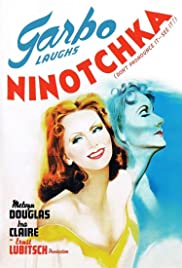
Greetings again from the darkness. It’s been too far long since my last “revisited” piece. These are meant to be a combination of movie review and historical perspective on a particular classic movie that I’ve watched yet again. My choice this time is NINOTCHKA, nominated for 4 Oscars (including Best Picture nominees) in what is widely considered one of cinema’s greatest years, 1939.
The roster of director, writers, producers, cinematographer, composer, set director, set decorator, editor, costume designer and actors reads like a “Who’s Who” of Hollywood. The director-producer was Ernst Lubitsch, whose career included 3 Best Director Oscars for HEAVEN CAN WAIT 1943, THE LOVE PARADE 1929, and THE PATRIOT 1928. He also directed THE SHOP AROUND THE CORNER (1940) which was later adapted into YOU’VE GOT MAIL (1998 with Tom Hanks and Meg Ryan). Lubitsch made a successful transition from silent films to talkies, and also directed 3 other films (a total of 6) that were Oscar nominated for Best Picture, including NINOTCHKA. He died of a heart attack at age 55 in 1947.
There are four credited writers for the film, each of which received an Oscar nomination. The original story was written by Hungarian writer Melchior Lengyel, and was adapted by Billy Wilder, Charles Brackett, and Walter Reisch. Mr. Wilder was nominated for 21 Oscars in his career, winning 6. Of course, he went on to become one of Hollywood’s most successful directors with classics like DOUBLE INDEMNITY (1944), THE LOST WEEKEND (1945), SUNSET BLVD (1950), WITNESS FOR THE PROSECUTION (1957), SOME LIKE IT HOT (1959), and THE APARTMENT (1960). Co-writer Mr. Brackett scored 9 career Oscar nomination, including wins for THE LOST WEEKEND (1945), SUNSET BLVD (1950), and TITANIC(1953), the first two of which he shared with Mr. Wilder. Wilder and Brackett had quite a professional relationship, as they wrote 14 movies together, and on an odd personal note, Brackett’s second wife was the younger sister of his first wife (who had died). Mr. Reisch, a 4-time Oscar nominee, shared the TITANIC Oscar with Mr. Brackett, and also wrote the still-popular GASLIGHT (1944, directed by George Cukor).
Greta Garbo plays Nina Ivanovna Yakushova, better known as the titular Ninotchka. Ms. Garbo was born in Sweden, and became more than a movie star … she was an icon. She was a 4-time Best Actress nominee, including one for NINOTCHKA. This was her first U.S. comedy, which was such a big deal, that MGM used the tagline, “Garbo laughs!” (a riff on “Garbo Talks!”). This was her penultimate film, as after TWO-FACED WOMAN (another comedy with co-star Melvyn Douglas), she walked away from acting in 1941 at age 36 (imagine if Meryl Streep had retired after OUT OF AFRICA). Ms. Garbo lived in seclusion in New York City, cultivating the infamous “Garbo Mystique”. She never married, though John Gilbert standing all dressed up at the alter certainly thought she was going to! For other standout Garbo performances, see ANNA KARENINA (1935), CAMILE (1936) and QUEEN CHRISTINA(1933).
Melvyn Douglas plays Count Leon d’Algout, a debonair charmer who incites a (passive-aggressive) rivalry between Ninotchka and Grand Duchess Swana. Douglas’ character is one we more frequently expect from William Powell or Cary Grant (both were offered the role), but it would be a mistake to think Lubitsch “settled” on Douglas. He’s considered one of the finest actors ever, and one of the few to have won a Tony, an Emmy, and an Oscar (he won two). Douglas has played the on screen dad to both Paul Newman (HUD, 1963) and Robert Redford (THE CANDIDATE, 1972), as well as Gene Hackman’s dad (I NEVER SANG FOR MY FATHER, 1970) and Peter Sellers’ quasi-mentor in BEING THERE (1979). Mr. Douglas is the grandfather of well-known actress Illeana Douglas (TO DIE FOR, 1995; STIR OF ECHOES, 1999), although, to this day, he is best remembered as the actor who made Greta Garbo laugh!
While Ms. Garbo and Mr. Douglas dominate the screen time, the cast features some other interesting and talented players. Ina Claire plays the exiled Grand Duchess Swana. Ms. Claire was a young Vaudeville performer and part of Ziegfeld Follies before building a reputation as a sophisticated comedy stage actress. She was briefly married to John Gilbert after he was jilted by Garbo, and she only appeared in 7 “talkie” movies before retiring from acting in 1943. Bela Legosi appears as Commissar Razinin, and of course he is best remembered as Count Dracula from Tod Browning’s 1931 DRACULA for Universal. Legosi was a charter member of the Screen Actors Guild (SAG), and died flat broke after his affiliation with schlock-director Ed Wood. He appeared alongside fellow Monster Universe icon Boris Karloff in numerous films (including THE BLACK CAT, 1934; THE RAVEN, 1935), and was buried wearing one of his Dracula capes (not the one from the film). The 3 bumbling Russian envoys who so quickly adapt to western ways are played by actors who fled their homeland and emigrated to the U.S. due to war. Sig Ruman was a German who appeared in several Marx Brothers films, Felix Bressert was a German who had a medical practice as a “side gig”, and Alexander Granach was Hungarian, and also appeared in FW Murnau’s 1922 NOSFERATU. Lastly, Edwin Maxwell, who plays jeweler Mercier, appeared in 13 Best Picture nominees (4 winners) in a 15 year span.
Although the story is not a complicated one, it’s important to note the era. The world had not yet stabilized after WWI and was on the verge of WWII. Joseph Stalin was the leader of the Communist Party in the Soviet Union, and one of the most feared men on the planet. That may not sound like the foundation for a comedy, and it’s important to note that the film is comedy, satire, and political commentary rolled into one. Three Russian envoys are sent to Paris to sell the jewels seized from Grand Duchess Swana during the Russian Revolution. They book the Royal Suite at a posh hotel (partly) because it has a large in-room safe for the jewels. As they are meeting with local jeweler Mercier to finalize the sale, Count Leon barges in to scuttle the sale and trick the envoys into returning the jewels to their rightful owner, the Grand Duchess. Soon, Ninotchka, a no-nonsense Russian, is dispatched to expedite the sale and send the first 3 envoys back home. Ninotchka and Count Leon meet by happenstance, and he’s immediately smitten with her, while she initially views him as little more than a curiosity.
The Eiffel Tower segment is pure brilliance in writing and acting. The dowdy Russian (Ninotchka) is interested in the global landmark for its technical achievement, while Count Leon shifts his charm into overdrive. Her line telling him to “suppress” his flirting is really our first glimpse of Garbo comedic timing … though it’s certainly not the last. The segment serves as a contrast in personalities – the face of communism versus the face of capitalism. Of course, it’s the “Garbo laughs!” moment in the café that most remember. Count Leon bumbles through joke after joke to no reaction, and once she cracks, she really lets loose. It’s a thing of beauty to watch.
As previously mentioned, it’s not just Lubitsch and Garbo and Douglas that make this a classic. The full production crew have a place in cinematic lore. Cinematographer William H Daniels won an Oscar for THE NAKED CITY (1948), and lensed 21 Garbo films. Editor Gene Ruggiero won an Oscar for AROUND THE WORLD IN 80 DAYS (1956), and composer Werner Haymann was a 4-time Oscar nominee. Set-Art Director Cedric Gibbons was a one-time Edison Studios staffer, and won 11 Oscars over 26 years, eclipsing the 8 Oscars won by Set Director Edwin Willis. Adding to the intrigue is Costume Designer Adrian (married to actress Janet Gaynor) who is still revered as one of the best all time with over 250 movies in 30 years, though he’s even more famous for his designs outside of cinema.
1939 is arguably the greatest of all movie years since it also gave us: GONE WITH THE WIND, THE WIZARD OF OZ, STAGECOACH, MR SMITH GOES TO WASHINGTON, GOODBYE MR CHIPS, GUNGA DIN, THE HOUND OF THE BASKERVILLES (the first of the series starring Basil Rathbone), OF MICE AND MEN, WUTHERING HEIGHTS, and LOVE AFFAIR. Though it didn’t win any Oscars (4 nominations), film schools still study NINOTCHKA’s sardonic dialogue, and the way the ‘decadent’ western ways seduce the Russians. It’s clear why film history books refer to the “Lubitsch touch” – a comical and witty approach to serious topics. Beyond that, the MGM marketing department certainly knew how to capitalize on a guffawing Garbo. As with the best classic films, there is much to study, much to learn, and above all, much to enjoy.
Greetings again from the darkness. I watch a lot of short films, yet post very few of those reviews on this site. For this special film, I am not offering up any type of review other than to encourage you to take 14 minutes and watch this documentary short.
Filmmaker William Lorton’s Great Uncle was Jim Savage, who was an Air Force field surgeon during WWII. When he died, Lorton discovered some untouched footage his Great Uncle had shot at an airbase. One sequence in particular caught his eye: a wheels up landing in a grassy field by a Spitfire, followed by some airmen huddled up afterwards. After some research, Lorton tracked down the pilot, (retired) Lt Col John Blyth, who agreed to meet with Lorton and his crew.
The film clips are fascinating, but it’s 83 year old Blyth recalling his missions that is truly captivating. Blyth flew reconnaissance missions in a British Spitfire retrofitted with extra fuel tanks and cameras. What was missing? Guns. Blyth actually flew over Germany with no guns or escort! Lorton films Blyth as he views the clip for the first time. It’s quite something to behold.
You can watch the documentary short here (thanks to Sundance, and a friend of a friend for sharing):
Greetings again from the darkness. Uruguayan writer-director Lucia Garibaldi has seemingly designed her first feature film specifically for film critics at festivals (it was well received at Sundance). I can’t recall a coming-of-age film with a less-accessible lead character, nor one that displayed that awkward phase between child and adult in a harsher manner. Watch that emotional step – it’s a doozy!
First time actress Romina Betancur plays 14 year old Rosina. The opening finds her running from her angry father right into the sea. It’s at this point she spots the dorsal fin of a shark. Of course no one believes her because sharks are not known to swim around this fishing village in Uruguay. We also learn that Rosina has recently caused an eye injury to her sister Mariana (Antonela Aquistapache), and Rosina claims it was an “accident.” It becomes apparent that her actions are not always the result of wise planning.
Rosina begins working on one her father’s labor crews as the town prepares for the summer visitors. Also on the crew is Joselo (Federico Morosini), an older boy in whom Rosina shows an interest. After their unconventional “date”, Joselo bores of the youngster, while she is rendered both curious and confused. Rather than a sexual awakening, Rosina seems to experience internal prods of which she is unsure how to handle. This transition phase is shown through the perspective of an awkward 14 year old girl who seems to handle everything with a constant stone-face … the envy of any poker player.
Once Joselo’s interest level shifts to others, Rosina fights back in what apparently is her dark nature. Some could call her a psychopath, as her instincts prove ill-advised at best, and possibly even flat out dangerous. Her quiet predator similarities to the shark are obvious, even as the question of ‘shark or no shark’ cloaks the community. Life in this area is not easy. Water is scarce, and these folks have no time to wrestle with Rosina’s twisted ways. Her mother is opening a new salon, and even a pregnant dog has a role in Rosina’s revenge plan.
Uruguay’s rocky coastline and wooded forests make for a picturesque background, and Ms. Garibaldi and cinematographer German Nocella take full advantage. The many tight shots of Rosina are meant to emphasize her isolation and separation, but at times it felt like this shot was used a bit too frequently. The electronic music was often distracting, and the slow pace certainly could have worked if the character development of Rosina had allowed us to better grasp her emotions and thoughts. Instead, the film is either restrained or dull, depending on your taste … although the flashes of humor certainly help. Director Garibaldi may relate to Rosina, but we never do. We are left thinking this could have been an extraordinary short film.
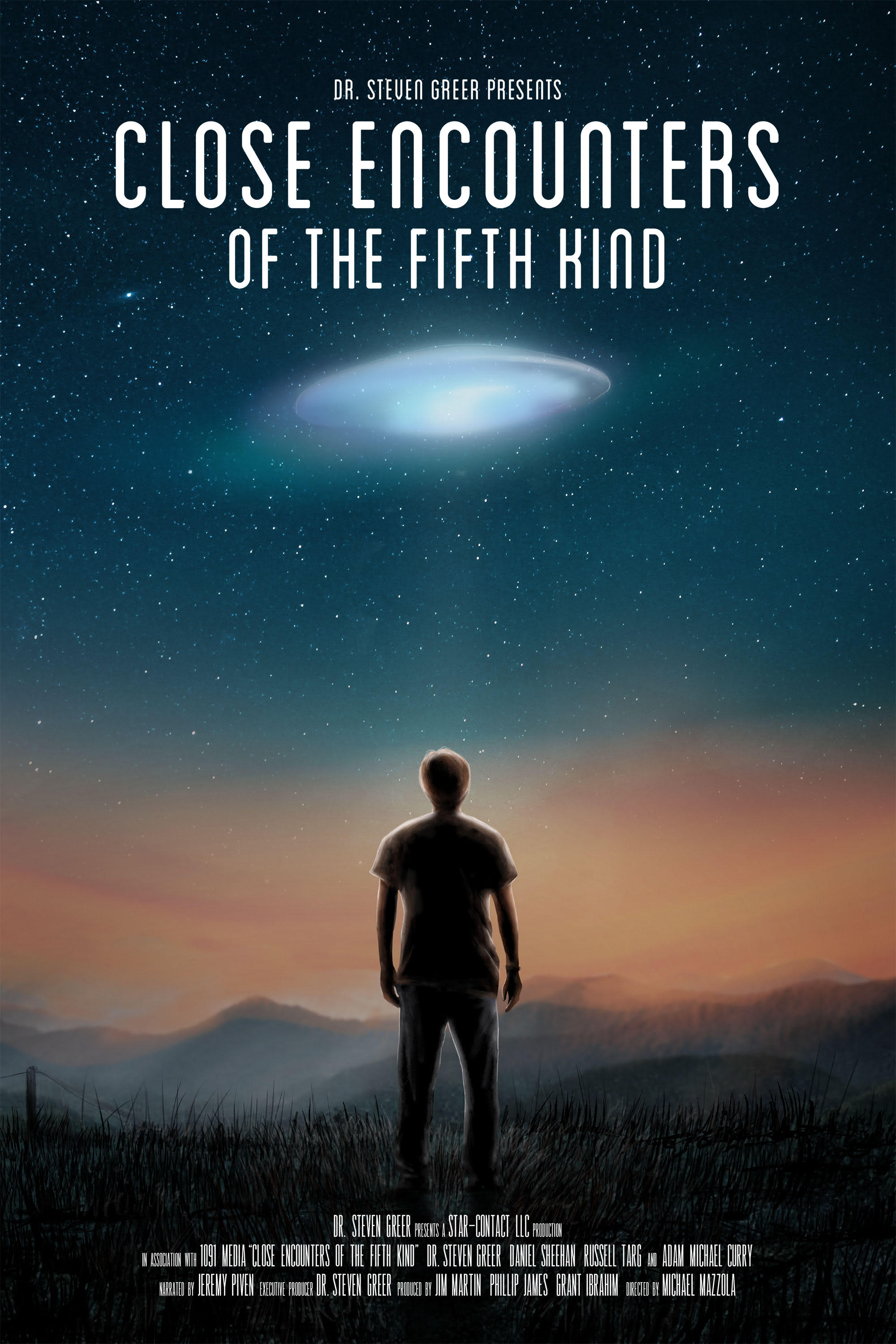
Greetings again from the darkness. Whether you’re a believer or a skeptic, one must respect the dedication to the mission of Dr. Steven Greer. His documented research into extraterrestrial activity dates back more than 25 years, and he has briefed every president since Bill Clinton on the topic. This is the third documentary for Dr. Greer, including SIRIUS (2013) and UNACKNOWLEDGED (2017), the latter of which was directed by Michael Mazzola – also the director of this current film.
Mr. Mazzola divides the film into 3 chapters: Blood and Treasure, The Crossing Point of Light, and A New World. However, the film’s structure matters little, as this is mostly another opportunity for Dr. Greer to present his research, his beliefs, and allow others to comment. Dr. Greer is the founder of the Center for Study of Extra Terrestrial Intelligence (CSETI), and he was also behind the 1993 Disclosure Project, which persuaded the government to release previously classified documents pertaining to UFOs and extraterrestrials.
Of course, Steven Spielberg’s 1977 double Oscar winner CLOSE ENCOUNTERS OF THE THIRD KIND remains quite popular today, and the title to Mazzola’s film refers to what CSETI categorizes as the 5th kind of alien encounter: proactive human communication with an extraterrestrial. In support of this, Dr. Green spends a good amount of time explaining his group events, where believers gather to experience these encounters. It’s at this point where much of the film focuses on Universal consciousness (ESP, meditation, etc.). The parameters of pure heart and peace are said to be necessary for group meditation cohesion. It’s very similar to the idea of “attraction” – if we think about something, that thing is more likely to appear or happen.
A quote from a physicist opens the film, and numerous quotes are highlighted throughout courtesy of intellects, scientists, and spiritualists. Scientific analysis is provided and we hear from some brainy talking heads, including Dr. Edgar Mitchell, a former astronaut. Attorney Daniel Sheehan gets plenty of screen time as well, and does his part to fit right in with the line-up of articulate, knowledgeable experts who offer up their commentary. These are not the wild-eyed types we see on local news or lesser documentaries. These are folks with actual experience backed by video and photographic evidence.
Dr. Greer asserts that since “no human has ever been harmed”, we can assume the extraterrestrials are not here to cause damage – an easily debated point. He also claims that these aliens are up to a billion years ahead of us, though he never explains the math on that. Actor Jeremy Piven seems an odd choice as narrator, given his propensity for roles as a fast-talking smart-aleck, but a montage of video from around the globe (the most recent from December 29, 2019) lends credence to Dr. Greer’s claim that the collective conscience has a relationship to the physical world. He has also accepted that skeptics will always exist, and that he will be ridiculed for his work and beliefs. If nothing else, perhaps the film will open up a few minds to the possibility.
 Greetings again from the darkness. If you have yet to experience a mid-life crisis, it only means you haven’t lived long enough. Of course, this ‘crisis’ often has little to do with age, and can seep into your marrow at any time … even when you think your life is plodding along just fine. These little thoughts or doubts or ideas start creeping in, and soon the only thing on your mind is a sports car, a younger partner, traveling the world, writing a novel, changing careers, or yes, starting a rock band.


 Posted by David Ferguson




 Movie Reviews from the Dark