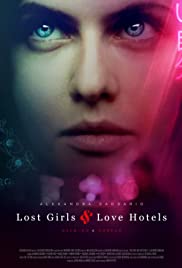
LOST GIRLS & LOVE HOTELS (2020)

September 17, 2020

 Greetings again from the darkness. The temptation here is to compare director William Olsson’s latest film to FIFTY SHADES OF GREY. While the two films do share the foundation of best-selling adult erotica novels, this film is darker and grittier, and doesn’t treat the lead as a cartoon character. Catherine Hanrahan wrote both the novel and the screenplay, a likely contributing factor to the more grounded feel to the setting and characters.

Alexandra Daddario stars as Margaret, a young woman living on her own in Tokyo. She works days as an English “pronunciation” teacher at a Flight Attendant Academy. In the evening she imbibes at a local dive bar with other ex-pats (Carice van Houten, Andrew Rothney) before heading out under the neon lights in search of that night’s partner at one of the “love hotels”. Margaret is burning the candle at both ends to an extreme. Her alcohol intake would put most sailors to shame. Is Margaret looking for the meaning of life or just trying to forget? That’s the question we spend most of the story trying to answer.

One day Margaret meets Kazu (played by Takehiro Hira), a dashing Yakuza (organized crime) member. She quickly falls under his spell, and the two have a lustful, fast-moving connection. Of course, traditions being what they are, the relationship can never be the same for Kazu as it is for Margaret. In other words, she finally found love, but with the wrong guy. Margaret as narrator offers up wisdom such as, “I tell myself there are no happy endings.” “Things are ragged and messy.” These sentiments perfectly describe her life.

Margaret is challenging to figure out. We feel her pain and confusion and desperation, though we never fully understand what’s driving it. She’s ‘happy and sad’, and more than just another pretty face. In fact, this dark world of loneliness and sex finds her starting in a bad place and then sinking lower. However, director Olsson and cinematographer Kenji Katori ensure the film is stylish and atmospheric, and no matter how ugly things get for Margaret, the film itself is quite something to look at.

This is a side of Tokyo we don’t often see, and the love hotels are a sub-culture that set up perfectly for those who have lost hope or control of their life. The city seems to prey on some … no matter how beautiful they are. Kudos to Alexander Daddario for taking on this role. She’s been around for a while with memorable appearances in “True Detective” (Season One), SAN ANDREAS (2015), and BAYWATCH (2017). It’s nice to see her go deeper and darker, and let’s hope it opens up some new opportunities for her.

LOST GIRLS & LOVE HOTELS is available on Digital and On Demand September 18, 2020

watch the trailer:


RENT-A-PAL (2020)

September 10, 2020

 Greetings again from the darkness. “Everybody loves somebody sometime.” So sang the great Dean Martin. But what about the exception that proves the rule? Writer-director Jon Stevenson (in his directorial debut) offers up David, a 40 year old lonely heart, who is a full time caregiver for his dementia-afflicted mother. In between cleaning up after his mother and spoon-feeding her meals, David dreams of finding a soul mate.

Brian Landis Folkins stars as David, and he delivers a terrific performance in one of the strangest roles of the year. He manages to make David a guy we care about, despite his being … well … not the most exciting or charismatic dude you’ve met. Does it help that he doesn’t have a job and lives on his mother’s social security? No?  How about the fact that he lives in her basement? Still not impressed? Well, the film takes place around 1990, and David is a member of Video Rendezvous, a VHS dating service – the Match.com of 30 years ago. Getting hopeful for David?  Well you should know he has had zero matches. Poor guy.

One of Mr. Folkins best scenes occurs when we see him filming his personal video for the dating service. Well, it’s his re-do … and then a re-do of his re-do. That’s pretty much how David’s life goes. Later, while rummaging through the VHS tapes bargain bin, he stumbles upon one titled “Rent-A-Pal”. At home, he pops it into the VCR and just like that – Andy (played by Wil Wheaton, STAND BY ME) appears on screen, and over a few days, David and Andy form an odd bond – maybe the strongest bond you’ve seen between a person and a character on screen talking directly to the camera/person watching. Andy is chummy and charismatic, and also a bit creepy. In fact, some of this reminded me of the Mark Duplass movie CREEP.

We witness David deal with the disappointment of each day. He finds some joy when his mother (Kathleen Brady) is reciting Cary Grant’s dialogue in HIS GIRL FRIDAY, and suddenly things look up when he has a match with Lisa (Amy Rutledge). Their first date is at Skate Land, and features the awkward chemistry of two lonely hearts, rather than one. They seem to like each other, though it may just be they are each excited to be noticed by anyone.

Since the film is billed as a thriller, we know things will go sideways at some point. However, even if you figure out where it’s headed, the path it takes may catch you off guard. As the bond between David and Andy crumbles, we witness David’s descent into madness. Whereas his connection to Lisa should have made his life better, his extended loneliness has pushed him to the brink, and he struggles to distinguish between fantasy and reality. The final 10-15 minutes turn very dark (and feel a bit rushed), and are kinda sad to watch. Director Stevenson has ensured a bleak feeling through most of the film with a washed out color palette. The only signs of brightness are the Skate Land sign, the receptionist’s jacket, and Andy’s glowing face on the TV. The performances are fun to watch, and Stevenson’s debut is a keeper. “So long, Pal.”

IFC will release this in select theaters and On Demand September 11, 2020

watch the trailer:


I AM WOMAN (2020)

September 10, 2020

 Greetings again from the darkness. Does penning and recording a feminist anthem warrant a film biopic? Well, when the singer is Helen Reddy and the song is “I Am Woman”, the answer is a resounding yes. This is director Unjoo Moon’s first narrative feature film, and she is working with a script from Emma Jensen (MARY SHELLEY, 2017). As with any biopic, its effectiveness comes down to the lead performance. Here, Tilda Cobham-Hervey is both strong and invincible as Ms. Reddy.

We first see a wide-eyed Helen Reddy walking through New York City clutching the hand of her very young daughter Traci after arriving from Australia in 1966. She’s in pursuit of a recording contract, but instead ends up singing at a mostly empty nightclub and living in a roach-infested rundown hotel. It takes almost no time for her to experience multiple instances of sexism and chauvinism. With no prospects for a better life, Helen meets up with fellow ex-pat Lilian Roxon (Danielle Macdonald, PATTI CAKE$, 2017), a journalist who shows her the town and offers her friendship.

Lilian throws a party for Helen, and after locking eyes across the room, Helen meets Jeff Wald (Evan Peters, “American Horror Story”), an up and coming agent at William Morris. By 1968, Wald has convinced Helen that Los Angeles is the place to kick off her singing career, and along with Traci, they move into a beautiful home and fill it with typical California dreaming. Jeff’s managing career starts to build, and Helen gets frustrated at his lack of attention to her career. There are some funny comparisons of Deep Purple, Tiny Tim, and Helen’s singing styles, but finally Capitol Records gives her a shot at recording a single.

Helen’s career takes off, as does her friend Lilian’s, who becomes the ‘Mother of Rock’ with her Rock ‘n Roll Encyclopedia, and subsequent reviews and articles. In fact, Ms. Roxon deserves a biopic or documentary highlighting her influence on rock journalism. As Helen puts out hit records, her husband Jeff is managing many successful acts. Money is pouring in (and out) and in contrast to Helen’s common sense manner, Jeff partakes of drugs and alcohol to extremes. Of course, the key component of Helen’s career and the movie is in regards to her writing the title song … a song that the skeptical executives of Capitol Records said made her sound “too angry”.

It was Lilian who introduced the women’s movement to Helen, but Helen was inherently ambitious and strong-willed … it ended up being the perfect match. Reddy supported the Equal Rights Amendment (ERA), even as Phyllis Schlafly fought hard against it. Helen’s 1972 song “I Am Woman” became a huge hit, and later the anthem for a movement. But Helen Reddy’s story isn’t all rainbows and unicorns, and despite a dose of clichés, and some overacting on the part of Peters, the movie does an admirable job showing how she reacted to the challenges.

Director Moon’s husband Dion Beebe (Oscar winner for MEMOIRS OF A GEISHA, 2005) is the cinematographer, and he does nice work with the stage performances, as well as the more intimate moments. However, it’s Ms. Cobham-Hervey who stands out. I’ve only previously seen her in HOTEL MUMBAI (2018), and she captures the determination and charisma of Helen Reddy. We see her strength as she instills life lessons in her kids, and goes toe-to-toe with her husband. It’s an impressive performance.

The movie shows us Helen’s 1982 Las Vegas act, and we hear most, if not all, of her hits, “Delta Dawn”, “Leave Me Alone” (actually a pretty annoying song), “You and Me Against the World”, “Angie Baby”, and obviously, “I Am Woman”. Later, in 1989, we see a grown up Traci talk her retired mother into performing her most famous song at the Washington DC rally of the National Organization of Women. It’s quite a moment that encapsulates the empowerment that Helen Reddy devoted her life to. The movie doesn’t go there, but it’s unfortunate that Ms. Reddy has been afflicted with dementia since 2015. Like all great artists, her work will survive her.

In select theaters and VOD on September 11, 2020

watch the trailer:


ALL IN: THE FIGHT FOR DEMOCRACY (2020, doc)

September 8, 2020

 Greetings again from the darkness. Stacey Abrams is a generational spokesperson, and may very well be the future of the Democrat Party. This despite being recently passed over as Joe Biden’s running mate. Ms. Abrams is a producer on this film co-directed by Lisa Cortes (HIP HOP X FASHION, 2019) and Liz Garbus (nominated for 2 Oscars: WHAT HAPPENED MISS SIMONE?, 2015 and THE FARM: ANGOLA, USA, 1998). She also appears on camera numerous times speaking to us about voter suppression – something which impacted her directly.

The film provides an historical look at the different ways voters have been suppressed and elections manipulated over the years – dating back to 1789, when the film informs, only 6% of the population was eligible to vote: white male property owners. We hear from many historians, authors, politicians, and activists, yet it’s Ms. Abrams who stands out. She takes us through her personal background and describes in detail the influence her parents had on her. We also learn much about the 2016 Georgia Governor’s race, where Ms. Abrams faced off against Brian Kemp. In one of the more startling statistics, we are told that as Georgia Secretary of State, Mr. Kemp purged 1.4 million voters from the Georgia registry.

A true history lesson on voter suppression is provided, with much of the lesson and commentary provided by Ms. Abrams and author Carol Anderson, who wrote the 2018 book, “One Person, No Vote: How Voter Suppression is Destroying Democracy”. We also hear from others, including 88 year old Andrew Young, one of the leaders of the Civil Rights movement, and a former Mayor of Atlanta and former US Ambassador to the United Nations.

So many aspects of United States elections are discussed, and these include the Reconstruction era after the Civil War, the 19th Amendment, President Lyndon Johnson and Voting Rights Act, Gerrymandering, Voter ID requirements, Poll taxes and literacy tests, and the landmark 2013 case, Shelby County v Holder, resulting in a US Supreme Court decision that has impacted voter access. We see clips of the 30th anniversary of the Walk across the Edmund Pettus Bridge in Selma, Alabama, and it’s clear Civil Rights and Voting Rights are forever bound.

The documentary is important as it connects history with the modern day issues resulting in voter suppression. Ms. Abrams and Ms. Armstrong are vital voices on a topic that should have been laid to rest many years ago; yet as long as the thirst for political power exists, manipulation of the system will be attempted. So, it’s important that every citizen understand how this happens and what to be aware of.

Premieres at Telluride Film Festival September 2, 2020 and in select theaters on September 9, 2020, and on Amazon Prime beginning September 18, 2020

watch the trailer:


A&E BIOGRAPHY: THE NINE LIVES OF OZZY OSBOURNE (2020, doc)

September 6, 2020

Airing on A&E September 7, 2020

 Greetings again from the darkness. My concern going in was that A&E would serve up a heavy dose of modern day Ozzy Osbourne, especially since this profile is directed by Greg Johnston, the producer of the popular reality TV show, “The Osbournes” (2002-05). Instead, the nine lives are divided up for various segments throughout Ozzy’s life (he’s 72 years old now), and seem to be weighted fairly … highlighting warts, family, and achievements.

The first “Life” segment takes Ozzy back to Birmingham, England where he spent his childhood. He and wife Sharon tour his early home – a home that now has an indoor toilet, a luxury not available to young Ozzy. We learn Ozzy had three sisters and two brothers, and that Birmingham was a blue color town lined with factories. Both of Ozzy’s parents were factory workers. Dad took the day shift, Mom the night shift. Ozzy explains that he hated school, and enjoyed his multitude of factory jobs even less. His eyes sparkle as he recalls how first hearing The Beatles inspired him to move towards music.

It’s at this point when we hear from guitarist Tony Iommi, drummer Bill Ward, and bassist Geezer Butler, the founding members, along with Ozzy, of Black Sabbath. This was 4 local lads who were pioneers in heavy metal rock music. Producer Rick Rubin talks about their influence, and how they started as a blues band and evolved into much harder and louder music. They sold many albums and became huge touring the UK and USA. Their second album “Paranoid” included the monster hit “Iron Man”, a true rock anthem. As you might know (or guess), Ozzy had significant issues with booze and drugs, and in 1979, he was fired by the band.

Many rock careers have ended due to addiction, but as the title infers, Ozzy manages to continually land on his feet. His new band, with talented guitarist Randy Rhoads, became huge, and the album “Blizzard of Oz” contained the megahit “Crazy Train”. During this time, Ozzy began his relationship with Sharon, the daughter of his manager. It was also during this era when Ozzy’s reputation as a wild man (or mad man) on stage blossomed … highlighted by shocking behavior at the record company offices and on stage (you’ve likely heard the live bat story). He was also banned from San Antonio for good reason. Disaster struck in 1982, but it was also the year Ozzy and Sharon wed.

Sharon, and Ozzy’s kids Jack and Kelly, are forthcoming in the stories they tell. It’s clear they love Ozzy, despite not always understanding his behavior. Ozzy is often shown watching clips of his live performances, and by the end, we fully comprehend that music and his family are both extraordinarily important to him … and he gives full credit to Sharon for his still being alive (a fact as stunning as Keith Richards still being with us).

The film does go into Ozzy’s retirement from performing, as well as the popular TV show with his family. The vintage clips are fun to watch, and all of the people interviewed (including an honest and often funny Ozzy) have fascinating insight to a remarkable life. It’s likely not many recall his days as the “Prince of Darkness”, but as Kelly says, Ozzy is “the real Iron Man”.

watch the trailer:


I’M THINKING OF ENDING THINGS (2020)

September 3, 2020

 Greetings again from the darkness. We should never look to Charlie Kaufman to pull us out of the pandemic doldrums, although he is an absurdly talented writer who specializes in unusual plots and oddball characters. Mr. Kaufman is also an over-thinker and a non-stop thinker – I would imagine his brain rarely goes quiet. This time out, he directs his own adaptation of Iain Reid’s novel, and the result is a mind and time bending existential crisis that leaves us feeling a bit down. Yet, as always, Kaufman’s work keeps our minds racing.

Jessie Buckley, who was so terrific in WILD ROSE (2019), stars as The Young Woman going on a blizzardy road trip with Jake (Jesse Plemons, THE IRISHMAN, 2019), her boyfriend of the last six weeks or so. They are headed to visit Jake’s parents who live in a “farmy” and remote area. Act 1 is spent in the car as the wipers flap, and the woman and Jake hold awkward conversation. We, as the audience, listen to her inner thoughts, including, “I’m thinking of ending things.” She is truly an outstanding actress, and carries much of the weight with this one.

The woman is not really unnamed, in fact, throughout the movie, she has multiple names including Lucy and Louisa. And character names aren’t the only fluid piece of Kaufman’s puzzle. She is variously labeled as studying Quantum Physics, a writer of poetry, and an artist. Are you confused yet?  If not, you will be.

Act 2 takes place at the farm house where Jake’s parents live, and it shifts the film from awkward to bizarre. Toni Collette (HEREDITARY, 2018) and David Thewlis (“Fargo”) play his mother and father, both excited for the visit, but unconventional, to say the least, in their social graces. Ms. Collette over-laughs just beyond the point of perplexing and nudges the beginning of downright weird. She and Thewlis are exceptional in their ability to keep Lucy off-balance, and Jake hyper-annoyed. We aren’t sure what to make of what we are seeing … and neither is Lucy. While none of these folks takes a single bite of the dinner spread, the tone turns to surreal. Overlapping time lines of past, present, and future become haunting and hypnotic.

The film itself is disorienting, and Act 3 does little to help us regain our equilibrium. Jake and Lucy finally start their drive back, as the snow begins falling even harder. Throughout the production, Kaufman includes references to William Wordsworth, Pauline Kael, Andrew Wyeth, Mussolini, and more. He also inserts clips of a high school janitor (played by Gus Boyd) as he goes about his duties. This janitor is part of a finale featuring an animated pig and a dance number … both of which occur after Jake and Lucy have debated the importance of Cassevetes’ A WOMAN UNDER THE INFLUENCE, and the performance of Gena Rowlands.

Oklahoma plays a role as both a setting and a reference musical, and a stop for ice cream at Tulsey Town, adds to the oddity and the feeling of dread that encompasses us for much of the movie (when we aren’t chuckling at the absurdities). Kaufman mixes genres with glee – horror, comedy, and psychological thriller all lead us to a dance scene and many unanswered questions about what is real and what is only in Lucy’s mind. We never see what attracted these two to each other, but we do wallow in their misery and discomfort. Charlie Kaufman’s previous screenplays include such brilliance as ETERNAL SUNSHINE OF THE SPOTLESS MIND, BEING JOHN MALKOVICH, and ADAPTATION, although this one may have more in common with his SYNECHDOCE, NEW YORK – a film that can wrestle with this one over which is his least accessible. An existential film where past, present, and future mingle and bizarre observations are made on aging and memory, can only fit into Charlie Kaufman’s oeuvre. It will surely make you think, though it may end with you asking ‘why?’

Netflix September 4

watch the trailer:


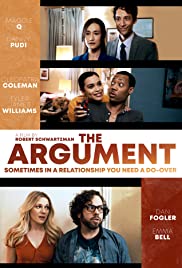
THE ARGUMENT (2020)

September 3, 2020

 Greetings again from the darkness. Couples argue. Some more often and more boisterous than others. Things get ugly when friends and other outsiders are drawn into the arguments, which is exactly what we witness (in exaggerated form) with this film from director Robert Schwartzman and writer Zac Stanford (THE CHUMSCRUBBER, 2005). Schwartzman is also a musician and composer, and is the son of ROCKY actress Talia Shire, and the younger brother of actor Jason Schwartzman (MOONRISE KINGDOM, 2012).

Lisa (Emma Bell, A QUIET PASSION, 2016) has just finished her first acting gig (other than a cameo in her husband’s film) in a stage production of Mozart. Her husband Jack (Dan Fogler, FANTASTIC BEASTS AND WHERE TO FIND THEM) is simultaneously happy for her and insecure. His insecurity stems from his lack of success as a writer, and his suspicion, bordering on jealousy, of Lisa and her co-star Paul (Tyler James Williams, “Everybody Hates Chris”). The film picks up at the intimate after-party at Lisa and Jack’s home. It’s here where we meet Paul and his friend Trina (Cleopatra Coleman, “The Last Man on Earth”), and married couple Brett (Danny Pudi, “Community”) and Sarah (Maggie Q, “Nikita”). Brett is Jack’s literary agent, and he’s about as successful as an agent as Jack is as a writer. Sarah is an Entertainment Lawyer, who is as bored with the party as she was with Lisa’s play … she just wants to go home and sleep.

The party ends abruptly when Jack and Lisa get into a fierce argument. Alone in the house, neither accepts the blame, so of course, it escalates. The unconventional solution reached is to recreate the sequence of events with the same people saying and doing the same things they said and did that first night. Then they do it again. And again. A montage of do-overs causes us to lose track of just how many times these poor people re-live a forgettable and unpleasant evening.

A tonal shift occurs when Jack “casts” the party with actors, while still inviting the same friends to watch. Rather than exaggerated relationship issues, we get an exaggerated look at actors finding their characters … characters who happen to be sitting in the same room! This jolt of fresh faces transforms the film from quirky to slapstick, and it’s quite likely you’ll enjoy one segment more than the others. The “new” actors bring their own comedic style to the roles: an amped up Mark Ryder (“Borgia”) as Jack, actor-within-an-actor Nathan Stewart-Jarrett (“Misfits”) as Paul, a subdued Karan Brar (DIARY OF A WIMPY KID) as Brett, a willing Charlotte McKinney (FANTASY ISLAND) as Lisa, and Marielle Scott (LADY BIRD) as Trina.

The do-overs are a creative approach in attempting to solve the argument, but this movie is at its best, not in deep psychological analysis of relationships, but rather in the simple comedy elements on display. Relax and take it for what it is … a way to laugh at the problems of others without feeling an ounce of guilt. Just please don’t throw the pie.

In theatres and On Demand September 4, 2020

watch the trailer:


GATSBY IN CONNECTICUT: THE UNTOLD STORY (2020, doc0

September 3, 2020

 Greetings again from the darkness. I’ve lost track of the number of times I’ve read F. Scott Fitzgerald’s 1925 novel “The Great Gatsby.” In an effortless manner, it sweeps the reader into a magical world through prose that brings the parties and characters to life. Nick, Jay, Daisy, Tom, and Jordan become people we know … some we may like, others not so much. We precisely envision Gatsby’s estate, Nick’s bungalow, and that speeding yellow car. There have been multiple movie versions, with the most famous being 1949 with Alan Ladd, 1974 with Robert Redford, and 2014 with Leonardo DiCaprio.

In 2013, Robert Steven Williams and Richard Webb began a project documenting the five months in 1920 that Scott and Zelda spent in Westport, Connecticut. A 1996 article in “The New Yorker” magazine by renowned writer Barbara Probst Solomon gave credence to the idea that much of Fitzgerald’s inspiration for “The Great Gatsby” (and West Egg) came from those few months spent in Westport, Connecticut. Now you might think, ‘yeah, that’s kinda interesting’, but in the literary and academic worlds, it caused quite an uproar and backlash. See, foremost Fitzgerald expert and biographer Matthew Bruccoli was adamant that Great Neck, Long Island was Fitzgerald’s only inspiration for the classic novel … and Bruccoli staked his career and reputation on it. He scoffed and refuted any such notion that Westport played a role.

Filmmakers Williams and Webb proceed to systematically examine evidence, even though many literary scholars were, at a minimum, quite skeptical. Some background on Westport is provided, including noting its two most famous residents, Paul Newman and Joann Woodward, the 1956 movie THE MAN IN THE GRAY FLANNEL SUIT, Rod Serling’s “Twilight Zone” episode based there, and an entire season of “I Love Lucy” where Ricky and Lucy were living in the town. Numerous writers spent time in Westport, though few of the town’s current residents are aware of Scott’s and Zelda’s summer of 1920.

We see the cottage they lived in. She was only 19 years old, and the couple had been married only a short while. What’s most compelling is that during that summer, an eccentric and private millionaire named F.E. Lewis resided in the massive estate adjacent to the Fitzgerald house. Lewis was a mysterious man who threw lavish parties at his mansion overlooking the water. Sound familiar? Was Lewis the inspiration for Jay Gatsby?

An academic conspiracy doesn’t gather much interest outside the ivy walls, but Williams and Webb make a very compelling case that deserves consideration. It has always been presumed that Long Island was the basis for the novel, but even Scott’s and Zelda’s granddaughter, Bobbie Lanahan, believes it’s obvious that a writers experiences can be blended into a composite for fiction. Further evidence is offered by the previously unknown McKaig Diary, which details much of what occurred that summer.

Williams enlists the help of actor Sam Waterston (who played Nick Carraway in the 1974 film version) and narrator actor Keir Dullea (Dave in 2001: A SPACE ODYSSEY) to guide us through the journey. Clips from the movies and an analysis of Scott’s other writings, as well as Zelda’s novel “Save Me the Waltz”, lend credence to the thought that those 5 months in Westport made quite an impact on ‘America’s first pop stars.’ Most of us simply prefer to enjoy a good book, but for those who must know the background and what influenced the writer, the documentary makes a very good case for the important role of Westport, Connecticut for Fitzgerald’s “The Great Gatsby”.

watch the trailer:


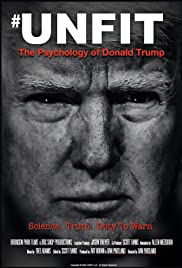
UNFIT: THE PSYCHOLOGY OF DONALD TRUMP (2020, doc)

September 1, 2020

 Greetings again from the darkness. Election Day 2020 is only two months away. Our nation is divided into two vocal factions … those for President Trump and those against him. There seem to be very few who fall into the “undecided” bucket, and that’s with no head-to-head debate yet. Because of this, we might question the “why” of Dan Partland’s documentary. However, what it does is condense three and a half years of President Trump’s actions and words into about 80 minutes of jarring psychoanalysis.

The film kicks off by informing us the President of the United States, as a result of taking office via election, is not subject to passing the mental fitness evaluation required by the military … yes, the military of which he is now Commander-In-Chief. We then hear from a steady stream of psychologists who offer up their diagnosis, though admittedly, none of met with Trump personally, and their analysis is based solely on observation and experience. They are in agreement that he fits the personality disorder known as a “malignant narcissist.” This label has four key elements: narcissism, paranoia, anti-social behavioral disorder, and sadism (the pleasure of harming others).

Labels are in vogue here. We hear from many psychologists and some previously associated with government and/or the administration, and each one has a label for Trump. The overriding question of Mr. Partland’s film appears to be, “Is Trump fit to be President?” In addition to the psychologists, we get interviews with George Conway, Malcolm Nance, and Anthony Scaramucci. Conway labels Trump as a “practical joke that got out of hand”, while Scaramucci (who lasted a total of 11 days in the administration) offers up a defense of Trump by stating, ‘Obviously he’s an a-hole, but he’s not a racist. He treats everyone like s___.”

Malcolm Nance offers up the most substantive insight into how government officials view the President, but it’s sportswriter Rick Reilly and author Tony Schwartz whose recollections are most memorable. Reilly tells the remarkable tale of how Trump cheats at golf (a gentleman’s game of integrity) and Schwartz, who co-wrote the book “Trump: The Art of the Deal”, states matter-of-factly that the President has no empathy for others.

The psychologists explain The Goldwater Rule and how The Tarasoff Rule overrides it. Bottom line, they are speaking out because of what they perceive to be their duty to warn society of impending danger. It should be noted that John Gartner is writing a book about Trump and his infamous tweets, and it is fascinating to see Jane Goodall’s study on chimps correlated to Trump and our society. The Hitler and Mussolini comparisons are discussed, as is the rise of fascist leaders in Brazil, The Philippines, Turkey, and other countries.

Is Donald Trump fit to be President? The argument is made here that he’s not, though we don’t hear any input from those who believe he is. Character and judgment have been on display since January 20, 2017 (and even before inauguration), so voters will decide. The film ends with discussions of nuclear threats and responsibilities, as well as how the Coronavirus was initially handled. Trump is given credit for drawing out what is referred to as the “tribal nature” in folks”, but mostly what we are left with is that Trump believes it’s all about him. Perhaps the impact of the documentary would have been greater had there been statements and input from those who support him. Instead, it comes across as confirmation for those who agree with this sentiment, and noise for those who don’t.

Available September 1, 2020 on digital and cable VOD

watch the trailer:


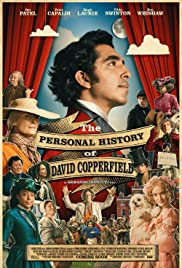
THE PERSONAL HISTORY OF DAVID COPPERFIELD (2020)

August 27, 2020

 Greetings again from the darkness. One need not be a Dickens expert to enjoy this re-imagining of his “The Personal History, Adventures, Experience and Observation of David Copperfield the Younger of Blunderstone Rookery (Which He Never Meant to Publish on Any Account)”. Yes, that’s the novel’s actual title, so there is little wonder it’s typically referred to by only the main character’s name.

The film opens with David Copperfield (Dev Patel, SLUMDOG MILLIONAIRE) reading his autobiography to a mesmerized audience in a beautiful theatre. Yes, we hear the iconic opening line, “Whether I shall turn out to be the hero of my own life …”, and then Copperfield turns and walks into the backdrop which comes alive as he, in fact, steps into his own life. The film is episodic in structure as we are presented with segments of Copperfield’s life that shaped his writing – from his birth at The Rookery, to his inquisitive nature as a young boy, through his cruel banishment to factory work, on to his life living with his eccentric aunt and his time at boarding school, and finally, with his time as a proctor, courting Dora, and focusing on writing. It’s a fascinating life, with many elements pulled (or enhanced) from Dickens’ own.

Director Armando Iannucci (IN THE LOOP, creator of “Veep”) and co-writer Simon Blackwell are frequent collaborators renowned for their expertise in satire. Iannucci is an admitted fan and student of Dickens, and he’s assembled quite a sterling cast for his take on the classic story. In addition to Patel as the older Copperfield, we have Jairaj Varsani in his first film as young David, rising star Morfydd Clark (PRIDE AND PREJUDICE AND ZOMBIES, 2015) in dual roles including the enchanting Dora Spenlow, Hugh Laurie as the King Charles (and his head) obsessed Mr. Dick, Aneurin Barnard (DUNKIRK) as David’s friend Steerforth, Darren Boyd and Gwendoline Christie as the wicked Murdstones, Peter Capaldi (“Doctor Who”) as the dodgy Mr. Micawber, Daisy May Cooper as trusted handmaid Peggotty, Nikki Amuka-Bird as the concerned Mrs. Steerforth, Benedict Wong as the sherry-loving Mr. Wickfield, and Ben Whishaw is a standout as conniving Uriah Heep. And if somehow that’s not enough, the brilliant and eclectic Tilda Swinton shines as Aunt Betsey Trotwood.

Each of the segments brings something different to the party – some of it bleak, and some of it cheery. Of course the dialogue has dashes of humor, but much of the comedy comes courtesy of the talented cast. It’s been said of writers that they should write what they know, and David Copperfield literally writes what he lives … through piles of scraps of paper, each holding a moment of life or the essence of a character. Watching this is a bit like camping out in a writer’s head and twisting through their thoughts … Mr. Dickens would be proud.

Opens wide in theaters on August 28, 2020

watch the trailer: