TRUTH IS THE ONLY CLIENT: THE OFFICIAL INVESTIGATION OF THE MURDER OF JOHN F KENNEDY (doc, 2020)

November 16, 2020

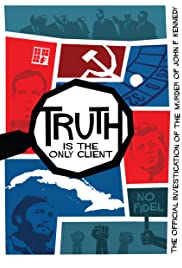
Greetings again from the darkness. Having spent much of my life in Dallas, the tragic events of November 22, 1963 have always played a role in my identity as a Texan. President Kennedy’s assassination that day has carried the added burden of conspiracy theories and politicized commentary … this in addition to the devastating emotional toll it took on the citizens of the United States. Co-directors Todd Kwait and Rob Stegman focus their attention on The Warren Report, the research conducted by the 7 appointed members of the committee, plus the affiliated attorneys and staff.

We see the archival clip of the Boston Symphony announcement of that day’s assassination, and the reaction of the live audience as the conductor reveals the Funeral March from Beethoven’s symphony is next up. It’s effective as a reminder of the gut-punch felt by the populace, before the filmmakers’ move towards a more analytical look at the findings by the commission. Vincent Bugliosi then informs us that it’s the greatest murder case in world history, and also the most important and complex. Bugliosi (now deceased) was the lead prosecutor in the Charles Manson case, and he also acted as the prosecutor in a 1986 televised mock trial of Lee Harvey Oswald – an event which led Bugliosi to write a detailed 2007 book entitled “Reclaiming History: The Assassination of President John F Kennedy”.

Four surviving staff members affiliated with the Warren Commission are interviewed on camera, as are other experts, authors, historians, and investigators. The “star” witnesses are Ruth Hyde Paine and Robert Blakey. Ms. Paine was a friend of Marina Oswald, and owned the house where Marina lived at the time of the assassination. Mr. Blakey was Chief Counsel and Staff Director to the U.S. House Select Committee on Assassinations (1977-79), which investigated Kennedy’s death. Among the other key contributors included here are author Patricia Johnson McMillan (“Marina and Lee”), Kennedy expert Judge Brendan Sheehan, CIA historian David Robarge, and Sound/Acoustics investigator Steve Barber.

While acknowledging, and not shying away from, the numerous conspiracy theories that have been floated in regards to the assassination, it’s important to understand that the focus here is on the report filed by the Warren Commission. It could even be categorized as having the goal of proving its accuracy. It’s noted that Chief Justice Earl Warren directed everyone associated with the commission that, “your only client is the truth”. We are informed that the multitude of conspiracy theories have cumulatively accused 12 groups, 82 assassins, and hundreds of co-conspirators. The commission interviewed 552 witnesses, and those involved remain adamant that their research and work was neither tainted nor politicized.

A high level history lesson is worked in between the interviews, often tying in to the portion of the report being discussed. These segments include: the assassination attempt on General Walker, Oswald’s pro-Castro work in New Orleans, the ‘grassy knoll’, the pristine bullet, Jack Ruby (including some background on him), and of course, the Zapruder film … where the pertinent frames are analyzed. There is an interesting segment on the Police Audio and how it was remarkably released via Gallery Magazine (a publication for adults). Discussion of Operation Mongoose, the CIA plot to overthrow communism in Cuba, including the killing of Fidel Castro may or may not be news to viewers, and there is even mention of Oliver Stone’s 1991 movie, JFK.

Included among those who have been accused of orchestrating the assassination are Cuba, the Soviet Union, organized crime, the FBI, and the CIA. Those involved specifically reference the cover-ups perpetrated by those latter two federal agencies. Did these hinder the investigations and impact the final report? Whether you subscribe to one or more of the conspiracy theories, one would be hard-pressed to not at least acknowledge that the citizenry’s distrust of government was amplified during this time,  and nothing since has calmed the waters. Kwait’s and Stegman’s film is undoubtedly the best film breakdown of the Warren Report, though it’s unlikely to change the minds of those who prefer a conspiracy.

watch the trailer


ANTEBELLUM (2020)

November 14, 2020

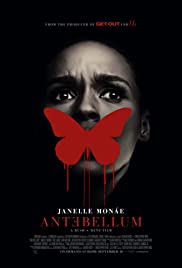
 Greetings again from the darkness. This is the movie for anyone unaware that racism was prevalent during the Civil War, and still continues to this day. Of course anyone fitting that description is likely enjoying their life in a cave, and is clueless that movies exist. It even goes as far to “inform” us that slaves were abused, tortured, and lynched, while today racism can take the more subtle form of a less desirable restaurant table or a concierge with an attitude. However, while the message may be unnecessary and too obvious, the originality and creative approach of filmmakers Gerard Bush and Christopher Renz is commendable, especially for their first feature film.

An uninterrupted extended take kicks off the movie, and shows us the lay of the land at a cotton plantation where the slaves are controlled by confederate soldiers. When an attempted escape goes wrong, the brutality of the soldiers is on display. One of the slaves is Eden, played by Janelle Monae. She’s the favorite of the General (Eric Lange, seen recently in two popular cable mini-series, “Escape at Dannemora” and “Perry Mason”), and he literally brands her as his property. Many of the sequences are difficult to watch as the cruelty and abuse is not sugar-coated.

When we next see Ms. Monae wake up from a dream, she’s living in a swanky home with a perfect husband (Marque Richardson) and cute daughter. She’s now Veronica, a well-known author and speaker who is living the American dream. A night on the town with her friends played by Gabourey Sidibe (Oscar nominated for PRECIOUS, 2009) and Lily Cowles purposefully comes across like it’s from a different movie altogether. It’s this contrast the filmmakers use to deliver their M Night Shyamalan style twist. Afterwards, it’s wheels-off for the movie, but we are able to assemble the pieces of what we’ve seen to this point.

Jena Malone and Jack Huston also play key roles here, but it’s Ms. Monae who gets the majority of the screen time, and mostly nails both Eden and Veronica. Although much of the film and story seems exaggerated and over-played, cinematographer Pedro Luque (THE GIRL IN THE SPIDER’S WEB, 2018) delivers a beautifully shot film, so it always looks good, regardless of what else we might be thinking. Filmmakers Bush and Renz likely have much more nuanced and effective storytelling in their future, and we do expect Ms. Monae to take the step from supporting roles to leads. She’s earned it.

watch the trailer


AMMONITE (2020)

November 12, 2020

 Greetings again from the darkness. “Peanuts” creator Charles Schulz injected “It’s the Great Pumpkin, Charlie Brown” (1966) with downtrodden Charlie repeating the line, “I got a rock” after each house on the trick or treat trail. It was funny because no one would rather have a rock than candy, right? Well, maybe no one except Mary Anning, the 19th century English fossil collector and paleontologist whose story is at the core of writer-director Francis Lee’s (GOD’S OWN COUNTRY, 2017) new film. His latest film has received some backlash due to the fictionalized approach it takes with her personal life.

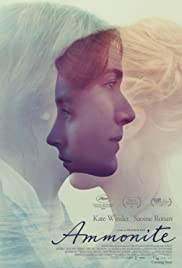
Oscar winner (plus 6 other nominations) Kate Winslet stars as Mary Anning, and we first find with her living a quiet life of near solitude in Lyme Regis, a sea side town in West Dorset, England. Having never received her deserved recognition from the scientific community for her discoveries, Mary cares for her mother (Gemma Jones, who also played Winslet’s mother in SENSE AND SENSIBILITY, 1995), an elderly woman burdened with having watched 8 of her 10 children die before her. They eke out a living peddling the stones Mary finds and polishes to tourists. Mary rarely speaks and her face shows the wear and tear of a mostly joyless life.

One day, Rodrick Murchison (James McArdle, MARY QUEEN OF SCOTS, 2018) drops into the shop. As a fellow scientist, he is aware of and interested in Mary’s work. He condescendingly introduces his wife Charlotte (4 time Oscar nominee Saoirse Ronan) as suffering from “melancholia”. When Charlotte falls ill, Rodrick asks Mary to look after her while he continues his travels. Dr. Lieberson (Alec Secareneau, AMULET, 2020) examines Charlotte and recommends rest and sea air. He also takes notice of Mary, an occurrence to which she pays little mind.

The contrast between Charlotte and Mary is not limited to age and class. They aren’t particularly fond of each other initially, though Mary slowly nurses her back to health. The two ladies finally connect over a heavy rock half-buried in sea wall sediment. The evolution of their relationship is slow, but thanks to the two outstanding actors, it’s quite something to watch. Ms. Winslet is particularly affecting as the woman beaten down by life and reluctant to allow any glimmer of hope. We see this in her interaction with neighbor Elizabeth Philpot (Fiona Shaw), a woman with whom there was a previous bond. The old saying goes, “opposites attract”, and here the two opposites, Mary and Charlotte, bring out the best in each other.

The skilled actors never allow the film to slide into melodrama, and instead offer two occasions where unbridled emotion jump off the screen. A passionate and liberating love scene is the first, and then a later re-connection provides the second. Mostly, Mary forces herself to conceal her rare happiness – we wonder if this is due to her belief it won’t last, or if it’s because she feels unworthy. Either way, it’s quite something to watch Ms. Winslet allows us to sense what’s she’s experiencing inside.

Music from Voker Bertelmann and Dustin O’Halloran never overpowers the moment, and the extremely talented cinematographer Stephane Fontaine works his magic. His previous work includes: JACKIE (2016), ELLE (2016), CAPTAIN FANTASTIC (2016), RUST AND BONE (2012), A PROPHET (2009), all beautifully filmed. Filmmaker Lee’s controversial dramatic license with the relationship is apparently done to better explain Mary Anning’s life, and it’s likely the first film where new acquaintances connect in a deep way thanks to the unearthing of a unique rock. Filming took place in Lyme Regis, the actual town where Mary Anning collected fossils in the 1800’s.

Watch the trailer


DREAMLAND (2020)

November 12, 2020

 Greetings again from the darkness. Outlaws on the run have been fertile ground for movies over the years, and young director Miles Joris-Peyrafitte and writer Nicolas Zwart give the genre their best shot (pun intended). The easiest comparisons are probably Sam Peckinpah’s THE GETAWAY (1972), Jonathan Demme’s SOMETHING WILD (1986), and Arthur Penn’s Oscar nominated classic BONNIE AND CLYDE (1969). However, given the style of this film, Terrence Malick’s BADLANDS (1973) was likely more of an influence for the filmmakers.

Phoebe Evans (as voiced by Lola Kirke, GONE GIRL, daughter of Bad Company drummer Simon Kirke) is our narrator, and from 1955 she recounts the story of her half-brother Eugene. Most of what she tells takes place twenty years earlier – 1935 Dust Bowl Texas during the Great Depression. Finn Cole (“Animal Kingdom”) stars as Eugene, and we pick up a few years after his dad left the family behind and headed for what he expected would be an easier life in Mexico. Mother Elizabeth (Kerry Condon, “Breaking Bad”) is now re-married to local Deputy George Evans (Travis Fimmel, LEAN ON PETE) and his bad haircut, and they now have a young daughter Phoebe (the magical smile of Darby Camp, THE CHRISTMAS CHRONICLES). Eugene reads Detective stories and mostly tries to stay out of George’s way, while Phoebe is a curious little sister, easily the most intelligent of the lot.

One fateful day, Eugene’s beloved detective stories come to life. After a local bank robbery turns violent, he discovers Allison Wells (two-time Oscar nominee Margot Robbie, I TONYA) hiding in his barn, with a bullet in her leg. Despite the $10,000 reward on her head, Allison sweet talks young Eugene into keeping her whereabouts secret, and helping her plot an escape. She swears she didn’t kill anyone and rationalizes the bank robbery by blaming the government for letting people suffer hard times. Eugene may or may not buy her story, but he recognizes this is the most excitement he’s likely to ever have in his life … plus, he’s smitten.

During the first half of the film, we follow Eugene as he helps Allison and holds the secret. When the second half kicks in, we find ourselves along for the ride as the two are on the run from the law, including Eugene’s stepfather George. Along the way director Joris-Peyrafitte includes some flashbacks to the botched bank robbery giving us a look at Allison’s “Clyde”, Perry Montroy (played by Garrett Hedlund). There are also numerous artsy flashes of coastline, supposedly representing Allison and Eugene’s landing spot should they escape. Of course, we know where this is headed – a shootout finale. Filmed in New Mexico, we do get the feel of the hard life fought by those during this era, including the powerful and devastating dust storms that require gas masks to prevent suffocation. The film is watchable thanks to the performances and atmosphere, though it’s not at the level of similar type movies listed earlier.

Watch the trailer


JUNGLELAND (2020)

November 9, 2020

 Greetings again from the darkness. We’ve rarely seen more improvement from an actor than what we’ve witnessed on screen from Charlie Hunnam in his nearly 25 year career. His work was particularly strong in James Gray’s LOST CITY OF Z (2017), and he builds on that here as the older brother filled with dreams of a better life. Writer-director Max Winkler (FLOWER, 2017, and son of Henry) co-wrote the script with Theodore Bressman and David Branson Smith (INGRID GOES WEST, 2017), and while it has a ‘seen this before’ vibe, we remain engaged throughout.

Hunnam stars as Stanley, the visionary who manages the underground boxing career of his brother Lion (Jack O’Connell, UNBROKEN, 2014). Lion is quiet and reserved, while Stanley thinks talking is the key to life. We don’t get the full back story on the brothers, but enough to know that Stanley has made an endless stream of bad decisions that have left the brothers squatting in a deserted foreclosed house in Massachusetts that requires them to sneak in and out of windows for access. Preaching a belief in “fate”, Stanley gushes about their future, which he envisions as a beautiful house in California and tailored Italian clothes.

In a scene that we assume has occurred numerous times, Stanley finds himself unable to pay the $2000 he owes his crime boss Pepper, played by Jonathan Majors. Rather than kill Stanley, Pepper offers him the kind of deal that seems too good to be true. All the Kaminsky brothers have to do is drive Sky (Jessica Barden) across the country to Reno, where they are to deliver her to Yates (John Cullum). At this point, we only know enough about Yates to understand that he’s not an upstanding citizen. If the brothers manage to execute this “simple” task, Pepper will ensure that Lion is added to the list of fighters of “Jungleland”, a bare-knuckles, no-holds-barred fight in San Francisco where the Grand Prize is $100,000. Stanley sees this as a much better alternative than being killed, and Lion agrees to go along with the plan.

What follows is a road trip with the Kaminsky brothers, their Whippet dog Ash, and Sky, the mysterious young lady whose minimal dialogue masks intentions that don’t necessarily mesh with the mission of trip. On the road, Stanley makes a few more less-than-brilliant decisions, while Lion and Sky bond … or do they? Regardless, things get challenging and obstacles appear everywhere. Once Yates appears, it’s a joy to behold 90 year old Jack Cullum (“Northern Exposure”) as he tears into the role of tough guy.

Mr. Winkler’s film actually has very little fighting in it, especially when compared to Gavin O’Connor’s outstanding 2011 film, WARRIOR. Instead, this is about brotherly love and the ties that bind (although so was O’Connor’s film). Surprisingly, the soundtrack features Bruce Springsteen singing “Dream Baby Dream”, and we do learn how to dress a knife wound with duct tape.

watch the trailer


LIE EXPOSED (2020)

November 9, 2020

 Greetings again from the darkness. The fine line of demarcation between “art” and pornography is one of society’s longest-running debates. “I know it when I see it” was made official in 1964 by Supreme Court Justice Potter Stewart in a case where the subjective categorization of obscenity was on trial. Of course the obvious problem with that definition is that everyone “sees it” differently. Director Jerry Ciccoritti (“Schitt’s Creek”) presents a film version of Jeff Kober’s stage play “Pornography”. Mr. Kober, a veteran actor, also appears here as a key character.

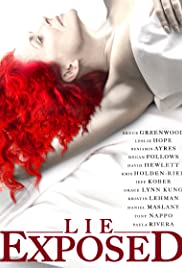
Leslie Hope stars as Melanie, our lead character and narrator. Melanie is diagnosed with a terminal illness, and her reaction to that affects her marriage, her sobriety, her friends, and results in a controversial art exhibit. That art exhibit acts as a framing device and structure for a film that is mostly various vignettes assembled together in a somewhat related, yet haphazard manner. We initially witness Melanie’s anxiety over opening night, and the reason for her trepidation is slowly revealed … the exhibit is set up as a peep show of the tintype photographs taken of her vagina. Yep, the worst possible news from the doctor led her to expose her lady parts, while also falling into the stereotypical lustful affair with the photographer (played by writer Kober).

We watch as each of her invited friends take a glimpse at the photographs. It’s not until the closing credits that we see Melanie the way they see Melanie, but the ensuing conversations tell us what we need to know. Each of the attending couples and friends gets their own dedicated segment preceded by their own tintype photograph. These cool retro photographs were the highlight to this viewer. However the focus of the film is how each person reacts to the exhibit and how it impacts their own relationship, most of which seem teetering on the brink of collapse. After each vignette, we are returned to the exhibit’s opening night, and also get additional color on Melanie’s search for meaning in life.

The characters we briefly get to know include Melanie’s husband Frank (Bruce Greenwood), who seems impossibly patient and understanding, given the situation. A substantial portion of their conversations occur over the phone while Frank sits alone in their bedroom (or even asleep). Others we meet: Mickey (Kristin Lehman), an alcoholic middle-aged party girl, Jerry (Daniel Maslany, brother of Tatiana), the acting DJ and AA member under sponsor Frank, Diane (Megan Follows), Tom (Kris Holden-Reid), Brian (David Hewlett), and married couple Betsy (Grace Lynn Kung) and Gregg (Benjamin Ayres), who air entirely too many grievances for our comfort.

Alcoholism and AA are referenced throughout the film, and Mickey even spouts, “Alcoholism is a good idea taken too far.” A misplaced debate on the best rock and roll drummer falls flat, but at least offers a momentary reprieve from the non-stop chatter on sex and vaginas. Obviously the title has dual meanings, and what the film does best is reinforce the need for art to spark conversation, debate and reflection.

watch the trailer


LET HIM GO (2020)

November 5, 2020

 Greetings again from the darkness. Diane Lane and Kevin Costner reunite on screen, only this time it’s not as the earthy and earthly parents to Superman (MAN OF STEEL, 2013). Instead, this film from writer-director Thomas Bezucha (THE FAMILY STONE, 2005), based on Larry Watson’s 2013 novel, features the two stars as long-time married couple, Margaret and George Blackledge, living a peaceful existence on their Montana ranch. Well, it’s peaceful now, as George is retired from his career as a lawman.

Their son James (Ryan Bruce), his wife Lorna (Kayli Carter, “Godless”), and young son Jimmy live on the ranch with Margaret and George. Grandma Margaret’s devotion to her grandson and judgmental nature sometimes crosses the line, creating quiet tension with his mother Lorna. George’s trained eye sees it all, but he mostly keeps his thoughts private, although the communication he shares with Margaret is often through a simple gesture or nod. Their chemistry is one that’s only built through time (and fine acting).

When a freak accident leaves James dead, we flash forward three years as Margaret and George attend Lorna’s wedding to Donnie Weboy (Will Brittain, who was excellent in this year’s BLOW THE MAN DOWN). George senses that Donnie does not possess the highest moral character, but Margaret is hit hardest by the newlyweds moving off the ranch and taking her beloved grandson with them. Concern escalates quickly when Margaret witnesses Donnie being physically abusive to Lorna and Jimmy, and then he relocates them to North Dakota to be near his family … without so much as a warning or goodbye to Margaret and George.

Crossing Grandma Margaret is like kicking the hornet’s nest. Poor George arrives home one day to find the car packed and Margaret on a mission to bring Jimmy home. George’s feeble attempt to reason with her fails (as he knew it would) and the two are soon on the road through some gorgeous countryside captured by cinematographer Guy Godfree. Along the way, they cross paths and befriend Peter (Booboo Stewart), a Native American who deserted “Indian School” for a life of solitude on the plains. It’s also on this road trip where Margaret and George are inundated with every possible warning about the notorious Weboy clan of North Dakota. No specifics are provided, but the message is clear … no one messes with the Weboys.

A tip leads the grandparents to Bill Weboy (Jeffrey Donovan, “Burn Notice”), and he provides living proof that the Weboy clan is rotten to the core. Behind an evil grin, Bill invites Margaret and George to the family ranch for dinner and a visit with their grandson. At the ranch, we are introduced to the twisted matriarch, Blanche Weboy (Lesley Manville, PHANTOM THREAD, 2017). This meeting of the families is about as tense as any we’ve seen on screen. A clash of good versus evil is always welcome, which makes it so disappointing that a film so stellar to this point, abruptly shifts from an intriguing psychological thriller into a ludicrous circus of violence, poor decisions, and absurdity.

There is a lot to like here, before it spins off the axis. Diane Lane is ferocious in the role, and Costner is very effective as her ‘still waters’ husband. It’s a hoot to see Ms. Manville lose her British accent and go over-the-top as nasty Blanche, and the early 1960’s setting looks great, including the vehicles. As mentioned before, the scenery is breath-taking, with Alberta (Canada) standing in beautifully for Montana and North Dakota. Composer Michael Giacchino is more accustomed to working on superhero and animated movies, and the score is often distracting in the first half, but fits better in the final act. Brace yourself for a couple of tough to watch scenes and a jarring tonal shift.

watch the trailer


KINDRED (2020)

November 5, 2020

 Greetings again from the darkness. It’s the first feature film for writer-director Joe Marcantonio and his co-writer Jason McColgan, which might explain why the film starts strong before faltering, mostly salvaged by three strong performances. Eighteen months into their relationship, veterinarian Ben (Edward Holcroft, KINGSMAN: THE SECRET SERVICE, 2014) and Charlotte (Tamara Lawrance) break the news to his mother that they are moving from England to Australia. Mum is none too pleased, as she expects her son to carry on the legacy of nine generations that have lived in the now dilapidated (and isolated) family estate.

Ben’s overbearing mother is Margaret (Fiona Shaw, Petunia in the Harry Potter movies) and she lives in the drafty mansion with Ben’s step-brother Thomas (Jack Lowden, TOMMY’S HONOUR, 2016), who seems more man-servant than son to Margaret. Charlotte soon discovers she’s pregnant, and while Ben is thrilled, she is unsure whether she even wants to keep the baby. Her own mother’s history plays a significant role in her uncertainty. A freak on-the-job accident kills Ben, and Charlotte soon finds herself … um … a guest of Margaret and Thomas. She’s the type of guest that’s not allowed to leave or make phone calls. Yep, she’s being held captive under the guise of this being in the best interest of her baby.

While Margaret is straight-forward vile and ignoble towards Charlotte, Thomas is more difficult to read … albeit no less off-center. Clearly both have a vision for where this is all headed. Margaret spills hers in a terrific scene where she lets her guard down with Charlotte, while Thomas is perfectly creepy and overuses the “making a quiche” punchline. For her part, Charlotte frequently passes out and has recurring dreams featuring birds/ravens/crows … and as fans of horror can tell you, that’s never a good sign. Has Charlotte been drugged or is she being gaslighted by Margaret and Thomas?

Director Marcantonio has delivered a psychological thriller that’s more frustrating than haunting. It has vibes of the classic ROSEMARY’S BABY (1968) sans Satan, but of course, is not at that level – although we do get the chilling doctor played here by Anton Lesser. Charlotte is the proverbial trapped damsel, but the film falls into a pattern of ‘escape-capture-repeat’. It also attempts to use music, but the combination of Debussy’s “Claire de Lune”, Bach’s Cello Suite No. 1, and the long-time standard “Dream a Little Dream of Me”, reaches overload. The Production Design from Derek Wallace and Set Decoration by John Neligan are top notch, but in the end, the frustration we feel overrides any creep factor or strong performance. It’s a near miss.

watch the trailer


THAT GOOD NIGHT (2020)

November 4, 2020

 Greetings again from the darkness. Art imitating life is something we’ve not only grown accustomed to, but also something we expect. In this case it’s the bittersweet final performance of the great John Hurt. A terminally ill man taking on the role of a terminally ill man. Director Eric Styles is working from a script by Charles Savage that was adapted from N.J. Crisp’s stage production. It’s easy to see how this could be a powerful live show, but the stunning home in Portugal where most of the film is set, makes for a pleasant transition to the screen.

John Hurt stars as Ralph Maitland, a self-centered, highly successful screenwriter, who may be an even more proficient curmudgeon. He lives in a beautiful home with his younger wife Anna (Sofia Helin, “The Bridge”), who was once his nurse. Ralph receives the dreaded prognosis at his doctor appointment. Rather than tell his wife, he proceeds with ‘getting his affairs in order’ and summoning home his estranged son Michael (Max Brown, “The Royals”). Michael was born to Ralph’s first wife, and he is also a writer.

Ralph’s true colors shine when Michael shows up with his girlfriend Cassie (Erin Richards, “Gotham”). Although Cassie is pretty tough, Ralph devolves from curmudgeon to downright churlish. His rudeness exceeds the bounds of palatable during dinner at a local restaurant, sending Michael and Cassie scampering off before appetizers. Anna is embarrassed by her husband’s actions, but he just continues on with his process – a process that includes contacting “The Society”, which facilitates Euthanasia.

A man in an impeccable white linen suit appears in the doorway of Ralph’s office. He’s only referred to as “The Visitor”, and his played by Charles Dance, Mr. Hurt’s co-star in the underrated 1987 film WHITE MISCHIEF. The conversations between Ralph and The Visitor deliver the best dialogue in the film, and likely the deepest since it forces Ralph to face his mortality and the impact and finality of his decision. It’s here where Ralph’s “low boredom threshold” is mentioned, and quickly minimized by The Visitor.

The film is a relatively simple look at a complex topic, and it also highlights the importance of reconciling with family members, and discovering a reason to keep living. The weakness here is that we only scratch the surface of Anna and Michael, and even what turned Ralph into the man he is. We get a quick glimpse of Ralph interacting with Ronaldo (Noah Jupe, HONEY BOY, A QUIET PLACE), the housekeeper’s son, in a manner that makes us believe he has regrets on his poor parenting during Michael’s childhood. Cinematographer Richard Stoddard takes full advantage of the beautiful scenery, as well as the uncomfortable interactions amongst the family.

John Hurt died in 2017, just 3 weeks after filming was complete. He had a remarkable 55 year acting career, including Oscar nominations for his work in MIDNIGHT EXPRESS (1978) and THE ELEPHANT MAN (1980). Of course he will always be remembered for his iconic chestburster moment in ALIEN (1979). He compiled more than 200 acting credits, and some of my other favorite John Hurt characters are found in: 1984 (1984), OWNING MAHONEY (2003), TINKER TAILOR SOLDIER SPY (2011), and the voice of rabbit Hazel in WATERSHIP DOWN (1978). Dylan Thomas’ 1947 poem plays a key role in this film (and title), and the sentiment also captures the spirit of John Hurt: “Do not go gentle into that good night. Old age should burn and rave at close of day. Rage, rage against the dying of the light.”

watch the trailer


COME PLAY (2020)

October 28, 2020

 Greetings again from the darkness. Hopes are always high this time of year for a creative new horror film. As each Halloween approaches, we search for new movies that will frighten us in an entertaining way, or at least be creepy enough to make us sleep with the lights on! Looking to be this year’s horror breakout, writer-director Jacob Chase has expanded his own 2017 5-minute short film LARRY into a full-length feature film.

Azhy Robertson (the young son in Noah Baumbach’s Oscar nominated MARRIAGE STORY, 2019) stars as Oliver, a dead-ringer for Danny Torrance in THE SHINING (1980). Oliver is an autistic, non-verbal boy who has no friends and depends on his electronic devices to communicate and entertain (he loves “SpongeBob SquarePants”). His parents, Sarah (Gillian Jacobs, “Community”) and Marty (John Gallagher Jr, SHORT TERM 12, 2013) constantly argue, which exacerbates Oliver’s hyper-sensitivity. When Dad moves out, an overwhelmed mother does her best to follow the advice of Oliver’s therapist. What she doesn’t know initially is that some being or creature named Larry is tracking her son through an online story called “Misunderstood Monsters” that pops up on his mobile devices.

Larry just wants a friend.” As the story slowly unfolds on the tablet Oliver’s dad found in the lost & found in the parking lot booth where he works, we come to understand exactly what is happening, and who and what Larry really is. The theme has some similarities to Jennifer Kent’s excellent film, THE BABADOOK (2014), with a dose of THE RING (2002), but the suspense never builds to that level despite a nice performance from young Mr. Robertson.

A clever twist actually ends up lessening the fright factor here. The monster can (mostly) only be seen via the mobile devices, which means the visuals are often limited by the size of the screen, although I’m a fan of the practical effects. Because of this, sound effects are critical, as are the reactions of Oliver and his parents … as well as the classmates unfortunate enough to get volunteered for a sleepover.

It seems only fitting that in 2020, loneliness is the real monster, and technology is the conduit for its impact. Additionally, all parents will relate to the extremes Sarah and Marty go to protect Oliver, and the final scene does offer an all-knowing moment that reverts to a simpler time … one that Larry wouldn’t appreciate.

watch the trailer