THE FAVOURITE (2018)

November 29, 2018

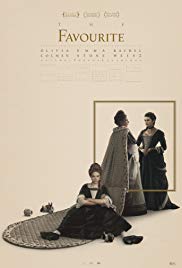
 Greetings again from the darkness. Our biggest fear was that Greek director Yorgos Lanthimos would one day soften the twisted edge he blessed us with in THE KILLING OF A SACRED DEER (2017), THE LOBSTER (2015), and DOGTOOTH (2009). That day may yet arrive, but not today and not with his latest. It’s his first time to direct a screenplay he didn’t write, which likely explains this being his most accessible film – though labeling it “mainstream” would be a huge stretch. So brace yourself for an unusual and odd costume period piece unlike anything you’ve seen before.

Co-writers Deborah Davis (her first screenplay) and Tony McNamara (TV background) deliver biting dialogue and treacherous situations, and benefit from three staggeringly terrific lead actress performances. Olivia Colman stars as Queen Anne, Rachel Weisz as Lady Sarah Churchill, and Emma Stone is Abigail. The three combine for one of the strangest and most convoluted love triangles and power struggles in history.

It’s very early 18th century and Britain is at war with France. Queen Anne is frail and in ill health due to severe gout and who knows how many other ailments. Her erratic behavior and quick temper convey childlike behavior from an adult body with a crown. Lady Sarah (Winston’s great-great grandmother, if I’ve calculated correctly) has strategically become the Queen’s trusted political advisor and often governs in her stead, while also sharing moments of intimacy. Sarah pulls no punches and certainly doesn’t subscribe to the ‘kill ‘em with kindness’ approach, and instead frequently insults the Queen to her face. When Sarah’s cousin Abigail appears after her family’s fall from grace (her father lost her in a card game), Sarah takes pity on her due to Sarah’s fondness of Abigail’s father during her childhood.

Abigail’s naivety and kindness soon win over the Queen’s affections. Is her sweetness an act? Is it due to ambition or desperation … is there even a difference here? We soon learn Abigail treats conniving as a profession – she views it as her only path back to respectability, and she’s willing to take on many acts lacking in respectability to charm her way into the inner sanctum. We are plopped into the wicked fun, delicious cat-fighting, strategic backstabbing and crafty political and personal maneuverings … right up until the story turns to vicious bleak darkness in the final act.

It’s fascinating to watch three women hold the power during this era, as the noblemen are relegated to constantly playing catch-up (kind of like the real world) and struggling to figure out the rules of the game. Power struggles abound, as do director Lanthimos stylistic touches. Noblemen played by Nicholas Hoult and Joe Alwyn are frequently dressed in frilly costumes, giant wigs and heavy make-up – quite the contrast to what we typically see in these period pieces. Other Lanthimos touches include royal duck races, pet bunnies representing deceased children, and fisheye lenses used from every conceivable angle.

Ms. Colman and Ms. Weisz were both in THE LOBSTER, and both have a knack for the Lanthimos style, and Ms. Stone surprisingly is also a natural with the twisted, vicious material. Each of the actresses have an extended close-up allowing them to show-off their immense and subtle talent … Ms. Colman’s is especially impactful. Extreme profanity (numerous c-words and f-words) is at times startling and effective, and the music is unique and diverse – as we would expect. As an added bonus, it requires little imagination to connect the dots to our contemporary political state, although that approach would likely stifle one’s enjoyment of the film. Mr. Lanthimos has quickly reached the ‘must-see’ list of directors, with a guarantee that we are going to see something unusual and interesting. It’s one of the year’s best, even if it’s not for everyone.

watch the trailer:


CREED II (2018)

November 20, 2018

 Greetings again from the darkness. The theatre was packed and I don’t recall having heard a louder outburst of cheering for any movie moment. Was it predictable? Yes. Did it deliver what the fans wanted? Absolutely. Is it (as my son asked) “Was it just ROCKY IV in 4K?” Yes, that’s pretty much exactly what it is. So despite CREED (2015) director Ryan Coogler opting to make BLACK PANTHER instead of this sequel to his own movie, I’ve seen proof that it’s clearly a crowd-pleaser … which is what the “Rocky” franchise has always done best.

Michael B Jordan returns as Adonis Johnson/Creed and Sylvester Stallone is back as Rocky Balboa. And although that would likely be enough, we also have Tessa Thompson as Adonis’ girlfriend Bianca and Phylicia Rashad as Adonis’ mom, both also from CREED. We see an early training/boxing sequence in Russia featuring (professional boxer and chiseled human mountain) Florian Munteanu as Viktor Drago being trained by his father Ivan Drago (Dolph Lundgren). If you are a fan of the franchise at all, you know exactly where this is headed – and so does opportunistic boxing promoter Buddy Marcelle (Russell Hornsby).

Think of it as ‘Revenge vs Redemption’. Adonis fighting the son of the man who killed his father Apollo is the obvious revenge side, and Viktor fighting to redeem his disgraced father Ivan, who lost to Rocky 30 some years ago. This one lacks the real world Cold War element of ROCKY IV (1985), and while it’s missing the political heft of that film, it still packs quite a punch as a revenge flick … even if there was no other possible route this sequel could take. If anything, the filmmakers should be commended for not force-feeding any cheesy political statements on today’s environment.

What are you fighting for?” This must be both a necessary boxing question to answer and a tough one, as it seems to get asked over and over during the film. The combination of writers: story by Cheo Hodari and Sacha Penn, characters by Ryan Coogler, and screenplay by Sylvester Stallone and Juel Taylor, place quite a bit of focus outside the ring. Relationship quandaries are at every turn: young married couples, father-son (double whammy), mother-son (another double whammy), and first time parents.

Director Steve Caple Jr seems more comfortable outside the ring himself, as the boxing match camera work does not hit the level of the first, although audience members’ emotions run even higher. Perhaps to overcompensate for the more basic camera work, some of the sound effects for rib punches may have been pulled right out of battle scenes in war movies – they sound like explosions, and are exaggerated so that we viewers might “feel” the ribs cracking.

Wisely the relationship between Adonis and Bianca is a key element this time. Mr. Jordan and Ms. Thompson have tremendous chemistry, and the filmmakers deserve credit for hitting the hearing-impaired issue head-on. It’s a topic that’s rarely seen in movies, and appears to be very well handled. There are some other ties to the “Rocky” franchise with Wood Harris playing “Little Duke”, son of Duke, played numerous times by Tony Burton throughout the Rocky films, and there are a couple of other (very) familiar faces that pop up from both IV and ROCKY BALBOA (2006). On the music front, Ludwig Goransson is a rising star composer thanks to FRUITVALE STATION, CREED, BLACK PANTHER, VENOM, and now CREED II. He toys with the familiar Rocky numbers, but some will argue not enough.

This sequel is more grand scale than the first (which was identity driven), yet more restrained than IV. Sure we have the mandatory zany training montage (zany may be too mild), and the final bout is held in Moscow (even though it makes no sense that the champion would agree to this), but it’s definitely more low-key when comparing Bianca’s musical intro to James Brown’s “Living in America”.

For fans, it’s great to see Rocky Balboa and Ivan Drago back in the ring together – even if only for a moment; however, maybe not as thrilling (dramatically speaking) as when the two first reunite Godfather-style in a table at Adrian’s Café. It’s a surreal moment that both Lundgren and Stallone play perfectly – one with pent-up emotional turmoil and the other quite content with what life has delivered. Of course, Sly can play Rocky in his sleep … and no that wasn’t meant to encourage one-liners followed by rim shots. He’s comfortable with the shuffles and mumbles of an elderly Rocky and it’s a pleasure to watch an old friend. The only real question remaining … is the “Creed” franchise gonna fly now?

watch the trailer:


THE FRONT RUNNER (2018)

November 16, 2018

 Greetings again from the darkness. Jason Reitman has proven himself to be an outstanding filmmaker who delivers entertaining stories with insightful commentary often accompanied by biting humor. His excellent films include: THANK YOU FOR SMOKING, JUNO, UP IN THE AIR, and one of this year’s most underappreciated films, TULLY. His latest is based on the book “All the Truth is Out” by Matt Bai (who also co-wrote the screenplay with Reitman and “House of Cards” Producer Jay Carson), and it tells the story of Colorado Senator Gary Hart and his derailed 1988 campaign for President.

The film begins in 1984 when an idealistic Hart loses the Democrat party nomination to Walter Mondale, who of course, went on to lose the national election to Ronald Reagan. It then picks up as the 1988 campaign is underway and Hart is the party frontrunner, and some say the candidate most likely to win the Presidency. Hugh Jackson plays Hart and is unfortunately burdened with an ill-fitting and distracting wig meant to emulate the lush locks sported by the youthful looking Senator. Vera Famiga plays his wife Lee, and Kaitlyn Dever plays their daughter Andrea. Casting two such fine actresses matters because of what happened during the campaign.

Senator Hart was the favored candidate of the young and the idealistic forces, though the details of his platform were never communicated clearly. Mostly, he was presented as the energetic candidate of hope versus the stodgy Republican Party that had delivered Ronald Reagan for 8 years and was now looking to George Herbert Walker Bush. Everything changed for Hart when rumors of marital infidelity, and possibly even an open marriage, began to circulate. When the media asked him, he was defiant … at times snapping in anger that his personal life was no one’s business.

We are taken inside the campaign via many familiar faces, including campaign manager Bill Dixon played by JK Simmons, and a terrific turn by Molly Ephraim as staffer Irene Kelly. We are invited on board the aptly named party yacht “Monkey Business” when Hart first meets Donna Rice (Sara Paxton), setting off what could considered be the birth of political gossip-columns. The Herald and Washington Post are key players here, as are editor Ben Bradlee (Alfred Molina) and iconic journalist Bob Woodward. Apparently this is supposed to show us how politics and the media coverage of politics changed with Gary Hart.

Where the movie lets us down is in not providing any explanation to why Hart was the front runner, whether the U.S. or even the democratic party missed out on a great (or even competent) President, and how in the world Hart was so clueless as to why citizens might have an interest in his personal life activities that included sleeping with a woman (or women) that weren’t his wife. By the way, the reason for the last one is character … and we’ve since learned it’s not as important as what we might have once thought. These are all key issues as to why this is even a story, and whether or not it’s interesting enough to re-tell.

Instead of details, we are bombarded with overlapping dialogue and frenetic editing designed to generate some buzz and energy. The reality is that Gary Hart was really not that interesting, and in fact, by denying the importance of character, he thumbed his nose at his supporters. This blip on American history is simply not enough to justify a 2 hour a movie, and Mr. Jackman never seems able to capture the essence of Hart (whatever that essence might have been). There is obvious relevance to how today’s press treats personal stories, but a bland candidate makes for a bland movie.

watch the trailer:


GREEN BOOK (2018)

November 15, 2018

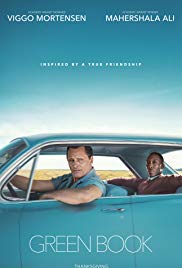
 Greetings again from the darkness. “The Negro Motorist Green Book” was a travel guide highlighting safe places for African Americans to stay, eat and visit from the 1930’s through the mid 1960’s. Yes, it was a real publication and yes, there was a real need for it during the Jim Crow era. The book makes for a nice movie title, but this sterling dramedy from director Peter Farrelly focuses more on the budding friendship of two men from vastly different worlds separated by a few city blocks.

Mr. Farrelly is one-half of the infamous Farrelly Brothers who have directed such raunchy comedy hits as THERE’S SOMETHING ABOUT MARY (1998) and DUMB AND DUMBER (1994). This is quite the change of pace for him, as it is for co-stars Mahershala Ali (Oscar winner last year for MOONLIGHT) and heavy drama stalwart Viggo Mortensen. We see a crisp blend of the era’s harsh racism and the inherent comedy of a buddy road trip featuring a working class NYC Italian-American and an upper crust, well-educated, world class African-American pianist.

The film kicks off in 1962 at the Copacabana, a mob-controlled club where Frank Anthony “Tony Lip” Vallelonga (a beefed up Mortensen) gives us an up-close look at his bouncer skills. He’s quite good at his job. When the club closes for renovation, he takes a job as a chauffeur/bodyguard for Dr. Don Shirley (Ali), who is beginning an 8 week tour as the featured player in a jazz trio through the Midwest and Deep South. Tony Lip is a walking Italian cliché, while Dr Shirley is a regal black man … in fact, he might view himself as royalty – living alone in a swank apartment above Carnegie Hall. This is a good time to note that Tony Lip’s son Nick Vallelonga co-wrote the script, is a producer on the film, and even makes an appearance as a State Trooper.

Inspired by the true story of this trip and the lifelong friendship that ensued, we get to know both men as they get to know each other. Tony Lip is a streetwise man who is comfortable with his lot in life, while Dr. Shirley plays his role in society while quietly stewing internally. He flashes his toothy grin to disarm the adoring white audiences, but then sucks down his Cutty Sark in the evening, as he is good enough to perform for them, but not good enough to dine with them (or even use their restroom). There are times the racism gets violent and that’s where Tony Lip comes in.

Don helps Tony write romantic and intimate letters to his wife Dolores (played by Linda Cardellini), while Tony teaches Don about KFC and Little Richard … proclaiming “I’m blacker than you!” in one of the film’s funniest moments. It’s an awkward buddy film that in real life developed into a decades-long friendship – one that only ended when both died in 2013. It could be described as a twisted DRIVING MISS DAISY with a dose of THE HELP. It’s certainly a crowd-pleaser, even delivering a mushy ending not dissimilar to that of PLANES TRAINS AND AUTOMOBILES. Of course we don’t mind, because after spending a couple of hours with these two, we are fine with a feel-good ending. The film is showcase for two terrific actors, and for those that don’t know, the real Tony Lip appeared in a few projects such as “The Sopranos” and DONNIE BRASCO.  Expect to see these two actors get some love at Oscar time, and this is one of the few that can be recommended to just about every movie lover.

watch the trailer:


WIDOWS (2018)

November 15, 2018

 Greetings again from the darkness. Woman power. Black power. Racist old white men. Corrupt politicians. Abusive husbands. Cheating white husbands. Racist cops. Men are bad. Women are strong and good. If a filmmaker were to blend all of these stereotypes into a single movie, then as movie goers we should expect an ultra-talented filmmaker like Steve McQueen to go beyond conventional genre. Unfortunately, a nice twist on the heist movie formula from Lynda La Plante’s novel turns into predictability that whips us with societal clichés posing as societal insight.

I seem to be one of the few not raving about this movie. Hey it has the director behind  Best Picture Oscar winner 12 YEARS A SLAVE (Mr. McQueen),  a screenplay he co-wrote with Gillian Flynn (GONE GIRL) from the aforementioned novel by Lynda La Plante, and a deep and talented cast of popular actors. It ticks every box and it’s likely to be a crowd-pleaser, despite my disappointment. Every spot where I expected intrigue, the film instead delivered yet another eye-roll and easy-to-spot twist with a cultural lesson. Each of the actors does tremendous work, it just happens to be with material they could perform in their sleep.

It’s the kind of film where audience members talk to the screen – and it plays like that’s the desired reaction. This is the 4th generation of the source material, including 3 previous TV mini-series (1983, 1985, 2002). It makes sense that this material would be better suited to multiple episodes, rather than hurried through 2 hours. There are too many characters who get short-changed, and so little time to let the personalities breathe and grow. But this is about delivering as many messages as possible.

A strong premise is based in Chicago, and finds a team of four burglars on a job gone wrong. This leaves a mobster/politician looking to the four widows (hence the title) for reparations. Since the women have no money, their only hope is to tackle the next job their men had planned. Viola Davis, Michelle Rodriguez, Elizabeth Debicki, and Carrie Coon play the widows, though only the first three are given much to do, as the talented Ms. Coon is short-changed. In fact, Ms. Davis is such a strong screen presence that she dominates every scene she is in – she’s a true powerhouse. Even Liam Neeson can’t hang with her. Colin Farrell appears as a smarmy politician and Robert Duvall is his f-word spouting former Alderman dad. Cynthia Erivo has a nice supporting turn in support of the women, and Bryan Tyree Henry, Daniel Kaluuya, Jacki Weaver, Garret Dillahunt, Kevin J O’Connor, Lukas Haas, and Jon Bernthal fill out the deep cast … see what I mean about too many characters and too little time?

There is no single thing to point at as the cause for letdown. The story just needed to be smarter and stop trying so hard to comment on current societal ills. As an example, a quick-trigger cop shooting an innocent young African-American male seems thrown in for the sole purpose of ensuring white guilt and an emotional outburst from the audience. It’s difficult to even term this film as manipulating since we see the turns coming far in advance. Two far superior message films released earlier this year are Spike Lee’s BLACKKKLANSMAN and Boots Riley’s SORRY TO BOTHER YOU. For those who need only emotion and little intellect in their movies, this not-so-thrilling heist might work. For the rest of you, it’s good eye-roll practice.

watch the trailer:


A PRIVATE WAR (2018)

November 10, 2018

 Greetings again from the darkness. Marie Colvin was a (seemingly) fearless war correspondent obsessed with giving a voice to those forgotten during war. Were she alive today, she could not have hand-picked a better filmmaker than Matthew Heineman to tell her story. Director Heineman was Oscar nominated for CARTEL LAND (2014) and, combined with his CITY OF GHOSTS (2017), gives him two of the best ever documentaries that show what the front lines are like in both international wars and the equally dangerous wars being fought over drug territories. Heineman has carried his own camera directly into the center of those storms, while Ms. Colvin took her pen and pad. Simpatico.

Based on Marie Brenner’s Vanity Fair article “Marie Colvin’s Private War” (screenplay by Arash Amel), the film benefits from the extraordinary and courageous work of Ms. Colvin, and also a terrific performance from Rosamund Pike (words I’ve not previously written). Ms. Pike captures the extremes of Ms. Colvin’s life – the atrocities of war and the self-prescribed treatment of her PTSD through vodka, and does so in a manner that always seems believable. She lets us in to a world most of us can’t imagine.

As a war correspondent for Britain’s Sunday Times (since 1986), Ms. Colvin told the stories we’d rather not know. In her words, “I saw it, so you don’t have to.” The film begins with a stunning overhead view of 2012 war-ravaged Homs Syria (destruction courtesy of Assad’s soldiers) – a place that starts the film and later ends the story. We then flash back to 2001 London so we can witness Marie in society and struggling with a personal relationship. She then chooses, against her editor’s (Tom Hollander) guidance to cover Sri Lanka. It’s a decision that cost her an eye, while also providing her recognition as the eye-patch wearing female war reporter.

In 2003, a tip takes her to a previously undiscovered mass grave site in Fallujah. This is her first work alongside photographer Paul Conroy (played by Jamie Dornan). Having “seen more war than most soldiers”, Ms. Colvin’s severe alcoholism can’t kill the nightmares, visions, and PTSD. After time in a clinic, she returns to work. We see her in 2009 Afghanistan and then pulling no punches when interviewing Libya’s Muammar Gaddafi in 2011. During these assignments, we learn much about Ms. Colvin’s personality and approach. She is rarely without a cigarette, admits to wearing Le Perla lingerie (and why), carries Martha Gellhorn’s “The Face of War” as her field manual, and wins two British Foreign Journalist of the Year awards – though seeing her at the banquets is quite surreal.

Hollander’s subtle performance as news editor Sean Ryan is also quite impressive. He fears for her safety (and even questions her sanity) but is in constant conflict with the need to sell newspapers – something Ms. Colvin’s stories certainly did. Stanley Tucci has a role as Tony Shaw, her love interest, but despite her words, we never believe he and his sailboat are ever more than a distraction from her obsession with the front lines. The final sequence in 2012 Homs Syria is stunning, as is her final interview with Anderson Cooper on CNN.

Ms. Pike has altered her voice to mimic the deeper tone of Marie Colvin – her efforts confirmed in the final interview played at the film’s end. It’s quite a career boost for Ms. Pike, who has previously been known for playing ice queens in films like GONE GIRL. She captures the traumatized Marie, but also the obsession of someone whose DNA constantly drove her back to the stories that needed to be told.

Director Heineman’s unique perspective combined with the cinematography of 3 time Oscar winner Robert Richardson (a favorite of Scorcese, Tarantino, and Oliver Stone) delivers a realism of war that we rarely see on screen. Mr. Richardson also shot SALVADOR (1986) and PLATOON (1986) and his work here surpasses both. The film gives us a glimpse at the psychological effects of such reporting, and a feel for the constant stress of being surrounded by tragedy and danger. This is fitting tribute to a courageous and very skilled woman, although I do wish the men weren’t constantly helping her out of trucks and jeeps.

watch the trailer:


BOY ERASED (2018)

November 8, 2018

 Greetings again from the darkness. It has taken two movies this year, THE MISEDUCATION OF CAMERON POST and this one from writer-director-producer-actor Joel Edgerton, and I finally understand that the practice of conversion therapy (treatment designed to change a person’s orientation to heterosexual from something else) is real … and it’s widespread … and it’s cruel … and it’s absurd. I’ll readily admit that my little life bubble has previously protected me from knowing much about the world of conversion.

Lucas Hedges has quickly developed into a dependable dramatic actor with his moving performances in such films as MANCHESTER BY THE SEA, LADY BIRD, and MID90S. Here he stars as Jared Eamons, a college aged young man struggling with the inner turmoil that accompanies being a gay man raised by a Pastor-dad in the heart of the Bible belt. Since the film is based on the memoir of Garrard Conley, we can assume much of what we see and hear has been seen and heard by Mr. Conley in his life.

Jared’s parents are played by Nicole Kidman and Russell Crowe, and while the parental actions of their characters may confound us, both deliver strong performances. One especially impactful scene allows Ms. Kidman to show what sets her apart … it occurs in her scene at a table with Hedges when momma finally takes control. Director Edgerton appears as Victor Sykes, the director and “therapist” at Love In Action, the refuge program where Jared’s parents send him.

Over the opening credits we get childhood clips showing Jared was a “normal” little boy being raised in a loving household. Flash forward to his awkward date with a girlfriend who asks him “what’s wrong?”. Later, after being sexually assaulted by a college buddy, Jared comes out to his parents. His time in Sykes’ program is filled with unimaginable steps. A Genogram is to be completed, listing all of the personal problems and “dangerous” traits of relatives on the family tree – the point is to isolate the source of sin. One boy is beaten with bibles by his family in an effort to drive out the demons of homosexuality (nope, that’s not a joke). There is also a macho counselor (played by Flea of Red Hot Chili Peppers) who gives inspiring manly talks and teaches how to look, act, and stand like a real man. It’s all so pathetic and tragic.

Rather than focus on Jared and the others in the program, much of the time is spent with his parents and why/how they could make the decision to enter him into conversion therapy. Jared’s dad tells him he won’t be loved by God … a message also delivered by Sykes. When Jared’s mom (Kidman) states “our family is so normal”, we aren’t sure whether she believes it, or wishes it so – although she leaves no doubt how she pictures a normal family. Of course, it’s really Jared’s dad (Crowe) who takes the news as a personal affront to his manhood and religious beliefs … beliefs somehow more important than his own son.

Support work is provided by Joe Alwyn, Cherry Jones (as a doctor, and the only reasonable adult), Frank Hoyt Taylor, Britton Sear, and Jess LeTourette. Filmmaker Xavier Dolan (MOMMY, 2014) also has a role as Jon, one of those in the program. The music is provided by Danny Bensi and Saunder Jurrianns, and for the most part, director Edgerton stays consistent with his focus on characters – though his frequent use of slo-motion loses impact with each successive use. The film avoids any cheap sentimentality or emotional gut-punches, instead focusing on the daily dealings. Perhaps it’s meant to appeal to parents in this situation – those parents who are confused and misguided. We see this film more than we feel it, although I often found myself looking at these parents and asking, ‘what’s wrong with these people?’ When the film ends by telling us 36 states allow for conversion therapy, we quickly realize Jared’s parents may be more ‘normal’ than we thought (incredible as it seems).

watch the trailer:


THE DIVIDE (2018)

November 8, 2018

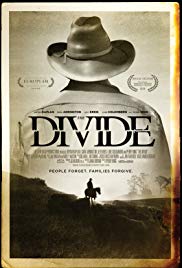
 Greetings again from the darkness. Those of us who were watching movies in the 1970’s recall Perry King as one of the fresh-faced, hunky twenty-somethings in THE LORDS OF FLATBUSH (1974) … along with Sylvester Stallone and Henry Winkler. Now, more than 40 years later, not only does Mr. King star as crusty old rancher Sam Kincaid, but he also directs his first feature film. The script is written by Jana F Brown, in what is also her first screenplay. Due to its setting, the film could be labeled as a western, but it’s really a personal drama emphasizing the importance of family reconciliation.

Sam Kincaid (King) is an elderly rancher who lives on land that looks a great deal like the Lucas McCain ranch from the TV classic “The Rifleman”. We first see Sam as he shares his philosophy of mending fences with his hired help. If you are curious, it has to do with knowing “why the holes are there”. Luke (Bryan Kaplan) is the young ranch hand who must not only deal with the severe drought-plagued northern California climate of 1976, but also the past-their-prime tools and equipment. Presenting even more of a challenge is Sam himself.

Sam is suffering from Alzheimer’s disease and his house is decorated with personal notes reminding him how the light switch works, or to perform some other menial task. A particularly pointed note on the phone states, “your daughter doesn’t want to talk to you”. Luke figures out the father and daughter had some kind of falling out, but he soon realizes Sam’s disease is progressing pretty quickly. He tracks down daughter Sarah (Sara Arrington) and pleads with her to come visit her father.

As much as I enjoyed the banter between Sam and Luke, the film picks up a bit when Sarah and her son (Sam’s unknown grandson) arrive. Family issues, secrets and skeletons in the closet make communication between these folks more than a tad uncomfortable at times. However, slowly we see the “fence” mending … and Sam’s early philosophy becomes crystal clear. Campfire-style music plays throughout much of the film, and Sam’s repeated questions allow Luke, Sarah, and grandson CJ to comprehend what’s happening and what needs to be done. Sam’s recurring nightmare can only be stopped with a reconciliation that’s painful for all involved. Perry King proves his effectiveness as an aged rancher, and also as a first time filmmaker. He and Ms. Brown deliver a nice message … and the black and white photography serves the faces and setting quite well.

watch the trailer:


CAN YOU EVER FORGIVE ME? (2018)

November 1, 2018

 Greetings again from the darkness. Despite her regular role in all 7 seasons of “Gilmore Girls” and her co-lead role in the 6 season run of “Mike and Molly”, it was her raunchy turn in 2011’s BRIDESMAIDS that turned Melissa McCarthy into a star. Since then, she has been the lead in a string of comedies written specifically for her: IDENTITY THIEF, THE HEAT, TAMMY, SPY, THE BOSS, and GHOSTBUSTERS: ANSWER THE CALL. Mixed in was an overlooked little film called ST. VINCENT, a Bill Murray vehicle in which Ms. McCarthy first flashed some dramatic chops. With this latest, she shows that she’s no one-trick pony, but the character is a bit too narrow, and the material a bit too bland to convince us whether she is up to becoming an Oscar-caliber dramatic lead.

That’s not to say her performance isn’t noteworthy, because it is. She plays Lee Israel, a real life writer who had success as a celebrity biographer in the 1970’s and 1980’s, and then turned to a life of crime as a forger of collectible letters. This (mostly) true story of Ms. Israel features Ms. McCarthy in a poorly cut wig, very little make-up and the frumpiest of frumpy clothes. She’s also an aggressively bitter person who, in the film’s opening scene, get fired from her job in 1991 for drinking scotch at her desk and telling a co-worker to “F-off”. Classy, she’s not. Her actions and this firing are our indoctrination into her caustic personality.

Director Marielle Heller is no stranger to examining the life of someone who is not so happy, as she is best known as the writer/director of THE DIARY OF A TEENAGE GIRL (2015). Her latest is adapted from Lee Israel’s memoir by screenwriters Nicole Holofcener (ENOUGH SAID, 2013) and Jeff Whitty. After her firing, Ms. Israel hits desperate times. Her publisher (an always terrific Jane Curtain) tells her that a Fanny Brice biography has no market, and that no one wants to work with Israel anymore … she has burned every bridge. Fanny Brice and Tom Clancy both take some shots here as Israel tries to defend herself by dragging down others … a personality trait not uncommon among those who are so miserable in life.

As we watch this alcoholic, slovenly, abrasive person muddle through days – only showing any affection for her pet cat – there is quite a clever scene that could seem like filler were it not for what happens soon afterwards. Ms. Israel is at home watching THE LITTLE FOXES on TV and we see her perfectly mimicking Bette Davis. This ability to imitate others leads her into a career path of forging and selling personal letters “from” the likes of Noel Coward and Dorothy Parker. It also finds her crossing paths with miscreant Jack Hock (a flamboyant and energetic Richard E Grant). The two misfits form an odd friendship and partnership that begins to cash flow.

A sequence between independent bookstore owner Anna (a talented and under-utilized Dolly Wells) and Lee Israel teases us with the idea of a love interest, but Ms. McCarthy is unable to convince us that Lee’s vulnerability is genuine, and the potential relationship soon fizzles thanks to Lee’s crankiness and criminal path. While watching, I couldn’t help but feel that I was being manipulated into feeling sympathy towards Lee Israel, simply because she is a lonely female criminal. Typically male criminals in movies are social outcasts to be despised and/or feared, so this trickery is a bit unsettling. Personally, I find it difficult to muster sympathy towards any criminal, no matter their gender or how pathetic their life and personality might be.

The best film to date about a forger, CATCH ME IF YOU CAN, worked because of the cat and mouse between good and bad, and the criminal at the center was overflowing with personality. Here, we are stuck with a curmudgeon who uses multiple typewriters to create fake letters … all in the confines of a dirty apartment she shares with her cat. Were it not for Ms. McCarthy’s expertise at delivering caustic one-liners or Mr. Grant’s impeccable comic timing, this drama would fall flat. If we ever doubted the manipulation, be prepared for two kitty cat scenes designed to elicit “aww” from the audience.

Director Heller does a nice job of presenting an early 1990’s feel for New York, including the gay bar Julius’, which is evidently still in existence today. There is also an interesting point made about how collectors want to believe, so the authentication process is crucial to the industry – though we can’t help but wonder about potential fraud. On the downside, there is really nothing dryer than watching a writer write … even someone as miserable as Lee Israel, and even on collectible typewriters. Additionally, the score and soundtrack were much too loud for the film, and proved quite distracting in certain scenes. A Paul Simon song near the end seems like a plea for Oscar consideration, but by then, we are just relieved that the bad guy got caught. But that kitty … aww.

watch the trailer:


THE OTHER SIDE OF THE WIND (2018)

November 1, 2018

 Greetings again from the darkness. Film nerds unite! Most of us who (proudly) wear that label have known that filmmaker Orson Welles left a few unfinished projects when he died in 1985. The most famous – or infamous – of these was THE OTHER SIDE OF THE WIND. It was to be the comeback film for Mr. Welles, who had slipped from the artistic throne with his run of TV projects, shorts, and unsuccessful features during the 1960’s. Known as a perfectionist, and as someone more dedicated to the filmmaking part more than the “finishing” part, Welles filmed scenes for the movie from 1970-1976, and then picked it back up in the early 1980’s to begin the editing process … a process he never finished.

Best known for his all-time classics CITIZEN KANE (1941) and TOUCH OF EVIL (1958), Welles left mountains of copious production notes, and almost 100 hours of footage in multiple formats, and in both color and black and white stock, on this project that, even today, might best be described as experimental. Over the past 30 years there have been numerous attempts to raise the money required to finish the film, but all fell short until this one spearheaded by Peter Bogdanovich and Beatrice Welles (Orson’s daughter).

In what we can only interpret as semi-autobiographical, what we see on screen is the making of a documentary on a legendary director’s comeback film (his poke at artsy filmmakers). Clips of the unfinished film are shown throughout, while an industry party plays out, and numerous documentary filmmakers capture the scene from various angles with their always-present cameras. Got that?  Don’t worry, it takes at least a few minutes as a viewer to get the rhythm and layers of what’s unfolding before our eyes.

John Huston (himself an industry legend with 2 Oscars and 15 nominations) plays director Jake Hannaford, who is walking the fine line between Hollywood power and has-been. It’s his 70th birthday party, and Hannaford is compared to Hemingway (a description that better fit Huston than Welles), silently endures insinuations of his closeted homosexuality, desperately seeks funding to finish his film, and skulks around his own party winding through the hangers-on and those waiting for the final curtain.

Hannaford’s artsy film within a film, at least the clips we see, feature an inordinate amount of nudity from the leading lady (played by Welles 4th wife and the film’s co-writer Oja Kodar), and some ultra-coolness from the lead actor John Dale (played by Robert Random). Part of Hannaford’s desperation (both professional and persona) stems from a James Dean-type Dale walking off the set mid-picture.

Guests at the party include Peter Bogdanovich as director Brooks Otterlake, a young director once mentored by Hannaford. It’s an example of the student becoming the teacher. Susan Strasberg (daughter of famed acting coach Lee Strasberg) plays film critic Juliet Riche, a thinly-veiled portrait of Welles nemesis Pauline Kael. Other familiar faces in the cast include: Lilli Palmer, Mercedes McCambridge (Oscar winner), Edmond O’Brien (Oscar winner), Cameron Mitchell, Paul Stewart (from CITIZEN KANE), Tonio Selwart, Geoffrey Land, Norman Foster, Dennis Hopper (2 Oscar noms), Claude Chabrol, Stafford Repp (Sgt O’Hara from “Batman” series), plus Cameron Crowe (Oscar winner), William Katt, Frank Marshall (5 Oscar noms), Rich Little, Leslie Moonves (recently fired in disgrace CBS President), and Paul Mazursky (5 Oscar noms). It’s fascinating to see so many we recognize from more than 40 years ago. Of course, it’s Huston, with his face that’s made for black and white film, who is the dominating figure (his scenes were filmed prior to his work on CHINATOWN).

It’s easily viewed as a satire on the film industry, and it’s quite a fun, messy-by-design, now retro look at a fragile industry – and the even more fragile people who make movies. Welles’ love/hate relationship with the industry takes on an art form. He shows what’s good and what’s deplorable. Is it an experimental movie commenting on the post-studio world of independent filmmaking, or is it an iconic filmmaker, glory days behind him, in the midst of self-reflection. Perhaps it’s both. In addition to Welles’ early editing efforts, Oscar winning editor Bob Murawski (THE HURT LOCKER) was brought in to finish up what can now be described as a master class in film editing. It’s a wild ride for us film nerds. Are you ready to join us?

watch the trailer: