FIVE FEET APART (2019)

March 14, 2019

 Greetings again from the darkness. The all-too-familiar sick/dying teenager genre is frequently associated with Lifetime Channel movies or something of that ilk. What sets this one apart (and above) many in the slew of similarly themed movies is the script, and more so, two outstanding lead performances. Director Justin Baldoni is best known as an actor and director of TV projects, but he (mostly) handles the script from Mikki Daughtry and Tobias Iaconis quite well.

Rising star Haley Lu Richardson (COLUMBUS, SPLIT) plays Stella, a teenager who has been dealing with Cystic Fibrosis (CF) her entire life. When we first meet her, she has checked back in to the hospital for a “tune-up”. Despite her breathing struggles and medical issues, Stella is a shining light of optimism who is friendly with the entire hospital staff and other patients. She’s also OCD and maintains a strict regimen on her meds in hopes of hanging on long enough for the holy grail – a lung transplant, or ultimately a miracle cure for this death sentence disease. Stella maintains two to-do lists: one for the day, and another for her bucket list. She also runs a YouTube channel where she educates us on what it’s like living with CF.

On one of her frequent visits to the hospital nursery to watch the newborn babies, Stella crosses paths with Will (Cole Sprouse), a more cynical CF patient who has B cepacia form – so deadly that sufferers aren’t included on the lung transplant list. In contrast to Stella, Will wonders if the hassle of treatment is worth the pain and inconvenience, when so little hope is present. CF patients are required to don gloves, masks, and oxygen packs. One rule that must not be broken is to maintain at least a 6 foot distance at all times between themselves and any other CF patient. The risk of passing along their specific mixture of bacteria is simply too great.

‘Opposites attract’ is in play here as Stella and Will share only one trait, and it’s a bond where being too close could literally kill one or both of them. These are smart and interesting characters who understand there are no “happily ever afters” in their future. We are along for the ride as they learn more about each other. Will is a talented sketch artist with a wicked sense of humor in his cartoons, while Stella carries a special burden of putting others at ease while focusing on the present and looking to the future, thanks to the exploits of her beloved older sister Abby (Sophia Bernard).

Other supporting actors include Claire Forlani as Will’s mother, Parminder Nagra (BEND IT LIKE BECKHAM) as the doctor, Kimberly Hebert Gregory as the strict and caring Nurse Barb, and Moises Arias as Poe, a witty gay teenager and fellow CF patient, who has been friends with Stella since they were young kids. As the romance blooms for Stella and Will, there are some too-familiar moments and a couple of lame musical interludes with slow-motion … but there are also some terrific and heartfelt scenes. In particular, a pool cue at the pool is extraordinarily tender and romantic.

The film teases us a few times with assumptions, but the theme of human touch is ever-present. For CF patients, is love selfish or is it an inherent need? ‘The lights are like stars’ is a nice touch that explains how this disease forces these folks to think a little differently and find joy in the moment … yet still keep their distance. Sure, Ms. Richardson (a bona fide star in the making) and Mr. Sprouse are a bit too old to be playing teenagers, but their talent allows us to take in the layers here with the disease and the limitations on life. The film has plenty of laughs and plenty of tears (bring your tissue) as we watch a heartfelt romance while also learning some of the challenges facing the 30,000 CF patients in the U.S.

watch the trailer:


CLIMAX (2019)

March 14, 2019

 Greetings again from the darkness. A wounded, bleeding, hysterical woman is seen crawling through the snow. She’s not dressed appropriately for the weather, and it’s apparent she’s suffered some type of trauma. This opening shot is from a bird’s eye view, and it’s the way provocative filmmaker Gaspar Noe (LOVE, ENTER THE VOID) opens his latest film. This vivid visual sticks with us as we flashback to the progression of events that led to this woman’s unfortunate circumstance … her situation being the conclusion to what we are about to watch.

The initial dance sequence is shown in full and it is quite stunning in its energy and physicality and athleticism. As best I could tell, it was a single long take with dancers writhing and music thumping, both in frenetic mode. Much of each dancer’s personality is depicted in their movements, and the video interviews we see as part of their audition reveal a culturally diverse group of young adults unsure of where this is headed. We are watching a troupe of mid-1990’s French dancers rehearsing in a large, otherwise empty facility on a snowy night, and we too are unprepared for what’s about to unfold.

After that initial performance, the dancers begin mingling as the camera takes us inside the various conversations. Lust, jealousy, and insecurities fill the air as the choreographed energy we first watched in awe slowly disintegrates into a bizarre type of hand-to-hand combat … some psychological, some more physical/violent in nature. The dancers are slipping from sanity, unsure if it’s temporary or possibly deadly. One of them traces their spinning head (not literal) and unexplained sensations to the Sangria punch – leading to some angry confrontations and outrageous behavior.

While none of the individual performances really stand out … this is not a film about certain interesting characters … it should be noted that Sofia Boutella (HOTEL ARTEMIS) plays Selva, the dance company’s choreographer, and Kiddy Smile plays Daddy, the DJ who keeps the music pumping. Watching the movie is truly like observing a group acid trip through the eyes of someone on an acid trip. The camera is sometimes invading intimate moments, while other times hovering or wildly spinning above or below. Sometimes it felt like a GoPro was strapped to a frantic parakeet that had just been set free from its cage. Combining the camera work with the constant thundering of music, some might describe the film as hypnotic and hallucinatory (I prefer horrific).

While most of the dancers seem to lose all sense of reality, some react more violently than others. Hysterics run rampant, especially in a sequence where a young boy is locked in a utility closet by his mother. Whether the scene was for shock value or merely in keeping with the filmmaker’s demented approach is unclear – either way, this came across as too much on top of too much. Simply put, the film is a relentless assault on the eyes and ears and all sense of decency … just as Gaspar Noe likely intended.

watch the trailer:


ICEMAN (Der Mann aus dem Eis, 2019)

March 14, 2019

 Greetings again from the darkness. Some writers struggle with how to end their story. In this case, writer-director Felix Randau had his ending served up in newspaper headlines almost 30 years ago, and his challenge was to come up with an interesting beginning and middle (as well as meaning for the ending). In 1991, at almost 10,000 feet above sea level, a body was discovered. Originally thought to be a missing hiker, it was determined instead to be a 5300 year old Neolithic man. Thanks to the ice, he was well-preserved along with his clothes, tools, and supplies.

Nicknamed Otzi the Iceman since he was found in the Otztal Alps (Italy), some basic information could be derived about his existence and death. Filmmaker Randau then created a fictional account of his final days, speculating on and imagining the life he led. German actor Jurgen Vogel stars as Kelab (Otzi the Iceman), and we get our first glimpse of native Neolithic life in the community of his clan. The mother of his child dies giving birth, and we see Kelab display a magical box used as a shrine of worship to pay respect. The contents of the box are not revealed until near the end of the film.

While Kelab is out hunting for food, the village is violently attacked. The invasion kills most of the inhabitants and destroys their homes and supplies. Kelab takes the surviving infant child with him as he sets off to seek revenge. As he tracks those who attacked, we see him balance his incredibly strong survival instincts with his emotional need for revenge. Another community led by the legendary Franco Nero offers Kelab a place to rest and a safe haven for the infant child that couldn’t possibly make the trek that lies ahead for his father. The scenery is breathtaking and environment treacherous.

Very little dialogue is spoken, and what there is must be interpreted by the situation. The filmmakers and researchers decided on an early form of Rhaetian for the film, so unless you are a world renowned linguist, you’ll likely have to join the bulk of viewers in interpreting meaning. Mr. Vogel is quite believable in his performance … at times we forget he’s an actor rather than the Neolithic man he’s portraying.

The costumes and makeup are excellent and realistic, while the setting, scenery and environment (nature) are the true co-star. We feel the cold and grasp the harsh conditions. This was a violent life … typically out of necessity, yet sometimes out of emotion. QUEST FOR FIRE (not CAVEMAN) and the brutal elements of THE REVENANT (without the bear) are recalled; however, Mr. Randau’s dramatized account of Kelab’s last days in pursuit of vengeance are a perfect fit for this coldest of all cold cases. Otzi the Iceman’s preserved mummy can be viewed at the South Tyrol Museum of Archaeology in Bolzano, Italy.

watch the trailer:


MISSION OF HONOR (2019)

March 14, 2019

aka HURRICANE

 Greetings again from the darkness. The true story of the Polish fighter pilots who helped the Royal Air Force (RAF) win the Battle of Britain in WWII is certainly fascinating and deserves telling. However, the budget constraints are a hindrance to this production, and though the story gets told, it’s missing the visual flair we’ve come to expect. It’s the first screenplay from co-writers Robert Ryan and Alastair Galbraith, and together with director David Blair, they all seem to understand the historical importance of the story and those involved.

The film begins in 1940 German occupied France, and this is where we first see Zumbach (played by Iwan Rheon), on his way to meet up with his fellow Polish pilots in England. Poland had only been a free standing country for about 20 years at this time, and these men were committed to salvaging their country … even if this meant fighting with the RAF against Germany. Initially the arrogance of British commanders borders on racism, as it’s assumed the Polish fighters don’t compare to the elite Royal Air Force pilots. Once stationed in Northolt under Kentowski (Milo Gibson, Mel’s son), Squadron 303 begins to take shape flying Hurricanes, disproving most of the preconceptions of British brass and pilots; although their success does cause some jealousy in the ranks over the prowess of the Polish pilots.

The less than stellar CGI used for the dogfights is a bit distracting, especially since there is only minimal character development. Polish fighter ace Witold Urbanowicz (played by Dorcin Morocinski) is idolized, but we learn very little about the man outside of flashbacks of his family in war torn Poland. There is a budding romance with Zumbach and Phyllis Lambert (Stephanie Martini), but quite a few assumptions must be made to take us to their final sequence. The character of Ms. Lambert is the standout female role here, and though she’s given a few quality scenes, it’s unfortunate that it’s her shock of blonde hair that seems to stand out most.

The film concludes in 1946 London with the victory parade for King George VI. Despite Polish pilots helping immensely in the RAF victory in the Battle of Britain, no Polish pilots marched with the Allied forces. As a bitter Zumbach states, “we wouldn’t want to offend %&*$ing Stalin.” Squadron 303 was the highest scoring squadron of RAF during the war, and it’s unforgivable how the British viewed Polish casualties as mere numbers, despite the dead being friends and countrymen to the Polish pilots. This is overall a respectful approach to a key historical story … a story in which all Polish people should take pride.

watch the trailer:


ALICE (2019)

March 13, 2019

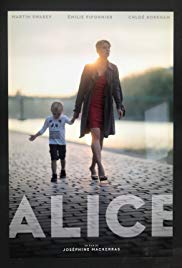
 Greetings again from the darkness. So much trust goes into a marriage. We try to choose someone we can imagine growing old with, and also whose morals are in line with our own … especially if raising kids is part of the plan. Of course sometimes things don’t work out as hoped, and writer-director Josephine Mackerras shows us what happens when things go horribly wrong – when the person we have trusted is so drastically different than the person we believed them to be.

Alice (Emilie Piponnier) and Francois (Martin Swabey) appear to be a normal wife and husband raising a cute little boy named Jules. Alice is a beautiful and caring person, whose goodness shines through in her smile. Francois is the charming type who recites literary passages at dinner parties before planting a passionate kiss on his wife in front of everyone at the table. One day, Alice’s credit card is declined which leads her down the dark trail no one hopes to travel. Francois has maxed out the cards and emptied the bank account. Worse yet, their apartment is nearing foreclosure from lack of payments.

Further research leads Alice to Elegant Escorts and the realization that her beloved husband has been leading a secret double life – one that has left her penniless with a young child. What happens next is quite surprising. Sweet Alice proves to be much tougher than she appears. After some terrible guidance from her mother, Alice takes control of the situation in order to save her home and provide for her son. Her friend and mentor in her new vocation is Lisa (Chloe Boreham), who offers tips and emotional support. This gets her through the clumsy and awkward initial attempts at carrying out her new duties. Soon she believes the plan is working and she’ll be able to save her home, but alas, Francois reappears and complicates the situation.

This is the first feature film from Ms. Mackerras and the film won a Grand Jury prize at SXSW. The obvious comparison here is to Louis Bunuel’s masterpiece BELLE DE JOUR (1967) starring Catherine Deneuve, with the obvious difference being one character was bored and craved attention, while another was desperate to save her home. Self-discovery plays a role for both. The tagline for this film is: “She did everything right, until it all went wrong”, and it’s a reminder that often we find the inner strength needed during times of crisis. The film also offers up a nice moral of the story in noting the cleansing power of nature. It’s a terrific little film that flashes significant talent from filmmaker Josephine Mackerras and lead actress Emilie Piponnier.

watch the trailer:


I’M NOT HERE (2019)

March 7, 2019

 Greetings again from the darkness. So many are haunted by the past – unable to move beyond either having been dealt a bad hand or having created one through their own actions. The film opens on a gaunt Steve (JK Simmons), alone in his apartment, and seemingly barely functioning. He is contemplating suicide with a shiny gun he keeps on a coffee table in a home as unkempt as himself. His only breaks are to frantically search the house for another bottle of vodka, or to listen to a phone message that kicks off yet another painful memory.

The film features three timelines for Steve: the despondent, suicidal elder; the twenties and thirties version (Sebastian Stan); and the 1960’s childhood Stevie (Iain Armitage, “Young Sheldon”). Those young years for Stevie recall his always-annoyed mom (Mandy Moore) and his fun-loving dad (Max Greenfield), while the young adult years show us his romance and marriage with Karen (Maika Monroe). It’s not long before we recognize the common thread that binds the timelines: alcoholism. First his dad’s, then his own.

Our memories tend to return in moments and flashes of events. This becomes more evident and the memories less reliable when years of alcohol abuse are in play. The flashes include the courtroom and judge of his parents’ divorce, his dad drinking, his own courting of Karen and the booze that accompanied it, the dissolution of his own marriage, and an unspeakable tragedy that ruined his life without taking it … something he is looking to remedy with that gun.

JK Simmons is remarkable here. His Steve is mired in loneliness, depression, guilt, and regrets – each amplified through booze. Simmons’ performance offers up not a single line of dialogue. He never leaves the apartment. He never has human interaction. Yet despite all of this, he never leaves our thoughts as he pinballs through his memories. Mr. Stan and Ms. Monroe provide the most telling scene outside of Simmons’ segments. Notice the difference in demeanor as he tells her he heard the shot when his dad killed himself vs how she states her mother died from cancer. This is the contrast of moving on no matter what life serves up, or being burdened with that weight forever.

The film was directed by Mr. Simmons’ wife Michelle Schumacher, and she co-wrote the screenplay with Tony Cummings (son of Emmy winning actor Robert Cummings). Mr. Cummings also appears as the judge in the divorce hearing. The film was originally shown in 2017, but is only now getting released. For fans of JK Simmons, it’s a must see.

watch the trailer:


GRETA (2019)

February 28, 2019

 Greetings again from the darkness. “Don’t touch anything on the subway.” That should be a warning posted in all New York City tourist brochures. Recent NYC transplant Frances didn’t get the memo. She not only picks up a “lost” handbag, but also wants to personally return it to the rightful owner – despite the counseling of her streetwise roommate.  Oscar winning director Neil Jordan (THE CRYING GAME) co-wrote the screenplay with Ray Wright, and they blend in many elements … not the least of which is making friends with someone you shouldn’t.

Chloe Grace Moretz plays Frances as the good-hearted Boston-raised girl who is almost too innocent to believe, given the day and age we are in. When Frances returns the purse, she is greeted warmly and appreciatively by a kindly Greta (Isabelle Huppert). The two bond over their individual loneliness: Greta says her daughter lives abroad, and Frances’ mother passed away about a year ago. It’s easy to see how a friendship forms through a substitute mother-daughter gap-filling.

An accidental discovery by Frances sends her out the door, intent on cutting ties with Greta. What Frances soon learns is that Greta is a crafty psychopath of the highest order. It’s at this point where filmmaker Jordan kicks in the twisted, dark humor and serves us a cheap-thrills ride via a full blown stalker movie. Greta is truly deranged and once Ms. Huppert cuts loose, we see how much fun she’s having. She even plays a piano teacher, which is kind of funny since she was also the piano teacher in THE PIANO TEACHER (2001). She becomes my first and favorite Liszt loving psychopath, who likely isn’t as technologically challenged as she makes out.

There are stylistic and story elements reminiscent of movies like FATAL ATTRACTION and SINGLE WHITE FEMALE, and Jordan’s camera angles and lighting combine with Javier Navarrete’s score to dish up some B-movie type comically dark moments. Maika Monroe (IT FOLLOWS) is terrific as Frances’ roommate. She’s the direct type who tells Frances that “this city will eat you alive”, but is also extremely supportive and protective (and good at yoga).

Stephen Rea and Colm Feore appear in limited roles, but the fun you have here is directly related to how you buy into the Greta vs Frances web. It’s rare to see an onscreen female predator, but neither Mr. Jordan nor Ms. Huppert round off any edges. We are reminded that being nice doesn’t always pay off, but having friends certainly does. There is some creepy evil fun to be had, as well as a key life lesson: never trust a woman with too many purses.

watch the trailer:


THE WEDDING GUEST (2019)

February 28, 2019

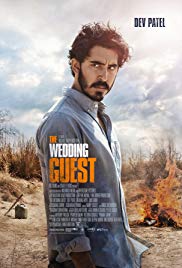
 Greetings again from the darkness. I pity the poor soul who, based on the film’s title, buys a ticket assuming it must be a light-hearted romantic-comedy starring Katherine Heigl. While we do watch a slow-building romance, this is much more of a road trip through parts of the world we don’t usually see on screen. Writer-Director Michael Winterbottom (A MIGHTY HEART, THE KILLER INSIDE ME, THE TRIP) has had a solid career with movies that tend to be quite watchable, though not particularly memorable. Chalk up another.

The film opens in a subdued manner with a man (Dev Patel) meticulously packing a suitcase, boarding a plane, landing in Pakistan and renting a car. These are all things any of us might do if headed to a wedding. Only this mysterious man of few words also buys 2 guns, plastic ties and duct tape. Either this is going to be a honeymoon unlike any other, or he’s on a different mission altogether. We don’t have to wait long, as the night before the wedding, Patel sneaks past the armed security guard and into the family compound so that he can kidnap Samira (Radhika Apte), the bride-to-be.

Mr. Patel plays a British Muslim man with various names and identities, and a supply of passports. He was hired by a shifty rich guy (Jim Sarbh) who loves Samira to prevent her from going through with the arranged marriage. The meet up gets delayed as the kidnapping and fallout make national news. The story evolves into a predictable and familiar road trip, but with a delightfully different setting and backdrop than what we are accustomed to. A train to Delhi plays a role with Samira and her kidnapper on the lam – working to remain anonymous.

The film does offer up some twists and turns for us, but after an intriguing first 15 minutes, we pretty much know where things are headed. Fortunately the camera work of Cinematographer Giles Nuttgens (HELL OR HIGH WATER) keeps our attention, as does the back and forth between Dev Patel and Radhika Apte, two excellent performers. So yes, the film is one we can enjoy watching, though it will likely never come up in conversation.

watch the trailer:


MAPPLETHORPE (2018)

February 28, 2019

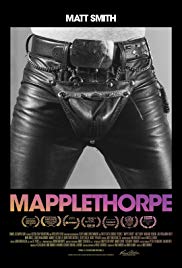
 Greetings again from the darkness. Writer-director Ondi Timoner goes head on (so to speak) with the story of Robert Mapplethorpe, the immensely talented and endlessly controversial photographer whose work in the 70’s and 80’s was often considered scandalous, if not pornographic. Ms. Timoner and star Matt Smith (PRIDE AND PREJUDICE AND ZOMBIES) are unflinching in this look at the artist, his personal life, and his work … although I personally flinched a few times.

The opening scene is quite unusual as Mapplethorpe is shown alone in his small dorm room, attired in full Pratt Institute uniform, just prior to dropping out. We next see his NYC meet with Patti Smith (Marianne Rendon), and watch the two oddball youngsters connect. Their relationship develops as Robert shifts from drawing to photography, stating, “I’m an artist. I would have been a painter, but the camera was invented”. The couple wriggles their way into the Chelsea Hotel and soon Mapplethorpe is focused on male nudes not just as artistic models, but also as personal pleasure. His interests send Patti Smith packing … and understandably so.

Mapplethorpe’s career takes off when Sam Wagstaff (John Benjamin Hickey) becomes his benefactor and lover. Sam’s connections in the art world lead to gallery shows and work that Robert might never have attained. The film never shies away from Mapplethorpe’s daddy issues, his promiscuity, his drug use, or his intolerance of those who didn’t “get” his work. His fascination with male genitalia in both art and personal life is on full display, as many of his actual photographs are shown throughout.

Once diagnosed with HIV/AIDS, his sexual irresponsibility probably should have been emphasized, but other than that, filmmaker Timoner never tries to sugar coat the man. He seemed to crave attention, yet so many wanted love from him – Patti Smith, Sam Wagstaff, his father (Mark Moses, “Mad Men”), and his brother (who worked with him), all tried to establish that bond, but things just never quite clicked.

Other fine supporting work is provided by Hari Nef, Mickey O’Hagan (TANGERINE), Brian Stokes Mitchell, and Brandon Sklenar. Mapplethorpe’s story would likely be best handled via documentary, but Mr. Smith’s performance is worthy of attention. The film does a nice job of relaying the two sides to Mapplethorpe’s work – the provocative and the portraits. He took some iconic photos of celebrities including the cover of Patti Smith’s debut album “Horses”.

Ms. Smith’s 2010 memoir “Just Kids” paints a more complete picture of their relationship, and it’s interesting to note that although he died in 1989, Mapplethorpe’s work continues to generate emotional responses. In fact, his work inspired a national debate about whether the government should fund the arts. Ms. Timoner’s film has been well received at LGBTQ festivals, and the Robert Mapplethorpe Foundation is devoted to protecting and promoting his work, while raising millions of dollars for AIDS research. His legacy is much more than some black and white photographs of nude models.

watch the trailer:


THE HEIRESSES (2019, Paraguay)

February 28, 2019

 Greetings again from the darkness. It would be a tight race to determine which is rarer: a Paraguayan film with distribution, or a movie centered on a middle-aged lesbian couple together for 30 years. The first feature film from writer-director Marcelo Martinessi is remarkable in its level of quiet, as everything that matters lies beneath the surface. Neither happiness nor sadness is particularly obvious at any given time.

Chela (Ana Brun) and Chiquita (Margarita Irun) live in the capital city of Asuncion and are both from wealthy families. They are in the process of selling off family heirlooms from their large (and well worn) house due to the debt run up by Chiquita … a debt that has her headed soon to jail after being found guilty of fraud. Chela, the introverted artist, is embarrassed and withdrawn by their situation, whereas the more affable and gregarious Chiquita takes it all in stride. We can’t help but notice that the items being sold and this couple’s relationship both seem relics of the past, trapped in a time warp.

Confinement and restrictions of movement play a role for both women. Obviously Chiquita is confined to jail, while the cave-like house surrounds Chela. Early on, we see further contrasts. Chiquita flourishes in jail, while Chela struggles with the placement of her coffee cup on the silver serving tray delivered by her maid (Nilda Gonzalez). In fact, the hiring of a maid is somewhat confounding to us – who does that while selling off furnishings to make ends meet?

Although Chela refuses help from the friends she has generously assisted over the years, circumstances are such that she kind of falls into a private uber-taxi business for the local ladies (doctor appointments, card games, funerals, etc). Chela slowly begins to discover living life again. After years of not driving, she’s a bit nervous at first, but driving the car is her literal vehicle to a new life approach. Her jail visits with Chiquita are a bit awkward, but things turn for Chela when she meets and becomes enamored with Angy (Ana Ivanova). Angy is a lively woman who ignites interest and hope within Chela. As an object of desire, Angy excels … turning Chela on to designer sunglasses and cigarettes.

All three lead actresses are relatively inexperienced, cinematically speaking; yet each delivers an exceptional performance. Ms. Irun is a stage veteran, while Ms. Ivanova has a terrific screen presence. Most remarkably, this is Ms. Brun’s first movie role, and she excels as a quiet listener and silent observer through doorways. As she emerges from the shadows, her transformation offers hope, while still remaining cloaked in sadness. A more experienced actress might have instinctually offered up a more showy performance, though Ms. Brun’s Chela is what keeps us mesmerized.

To call this film female-centric is an understatement. The few men are mere blurs on the screen. It’s no wonder the film has been so well received at festivals, as the story, performances, music and camera work offer something a bit out of the norm. It was Paraguay’s submission for Best Foreign Language Oscar, and it would have fit quite comfortably with the final nominations.

watch the trailer: