Greetings again from the darkness. A herd of wild horses frolic and gallop and relax in the prairies that separate majestic peaks of the Sierra Nevada mountain range. Suddenly the peace being enjoyed by the horses is interrupted by the deafening noise of a helicopter above. The purpose of the helicopter is to push the herd towards the corral and trucks that are part of the round-up. An opening title card informs us that more than 100,000 wild horses roam the U.S. countryside and the government is only able to manage a small percentage. Part of that process involves therapy for prisoners … an obvious analogy being the two wild beings try to tame each other. When the prisoners have trained the horses, an auction is held, and many of the animals will be used in law enforcement – an irony not dwelled upon here.
Roman Coleman is a guilt-riddled man. A man of short fuse and violent ways. He readily admits to the prison psychologist (Connie Britton) that “I’m not good with people.” After 12 years in isolation, he’s been transferred to general population and he seems pretty indifferent about it. His guilt is the type that only a split-second violent outburst can saddle one with – though we don’t hear the specifics until late in the film. The psychologist assigns him to “outdoor maintenance” which is a fancy institutional term for, well, shoveling horse manure.
As he observes the rehabilitation program, where the convicts train the wild mustangs under the tutelage of crusty old horse trainer Myles (Bruce Dern), Roman is drawn to the wildest of the wild … a mustang kept in a dark stall and labeled untrainable. The parallels to Roman himself are obvious, and soon head trainer Myles and fellow convict Henry (Jason Mitchell, MUDBOUND) have invited Roman into the program. It’s here where man and horse prove how similar their temperaments are – they both react with anger to most any situation. After a particularly cruel and unfortunate outburst, Roman is back to solitary confinement and studying up on horses.
Writer-director Laure de Claremont-Tonnerre co-wrote the story with Mona Fastvold and Brock Norman Brock (BRONSON). It’s the director’s first feature film and she shows a real knack for pacing … letting the uncomfortable scenes between man and horse breathe and play out. Speaking of uncomfortable, when Roman’s pregnant daughter Martha (rising star Gideon Adlon, BLOCKERS) shows up to get his signature on a form so that she can run off with her boyfriend, the history and lack of commonality between the two is palpable. Their scenes together are excruciating. Sure this is a cliché-filled concept, but the director and especially the cast keep us glued to the screen and caring about what happens.
Matthias Schoenaerts stars as Roman, and it’s yet another stellar performance from the actor who exploded onto the movie screen with BULLHEAD (2011) and RUST AND BONE (2012). Since then, it’s been one terrific turn after another. His physical presence and soulful eyes convey so much. He has mastered the strong silent type, but here he expertly uses body language to communicate with both the horse and the audience. The drug-dealing sub-plot appears to have been included to remind us just how dangerous a prison yard can be, but we never lose sight of the pain involved with second chances and learning to be a better person. There are some similarities to two excellent 2018 movies, LEAN ON PETE and THE RIDER, but this first time filmmaker wisely lets her talented cast do their thing, as she complements their work through cinematographer Ruben Impens’ (BEAUTIFUL BOY) fabulous work up close and with expansive vistas. Robert Redford was an Executive Producer on the film, so the beauty of the area is not surprising. The film allows emotions to play out right through the final shot.
Greetings again from the darkness. Having previously mentioned my general annoyance at the frequency of which the ‘Americanization’ of World Cinema projects occur, I was initially dismayed to hear about the remake of the excellent Chilean film GLORIA. That 2013 featured a terrific performance from Paulina Garcia, and provided a grounded look at life of a single woman of a certain age. However, when it was announced that the American version would be directed by Sebastian Lelio, who also directed the earlier version, and that it would star Julianne Moore in the lead role, the idea became much more palatable.
Oscar winner (and 4 time nominee) Julianne Moore has been one of our more interesting actors since she jumped off the screen (in a supporting role) in 1992’s THE HAND THAT ROCKED THE CRADLE. She’s now approaching 60 years of age, and is a true master at capturing the essence of a character. She brings Gloria Bell to life in the most believable and grounded manner possible. Rather than a movie caricature, Gloria is a real woman. She plugs away at her daily work in the insurance business. She belts out the songs on the radio as she drives her car. She gets annoyed at the stray cat who sneaks into her apartment. She smokes and drinks. She tries to be part of her adult kids’ lives. She tries to ignore, but ultimately reports the loud noises from her upstairs neighbor to her landlord. She loves dancing in clubs with men she doesn’t know, or even alone. In conclusion, Gloria lives her life.
Much of the film focuses on the odd developing relationship Gloria has with Arnold (John Turturro). Their eyes meet across the dance floor, spend some time chit-chatting, and soon, his Velcro-back brace is being ripped off. As with many folks, Arnold’s baggage is more burden than history. He seems to be in an unhealthy marriage with ultra-dependent grown daughters and a wife who can’t get through a day without his help. The cell phone ring becomes a running gag … one Gloria finds little humor in.
Supporting work is provided by Sean Astin (a Las Vegas mistake), Brad Garrett (Gloria’s ex), Jeanne Tripplehorn (Garrett’s new wife), and Holland Taylor (Gloria’s mom). Each of these characters get a brief sub-story, as do Gloria’s grown kids, played by Michael Cera and Caren Pistorius. With the son’s marriage in shambles, and the daughter heading to Sweden to live with a man, Gloria experiences the trials and tribulations of life while still looking for meaning and companionship … each a search worth pursuing.
Alice Johnson Boher adapted the screenplay for this version from the original by director Sebastian Lelio and Gonzalo Maza. She refrains from the usual American melodrama or corniness, and instead delivers something to which the actors and viewers can easily relate. The fine line between independence and loneliness is in a delicate balance, and one that’s deftly handled here. And of course, there are scenes that are elevated thanks to the brilliance of Julianne Moore’s performance. All in all, fans of GLORIA will not be disappointed … just lay off the post-yoga cigarette.
Greetings again from the darkness. More. Better. Faster. Most industries have those goals, and this story from French-Canadian writer-director Kim Nguyen focuses on high-frequency stock traders … particularly a race between two competitive firms to cut one millisecond off the processing time. We learn that one millisecond is roughly one flap of a hummingbird wing (hence the film’s title).
We also learn that one millisecond can translate into hundreds of millions in profits, which is why cousins Vincent and Anton walk away from their jobs at the Eva Torres brokerage firm to pursue their dream of shaving that single millisecond. Vincent (Jesse Eisenberg) is the fast-talking visionary and deal-maker, while Anton (Alexander Skarsgard) is the computer programming whiz. Yes, you read that correctly. Sex symbol Skarsgard (“True Blood”, “Big Little Lies”) plays a paunchy, balding, computer nerd with zero social skills. He also delivers the film’s most enjoyable dance moves … it’s a moment to which any programmer can relate.
If any of the above (other than Anton’s dance) seems the least bit exciting or enticing, you should know that the bulk of the film deals with the digging and drilling (there’s even a montage) required to lay the fiber optic cable that will allow this extra-quick data delivery. Their plan is to tunnel from Kansas City to New Jersey in a perfectly straight line. Because of this, we get conversations with homeowners, conversations with Amish, conversations with drilling experts, and conversations with those who want this to happen, and those who don’t. Have you ever thought about drilling through a granite mountain that is located in the middle of a park? Neither have I, and I wouldn’t have thought of it again if not for writing this review.
To clarify, this is a story that seems like it could be true, but isn’t. Most of the screen time is devoted to either underground drilling, computer programming, or intellectual property. And while I’m sure each of these categories have their fans, most will agree the transfer to cinema does not come off especially entertaining. In fact, it’s so dry that the filmmaker felt the need to include a cancer sub-plot in hopes that we might find Vincent a bit more appealing as a character. It should be noted that since his Oscar nomination for THE SOCIAL NETWORK, Mr. Eisenberg has displayed a remarkable lack of variation in the roles he’s chosen and characters he’s played. At this point, we mostly just find him annoying, rather than brilliant or even mildly interesting.
Salma Hayek plays Eva Torres, former boss of the cousins, and now laser-focused in not letting the boys win. Ms. Hayek is given relatively little screen time, and is portrayed as the villain … although her goals are no different than Vincent’s and Anton’s. Michael Mando plays Mark Vega, the partner and drilling expert the boys choose to project manage this undertaking. Mr. Mando is best known as Nacho from both “Better Call Saul” and “Breaking Bad”. Ayisha Issa brings a momentary jolt to the proceedings as a mountain driller, but the film simply drags when neither Mr. Skarsgard nor Ms. Hayek are on screen.
Technology is a very difficult topic to make visually entertaining. I’m not talking about the high-tech special effects that go into making the wildly successful superhero movies that are so popular these days. No, I’m referring to actual technology … programming and data analysis. The list of technology-focused films includes: SNEAKERS, THE SOCIAL NETWORK, OFFICE SPACE, HACKERS, WAR GAMES, SWORDFISH, and THE IMITATION GAME. The best of these understood that the story around the technology was more vital than the actual programming being done. And all of them were wise enough to avoid drilling and digging. Then again, none of the others featured a dancing Skarsgard.
Greetings again from the darkness. It was the year after ONE FLEW OVER THE CUCKOO’S NEST and the year before ANNIE HALL. 1976 was good for the underdog as Sylvester Stallone’s ROCKY won the Oscar for Best Picture, edging out such (now) classic films as TAXI DRIVER, ALL THE PRESIDENT’S MEN, and the film we are going to talk about here, NETWORK.
“I’m mad as hell, and I’m not going to take this anymore.” That’s the lasting quote most recite when asked about NETWORK. And since those folks are generally energetically emphatic as they recall the line, it says quite a bit about the influence and ongoing impact of the film. In fact, many believe much of what the film warned us about has come to pass – and is even happening right now!
The story begins with (fictional) UBS network news anchor Howard Beale being let go after many years on the job. His personal issues have become a problem, and unlike his competitors Walter Cronkite and John Chancellor, he’s no longer dependable. With two weeks remaining until his final broadcast, Beale goes off script and creates a firestorm of emotion in the viewing audience as he promises on-air suicide and rants about TV programming, journalism, and society as a whole. People across the country take him up on his direction to go to the window and yell out the above mentioned catchphrase. What follows cuts to the core of the film’s theme. Beale’s friends worry about his mental well-being, while others at the network are concerned only with the ratings bump, and how best to capitalize on his revived and re-engaged audience.
What had previously been a respectable newscast, transitions into what we recognize today as a Reality TV show. Beale is provided a pulpit to rail against the establishment and the general public for its acceptance or surrender. He criticizes those who have given up reading books and have allowed TV to guide their thoughts (sound familiar?). Beale proclaims “television is a carnival” even as he becomes its lead barker, and proudly accepts his new label as “an angry prophet denouncing hypocrisies of our time.” It’s now been over 40 years since the film premiered, and the parallels to today’s world are crystal clear.
As with any quality film, there are multiple sub-plots and story lines, as well as numerous characters we get to know. There is an ambitious program director willing to make her mark by any means necessary. All of this turmoil occurs while UBS is going through a corporate takeover, so we get a glimpse at the behind-the-scenes political wranglings of those in power and those striving to be. An inner-office romance blends with the reckoning that accompanies middle age, and the resulting cracks in a long-term marriage. In yet another jab at the TV industry, a brainstorm leads to the birth of the “Death Hour”, an idea for a series based on the illegal and often violent actions of a terrorist group called the Ecumenical Liberation Army. The negotiations with this group are either the funniest or the most dangerous of the film, depending on your perspective. In keeping with the era, we are reminded of the ongoing economic recession, and get news flashes on the situation with kidnapped heiress Patty Hearst, plus the two assassination attempts on then President Gerald Ford. These doses of reality add the necessary gravitas to the film to prevent it from dipping into soap opera territory.
The cast is stellar and deep. Peter Finch plays Howard Beale. Mr. Finch died in January 1977 at age 60, and a couple of months later was named the Oscar winner for Best Actor, becoming the first acting winner to be so awarded posthumously (later joined by Heath Ledger). He was previously nominated for SUNDAY BLOODY SUNDAY (1971). Although he was talented and had a fine acting career, he might be best remembered in Hollywood lore for his ongoing affair with Vivian Leigh, who was married to Laurence Olivier at the time. Sir Olivier was also Mr. Finch’s acting mentor. In his role as Howard Beale, Finch got to chew scenery at the level every actor dreams of.
Faye Dunaway plays the ambitious program director Diana Christensen. She won the Oscar for Best Actress, and had previously been nominated for BONNIE AND CLYDE (1967, a role she chose over Elaine in THE GRADUATE) and CHINATOWN (1974). She also appeared (with her NETWORK co-star William Holden) in THE TOWERING INFERNO (1974), and is unfortunately remembered for her frightening portrayal of Joan Crawford in MOMMY DEAREST, giving wire hanger nightmares to an entire generation. Her first marriage was to Peter Wolf of the J. Geils Band, and more recently you’ll recall her as co-presenter with Warren Beatty, and part of the calamity at the 2017 Oscars when LA LA LAND was erroneously named Best Picture before the confusion was cleared and MOONLIGHT was awarded the statuette. Dunaway’s Diana is unabashedly ambitious and flounces through the newsroom taking no prisoners. Her relationship with Holden’s character has one of the more unusual on screen love-making sequences, as she continues to talk shop as things heat up.
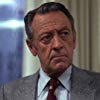
William Holden plays Max Schumacher, the veteran news director forced out of his job for placing more importance on protecting his friend Howard than in increasing the ratings and revenue of the broadcast. Mr. Holden died in 1981 at age 63 from injuries sustained during a fall. He was a Best Actor Oscar winner for STALAG 17 (1953), and a nominee for NETWORK and SUNSET BOULEVARD (1950). Mr. Holden also appeared in other classic films as PICNIC (1956), THE BRIDGE ON THE RIVER KWAI(1957), THE WILD BUNCH(1969), and THE TOWERING INFERNO (1974). He once shared an apartment with baseball great Hank Greenberg while both were serving in the military (1943), and was Best Man at the wedding of Ronald and Nancy Reagan. As Max, Holden captures the middle-age frustrations of a man unwilling to live with the cultural change of the new conglomerate owner, and equally uneasy with a marriage that has grown too stale. His stereotypical fling with the exciting younger woman ends as expected … only with a world class monologue.
Robert Duvall is Frank Hackett, the cut-throat front line manager brought in by the new owners to shake things up and create some profit. Mr. Duvall is still working today at age 88, and began his career on TV in 1960. He won a Best Actor Oscar for TENDER MERCIES (1983), and was nominated six other times for performances in THE GODFATHER (1972), APOCALYPSE NOW (1979), THE GREAT SANTINI (1979), THE APOSTLE (1997), A CIVIL ACTION (1998), and THE JUDGE (2014). He also appeared in BULLITT (1968), MASH (as Frank Burns, 1970), THE GODFATHER II(1974), THE NATURAL (1984), and Larry McMurtry’s classic western series “Lonesome Dove” (1989). You might also remember him as Boo Radley, quietly hiding behind the door in TO KILL A MOCKINGBIRD (1962), though he’s likely best remembered for a certain character’s love of napalm in the morning. Duvall’s Hackett is a symbol of blind ambition and thirst for power.
Beatrice Straight won the Oscar for Best Supporting Actress for playing Louise, Max’s scorned wife. She’s only in only a couple of scenes, and her approximately 5 minutes on screen remains the briefest to win an acting Oscar. Ms. Straight acted in very few movies, and spent most of her acting career in TV projects and on stage, though many will recall her as one of the scientists in POLTERGEIST (1982). When Louise rips into Max, she’s speaking for the untold number of middle-aged women who have been in that situation … simultaneously angry, hurt and afraid.
Ned Beatty plays Arthur Jensen, an eccentric network executive, and with basically one powerful and memorable scene, received the only Oscar nomination of his 45 year career. Mr. Beatty’s first screen appearance was in DELIVERANCE (1972) and his pig squeals haunted many viewers (including yours truly). He has also played delicious villains, the everyman, and buffoons, and appeared in such fine movies as NASHVILLE (1975), ALL THE PRESIDENT’S MEN (NETWORK’s Oscar competition), SILVER STREAK (1976), SUPERMAN (1978), SUPERMAN II (1980), THE BIG EASY (1986), RUDY (1993), and more recently as the voice of Lotso in TOY STORY 3 (2010). He hasn’t acted in the past 5 years, and turns 82 years old this year.
You might think that is already an incredible lineup of acting legends, but we aren’t done yet. Wesley Addy appears as network executive Nelson Chaney, and Mr. Addy was also in one of my favorite film noirs, Robert Aldrich’s KISS ME DEADLY (1955). Kathy Cronkite plays radical activist Mary Ann Gilford, and Ms. Cronkite is the daughter of news icon (and University of Texas graduate) Walter Cronkite (who also appears in clips). Conchata Ferrell is part of the UBS creative team, and Ms. Ferrell is now best known as Berta on “Two and a Half Men” and as the pizza shop proprietor in MYSTIC PIZZA (1988). Ken Kercheval plays Merrill Grant, and “Dallas” fans will recognize him as JR Ewing’s nemesis, Cliff Barnes. Making a brief appearance is Lane Smith, whom we all remember as Joe Pesci’s opposing counsel in MY COUSIN VINNY (1992), and in a blink-and-you’ll miss it role in the terrorist negotiation scene is an uncredited Lance Henriksen. Mr. Henriksen now has a cult following after his chilling role in ALIENS (1986). He’s also appeared in many other classic films over the years: DOG DAY AFTERNOON (1975), CLOSE ENCOUNTERS OF THE THIRD KIND (1977), THE RIGHT STUFF (1983), THE TERMINATOR (1984), and he has over 250 screen credits. Lastly, you might recognize the voice of the film’s narrator. Lee Richardson is an actor and the voice of more than one hundred commercials.
NETWORK was directed by the great Sidney Lumet. He received one of his 5 Best Director Oscar nominations … the other four were 12 ANGRY MEN (1957), DOG DAY AFTERNOON (1975), PRINCE OF THE CITY (1981), and THE VERDICT(1982). He also directed THE HILL (1965), SERPICO (1973), MURDER ON THE ORIENT EXPRESS (1974), RUNNING ON EMPTY (1988), and his final film BEFORE THE DEVIL KNOWS YOU’RE DEAD (2007). Mr. Lumet received an honorary Oscar in 2005, and died in 2007 at age 86. One of Lumet’s four wives was Gloria Vanderbilt, and his book “Making Movies” is a must read for any aspiring filmmaker.
Writer Paddy Chayefsky gets much of the credit for the success of NETWORK, and rightfully so. The script is a work of art, and brought him one of his three Oscars. The other two were MARTY (1955) and THE HOSPITAL (1971), making him one of only five three-time writing winners. He also wrote cult favorite ALTERED STATES (novel and screenplay) and adapted PAINT YOUR WAGON (1969) for the screen. Mr. Chayefsky’s influence can be seen (and especially heard) in the dialogue written by Aaron Sorkin, one of today’s most celebrated writers. Mr. Chayefsky died in 1981 at age 58.
The film won 4 Oscars (Actor, Actress, Supporting Actress, Original Screenplay) and was nominated for six others. The 3 acting wins tie it for most ever with A STREETCAR NAMED DESIRE (1951), and it’s the only movie to date with 5 acting nominations. It’s also highly probable that NETWORKis the only film where the Best Actor and Best Actress don’t share any screen time together. Owen Roizman was nominated for Cinematography, and his other nominations include THE EXORCIST (1973), TOOTSIE (1982), WYATT EARP (1994) and THE FRENCH CONNECTION (1971) … that’s right, he filmed the infamous car chase scene. Alan Heim was nominated for Editing, an Oscar he would later win for ALL THAT JAZZ (1979).
Relevant seems too weak as a description to make the point of how the film’s message stands up today. Television should be a vehicle that informs and educates instead of serving up drivel like dating and quirky personality shows. Of course entertainment is an important piece of the puzzle, but we shouldn’t end up holding an empty bag. One of the final scenes in the film highlights the lack of scruples from the executive team. A final decision is made that at first seems over-the-top, but is it really so hard to believe? Howard Beale is a man who has lost, or is losing, his mind – but the network milks him until that cash cow is dry. We can’t help but note the themes that still hit home today: corporate and personal greed, ambition, grief, mismatched relationships, the misuse of power, the willingness to sit back and accept, and the fear of life with no purpose.
ROCKY was the only 1976 film to eclipse $100 million at the box office, and in addition to the other Oscar nominated films listed in the first paragraph, 1976 also blessed us with horror classics CARRIE and THE OMEN, thrillers like MARATHON MAN (“Is it safe?”) and KING KONG (Jessica Lange and Jeff Bridges), BOUND FOR GLORY (the 5th Best Picture nominee) and Barbra Streisand’s A STAR IS BORN, comedy classics BAD NEWS BEARS and THE PINK PANTHER STRIKES AGAIN, and Alfred Hitchcock’s final film, FAMILY PLOT. 1976 was also the year we lost Agatha Christie, Busby Berkeley, Howard Hughes, Fritz Lang, Dalton Trumbo, Alastair Sim, and Sal Mineo (a still unsolved murder). Forty-three years later, NETWORKlives on as a lesson we have yet to learn.
***NOTE: another thing to notice is the natural teeth of Faye Dunaway, Robert Duvall and Peter Finch. Comparing it to the blindingly bright pearly whites of today’s actors provides quite the contrast.
Greetings again from the darkness. The all-too-familiar sick/dying teenager genre is frequently associated with Lifetime Channel movies or something of that ilk. What sets this one apart (and above) many in the slew of similarly themed movies is the script, and more so, two outstanding lead performances. Director Justin Baldoni is best known as an actor and director of TV projects, but he (mostly) handles the script from Mikki Daughtry and Tobias Iaconis quite well.
Rising star Haley Lu Richardson (COLUMBUS, SPLIT) plays Stella, a teenager who has been dealing with Cystic Fibrosis (CF) her entire life. When we first meet her, she has checked back in to the hospital for a “tune-up”. Despite her breathing struggles and medical issues, Stella is a shining light of optimism who is friendly with the entire hospital staff and other patients. She’s also OCD and maintains a strict regimen on her meds in hopes of hanging on long enough for the holy grail – a lung transplant, or ultimately a miracle cure for this death sentence disease. Stella maintains two to-do lists: one for the day, and another for her bucket list. She also runs a YouTube channel where she educates us on what it’s like living with CF.
On one of her frequent visits to the hospital nursery to watch the newborn babies, Stella crosses paths with Will (Cole Sprouse), a more cynical CF patient who has B cepacia form – so deadly that sufferers aren’t included on the lung transplant list. In contrast to Stella, Will wonders if the hassle of treatment is worth the pain and inconvenience, when so little hope is present. CF patients are required to don gloves, masks, and oxygen packs. One rule that must not be broken is to maintain at least a 6 foot distance at all times between themselves and any other CF patient. The risk of passing along their specific mixture of bacteria is simply too great.
‘Opposites attract’ is in play here as Stella and Will share only one trait, and it’s a bond where being too close could literally kill one or both of them. These are smart and interesting characters who understand there are no “happily ever afters” in their future. We are along for the ride as they learn more about each other. Will is a talented sketch artist with a wicked sense of humor in his cartoons, while Stella carries a special burden of putting others at ease while focusing on the present and looking to the future, thanks to the exploits of her beloved older sister Abby (Sophia Bernard).
Other supporting actors include Claire Forlani as Will’s mother, Parminder Nagra (BEND IT LIKE BECKHAM) as the doctor, Kimberly Hebert Gregory as the strict and caring Nurse Barb, and Moises Arias as Poe, a witty gay teenager and fellow CF patient, who has been friends with Stella since they were young kids. As the romance blooms for Stella and Will, there are some too-familiar moments and a couple of lame musical interludes with slow-motion … but there are also some terrific and heartfelt scenes. In particular, a pool cue at the pool is extraordinarily tender and romantic.
The film teases us a few times with assumptions, but the theme of human touch is ever-present. For CF patients, is love selfish or is it an inherent need? ‘The lights are like stars’ is a nice touch that explains how this disease forces these folks to think a little differently and find joy in the moment … yet still keep their distance. Sure, Ms. Richardson (a bona fide star in the making) and Mr. Sprouse are a bit too old to be playing teenagers, but their talent allows us to take in the layers here with the disease and the limitations on life. The film has plenty of laughs and plenty of tears (bring your tissue) as we watch a heartfelt romance while also learning some of the challenges facing the 30,000 CF patients in the U.S.
Greetings again from the darkness. A wounded, bleeding, hysterical woman is seen crawling through the snow. She’s not dressed appropriately for the weather, and it’s apparent she’s suffered some type of trauma. This opening shot is from a bird’s eye view, and it’s the way provocative filmmaker Gaspar Noe (LOVE, ENTER THE VOID) opens his latest film. This vivid visual sticks with us as we flashback to the progression of events that led to this woman’s unfortunate circumstance … her situation being the conclusion to what we are about to watch.
The initial dance sequence is shown in full and it is quite stunning in its energy and physicality and athleticism. As best I could tell, it was a single long take with dancers writhing and music thumping, both in frenetic mode. Much of each dancer’s personality is depicted in their movements, and the video interviews we see as part of their audition reveal a culturally diverse group of young adults unsure of where this is headed. We are watching a troupe of mid-1990’s French dancers rehearsing in a large, otherwise empty facility on a snowy night, and we too are unprepared for what’s about to unfold.
After that initial performance, the dancers begin mingling as the camera takes us inside the various conversations. Lust, jealousy, and insecurities fill the air as the choreographed energy we first watched in awe slowly disintegrates into a bizarre type of hand-to-hand combat … some psychological, some more physical/violent in nature. The dancers are slipping from sanity, unsure if it’s temporary or possibly deadly. One of them traces their spinning head (not literal) and unexplained sensations to the Sangria punch – leading to some angry confrontations and outrageous behavior.
While none of the individual performances really stand out … this is not a film about certain interesting characters … it should be noted that Sofia Boutella (HOTEL ARTEMIS) plays Selva, the dance company’s choreographer, and Kiddy Smile plays Daddy, the DJ who keeps the music pumping. Watching the movie is truly like observing a group acid trip through the eyes of someone on an acid trip. The camera is sometimes invading intimate moments, while other times hovering or wildly spinning above or below. Sometimes it felt like a GoPro was strapped to a frantic parakeet that had just been set free from its cage. Combining the camera work with the constant thundering of music, some might describe the film as hypnotic and hallucinatory (I prefer horrific).
While most of the dancers seem to lose all sense of reality, some react more violently than others. Hysterics run rampant, especially in a sequence where a young boy is locked in a utility closet by his mother. Whether the scene was for shock value or merely in keeping with the filmmaker’s demented approach is unclear – either way, this came across as too much on top of too much. Simply put, the film is a relentless assault on the eyes and ears and all sense of decency … just as Gaspar Noe likely intended.
Greetings again from the darkness. Some writers struggle with how to end their story. In this case, writer-director Felix Randau had his ending served up in newspaper headlines almost 30 years ago, and his challenge was to come up with an interesting beginning and middle (as well as meaning for the ending). In 1991, at almost 10,000 feet above sea level, a body was discovered. Originally thought to be a missing hiker, it was determined instead to be a 5300 year old Neolithic man. Thanks to the ice, he was well-preserved along with his clothes, tools, and supplies.
Nicknamed Otzi the Iceman since he was found in the Otztal Alps (Italy), some basic information could be derived about his existence and death. Filmmaker Randau then created a fictional account of his final days, speculating on and imagining the life he led. German actor Jurgen Vogel stars as Kelab (Otzi the Iceman), and we get our first glimpse of native Neolithic life in the community of his clan. The mother of his child dies giving birth, and we see Kelab display a magical box used as a shrine of worship to pay respect. The contents of the box are not revealed until near the end of the film.
While Kelab is out hunting for food, the village is violently attacked. The invasion kills most of the inhabitants and destroys their homes and supplies. Kelab takes the surviving infant child with him as he sets off to seek revenge. As he tracks those who attacked, we see him balance his incredibly strong survival instincts with his emotional need for revenge. Another community led by the legendary Franco Nero offers Kelab a place to rest and a safe haven for the infant child that couldn’t possibly make the trek that lies ahead for his father. The scenery is breathtaking and environment treacherous.
Very little dialogue is spoken, and what there is must be interpreted by the situation. The filmmakers and researchers decided on an early form of Rhaetian for the film, so unless you are a world renowned linguist, you’ll likely have to join the bulk of viewers in interpreting meaning. Mr. Vogel is quite believable in his performance … at times we forget he’s an actor rather than the Neolithic man he’s portraying.
The costumes and makeup are excellent and realistic, while the setting, scenery and environment (nature) are the true co-star. We feel the cold and grasp the harsh conditions. This was a violent life … typically out of necessity, yet sometimes out of emotion. QUEST FOR FIRE (not CAVEMAN) and the brutal elements of THE REVENANT (without the bear) are recalled; however, Mr. Randau’s dramatized account of Kelab’s last days in pursuit of vengeance are a perfect fit for this coldest of all cold cases. Otzi the Iceman’s preserved mummy can be viewed at the South Tyrol Museum of Archaeology in Bolzano, Italy.
Greetings again from the darkness. The true story of the Polish fighter pilots who helped the Royal Air Force (RAF) win the Battle of Britain in WWII is certainly fascinating and deserves telling. However, the budget constraints are a hindrance to this production, and though the story gets told, it’s missing the visual flair we’ve come to expect. It’s the first screenplay from co-writers Robert Ryan and Alastair Galbraith, and together with director David Blair, they all seem to understand the historical importance of the story and those involved.
The film begins in 1940 German occupied France, and this is where we first see Zumbach (played by Iwan Rheon), on his way to meet up with his fellow Polish pilots in England. Poland had only been a free standing country for about 20 years at this time, and these men were committed to salvaging their country … even if this meant fighting with the RAF against Germany. Initially the arrogance of British commanders borders on racism, as it’s assumed the Polish fighters don’t compare to the elite Royal Air Force pilots. Once stationed in Northolt under Kentowski (Milo Gibson, Mel’s son), Squadron 303 begins to take shape flying Hurricanes, disproving most of the preconceptions of British brass and pilots; although their success does cause some jealousy in the ranks over the prowess of the Polish pilots.
The less than stellar CGI used for the dogfights is a bit distracting, especially since there is only minimal character development. Polish fighter ace Witold Urbanowicz (played by Dorcin Morocinski) is idolized, but we learn very little about the man outside of flashbacks of his family in war torn Poland. There is a budding romance with Zumbach and Phyllis Lambert (Stephanie Martini), but quite a few assumptions must be made to take us to their final sequence. The character of Ms. Lambert is the standout female role here, and though she’s given a few quality scenes, it’s unfortunate that it’s her shock of blonde hair that seems to stand out most.
The film concludes in 1946 London with the victory parade for King George VI. Despite Polish pilots helping immensely in the RAF victory in the Battle of Britain, no Polish pilots marched with the Allied forces. As a bitter Zumbach states, “we wouldn’t want to offend %&*$ing Stalin.” Squadron 303 was the highest scoring squadron of RAF during the war, and it’s unforgivable how the British viewed Polish casualties as mere numbers, despite the dead being friends and countrymen to the Polish pilots. This is overall a respectful approach to a key historical story … a story in which all Polish people should take pride.
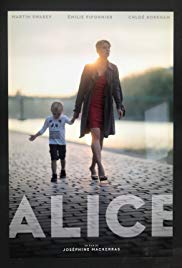
Greetings again from the darkness. So much trust goes into a marriage. We try to choose someone we can imagine growing old with, and also whose morals are in line with our own … especially if raising kids is part of the plan. Of course sometimes things don’t work out as hoped, and writer-director Josephine Mackerras shows us what happens when things go horribly wrong – when the person we have trusted is so drastically different than the person we believed them to be.
Alice (Emilie Piponnier) and Francois (Martin Swabey) appear to be a normal wife and husband raising a cute little boy named Jules. Alice is a beautiful and caring person, whose goodness shines through in her smile. Francois is the charming type who recites literary passages at dinner parties before planting a passionate kiss on his wife in front of everyone at the table. One day, Alice’s credit card is declined which leads her down the dark trail no one hopes to travel. Francois has maxed out the cards and emptied the bank account. Worse yet, their apartment is nearing foreclosure from lack of payments.
Further research leads Alice to Elegant Escorts and the realization that her beloved husband has been leading a secret double life – one that has left her penniless with a young child. What happens next is quite surprising. Sweet Alice proves to be much tougher than she appears. After some terrible guidance from her mother, Alice takes control of the situation in order to save her home and provide for her son. Her friend and mentor in her new vocation is Lisa (Chloe Boreham), who offers tips and emotional support. This gets her through the clumsy and awkward initial attempts at carrying out her new duties. Soon she believes the plan is working and she’ll be able to save her home, but alas, Francois reappears and complicates the situation.
This is the first feature film from Ms. Mackerras and the film won a Grand Jury prize at SXSW. The obvious comparison here is to Louis Bunuel’s masterpiece BELLE DE JOUR (1967) starring Catherine Deneuve, with the obvious difference being one character was bored and craved attention, while another was desperate to save her home. Self-discovery plays a role for both. The tagline for this film is: “She did everything right, until it all went wrong”, and it’s a reminder that often we find the inner strength needed during times of crisis. The film also offers up a nice moral of the story in noting the cleansing power of nature. It’s a terrific little film that flashes significant talent from filmmaker Josephine Mackerras and lead actress Emilie Piponnier.
Greetings again from the darkness. So many are haunted by the past – unable to move beyond either having been dealt a bad hand or having created one through their own actions. The film opens on a gaunt Steve (JK Simmons), alone in his apartment, and seemingly barely functioning. He is contemplating suicide with a shiny gun he keeps on a coffee table in a home as unkempt as himself. His only breaks are to frantically search the house for another bottle of vodka, or to listen to a phone message that kicks off yet another painful memory.
The film features three timelines for Steve: the despondent, suicidal elder; the twenties and thirties version (Sebastian Stan); and the 1960’s childhood Stevie (Iain Armitage, “Young Sheldon”). Those young years for Stevie recall his always-annoyed mom (Mandy Moore) and his fun-loving dad (Max Greenfield), while the young adult years show us his romance and marriage with Karen (Maika Monroe). It’s not long before we recognize the common thread that binds the timelines: alcoholism. First his dad’s, then his own.
Our memories tend to return in moments and flashes of events. This becomes more evident and the memories less reliable when years of alcohol abuse are in play. The flashes include the courtroom and judge of his parents’ divorce, his dad drinking, his own courting of Karen and the booze that accompanied it, the dissolution of his own marriage, and an unspeakable tragedy that ruined his life without taking it … something he is looking to remedy with that gun.
JK Simmons is remarkable here. His Steve is mired in loneliness, depression, guilt, and regrets – each amplified through booze. Simmons’ performance offers up not a single line of dialogue. He never leaves the apartment. He never has human interaction. Yet despite all of this, he never leaves our thoughts as he pinballs through his memories. Mr. Stan and Ms. Monroe provide the most telling scene outside of Simmons’ segments. Notice the difference in demeanor as he tells her he heard the shot when his dad killed himself vs how she states her mother died from cancer. This is the contrast of moving on no matter what life serves up, or being burdened with that weight forever.
The film was directed by Mr. Simmons’ wife Michelle Schumacher, and she co-wrote the screenplay with Tony Cummings (son of Emmy winning actor Robert Cummings). Mr. Cummings also appears as the judge in the divorce hearing. The film was originally shown in 2017, but is only now getting released. For fans of JK Simmons, it’s a must see.
 Greetings again from the darkness. A herd of wild horses frolic and gallop and relax in the prairies that separate majestic peaks of the Sierra Nevada mountain range. Suddenly the peace being enjoyed by the horses is interrupted by the deafening noise of a helicopter above. The purpose of the helicopter is to push the herd towards the corral and trucks that are part of the round-up. An opening title card informs us that more than 100,000 wild horses roam the U.S. countryside and the government is only able to manage a small percentage. Part of that process involves therapy for prisoners … an obvious analogy being the two wild beings try to tame each other. When the prisoners have trained the horses, an auction is held, and many of the animals will be used in law enforcement – an irony not dwelled upon here.


 Posted by David Ferguson






 Movie Reviews from the Dark