Greetings again from the darkness. The temptation here is to compare director William Olsson’s latest film to FIFTY SHADES OF GREY. While the two films do share the foundation of best-selling adult erotica novels, this film is darker and grittier, and doesn’t treat the lead as a cartoon character. Catherine Hanrahan wrote both the novel and the screenplay, a likely contributing factor to the more grounded feel to the setting and characters.
Alexandra Daddario stars as Margaret, a young woman living on her own in Tokyo. She works days as an English “pronunciation” teacher at a Flight Attendant Academy. In the evening she imbibes at a local dive bar with other ex-pats (Carice van Houten, Andrew Rothney) before heading out under the neon lights in search of that night’s partner at one of the “love hotels”. Margaret is burning the candle at both ends to an extreme. Her alcohol intake would put most sailors to shame. Is Margaret looking for the meaning of life or just trying to forget? That’s the question we spend most of the story trying to answer.
One day Margaret meets Kazu (played by Takehiro Hira), a dashing Yakuza (organized crime) member. She quickly falls under his spell, and the two have a lustful, fast-moving connection. Of course, traditions being what they are, the relationship can never be the same for Kazu as it is for Margaret. In other words, she finally found love, but with the wrong guy. Margaret as narrator offers up wisdom such as, “I tell myself there are no happy endings.” “Things are ragged and messy.” These sentiments perfectly describe her life.
Margaret is challenging to figure out. We feel her pain and confusion and desperation, though we never fully understand what’s driving it. She’s ‘happy and sad’, and more than just another pretty face. In fact, this dark world of loneliness and sex finds her starting in a bad place and then sinking lower. However, director Olsson and cinematographer Kenji Katori ensure the film is stylish and atmospheric, and no matter how ugly things get for Margaret, the film itself is quite something to look at.
This is a side of Tokyo we don’t often see, and the love hotels are a sub-culture that set up perfectly for those who have lost hope or control of their life. The city seems to prey on some … no matter how beautiful they are. Kudos to Alexander Daddario for taking on this role. She’s been around for a while with memorable appearances in “True Detective” (Season One), SAN ANDREAS (2015), and BAYWATCH (2017). It’s nice to see her go deeper and darker, and let’s hope it opens up some new opportunities for her.
LOST GIRLS & LOVE HOTELS is available on Digital and On Demand September 18, 2020
Greetings again from the darkness. Does penning and recording a feminist anthem warrant a film biopic? Well, when the singer is Helen Reddy and the song is “I Am Woman”, the answer is a resounding yes. This is director Unjoo Moon’s first narrative feature film, and she is working with a script from Emma Jensen (MARY SHELLEY, 2017). As with any biopic, its effectiveness comes down to the lead performance. Here, Tilda Cobham-Hervey is both strong and invincible as Ms. Reddy.
We first see a wide-eyed Helen Reddy walking through New York City clutching the hand of her very young daughter Traci after arriving from Australia in 1966. She’s in pursuit of a recording contract, but instead ends up singing at a mostly empty nightclub and living in a roach-infested rundown hotel. It takes almost no time for her to experience multiple instances of sexism and chauvinism. With no prospects for a better life, Helen meets up with fellow ex-pat Lilian Roxon (Danielle Macdonald, PATTI CAKE$, 2017), a journalist who shows her the town and offers her friendship.
Lilian throws a party for Helen, and after locking eyes across the room, Helen meets Jeff Wald (Evan Peters, “American Horror Story”), an up and coming agent at William Morris. By 1968, Wald has convinced Helen that Los Angeles is the place to kick off her singing career, and along with Traci, they move into a beautiful home and fill it with typical California dreaming. Jeff’s managing career starts to build, and Helen gets frustrated at his lack of attention to her career. There are some funny comparisons of Deep Purple, Tiny Tim, and Helen’s singing styles, but finally Capitol Records gives her a shot at recording a single.
Helen’s career takes off, as does her friend Lilian’s, who becomes the ‘Mother of Rock’ with her Rock ‘n Roll Encyclopedia, and subsequent reviews and articles. In fact, Ms. Roxon deserves a biopic or documentary highlighting her influence on rock journalism. As Helen puts out hit records, her husband Jeff is managing many successful acts. Money is pouring in (and out) and in contrast to Helen’s common sense manner, Jeff partakes of drugs and alcohol to extremes. Of course, the key component of Helen’s career and the movie is in regards to her writing the title song … a song that the skeptical executives of Capitol Records said made her sound “too angry”.
It was Lilian who introduced the women’s movement to Helen, but Helen was inherently ambitious and strong-willed … it ended up being the perfect match. Reddy supported the Equal Rights Amendment (ERA), even as Phyllis Schlafly fought hard against it. Helen’s 1972 song “I Am Woman” became a huge hit, and later the anthem for a movement. But Helen Reddy’s story isn’t all rainbows and unicorns, and despite a dose of clichés, and some overacting on the part of Peters, the movie does an admirable job showing how she reacted to the challenges.
Director Moon’s husband Dion Beebe (Oscar winner for MEMOIRS OF A GEISHA, 2005) is the cinematographer, and he does nice work with the stage performances, as well as the more intimate moments. However, it’s Ms. Cobham-Hervey who stands out. I’ve only previously seen her in HOTEL MUMBAI (2018), and she captures the determination and charisma of Helen Reddy. We see her strength as she instills life lessons in her kids, and goes toe-to-toe with her husband. It’s an impressive performance.
The movie shows us Helen’s 1982 Las Vegas act, and we hear most, if not all, of her hits, “Delta Dawn”, “Leave Me Alone” (actually a pretty annoying song), “You and Me Against the World”, “Angie Baby”, and obviously, “I Am Woman”. Later, in 1989, we see a grown up Traci talk her retired mother into performing her most famous song at the Washington DC rally of the National Organization of Women. It’s quite a moment that encapsulates the empowerment that Helen Reddy devoted her life to. The movie doesn’t go there, but it’s unfortunate that Ms. Reddy has been afflicted with dementia since 2015. Like all great artists, her work will survive her.
Greetings again from the darkness. We should never look to Charlie Kaufman to pull us out of the pandemic doldrums, although he is an absurdly talented writer who specializes in unusual plots and oddball characters. Mr. Kaufman is also an over-thinker and a non-stop thinker – I would imagine his brain rarely goes quiet. This time out, he directs his own adaptation of Iain Reid’s novel, and the result is a mind and time bending existential crisis that leaves us feeling a bit down. Yet, as always, Kaufman’s work keeps our minds racing.
Jessie Buckley, who was so terrific in WILD ROSE (2019), stars as The Young Woman going on a blizzardy road trip with Jake (Jesse Plemons, THE IRISHMAN, 2019), her boyfriend of the last six weeks or so. They are headed to visit Jake’s parents who live in a “farmy” and remote area. Act 1 is spent in the car as the wipers flap, and the woman and Jake hold awkward conversation. We, as the audience, listen to her inner thoughts, including, “I’m thinking of ending things.” She is truly an outstanding actress, and carries much of the weight with this one.
The woman is not really unnamed, in fact, throughout the movie, she has multiple names including Lucy and Louisa. And character names aren’t the only fluid piece of Kaufman’s puzzle. She is variously labeled as studying Quantum Physics, a writer of poetry, and an artist. Are you confused yet? If not, you will be.
Act 2 takes place at the farm house where Jake’s parents live, and it shifts the film from awkward to bizarre. Toni Collette (HEREDITARY, 2018) and David Thewlis (“Fargo”) play his mother and father, both excited for the visit, but unconventional, to say the least, in their social graces. Ms. Collette over-laughs just beyond the point of perplexing and nudges the beginning of downright weird. She and Thewlis are exceptional in their ability to keep Lucy off-balance, and Jake hyper-annoyed. We aren’t sure what to make of what we are seeing … and neither is Lucy. While none of these folks takes a single bite of the dinner spread, the tone turns to surreal. Overlapping time lines of past, present, and future become haunting and hypnotic.
The film itself is disorienting, and Act 3 does little to help us regain our equilibrium. Jake and Lucy finally start their drive back, as the snow begins falling even harder. Throughout the production, Kaufman includes references to William Wordsworth, Pauline Kael, Andrew Wyeth, Mussolini, and more. He also inserts clips of a high school janitor (played by Gus Boyd) as he goes about his duties. This janitor is part of a finale featuring an animated pig and a dance number … both of which occur after Jake and Lucy have debated the importance of Cassevetes’ A WOMAN UNDER THE INFLUENCE, and the performance of Gena Rowlands.
Oklahoma plays a role as both a setting and a reference musical, and a stop for ice cream at Tulsey Town, adds to the oddity and the feeling of dread that encompasses us for much of the movie (when we aren’t chuckling at the absurdities). Kaufman mixes genres with glee – horror, comedy, and psychological thriller all lead us to a dance scene and many unanswered questions about what is real and what is only in Lucy’s mind. We never see what attracted these two to each other, but we do wallow in their misery and discomfort. Charlie Kaufman’s previous screenplays include such brilliance as ETERNAL SUNSHINE OF THE SPOTLESS MIND, BEING JOHN MALKOVICH, and ADAPTATION, although this one may have more in common with his SYNECHDOCE, NEW YORK – a film that can wrestle with this one over which is his least accessible. An existential film where past, present, and future mingle and bizarre observations are made on aging and memory, can only fit into Charlie Kaufman’s oeuvre. It will surely make you think, though it may end with you asking ‘why?’
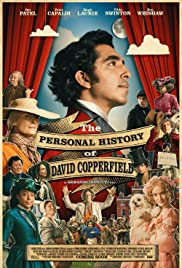
Greetings again from the darkness. One need not be a Dickens expert to enjoy this re-imagining of his “The Personal History, Adventures, Experience and Observation of David Copperfield the Younger of Blunderstone Rookery (Which He Never Meant to Publish on Any Account)”. Yes, that’s the novel’s actual title, so there is little wonder it’s typically referred to by only the main character’s name.
The film opens with David Copperfield (Dev Patel, SLUMDOG MILLIONAIRE) reading his autobiography to a mesmerized audience in a beautiful theatre. Yes, we hear the iconic opening line, “Whether I shall turn out to be the hero of my own life …”, and then Copperfield turns and walks into the backdrop which comes alive as he, in fact, steps into his own life. The film is episodic in structure as we are presented with segments of Copperfield’s life that shaped his writing – from his birth at The Rookery, to his inquisitive nature as a young boy, through his cruel banishment to factory work, on to his life living with his eccentric aunt and his time at boarding school, and finally, with his time as a proctor, courting Dora, and focusing on writing. It’s a fascinating life, with many elements pulled (or enhanced) from Dickens’ own.
Director Armando Iannucci (IN THE LOOP, creator of “Veep”) and co-writer Simon Blackwell are frequent collaborators renowned for their expertise in satire. Iannucci is an admitted fan and student of Dickens, and he’s assembled quite a sterling cast for his take on the classic story. In addition to Patel as the older Copperfield, we have Jairaj Varsani in his first film as young David, rising star Morfydd Clark (PRIDE AND PREJUDICE AND ZOMBIES, 2015) in dual roles including the enchanting Dora Spenlow, Hugh Laurie as the King Charles (and his head) obsessed Mr. Dick, Aneurin Barnard (DUNKIRK) as David’s friend Steerforth, Darren Boyd and Gwendoline Christie as the wicked Murdstones, Peter Capaldi (“Doctor Who”) as the dodgy Mr. Micawber, Daisy May Cooper as trusted handmaid Peggotty, Nikki Amuka-Bird as the concerned Mrs. Steerforth, Benedict Wong as the sherry-loving Mr. Wickfield, and Ben Whishaw is a standout as conniving Uriah Heep. And if somehow that’s not enough, the brilliant and eclectic Tilda Swinton shines as Aunt Betsey Trotwood.
Each of the segments brings something different to the party – some of it bleak, and some of it cheery. Of course the dialogue has dashes of humor, but much of the comedy comes courtesy of the talented cast. It’s been said of writers that they should write what they know, and David Copperfield literally writes what he lives … through piles of scraps of paper, each holding a moment of life or the essence of a character. Watching this is a bit like camping out in a writer’s head and twisting through their thoughts … Mr. Dickens would be proud.
Greetings again from the darkness. I’m not Catholic and did not grow up learning much about Catholicism. However, I have heard the story of Fatima, Portugal and the 3 young shepherds who claimed to have seen the Virgin Mary. Writer-Director Marco Pontecorvo and co-writers Valerio D’Annunzio and Barbara Nicolosi deliver a dutiful re-telling of the events that led up to the Miracle of the Sun.
The movie begins in 1989 as Professor Nicols (Harvey Keitel) visits Sister Lucia (Sonia Braga), now an octogenarian, at her nunnery. The professor is quite the skeptic, but it’s crucial to his new book project that he question the Sister about what she experienced in 1917. We then flash back to that era when 10 year old Lucia (Stephanie Gil) and her cousins, 7 year old Jacinto (Alejandra Howard) and 8 year old Francisco (Jorge Lamelas) are youngsters working as shepherds for the family flock of sheep. One day, a vision appears to the three children. It’s the Virgin Mary (Joana Ribeiro) offering words of hope and a request for praying and strong faith.
Of course kids are kids, so their secret gets spilled almost immediately. As you would expect, no one believes them. Not their family or those in the small Portugal village. The townspeople gather regularly in the square to hear the Mayor (Goran Visnjic) read the names of the local boys and men who have been killed in war. It’s a gut-wrenching occurrence for all involved, and yet another opportunity for the mean-spirited folks to accuse the kids of lying about what they’ve seen. The local priest (Joaquim de Almeida) tries to frighten them out of the story, and even Lucia’s mother (Lucia Moniz) scolds and belittles her.
“The faith of a child” has rarely been more evident than with young Lucia. She stays strong despite being ostracized by the villagers, the church, and even her family. The film makes clear observation about faith and religion. What is religion but believing and having faith in something intangible – something that can’t be seen or touched. Director Pontecorvo delivers a faith-based film, yet one that is not preachy. It does make us wonder why the religious leaders are themselves so lacking in true faith, and why the politician is envious of the youngsters who draw an audience. Photographs of that day in 1917 … the “Miracle of the Sun” … are shown as part of the closing credits, while Andrea Bocelli’s remarkable voice sings out. It’s a low-budget film with some overacting (from adults), but the message and the performance of young Stephanie Gil make it worthwhile.
Available in theaters and On Demand August 28, 2020
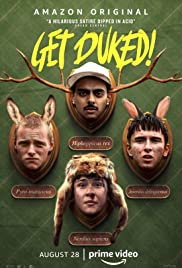
Greetings again from the darkness. In this time of pandemic, we may not yet have a cure for the virus, but music video director Ninian Doff serves up his first feature film as a vaccine for those who have been stuck in the house for too long. It’s really a mash-up of comedy-horror-thriller-buddy film, with a dash or two of hip-hop and social satire. Mr. Doff also wrote the screenplay, and the film originally played SXSW under the title, “Boyz in the Wood.”
Three friends/delinquents from school are on the verge of expulsion, and their punishment is being sent on the Duke of Edinburg adventure, a program established in 1956 with the objective of getting kids out of the city and into the country. Dean Gibson (played by Rian Gordon) is the leader of the trio, while DJ Beatroot (Viraj Duneja) dreams of becoming a star hip-hop artist, and Duncan (Lewis Gribben) mostly creates chaos at every turn. They are joined on the trip by their personality opposite, Ian (Samuel Bottomley), a home-schooled boy who actually volunteered for the trip in hopes of padding his university application.
The Scottish Highlands serve as the life-sized game board where the boys take their wilderness trek. Substitute teacher Mr. Carlyle (Jonathan Aris) hands them a map and takes a picture of the group in front of a bulletin board filled with missing kid flyers. That’s just a taste of the humor that awaits. Ian is the only one treating the journey seriously, while the other three are wise-cracking, experimenting with drugs, and putting up with DJ Beatroot’s meanderings about his music “career”. At first, the boys are oblivious to the fact that they are being stalked (or hunted) by a couple of elites played by the always entertaining Eddie Izzard as The Duke, and his partner in crime (literally), Georgie Glen as The Duchess.
Simultaneous to this Highlands’ action, we are treated to a look inside the police station where Sergeant Morag (Kate Dickie) and PC Hamish (Kevin Guthrie) generate some laughs with their excitement over hip-hop terrorist zombies in their area. They find this significantly more intriguing than “the bread thief” which was previously the number one crime to solve. At times, it’s difficult to know which group is the most talented at bumbling – the boys, the rich hunters, or the police.
The Duke of Edinburg award is earned by combining “Teamwork, Orienteering, and Foraging.” For this group of boys, it also involves drugs, hip-hop, and staying alive. Director Doff infuses a zany absurdity to the action, and with some of the set ups, he perhaps could have even gone further – although the bits on rabbit pellets and a fork as a weapon are to be admired. One of the songs drags on a bit too long, but mostly the creativity is fun to watch, as is the collision of teenage group dynamics, the generational clash, and the social commentary. The film is in the mode of some of Edgar Wright’s best work, so if that’s your style, you’ll find this a treat.
Greetings again from the darkness. This is the next entry in my “Revisited” series, where I re-watch and then write about (not a traditional review) a classic movie. “City Slickers” could have been an apt name for this 1972 film, though it would have forced a new title for Billy Crystal’s 1991 comedy. DELIVERANCE was directed by John Boorman, and the script was adapted from James Dickey’s 1970 novel by the writer himself. Many have referred to this as a man-against-nature film, and it certainly works as an adventure tale; however, I find the psychological elements just as fascinating – the primal instincts and the personal transformations.
Those nine notes are every bit as iconic as the JAWS theme. “Dueling Banjos” always sends a chill up my spine, as I recall certain scenes from the film that are forever etched into my memory. We don’t even have to wait long to hear the song. It’s the first real sequence after the opening credits which feature only the banter of four buddies animatedly discussing their weekend canoe trip down the Cahulawassee River before a dam is built and the area flooded for a hydro-electric plant. During the banter, in a bit of foreshadowing, we hear Ned Beatty’s character ask, “Are there any hillbillies” where they are headed. The first glimpse of the four men occurs as they stop for gas and interact with the locals.
The personalities of each are quickly established. Lewis (Burt Reynolds) is the alpha male, and the one pushing the group to take the trip. Ed (Jon Voight) is Lewis’ friend who wants to be like him, though he lacks the confidence. Bobby (Ned Beatty) is an insurance salesman, who looks down on the locals and would rather be playing golf. Drew (Ronny Cox) is a nice guy, and the one who connects musically for the guitar and banjo picking with the local boy (Billy Redden) perched on the porch. It’s a fun, yet unsettling, scene to watch as the two pick away on their instruments. Their smiles end abruptly when the boy turns away in disgust as Drew tries to shake his hand. It’s not the last time the outsiders will be rebuffed.
These are suburban men, settled in life, being pushed outside their comfort zone by wannbe-adventurer Lewis, who is the epitome of 1970’s machismo. His angry proclamation that “they’re drowning a river” is followed up with “because it’s there”, as an answer to why they are taking the trip. Lewis’ life vest flaunting his arms and chest, and his aggressive oratory (including the ironic, “You can’t judge people by the way they look, Chubby”) contrast with the conservative dress and mannerisms of the other men: Ed smoking a pipe, Drew strumming a guitar, and Bobby’s squishy body. For the first half of the film, Reynolds mesmerizes as the cocky Lewis.
As the men make their way down the river, they experience the sudden adrenaline rush that Lewis promised. Shooting the rapids on the river is truly man-against-nature, and the adventure that director Boorman and writer Dickey want us to initially believe is at the heart of the story. One of the key exchanges occurs at the campsight that night as Lewis acknowledges Ed’s “nice life, nice job, nice wife, nice kids”, and then asks him directly, “Why do you come on these trips with me, Ed?” It’s clear Ed is happy with his life, but he desperately wants to feel the power of being a survivalist and “real man”. It’s because of this exchange, that we find Ed’s hunting trip and face-to-face with a deer the next morning so gut-wrenching.
The second day finds some truly peaceful times with nature, and some stunning camera work and shots of nature courtesy of cinematographer Vilmos Zsigmund. It’s in these shots where we “get it” – the appeal of becoming one with nature. Of course, it’s once things seem so right, that things go so wrong. A drastic shift occurs. Ed and Bobby are confronted by local hillbillies in the most despicable way. Fear fills the screen and our minds. The menacing mountain men are played by Herbert “Cowboy” Coward (not really an actor) and Billy McKinney (whom you’ll recognize from FIRST BLOOD, THE OUTLAW JOSEY WALES, and many other roles). Still today, the sequence is terrifying and difficult to watch, and it’s when “squeal like a pig” entered our lexicon, while “He got a real purdy mouth” became seared into our brain.
Immediately following the nightmare sequence with the hillbillies, comes one of those psychological exchanges that elevate the film to greatness. Four frantic and desperate men debating “the law”, when in actuality, they are debating self-preservation. The close-up of Ned Beatty’s face says as much as any line of dialogue, and, as is often the case, a moral dilemma is resolved by choosing the path of least resistance. The day presents more horror, as Lewis and Drew meet with disaster, while Ed’s transformation takes place. It should be noted that the film’s budget was so tight, the actors performed their own stunts – including Jon Voight’s tense (and impressive) climb up the face of the rock cliff.
Director John Boorman was a 5-time Oscar nominee, including HOPE AND GLORY (1987). He also helmed one of my sleeper favorites, THE EMERALD FOREST (1985), as well as coming right out of the gate with his first feature (and cult favorite) POINT BLANK (1967), starring Lee Marvin and Angie Dickinson. Writer James Dickey wrote the 1970 novel and adapted his own novel for the screen. He was a novelist, poet, and college professor, as well as being named U.S. Poet Laureate. My favorite Dickey quote is, “The poet is one who, because he cannot love, imagines what it would be like if he could.”
For Ned Beatty and Ronny Cox, it was their feature film debut. Mr. Beatty had a 40 year acting career (he retired in 2013), and notched an Oscar nomination for NETWORK (1976), while seemingly appearing in most every movie in the 1970’s and 1980’s. He may be best remembered as Lex Luthor’s bumbling henchman in SUPERMAN (1978) and SUPERMAN II (1978), and kids today would recognize his voice as Lotso in TOY STORY 3 (2010). He also became good friends with Burt Reynolds, and was cast in many of Reynolds’ later films. His career allowed him to play a widely diverse roster of characters, and one of his often-forgotten best was in THE BIG EASY (1986). Mr. Cox is approaching a 50 year acting career, and he is also a talented singer-songwriter. His best known roles are as the Police Lieutenant in BEVERLY HILLS COP (1984) and BEVERLY HILLS COP II (1987), and as a corporate executive in both ROBOCOP (1987) and TOTAL RECALL (1990). In addition to his many movie roles, Cox appeared in numerous TV series throughout the years, and one of my favorites was a small town family drama entitled “Apple’s Way”, which ran for two seasons, 1974-75.
Jon Voight is an actor every movie lover is familiar with. As he approaches his 60th year in the business, the highly decorated actor has been nominated for four Oscars, winning for COMING HOME (1978), starring opposite Jane Fonda. His other nominations were for playing a gigolo in MIDNIGHT COWBOY (1969), a bad guy in the thriller RUNAWAY TRAIN (1985), and as Howard Cosell in ALI (2001). More recently he has been recognized for his stellar work in the superb cable TV series “Ray Donovan”. His daughter is Oscar winner Angelina Jolie, and Mr. Voight has had such memorable roles as boxer Billy Flynn in THE CHAMP (1979), Jim Phelps in MISSON: IMPOSSIBLE (1996), a sleazy hunter in ANACONDA (1997), and President Franklin Roosevelt in PEARL HARBOR (2001). And of course, we must mention the classic Jon (“John”) Voight episode of “Seinfeld.” JAWS fans might be surprised to know that he turned down the Hooper role that ultimately went to Richard Dreyfuss.
A remarkable 60 year career ended when Burt Reynolds passed away in 2018. Reynolds was a star running back for Florida State University before an injury ended his pro aspirations and caused him to pursue acting. For an extended period of time in the 1970’s and 1980’s, Reynolds was the biggest box office draw among actors. Some of his most popular films during the streak included: THE LONGEST YARD (1974), the SMOKEY AND THE BANDIT franchise (1977, 1980, 1983), SEMI-TOUGH (1977), SHARKY’S MACHINE (1981), THE CANNONBALL RUN (1981) and II (1984), and THE BEST LITTLE WHOREHOUSE IN TEXAS (1982). Most of these films played off of Reynolds’ extraordinary charm and good looks (and iconic cackle), while he often strutted tongue-in-cheek as he worked extensively with a close group of friends. He later experienced some personal relationship issues, financial difficulties, and extreme health scares. Although he continued to work during the late 80s and early 90s, it was his excellent supporting work in STRIPTEASE (1996) and BOOGIE NIGHTS (1997) that really vaulted him back into the Hollywood scene. The latter of those two movies nabbed him the only Oscar nomination of his career. Reynolds continued to work right up until the end of his life, spanning a career of almost 200 credits (TV and movies). Some of you fellow old-timers out there might recall Reynolds’ first recurring role was as Quint in “Gunsmoke”, the longest running TV series until eclipsed by “The Simpsons” (and by “Law and Order” in seasons, though it has about 150 fewer episodes). In DELIVERANCE, Reynolds’ Lewis is “a man’s man” – the kind of guy the other suburban dads aspired to. His on screen magnetism is obvious, and stardom followed. Reynolds spent most of his adult life in front of a camera – either movies, TV, paparazzi, or talk shows. And lest we forget, though he claimed to have tried, Reynolds became the first male centerfold for “Cosmopolitan” magazine in 1972, the same year this movie hit. That smirk, cigar and bear rug created quite a sensation at the time – brilliant marketing from editor Helen Gurley Brown.
While the Cahulawassee River is fictional, the filming location was most decidedly real. Cinematographer Vilmos Zsigmund captured the stunning beauty of Tallulah Gorge and the Chatooga River in northeastern Georgia. His camera work leaves no doubt as to nature’s double edge sword of beauty and danger. Mr. Zsigmund was a 4 time Oscar nominee, winning the award for CLOSE ENCOUNTERS OF THE THIRD KIND (1977). He was also responsible for THE DEER HUNTER (1978), HEAVEN’S GATE (1980), THE TWO JAKES (1990), and THE BLACK DAHLIA (2006). Editor Tom Priestley received his only Oscar nomination for his work on this film. Mr. Priestley also served as Editor on THE GREAT GATSBY (1974), TESS (1979), and 1984 (1984), and is the son of English writer John Boynton Priestley.
Ned Beatty’s wife and John Boorman’s son have brief appearances as Ed’s family, and writer James Dickey has a small but key role as the hulking Sheriff of Aintry, who doesn’t buy the men’s recap of events. Reynolds dominates the screen for the first half of the movie, and Mr. Beatty shines in his degradation, but it’s Voight’s transformation into a semblance of Lewis that proves most remarkable. Rarely have primal instincts and survival mode been more effectively presented on the silver screen than in this film. This “guys’ weekend” turned nightmare received 3 Oscar nominations (Best Picture, Best Director, Best Editor), but this was the same year that CABARET beat out THE GODFATHER in a couple of categories, so DELIVERANCE took home no awards … although we will always have those 9 notes.
*Note: “Dueling Banjos” was credited to Eric Weissberg and Steve Mandel, but there was a lawsuit filed by Arthur “Guitar Boogie” Smith, who wrote “Feudin’ Banjos” in 1955.
As a bonus for reading this far, here is a short video of Steve Martin and Kermit the Frog performing “Dueling Banjos”:
Greetings again from the darkness. Very little outside ‘the norm’ is required for teenagers to ostracize one of their own. Sometimes it’s a haircut or a brand of shoes, or even some other minor detail that sets them apart. But when it’s a mental illness, the tribe can be merciless. Director Thor Freudenthal (DIARY OF A WIMPY KID, 2010) takes on Julia Walton’s 2017 novel, with a screenplay from Nick Naveda. The film features two rising young stars and addresses some of the challenges brought on by the uncertainties associated with a mental illness.
Charlie Plummer (so terrific in LEAN ON PETE, 2018) stars as Adam, a high school senior who has dealt with the challenges of undiagnosed mental health issues since he was quite young. His father abandoned the family years ago, and Adam’s devoted mother (Molly Parker, “House of Cards”) is not only patient and loving, but also committed to researching any possible treatment that would lead Adam to a better life. On the other hand, Adam and his mother’s new live-in lover Paul (Walton Goggins) don’t exactly see eye-to-eye on things, leading to more anxiety for Adam.
In an interesting and unique approach, director Freudenthal allows us to not only hear the voices Adam hears, but also see the hallucinations and visions he sees – three of whom are Rebecca (AnnaSophia Robb, THE WAY WAY BACK), a sweet, hippie-ish optimist; The Bodyguard (Lobo Sebastian), a cigar-chomping, bat swinging he-man; and Joaquin (Devon Bostick), an inappropriately horny ‘best friend from a 90’s move.” On top of that, there is a black mist that periodically manifests, enveloping Adam and bringing on crippling fear and isolation. After a years-long stream of drug therapy, Adam is pronounced “treatment resistant” and diagnosed as schizophrenic. Adam’s only mind-calming escape is when he’s cooking. He knows his way around the kitchen and his goal is to attend Culinary School after graduation.
One day, Adam has a psychotic break during Chemistry class. He gets expelled, which jeopardizes his Culinary School dream. His mother gets him admitted to a Catholic School run by Sister Catherine (Beth Grant) at the same time he is accepted into an experimental drug trial. He’s allowed to stay in school as long as he takes his meds and maintains his grades. It’s here where he meets the dynamic Maya (Taylor Russell,WAVES, 2019). Maya is smart and ambitious and proud, and the two quickly form a bond – an interesting bond between two smart high school kids carrying their own burdens and holding their own secrets.
Sister Catherine is balancing the specific needs of Adam with her responsibility to the school, and then there is also prom and graduation to deal with. With the new drug, the voices and visions disappear, but Adam has some issues with the side effects. A desperate plea for help from Father Patrick (Andy Garcia), the school priest, provides a boost as Adam tells him, “It’s nice to be listened to and not just observed.” That line provides significant insight into what it’s like to have this affliction, and that’s really where the movie excels … putting us in the shoes of a schizophrenic and allowing us to experience the good and bad moments. What can Adam trust? His eyes? His ears? His mind?
Adam and Maya are both trying to figure out who they are, at the same time learning what it really means to love someone. Adam refers to his illness as his “burgeoning insanity”, and in fact, schizophrenia does have a history of accelerating over time once it strikes a young person. The movie succeeds in taking away some of the mystique of mental illness, by making it approachable and something we want to better understand. There is a visual reference to Van Gogh’s “Starry Night” that might be a bit too “nail on the head”, but Freudenthal’s movie is profound and features two very talented young actors. The humanity beneath the surface of those society would rather pretend don’t exist is effectively compared to those stricken with cancer … those we would do anything for. I watched this film back-to-back with another teen-drama-romance new release entitled CHEMICAL HEARTS, and it’s extremely rare to find two such thought-provoking films centered on a pair of high school students … but quite a treat (although I believe all 4 actors are long past high school age).
Being released on August 21, 2020 in THEATERS ONLY
Greetings again from the darkness. In the mid-1960’s Cat Stevens wrote the song “The First Cut is the Deepest.” It’s a beautiful and poignant song that has been a hit single for many artists, including Rod Stewart (1977) and Sheryl Crow (2003). Although the song is not associated with this film from writer-director Richard Tanne, I couldn’t stop thinking of it as the story unfolded – unsure if any teen romance has ever captured the sentiment with more emotional depth. The film is based on the 2016 novel, “Our Chemical Hearts”, by Krystal Sutherland.
Henry Page (Austin Abrams, PAPER TOWNS) is a high school senior, who proclaims as our narrator, “You are never more alive than when you are a teenager.” Henry also laments that “nothing remarkable” has happened in his life yet. That changes quickly the day the teacher-sponsor of the school newspaper calls Henry and new student Grace Town (Lili Reinhart, CW series “Riverdale”) into the office to inform them they will be co-Editors this year. However, the remarkable part for Henry isn’t achieving his goal of being Editor, rather it’s meeting Grace.
Grace is not nearly as excited as Henry for the assignment, but agrees to edit the paper as long as she doesn’t have to write. It turns out Grace is beyond damaged, she’s a shattered soul. A recent car crash took the life of her true love boyfriend, and left her leg severely damaged, instantly ending her track career. In contrast, Henry’s hobby is Kintsugi, an ancient Japanese tradition of re-assembling broken pottery. Yep, Henry is a fixer, albeit a sensitive one, and Grace is broken. Despite Henry’s best intentions, we see where this is headed.
Henry falls quickly and hard for Grace, though she’s much slower to come around. She’s grieving and filled with guilt, and Henry is simply too young to understand what she’s going through – although he gives all he can. Every teenager believes they have the strangest home life on the planet, but Grace may very well take the prize. Hormones, drama, romance, New Jersey, and Neruda’s “100 Love Sonnets” all play a role here, and mostly we are mesmerized by two outstanding young actors. Ms. Reinhart brings exceptional depth to a difficult role, and she and Mr. Abrams are terrific together. I watched this film back-to-back with another teen-drama-romance new release entitled WORDS ON BATHROOM WALLS, and it’s extremely rare to find two such thought-provoking films centered on a pair of high school students … but quite a treat (although I believe all 4 actors are long past high school age).
Greetings again from the darkness. In the years since Frances Hodgson Burnett’s novel was first published in 1911, “The Secret Garden” has become one of the most popular and oft-read children’s books. Previous film adaptations include the 1949 version with Margaret O’Brien and Dean Stockwell, and the 1993 version with Kate Maberly and Maggie Smith. Additionally, the novel has been adapted numerous times for the stage and television. Director Marc Munden is working with the screenplay adapted by Jack Thorne (WONDER, 2017), and the two had previously collaborated on the BBC series “National Treasure”. Readers of the beloved novel will certainly recognize the changes and differences within this version, both in characters and theme.
As the film begins, we are told it’s “the eve of Partition”, which was the 1947 division of British India into two separate states: India and Pakistan. This timing is, of course, quite a bit later than Ms. Burnett’s setting, but the effect is the same – young Mary Lennox (Dixie Egerickx) is orphaned when her parents die, and left alone when the servants desert her. She is shipped off to live with an uncle (Oscar winner Colin Firth) she doesn’t know. Accompanied to massive Misselthwaite Manor by the housekeeper, Mrs. Medlock (Julie Walters), Mary quickly understands that Uncle Archibald Craven is a grieving widow (his wife was Mary’s mother’s sister) who is not to be disturbed, and his hunchback is not to be stared upon. Mary soon learns that her spoiled brat manner will not be tolerated, though her natural spunk will prove advantageous. The young girl is one who is accustomed to be waited on, while also wanting to prove her independence.
Mary’s imagination is extraordinary and she often asks, “Do you want to hear a story?” CGI effects allow us to see what she has envisioned, whether it’s the wallpaper coming to life, or her mother and aunt frolicking through the halls or swinging in the garden. Mary soon befriends Martha the maid (Isis Davis), and then happens upon “Jemima” the dog while wandering the estate grounds. It’s here where the fantastical and supernatural meet reality, and a helpful Robin leads Mary to the key that unlocks the gates of the gardens that have been locked away since Uncle’s wife died. Mary and her new friend Dickon (Amir Wilson) go on adventures through the garden – a garden which has mystical powers.
One evening Mary hears cries echoing in the halls of Misselthwaite. Despite being forbidden from exploring, she discovers her cousin Colin (Edan Hayhurst) locked away in a far off bedroom. Colin is a sickly child, supposedly stricken with a spinal problem that keeps him from going outside. Mary continues to visit Colin, and soon she and Dickon are sneaking Colin into the secret garden, where the magical healing powers begin to take hold. The titular garden doesn’t make an appearance until about one hour in, but its beauty and wonder are on full display.
This is a story about the power of loss and grief and depression, and it offers the life lesson that the things we care for blossom and grow and thrive. This version has some elements of such classics as “Peter Pan” and “The Chronicles of Narnia” in that fantasy and magic play a much larger role than in the novel. Director Munden employs a darker approach and seems to emphasize self-discovery. Young actress Dixie Egerickx was a standout in the recently watched SUMMERLAND, and she is terrific here – despite the changes to the story that some fans might not embrace. The film seems a bit disjointed at times, but it’s always a feast for the eyes, and offers up one of the year’s best scores, courtesy of Oscar winner Dario Marianelli (ATONEMENT, 2007).
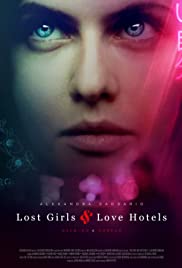 Greetings again from the darkness. The temptation here is to compare director William Olsson’s latest film to FIFTY SHADES OF GREY. While the two films do share the foundation of best-selling adult erotica novels, this film is darker and grittier, and doesn’t treat the lead as a cartoon character. Catherine Hanrahan wrote both the novel and the screenplay, a likely contributing factor to the more grounded feel to the setting and characters.


 Posted by David Ferguson







 Movie Reviews from the Dark