PINOCCHIO (2021)

February 23, 2021

 Greetings again from the darkness. Part ‘Frankenstein’ and part parable for parenting is how I’ve always thought of the story of Pinocchio. In this latest version, director and co-writer (with Massimo Ceccherini) Matteo Garrone adds a splash “Alice in Wonderland” to Carlo Callodi’s 1883 novel, “The Adventures of Pinocchio”. The result is a grim, not-kid-friendly live-action presentation that’s a bit uneven, yet still engaging.

Oscar winner Roberto Benigni (LIFE IS BEAUTIFUL, 1997) is wood-carver Geppetto, a poverty-stricken man who works magic with a chisel, but is never quite sure where his next meal will come from. When the traveling Grand Puppet Theater hits town, Geppetto dreams of creating a beautiful puppet and traversing the globe to show it off. A fellow wood worker gifts him with the enchanted piece of wood from which Pinocchio is born. When he discovers the puppet can talk, Geppetto is so proud of his new son that he shows him off around town and walks him to his first day of school.

Of course we know that Pinocchio is a curious boy, and he immediately sneaks off to watch the puppet show. This sets off his many adventures, while simultaneously making Geppetto quite sad as he undertakes a search and rescue mission. Pinocchio crosses paths with the kinda creepy Talking Cricket (Davide Marotta), the fire-eating Mangiafuoco (Gigi Proeitti), a couple of tricksters in Cat (Rocco Papaleo) and Fox (co-writer Ceccherini), a confused gorilla judge (Teco Celio), and a friendly, but slimy snail (Maria Pia Timo) who lives with the Fata Turchina/Blue Fairy (played young by Alida Baldari Calabria, and older by well-known French actress Marine Vacth).

The enticement of playing all day and having no responsibilities leads Pinocchio to accept an invitation to Toyland, although the train of donkeys pulling the wagon load of kids is our tipoff to what’s about to go down. Pinocchio’s subsequent swim in the ocean and encounter with the sea monster are handled well visually, and the reunion with Geppetto is quite pleasant. You should know that the iconic Pinocchio nose that grows upon telling lies is limited to a single scene, albeit a memorable one.

Benigni was the writer-director-star of the critically-panned 2002 PINOCCHIO, which also failed at the box office. He’s much better suited to the role of Geppetto and does a nice job of capturing the essence of the character. Federico Ielapi handles the role of Pinocchio quite well, and the “wooden” effects of his face are quite impressive. The story is a metaphor for the struggles and challenges of life, and the life lessons are easy to discern … for instance, there is no ‘field of miracles’, regardless of what Cat and Fox promise. Nicolai Bruel’s cinematography is at times visually stunning as we make our way through the countryside of Italy. It’s just that director Garrone (two excellent films: TALE OF TALES 2015, and GOMORRAH 2008) chooses to emphasize the bleakness, and it’s important to note that this is far-removed from the 1940 Disney animated classic. Most will struggle to find an emotional connection, though the look of the film and life lessons are top notch. Guillermo del Toro has a stop-action animation version currently in production and it’s not surprisingly rumored to be even darker than this one.

After a long delay, the film gets a digital release on February 23, 2021

WATCH THE TRAILER


NOMADLAND (2021)

February 20, 2021

 Greetings again from the darkness. Traditional beauty is nowhere to be found in filmmaker Chloe Zhao’s extraordinary film adapted (by Ms. Zhao) from Jessica Bruder’s 2017 award-winning book, “Nomadland: Surviving America in the Twenty-First Century”. There are no breathtaking shots of majestic sites like the Grand Canyon, and the people we meet rarely bathe, and are not concerned with fashion. Despite this, the film can best be described as one of the most beautiful and most unique cinema experiences in years. Ms. Zhao provides a look at America’s roads and landscape through the eyes of folks that society tends to overlook.

A significant reason this film works is the incredible performance by two-time Oscar winner Frances McDormand (FARGO, 1996, and THREE BILLBOARDS OUTSIDE EBBING, MISSOURI, 2017). She plays Fern, a strong woman who refuses to let grief suffocate her. Her hometown of Empire, Nevada was erased from existence in 2011 when US Gypsum shut down the local plant, resulting in the town’s zip code being discontinued a few months later. As if her town disappearing wasn’t enough, Fern’s husband passed away, leaving her with little evidence of a life to which she had grown accustomed. We watch as Fern packs up her van and hits the road.

Her first stop is working at an Amazon distribution center during the holiday rush season. She lives out of her van as part of the company-sponsored CamperForce program. When the season is over, Fern hits the road again. We slowly get a feel for this subculture of van-dwelling nomads, young and old, who travel the country’s backroads and keep to themselves, except when they gather to form a temporary community of similar-minded individuals. Fern makes it clear she is “house-less”, not “homeless”, and has nicknamed her customized vehicle, ‘Vanguard’.

Fern thrives on her solitude, but is also friendly enough to connect with others wherever she stops driving or works. She joins the annual gathering of Bob Wells’ community/tribe, and her other odd jobs include acting as a “host” at one of the stops, shoveling sugar beets at a farm, and cooking/cleaning/serving at the famous Wall Drug Store in South Dakota. Along the way she befriends Dave (David Strathairn), a fellow nomad whose dreams don’t necessarily coincide with Ferns. Respected actor Strathairn is the only other familiar face in the film, other than McDormand. Non-professional actors fill the scenes, most of whom are real life nomads kind enough to share their ways in front of a camera.

Director Zhao has reunited with Joshua James Richards, her cinematographer on the excellent 2017 film, THE RIDER. Their work here is a masterclass in taking us into a world most of us know little about, and doing so in a way that combines both the intimacy of people with the scale of nature. Even the sequence where Fern revisits her past life is quietly emotional and done with grace, while also packing a punch. The music from Ludovico Einaudi is exceptional in its complementary nature and ability to leave the quiet moments unspoiled, while also driving our empathy and emotions. This is an extraordinary film with a superb performance, and one that is entertaining, while also proving thought-provoking at a time when so many of us are questioning the sustainability of our current societal structure, and wondering just who will toss a rock on the fire in remembrance.

In theatres and PVOD on Hulu beginning February 19, 2020

WATCH THE TRAILER


DAYS OF THE BAGNOLD SUMMER (2021)

February 20, 2021

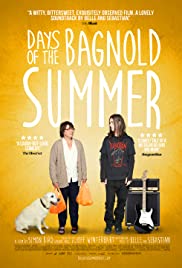
 Greetings again from the darkness. If most people realized how obnoxious they were as teenagers, we’d likely have far fewer folks opting to be parents. Actor-turned-director Simon Bird, in his first feature film, portrays the awkward, frustrating, and sometimes bitter relationship between a confused and directionless teenage boy and his divorced, well-meaning, single mom. The screenplay was written by Bird’s wife, Lisa Owens, and adapted from Joff Winterhart’s 2012 graphic novel.

Daniel (a terrific Earl Cave) is a 15 year old boy who is obsessed with heavy-metal music and resents pretty much everything else in life. He’s a droopy boy who can’t be bothered to shampoo his hair, and the only energy he expends is with snarky comments to his devoted mother, Sue (an outstanding Monica Dolan), who is clueless on how to connect with a son who bears little resemblance to the younger boy she fondly recalls raising. Sue is diligent with her work as a librarian, and tries to instill some ambition in Daniel by having his seek employment.

Daniel sinks into an even lower funk when the dad he worships cancels the boy’s much anticipated trip to Florida for a visit. Of course, Sue subtly points out that dear old dad may not be the best idol for her son, but those cautions fall on deaf ears. Instead, Daniel labels Sue, “the most boring person in the world”. Their time together is cringe-inducing, as Sue does her best to convince Daniel they can have fun, despite his disappointment.

The interesting aspect of the film is derived from its structure as a comedy, while the undercurrent of sadness and isolation is ever-present. Sue is thrilled when Douglas (Rob Brydon), a history teacher, asks her out on a date. At the same time, Daniel’s best (only?) friend Ky (Elliott Speller-Gillott) encourages him to pursue his dream as a front man for a local metal band … resulting in one of the film’s funniest and strangest segments. Neither Sue’s date, or the aftermath, nor Ky’s attempt to help his friend go according to plan.

Much of the soundtrack comes courtesy of Belle & Sebastian, and the uses of musical montages actually takes away from the otherwise realistic interactions between these characters. In addition to Brydon and Speller-Gillott, Alice Lowe has a welcome supporting role as Sue’s more socially-inclined sister, but this film belongs to Mr. Cave and Ms. Dolan. Most parents can relate to Sue’s challenges, and most adults who can be honest with themselves in retrospect, will likely recognize some of their own behavior in Daniel. The nuanced behavior and witty humor is handled well, and that deeper emotional level elevates the film for those who care to dig in.

Available in theatres, Virtual Cinema, and streaming platforms on February 19, 2021

WATCH THE TRAILER


THE MAURITANIAN (2021)

February 13, 2021

 Greetings again from the darkness. September 11, 2001 will be always remembered in history books, and seared into the memories of those who were there or watched the horrifying events unfold on television. As Americans, we were stunned and felt vulnerability for the first time in years. Also as Americans, we demanded justice for those responsible (or at least closure). Oscar winning director Kevin Macdonald (ONE DAY IN SEPTEMBER, 1999) working from a script by co-writers Michael Bronner, Rory Haines, and Sohrab Noshirvani, brings us the true story of Mohamedou Ould Slahi, based on his best-selling 2015 memoir, “Guantanamo Diary”.

Tahar Rahim (so good in A PROPHET, 2009) stars as Slahi, and we first see him in November 2001 (2 months after the attack) as he’s returned from Germany to Mauritania, West Africa for a family wedding. He’s told, “The Americans want to talk to you”, as he’s taken into custody. The movie skips to 2005 where we find Defense Attorney Nancy Hollander (2 time Oscar winner Jodie Foster) and her associate Teri Duncan (Shailene Woodley) in the courtroom. These two are crusaders for the law, and take on the case of Slahi, who has bounced first from a prison in Jordan and now to Guantanamo. Four years with no hearing, no trial, and no charges brought against him.

The film jumps around from Slahi in Gitmo, to the two sides prepping their cases: Hollander for the defense, and Stuart Couch (Benedict Cumberbatch) for the military. Couch had a friend on one of the 9/11 planes, and he’s instructed that this is a death penalty case – the only outcome that will deliver justice to the American people. Director Macdonald includes flashbacks to Slahi’s arrival at Gitmo, and even further back (1988) to his earning a scholarship to Germany. We also see the reenactment of the documented torture and “enhanced interrogation” procedures used against Slahi. It’s difficult to watch even these snippets of what he endured.

It’s 2009 before a judge even hears Slahi’s case, and 7 more years before he’s released. A total of 14 years captive with no charges, on top of the well-documented torture. Was Mohamedou Ould Slahi in some way responsible for the terrorist act of September 11, 2001?  Did he recruit others to join the cause? The fact that we don’t really know the answers goes to the heart of what went wrong at Gitmo, and how the American need for justice caused a horrific detour in the legal process.

Unlike some, I have no issues with “agenda movies”, and it seems as though director Macdonald set out to make this one. The problem is that the multiple pieces and characters are just too much to juggle for one film. At times, it seems to highlight Hollander as a crusader. Other times it wants us to understand the struggles of Couch. And then there are times when the attention is on Slahi. The fragmented approach leaves us lacking in all aspects, especially for teasing a courtroom drama that never occurs. The actual footage included at the conclusion leaves us wondering whether the intention all along was to tug on our heartstrings, rather than expose the wrongs that transpired.

In theaters February 12, 2021

WATCH THE TRAILER


COWBOYS (2021)

February 13, 2021

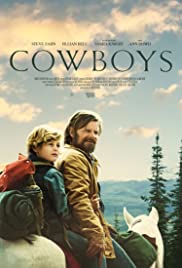
 Greetings again from the darkness. Marriage is difficult, and adding parenting to the mix brings significantly more challenges. However when the marriage crumbles, the parenting piece becomes even more complex – for the adults and the kids. Writer-director Anna Kerrigan takes that hand and raises the stakes with a husband/father battling a mental illness, a wife/mother sticking to her idealistic vision, and a frustrated child who is absolutely certain they are in the wrong body.

Sally (Jillian Bell) is a loving mother who wants to buy dolls, dresses and “pretty” boots for her daughter Josie (Sasha Knight). The problem is that Josie is more comfortable in the world of her dad – guns, belt buckles, horses, and hanging with buddies. Troy (Steve Zahn) enjoys a bond with his daughter and is appreciative that she likes “guy” things. The best scene in the film occurs when Josie demands to be Joe. Sitting in the truck with dad, Joe claims to be a boy, not a girl. Troy initially laughs it off, but quickly comes around to the seriousness of the situation. Having a transgender child requires more sensitivity than Troy has previously displayed, and he handles the moment well.

It’s Sally who pushes this off as the action of a confused adolescent, and makes a good point about how any child would find hunting and bowling preferable to washing dishes and scrubbing toilets. This of itself makes a strong statement. The interesting thing about Kerrigan’s film is that the transgender aspect is really not the focus. Troy and Joe take off on a camping trip in the Montana forest, with the goal of escaping to Canada. They are each outsiders in their own way, and heading to the country of “nice people” who will accept them is just too good to pass up.

Of course, a parent kidnapping their kid is never the right move, and soon a detective (Ann Dowd) is on their trail. Troy loses his medication and his behavior becomes more erratic, pushing Joe into a spot they are too young to handle. Flashbacks are used to fill in the family history, and show us each character’s flaws and difficulties. The film lacks the dramatics that we might expect given the subject matter, but I most appreciated how Sally was treated as a real person – a hard working woman, a frustrated wife, and a mother who wants the best for her child, even if her path from denial to acceptance is gut-wrenching. The film suffers a bit from the extraneous baggage of Troy’s medication and temper, but the message comes through in the end. As a bonus, we see some beautiful scenery along the way.

Available VOD on February 12, 2021

WATCH THE TRAILER


JUDAS AND THE BLACK MESSIAH (2021)

February 11, 2021

 Greetings again from the darkness. Electrifying. Towering. Ferocious. Choose whatever superlative you prefer to describe Daniel Kaluuya’s performance as Fred Hampton, Chairman of the Illinois Black Panther Party. Remarkably, Mr. Kaluuya captures Hampton’s legendary oratory skills, and his stage presence reminds of Forest Whitaker’s Oscar winning turn as Idi Amin in THE LAST KING OF SCOTLAND (2006). And the most stunning part is that this isn’t even really a story about Hampton. Director Shaka King, who co-wrote the script with Will Berson from a story by the Lucas brothers, Kenneth and Keith, actually devotes more time to Bill O’Neal, the FBI informant played by LaKeith Stanfield (SHORT TERM 12, 2013).

The film opens with a montage of activists in the 1960s, including Bobby Seale, and transitions right into a 1968 FBI symposium where director J Edgar Hoover (Martin Sheen in botched make-up) tells the auditorium full of agents that the Black Panthers are the greatest security threat to America. From there we watch as Bill O’Neal, wearing a trench coat and fedora, steals a car from a group of men in a pool hall simply by waving an FBI badge. When he’s apprehended, it’s that badge, not the car, that puts young O’Neal (he was 19 at the time) in the precarious situation of going to prison or accepting (actual) FBI Agent Roy Mitchell’s (Jesse Plemons, I’M THINKING OF ENDING THINGS, 2020) offer to infiltrate the Black Panthers as a federal informant.

One of the film’s most memorable lines occurs when Agent Mitchell asks O’Neal why he impersonated an agent. The reply: because “a badge is scarier than a gun”. It’s a belief that still holds true more than 50 years later. And that sentiment is a key part of Mr. King’s film. Blatant racism within law enforcement is on display through both the Chicago Police Department’s harassment, and the FBI (and Hoover’s) strategy to prevent the rise of black people.

As fascinating as Hampton and O’Neal are as characters (and real life men), the script falters in a couple of ways. We never really get to know Hampton except as the fire and brimstone speaker on stage. As impressive as that is, it’s a mystery to us how this 21 year old man became so inspirational and skilled at forming alliances. His “rainbow coalition” goal to unite local groups to battle ‘the establishment’ is remarkable, but we are left to wonder if feeding the poor and opening a local medical center were possible through any method other than all-out war. And if so, why the stock pile of guns? Another letdown with the script is that we are not shown how O’Neal manages to become so quickly trusted, and promoted to head of security.

Most of this is told through the eyes of O’Neal, and Stanfield is terrific at capturing the internal conflict and constant danger. Included here are dramatic recreations of O’Neal’s interview on a 1989 PBS documentary entitled “Eyes on the Prize 2”, and he admits to considering Agent Mitchell a role model. Unfortunately, the movie never shows this type of connection between the men. Rather, it’s an awkward and forced bond between two men, neither of which are comfortable with the actions required of their situation. That’s not to say the two don’t share some tense moments, because they do. Especially effective is when Mitchell explains to O’Neal that the Black Panthers are the same, and equally destructive, as the Ku Klux Klan.

Writer-director King and writers Berson, Lucas, and Lucas are all best known for their TV work, so this is a huge step forward for them. It’s a powerful movie that explains some of the Black Panther ideology and how it was treated by law enforcement. The “War versus Politics” explanation cuts to the bone, as do the actual clips played over the opening and closing credits. Dominique Fishback deserves mention for her terrific supporting turn as Hampton’s girlfriend, especially in her final scene. If you’ve ever wondered about the responsibility of leading a revolution, or the inner turmoil of being a snitch, then you’ll find some answers in this memorable film from Shaka King.

In theaters and streaming on HBO Max beginning February 12, 2021

WATCH THE TRAILER


LAND (2021)

February 11, 2021

 Greetings again from the darkness. In her 35 year career, Robin Wright has created many memorable big screen roles, including: Princess Buttercup in THE PRINCESS BRIDE (1987), Jenny in FORREST GUMP (1994), and Antiope in the WONDER WOMAN franchise. She entertained many of us as the complex Claire Underwood in “House of Cards”, a series for which she also directed 10 episodes. However, this is Ms. Wright’s feature directorial debut, and she also stars in this introspective story from co-writers Jesse Chatham and Erin Dignam.

City slicker Edee (Ms. Wright) decides to go “off the grid”. Through flashbacks we are able to intuit that she is grieving deeply, and both her therapist and sister (Kim Dickens) are concerned about her suicidal tendencies. Edee loads up a U-Haul trailer and in the ultimate sign of ‘dropping out of society’, she ceremoniously dumps her cell phone in a trash can. The road takes her to the Rocky Mountains region of Wyoming, where she plops down the money for a remote … extremely remote … rundown cabin with a breathtaking view. At this point, we question both her sanity and reasoning.

Through Edee’s visions we catch glimpses of a man and young child, whom we can assume are her husband and son. An unknown devastating family tragedy, and realization that therapy is not the answer, have driven her to the point of needing to be alone with her pain – to get away from people. Of course, the harsh reality is that she doesn’t know how to live off the land, and no “how to” book is going to teach her to chop wood, or hunt, trap and fish, much less survive the forces of nature. A visit from a bear ensures a shortage of supplies, and the brutal wintry cold combines to leave Edee wondering whether she will freeze to death before she starves to death.

Did she expect to die on this mountain or did she honestly think this life could rehabilitate her spirit to live? Would changing the view from skyscrapers to a majestic mountain range be enough to help her escape the darkness?  Well, we never really get the answers, thanks to the just-in-time arrival of a hunter named Miquel (Oscar nominated Demian Bichir, A BETTER LIFE, 2011), who, along with local nurse Alawa (Sarah Dawn Pledge) help Edee regain her health after near death.

Miguel and Edee forge a bond as he teaches her the realities of living off the land. They exchange very little dialogue, but it’s clear Miguel is dealing with his own form of suffering. He’s a very practical and patient man, and when teaching her how to trap, he states, “Eating squirrels is motivation to get a deer.” Can one person help another person re-discover the will to live? That’s really the message of the film. We may prefer to be alone with our grief, but it’s connecting with others that gives life meaning. As with Miguel and Edee, that connection may simply be someone “in my path”.

As you might imagine, the film looks beautiful as it bounces between the immediacy of Edee in a cabin, and the vastness of the mountain vistas. Long-time cinematographer Bobby Bukowski (ARLINGTON ROAD, 1999) makes sure we experience the overwhelming beauty of nature (Alberta as a stand in for Wyoming), as well as its overwhelming danger. With minimal dialogue, much of the story is told through the nuanced physical acting from two pros, Ms. Wright and Mr. Bichir. Humor is injected through the use of Tears for Fears song, “Everybody Wants to Rule the World”, and though it’s kind of a running gag, the song’s lyrics are spot on. There is no magic cure for disabling grief, but the dream of self-discovery by getting “one with nature” can be idealistic without proper guidance. As the film relays, the best path is more likely to be a fellow human being simply doing the right thing.

Opens in theatres on February 12, 2021

WATCH THE TRAILER


THE WORLD TO COME (2021)

February 11, 2021

 Greetings again from the darkness. I’d be hard-pressed to name a movie that is more somber, front beginning to end, than this film from director Mona Fastvold (writer of VOX LUX, 2018) and co-writers Ron Hansen (THE ASSASSINATION OF JESSE JAMES BY THE COWARD ROBERT FORD, 2017) and Jim Shepard (based on his short story). Allowing only a few sparks of hope in the second act, the film’s ending finds us nearly as beaten down as the four main characters we’ve just watched.

Structured as though Abigail (Katherine Waterston) is reading her own journal entries as they play out in real life, the film captures the brutal conditions of working a hillside farm in upstate New York during 1856. But more than that, it conveys the price of a joyless existence on the frontier, when days were spent adhering to chores. For everyone, this meant little social interaction; and for women this meant cooking, cleaning, and giving birth. Abigail mesmerizes with her balletic poetry in describing the drudgery of her life and marriage to Dyer (Casey Affleck). Dyer is a sullen man who says little, but remains dutiful in his responsibilities. He is attuned enough to allow Abigail her space after diphtheria claims their young daughter … though he seems mostly unchanged by the tragedy.

Abigail’s emptiness and unrequited quest for meaning seem her destiny until the day that new arrivals rent the next farm over. As Finney (Christopher Abbott) guides the wagon by, Abigail and Tallie (Vanessa Kirby) lock eyes, signaling to them (and us) that life on the frontier is about to become more exciting than collecting that day’s eggs from the chicken coup. This moment arrives mere weeks after Abigail as narrator has informed us, “With little pride and less hope, we begin the new year.” And just like that, she has hope.

The two women begin to spend days together building a connection first borne from isolation and loneliness, and soon growing into a true relationship. Dyer deals with his wife’s affinity for the new girl with a nonchalance that masks his agitation. Finney, on the other hand, is a quietly simmering man of anger that wreaks of a violent nature just below the surface. These are combustible elements in a world where this type of relationship between women is simply not discussed or admitted.

We witness the beginning, middle, and end of the relationship between Abigail and Tallie. We see how each lights up around the other … although Tallie’s well-coiffed auburn hair always seems out of place in an environment where showers and shampoo would be scarce. It’s really Abigail’s narration and lyrical use of language that propels the story, and as lovely as her words are, the actual pacing of the film is a bit slow at times. Of course, that corresponds to the oppressive bleakness of this world, adding to the challenge for viewers.

The four lead performances are all terrific. The two men have less screen time and certainly less dialogue, but we never once doubt where they stand. Ms. Waterston has been a standout with her work over the past few years, and Ms. Kirby recently posted one of last year’s finest performances in PIECES OF A WOMAN. She’s clearly a star in the making. Composer Daniel Blumberg’s work is a good fit, and cinematographer Andre Chemetoff works wonders with the muted color palette. Bucharest is the stand in for 19th century upstate New York, allowing us to see the harshness. Period lesbian romances are rare, though this is the third in a short period of time along with AMMONITE (2020) and PORTRAIT OF A LADY ON FIRE (2019). Just prepare yourself for an hour and a half of anguish.

In theaters February 12th, 2021 and on digital March 2nd, 2021

WATCH THE TRAILER


BEFORE/DURING/AFTER (2021)

February 8, 2021

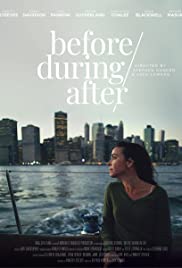
 Greetings again from the darkness. There is no “normal” process for the break-up of a marriage or any relationship. Sometimes it’s even be a relief to both participants. But that’s not what happened to Finnerty Steeves, and she’s written an insightful and grounded script that could hit home (or maybe too close to home) for many. Co-directors Stephen Kunken (who also appears briefly on screen) and Jack Lewars bring the story to life, accentuated by a terrific performance from Ms. Steeves herself.

Jennie (Finnerty Steeves) is a New York stage actress, and one particular audition is used as somewhat of a structural device for the story. The play is (ironically) entitled “To Have and To Hold”, and the scene she is reading cuts right to the core of what Jennie has gone through in her life. Her husband David (Jeremy Davidson) has had an affair. After 15 years of marriage, a lack of communication and differing goals, the couple finds their relationship crumbling. Flashbacks are used to show us different points in the relationship – from their wedding reception, to the arguments about his affair, and to the painful ordeal with her pregnancy. The flashbacks are the ‘replay’ in the mind that anyone would go through in her situation.

We tag along as Jennie and David work their way through a steady stream of frustrating couples therapists, played in order by familiar faces Kate Burton, Richard Masur, Myra Lucretia Taylor, Deborah Rush, and Stephen Kunken (the film’s co-director). We are also in the chair with Jennie as she’s “drilled” on the relationship by her dentist (the always entertaining Austin Pendleton) and his assistant (Kathleen Chalfant); and then again at Ladies Night Out with her friends – as they provide support for each other and exchange horror stories on past relationships.

There is an authentic feel to the situations and the characters, right down to Jennie’s supportive parents played by John Pankow and Kristine Sutherland. On Jennie’s first post-divorce date with Clark (John Ellison Conlee), she provides an example of how adults should act in a scenario that doesn’t go as planned. It really shouldn’t be that difficult to do the right thing, but real life tells us that it evidently is. Divorce often leads one through multiple phases: anger/sadness – acceptance – grief – rebuilding of a life. Noah Baumbach’s Best Picture nominee MARRIAGE STORY (2019) showed us a split that shook the Richter scale, and this film conveys something different.

Ms. Steeves has written a terrific script, and her distinctive hangdog facial expressions are perfectly suited to emotional turmoil, yet some of her best acting here is done in the scenes when she’s not necessarily sad. The number of familiar faces in the cast is quite impressive, and the gentle infusion of humor helps offset some of the pain Jennie feels. The film deserves bonus points for creating ‘hein-hole’, a label you’ll appreciate once you hear the root explained. On an unrelated, trivial side note that might be of interest to fans of the Harlem Globetrotters, Jeremy Davidson’s father, Mickey, played for the Washington Generals.

Available On Demand beginning February 9, 2021

WATCH THE TRAILER


OUT OF THE PAST (1947) revisited

February 7, 2021

***** This is an entry into my “Revisited” series where I re-watch a classic movie and then write about it – not with a traditional review, but rather a general discussion of the movie, those involved with it, and its impact or influence.
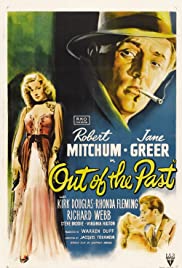
 Greetings again from the darkness. There are a few films that provide the perfect example of Film Noir, and this one from director Jacques Tourneur is unquestionably one of them. Tourneur is also known for CAT PEOPLE (1942) and he’s the son of prolific French director, Maurice Tourneur. Daniel Mainwaring, under his pen name Geoffrey Homes, adapted the screenplay from his own novel, “Build My Gallows High”.

Jeff is the owner of a small town gas station, and although relatively new to the town, he’s made a few local friends – in particular Ann, with whom he has a pretty serious, though not altogether honest, relationship. Of course, it’s only a matter of time before Jeff’s mysterious past catches up with him, and this happens pretty early in the story. He’s called back to the big city by one of the henchmen for mobster Whit, who wants Jeff to track down Whit’s mistress, Kathie, who absconded with $40,000. It’s an offer Jeff can’t refuse, and soon enough he’s in Acapulco entranced by the “dame” he’s paid to track down. What follows is a slew of twists and turns, double-crosses, dangerous close calls, and yes, yet another “dame” that can’t be trusted.

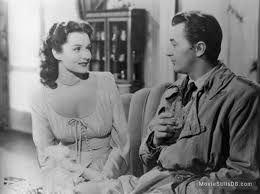
The noir hijinks are a blast to watch, thanks in no small part to the extraordinary cast. Robert Mitchum plays Jeff, and his dry, laconic approach allows him to walk that line between being an anti-hero and a good guy that we root for. Whit is played exceeding well by not-yet-a-star Kirk Douglas, whose pent-up energy and fast-talking nature are the perfect dueling partner for Mitchum. While the screen presence of Mitchum and Douglas can’t be denied, it’s Jane Greer who steals nearly every scene she’s in playing Kathie. Duplicitous is not a strong enough word for the character of Kathie. Ann is played beautifully by Virginia Huston, and Rhonda Fleming comes into the story as Meta Carson about halfway through, competing with Kathie for the title of least trustworthy woman you’ll likely come across. Other supporting performances come from Paul Valentine as Whit’s henchman Joe, Richard Webb as Ann’s protective and jealous suitor Jim, Steve Brodie as Fisher, and Dickie Moore as Jeff’s trusty employee known only as The Kid.

Director Tourneau was a master of creating atmosphere, and his career took him through many types of projects, formats, and genres: Short films, westerns, horror, adventure, war, mystery, and crime. The last few years of his career were spent directing TV movies and series. He passed away in 1977 at age 73, leaving behind two movies, OUT OF THE PAST and CAT PEOPLE that would be selected for the National Film Registry. Writer Daniel Mainwaring also passed in 1977 (age 74), and though he began as a journalist-turned-novelist, his greatest success was as a screenwriter. In addition to this film, he also wrote another noir classic, THE BIG STEAL (1949), in which director Don Siegel reunited Robert Mitchum and Jane Greer; and the original INVASION OF THE BODY SNATCHERS (1956), also directed by Siegel.
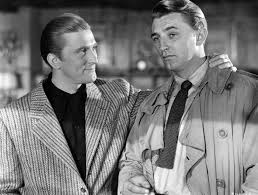
 Robert Mitchum and Kirk Douglas are both considered giants of Hollywood past. Mitchum is viewed as the consummate tough guy, and his characters often stood out due to the air of indifference in his acting style. He was only nominated for one Oscar in his career, but the memorable roles are many – including westerns, romance, and crime thrillers. Mitchum’s “bad boy” persona was only enhanced by his serving jail time for a marijuana offense in 1949, however in real life, he was married to his wife Dorothy for 57 years (although his extramarital affairs were well known). He also had some success as a singer-songwriter, and on screen, he is remembered for two of the best ever screen villains from CAPE FEAR (1962) and THE NIGHT OF THE HUNTER (1955). Fans of TOMBSTONE (1993) recognize Mitchum’s voice as the narrator, and his final screen appearance was in 1997, the same year he died at age 79.

Kirk Douglas was nominated for 3 Oscars, and very few actors were more proficient at stealing a scene, and even fewer duplicated his long-lasting screen presence. He was a showy performer who was hardly known when cast in OUT OF THE PAST, the movie that vaulted him towards stardom. His most iconic roles include Vincent Van Gogh in LUST FOR LIFE (1956), Doc Holliday in GUNFIGHT AT THE OK CORRAL (1957), and in two Stanley Kubrick films, PATHS OF GLORY (1957) and SPARTACUS (1960). Douglas is often given credit for virtually ending Hollywood’s “Blacklist” by hiring Dalton Trumbo to write for SPARTACUS. Douglas worked frequently in the 1960s, 1970s, and 1980s, and made eight films with Burt Lancaster, another industry legend. A stroke in 1996 made speaking very difficult for him, but therapy allowed him to get back on stage and on screen. In the early 1960s, Douglas starred on stage in “One Flew Over the Cuckoo’s Nest” and he held on to the screen rights until his son, actor-producer Michael Douglas, turned it into a 1975 box office hit starring Jack Nicholson. Kirk Douglas was married to his second wife, Anne, for 65 years until his death in 2020 at age 103.

 Jane Greer was only 22 when she filmed OUT OF THE PAST, yet she had the aura to make us believe her Kathie could turn any man inside-out. She won beauty pageants as a baby, and sang with orchestras as a teenager, but the movie camera and big screen took her to a new level. As her career was just starting, she got caught in the infamous web of Howard Hughes, and only a quickie marriage to singer Rudy Vallee allowed her to escape. Her two best known films are this one and THE BIG STEAL two years later, in which she again co-starred with Mitchum. In 1984, she appeared in Taylor Hackford’s remake of OUT OF THE PAST, entitled AGAINST ALL ODDS. In the film, she plays Rachel Ward’s mother. After her second divorce in 1963, she had a long-term relationship with actor Frank London. They both passed away in 2001. She was 76.

Rhonda Fleming was in her mid-20s during filming, and had already appeared in Alfred Hitchcock’s SPELLBOUND (1945). Her career spanned more than 40 films, including Robert Siodmak’s THE SPIRAL STAIRCASE (1946), Fritz Lang’s WHILE THE CITY SLEEPS (1956), and John Sturges’ GUNFIGHT AT THE OK CORRAL (1957). She worked with most every leading man of the era, including four films with Ronald Reagan. As a gifted singer, she performed in  Broadway musicals and was featured in her own concerts. Fleming spent most of the 1960’s and 1970’s doing TV work. She was married 6 times, and died in 2020 at age 97.  The third female star in the film was Virginia Huston as Jeff’s small town girlfriend. Ms. Huston’s acting career lasted less than a decade, and she also appeared in FLAMINGO ROAD (1949) with Joan Crawford, and as Jane opposite Lex Barker in TARZAN’S PERIL (1951). She passed away from cancer at age 55 in 1981.
Paul Valentine, who plays Whit’s smirking henchman Joe, also had a fairly limited career, although like Ms. Greer, he also appeared in the remake AGAINST ALL ODDS in 1984. It was one of his last screen appearances. Richard Webb, Anne’s intense and jealous protector Jim, was a hard-working character actor from the 1940s through the 1970s, and he authored some books on psychic phenomena. Dickie Moore plays the deaf-mute “Kid”, Jeff’s confidant, and was the epitome of a child star. Beginning at age 18 months, Moore appeared in 52 movies by age 10. If you are ever in a trivia contest and the question comes up about Shirley Temple’s first on screen kiss – you’ll rack up the points if you answer ‘Dickie Moore’. He appeared in five Best Picture nominees, but his acting career was over by age 30. While researching his book on child stars, he met actress Jane Powell. They had been married for 27 years at the time of his death in 2015.

The film stands the test of time and is right there with THE MALTESE FALCON (1941) and DOUBLE INDEMNITY (1944) and any others considered classic Film Noir. In fact, Humphrey Bogart was originally offered the role of Jeff, and while we can imagine him in the role, Mitchum was terrific in making it his own. No one has ever said, “Baby, I don’t care” any better, and it is also the name of Mitchum’s 2001 biography written by Lee Server. In addition to the great cast, Tourneur makes creative use of lighting and camera angles throughout, and all of that adds up to a fun movie-watching experience in spite of some of the confusion on how the story progresses. It’s a must see for anyone who enjoys classic movies or wants to experience a young actress stealing a film right out from under two screen legends.

*NOTE: I previously wrote about this movie in 2011, but I felt the urge to dig a bit deeper after re-watching it recently.

WATCH THE TRAILER