THE GREATEST MOVIE EVER SOLD

May 1, 2011

 Greetings again from the darkness. This is billed as “a documentary about branding, advertising and product placement that is financed and made possible by branding, advertising and product placement“. My issue with the movie is that it’s not really ABOUT anything! It’s really more of a “How To Raise Money For Your Movie By Selling Advertising”.  It does have some funny scenes and provide a glimpse into how open to suggestion the marketing leaders of companies have become.

Morgan Spurlock hit the big time in 2004 with his Oscar-nominated Super Size Me, in which he filmed himself eating only McDonalds food for a full month. The difference in that movie and this one is that previously, he did much research and explained to the viewer the significance of cause and effect of junk food. In this most recent film, he promises insight into the abundance of product placement in the entertainment world, but really we get only a mish-mash of images and scenes.

 The segments can be divided into these categories: conference room presentations, celebrity talking heads, industry experts, and Mr. Spurlock’s own ruminations. Each of these segments are entertaining … heck some are laugh outloud funny … but in the end, we are left holding an empty bag. We have no more understanding of product placement than when we started. What we do have is a better feel for how desperate companies are to find new ways to advertise their products.

Some of the products featured in the film are: Hyatt, Jet Blue, Mini Cooper, Merrill shoes, Sheetz (gas and convenience) and of course, Pom Wonderful – the 100% pomegranate juice whose President and Owner ends up spending $1 million for above the title sponsorship. Some of the talking heads include Ralph Nader, Noam Chomsky, Paul Brennan and Donald Trump. We get brief chats with film directors Peter Berg, Brett Ratner and Quentin Tarantino. Throw in a couple of lawyers, musicians and some industry experts and you get the impression that Spurlock did just enough to qualify this as a documentary.

 I have spent some time thinking about this and I will stick to my conclusion. What the movie doesn’t do is provide any insight or detail into what drives product placement in entertainment. However, the movie does a decent job showing us how presentations are made to advertising managers at companies, and it leans heavily on Mr. Spurlock’s often-hilarious viewpoint of situations (Mane & Tail shampoo). When you get right down to it, isn’t this just a glimpse at one segment of capitalism? When you have a product to sell, you are constantly looking for the most effective way to advertise that product to potential customers. Sorry, that’s not insight, that’s just Marketing 101.

SEE THIS MOVIE IF: you would like a peek at how advertising presentations are conducted OR you just want to enjoy Mr. Spurlock’s oddball observations

SKIP THIS MOVIE IF: you are looking for real insight into the product placement techniques that have invaded movies and TV shows


BILL CUNNINGHAM NEW YORK

April 12, 2011

 Greetings again from the darkness. Admittedly, my fashion sense is limited to jeans, a t-shirt and tennis shoes. I would not be one’s first choice to discuss the industry of fashion photography. However, that’s not what this documentary is really about. Instead of focusing on the photographs of Bill Cunningham, director Richard Press shoots the man at work and in life … the two being indistinguishable for Mr. Cunningham.

If you aren’t familiar with his name, you are not alone. Bill Cunningham has a long running NY TIMES page where his photographs are displayed. He also has a feature called “On The Street”, where he records commentary on his photographs – this can be heard on the website. Still, none of that tells you much about this man.

 The film opens abruptly with video of Cunningham at work. He is alternatingly riding his bicycle and sprint-walking as he weaves through the sea of taxis and humanity in downtown Manhattan. His trusty camera is always around his neck as he continues his quest for discovering fashion on the street … fashion sense in the working people of the city. His eye is sharp and quick. We never know what he will hone in on. Maybe a never-before-seen winter coat, a flamboyant hat, or even a pair of heels that a woman is sporting. The man is over 80 years old and his eye and mind still quickly process what he deems worthy of notice.

Once again, none of those words do justice to this man or his story. He lives, well did for 50 years, an incredibly humble life in a studio apartment within the confines of Carnegie Hall. Yes, as the film takes place, he is among the last of the remaining residents of the great hall. We learn management has determined that the few residents will be moved out of the building and relocated to other apartments nearby. Office space is needed.  History be damned!  We meet one of the other residents … the fascinating “Duchesss of Carnegie”, Editta Sherman. She has lived there for 60 years and it has been her home and photography studio. She made her living shooting celebrities and we catch a glimpse of her amazing work … including a short video of her dancing in the 60’s – filmed by Andy Warhol! Ms. Sherman’s space is palatial compared to Cunningham’s. His small studio apartment is crammed with metal file cabinets, each loaded with decades worth of photographs and negatives … a priceless history of New York fashion. His bed is a twin mattress held up by books and crates – no kitchen, and a community bathroom. “Humble existence” is an understatement.

 We learn from Mr. Cunningham that his work is divided into three parts: his street work, fashion shows, and charity events. He makes it clear that celebrities bore him and he is much more interested in how the everyday person uses fashion in their real life. Still, early on, we get comments from Vogue editor, Anna Wintour about how Cunningham’s eye impacts the fashion world. She gives him much credit. We also get quickies from Tom Wolfe, Annie Flanders and even Brooke Astor to see how easily Cunningham fits in with the upper crust, despite his connection to the street. There is even a segment in Paris where he is honored by the French Order of Art and Letters … and he “works” his own event!

 But it’s the street where he is most at home. He says he is on his 29th bicycle … the first 28 were stolen. He states this with the same enthusiasm that he shoots his subjects. The man is a constant smile and quick with banter, yet we learn just how alone he really is. When asked about his friends, family, lovers … he momentarily breaks down only to regroup and express his love for what he does – it’s not work, it’s pleasure.

By the end, it’s clear that while so many people respect the man and his work, no one really knows him. He lets his pictures stand as the testament to decades of documenting the colors and patterns and style of New Yorkers.

SEE THIS MOVIE IF: you want to see someone who loves their work and lives for the moment.

SKIP THIS MOVIE IF: you are looking for any real behind-the-scenes trade secrets in the fashion industry.  This is a story about a man and his work.


GASLAND

January 29, 2011

 Greetings again from the darkness. This is Josh Fox‘s Oscar nominated documentary on the effects of natural gas drilling known as fracking. The film deserves your attention because it is a frightening look at how huge companies and the government can work in conjunction on projects that clearly put citizens at risk. I realize that last sentence sounds like Chicken Little yelling “conspiracy”, but the details of the film will give you pause.

Can you light your tap water on fire? If so, chances are good that you are within range of natural gas drilling. Our government somehow agreed to allow this practice to remain exempt from the clean air and clean water laws. If brown water comes out of your faucet, then you already know what I am talking about.

 Mr. Fox is from Pennsylvannia and that’s where the cross-country story begins. He is concerned about his neighbors, the environment and our drinking supply. Clearly an enormous amount of chemicals are used in this drilling process. Clearly these chemicals seep into the wetlands and water supply of neighboring areas. Clearly too many people are looking the other way. The only thing not clear? The water near these drilling sites.

No mystery why this is allowed. The almighty dollar. It is cheaper for these companies to “pay off” the backwoods citizens than it is to not drill. Not sure how you decide the payoff when your kids are being poisoned and the damage to the water sources continues.

The film itself is a bit amateurish and sometimes the camera work is downright awful. But the point here is not to make a beautiful film. It is to educate … to awaken people on just what is at stake with these dangerous procedures and lack of regulation and safety requirements.

The most painful piece was when the EPA executive was interviewed and he said that his agency must be directed by the government to check into allegations made by citizens. They have no authority to move on their own. If this is true, it’s just one more instance of a bass-ackwards policy that needs to be reviewed. I encourage everyone to see this. If they aren’t drilling in your area currently, it won’t be long now.

SEE THIS MOVIE IF: natural gas drilling is already occurring in your area OR you drink water

SKIP THIS MOVIE IF: you prefer to stick your head in the sand and pretend the government will take care of you OR you believe companies can be trusted to put the good of people over the drive for profit.


INSIDE JOB (2010)

November 21, 2010

 Greetings again from the darkness. What documentary director Charles Ferguson and writers Chad Beck and Adam Bolt deliver is an emotional expose’ into the faces behind the financial crisis and a quick education on the basic causes. This is not an in-depth thesis put together by a Harvard economist … though as we learn, there may not be as much value in that as we once assumed! My emotions ranged from sadness to anger to disgust. There are even moments of laughter as these blatantly arrogant types weakly attempt to defend themselves – at least those courageous enough to submit to an interview.

 The point the filmmakers clearly set out to prove is that the mess was a collaboration of politicians (including Presidents), Ratings Agencies, Investment Managers, leaders of Banking giants, the Federal Reserve, the Boards of Directors from Financial Services conglomerates and once sacred Academic leaders. The film asks the question: “Who can we trust?”. The answer is, unfortunately, NO ONE. What we can do is learn, demand changes and hold accountable those responsible.

 The film gives a brief outline of derivatives, CDO’s, the mortgage mess, and how the Ratings agencies’ “opinions” led directly to the demise of many jobs, nest eggs, and long-standing companies. The other thing it clearly shows is how these Financial giants profited GREATLY from the failure of many individual investors. In fact, they purposefully withheld information and misled the general public into making investment decisions that knowingly stood no chance at success for anyone but the Investment firms.

Since distrust of politicians and corporate types has been rampant for years, I believe one of the most disappointing revelations was the pulling back of the curtain on the Academic world. Those thought to be unbiased analysts and commentators have been exposed to be highly paid consultants for the very people manipulating the markets. Ouch.

 It is important to note that no President goes untouched here – from Reagan forward. If you believe Obama to be above this mess, you would be mistaken. Much of his official financial advisory group is composed of the very same players responsible for the deceit these past few years. Think things are going to change? The film states we are living with a “Wall Street Government”. Those in charge clearly bring truth to the words “Greed is good”. They have no sense of right and wrong. They give no consideration to making the world a better place. What matters is how much better can they make their own life. The segment on Lehman executive Richard Fuld summed it up best. His day was planned so that he only had 3 to 4 seconds exposure to real people … his daily steps from his limo to a programmed elevator whisking him away to his private world.  I dare you to see this and not be outraged.

SEE THIS MOVIE IF:  you would like a crash course on the crash

SKIP THIS MOVIE IF: you subscribe to the notion that “ignorance is bliss”


CATFISH (2010)

October 23, 2010

 Greetings again from the darkness. A brilliant piece of marketing for what actually plays like a film school project, Catfish can be analyzed from many perspectives. What I can’t do is put any of those perspectives in written form without taking away from the marketing gimmick of not letting someone tell you what happens.

Make no mistake, this is not a thriller by any stretch. It’s not even particularly well made as a film. It is, all skepticism aside, a documentary made by some 30-ish guys from a Manhattan loft office. Their film is based on interactions with a Michigan family after they receive a painting of one of their web-posted photos. The artist is an 8 year old girl named Abby. The New York photographer is Nev Schulman.

Nev and Abby begin corresponding through Facebook. The correspondence spins off to include Abby’s 19 year old sister Megan, and their mother Angela. What is unclear is whether Nev and his filming cohorts (Ariel and Henry) are as naive as they appear or whether they smell a real story. Either way, they continue on with the back-and-forth until a real cyber-romance blossoms between Nev and Megan.

Next, we find our boys in Vail for work and they decide to “stop by” Michigan on their way back to New York. And don’t we all just love surprise home visits from strangers? What follows is the core of the film and some insight into human nature. The reactions of all parties may surprise you, but there are no major plot twists involved if you have been paying attention.

There were only two ways this “mystery” could go and neither is all that interesting. What we really see is that … SURPRISE … there are lonely people out there. There are naive people out there. Neither of these type of people are necessarily bad. I believe this film is every bit as insightful into the real Facebook as The Social Network. The only difference is that movie tells the story of those who built it, while this one tells the story of those who use it.

SEE THIS MOVIE IF: watching naive and lonely people boost your own self-esteem OR you want to know how Facebook is really being utilized.

SKIP THIS MOVIE IF: Facebook is a foreign language to you OR you will kick yourself after falling for a crafty marketing scheme


WAITING FOR SUPERMAN (2010)

October 4, 2010

 Greetings again from the darkness. The system is broken. I am neither a teacher, Union official or politician … simply a U.S. citizen who sees a real problem with a public education system that seems to adequately serve very few.

After viewing Davis Guggenheim‘s documentary, I find it fascinating to read some of the comments made … especially those made by teachers.  To my eye, the film does not blame any one group for the problems – though lousy (not good) teachers and a misguided union do take some serious criticism. Shouldn’t they? The film makes the point that excellent teachers and principals can definitely make a difference … comparing a great teacher to a work of art.  The specific subject families show caring, involved parents and eager to learn children. Of course, not every family or child fits this definition. But shouldn’t the system at least work for the engaged parents and students?

There is no shortage of blame in this game – politicians, unions, teachers, administrators, parents and rowdy kids. Regardless of the situation, it’s clear that the overall system is flawed, especially in lower income areas. The film asks the question, do neighborhoods drag the school down or is it vice versa? To me, it doesn’t matter. The system should reward the teachers, parents and children who do want to teach and learn.

Regardless of your politics or personal involvement in education, I commend Mr. Guggenheim (An Inconvenient Truth) and Mr. Gates and Ms. Rhee for rocking the boat … for getting the questions asked in a public forum. This movie should inspire much debate and discussion – typically the beginning of real improvement and change. Let’s hope this is the needed start to finding a better system.

SEE THIS MOVIE IF: you believe debate and discussion can lead to changes for the better.

SKIP THIS MOVIE IF: you believe the current public education system is perfect.


ELVIS ON TOUR: 75th Anniversary

July 30, 2010

 Greetings again from the darkness. Thanks to the July 29 one-night-only showing through Fathom Events, I got to see this on the big screen again for the first time since it’s initial release in 1972. In celebration of what would have been Elvis’ 75th birthday, an introduction was added that includes some clips and interviews … kind of a “making of” segment. I found it most interesting to get a behind the scenes look at how the film was put together, and the roles of Robert Abel, Pierre Adidge and Martin Scorcese.

The film itself won a Golden Globe for best documentary and it’s easy to see why. It provides a look at Elvis on the road … and a peek at what he was like as a man. In the new intro, Priscilla says “Elvis didn’t just sing a song”. She is so right. Sure, he had an amazing voice. And yes, he was an incredibly charismatic stage performer. Obviously, he was a handsome man and sex symbol of the times. But what the film reminds us is that he was a musician … a man who felt and loved the music.  Watching him breathe in a song by The Stamps (including the great J.D. Sumner) is a moment to behold.

For anyone who doesn’t “get” Elvis or thinks he was just some old guy in a sequined jumpsuit, this is the film to watch. Upon its original release, Rolling Stone magazine’s headline read “Finally, the first Elvis movie”. The montage of his early years and crowd shots of his later years, show just what an impact he had on his fans. There was, and still is, a connection to those who were captivated by the man and his songs. He truly was a musical and social phenomenon.

Seeing him carry the burden of being ELVIS is very interesting. While the songs and performances are fun to watch, the real value here is in the backstage portions. That’s where we see that he lived for the music. How else can you explain the voluminous recording library he left behind in less than 20 years. Despite the military service, pressures of fandom, and his personal issues, he continually recorded songs that we can enjoy today. Compare this to the Rolling Stones, whose careers have lasted more than twice as long as Elvis! While he was not at his physical peak on this tour, he was 37 years old and in decent condition. What is obvious is that the VOICE is still there when he wants it. The two best moments are when he records “Separate Ways” and then when he performs “Trilogy”. We hear the proof that the special gift never left him.

It’s difficult to watch this and realize that Elvis was dead 5 short years later. It really affects how you view his father, Vernon, who we see backstage and watching his son perform. It is also painful to see guys like Joe Esposito and Sonny and Red West kissing up to Elvis, now that we know they would go on to publish trash stories about him, once their golden goose was dead.

The film truly captures a part of history and a glimpse at a fascinating man.  Elvis really was the first mega-superstar who became bigger than life.


EXIT THROUGH THE GIFT SHOP (2010)

July 4, 2010

Greetings again from the darkness. Hoax or real? Documentary or Mockumentary? Fiction or Stranger than Fiction? Sorry, but I can’t answer these questions. A quick Google gives the appearance that the characters and story are true – or at least real. I guess the main argument I would make is that, true or not, the film is entertaining and enlightening either way.  Personally, I have never put much thought into graffiti or street art and never once (prior to this film) gave any thought that there could be celebrity graffiti artists.

The film certainly makes a statement regarding the commercialization of art. This includes fads and the power of hype and marketing. I can’t really offer up much commentary on the content of the film other than to say Thierry Gueta is a fascinating character, though I have absolutely no interest in owning his “art”. I did love Banksy‘s line about Thierry being more interesting than his work. Couldn’t agree more.


BABIES (Bebes, Fr., 2010)

May 9, 2010

 Greetings again from the darkness. About 4 months ago I saw this trailer and knew immediately I wanted to see it. The word “documentary” is usually box office death, with only a few exceptions. Those exceptions usually involve penguins and sometimes kitties and puppies.  Barely included in the Top 5 would be babies which are on display here.  Sorry, no penguins here. Only babies. And a couple of cats.  And goats.

Director Thomas Balmes from France had a pretty good idea – show the first year of life for four babies from different parts of the world. The babies are from Namibia, Mongolia, Tokyo and San Francisco. It seems his ideas pretty much stopped there. What we see are interlocking scenes of each of the babies at similar stages of developments. The stark contrast in environment seems to be the driving force of photography.

Developed countries vs. un-developed countries. Is it best to raise your child in the wilderness or in the big city? Does it even matter? We see babies rolling on dirt hut floors and poking at goat’s ears. We see other babies going through baby yoga and group therapy sessions. Apparently the big surprise is that all four babies learn to crawl, walk and talk no matter the level of luxury or amount of parental attention.

Roger Ebert says all babies are cute. Any fan of “Seinfeld” will tell you that’s just not true. What is true is that babies are curious and observant and creative. No one knows if the over-indulgent and over-protectiveness of high society actually helps or stifles the development of babies. What we do know is that life finds a way and babies keep growing and learning, whether in a hot tub with mom or in a bowl that a wild goat uses as drinking water.

I just wish the director had put more substance into the delivery. We are simply observers in quick snapshots of each baby. We get very little from the parents or other kids. Luckily, there is no narrator – not even Morgan Freeman!  The obvious points are made, but in the end, this feels a bit empty and probably better served on the National Geographic channel than the local cinema.


KILLING KASZTNER (2008)

February 9, 2010

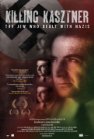
 (2-9-10) Greetings again from the darkness. The best documentaries provide both (or more) sides of the story, show the conflict, allow the emotions to speak and inspire the viewer to decide or research further. Director Gaylen Ross does just that with this terrifying tale of truth … a truth left open to interpretation.

Rezso Kasztner arranged for the rescue of 1684 Jews. That much is known. The bone chilling debates occur when one views him as a hero and the other views him as a traitor – a collaborator with the Nazi’s (specifically Adolph Eichmann). Kasztner has been referred to as the Jewish Schindler, but also as the man who sold his soul to the devil.

Ms. Ross provides us access to many sources including his probable assassin! When this admitted killer sits down with Kasztner’s family, it proves the adage that truth is stranger than fiction. Kasztner’s family, especially his daughter, are on a mission to see him portrayed as the hero they see. The problem is that many, including some of those he rescued, see him as a Nazi collaborator and are unable to forgive.

So many fine moments and interviews in this one that it actually left me wanting more. Somehow we never really got to know Kasztner as a man, but I do walk away admiring his daughter and granddaughter for working to get their side of the story out, and even more amazingly, having a touch of pity for the assassin.