DETROPIA (2012)

December 3, 2012

detropia2 Greetings again from the darkness. Admittedly, I am tough on documentaries. My expectations are quite high. After all, documentary filmmakers need not be burdened with fluffy entertainment requirements. Instead, they can tell a story, debate an issue, or expose a wrong. Wasted opportunities annoy me.

Have you heard anything about the economic hardships in the city of Detroit? Of course you have. It’s been a story for more than two decades. So a documentary “exposing” the hardships in Detroit should at least offer a different perspective, debate options, or discuss the challenges of progress. Otherwise, it’s a wasted opportunity, which is what we have here.

The film is beautifully photographed and very well put together. It lacks only a reason to exist. The film comes from co-directors Heidi Ewing and Rachel Grady, Oscar nominated for Jesus Camp. This one is a clump of different pieces that don’t fit and provide little insight. We get a clueless local union president who is clinging to the past and offering no help to his constituents. We get some obscure video blogger whose main credentials seem to be that she lives in Detroit and has her own camera (and can climb in a window). We get a couple of guys sitting on a front porch cracking wise of any efforts by local officials to develop solutions.

detropia4 There seems to have been a very narrow focus on choosing who to interview. At least Tommy Stevens, a local bar owner, is an interesting guy to follow around. He holds out hope that GM will open a Chevy Volt plant and spur business at his club, so he can re-hire his cook. His hopes are dashed when he attends a local auto show and finds out that China offers an electric car at a significantly lower price than Chevy. He recalls the days that stubborn US automakers refused to acknowledge upstart Honda in the US.

We are offered brief glimpses into some type of town hall meeting and the absolute rejection by the union of the “final” offer from American Axle. We are shown a few clips from inside the Detroit Opera, which the Big 3 automakers continue to finance. Lastly, we are introduced to a couple of young artists, who are part of a growing trend of relocations to inner city Detroit to take advantage of the low housing costs.

DetropiaTT All of the above are interesting enough, but again, it’s been two decades and we already know this stuff.  We only get one angry lady spouting off about Mayor Dave Bing’s seemingly appropriately creative idea of consolidating the outlying areas into a smaller geographic area, so the city can provide services for its citizens and start the process of healing and growing. Her reason for bashing the idea?  She doesn’t want to move.

There seem to be two real issues worth analyzing. First is the unwillingness of so many to accept that change has already occurred … so fighting change is a lost cause. Your city is broke. No need to make things worse. Secondly, looking into the true cause of the downturn could lead to interesting discussions of greed. Corporate greed as well as the greed of the people. The Chinese can make a car (and electronics, etc) so much cheaper because they are not holding on to our standard of living. Detroit has been called the birthplace of the middle class, but just what is that definition today? These are some of the discussions that need to be had. One more look at houses being torn down and empty hotels … all with the shiny GM towers in the background … is just a re-hash of what we already know. So yes, the wasted opportunity has me annoyed.

**Note: this film made the cut down list to 15 for documentaries under consideration for the Academy Award.

watch the trailer:

http://www.youtube.com/watch?v=SRce1KFsH-g


2016: OBAMA’S AMERICA (2012)

September 5, 2012

 Greetings again from the darkness. Seeing as many movies as I do each year, the theatre has come to represent a nice air-conditioned respite from the harsh realities of life: paying bills, yard work, bad drivers, politics. Once or twice per year, some filmmaker comes along and messes up my little world of escape. Often it’s Michael Moore. This time it’s Dinesh D’Souza, the President of King’s College in NY and the author of the best-selling conservative tome “The Roots of Obama’s Rage”.

Teaming with co-director John Sullivan, Mr. D’Souza is the on screen presence as narrator and interviewer. His basic premise is that Obama is inordinately influenced by the radical anti-colonialism politics of his father, grandfather and a few other key figures in his past. Obama’s own memoir “Dreams From My Father” is dissected, a few familiar clips are utilized, and a sampling of interviews conducted are meant to prove the theories.

 The best and most interesting portion of the film is the beginning, which tracks and pieces together the early years of Obama. We get a brief interview with Obama’s half-brother George who lives in poverty in Kenya. George’s key answer is basically ‘Go ask him’ when questioned on why Obama lets him live like this. For some reason, Dinesh finds it necessary to express the similarities in Obama’s background and his own. Dinesh is an Indian-American educated in the U.S., while Obama is the son of a Kenyon father and was also educated in U.S.

Unlike Michael Moore, Dinesh does offer an impressive lineup of intellectual interviews including Shelby Steele, who makes the point that, in the 2008 election, many white people voted for Obama to “prove” they weren’t racist. The point being, that may not happen again. Of course, there were also those who did not vote for Obama for racial reasons. There is also talk of Obama’s influencer’s including Columbia Professor Edward Said, a known pro-Palestinian scholar, and the infamous (youtube) Reverend Jeremiah Wright, whom Dinesh points out is not as crazy as the videos make him out.

The best documentaries introduce us to new subjects or cause us consider a different viewpoint. While I am certainly not an Obama supporter, the only portion of the presentation that really worked for me was the background details. Positioning Obama as an anti-colonialist looking to downsize the U.S. and redistribute wealth to third world countries seems a bit of stretch, and is just not proved here.

One of my concerns with 2008 Barack Obama was the limited background information we received. It seemed every time one of his political influencer’s was discovered, they were immediately cloaked in secrecy and hidden through election date. It seemed as if we knew very little about the man when compared to what we were accustomed to. Dinesh D’Souza took that baton and ran. Unfortunately, his trail of deductions doesn’t seem to add up … but does raise some interesting questions.

Mostly this film will preach to the choir … the anti-Obama establishment. It’s doing very well at the box office, but if Obama supporters ignore it and refuse to offer rebuttal, the political impact should be minimal.  A documentary of importance would not use accusations and suppositions to prove its point, but thought provocation is always appreciated.

watch the trailer:


SEARCHING FOR SUGAR MAN (2012)

August 26, 2012

 Greetings again from the darkness. I make no apologies for my tendency to have higher expectations and be more demanding of documentaries than other films. When dealing with a real subject, event or person, there is no place for fabrication or embellishment. The truth must stand (and entertain) on its own. Filmmaker Malik Bendjelloul has no such issue given his fascinating, almost jaw-dropping story of musician Sixto Rodriguez.

Described as Dylan-esque, Rodriguez was a folk singer and songwriter who put out two albums: “Cold Fact” (1970) and “Comng from Reality” (1971).  Despite critical raves, the album sales were minimal and Sussex/A&R dropped him. After that, the story got a bit hazy. Urban Legend had Rodriguez dousing himself with gasoline while onstage, and committing suicide by lighting himself up. Mostly he just seemed to disappear, not simply fade away.

The story could hit you like some kind of gag … like the Loch Ness Monster photos.  This is no spoof.  It’s real life.  A real man’s life.  Nearly incomprehensible in today’s age of internet communication, the Rodriguez songs (quietly to the rest of the world) became anthems for the anti-apartheid whites in South Africa. The music reached the country through bootleg copies and the popularity grew. We meet a Cape Town record store owner and indie music supporter names Stephen Segerman who describes Rodriguez as “bigger than Elvis” in South Africa. In the late 1990’s a world wide web manhunt began.

 What happens after that … I will leave it to the film. Just know that this documentary is a blend of Mystery, Intrigue, Urban Legend, Who-done-it, and Where are they now? There is a brief interview with Clarence Avant, the owner of now-defunct Sussex Records, during which he provides the only real insight into the music industry underbelly. Additionally, so much of the story – Rodriguez” personal life – goes unexplained. So many questions unanswered … even unasked! However, the story itself, and Rodriguez the man, are so amazing, that the entertainment and intellectual value of the film remains intact.  He comes across as a very centered man, apathetic towards the public’s need to know more.

Since the vast majority (99% plus) of us have never previously heard of Rodriguez, the film does a nice job of integrating his songs in a manner that allows us to get a real understanding for the musical genius and why the critics (and South Africa) fell hard for it. This is a fascinating story and captivating film, despite lacking in “the rest of the story” department.

watch the trailer:


MARLEY (2012)

April 22, 2012

 Greetings again from the darkness. Kevin Macdonald is one of those rare directors who has had commercial success with both documentary and mainstream films. His The Last King of Scotland featured a powerful performance from Forest Whitaker as Idi Amin, and in Touching the Void, he chronicled a perilous mountain climbing trip in the Andes. Here, he takes on the fascinating life of reggae musician and humanitarian, Bob Marley.

This extraordinary film features some wonderful, never before seen home video, concert footage, and still photography.  We also get some very insightful and forthcoming interviews from friends, family, bandmates, and others who were present during that time. We see the poverty stricken area of Jamaica where Marley was born to his mother (a local teenager) and his father, a 60-something white man who evidently worked for the forest department.

It’s truly fascinating to watch Marley’s development as a musician and human being. With little formal education, he relied on stunning life instincts and rose to become the most important Jamaican figure in a time of intense and violent discourse. His personality was one that brought people together, and his music complimented his beliefs and encouraged a unified country and world.

 While he survived an assassination attempt, he was unable to beat cancer. His death at the young age of 36, leaves us asking … what could have been? Watching his Wailers begin by playing for free in small clubs and building to worldwide tours in huge stadiums shows just how much influence he had with his words, music and actions. He was admired globally and revered in Jamaica. So often biographies and documentaries treat their subject as either a saint or villain. Here, we get the descriptions from Marley’s own voice, as well as the voices of his wife Rita (pictured left), his children (including Ziggy), and his girlfriends (including Cindy Breakspeare who was Miss World). We learn he had 11 kids with multiple women. We learn he wasn’t the warmest father to his kids. We learn he was courageous and insightful, and always willing to listen to both sides of an argument.

For most, being an influential musician would be enough. For Bob Marley, it was just the key to the door … his vision was for a peaceful world where we could all “get together and feel alright”. You will notice I have yet to mention marijuana. Marley’s face has become a symbol for Jamaica’s key export, and that’s a shame … more people need to know what this man was all about.  This is an excellent vehicle for that opportunity.

watch the trailer:


BULLY (2012)

April 22, 2012

 Greetings again from the darkness. A documentary about a socially vital topic that desperately needs more attention would typically receive rave reviews from me. Writer/director Lee Hirsch delivers a final product that emotes sympathy, empathy, sorrow and outrage. What’s missing? There are no solutions, no action ideas (other than let’s do something), and no examples of what might be working in some schools.

We are introduced to, what I hope is, the world’s worst Assistant Principal. Maybe her attitude and actions are to represent the poor approach by most teachers and administrators. I am just not sure. We see her mediate a handshake meeting between a bully and his target, and she easily falls for the bully’s eagerness to settle, seemingly oblivious to the victim’s emotional pain. Her meeting with parents is almost comical in the lack of understanding she shows … preferring to flash photos of her grandchild rather than address the more serious issue.

We visit Iowa, Mississippi, Georgia and Oklahoma to meet kids and parents who have been affected by bullies. We also see the aftermath of suicide caused by the helplessness victims feel from incessant bullying. It’s not difficult to categorize the kids we meet as “different”. One is physically small, weak and not fully developed as a result of being born more than 3 months premature. Another is a lesbian who hides her pain behind a smile. These “different” kids seem to be that which teachers, administrators, students and even parents are unable and ill-prepared to cope.

 Mr. Hirsch (pictured left) is able to capture some upsetting footage onboard a school bus. The mother of the kid being picked on even states that when she rode the bus as a kid, the driver was in control and kids were required to stay seated and keep still. Today, the kids run the show … at home, at school, and on the bus. Teachers know they will not receive support from parents and likely to be sued for getting involved. It’s a vicious cycle that can lead to tragedy.

It would have been interesting to see something other than blue collar families. Is there a class difference in this subject? What about the preferred schools for teachers … are the results different when the quality of teachers is compared?  How about trying to get the perspective of a bully … even a former bully? The film gives the impression that it had a point to make and would do whatever necessary to make that point. That is the Michael Moore school of documentaries. I am by no means saying this isn’t a vital and important topic. It definitely is. And it needs to be addressed quickly. I just believe an issues-related filmmaker has a responsibility to tell the whole story.

watch the trailer:


PINA

February 6, 2012

 Greetings again from the darkness. One can’t help but wonder how differently this Oscar nominated documentary would have turned out had its subject, Pina Bausch, not passed away from cancer just days before filming commenced. Instead of direct insight from the famously creative choreographer, we witness the tributes she earned … dancing from those who brought her work to life.

Director Wim Wenders had planned for years to document Ms. Bausch and her fascinating interpretative dance company. When 3D technology became portable enough to work with, he knew it was time. Unfortunately, Pina was diagnosed with cancer and passed away just a few days later. What we see on screen are re-creations of her work by those dancers who worked so closely with her. The reverence is obvious during the brief statements from the key dancers. Wenders presents these segments, not as talking heads, but instead of live head shots with voice-overs. A very nice touch.

 The earthy elements of water, soil and rock are on full display, as are the street scenes Pina utilized over the years. The dances are brought to life for the first time without Pina’s direction. It’s clear her presence and spirit remain with the dancers. The interpretive dance numbers may not be to everyone’s taste, but the talent of the dancers, and especially the famed choreographer are quite obvious and impressive.

SEE THIS MOVIE IF: you want to witness the lasting impact of a most influential choreographer of interpretative modern dance

SKIP THIS MOVIE IF: you are looking for concrete insight and biographical details on Pina Bausch

watch the trailer:


THE BIG STAR STORY

December 2, 2011

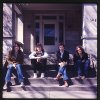
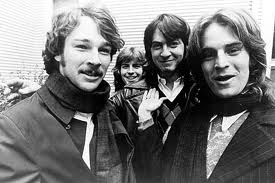
 This is not a movie review, but rather an advance notice.  In 2012, a full length documentary is being released detailing the influential cult band BIG STAR.  The band was formed out of Memphis in 1971 by Alex Chilton, Chris Bell, Jody Stephens and Andy Hummel.  If you are a music fan from the 60’s and 70’s, you will recognize the name Alex Chilton.  He was the 16 year old lead singer for THE BOX TOPS on their hits “The Letter” and “Cry Like a Baby”.   BIG STAR’s first album received wide spread critical acclaim, but was poorly marketed by their label, and the band never reached a wide audience before folding in 1974.

 Years later, bands such as REM named BIG STAR as a key influence to their music … and a revival was born.  Chilton and Stephens put a band together and began playing dates.  In 2010, BIG STAR was to play SXSW Music Festival, but Chilton tragically died from heart problems just days before their scheduled performance.  A special tribute show sprang from the fellow musicians at the festival and production on the documentary continued.  It’s entitled NOTHING CAN HURT ME: THE BIG STAR STORY, is directed by Drew DeNicola and Danielle McCarthy, and will be ready for it’s debut during the Spring 2012 festival season.  Here’s hoping Big Star finally finds the audience they deserve.

Here is the official site for the documentary

http://www.bigstarstory.com/

Watch the trailer

Listen to BIG STAR perform:


SHOLEM ALEICHEM: Laughing in the Darkness

October 17, 2011

 Greetings again from the darkness. Typically a documentary on an individual is either presented as a look back at their life or an observation of their lasting impact. Director Joseph Dorman provides both of these PLUS critical reviews and analysis of the writings of Sholem Aleichem, the writer whose work inspired Fiddler on the Roof. It is an absorbing look at who most would consider to be the most famous Yiddish writer and humorist. His work really bridged the gap between the old world Jews and the rapidly changing and evolving modernists from the turn of the 20th century.

At times the film plays like a classroom presentation for 8th graders in World History, but look closer and you’ll see many fascinating, rare photographs and video. There is even one bit of audio featuring Aleichem himself reading his own words. We also get Alan Rosenberg as the narrator and Peter Riegert as the voice of the other readings.

What makes this enthralling, interesting and educational are the terrific interviews with Yiddish experts, and the on camera presence of author Bel Kaufman, Aleichem’s granddaughter. There is no fluff or filler here. These people provide real insight and analysis and perspective on his life and writings. The photo montage of the funeral procession with 200,000 New Yorkers is a sight to behold.

 Maybe you have read the original literary work “Tevye the Dairyman”. Perhaps you have seen the 1939 film Tevye. Maybe you were fortunate enough to have seen the original Broadway run of “Fiddler on the Roof”. Most likely you have seen the 1971 film musical with the great Topol (pictured, left) as Tevye. This film points out that the words and message of Aleichem have been twisted and shifted over the years, but there is no questioning the lasting impact and his determination to document … Tradition!

SEE THIS MOVIE IF: you have any interest at all in the historical journey of Jews from the 19th to the 20th Century OR you would like to see the foundation of the beloved musical Fiddler on the Roof

SKIP THIS MOVIE IF: historical perspective bores you and you prefer to just sing along to “If I Were a Rich Man”

watch the trailer:


CRIME AFTER CRIME

September 10, 2011

 Greetings again from the darkness. 80% of women in US prisons are survivors of domestic violence, rape and/or abuse. This statistic is provided by the movie and is crucial to understanding not just the story in this documentary, but moreso, the underlying issue that is screaming for attention. Wrongful incarcerations have a disproportionate impact on poverty-stricken families and communities.

This film focuses on the story of Deborah Peagler. Her charismatic, drug-dealing boyfriend violently abused her, forced her into prostitution and abused her daughters. At her mother’s suggestion, she asked a couple of crips’ gang members to convince her boyfriend to leave her alone. The convincing got out of hand.  The boyfriend was dead.  Deborah was arrested.

The Los Angeles District Attorney office threatened Deborah with the death penalty (not legally in play) if she didn’t confess to planning the murder. See, there was a $17,000 life insurance on her boyfriend and they were sure they could pin a murder-for-profit scheme on her. Deborah believed the DA and chose not to die. Her confession got her a 25 year to life sentence. This was 1983.

While in prison, Deborah earned two associates degrees, held a top prison job and was a social leader amongst the women prisoners. A model prisoner by any standard. In 2002, California passed a law allowing courts to reconsider decisions when evidence of physical abuse had been withheld from the original trial. Enter two young pro-bono attorneys, Joshua Safran and Nadia Costa.

I won’t go into detail with all of the corruption and cover-up and injustice that occurred over those next 7 years, but clearly it is a disheartening story that sheds light on the downside of a political office being responsible for justice. The Los Angeles District Attorney, Steve Cooley, is exposed for his power hungry ways and need to avoid scandal and the media firestorm regarding poor law work from his office.

The film was introduced at Sundance Film Festival and is both inspirational and motivational, though not particularly well made by director Yoav Potash. By her own self-admission, it is clear that Ms. Peagler regrets her involvement in the this crime of desperation.  Witnessing her spirit over the years gives you hope for humanity, while also acting as expose’ on a system that is far from perfect.

Look, I am no bleeding-heart liberal, but I do recognize injustice when it slaps me upside the head. I firmly believe justice is compromised given the politicized system we now have. District Attorneys campaign based on their conviction rate … their ability to be tough on crime. Is it possible that corners are cut and poor judgement supersedes compassion and doing what’s right – all for the sake of a high conviction rate?

After the film, there was a panel discussion that included attorney Alan Bean from friendsofjustice.net and Reverand Gerald Britt from CitySquare (CitySq.org). Both of these men, and their many associates are fighting daily for JUSTICE over procedure. I am not pushing any agenda or any specific organization, but I do believe more conversation and insight is needed to ensure our Justice system is actually providing justice, and not just a system to serve those running for office.

SEE THIS MOVIE IF: you want to watch a real life horror story on the potential for abuse of power by those we trust to uphold justice OR you want two examples of young attorneys who continue to battle for “right”, not matter the obstacles or setbacks

SKIP THIS MOVIE IF: you are convinced the legal system is just fine and are willing to blindly accept whatever flaws it might have

watch the trailer:


PROJECT NIM

July 25, 2011

 Greetings again from the darkness. It is rare that we find a movie so unsettling to watch, yet admire the expertise with which it is made. Such is the case with award-winning documentarian James Marsh (Man on Wire) and his presentation of Project Nim. This is the story of Nim Chimpsky, the chimp from the 1970’s who was taught sign-language and raised by humans.

The chimp’s name is taken from Noam Chomsky, the famous MIT linguist. Unfortunately, the linguistic side of this story actually is quite minor compared to what really occurred. Columbia professor Herbert Terrace wanted to conduct an experiment on a baby chimp to see if it could be raised like a human baby and learn to communicate with people. He started the project by snatching the baby from its mother at two weeks of age, and then plopping it right into a large, free-spirited family with no scientific or primate-training background. Heck, no one in the family even knows sign language! The film shows how quickly Nim adapts to the pampered lifestyle and is even breast-fed by Stephanie, the mother. Nim is also exposed to smoking pot, drinking alcohol and even has limited success being potty trained. All of this is explained away with “it was the seventies”. I was already bouncing between sadness and anger.

 Admittedly, I am no scientist. I do know that a true science experiment or project would involve specific records and at least some type of plan … not to mention the recording of actions, tests and progress. Instead, Professor Terrace shows up periodically for some photo ops and a hug from Nim. Poof! He is gone again. While this is never really explained in the film, one can only assume he was benefiting nicely from a huge grant, not to mention “close” relationships with a couple of his assistants. The other thing left unexplained was how Nim’s mother had other babies taken from her in a similar manner. We get no detail on those “experiments”.

As Nim gets older, guess what … he gets bigger and stronger. He is difficult to control and even lashes out periodically at his caregivers, once quite violently. He is bounced from home to home and person to person. He does adapt, but he is just too strong and unpredictable to be part of human society. Finally, he is sold off to an animal rescue farm. That’s just great, except initially there are no other chimps. Not a good thing for a social primate.

The whole thing is just painful to watch. I couldn’t help but feel sympathy for the chimp and anger at the people … especially Professor Terrace. His selfish, ill-conceived project negatively impacted the life of a chimp and the safety and well-being of many good-hearted people along the way.

 While there was proof that Nim learned approximately 125 signs, the question remains … did he really understand these words and phrases? Did he instead learn behavior that led to his reward? One of Nim’s later day caregivers (Bob Ingersoll) visited him often at the rescue farm until at the age of 26, Nim passed away. The average lifespan of a chimp in the wild is about 45 years. So, it would appear neither the chimp or the people really benefited from Project Nim. It is, however, a well made documentary.

SEE THIS MOVIE IF: you are always up for a quality documentary … even if it involves some difficult times for a cute chimp.

SKIP THIS MOVIE IF:  David Letterman’s Stupid Human Tricks offers you all the ridiculous activity you need to see from people who should know better.

Watch the trailer: