LOW & CLEAR (2012, doc)

August 2, 2013

low and clear2 Greetings again from the darkness. I missed this one during it’s festival run last year, but being a lifelong fan of the late great songwriter Townes Van Zandt, I was of course curious in a project that featured his first born son (John Townes Van Zandt II). While the facial resemblance is clear and a Townes song is included, this little documentary stands tall on its own thanks to stunning cinematography and a spiritual look into how a love of fishing bonds a couple of men over the years.

We are first introduced to J.T. on the Texas Gulf Coast, as he explains that it’s a mistake to assume the purpose of fishing is catching fish, and that instead, fishing is “a micro-examination of life itself”. Just as we are settling into J.T.’s zen-like approach to life and fishing, we are startled back into reality thanks to the shouted profanity and ear-piercing chainsaw wielded by Alex “Xenie” Hall, a fishing legend in Colorado.

These two first crossed paths many years ago as Xenie became J.T.’s fishing mentor. The river and the solemnity of fishing created a bond between two very different men. As the years passed, they saw less of each other, until a planned trip to British Columbia reunited them in the only way they can really communicate … rod in hand, waist deep in water. It’s this trip where we (and they) truly come to understand what polar opposites they are. J.T. soaks in the beauty and peace of nature in his quest for the perfect cast, while Xenie is on an adrenaline rush to catch and document as many fish as possible … gleefully shouting “I’m healed” after a particularly successful catch.

Very few movies or stories deal directly with the emotions involved in male bonding: rivalry, support, introspection. To see this between two such different personality types is quite interesting … especially since most every shot in the movie could be directly from a nature photography exhibit. When J.T. says he is at his best and worst while fishing, we immediately understand that it’s the only time he can truly be himself.

It’s difficult to tell if the lack of background or “non-fishing” life of these two is a strength or weakness of the film, but it matters little. As a character study or work of art, co-directors Khalil Hudson and Tyler Hughen provide us a look at real life that dwarfs the fictionalized fly-fishing tale of A River Runs Through It.

low and clear


20 FEET FROM STARDOM (2013)

July 1, 2013

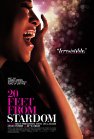
20 feet1 Greetings again from the darkness. “And the colored girls go do doo doo, do doo …”. The controversial lyrics from Lou Reed’sWalk on the Wild Side” kick off this exceptional documentary about the oft-ignored back-up singers who have played (and continue to play) a huge role in some of the biggest songs of all-time. You may not know their names, but you have undoubtedly sung along with them while driving or taking a shower.

Director Morgan Neville has a credit list filled with music shorts and documentaries. One of my personal favorites of his is “The American Masters” on Muddy Waters. I recalled that while watching this one because Neville does a nice job of connecting the dots from Gospel, Blues and Soul to the roots of Rock and Roll. The main women featured here all admit to being daughters of preachers, and fine-tuning their ability to harmonize during their youth while singing in the church choir.

20 feet5 Most of the interview time and insight comes from Darlene Love, Lisa Fischer, and Merry Clayton. You may not recognize the names or faces, but you will surely recognize the voices. Ms. Love has been elected to the Rock and Roll Hall of Fame, and may be best known thanks to her annual appearance on the David Letterman Show at Christmas. Ms. Fischer is the most frequent worker today of the three as she tours with Chris Botti, Sting and The Rolling Stones. However, the heart-stopping climax of the film belongs to Merry Clayton, as we are treated to her isolated vocals from the master on her infamous performance on the single “Gimme Shelter“. Hearing her raw voice blast out “Rape. Murder. It’s just a shot away” is both exhilarating and gut-wrenching. To hear her tell the story is mesmerizing. One of my favorite movie moments ever.

20 feet2 While we see and hear the personal stories filled with frustration and regrets, we also see an inherent love of music and the appreciation for their particular gift. We also hear from Tata Vega, Dr. Mabel John (a former Raelette for Ray Charles), and Claudia Lennear. With many similar stories of their quest for solo careers, we get the contemporary version with Judith Hill, a twenty-something working back-up today as she strives for a solo career. The parallels are obvious with her older peers.

Another excellent feature of the film comes in the form of interviews from the likes of Bruce Springsteen, Sting, Stevie Wonder, Lou Adler, Chris Botti, and Mick Jagger. We also see some studio shots featuring Phil Spector (once the hottest music producer, now incarcerated), and concert footage of Talking Heads, Ray Charles, The Rolling Stones, and the Concert for 20 feet3Bangladesh. It’s especially fitting to see Luther Vandross as a back-up singer to David Bowie‘s “Young Americans“, and to hear from Sheryl Crow, who worked as Michael Jackson’s back-up/lead female. These are the examples of the back-ups who successfully made the walk.

My only minor quibble with the film is structural, not content. Neville has an over-whelming task of addressing each of the individual stories, while also relating it to the nasty and unfair music business, the Civil Rights movement, the development of Rock and Roll, and the role that “talent” plays in what Springsteen terms the “complicated” walk from back-up to lead singer (the titular 20 feet). The segment focusing on Merry Clayton’s role in Lynyrd Skynyrd’s “Sweet Home Alabama” is especially poignant. Overall this film is fascinating and entertaining, and makes a great companion piece to Standing in the Shadows of Motown (2002) and Muscle Shoals (2013).  Whether or not you are a fan of documentaries, this is a film to be enjoyed by all.

watch the trailer:

http://www.youtube.com/watch?v=tWyUJcA8Zfo


PAUL WILLIAMS STILL ALIVE (2012)

June 12, 2013

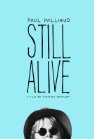
paul1 Greetings again from the darkness. This documentary was recommended to me by Adam, a music expert and fellow movie lover. Without his urging, I probably would have never taken the time to watch this ultimately fascinating and intriguing look at Paul Williams. I say that after an extremely clunky first few minutes where director Stephen Kessler, a self-proclaimed childhood fan of Williams, displays his insecurities and lack of focus as a filmmaker.  Kesssler’s most famous directorial effort was Vegas Vacation (he even pokes fun at it himself).

If you don’t recognize the name Paul Williams, then you probably didn’t watch TV or listen to the radio in the 1970’s. The guy was everywhere! Known mostly for his prolific songwriting, he also performed, appeared in movies (Smokey and the Bandit), TV shows, game shows and talk shows. In fact, he was a favorite of Johnny Carson and appeared on “The Tonight Show” fifty times! And then … just like that … he was gone. Drugs and alcohol destroyed his career. Now twenty years sober, he still performs – just in much smaller venues. This is man who has spent much time soul-searching. His insight into being different (difficult) or special (addicting) makes for a chilling moment.  He pulls no punches admitting he loved the celebrity life.

paul3 The best stories have an abundance of conflict, and it turns out that the polar opposite goals of Williams and Kessler make for some spellbinding viewing. See, Kessler wants to figure out what happened to the 1970’s icon he so admired, and Williams simply wants to show how he has adjusted to a somewhat normal life. Kessler wants to look back, while Williams is living (happily) in the present.  It’s quite telling to watch Williams’ wife consistently flash a look of annoyance while the camera is running.  And in keeping with the “now”, there is very little mention of Williams’ long time collaborator Roger Nichols.

Kessler follows Williams around until he is forced to join him in front of the camera. Their strained relationship is painful to watch until things begin to turn during a long bus ride in the Phillipines. With so much of the focus on Kessler’s fanboy attempt to connect with Williams, this is as much a personality thesis of the director as it is a look at the history and current status of Williams.

paul2 The final act of the film seems a bit staged as Kessler finally gets the “sleepover” at Williams’ house that he had been after for 2 plus years. Reviewing old TV clips does not get the desired reaction … Kessler never seemed to grasp what he had with this film. It’s obvious that the two men now have a connection, but if you are expecting a tribute film to the glory years of Paul Williams, you will be disappointed. If instead you embrace this unusual film, you will come away impressed with the man that Paul Williams has become. It’s no “Rainbow Connection” but maybe it’s even more.

Career highlights:

Paul Williams wrote the following songs: “Rainy Days and Mondays” and “We’ve Only Just Begun” both by The Carpenters, “An Old Fashioned Love Song” by Three Dog Night,  “You and Me Against the World” by Helen Reddy, “Evergreen” by Barbra Streisand (they shared the Academy Award), “Rainbow Connection” by Kermit The Frog/Jim Henson

He received 6 total Oscar nominations including his win for “Evergreen” and a Best Score Oscar nomination for Phantom of the Paradise (1974, directed by Brian DePalma)

He also received 5 Golden Globe nominations (2 wins), 2 Grammy nominations, and 2 Emmy nominations.

**NOTE: Paul’s brother Mentor Williams is also a songwriter, and he wrote the Dobie Gray hit “Drift Away”(1973)

watch the trailer:

http://www.youtube.com/watch?v=z-Gc-fW_aSU


STORIES WE TELL (2013)

June 9, 2013

stories1 Greetings again from the darkness. As a lover of indie films, I’ve long been an admirer of actress and director Sarah Polley. Her two feature film directorial efforts Away From Her and Take This Waltz displayed not just an eye for the camera, but more importantly, a unique story-telling vision. This time she turns and focuses her story telling skills on her own family, in what is a very intimate pull back of the curtain.

Polley takes a three-tiered documentary approach to the telling of stories associated with her mother (actress Diane Polley). Sarah intertwines interviews with her brothers, sisters and family friends with the voice recording by her father (Michael Polley) of his memoirs, and some staged Super-8 looking video of reenactments of certain events from these corresponding stories. It’s a different approach and works to keep the viewer engaged, even in the slower segments.

stories2 Much has been made of the variances within the stories told by the family members. In fact, the stories all seem remarkably similar but it nonetheless is a terrific study in memories and how we come to view our version as the truth. Of course, the obvious answer is that how a memory impacts us does in fact become our truth. Within the first few minutes of the movie, one of Sarah’s siblings says something along the lines of “Why would anyone care about our family?”. At this point, we tend to agree. Even once the real story and secrets are exposed, it’s not difficult to think that these stories could be replayed for numerous families throughout the globe. Sure, the Polley family has the whole showbiz thing, but for family relationships and personal secrets and associated pain, I’m not convinced there is anything extraordinary here … other than the fantastic presentation.

stories3 The value here, other than exorcising any personal Polley demons, is with the technical brilliance Sarah shows as a documentarian and story-teller. She spends little time on camera, but we realize this is much more her own story than that of her mother (as it’s set up). Clearly Michael was not fully engaged as a doting father, though that’s hardly unusual. It appears their relationship comes courtesy of Sarah’s commitment to making it happen … before, during and after the big reveal. Polley’s talents as a filmmaker have probably brought her family closer, despite the remaining question of exactly what her motivation was.

watch the trailer:

http://www.youtube.com/watch?v=ytq4VZ2Nyxg


GROW! (2011)

May 3, 2013

grow Greetings again from the darkness. Caught this documentary thanks to the “Chipotle Film Series” in Dallas. The series is focused on our food supply, and GROW! introduces us to the next generation of farmers … twenty and thirty-somethings tackling organic and sustainable gardening on an ever-growing scale.

The people we meet are mostly college-educated who were raised with a goal of a professional career in medicine, science, finance, etc. Instead, they each (in their own way) have devoted themselves to growing safer and higher quality fresh food. The theme throughout the various discussions is … know where your food is coming from (and what it is). As one of the new-generation farmers mentions, she was raised on “lunchables” and other pre-packaged food, but fresh and safe farming will lead to better health.  Filmmakers Christine Anthony and Owen Masterson have two other “food” related documentaries to their credit, and it’s obviously a passion for them.

The near 60 average age for today’s farmers is mentioned a couple of times, so it is vital to this and future generations that these new world farmers are successful and continue with their mission. Land, equipment and money are all mentioned as obstacles, but having a valued mentor is also crucial to their success. This point was also made during the interesting post-film Q&A held by local organic farmers. This movement needs more participants and is a community made up of caring people who are willing to help.

To learn more, here is the film’s website which includes the trailer and information on how to watch the full movie:

http://growmovie.net/


DETROPIA (2012)

December 3, 2012

detropia2 Greetings again from the darkness. Admittedly, I am tough on documentaries. My expectations are quite high. After all, documentary filmmakers need not be burdened with fluffy entertainment requirements. Instead, they can tell a story, debate an issue, or expose a wrong. Wasted opportunities annoy me.

Have you heard anything about the economic hardships in the city of Detroit? Of course you have. It’s been a story for more than two decades. So a documentary “exposing” the hardships in Detroit should at least offer a different perspective, debate options, or discuss the challenges of progress. Otherwise, it’s a wasted opportunity, which is what we have here.

The film is beautifully photographed and very well put together. It lacks only a reason to exist. The film comes from co-directors Heidi Ewing and Rachel Grady, Oscar nominated for Jesus Camp. This one is a clump of different pieces that don’t fit and provide little insight. We get a clueless local union president who is clinging to the past and offering no help to his constituents. We get some obscure video blogger whose main credentials seem to be that she lives in Detroit and has her own camera (and can climb in a window). We get a couple of guys sitting on a front porch cracking wise of any efforts by local officials to develop solutions.

detropia4 There seems to have been a very narrow focus on choosing who to interview. At least Tommy Stevens, a local bar owner, is an interesting guy to follow around. He holds out hope that GM will open a Chevy Volt plant and spur business at his club, so he can re-hire his cook. His hopes are dashed when he attends a local auto show and finds out that China offers an electric car at a significantly lower price than Chevy. He recalls the days that stubborn US automakers refused to acknowledge upstart Honda in the US.

We are offered brief glimpses into some type of town hall meeting and the absolute rejection by the union of the “final” offer from American Axle. We are shown a few clips from inside the Detroit Opera, which the Big 3 automakers continue to finance. Lastly, we are introduced to a couple of young artists, who are part of a growing trend of relocations to inner city Detroit to take advantage of the low housing costs.

DetropiaTT All of the above are interesting enough, but again, it’s been two decades and we already know this stuff.  We only get one angry lady spouting off about Mayor Dave Bing’s seemingly appropriately creative idea of consolidating the outlying areas into a smaller geographic area, so the city can provide services for its citizens and start the process of healing and growing. Her reason for bashing the idea?  She doesn’t want to move.

There seem to be two real issues worth analyzing. First is the unwillingness of so many to accept that change has already occurred … so fighting change is a lost cause. Your city is broke. No need to make things worse. Secondly, looking into the true cause of the downturn could lead to interesting discussions of greed. Corporate greed as well as the greed of the people. The Chinese can make a car (and electronics, etc) so much cheaper because they are not holding on to our standard of living. Detroit has been called the birthplace of the middle class, but just what is that definition today? These are some of the discussions that need to be had. One more look at houses being torn down and empty hotels … all with the shiny GM towers in the background … is just a re-hash of what we already know. So yes, the wasted opportunity has me annoyed.

**Note: this film made the cut down list to 15 for documentaries under consideration for the Academy Award.

watch the trailer:

http://www.youtube.com/watch?v=SRce1KFsH-g


2016: OBAMA’S AMERICA (2012)

September 5, 2012

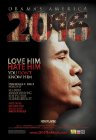
 Greetings again from the darkness. Seeing as many movies as I do each year, the theatre has come to represent a nice air-conditioned respite from the harsh realities of life: paying bills, yard work, bad drivers, politics. Once or twice per year, some filmmaker comes along and messes up my little world of escape. Often it’s Michael Moore. This time it’s Dinesh D’Souza, the President of King’s College in NY and the author of the best-selling conservative tome “The Roots of Obama’s Rage”.

Teaming with co-director John Sullivan, Mr. D’Souza is the on screen presence as narrator and interviewer. His basic premise is that Obama is inordinately influenced by the radical anti-colonialism politics of his father, grandfather and a few other key figures in his past. Obama’s own memoir “Dreams From My Father” is dissected, a few familiar clips are utilized, and a sampling of interviews conducted are meant to prove the theories.

 The best and most interesting portion of the film is the beginning, which tracks and pieces together the early years of Obama. We get a brief interview with Obama’s half-brother George who lives in poverty in Kenya. George’s key answer is basically ‘Go ask him’ when questioned on why Obama lets him live like this. For some reason, Dinesh finds it necessary to express the similarities in Obama’s background and his own. Dinesh is an Indian-American educated in the U.S., while Obama is the son of a Kenyon father and was also educated in U.S.

Unlike Michael Moore, Dinesh does offer an impressive lineup of intellectual interviews including Shelby Steele, who makes the point that, in the 2008 election, many white people voted for Obama to “prove” they weren’t racist. The point being, that may not happen again. Of course, there were also those who did not vote for Obama for racial reasons. There is also talk of Obama’s influencer’s including Columbia Professor Edward Said, a known pro-Palestinian scholar, and the infamous (youtube) Reverend Jeremiah Wright, whom Dinesh points out is not as crazy as the videos make him out.

The best documentaries introduce us to new subjects or cause us consider a different viewpoint. While I am certainly not an Obama supporter, the only portion of the presentation that really worked for me was the background details. Positioning Obama as an anti-colonialist looking to downsize the U.S. and redistribute wealth to third world countries seems a bit of stretch, and is just not proved here.

One of my concerns with 2008 Barack Obama was the limited background information we received. It seemed every time one of his political influencer’s was discovered, they were immediately cloaked in secrecy and hidden through election date. It seemed as if we knew very little about the man when compared to what we were accustomed to. Dinesh D’Souza took that baton and ran. Unfortunately, his trail of deductions doesn’t seem to add up … but does raise some interesting questions.

Mostly this film will preach to the choir … the anti-Obama establishment. It’s doing very well at the box office, but if Obama supporters ignore it and refuse to offer rebuttal, the political impact should be minimal.  A documentary of importance would not use accusations and suppositions to prove its point, but thought provocation is always appreciated.

watch the trailer:


SEARCHING FOR SUGAR MAN (2012)

August 26, 2012

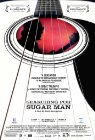
 Greetings again from the darkness. I make no apologies for my tendency to have higher expectations and be more demanding of documentaries than other films. When dealing with a real subject, event or person, there is no place for fabrication or embellishment. The truth must stand (and entertain) on its own. Filmmaker Malik Bendjelloul has no such issue given his fascinating, almost jaw-dropping story of musician Sixto Rodriguez.

Described as Dylan-esque, Rodriguez was a folk singer and songwriter who put out two albums: “Cold Fact” (1970) and “Comng from Reality” (1971).  Despite critical raves, the album sales were minimal and Sussex/A&R dropped him. After that, the story got a bit hazy. Urban Legend had Rodriguez dousing himself with gasoline while onstage, and committing suicide by lighting himself up. Mostly he just seemed to disappear, not simply fade away.

The story could hit you like some kind of gag … like the Loch Ness Monster photos.  This is no spoof.  It’s real life.  A real man’s life.  Nearly incomprehensible in today’s age of internet communication, the Rodriguez songs (quietly to the rest of the world) became anthems for the anti-apartheid whites in South Africa. The music reached the country through bootleg copies and the popularity grew. We meet a Cape Town record store owner and indie music supporter names Stephen Segerman who describes Rodriguez as “bigger than Elvis” in South Africa. In the late 1990’s a world wide web manhunt began.

 What happens after that … I will leave it to the film. Just know that this documentary is a blend of Mystery, Intrigue, Urban Legend, Who-done-it, and Where are they now? There is a brief interview with Clarence Avant, the owner of now-defunct Sussex Records, during which he provides the only real insight into the music industry underbelly. Additionally, so much of the story – Rodriguez” personal life – goes unexplained. So many questions unanswered … even unasked! However, the story itself, and Rodriguez the man, are so amazing, that the entertainment and intellectual value of the film remains intact.  He comes across as a very centered man, apathetic towards the public’s need to know more.

Since the vast majority (99% plus) of us have never previously heard of Rodriguez, the film does a nice job of integrating his songs in a manner that allows us to get a real understanding for the musical genius and why the critics (and South Africa) fell hard for it. This is a fascinating story and captivating film, despite lacking in “the rest of the story” department.

watch the trailer:


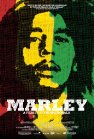
MARLEY (2012)

April 22, 2012

 Greetings again from the darkness. Kevin Macdonald is one of those rare directors who has had commercial success with both documentary and mainstream films. His The Last King of Scotland featured a powerful performance from Forest Whitaker as Idi Amin, and in Touching the Void, he chronicled a perilous mountain climbing trip in the Andes. Here, he takes on the fascinating life of reggae musician and humanitarian, Bob Marley.

This extraordinary film features some wonderful, never before seen home video, concert footage, and still photography.  We also get some very insightful and forthcoming interviews from friends, family, bandmates, and others who were present during that time. We see the poverty stricken area of Jamaica where Marley was born to his mother (a local teenager) and his father, a 60-something white man who evidently worked for the forest department.

It’s truly fascinating to watch Marley’s development as a musician and human being. With little formal education, he relied on stunning life instincts and rose to become the most important Jamaican figure in a time of intense and violent discourse. His personality was one that brought people together, and his music complimented his beliefs and encouraged a unified country and world.

 While he survived an assassination attempt, he was unable to beat cancer. His death at the young age of 36, leaves us asking … what could have been? Watching his Wailers begin by playing for free in small clubs and building to worldwide tours in huge stadiums shows just how much influence he had with his words, music and actions. He was admired globally and revered in Jamaica. So often biographies and documentaries treat their subject as either a saint or villain. Here, we get the descriptions from Marley’s own voice, as well as the voices of his wife Rita (pictured left), his children (including Ziggy), and his girlfriends (including Cindy Breakspeare who was Miss World). We learn he had 11 kids with multiple women. We learn he wasn’t the warmest father to his kids. We learn he was courageous and insightful, and always willing to listen to both sides of an argument.

For most, being an influential musician would be enough. For Bob Marley, it was just the key to the door … his vision was for a peaceful world where we could all “get together and feel alright”. You will notice I have yet to mention marijuana. Marley’s face has become a symbol for Jamaica’s key export, and that’s a shame … more people need to know what this man was all about.  This is an excellent vehicle for that opportunity.

watch the trailer:


BULLY (2012)

April 22, 2012

 Greetings again from the darkness. A documentary about a socially vital topic that desperately needs more attention would typically receive rave reviews from me. Writer/director Lee Hirsch delivers a final product that emotes sympathy, empathy, sorrow and outrage. What’s missing? There are no solutions, no action ideas (other than let’s do something), and no examples of what might be working in some schools.

We are introduced to, what I hope is, the world’s worst Assistant Principal. Maybe her attitude and actions are to represent the poor approach by most teachers and administrators. I am just not sure. We see her mediate a handshake meeting between a bully and his target, and she easily falls for the bully’s eagerness to settle, seemingly oblivious to the victim’s emotional pain. Her meeting with parents is almost comical in the lack of understanding she shows … preferring to flash photos of her grandchild rather than address the more serious issue.

We visit Iowa, Mississippi, Georgia and Oklahoma to meet kids and parents who have been affected by bullies. We also see the aftermath of suicide caused by the helplessness victims feel from incessant bullying. It’s not difficult to categorize the kids we meet as “different”. One is physically small, weak and not fully developed as a result of being born more than 3 months premature. Another is a lesbian who hides her pain behind a smile. These “different” kids seem to be that which teachers, administrators, students and even parents are unable and ill-prepared to cope.

 Mr. Hirsch (pictured left) is able to capture some upsetting footage onboard a school bus. The mother of the kid being picked on even states that when she rode the bus as a kid, the driver was in control and kids were required to stay seated and keep still. Today, the kids run the show … at home, at school, and on the bus. Teachers know they will not receive support from parents and likely to be sued for getting involved. It’s a vicious cycle that can lead to tragedy.

It would have been interesting to see something other than blue collar families. Is there a class difference in this subject? What about the preferred schools for teachers … are the results different when the quality of teachers is compared?  How about trying to get the perspective of a bully … even a former bully? The film gives the impression that it had a point to make and would do whatever necessary to make that point. That is the Michael Moore school of documentaries. I am by no means saying this isn’t a vital and important topic. It definitely is. And it needs to be addressed quickly. I just believe an issues-related filmmaker has a responsibility to tell the whole story.

watch the trailer: