BURT’S BUZZ (doc, 2014)

July 1, 2014

burt Greetings again from the darkness. I’ve said it many times – my expectations for documentaries are quite high. Either pick a side (ala Michael Moore) or tell the whole story. Anything less is a let down. That holds true even if your subject is a colorful curmudgeon with what might be an interesting back story.

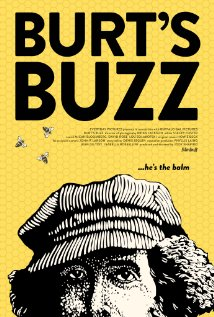
You are probably familiar with the Burt’s Bees brand of personal care items, and you have probably noticed the bearded guy logo. Yes, that’s the real Burt and director Jody Shapiro introduces us. Admittedly, I got caught up in the Burt show … watching him bounce between his life of seclusion and minimalism in Maine, and the near-rock star status he enjoys on a PR tour of Taiwan. It wasn’t until afterwards that the holes and unanswered questions started piling up.

The Burt Shavitz story traces his initial drop out from a promising photojournalism career in New York to selling jugs of honey from his truck on the side of the road. A chance meeting and initial attraction to single mom Roxanne Quimby brought forced ambition to Burt’s quiet life and the next thing he knew, he was spending his days behind a desk helping run a company.

Burt and Roxanne had a massive fallout after the company relocated to North Carolina and the movie only hints at the real reason. It also leaves open-ended the question of whether Roxanne shrewdly maneuvered the company away from Burt or whether the decision to part ways was mutual.  Whatever the story, she later sold it for almost $1 billion to the Clorox company.

It’s pretty obvious Roxanne refused to participate in the film, and instead sent her son to answer questions. Because of this, the guts of the story are never determined. Instead, we follow Burt around as he fulfills his requirements to the company that he no longer owns. We don’t get any details on his arrangement, who pays for his personal assistant, or what Burt thinks about the business side. Instead he ruminates about the importance of land, and how he lives a life without hot water or hardly any other of life’s modern conveniences. Well, except for when he is staying in 4 star hotels while touring for the company. These contradictions are fascinating, but of course, go unexplored.

Burt doesn’t appear to be a very complex man, and it’s easy to accept his words at face value. He is almost 80 years old and seems to be quite satisfied hanging out with his dog … but he also gets a kick out of the recognition and applause from his promotional tours. With all of the unanswered questions, this would have been better served as an hour long “Biography”.

watch the trailer:


FED UP (doc, 2014)

May 28, 2014

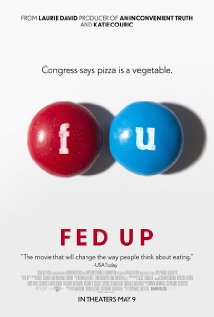
fed up Greetings again from the darkness. Changing traditional thinking is not easy, but filmmaker Stephanie Soechtig gives it her best shot. The main theme here is that the obesity crisis is getting worse because we are not looking at the problem correctly.

All calories are not created equal, so Energy Balance (calories in equal calories burned) is a flawed theory. This messes with our eat less and exercise more mantra. The real bad guy here is sugar – in all forms. We learn that the food industry is adding all types of sugar to all types of foods (as much as 80% of grocery store items). We know the dangers of corn syrup, and soda certainly gets some blame, but we get “tricked” with many other foods … especially those in school cafeterias.

Narrated by (Producer) Katie Couric, the film gets a boost from such well known types as Bill Clinton, Tom Harkin and Michael Pollan. The film doesn’t let Michelle Obama off the hook. It explains how her initial “Let’s Move” campaign was designed to help us eat better, but has been repositioned by the food industry lobbyists to promote exercise for kids, rather than proper diet. More detail on this would have been welcome.

There is no shortage of other experts or sobering statistics. One of the most fascinating was 40 out of 43 lab rats preferred sugar water to cocaine. The point is that a powerful sugar addiction can happen quickly and it causes our bodies to crave the foods that make us fat. Those same foods will not have daily requirements of sugar listed, because if they did, most servings would be over 100%.

So while the food industry is the clear target, the burden falls to each of us to better understand the negative impact of sugar. The Type 2 Diabetes statistics are stunning. Break your soda habit and learn what makes up the food you are eating. Don’t wait for the government to save you.

watch the trailer:


SOMM (doc, 2012)

May 26, 2014

somm Greetings again from the darkness. Alexander Payne’s 2004 hit Sideways made wine tasting and discussion a fun thing to do with friends, and U.S. wine tours exploded. In the movie, Miles (Paul Giamatti) is quite knowledgeable and opinionated on wine. However, comparing Miles to the real life characters in the Somm documentary is like comparing the boys of The Sandlot to major leaguers … it’s not even close!

Filmmaker Jason Wise follows four guys as they prepare for the nearly impossible-to-pass Master Sommelier exam. The certification has been around for 40 plus years, and less than 200 applicants have actually passed. We get to know the four who are studying so diligently by watching them interact and even talk to the camera. The competitive nature is on full display through the trash-talking and emotions that are evident through each disagreement. Mostly we witness the enormous stress that comes from working so hard for a single shot … the best comparison I can make is that of an Olympic athlete preparing for their single event.

We also meet Fred Dame, the Godfather of U.S. Master Sommelier. He trains through intimidation and seems to carry the burden of exclusivity in every interaction. Yeah, he’s kind of jerk, as are the four vying for the certification. It seems one must be self-absorbed and borderline ego-maniacal to build the knowledge and fine-tune the palate necessary to have a shot at passing.

The exam is broken into 3 parts: Blind wine tasting, Theory, and Service. The wine tasting segments are most fun to watch as we quickly learn there is a skill, a science and some luck involved. Through a sniff and a sip, they must be able to identify the type of wine, the subtle flavors, the age of the wine, the country of origin, the specific region, and even the level of winery. The theory section involves knowing wine history from all over the globe. This is accomplished through endless hours of reading and flash card drills. The Service portion gets the short straw here, but we do get a taste of the outlandish nature of a game whose sole point seems to be humiliating the participant.

To add another touch of legend, we do get some insight from Bo Barrett, the legendary California wine maker profiled in the movie Bottle Shock. Mostly though, we learn that this most prestigious designation can only be obtained through an elitist Obsessive-Compulsive approach that kills all sense of acceptable societal manner. For most of us, enjoying a glass of wine with friends is reward enough … for you others, best of luck learning the 3000 grape varietals in Italy.

watch the trailer:


DIRT! THE MOVIE (doc, 2009)

May 24, 2014

dirt Greetings again from the darkness. “Dirt might be more alive than we are.” It could be a tag line for the newest horror flick, but instead it’s one of the key elements to this well presented and informative documentary that’s been around, and discussed, for a few years.

Inspired by William Bryant Logan’s book “Dirt: The Ecstatic Skin of the Earth“, the three filmmakers roll out interviews from what must be a some kind of Guiness world record in professional diversity: farmers (of course), Mycologist (had to look it up), Professors, a Physicist, a Pastor, an Entomologist, an Anthropologist, Ecologists, a Horticulturalist, a Native American spokesperson, a prison worker, a photographer, a wine expert (who merrily eats dirt and then brags about it) and even a Nobel Laureate. This group would make up quite the dinner party!

Doing as much showing as telling, the film avoids the doom and gloom of so many “destroying the earth” documentaries and instead uses splashes of animation to lighten the mood, while still making serious and important points. It doesn’t, however, miss the chance to cast the negative light on monoculture farming (single crop over large land areas), strip-mining, logging, fertilizers and pesticides.

On the bright side, hope is provided through many isolated efforts of those trying to save our dirt (S.O.D. – see what I did there?)! These aren’t extremists picketing corporate farms, but rather groups of people doing what they can. Rooftop gardening and schoolyard gardens (by ripping out asphalt) are two of the most interesting. A fascinating point is made that if Ethiopia were properly farmed, it could feed all of Africa.

The story of Clyde’s pickup is pretty interesting as well – though I wondered why it never got towed. We get a history lesson on the use of dirt as a building material, and how man’s greed created the Dust Bowl.  After all this, somehow the one thing that is stuck in my head is Dino Pee … the point that all of Earth’s water is continually recycled, and every glass of water we drink goes back millions of years and could contain traces of … well you get the idea.

watch the trailer:


KIDS FOR CASH (doc, 2014)

May 20, 2014

kids for cash Greetings again from the darkness. Focusing on “the honorable” Judge Ciavarelli and Judge Conahan of Pennsylvania, director Robert May (Producer: The War Tapes, The Fog of War) provides some insight into a despicable miscarriage of justice that the media labeled Kids for Cash. It’s a catchy phrase that can best be defined as a convergence of some less-than-favorable traits: abuse of power, over-the-top greed, and a collapse of trust in the juvenile justice system.

The talking head approach is on full display, and proves quite effective here. We get interviews and statements from attorneys, journalists, citizens, a particularly vocal radio talk show, and surprisingly, even Judge Ciavarelli and Judge Conahan. The biggest wallop comes from the words and body language of those most directly impacted – the kids and their parents.

For those unfamiliar with the story, Ciavarelli and Conahan were charged in various felonies related to their conspiratorial actions that led to the closing of a County facility, the fundraising for a new private facility, and the subsequent sentencing of thousands of kids to ensure the facility remained at capacity. The financial rewards for these two men included “finder’s fees” ($2 million for Ciavarelli), or what most others would term bribes or kickbacks.

The actions of Judge Ciavarelli are defended by his staunch campaign strategy of “Zero Tolerance” in the wake of the Columbine tragedy. Once elected, his frequent speeches at local schools reinforced his commitment to zero tolerance, and his promise to severely penalize any kid that ran afoul of the law. In theory, most of this sounds like a formidable stance, however, the real problem occurs when the test of reasonableness is absent in the charging of teenagers (some only 13 or 14) with a crime. This is where the film falls a bit short. The kids going to court makes a dramatic story, but the missing link is HOW does this happen when most of these cases come across as schoolyard dust-ups, typical teenager antics (a MySpace page), and simply part of the maturing process for adolescents?

There is an acknowledgment that most young teenagers don’t have the necessary decision-making skills or sense of judgment to handle these situations. The point is well made that teenagers are not just “little adults” … there is much growth to come, both physically and intellectually. This leads to the real question: why aren’t we doing a better job of allowing kids to develop their judgment and dispute resolution skills. The pizza shop guy in the movie says “we all got in playground fights“. He’s right! But these days, that gets the kid (even first time offenders) arrested and possibly sent away … where they come back hardened and angry. This approach is not working – though, I’m certainly not suggesting mass playground fights. There has to be a better way.

This story really isn’t about the kids, rather the attention is on the (then) upcoming trials of the two judges. The film’s tone shifts to one of revenge and reckoning. It’s an emotional and powerful time, and neither of the judges come across as believable or likable. In fact, Conahan strikes a plea bargain, and Ciavarelli defiantly states he is not guilty of “kids for cash” … AFTER being found guilty of 12 felonies on related issues! His true character shines through.

The film expertly tells the story … often very personal stories … of some of those impacted by the Kids for Cash scandal. It raises many questions on numerous topics, though most are overshadowed by the focus on the judges’ trials. Near the end, many statistics are displayed – some of which could support their own documentary. The real impact of a documentary is judged by its call to action – the ability to get people involved in finding answers and solutions. Let’s hope the impact is profound, even if it’s too late for some.

To learn more about the film and watch the trailer, visit the website:  http://kidsforcashthemovie.com/


CYBER-SENIORS (doc, 2014)

May 9, 2014

cyber seniors Greetings again from the darkness. As the world has become more connected, the greatest generation is being left behind in a cloud of digital dust. As pointed out by one of the teenage mentors, the generation gap is wider than ever. The good old days of three generations living together under one roof are gone, and quite often there is a great geographic distance between family members. Two teenage girls set out to close the gap by teaching senior citizens how to connect via the World Wide Web. Their project, Cyber-Seniors, is captured on film by director Saffron Cassady.

Taking place in a couple of Toronto Assisted Living Centers, the Cyber-Senior project has millennials making the rounds to tutor the residents on how to use a computer, and specifically, how to connect with distant family members. The film focuses on five individuals ranging in age from 77 to 93. While the seniors are absorbing the power of technology, the teenage mentors slowly come to realize the spirit of life and the interesting backstories of their much older pupils. Patience and a sense of humor are necessary for all parties involved, creating a very interesting, entertaining and meaningful story for the viewer.

Playing significant roles in the process are such items as Facebook, email, digital photos, chatting, online banking and Skype. There is a brief, but humorous segment on a dating site, but the real fun begins when 88 year old Shura creates a “cooking” video for YouTube. My guess is you will never again think of corn on the cob or grilled cheese the same. This leads to a YouTube contest, and this portion could have made a film unto itself, as each senior creates a video in line with their own personality – exercise, friendship, dating, and yes, even dental work. It’s fascinating to watch these folks flash some of their knowledge and personality.

The project itself is ambitious and worthwhile, but the real payoff comes as these fine people re-connect with their kids and grandkids and friends. While the humor and touching moments make for wonderful viewing, the film is a not so subtle reminder that everyone has something to offer, and we can all benefit from more personal interactions with those who mean so much to us. For other wonderful documentaries centered on senior citizens, see Young at Heart (2007) and Ping Pong (2012).

To see the trailer and learn more about the film, go to:

Home Page


WHITEY: UNITED STATES OF AMERICA v. JAMES J BULGER (doc, 2014)

April 16, 2014

DALLAS INTERNATIONAL FILM FESTIVAL (2014)

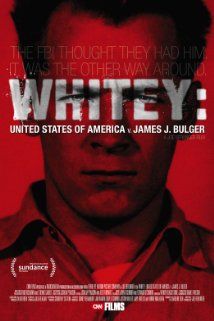
whitey Greetings again from the darkness. Definitely one of the best documentaries at this year’s Dallas International Film Festival, this is one detailed and informative expose’ that focuses not just on bad guy Whitey Bulger, but a seemingly corrupt system that allowed him to maintain his power.

Joe Berlinger is an award-winning and very prolific documentarian, and he certainly goes all in here with an overwhelming amount of information, detail and speculation. The film begins with the 2011 arrest of Whitey Bulger after 16 years on the lam. We then explore the trial, as well as the background of Bulger’s 30 years of power in South Boston (after his release from Alcatraz).

The interviews are fascinating. We get first person responses from attorneys, thugs from the Bulger syndicate, as well as many of the victim’s family members … some still so desperate for justice after decades of pain.

The Bulger defense team claimed immunity due to his status as an FBI informant. Of course, this claim opens up the real intrigue here … how deep did the corruption go with local law enforcement, the FBI and the judicial system? Was Bulger empowered by those who should have been protecting the citizens and pursuing him? Many questions are asked, and the likely answers do not quell conspiracy theorists.

While some documentaries seem a bit thin as they stretch material, Mr. Berlinger’s approach is to supply much information, many details, and an endless stream of interviews … all to force us to wonder if Whitey Bulger’s reign of southie crime was permitted, even encouraged, by those we thought were the good guys.

watch the CNN Films promo:


RICH HILL ( doc, 2014)

April 14, 2014

DALLAS INTERNATIONAL FILM FESTIVAL (2014)

rich hill Greetings again from the darkness. Boo, Hiss to Poverty. Nobody likes poverty and it’s one of the more popular topics for political lip service. Poverty also happens to be a frequent topic of documentary filmmakers. A prize winner at Sundance, co-directors (and cousins) Andrew Droz Palermo and Tracy Droz Tragos brought their film to the Dallas International Film Festival.

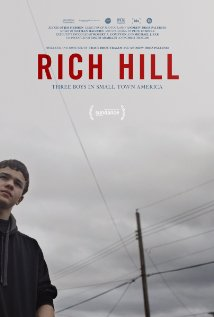
The beautifully photographed film focuses on three adolescent boys living in poverty stricken Rich Hill, Missouri (population 1396). Andrew is a sweet, athletic likable kid living with a medicated mother and dreamer dad (who can’t keep a job, and sees no real need to try). Appachey is a chain-smoking, anger-riddled boy living in an out of control house. He struggles with authority and structure and freedom, and well everything else too. Harley is the oldest of the three boys and lives with his grandmother, while his mom is in prison after a committing a very violent and personal crime … one at the core of Harley’s behavior disorders.

If that last paragraph sounds depressing, you are both right and wrong. Somehow, despite the situations that these boys are in, there is always a flicker of … not really optimism, but at least hope. This is the way to learn about the effects of poverty. Personal stories about real people. Governmental statistics mean little, but the smile of Andrew means everything … even as his father moves the family once again. The interconnection of parenting, schooling and the judicial system is on full display here, as is the healthcare system and the importance of hope and attitude. You will feel for each of these boys, and be forced to wonder how to make things better.

watch the trailer:


NO NO: A DOCKUMENTARY (doc, 2014)

April 10, 2014

DALLAS INTERNATIONAL FILM FESTIVAL (2014)

nono Greetings again from the darkness. Caught this one at the Dallas International Film Festival, and the most impressive part of director Jeff Radice’s approach is just how much he attempts to tackle. Most baseball fans immediately associate the name Dock Ellis with his much publicized 1970 no-hitter thrown while under the influence of LSD. Radice doesn’t focus on the baseball side of this story, but rather much more on the man and the times.

One must be of a certain age to have watched Dock Ellis pitch (he retired in 1979), and the era must be considered when understanding his often outspoken and arrogant behavior. Jackie Robinson had long ago broken the color barrier in baseball, but it wasn’t until the early 1970’s when things really started to change. 1971 saw the first all black and brown lineup from the Pirates (with Dock Ellis on the mound). The former players interviewed here recall the moment they noticed. The most emotional moment of the movie comes from an old radio interview where Dock is reading aloud a handwritten letter to him from Jackie Robinson.

In addition to his baseball and related antics, we get some history on his marriages, style, drug abuse and struggle to remain healthy near the end of his career. Radice scores with the numerous interviews of former teammates, as well as friends and family. Steve Blass and Bruce Kison provide a contrast to the words of Dave Cash, Mudcat Grant and Al Oliver, but the best insight comes from Ellis’ friends and family. This is where we see the hope and disappointment that Dock produced.

We also see the later years as Dock became a drug counselor and educated many on the mistakes he had made. Radice uses a 1981 movie called Dugout featuring former major league pitcher Bo Belinsky talking to little-leaguers about the importance of staying on the right track … the parallels to the career of Dock Ellis are obvious.

Some terrific game footage is used, but one of the most interesting moments occurs when Brad Corbett, Jr explains how his father (former owner of Texas Rangers) had interaction with Dock Ellis the player, and later with Dock Ellis the addiction counselor. There is also much made about “everyone” in baseball being on “greenies” (amphetemines) during the era … an interesting contrast to the steroid era. The main thing we learn is that there was much more to Dock Ellis than LSD and curlers in his hair.

Rather than a trailer (which I can’t find), here is a link to a 3 minute interview with the film’s Producer, Mike Blizzard, during the Dallas International Film Festival.


OSCAR NOMINATED SHORTS: Documentary (2013)

February 24, 2014

lady in 6 Thanks to the historic Texas Theatre, what is normally a gap in my annual movie-going experience has been filled.  The documentary shorts category is especially difficult to program for both theatres and cable channels.  Run times are typically around 40 minutes, and the subject matter is not always the most uplifting in nature. The Oscar nominated group this year includes the world’s oldest Holocaust survivor, Yemen’s uprising, a violent hate crime, a terminally ill prisoner, and a cantankerous artist who avoids most interaction with people.  Not exactly a festive day at the theatre!

Despite the subject matter, documentary shorts are an exceptionally interesting genre because they must quickly capture our interest with a person or topic, and then provide enough depth that we feel the need to discuss or think about it long after the short run time has finished.  Oh, and the filmmaker is usually working with a miniscule budget, often handling the camera and editing, and most any other detail with very little help.  It’s truly a genre of passion not profit.

DOCUMENTARY SHORTS

These are not my Oscar predictions (coming in a couple of days), but rather a brief recap of each in the order of my preference – starting with my favorite.

LADY IN NUMBER 6

Filmmaker Malcolm Clarke wonderfully captures the spirit of the oldest Holocaust survivor, Alice Herz-Sommer. She was 109 during filming and she happily passes on the joy she finds in every day life, despite a most cruel and unusual past. Alice’s parents were friends with Franz Kafka in Prague, and as a little girl, she would listen to the stories he told. Her remarkable prowess on the piano led her to a remarkable career as a performer, but more importantly saved her life at Theresienstadt concentration camp. Alice Herz-Sommer passed away the day after her story so inspired me.  She was 110.

KARAMA HAS NO WALLS (Czech)

The 2011 uprising/revolution in Yemen is seen up close through the lens of two cameramen (and director Sara Ishaq) right in the middle of the peaceful demonstration-turned-violent attack. When the soldiers, snipers and thugs begin attacking the civilians, we see people die in the streets. We see their friends carry bodies away. The attack resulted in 53 deaths and numerous injuries. It’s incredibly discomforting to watch, especially on the heels of the Oscar nominated feature documentary The Square, which details the similar uprising in Egypt.  Kamara (Dignity) indeed.

PRISON TERMINAL: THE LAST DAYS OF PRIVATE JACK HALL

This is a very unique story that takes place within the walls of Iowa State Penitentiary, one of the countries maximum security prison. It’s not unusual for “lifers” to die in prison, but what is unusual is a hospice wing funded by private donations and staffed by many volunteer prisoners.  We see this in action by following war hero turned convicted murderer Jack Hall.  The film gives an overview of how prison hospice can provide a dignified death, and we see this through an extremely close and personal  vigil of Mr. Hall through the lens of director Edgar Barens.

FACING FEAR

What may be the most incredible story and coincidence (destiny??) of any of the nominees, this film tells how the lives of Tim Zaal and Matthew Boger collided not once, but twice. A very young Mr. Boger was kicked out of his house by his mother. She refused to have a gay son living under her roof.  A few years later, Mr. Zaal and his band of neo-Nazi skin-heads chased down a random gay man (Mr. Boger) on the streets of L.A. simply to beat him to death.  By pure coincidence (or was it?), the two cross paths again in the museum where Mr. Boger works. As a reformed hate crime zealot, Mr. Zaal is the scheduled speaker of the day.  Director Jason Cohen captures this story of reformation, redemption, forgiveness and too many other emotions to name.

CAVEDIGGER

Ra Paulette is not a particularly likeable guy.  But he cares little what you think. His artistry lies in his unusual ability to dig caves into the hills and mountains, creating spectacular living spaces.  In an all too familiar story line, this artist is one of the worst businessmen you have ever seen. Since he can’t estimate his work or take direction from his clients, his jobs often get cut short and left unfinished. In his constant search for his Magnum Opus, he leaves friends and a wife in the piles of rubble he pulls out of the earth.  Despite his best efforts, director Jeffrey Karoff can’t make us like Mr. Paulette, no matter how much we marvel at his talent.

**NOTE: If you are interested in learning a bit more about the life of Alice Herz-Sommer, then please go to this link and read NPR’s article.  The link also takes you to the trailer for The Lady in Number 6,  http://www.npr.org/blogs/thetwo-way/2014/02/24/281965889/oldest-known-holocaust-survivor-dies-pianist-was-110