DIFF 2015 – Day 3

April 13, 2015


DALLAS INTERNATIONAL FILM FESTIVAL

Day 3 – Sunday April 12

Below is a recap of films I watched on Day 3:


CARTEL LAND (2015, doc)
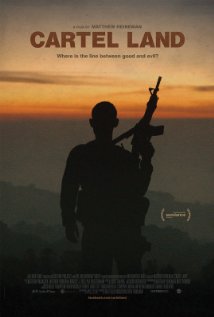
cartel land Greetings again from the darkness. Even in this digital age where information exists from all sides of a conflict … often with corresponding video, the general public somehow remains complacent to issues that don’t directly and obviously affect their lifestyle. Skilled documentarian Matthew Heineman ignores the rhetoric of political speeches and plops the war against drug cartels right into our lap.

This is a different approach to a topic with which we are all at least somewhat familiar. The involved parties include the affected communities (in Mexico and Arizona), the governments and affiliated agencies (DEA, Border Patrol), the ever-expanding vigilante groups of citizens (Arizona Border Recon, AutoDefensas), and of course the cartels (focus on Knights Templar).

Intimacy is the key here, as Mr. Heineman takes us inside these groups with an up-close look at leaders. Especially fascinating is Dr. Mireles who is the face of the AutoDefensas – a group he pledges will protect communities from the cartels, who clearly have no regard for human life. The film doesn’t shy away from the expected issues: citizen pushback, greed, abuse of power, and corruption. As AutoDefensas teams with the Mexican government to create the Rural Defense Force, we can’t help but wonder if the rumors of differing goals are at play in the drug battles. Citizens want safety, but what is it that the government wants? Is the goal drug-free streets or is it a cut of the action.

Learning how desperate the vigilantes are to protect their homes, turf and way of life, we are left with little doubt of their mission. It’s everyone else that we must keep questioning and holding accountable. This is not an easy documentary to watch, but it’s necessary if you have previously lost interest as the next politician proclaims he will continue “the war on drugs”.

ASCO (2015)

Greetings again from the darkness. A broken heart is one of most powerful triggers of human emotion. Clarity of thought is often lacking during this period, and mental images explode as a rational reaction is rarely able to break through the swirling alternatives.

Brazilian writer/director Alexandre Paschoalini presents the story of broken-hearted Ela (Sol Faganello) in expressionistic hyper-kinetic Black and White mode. After Ele (Guto Nogueira) crushes his emotions and attempt at connection, he begins a psychotic mission with the goal of causing her to feel the same pain that her actions brought to him.

Many of Ela’s actions are outside the boundaries of the law, but he will not be deterred. Ele’s shock of white hair adds a visual that perfectly contrasts with Ela’s dark and brooding features and moods. White hat vs Black hat – only no one told the white hat that she was in a demented duel.

With almost no dialogue, the story is told through both stark and outlandish visuals, and is often accompanied by music that harkens to 1960’s era rock music. A masked woman and a faceless man ensure that we understand just how removed from rational thought that Ela has become. It’s quite a build up with a startling climax that features a terrific last line … explaining all.

LADYGREY (2015)

Greetings again from the darkness. Alain Choquart has had a long and successful career as a top cinematographer, and though this is his first feature film as director, his eye with a camera is obvious in just how beautifully this film is shot.

Filmed and set in post-apartheid South Africa, this little village has an undercurrent of secrecy and misery. We realize that some tragic event has engulfed the citizens with a bleak perspective, and each day seems pretty much as dark as the last. Slow-witted Mattis (Jeremie Renier) brings tremendous energy and spirit to an otherwise downbeat environment. Sadly Mattis fluctuates between ecstasy, frustration and outright anger … each shift seemingly occurring over the smallest detail.

The synergy between characters played by Liam Cunningham, Emily Mortimer, Peter Sarsgaard and Sibongile Mlambo is so uncomfortable that we never know what form the next round of broken trust will take. These are not happy people and none of the relationships even border on healthy.

The beautiful Green River plays a vital role in the story, both as a carrier of secrets and a vision of hope, and the torrential rain storms tend to bring about the next infusion of misery. The excellent cast does their best to overcome a lacking script, but mostly the film is more enjoyable to look at than actually watch.


DIFF 2015 – Day 2

April 12, 2015


DALLAS INTERNATIONAL FILM FESTIVAL

Day 2 – Saturday April 11

Below is my recap of the three films I caught on Day 2 of this year’s festival:


THE AMINA PROFILE (2015, doc)

DIFF 2015

Social Media has changed so much about society: how information is dispersed, how we present ourselves, how we argue points of view, and even how relationships are structured. This documentary from Sophie Deraspe explores each of these points by dissecting a real world chain of events.

With events taking place during Syria’s Arab Spring of 2011, Amina Arraf started a blog entitled “A Gay Girl in Demascus”, where she wrote about both the dangers of being a lesbian in Syria, and the larger societal issues being faced by the populace living in the shadows of a dominating government regime. Her brave words garnered many followers, while also instigating an online romance with Sandra from Canada.

A few months later, Amina’s blog entries suddenly halt and the concern from Sandra and other readers spreads to international media outlets. Ms. Deraspe offers an interesting blend of styles in her approach. On one hand, some of the first images we see come across as a deep artsy film; and then next thing we are getting is talking head interviews with reporters and other concerned followers mixed with actual TV newscasts from the period.

In order to avoid any spoilers, suffice to say that the story comes in two distinct parts. The second half provides some fascinating psychological studies in regards to trust and narcissism, while also forcing us to further question the complacency of news outlets in this new age of readily available information. As the proverbial onion layers are peeled back, we can’t help but wonder who can be trusted and what steps are sufficient for verification.

Probably the biggest takeaway stems from the realization of just how easily we are manipulated and distracted by media outlets who determine what is “news” (what brings ratings) and what can be overlooked … the often more serious topics such as the Syrians who are still “dying in the dark”. This excellent documentary will provide no shortage of material for discussion and soul-searching.


THUNDER BROKE THE HEAVENS (2015)

DIFF 2015

thunder Very few things in life bother me more than seeing kids mistreated. It seems so simple: if we want productive caring adults, it’s our responsibility to raise, train, and treat kids accordingly.

In writer/director Tim Skousen’s film, 13 year old Sam (Alexandra Peters) and her 6 year old brother William Paul (Gavin Howe) manage to escape an unthinkable and violent family tragedy that leaves them without parents. This of course leads to foster parents, and though we have seen worse, it’s clear that Sam and William Paul are viewed as little more than a paycheck in their new home. The two kids are never allowed to work through their devastating loss, and instead cling to each other for security.

In fear of being split from her brother and suffering another unbearable loss, Sam takes charge and leads her brother into the woods where she believes she can take care of him and protect him. As smart as she is, 13 year olds have limited survival skills and soon enough the siblings are in need of food and medicine. They cross paths with an understanding bar owner played by Tom Nowicki, and his kindness can be questioned by viewers – is he doing the right thing?

The spirit of the story is alive in each scene thanks to a remarkable performance from Alexandra Peters as Sam. She is stunning in the strength and vulnerability she displays, while also maintaining a childlike curiosity that perfectly captures the notion that every child “deserves a life”. Mr. Skousen has a keen eye for camera work, and it’s especially effective during the Thanksgiving Day in-home tragedy.  And with his heavenly approach to good (and never ending) parenting, it’s a reminder for us to constantly ask if we as parents are making things better or worse for kids.


SHE’S THE BEST THING IN IT (2015, doc)

DIFF 2015

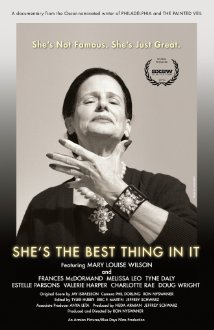
shes the best thing If you follow the live theatre, you are likely familiar with Tony winner Mary Louise Wilson. Everyone else will likely recognize her face (not her name) from various TV and movie appearances – ranging from “One Day at a Time” to Nebraska (2013). Ms. Wilson is one of the very few who have enjoyed a fifty plus year career as a character actor. Her own differentiation between a star and an actor: Stars are themselves playing others, while character actors disappear into the role. For her, this is heart of acting.

Director Ron Nyswaner is a well known writer (Philadelphia, The Painted Veil), and this is his first documentary. It would be incorrect to label this as a biopic. Though Ms. Wilson is the main focus of the project, it seems more accurate to call this a portrait of acting … especially female actors. How and why do actors do what they do? What makes them keep going? Mr. Nyswaner admitted during the Q&A that he “loves” and appreciates actors … not something we always hear from writers.

The cameras follow Ms. Wilson to her first teaching gig in New Orleans (where she was raised). Watching this energetic and passionate octogenarian work so hard to connect with a class of twenty year olds is intriguing, and as frustrating at times for the viewer as it is for her pupils. They struggle to comprehend her directions and critiques, as do we. She brings her 50 years experience and the knowledge of her legendary acting mentor Sanford Meisner to a group who mostly seem more in love with the idea of stardom, rather than a desire to develop a craft.

The real insight here comes courtesy of interviews with such actresses as Tyne Daly, Frances McDormand, Valerie Harper, Estelle Parson, and Melissa Leo. These extremely successful people come clean on the hard work, dedication, insecurities and the pain (“That’s the point” according to Ms. McDormand). Though they touch on the topic, I was anxious for more discussion on the challenges women face in the industry. One thing was clear for each … they LOVE acting.

Another enjoyable piece revolves around the reuniting of Ms. Wilson with her sister, a local playhouse actress herself. The two ladies reminisce about their childhood, and what motivated them to escape into “play pretend”. They both agree that being peculiar and feeling inadequate provided the natural desire to escape into roles.

This is one of the best looks at acting that you will find. The struggles, the motivation, the ups and downs, are all captured here in a perfectly titled film.


DIFF 2015 – Day 1

April 11, 2015


DALLAS INTERNATIONAL FILM FESTIVAL 2015

Day 1 – Friday April 10

I missed the Opening Night Gala at the Majestic Theatre last night, but took in three films on the first full day of this year’s festival.

Below is the day’s recap, and a reminder that I seek out the deep cut indies and documentaries that may or may not gain mass market distribution.


RED ON YELLA, KILL A FELLA (2015)

DIFF – Texas film series

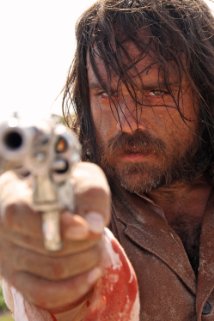
Red on yella Co-writers and co-directors Duane Graves (from San Antonio) and Justin Meeks manage to hit all extremes with comedy, violence and drama as they trek across some of the roughest Texas terrain. Tongue-in-cheek westerns are rare, and this one never falls into true parody, but instead uses hyper-dramatic music and dialogue delivery to balance the gun play and hardened outlaw activities.

Mr. Meeks also stars as Claude “Sweet Tooth” Barbee, who is leading his band of outlaws across Texas in an attempt to re-claim the gold from a previously botched train robbery. The character name is from a real life outlaw and the actions are loosely based on real life train robber Sam Bass. Meeks is clearly having a ball playing the type of colorful bad guy that actors dream about.

Screen veteran Pepe Serna has a brief but memorable role, and one that is crucial to story development. He too, seems to relish the chance to play a nasty guy. The rest of the cast, many of whom were present at the screening, all seem to have bought into the vision … whether their character is quickly filled with lead or manages to eke out a line or two or three. Every movie lover will quickly recognize the actor playing the Doc as Michael Berryman from The Hills Have Eyes (1972).

The ringing of a bell, a young ventriloquist, twins, prairie land nightmares, a hooker with an ulterior motive, and family revenge all play a role as this group of outlaws is hunted by more than just the Sheriff as they make their way to the coast. With unusual lines of dialogue such as “Shut that puppet up”, and a misleading sign that reads “Lodgers Welcome”, Graves and Meeks deliver an unusual look at the old west and those that inhabited this rugged land.


RAIDERS! THE STORY OF THE GREATEST FAN FILM EVER MADE (2015, doc)

DIFF 2015

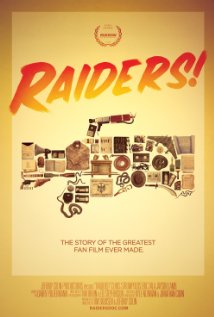
raiders! Most documentaries are pretty simple to recap: A filmmaker makes a movie about a topic or person. However, simplicity just doesn’t fit here. Filmmakers Jeremy Coon and Tim Skousen made a movie about the making of a movie that is a movie re-made in honor of a movie that was already made.  This isn’t Coppola’s Hearts of Darkness which portrays his difficulty in making Apocalypse Now. Far from it. This is a modern day look back at two/three geeky eleven year old boys making a shot-for-shot remake of Steven Spielberg’s classic Raiders of the Lost Ark.

Coon and Skousen catch up with forty-somethings Eric Zala, Chris Strompolos and Jayson Lamb as they are trying to put together the financing and logistics to film the final scene of their unfinished movie Raiders of the Lost Ark: The Adaptation. These are the same boy that started the process in 1982 and filmed each of the next seven summers until they graduated from high school.

If you are a total film geek, you have probably heard of their film and know that it has been an underground film favorite for years. But you may not know the real life details behind it and certainly not the modern day drama of Eric and Chris as they try to complete it. How about some interviews with their mothers? How about the real world possibility that Eric risks losing his job to complete this thirty plus year old kid’s summer project? How about the personal struggles of Chris over the years, or the fallout with Jayson as he is left out of this final chapter?

Director Eli Roth was instrumental in spreading the word of this film project throughout Hollywood, and the boys even got invited to meet with Spielberg. Mostly we are left with the fascination that young boys can have such passion and persistence over so many years. When asked about whether they missed out on their childhood, Chris responds “We filmed childhood”. A true and fitting response, that doesn’t tell the whole story. Fortunately, Coon and Skousen do.


THIS ISN’T FUNNY (2015)

DIFF 2015

Yes, it is funny. And it’s also not funny. This little relationship gem breaks down into 3 chapters … conveniently and obviously noted with title placards: Before, Together, After.

The story follows Juice Bar manager Jamie and stand-up comedian Eliot as their worlds literally collide in a chance meeting that doesn’t, on the surface, set the stage for love ever after. Director and co-writer Paul Ashton plays Jamie and co-writer Katie Page plays Eliot, and their natural onscreen rapport comes courtesy of their real life relationship (as they disclosed in the post screen Q&A).

Don’t mistake this for some simple rom-com. There is a lot going on here and it swirls around not just their budding romance, but also their individual lives. It’s very interesting how the story offers commentary on such topics as how young adults still use their parents as an excuse for their own lack of career success and/or happiness. In an interesting twist, it also allows us to view those same parents (including Mimi Rogers and David Pasquesi) as real people with their own issues, rather than just a drag on the “kids”. And speaking of parenting, Jamie and Eliot go through some rather unique soul-searching on the topic.

If that’s still not enough subject matter for you, we also witness Eliot’s struggles with anxiety. Her trips to a therapist are a battleground for medication levels – Eliot wants to be free of them, and wonders if they are a crutch or actually help. No judgments here, just wonderful material for further discussion.

On top of all that, we are treated to some sterling stand-up from Beth Stelling and Ahmed Bharoocha who are both extraordinarily talented comics. Plus Ms. Page more than holds her own at the microphone, as she brings Eliot’s personal life (and poor Jamie’s mishaps) to her material.  You should also be prepared for the most outrageous performance of Anthony LaPaglia’s career. He’s a riot.

It’s a joy to see an indie with such depth, insight and commentary on what relationships are like in today’s ever-changing world.


THE WRECKING CREW (doc, 2008/2015)

March 15, 2015

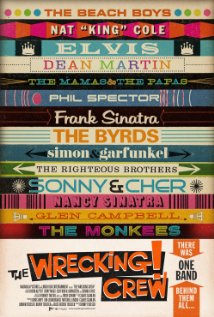
wrecking crew Greetings again from the darkness. The music business has always been a bit of a mystery – not just to the average record buyer, but even to those within the industry. History is filled with singers, band members, and songwriters missing out on the pot of gold due to slick legal maneuvering from some less-than-upstanding agent, producer or label. This documentary details the prolific recordings from a core group of studio musicians responsible for the sounds heard as rock and roll music exploded on the scene … their stellar performances marketed to the public as the work of popular bands.

Lest you think this is limited to an obscure genre or style of music, the two dozen (or so) musicians known as The Wrecking Crew were responsible for the album music for such groups and performers as The Beach Boys, Frank Sinatra, The Righteous Brothers, Elvis Presley, The Mamas and the Papas, Sonny and Cher, Sam Cooke, The Byrds, and The Monkees. And we can’t leave out Phil Spector’s “Wall of Sound” which dominated the charts for years. Director Denny Tedesco set out to make a documentary short about his father, guitarist extraordinaire Tommy Tedesco, but quickly realized the story was much bigger than just his dad.

In addition to the very talented (and funny) Tedesco, we get interviews with such talented musicians as Hal Blaine, Earl Palmer, Don Randi, Al Casey, Plas Johnson (The Pink Panther sax soloist), Carol Kaye, and Bill Pittman. There is also insight from producers Lou Adler and Snuff Garrett, American Bandstand’s Dick Clark, songwriter Jimmy Webb, plus icon Herb Alpert. Micky Dolenz and Peter Tork explain the business rationale in having the professionals take care of the recordings, while Roger McGuinn spills the beans that other members of The Byrds (including David Crosby) were pretty miffed at the process.

The personal importance of telling this story is quite obvious in the work of the director, and is especially clear in the segments featuring his father. In addition to the popular music he was involved with, the senior Tedesco’s work is heard in such well-known TV themes as “Bonanza“, “MASH“, “Batman“, and “The Twilight Zone” … plus many movie scores. Archival footage is available for Q&A roundtables and some of the seminar work Tedesco did in the later stages of his career (he passed away in 1997). There is also footage of Phil Spector working in the studio, and some audio from Frank Sinatra as he works on recording, and early Brian Wilson creating the magic of Pet Sounds with the Wrecking Crew.

Glen Campbell and Leon Russell are the two big breakout performers from this group of studio musicians and both speak so highly of these unpublicized artists. Their interviews, and that of Dick Clark, highlight the confusion of timeline in the making of the film. It began making festival rounds in 2008 before running the age old issue of “musical rights” brought distribution to a screeching halt. So now, in 2015, the film is finally getting some theatre time, and with it comes the recognition and appreciation that is long overdue for the members of this very secret club … few of whom seem to hold any type of grudge. They were just happy to make a living doing what they love.

This film instantly becomes one of four documentaries highly recommended for those who want to better understand the music biz. Group it with Standing in the Shadows of Motown (2002), Muscle Shoals (2013), and Oscar winner Twenty Feet from Stardom (2013) to form an 8 hour education and history of popular music over the past three generations.

**NOTE: Kent Hartman released a book entitled “The Wrecking Crew” that provides additional detail; however, it is not affiliated with Denny Tedesco’s film.

watch the trailer:


BIG MEN (2014, doc)

March 8, 2015

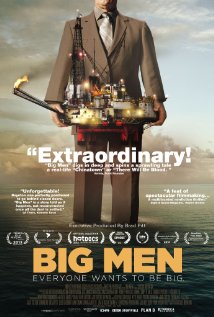
big men Greetings again from the darkness. The best we can hope for from a documentary is that it tells both sides to the story. But what happens when there are even more sides? Director Rachel Boynton expertly presents the perspective of numerous parties trying to secure their fair share (or more) of the first commercial oil field in Ghana … known as Jubilee Field. Her surprising and unprecedented access offers us a behind-the-scenes glimpse of what happens when business and politics mix during a clash of cultures.

Beginning with spot on quotes concerning greed and special interest – one from economist Milton Friedman and one from the 1948 movie The Treasure of the Sierra Madre – the movie spans the years of 2007 through 2011 as Dallas-based Kosmos Energy frantically maneuvers to develop this oil find while juggling the Ghana monarchy and government (two administrations), as well as the pressures from venture capitalists and investors Blackstone and Warburg Pincus.

Ms. Boynton’s access to closed-door meetings and negotiations is fascinating, as are her brief encounters with the local militant rebels (The Deadly Underdogs) on a mission to grab a share of the money – often by cutting the pipelines and starting fires (they want the contracts for clean-up). She interviews oilman Jim Musselman while he is President of Kosmos and he is negotiating with the Ghana government and King, and then again after he is ousted from the company by the Board of Directors who are demanding a quicker return on their investment.

The Ghana situation is contrasted to Nigeria, which is currently the 5th largest oil supplier to the United States. The billions in oil profits have not benefited the citizens of Nigeria, who continue to live in harsh poverty. The Ghana government gives every indication they don’t want this to be the case with Jubilee Field … even though they have had the same results with gold and cocoa. What we soon learn (though we already knew) is that every party involved, despite the words they speak, really have only their self-interest at the forefront.

When the election changes the players in Ghana, we see Kosmos scramble to maintain the agreements and their rights. Outside pressures and investigations add further turmoil and we begin to see that rational thought and fairness are rarely in play. There may be plenty to go around for everyone, but that matters little since everyone employs the “greed is good” approach. The culture clash is undeniable, but greed is the great equalizer.

We witness the May 2011 IPO for Kosmos Energy from the trading floor of the New York Stock Exchange, and it’s a reminder of what a strange world “big money” is on Wall Street, and maybe only the “big men” really understand. Boynton’s documentary does everything possible to enlighten the rest of us.

watch the trailer:


VICTORI: THE TRUTH JUST CAN’T BE ONE THING (2014, doc)

March 8, 2015

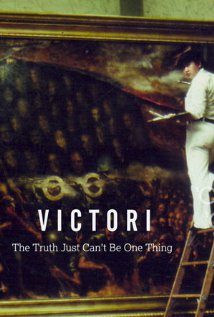
victori Greetings again from the darkness. Artists often don’t make for the best interviews. They usually best express themselves through their art – whether that’s music for the ears, words on a page, or paint on a canvas. So it’s understandable that director Michael Melamedoff thought it wise to focus attention on Ed Victori, the young, articulate, poised and educated son … rather than on the eccentric artist himself, Victor Victori. Unfortunately, this approach leaves us tired of Ed and longing for more Victor.

Victor emigrated to the U.S. from South Korea in 1972, and his first major project was a mural depicting all Presidents to that point in time. The mural is still displayed in the White House even today. Much of his career was spent traveling the country painting portraits … not just celebrities and industry leaders, but also the general public. Many of his stops were in shopping malls where his unusual speed allowed him to crank out enough portraits to make money and move on to the next stop.

Director Melamedoff picks up the story when Ed had been laid off from his corporate job in Finance, and has decided to become an art consultant representing his father’s work. We see the build up to the 2012 New York Art Expo, where Ed and his mother Maria do most of the marketing and set-up, while Victor continues to paint. The emphasis seems to be selling Victor’s immense body of work (more than 50,000 per Maria) with a concentration on Multiplism … a self-titled art movement that captures multiple faces and emotions of the same subject within a painting.

By far the most interesting moments come courtesy of the interviews and insight from Victor himself. He is a fascinating guy with the true artist’s disposition – enough ego to believe his work belongs alongside the greats, and enough insecurity to facetiously explain his lack of mass audience acceptance with “I’m sorry I didn’t paint pretty pictures”. That comment is in reference to the immensely popular works of Thomas Kinkade, whom Victor accuses of “cheating” through mass-produced reproductions that are nothing more than “pasting on canvas”. His frustrations are palpable. Victor also claims he pays no attention and is not influenced by other painters, but rather by the music of Beethoven … an unusual revelation by one who paints and sculpts.

While at the Expo, there are some quick exchanges with other artists who display a similar ego/insecurity/desperation blend. It’s during the Expo that Ed’s clinical and business-type approach is most obvious. He clashes with Maria, who just wants to sell enough of the work to make money, while Ed’s vision is to establish his father as a great artist, thereby establishing himself as a legitimate art consultant. The age old clash of commerce and art is on display, but all we really want is more time from Victor, so we can hear him explain why Andy Warhol is not a great artist, but he himself should be recognized as one.

watch the trailer:


MY LIFE DIRECTED BY NICOLAS WINDING REFN (2014, doc)

March 2, 2015

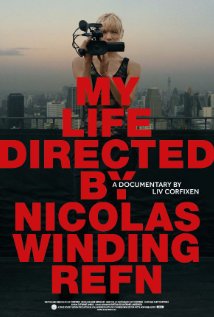
My Life Directed by Greetings again from the darkness. For those of us born without the “creative” gene, it can be quite intriguing to get even a quick peek behind the curtain of an at-work auteur or creative genius. Blend in the highly stressful family dynamics of having one’s spouse behind the camera for this peek, and it shoots right past intriguing and into the realm of captivatingly mandatory viewing … and provides double meaning to the title.

Nicolas Winding Refn is the creative force behind such films as Drive (2011) and Bronson (2008). Now elevated from his status as cult-favorite, this behind-the-scenes documentary explores his pressure and anxiety of the next project (Only God Forgives) – one the director proclaims “is not Drive 2”. While that is more than sufficient for a premise, this one adds the unique complexity of having NWR’s wife direct and shoot the documentary.  Because of this, we gain a highly unusual look at the added stress of personal and family life, as the whole family (including their two daughters) spends six months in Bangkok.

The film begins with an odd sequence showing legendary director Alejandro Jodorowsky (El Topo) reading tarot cards at the request of NWR. The resulting advice is that success can change an artist’s approach, and in a quite off-setting moment, Mr Jodorowsky directly addresses Liv Corfixen (as she films) and admonishes her to support her man. This certainly sets the stage for the relationship strains during production and up to the Cannes premiere of Only God Forgives.

“How to make a movie” is not the focus here, though we do see the storyboarding and some director-actor interactions (Ryan Gosling, Kristin Scott Thomas). Rather, the camera lens is aimed at what impact making a movie has on the director and his family.  He struggles with “what the audience wants” (more Drive) versus “what the artist wants”. A key line from NWR is “It would be boring if we all made the same films”.  And therein lies the motivation and challenge for a true auteur – how to remain true to one’s artistic vision, while still remaining commercially viable (a requirement if one wishes to continue creating).

Ms. Corfixen doesn’t shy away from filming the many moods and insecurities of her husband … sometimes filming him in bed, hinting that remaining there might be an option. We see the confidence of the director on set, but more interestingly, his ups and downs, and his various happy-depressed-angry moments while in the privacy of the family apartment (well as private as it can get with a camera in one’s face).

Being a film director is an odd combination of processes – both collaborative and solitary. Having one’s family along for the ride brings an added challenge that taxes one’s patience. Performing all of this with one’s spouse filming most of it exposes parts of one’s character and make-up that most of us would prefer stay hidden from public consumption. Upon reflection, maybe it is an effective starter kit for “how to make a movie”.

watch the trailer:


RED ARMY (doc, 2014)

February 26, 2015

red army Greetings again from the darkness. You need not be a hockey fan to be familiar with the “Miracle on Ice” upset of the seasoned Russians by the upstart Americans at the 1980 Olympics in Lake Placid. Often referred to as a battle of cultures – “our way vs their way, capitalism vs communism” – most articles, TV shows, and movies have been presented from the American perspective.  It’s only now, in this informative and entertaining documentary from filmmaker Gabe Polsky, that we gain some insight into the Russian players and their way of life.

Mr. Polsky is the son of Russian immigrants, and grew up playing hockey in Chicago and later for Yale. His research into Russian hockey evolved into a documentary that blends sports, geopolitics, history, culture, and personal stories. He mixes in some fantastic archival film footage from the 1970’s and 80’s, but the heart of everything here flows from the interviews with Russian hockey legend Vyacheslav Fetisov, who is a vital and unique link to past and present. Much of this is set to the distinctive sounds of Russian folk music.

Fetisov is sometimes playful and sometimes snide in his remarks, but he basically narrates the history of Russian hockey – starting with Stalin’s founding of the organization, through the two key coaches: father figure Tarasov and the militant Tikhanov who followed. Stalin was convinced that Russian domination of global sports would clearly establish communism and the Russian culture as far superior to capitalism and the carefree ways of the west.  This led to the Red Army hockey camps being run by the military. The players were isolated for eleven months each year, training and playing in a manner that generated ultimate teamwork, but also quite unhappy young men.

We see the influence of Russian chess (Karpov) and the Bolshoi ballet for training methods, and we also see the ever-present KGB ensuring no “escapes”, or what we might know better as defections. We learn about the Russian Five (including Fetisov) who were so dominant that the team went two years without losing.  Gold medals in Sarajevo (1984) and Calgary (1988) occurred just prior to the 1991 dissolution of the U.S.S.R. and the economic crisis of the region.

This is what opened the door for Russian hockey players to enter the NHL, though the transition was smoother for some than others. After a few years of adjusting, it was coach Scotty Bowman’s 1997 Detroit Red Wings that won the Stanley Cup with a contingency of Russian players (including Fetisov) who were given free reign to play their own game while on the ice. Their movements and intricate teamwork clashed mightily with the individualistic style of westerners … and that group of Russian players can be credited with helping the game to evolve to its current style.

Much of the insight comes from the faces of the men who are interviewed. Their stoicism and lack of emotion is a microcosm of the society in which they were raised. Their country was obliterated by war, and then led by a megalomaniac who wanted to rule the world. Human emotion and the rights of individuals mattered little, and we see that despite the years of hardship, these players remain (mostly) true and loyal to their country. This is a fascinating look at human nature and how the culture of one’s youth can directly impact the beliefs as an adult, so many years later.

watch the trailer:


MANNY (2014, doc)

February 8, 2015

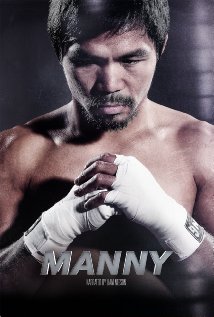
manny Greetings again from the darkness. Growing up in extreme poverty in the Civil War-torn Philippines, sleeping in a hut made from coconut tree leaves, and working with fishermen as a young boy, Manny Pacquiao spent his childhood not dreaming of becoming a world champion boxer and celebrity, but rather wondering if there would be food to eat on any given day. This background is probably what inspired co-directors Ryan Moore and Leon Gast (Oscar winner for When We Were Kings) to focus less on Manny’s personal flaws and more on his extraordinary road to success.

Opening with Michael Buffer’s familiar “Let’s get ready to rumble“, the film does exactly that. Obviously much of the film highlights Manny’s boxing career, beginning as an extremely young fighter with a slight build and carrying through to his record-setting titles in 8 weight classifications, but it also does an admirable job of helping us get to know the man behind the fame.

As Pac-Man finds more success in the ring, we witness the exponential growth of the circus environment – his training camp, the media onslaught, the endorsements, the lousy movies, his re-discovery of religion, and his political aspirations. We meet his cutting edge fitness trainer Alex Ariza and his long-time boxing trainer and friend (and former boxer) Freddie Roach. Freddie’s story is probably worthy of its own documentary, as he trained under his mentor, the legendary Eddie Futch, and blames his Parkinson’s Disease on staying in the game a few fights too long.

The film acknowledges, but only in a cursory manner, the dark side of boxing. Manny’s first two managers are blamed for some of his early financial woes, as is his business adviser Michael Koncz … and promoter Bob Arum is certainly a guy who deserves a bit more scrutiny. Questionable decisions in key matches are mentioned, but no further investigative reporting is offered … handled just as the sport itself does. This hole would be less obvious had not so much of the film focused on Manny’s boxing career.

We get a taste of Manny’s charm and appeal. Actor and fight fan Mark Wahlberg makes a great observation in his interview, as he points out that Manny’s entry into the ring for a fight is filled with smiles and waves … as if he had not a care in the world. But then once he steps into the ring, he can “flip the switch” and find the focus to fight his fight. We also see Manny on talk shows, and in a truly priceless sequence, we go into the recording studio as Manny sings “Sometimes When We Touch” … while being mentored by the song’s original singer/songwriter Dan Hill.

The film does nice work in letting us see Manny make the move into politics – he’s now a twice elected representative in his hometown Sarangami province. There is also footage of him in his ministry as he confesses to a sinful past left behind in favor of his family and clean living. Some of the interviews with Jinkee (his wife) are the most emotional moments in the film. Along the way, we are privy to some of Manny’s philosophical thoughts: “Loss is a reminder of what’s important in life“, and when times are tough, “You get back up. You fight again“. Manny’s talent has etched his place in boxing history, but his approach to life is what contrasts him from many other great fighters like Floyd Mayweather (whose brief appearances flash enough ego to turn anyone’s stomach). That hut in the Philippines may be long gone, but the film shows us that Manny is here to stay.

watch the trailer:


ROAD TO PEACE (2012, doc)

January 21, 2015

road to peace Greetings again from the darkness. This 2012 documentary from director Leon Stuparich is an intimate portrait of Tenzin Gyatso, the 14th Dalai Lama of Tibet. The cameras follow his holiness on his two week trek through Great Britain in 2008. We get so close that we can’t help but feel as if we are present – if not physically, at least spiritually.

An introductory history lesson provides details such as Dalai Lamas have been around since the 8th century, and each has chosen to be re-born to better serve others. The 14th Dalai Lama took full political control of Tibet at age 15 in 1949. Ten years later, the Chinese Army crushed the Tibetan uprising and the Dalai Lama led 80,000 Tibetans across the Himalayas on foot to a peaceful settlement. In 1973, he became the first Dalai Lama to spread his wisdom and message of peace to the western world. That message?  Universal Responsibility: promotion of human values, promotion of religious harmony, and to continue serving Tibetan people.

What really stands out, as we follow on his fast-paced agenda, is the description of him as a “peaceful presence” and “a joyful being”. His impact on those he meets is immediate and heart-felt. Never shying away from touch, it’s clear his sense of compassion and peace are there for anyone open to his message. Somewhat surprising is his frequent laughter, smiles, waves and show of appreciation. This is a man of peace as well as at peace.

But make no mistake, his vision and message remains strong. He wants a better life for Tibetans, and he wants a better world for us all. His 1989 Nobel Peace Prize has provided even more opportunity for him to spread the message. This 2008 United Kingdom trip took him to such places as Albert Hall, Lambeth Palace, Oxford University and Nottingham. He spoke to such diverse groups as the Tibet Society, politicians, educators, students, religious leaders, the press, and a Mongolian audience.

We never see his energy wane nor his message waver, though we do see various signs of emotion depending on the audience. No matter one’s religious beliefs, it is quite powerful to see one man making such an impact through a message of peace and tolerance, and sage advice such as stay on the path for knowledge, inner-strength, and compassion. This little film is as close as most of us will ever come to being in the Dalai Lama’s presence … and it feels pretty darn close.

The film’s website: http://www.roadtopeace.co.uk/