SUNSHINE SUPERMAN (2015, doc)

June 7, 2015

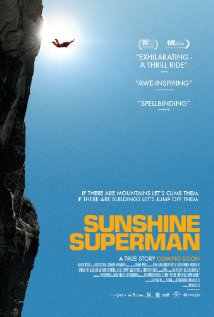
sunshine superman Greetings again from the darkness. When at a dinner party someone introduces themselves as “an engineer”, we don’t typically settle in for a long evening of tales describing their daredevil and death-defying hobbies. Filmmaker Marah Strauch teaches us being too quick to judge could cost us the exhilarating story of Carl Boenish, the acknowledged father of BASE jumping.

Mr. Boenish was an engineer turned cinematographer turned skydiver and cliff jumper. Despite his unbridled energy and enthusiasm, his engineering background (Hughes Aircraft) provided the analytical foundation that helped him plan “safe” jumps for years. And it was his love of film and cinematography that produced a treasure trove of film clips from some breathtaking jumps … beginning with his 1978 leap from Yosemite’s El Capitan.

The film is about Boenish’s thirst for the next big jump, but it’s also about his jumping partner and wife Jean, and the bond between them. GoPro cameras have spoiled us today. We are accustomed to film clips of just about anything that involves speed, height or any person looking for a thrill. Thirty plus years ago, such clips weren’t possible … except with Boenish and his clunky cameras strapped to helmets on these jumps.

BASE jumping is an acronym for Building, Antenna, Span, Earth … the types of jumps required to join the ranks of Boenish’s group. We witness the fights against national park Rangers, and the clandestine operations that led to jumps from under construction skyscrapers in Los Angeles and Houston. Boenish truly pushed the Nature’s Law vs. Man’s Law conflict.

Director Strauch takes us through the Guiness record jump at Norway’s Troll Wall, and we even hear Jean stating that Carl would have been right there with today’s wing suit jumpers. The final shot of a modern day “flyer” is quite the contrast to those early Boenish jumps. The film answers “How and Why”, and leaves little doubt that the genetic make-up is quite different for this group of thrill-seekers than for the rest of us … and being an engineer doesn’t exclude one from either group!

watch the trailer:


EVERY LAST CHILD (2015, doc)

June 7, 2015

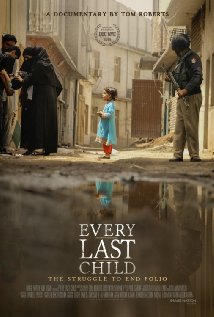
every last child Greetings again from the darkness. Filmmaker Tom Roberts takes his camera into Pakistan where polio, once near eradication, exploded in outbreaks in a short period of time. The causes of the increase include the Taliban’s 2012 ban on vaccinations and the general public’s distrust of the system.

Roberts puts a face to the disease and to those working so hard to get it back under control. We meet Habib, a 31 year old man who has been disabled since being struck down by polio at age 9. He shares his daily struggles and hope that he will be “fit” in the afterlife. We also see an emotional father as his young son is diagnosed with polio and subsequently fit with leg braces. It’s heart-breaking and painful to watch.

Also getting their share of the story are World Health Organization workers plus the volunteers who work as vaccinators – a terribly dangerous job. We go behind the scenes of the strategy and planning sessions, and witness a government leader step up for the “Justice For Health” plan that will successfully vaccinate tens of thousands of kids over the course of a few weeks … sadly, the vaccinators must be accompanied by armed police forces.

The statistical breakdown of the challenges and successes are a bit difficult to follow, but it’s even more frustrating to hear the citizens discuss putting their kids at risk due to the distrust of the WHO, which they believe is little more than a conspiracy of the western world to control their population. They ignore the infected waters that run through the heart of their cities, but the shift is welcome when their own government becomes the driving force behind the new strategy.

According to Roberts, the United Arab Emirates pushed the campaign and by late 2014, more than 13 million had been vaccinated and polio was nearly back under control. The camera work and access is quite unique and fascinating to watch as Roberts shows us the good, the courageous and the challenges faced.

watch the trailer:


DEEP WEB (2015, doc)

May 28, 2015

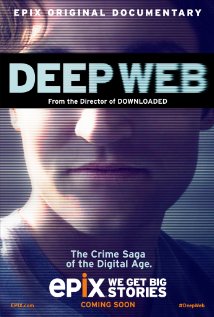
deep web Greetings again from the darkness. Even those of us who consistently obey the law have a general idea of how criminals work: robbing banks, stealing cars, kidnapping people, even hacking websites for personal information. Additionally, the vast majority of us have at least a rudimentary understanding of how the internet works, and the steps we take to increase security. Documentarian Alex Winter combines these two topics as he takes us inside the deep web … specifically Silk Road on the Darknet.

The Surface Web vs The Deep Web – the film exposes what most of us have very little knowledge of. The simple explanation is that the “surface web” is what we use on a daily basis: Facebook postings photos of our latest meal and YouTube video sensations showing cats fighting their mirrored reflection. The Deep Web is what lies beneath. This is the (mostly) untraceable technology where the underground marketplace site known as Silk Road exists. To be clear, most of the ongoings on the deep web are legitimate and in good faith – used frequently by journalists. However, the other side is how it obtained the nickname “ebay for Heroin”.  Yep, untraceable transactions for illegal drugs definitely happened (and still do). It turns out that Bitcoin is the ideal underground currency for this commerce, as it can be as untraceable as the drug orders.

You might recognize the name of director Alex Winter as half of the classic movie duo in Bill and Ted’s Excellent Adventure (1989). Mr. Winter released a documentary a couple years ago entitled Downloaded, where he explored the rise and fall of Napster and the effects of downloaded music. This current topic is much more dangerous and secretive, and he wisely brings along his old buddy Keanu Reeves as the narrator. Winter’s approach here is initially a bit confusing, as the focus seems uncertain – is it a tell all about the deep web, or is it a profile of Silk Road, or is it an analysis of the arrest and subsequent trial of possible Silk Road founder Ross Ulbricht?

Most of the attention goes to Ulbricht, better known as the Dread Pirate Roberts (DPR), a pseudonym snatched from the classic movie The Princess Bride. Is/Was Ulbricht the DPR? Winter is content to leave that mystery unsolved, but the real story here is how the government put the case together against Ulbricht – fabricating charges (later dropped), circumstantial evidence, and a probable breach of privacy.

The general belief is that we should have a free and open and secure internet, though most of us never stop to think what a ludicrous demand that really is. It’s the lack of privacy and ease of breach on the surface web that led to the development of the deep web – an anonymous and mostly secure environment. At least it was until the government went hard after Silk Road. Shutting down the non-violent drug transactions justified the law enforcement and political attention that the drug wars along the border never have. Is this a good thing? Is Ulbricht the DPR? Does it matter that after his arrest, his void was quickly filled by other opportunists? Do you believe you are secure on the web? Winter presents an exceptional amount of information that deserves even more discussion and explanation. That alone makes it time well spent.

watch the trailer:


SOUL BOYS OF THE WESTERN WORLD (doc, 2014)

May 25, 2015

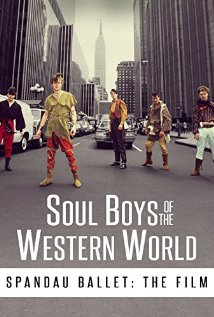
soul boys Greetings again from the darkness. Director George Hencken’s biopic on the British band Spandau Ballet provides not just an in-depth look at the band’s roller-coaster history, but also a timeline of musical changes beginning in the late 1970’s.

The film begins not with the formation of the band; but rather with each bandmember briefly discussing their childhood, family life, and original inspiration for a life in music. The photos and interviews provide insight into each of the gents, and is a terrific way to begin telling the story of a band that would go on to experience the greatest highs and lowest lows.

Best known for their huge international number one hit “True” (1983), Spandau Ballet went through numerous name changes and musical style changes in their early years – experimenting with influencers ranging from the Blues to Sinatra and Ella to Glam Rock and The Kinks. This was a group of working class Brits searching for their place during the rapid changes that included Punk Rock and Disco. Mostly, they wanted to be “Pop Stars”, and they became one of the beneficiaries of the Dawn of Music Videos. The band was a mixture of fashion, graphic arts, video and music, and never lost sight of the need for glamour.

Their musical rivals during this era were Duran, Duran and Wham!, though obviously there was plenty of airtime and plenty of fans for all. This group of school buddies leaned heavily on Gary Kemp for their songwriting. Things went along very well until 1990 when Gary and his brother Martin (also a band member) were chosen to star in director Peter Medak’s movie called The Krays.  It was soon after that the band played what most thought would be their final gig.

The Krays was successful, and both Gary and Martin pursued acting careers, while some of the other band members tried to make a go of it musically. However, a nasty lawsuit over royalties further divided the band, creating apparent irreconcilable differences. In a remarkable turn of events, the band members put the past behind them and in 2009 … after almost 20 years apart, they reunited for a tour and album.

Mr. Hencken fills the screen with some terrific clips – live shows, home movies, news reels, and interviews. It’s a detailed timeline and history of a band that literally took their name right off a bathroom wall, and enjoyed the heights of popularity playing Live Aid in 1985 (2 billion people watching) and the depths of a nasty band breakup, replete with publicly-reported lawsuit. It’s a very well documented and well presented history of band and the music culture of an era.

watch the trailer:


REVOLUTION (2014, documentary)

May 21, 2015

revolution Greetings again from the darkness. If you have seen Sharktown (2007), then you are already sold on the earnest commitment to conservation of documentarian Rob Stewart.  In his earlier effort, the focus was on saving the shark population. This time out, he is imploring the human race “save ourselves”.

Rather than blindly preach the evils of global warming and pollution, Mr. Stewart travels to 15 countries over 4 years putting together case studies of overall effects. It is a bit odd to see the first few minutes of this film focus on sharks and Stewart’s first movie. It feels as if he is trying to convince us of his worthiness, rather than letting his research speak for itself. Despite this minor complaint, the underwater photography alone makes this film worth watching. Stewart’s remarkable eye combined with top notch equipment and real knowledge of ocean life, elevate his photograph work to the highest level.

Of particular interest are Stewart’s segments on Coral Eden in New Guinea, the diminishing coral reefs worldwide, the excessive carbon dioxide being absorbed by oceans due to the preponderance of Coal usage for energy (China opens a new coal plant each week), deforestation and its effect on Lemurs in Madagascar, the Canadian Tar Sands (Stewart is from Canada), and the increased banning of Shark Finning (now banned in more than 100 countries). Stewart drives home the point that most of the issues arise from the deep connection between governments and corporations.

Stewart’s mission is to convince individuals – especially young people – that they can make a difference; and in fact they MUST make a difference, or things will be much different and worse within their lifetimes. If we believe corporations will make changes for the sake of humanity and the saving of species, then we are dead wrong.

watch the trailer:


LAMBERT & STAMP (2015, doc)

May 7, 2015

lambert Greetings again from the darkness. Considering myself a big and long-time fan of the rock band The Who, this documentary from first time filmmaker James D Cooper caught me off-guard with the surprising amount of detail and behind-the-scenes insight into how the band broke out from the dingy club circuit to a world of gold records, massive arena shows, mansions, and international acclaim. The answer is in the title: Kit Lambert and Chris Stamp.

Unless you are a Rock Music historian, these names are probably new to you. Lambert was the son of renowned British composer Constant Lambert and had a “proper” private school upbringing, including an Oxford education. Stamp, the brother of actor Terrence Stamp and son of a tugboat captain, was the polar opposite – blue collar family with a street-wise education. This odd couple bonded over their love of French New Wave films, and decided to create their own film project to capture the restlessness and rebellion of British teenagers in the early 1960’s. Their idea was to film a band that captured the essence of the times, and this led them to put off the film project, and instead manage and mentor a group of “unattractive” mods known as The High Numbers … soon to be known as the The Who.

Much of the film is dedicated to interviews of the survivors. Pete Townshend and Roger Daltrey from The Who, seem quite complimentary in their recollection of the influence of Lambert and Stamp, as well as the band’s late members Keith Moon and John Entwistle. Since Kit passed away in 1981, the bulk of the interview time goes to Chris Stamp, who is unabashed in his respect for Lambert and how their differing styles but single vision helped drive the band’s development through some pretty lean early years. Stamp passed away in 2012, so his interviews and recollections helped capture a time that would otherwise be little more than newsclips and home movies. His memories are a treasure trove for an era.

The film opens with a perfectly placed 8th century quote from Hesiod. This band of misfits and outsiders was being managed by two fellows who were equally misfit – the result being musical genius and never before seen stage theatrics.  There is a segment with Townshend and Daltrey conversing about drummer Keith Moon that drives home the frustration and sadness that these two felt towards their bandmate, who was an exceedingly troubled man (Moon died in 1978 at age 32).  When Townsend says “Keith Moon wasn’t a drummer … He was something else”, we know exactly what he means.

Director Cooper does a really nice job of keeping the focus on the two men behind the band, rather than the four lads on stage. We all know the music. We all know the tragedies. What we weren’t aware of is how Lambert and Stamp managed this band to reach the huge heights of success … and this theme is never lost. One of the most fascinating clips has Townshend playing an early and very rough cut of a song that he is working on for the two managers. He is begging for their input and suggestions – a level of openness we rarely glimpse from artists, and one that clarifies just how much impact the titular characters had on the band … right down to the songs and the stage act.

The film is a bit tough to watch at times what with all the quick cuts of photographs and clips … kind of dizzying and distracting. That reaction is probably a result of this being such a non-traditional … actually quite unconventional documentary. It is by no means a retrospective or tribute to The Who. Instead, and much more impressively, it’s a rare look at the fearless approach of two British gents who set out to make a statement on the times, and instead helped create something timeless.

watch the trailer:


SWEETHEARTS OF THE GRIDIRON (2015, doc)

April 27, 2015

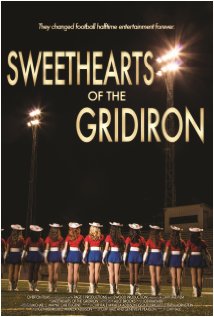
sweethearts Greetings again from the darkness. This year marks the 75th anniversary of the first time the Kilgore Rangerettes took the field at halftime of a football game.  Their iconic high-kicks have become popular all over the world and at many types of events.  For those outside the world of Rangerettes and Dance/Drill Teams, the history has been mostly unknown … until this documentary from filmmaker Chip Hale.

On September 12, 1940 director Gussie Nell Davis sent her first line of Kilgore Rangerettes onto the field to perform at halftime of a football game. It was a performance that was to change the way halftime entertainment was handled in high school and college football, and later in basketball as well. Gussie Nell Davis spent the next 40 years as director of the Kilgore Rangerettes, and even today (she passed away in 1993) is remembered at every camp and competition held by the American Dance/Drill Team School – an organization she helped found.

Director Hale introduces us to three living members of that first line … 90-something’s that are still friends and still proud of their time as Rangerettes. One even wears a sparkly shirt that states “Rangerettes Forever”. There are also brief interviews of other former Rangerettes, plus the current director and assistant director. Taking up most of the screen time is a look at the training and tryout camp for Rangerettes “hopefuls” – the girls looking to make the step from high school pep squad to “the world famous Kilgore Rangerettes”.

For those parents (like me) who have a daughter who danced, the workouts, practicing, rehearsal of routines, marking performances, and the extreme physical and emotional pressure that goes with all of it, is all too familiar … and brings back memories (some good and some not-so-good).  For those new to the dance world, the physicality and extreme workout and practice schedule will probably be shocking. The combination of athleticism, grace, technique and tenacity necessary for success are comparable to anything that football (or any other sport) players must possess.

It’s a slight disappointment that the film focuses so much on the pressure-cooker (one of the hopefuls calls it an “emotional massacre”) that is the tryout process, as tracking down more former Rangerettes would have been fascinating. We get a few stories – successful business women, teachers, etc – but so much is made of the confidence and presence and self-esteem that the program delivers, it really would have been insightful to meet more of these successful women, and note their contributions to society.

As impressive as the high-kicks are to behold, the Kilgore Rangerettes program deserves to be celebrated even more for its development of role models and citizens who understand hard work and teamwork. These are people who go on to make a difference in society. They ‘do their best, and do it with a smile’. In other words … “Once a Rangerette, always a Rangerette”.

the teaser trailer:


DIFF 2015 – Day 9

April 21, 2015


DALLAS INTERNATIONAL FILM FESTIVAL

Day 9 – Saturday April 18

FRAME BY FRAME (documentary)

DIFF 2015 Silver Heart Award Winner

frame by frame Greetings again from the darkness. Sitting comfortably in our recliners or desk chairs, we have come to take for granted the exceptional work of photojournalists from inside locations we ourselves would never risk going. These folks risk their lives to capture otherwise unimaginable conditions and injustice from around the world.  Co-directors Alexandria Bombach and Mo Scarpelli profile four courageous photographers from Afghanistan.

Documenting the truth with a camera seems so simple; however, as one of the photographers explains, he often finds himself running towards the spot from which everyone else is running away. Put yourself in this situation … you are taking photos of a solemn religious ceremony when suddenly a bomb explodes and bodies, limbs, blood and destruction are everywhere. Do you stay to record the fallout and help the injured, or do you run away from the scene in case another bomb is set to detonate? This film doesn’t judge, but instead it matter-of-factly points out that these photographers understand the role they play in exposing such evil and cruelty.  In other words, they stay.

One of the photographers profiled is Massoud, a Pulitzer Prize winner for his stunning photo of “The Girl in Green”. Massoud is now head photographer of AP – Kabul, and he remains in touch with the girl and her family, while maintaining his mission of documenting history in his country.

The most heart-breaking and anger-inducing segment involves Massoud’s wife Farzana, who is also a photojournalist. Yes, a female photojournalist in Afghanistan. Her personal story is so touching as she was a mere 13 year old girl when she had her first run-in with The Taliban, which had seized control in 1996 – making photography, education, history and any semblance of women’s rights a thing of the past. She shares her story which serves as her inspiration to record the injustices toward women that remain in the country, despite the social improvements since The Taliban was ousted from Kabul in 2001.

This review is no place for all the details covered in this emotional and powerful and informative documentary, but to paraphrase one of the photographers … “my heart was crying but my eyes had no tears left”. Please don’t mistake what these brave people do with the personal infringements of the celebrity paparazzi. The only similarities are the cameras they carry. These photojournalists and the others like them around the globe understand that their “empathy brings meaning to their photographs”, and that photographs are the only assurance that a segment of the population will never again be “voiceless”.


DIFF 2015 Award Winning Short Films

The last few days of a film festival allow the opportunity to catch up with the award-winning films that we may have missed. Below is a recap of the six award winning short films from this year’s Dallas International Film Festival:

WORLD OF TOMORROW (USA)

Directed by Don Hertzfeldt. The animated winner jumps ahead 227 years to show us a world where cloning provides everlasting life and perseverance of history and memories. It also depicts a world where financial status remains important, and leaves us with the philosophical thought … “Now is the envy of all dead”.

CAST IN INDIA (India/USA)

Directed by Natasha Reheja. Have you ever noticed that the manhole covers in NYC are stamped “Made in India”? Ms. Reheja noticed and thus began her journey to foundry where the bronze plates are crafted. It turns out these are highly skilled workers who take great pride in their work, face labor union issues, and sacrifice their hands, feet and backs for the manually intensive manufacturing process.

THE FACE OF UKRAINE (Australia)

Directed by Kitty Green. We see a stream of auditions from girls of various ages wanting the highly coveted role of the Ukrainian legendary figure skater Oksana Baiul – former World Champion and Olympic Gold Medalist.

ONE HITTA QUITTA (USA)

Directed by Ya Ke Smith. This provides a look at the despicable fascination of some high school kids regarding videos of violence … especially a “one hitta”, which is blindsiding some innocent with a punch to the face. It also takes us inside a classroom where a teacher pays the price for being in a no-win situation with a punk kid named Jason, whose clueless mother only contributes to his sickening actions.

THE CHICKEN (Germany/Croatia)

Directed by Una Gumjak. It is a pristine example of how a short film can so quickly capture our attention and shift tone from comedy to danger to heartfelt. During war-torn 1993 Sarajevo, a girl receives the gift of a live chicken from her soldier father, and what follows is worthy of the film’s award.

MELVILLE (USA)

Directed by James M. Johnston. The combination of a bleak diagnosis and pregnant wife lead to open mic night at a local hangout, and the unforgettable lyrics of “F Cancer”.


RADIATOR

DIFF 2015 – Grand Jury Winner

radiator Greetings again from the darkness. The feature film debut of writer/director Tom Browne might be best suited to live theatre, though it works just fine on the silver screen. So fine in fact, that is was named the Grand Jury winner at the Dallas International Film Festival. On the surface it looks like yet another glimpse at the miseries of aging; however, it doesn’t take long before we viewers are entangled in this three-headed web of marriage, family, dominance and the struggles of growing old and losing control.

Fortunately the bleak subject matter is juiced with enough dark comedy that we actually laugh out loud periodically, while other times we manage at a smile for the smattering of sweet moments. Daniel (played by co-writer Daniel Cerqueira) is beckoned to the rural family home by his mother Maria (Gemma Jones) as she finds herself at a loss on how best to deal with Leonard (Richard Johnson), her husband and his dad.

This is a towering performance from Mr. Johnson, and he plays it full hilt as some odd type of tyrannical tragedy. See, Leonard’s reign as a force in family and life is now relegated to wallowing in his own sorrow, pain and feces while committed only to lying prone on the sofa and bossing his wife about the house with menial tasks for which he demands perfection. When Daniel arrives, he is taken aback by the squalor and demeanor of his once powerful father. He does what any of us would do … he takes control by ordering a hospital bed, getting dad cleaned up, etc.

As viewers we initially see things through the eyes of Daniel and Maria – on the wrong end of Leonard’s demeaning abuse. Somewhere along the way, there is a subtle shift in viewpoint and tone. The roots of love and marriage are revealed to run inordinately deep after so many years. An act of cruelty can somehow be forgotten and life can move on … even after situations that might never survive a shorter-term relationship. This shift is brilliant writing, and at a level we don’t typically see in movies.

In fact, the film seems to disprove one of its more poignant lines: “The black moments smother any flicker of light”, and instead builds on another: “Just because someone changes, doesn’t mean you stop loving them”. You will likely recognize all three lead actors, and each of them deliver excellent performances. Despite the subject matter, my takeaway is actually summed up in yet another line from the film … “I remember so much pleasure”.


DIFF 2015 – Days 6 and 7

April 17, 2015

DALLAS INTERNATIONAL FILM FESTIVAL

Days 6 and 7, Wednesday and Thursday April 15 and 16

Below is a recap of the four movies I saw over these two days. I am counting the six Documentary Shorts as one movie since it was one block on the festival programming:

DOCUMENTARY SHORTS – DIFF 2015

The Dallas International Film Festival is a great place to catch up with those hard to find short films. It’s not unusual for short films to be later developed into feature films, but regardless, the short film format requires a unique skill set for writers, directors and actors. A connection must be made immediately with the viewer because there is no time for gradual acceptance or interest.

Short films come in three flavors: live action, animated, and documentary. Below is a recap of the six documentary short films at this year’s DIFF.

Crooked Candy (USA)

Directed by Andrew Rodgers. Kinder eggs are illegal in the United States as they are considered a choking hazard for kids. However, this collector has hundreds of the miniature figures/toys thanks to decades of pursuing the eggs through his global travels.

(The And) Marcella & Rock (USA)

Directed by Topaz Adizes. A couple face off against each other with some extremely personal questions. In a matter of minutes, the audience is as uncomfortable listening as the participants are in revealing very private thoughts.

Spearhunter (USA)

Directed by Adam Ruffman, Luke Poling. The story of Gene Morris who successfully fought to get spearhunting approved as an acceptable form of hunting in Alabama. Guns and bows lacked the challenge that Morris desired.  We even visit his legacy – a Spearhunting museum that houses some of the trophies from his 592 kills. His ex-wife labels the late Mr. Morris a serial animal killer.

Master Hoa’s Requiem (USA)

Directed by Scott Edwards. Master Hoa was one of the hundreds of thousands who fled South Vietnam by boat in 1975. In the process, he lost his family. We see how he re-established a new life, and we go with him on a heart-breaking search for the graves of his family.

Cast in India (India/USA)

Directed by Natasha Reheja. Have you ever noticed that the manhole covers in NYC are stamped “Made in India”? Ms. Reheja noticed and thus began her journey to foundry where the bronze plates are crafted. It turns out these are highly skilled workers who take great pride in their work, face labor union issues, and sacrifice their hands, feet and backs for the manually intensive manufacturing process.

The Face of Ukraine: Casting Oksana Baiul (Australia)

Directed by Kitty Green. We see a stream of auditions from girls of various ages wanting the highly coveted role of the Ukrainian legendary figure skater Oksana Baiul – former World Champion and Olympic Gold Medalist.

That’s it for the documentary shorts. Below are the three features I watched in addition to the previous doc shorts.

ECHOES OF WAR
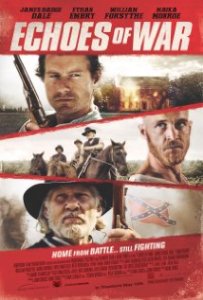
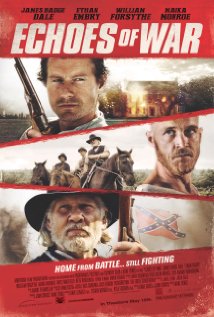
echoes of war Greetings again from the darkness. The fallout from war goes beyond the violence and massive loss of life. Returning soldiers often struggle to regain a sense of normalcy, and are often labeled as PTSD: Post Traumatic Stress Disorder.  And what of the families … those left behind with a gaping hole in their heart from the loss of a loved one, and those having to adjust to the “affected” surviving soldiers? This is the heart-breaking story of two families at the convergence of all of the above.

With the Civil War ending, Wade (James Badge Dale, “The Pacific”) returns home in search of “peace”. He shows up at the house of his brother-in-law Seamus (Ethan Embrey) and is greeted with open arms by his niece Abigail (Maika Monroe, It Follows) and nephew Samuel (Owen Teague), who clearly worship him as their favorite Uncle.

Though it’s not a Hatfield and McCoys extreme, it doesn’t take long for Wade to figure out the awkward and mostly silent unbalanced relationship between Seamus’ family and the McCluskey neighbors. Randolph McCluskey (William Forsythe) is a bitter man who lost a son in the war, has an unresponsive wife (Beth Broderick) due to that loss, and two sons: Dillard (Ryan O’Nan) who is a bit slow-witted, and Marcus (Rhys Wakefield) who is far too sensitive to be accepted by his crusty old father.

Wade’s best intentions of protecting his family turn a barely tolerable arrangement into an all-out war. On top of that, we get a bit of Romeo and Juliet to go along with Wade’s slow-drip meltdown as he is simply unable to handle what the war has made him. The connection between Abigail and Marcus is exciting to watch, though we all recognize a romance facing a heavily stacked deck. Wakefield was previously seen in The Purge, and Ms. Monroe was stunning in It Follows. Both are young actors to keep an eye on.

It’s almost unbelievable to accept that this is the first feature film from director Kane Senes and his co-writer John Chriss. There is so much going on here with multiple layers of conflict and personalities … plus the movie is beautifully shot with an air of artistic flair that lightens a mood when necessary, or makes an analogy of nature and man either through plants, critters or the sky. Religious overtures play a role, and it’s fascinating to watch the various interactions … each more complex than the previous, culminating with Wade and Seamus who seemingly couldn’t be more different.

The film explores the comparison of bravery versus cowardice and it challenges our beliefs. There is also a theme of survival – just what makes a life worth living? The acting here is something to behold. All eight are exceptional and contribute to the film’s ultra-serious approach, broken by brief moments of pure joy. With a terrific and complex story, stellar acting, and a talented director, this is one that serious film goers should seek out and embrace.

NOWITZKI: THE PERFECT SHOT (documentary)
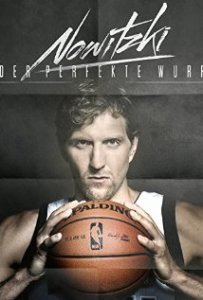
nowitzki Greetings again from the darkness. Dallas loves Dirk. The reasons why become obvious during this biopic that takes us from Dirk’s youth basketball league in Germany through his NBA Finals, while including significantly more information on his family and personal life than we have previously seen. Interviews come courtesy of such well known faces as Kobe Bryant, Don Nelson, Michael Finley, Mark Cuban, Yao Ming, Jason Kidd and former NBA commissioner David Stern.

Contrary to many sports documentaries, this is no shrine to its subject. Of course, we can’t help but be charmed by the “great guy” superstar, but it’s through his life challenges that we come to truly respect Dirk as a man. Director Sebastian Denhardt is one of the most prolific documentarians and filmmakers in Germany, but this look at Germany’s most popular and successful athlete is his best and most accessible work to date.

The most interesting segments involve Dirk’s long time personal coach Holger Geschwindner, plus insight from Dirk’s father, mother, sister, and childhood friend. It’s during these times that we realize Dirk’s “posse” is made of the people who he has always trusted – family and friends. The only two newcomers to his group of “insiders” are Lisa Tyner and Dirk’s wife Jessica. Ms. Tyner is the Mavericks staffer who took Dirk under her wing when he was a youngster transitioning to life in the United States.

While the film drills home the importance of Dirk’s work ethic and commitment to excellence, the most entertaining moments include: Dirk’s first meeting with Steve Nash, Dirk as a stick figure on Holger’s software, Dirk in a tennis skirt (for Halloween), Dirk dominating on the court as a teenager, Dirk’s mother discussing his move to the U.S., and best of all, Dirk stretching the truth a bit while meeting with former German Chancellor Helmut Schmidt … and then admitting it!

These days, disappointment seems to be the most common reaction when the curtain gets pulled back on celebrities and heroes. It’s refreshing to look into the life and see that the biggest scandals were when Dirk was the one cheated by a former girlfriend, and he stood by in full support of a friend going through an investigation for tax evasion. Dirk shows he is as impressive as a human being as he is a basketball player. What he definitely isn’t? A singer … we re-live his “We are the Champions” rendition from the parade. Dirk rocks!

DARE TO DRUM (documentary)

dare to drum Greetings again from the darkness. D’Drum. Stewart Copeland. Gamelan. Most viewers might be familiar with one of these – Stewart Copeland is the world famous Rock drummer and co-founder (with Sting) of The Police. D’Drum is a Dallas area based ensemble of percussionists who have been playing together for two decades. Gamelan is the traditional percussion based music so important to Java and Bali in Indonesia.

If you are curious how these three pieces might fit together, let’s make it more challenging and unlikely by blending in world class conductor Maestro Jaap Van Zweden and the Dallas Symphony Orchestra. Yes, this really happened and the result was a show-stopping 2011 performance of “Gamelan D’Drum”, a symphony composed by Copeland, conducted by the Maestro, and performed by the D’Drum fellows and the musicians of the Dallas Symphony Orchestra.

John Bryant is one of the drumming members of D’Drum, and in very impressive fashion, he also directed, edited and produced the film. He perfectly captures the process of these passionate musicians (insert drummer joke here) and their never-ending quest for new percussion instruments, no matter the part of the world. Their multi-cultural approach led to a stage filled with dozens of instruments, including those custom-made for the performance.

Inspirational seems to fall short in describing what unfolds on screen. Mr. Copeland’s enthusiasm towards the project was obvious in the post-screening Q&A as he energetically answered any question even remotely directed his way. See, he is what one would call a courageous musician – one not intimidated by the traditions of the world of symphonies and orchestras. He understands that the foundation of art is creating something new, and he brilliantly manages this without losing the audience.

While Copeland’s creativity and D’Drums eagerness are commendable and a joy to watch, none of this happens without the (risky) support of Maestro Jaap Van Zweden. So many conductors are tied to the traditions, and hesitant at best, to take risks with music that has been played the same basic way for sometimes hundreds of years. Instead, his positive attitude and willingness to push boundaries delivered one of the most exciting evenings ever for the Dallas Symphony Orchestra … not to mention Stewart Copeland and the members of D’Drum.  Should you have the opportunity to see this one, take it. And afterwards … “Do it again, man”!


DIFF 2015 – Days 4 and 5

April 16, 2015

DALLAS INTERNATIONAL FILM FESTIVAL

Days 4 and 5, Monday and Tuesday April 13, 14

My recap of the (only) three movies I watched over these two days (hey, a guy has to earn a living!)


DIVINE ACCESS

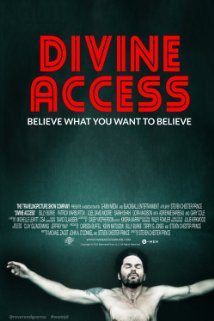
divine access Greetings again from the darkness. Meet Jack. Thanks to a mother who dragged him around as a kid to a stream of religious events and retreats, he has grown into an adult who has vast knowledge about various religions and approaches to spirituality. Yet, despite this, he is a slacker and self-anointed underachiever … a man living the simple life of fishing, drinking beer and morning skinny dips in the lake.

As a favor to his friend Bob (Patrick Warburton), Jack (Billy Burke) agrees to appear on a cable access show. It turns out Bob wants Jack to humiliate the current host … Reverend Guy Roy Davis (Gary Cole). The stunt works sending Guy Roy off the deep end, and turning Jack into an oddball spiritual leader.

The film balances some extremely funny segments and moments with the drama that typically accompanies anything religious. As the film points out, a great many people are looking for something to believe in. Jack’s simple talks revolve around philosophical bits such as: Believe you are loved. Why are you certain you are right and other are wrong? Tell your story and listen to others tell theirs.

When Jack hits the road to give his talks across Texas, he undergoes a personal transformation that is tied to Marian (Sarah Shahi) who he can’t quite figure out whether she is real or a vision. His travel buddies include Nigel (Joel David Moore) and Amber (Dora Madison Burge). The interaction between these three characters makes for the best scenes in the film.

The casting and acting is superb. Gary Cole is both painful and hilarious to watch as Guy Roy, a man committed to spreading the gospel through his ventriloquism with a creepy “Mini Jesus” doll. Sarah Shahi brings the necessary level of mysticism to her role, and Adrienne Barbeau is spot on as Jack’s mom. Patrick Warburton delivers his deadpan one-liners with aplomb, while Joel David Moore and Dora Madison Burge make for a quirky couple of passengers on the road trip. Even the multi-talented Turk Pipkin has a cameo as the leader of the Esoteric Fellowship. But it’s Billy Burke who owns the movie as the reluctant spiritual leader who is fighting his own transformation. Burke delivers a subtle and nuanced performance while also being downright cynical and funny.

The religious overtones are pretty clear with Jesus, Matthew the Apostle, and Mary Magdalene, but that should in no way lead you to believe this is one of those sneaky Christian message movies. Actually, director Steven Chester Prince and his three co-writers do a nice job at asking “Is everyone doing the best they can?” and “Do you believe what you say?” The message seems to be that we all have doubts, but it’s best to start with yourself before you start trying to fix others.

MOST LIKELY TO SUCCEED (documentary)

most likely Greetings again from the darkness. When people discuss the U.S. public education system, most agree (at least to a certain degree) that it’s broken. The impassioned and creative debates occur over how best to “fix” it. The ideas are infinite, but as with any problem in need of a solution, it’s wise to consider the desired end result.  What do we need and expect of our education system?  And who is “we” in that question?  Are we satisfying societal needs or those of the individual … and who decides?

It is not feasible to expect an 86 minute documentary to answer all of these questions and solve one of the biggest issues facing society, but skilled documentarian Greg Whiteley does his best to advance the conversation. “Teach to the test” is the widely accepted curriculum these days, and it’s defined as daily lessons and assignments structured to prepare each student for the standardized tests utilized for determining a student’s knowledge base, grading teacher effectiveness, ranking schools and school districts, and of course, determining the acceptability of certain students at particular colleges.

With a basic structure that has not changed in 124 years, it seems clear that our education system is not properly preparing students for a world that has changed drastically in the past 3 decades. Many make the argument that the future success of students will be determined by what are called “soft skills”: confidence, ability to collaborate, creativity, time management, critical thinking, and decision making. There are interviews from managers at Google and Khan Academy stressing that these are the skills they already seek in new hires.

There are defenders of the current system. They claim it’s all part of the game we play, and that students must survive the grind … just as their parents and their grandparents did. Opponents say students are being treated as data points, not people or future contributors. Whiteley takes us inside of High Tech High in San Diego. It’s an experimental campus committed to finding new ways to teach, so that students learn and retain and accomplish. One of their most impactful evaluation points come from group projects that are presented to faculty, parents and the community. It’s fascinating to watch the students work towards their goal, and equally interesting to hear the parents talk about personal growth of the students.

Whiteley includes the spot on quote from John Dewey: “If we teach today’s students as we taught yesterday’s, we rob them of tomorrow”. Though the film doesn’t touch on the highly charged political landscape or the importance of teacher education and preparation, it is quite effective in generating thought and discussion about what responsibility we have towards students, and how we can improve the odds that they will grow into contributing members of society. For more information on the film, or to schedule a screening at your school or organization, go to www.mltsfilm.org

THE WOLFPACK (documentary)

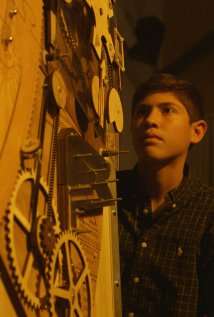
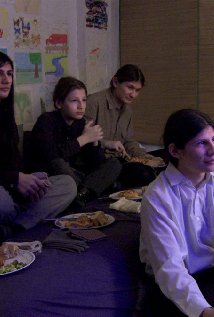
wolfpack Greetings again from the darkness. In what is one of the oddest real life stories I have ever seen, director Crystal Moselle takes her camera inside the Lower East Side apartment of the Angulo family – 6 brothers, one sister, and their parents. In their spare time, the kids re-enact movies within the apartment using elaborate costumes, sets and props. And no, that’s not the odd part.

Despite being mostly teenagers, these siblings have only left their apartment a few times in their life – a very few times … maybe once or twice a year, and not at all one year. They have been home schooled by their mother and are quite charming and articulate, despite the quasi-prison environment. The kids are not abused in the physical sense, but an argument can be made that mental anguish is in play here.

Their movie scenes are fun to watch, especially given their Tarantino leanings with Reservoir Dogs and Pulp Fiction. Ms. Moselle manages to capture a significant amount within the confines of the apartment. Her interviews with the boys are enlightening, but it’s the mother that provides the most context. Her regrets and dashed dreams for her kids cause her much pain, and it’s quite clear that the dad has some type of psychological vice grip on the family. The dad raises some eyebrows when he states “My power is influencing people”. As viewers, we don’t see this, but there is physical proof to his claim.

With no shortage of powerful moments, there are still two that jump off the screen. The first occurs as the boys head out on their own to watch their first movie in a real theatre, and then have such a fan boy moment after watching The Fighter. The second involves the mom having a conversation with her mother after not speaking for more than two decades. It’s an emotional moment.

We can’t help but like the boys and pull for them to find some normalcy outside the walls of the apartment. Their final film project needs no additional commentary as the lead character watches various emotions travel past his window … fitting since a NYC apartment window provided this family its only glances at the real world for so many years.