CRAZY ABOUT TIFFANY’S (doc, 2016)

February 18, 2016

crazy about tiffanys Greetings again from the darkness. Where were you when you received your first “little blue box”? If one is to believe the stream of gushing talking heads in Matthew Miele’s look at Tiffany & Co, very few moments are more memorable in a woman’s life.  The giddy women and spoiled-rotten teenagers provide the emotional perspective for what can only be described as a truly amazing success story for one of the most iconic brands in the world.

Charles Lewis Tiffany founded the company in 1837 (that’s not a misprint) and the instantly recognizable robin’s egg blue packaging is officially Pantone Tiffany blue 1837. Yes, Tiffany owns a color and it’s named after the year the company was established. The color was influenced by Empress Eugenie of France, whose style and fashion sense caught the eye of Charles.

Of course, many people know Tiffany’s thanks to the hugely popular 1961 Breakfast at Tiffany’s movie starring Audrey Hepburn, and based on the novel by Truman Capote. The influences of the Tiffany brand includes other movies (The Great Gatsby, Sweet Home Alabama), music (the 1995 hit from Deep Blue Something), sports trophies (including the Vince Lombardi NFL championship), the New York Yankees logo, Steve Jobs’ design style at Apple, as well as the purchases and style of many US Presidents – Abraham Lincoln was the first President to buy a piece for his wife, and FDR regularly wore his Tiffany wristwatch.

These days, the red carpet walk at the Academy Awards has turned into an international display of bling … much of it from Tiffany. Actresses Jennifer Beal and Jennifer Tilly provide some Hollywood perspective, and a few other designers offer their sometimes snarky remarks on how judgmental the industry can be. These segments are the most contemporary and the least interesting of Mr. Miele’s film.

It’s much more fascinating to learn that Charles Tiffany introduced the Engagement Ring into society, and the Tiffany clock at Grand Central Station is more than one hundred years old. Were you aware that there are collectors of Tiffany’s famed Blue Book (the first catalog in 1845), and more surprisingly, many who present Tiffany’s Etiquette Guide for Teenagers as a gift (not always welcome) to their kids. It’s also interesting to learn about Gene Moore, the pioneering window display artist; Elsa Peretti, the fashion model-turned jewelry designer; and Johnny Schlumberger, who became the first designer to have his name affixed to a line of Tiffany jewelry.

Lest you think Tiffany & Co is some stodgy company unwilling to adapt, they were the first jewelry company to run advertisements for rings marketed to gay couples. Miele’s film is filled with “gems” and bits of trivia and history … you just have to fight through the talking heads who somehow think they are the real story. Seeing clips of Katie Couric’s birthday bash from inside the 5th Avenue Tiffany store is yet another reminder that celebrities live a much different life than the rest of us. Fortunately the historical value of the film outweighs the arrogance of those interviewed leading to the conclusion that once you’ve watched it, I believe we’ll recall we both kind of liked it.

watch the trailer:


WHERE TO INVADE NEXT (doc, 2016)

February 10, 2016

where to invade next Greetings again from the darkness. We haven’t heard much from director Michael Moore since his 2009 film Capitalism: A Love Story … and not many people have complained. While Mr. Moore’s eagerness to ask tough questions and confront the system has always been appreciated (or at least thought-provoking), his style and manner have often seemed somewhat dubious, one-sided and self-serving. And now comes the new and improved Michael Moore. Many say he has mellowed in temperament; however, a better description might be that he has achieved a level of wisdom that allows for an approach that makes us more receptive to his points.

This latest begins with a note that the U.S. has not won a war since WWII, and the farcical hook is that the Joint Chiefs of Staff have summoned Moore for advice. See, America has lost its way and is on the wrong track when it comes to such basics as personal happiness, equality and overall priorities. Moore’s solution is to “invade” other countries and stake a claim on the things they do better than us (us being the United States).

To drive home the contrast of how other nations focus on crucial topics that the U.S. seems to have forgotten, Moore cherry-picks the best parts of other societies. These include: Italy (extended vacations for less stress), France (superior school nutrition and straight-forward sex education), Finland (top rated education despite no homework, short school days, and no standardized testing), Slovenia (free college education which means no debt for graduates), Germany (strong middle class, national healthcare, high wages at small companies), Portugal (decriminalization of drugs resulting in less crime and lower drug usage), Norway (prison rehabilitation), Tunisia (women’s rights), and Iceland (gender equality).

To convince us of his kinder, gentler self, Moore obsessively flaunts the American flag throughout. It does help to distract from his trademark disheveled and bedraggled personal appearance … his usual method in attempting to convince he’s just “one of the guys” rather than the multi-millionaire he is. Still, despite his gimmicky approach, it’s impossible not to notice the obvious lack of in-your-face negativity. In fact, it could be stated that optimism exists as he tromps his way through the good news in each stop. Optimism with a bite – the comparisons aren’t favorable for the U.S. in any of these scenarios.

What Moore does best is generate debate and inspire passionate discussion on topics. His point here is that most of the ideals he is claiming from other countries actually have a foundation in America. Yes, these are ideals that America has forsaken, yet are working in other places. Of course, the cherry-picking gives the impression of idyllic societies, when in fact, each of these nations face many of their own unnamed challenges – some on the specific topics addressed by Moore.

Moore’s goal seems to be to re-focus our attention on core American values – the topics Americans care about in our daily lives. He wants us to be annoyed with the way things are … crime-fed bankers still lining their pockets, a stressed-out workforce, and an education system that is quite simply stated, a mess. Maybe this kinder, gentler (but still manipulative) contrarian is on to something, and he ends by asking us how we feel about all of this. Moore has again succeeded in getting us thinking about things, and this time it comes with quite a surreal movie moment … Moore telling a disinterested Portugal police officer that he has “cocaine in my pocket right now.”

watch the trailer:


MEET THE PATELS (doc, 2015)

January 24, 2016

meet the patels Greetings again from the darkness. These days the topic of racism is usually only addressed in the form of hatred and closed mindedness. This documentary/comedy looks at how racism within a culture is sometimes not only acceptable, but even encouraged as a tradition … and somehow it makes some sense.

You might recognize Ravi Patel. He is an actor from Transformers and “It’s Always Sunny in Philadelphia”, and here his real life search for a wife is the focus – as is the cultural contrasts between his roots in India and his single life in the United States. Ravi co-directs with his sister Geeta Patel, though Ravi is predominantly on screen while Geeta spend her time operating the camera … while simultaneously jabbing and prodding her 29 year old brother with questions on his dating approach.

The movie picks up when Ravi has recently split with his long time girlfriend, Audrey Wauchope. Despite being very close with his parents, there is one reason Ravi never informed them of the relationship: Audrey is a white girl, not an Indian. Ravi’s parents are the product of an arranged marriage, the long-standing cultural tradition that not only matches male and female Indians, but takes it a step further by only pairing up Patels with roots in the same small geographic area of India. It’s a form of selective mating that dates back many generations.

Things get interesting and the laughs pick up as Ravi agrees to let his parents work the Indian dating network so that he can test out their traditions – in hopes of finding a match as well-suited as what theirs is. This process begins with “biodata”; a type of personal resume submitted by boys and girls – a precursor to the meet-up.

It really plays like a home movie, or a video journal, as Geeta films Ravi on dates and directly after, as he provides feedback on whether it was a good match. There is also a creative use of black & white animation to fill in the interview gaps where only Ravi’s audio is available.

The family quest to find a mate for Ravi provides some interesting and entertaining insight into the culture, but the best parts of the film come courtesy of the parents. The mother and father are exceptionally intelligent and very loving and engaged in supporting the success of their kids. Whenever the film drags a bit, a scene with either parent picks us right back up. It’s their commitment to the cause that highlights the cultural customs and challenges faced by immigrants as they struggle to get in step with American society while holding onto the tradition they so respect.

watch the trailer:


LISTEN TO ME MARLON (doc, 2015)

January 23, 2016

listen to me marlon Greetings again from the darkness. Was he greatest actor of all-time? Or was he a lazy actor only in it for the payday? Was he a defender of Civil Rights and Native American rights? Or was he as disturbed as his Colonel Kurtz? This film from director Stevan Riley addresses all of these questions and more, but what makes it fascinating to watch, is that the only talking head here is that of its subject … Marlon Brando.

Utilizing a treasure trove of Brando’s private audio recordings, and blending those words with some rare photographs and clips, Mr. Riley delivers one of the most unusual posthumous autobiographical documentaries ever released. Bookended by a tragic shooting at Brando’s Mulholland Drive house, the film explores his Omaha childhood with a mother who taught him about nature and music, and a father who was abusive and not a loving man. Both parents were alcoholics, and seemed to set Marlon up for a lifetime of family issues.

Brando’s movie career can be divided into two different chapters. He burst onto the scene in 1951’s A Streetcar Named Desire, and maintained the rebellious sex-symbol status through The Wild One (1953) and On The Waterfront (1954) and Mutiny on the Bounty (1962). Ten years later, a career resurgence brought The Godfather (1972), Last Tango in Paris (1972), Superman (1978), and Apocalypse Now (1978). This second phase solidified his reputation as difficult to work with and as a man with questionable mental stability (and creative use of a hearing aid). Listening to Brando’s self-analysis during these eras provides insight into the enigma … we learn some of what was going on with the troubled genius.

Some of the film’s best segments: learning about his acting (and life) mentor Stella Adler, hearing Brando discuss his “I coulda been a contender” speech and why the masses so closely related, an explanation of his love/fascination with Tahiti (started in Military School and continued while filming Mutiny on the Bounty), and especially a glimpse into his pain-gone-public during the ordeals with his divorce, and his son and daughter (Christian and Cheyenne).

These audio tapes are more intimate and revealing than diaries would be, as we hear Brando’s unbridled emotions in his voice. He was internationally famous for playing roles, but perhaps no role was harder for him than that of being Marlon Brando. A reclusive man who values his privacy does not easily transition to 40 foot silver screen, and his own words let us in on just how difficult this was for him.

watch the trailer:


PRESCRIPTION THUGS (doc, 2016)

January 21, 2016

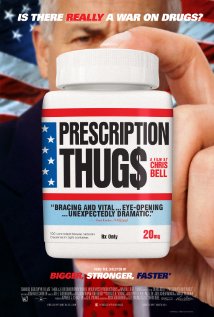
prescription thugs Greetings again from the darkness. United States citizens are living in a culture of addiction. That’s the key message that director Chris Bell and his co-directors Josh Alexander (also the film’s writer) and Greg Young wish to get across. Of course, this one’s not about cocaine or heroin, but rather the more rampant societal problem of overmedication via prescription drugs. It’s not really a revelation or shock-inducing theme, but it’s certainly a worthy and important topic.

The movie begins with Chris Bell introducing himself and reminding us of his first movie, the well received documentary Bigger Stronger Faster (2008). In that one, he focused on the use of steroids and Performance Enhancing Drugs (PED’s) throughout competitive bodybuilding – including him and his brother. Bell connects the two docs by explaining that the steroids lead to pain killers and other prescription drugs … legal drugs prescribed by doctors. To the detriment of the message, he chooses to focus on this for an extended period by speaking with WWE wrestlers, MMA fighters and by explaining that he believes the drugs are at least partially responsible for the death of his brother, known in the wrestling world as Mike “Mad Dog” Bell.

It’s this overly-personalized approach that limits the film’s effectiveness. Chris Bell takes the Michael Moore/Morgan Spurlock approach by putting himself smack dab in the middle of most every segment, and even using cutesy sidebars like animation and a Scarface clip. The result is a somewhat amateurish look and feel to a topic that deserves better.

In case there are doubters, Bell provides some startling statistics … the U.S. is 5% of the world’s population, but consumes 75% of the prescription drugs. One in ten American adults are on antidepressants. Keep that last statistic in mind the next time you stroll through your office, church or the neighborhood shopping mall.

Bell devotes time to “Big Pharma” and its army of lobbyists. He takes us back to the deregulation initiatives of the 1980’s which kicked off what has become the onslaught of “ask your doctor” TV ads that permeate the airwaves. The implied message is simple: if your doctor says the drug is OK, then it must be safe and effective. Our society is being marketed right into addiction. Oxycontin, Vicodin, and Codeine are all part of the Opiate family … the same as heroin. The reality is that the business of prescription drugs has evolved into a money-printing industry. Profits are the goal, which is why treatment is emphasized over cure. An addicted patient is profitable patient, and in a best case scenario for Big Pharma, the side effects of one drug lead that patient right into another drug … sometimes both are produced by the same pharmaceutical manufacturer!

The second half of the film is structured significantly better than the first, and includes what is the most impactful sequence. Bell visits with California Congressman Ted Lieu, who is jolted into action when he is sees that Oxy is readily available on Craigslist. This section also leads to a not-so-surprising confession from Bell – a confession that helps explain why he is so intent on being the center of the movie. A key point that is mentioned, but underplayed, is the admission by a doctor that an entire generation of medical school graduates has been taught that there is no downside to prescribing whatever level of pain medication is required for a patient, and even more frightening is the concern that doctors are being misled by drug companies in regards to efficacy and side effects. It’s another link in the seemingly unbreakable chain that doesn’t address the underlying issue.

This culture of addiction is now self-perpetuating. Pressure to maintain profits far outweighs the rewards of curing a disease, and the FDA approval process is highly politicized. This despite the high-profile celebrity deaths of which Bell reminds us: Michael Jackson, Heath Ledger, Whitney Houston. Prescription drugs played a role in each those deaths, as well as countless others who never had a hit record or movie. While much has been made of the failures of the “War on Drugs”, you may question why more focus isn’t given to the Rx addictions. To help in dealing with this conundrum, there are probably drugs available … just “ask your doctor.”

watch the trailer:


WHAT HAPPENED, MISS SIMONE? (doc, 2015)

January 16, 2016

what happened miss simone Greetings again from the darkness. Classical pianist, extraordinary singer, highly sought after live performer, Civil Rights activist, and inspiration to so many … it’s only fitting that Nina Simone is now the subject of an Oscar nominated documentary. Talented filmmaker Liz Garbus (also Oscar nominated for 1998’s The Farm: Angola, USA) provides a biography that is both a deep-dig and somewhat gentle look at this fascinating and troubled woman.

Born Eunice Waymon in North Carolina during the Jim Crow era, she was the church pianist at age 4, and later studied classical piano with the dream of becoming the first black female classical pianist to play Carnegie Hall. While attending Julliard, she worked at an Atlantic City bar where, in an effort to hide the gig from her parents, she created the stage name Nina Simone (after the popular French actress Simone Signoret). It was also at this bar where she was first forced to sing … a step that changed the course of her life.

The film begins by showing her return to the stage at the1976 Montreaux Festival in Switzerland after a seven year self-imposed exile (most recently in Liberia). We then head back to her humble childhood and follow her progression as she blends her Bach-influenced piano style with an expressive vocal style in jazz, gospel, pop, R&B and soul … resulting in the nickname “High Priestess of Soul”.

What we see is a woman with remarkable talent and ferocious drive who just never is satisfied with society or her place in it … despite the positive impact she had as a musician and activist. Ms. Garbus uses some rare archival performance footage … such as her singing “I Loves You Porgy” while appearing on Hugh Hefner’s “Playboy Penthouse” TV show and “Mississippi Goddam” during the march with Martin Luther King. We also hear Nina telling her own story through previously unheard audio recordings, and we have access to diary entries and personal letters. These are combined with insightful interviews from her ex-husband and manager Andrew Stroud, collaborators like Al Shackman (her guitarist) and George Wein (founder of Newport Jazz Festival), and her daughter Lisa Simone Kelly.

What we soon see is a combination of other-worldly talent and a woman filled with rage and depression, and who is isolated inside her own uneasiness. Her later diagnosis and medication for bi-polar syndrome allowed her to better function in those last years. Her lack of attentiveness to her kids is kind of glossed over, but we understand how it made sense for her kids to spend more time at the home of the Shabazz family (Malcolm X) than with their own parents.

It’s a shame that Ms. Simone could never appreciate her achievements, the impact she had in the Civil Rights movement and the inspiration her music brought to so many. Even playing Carnegie Hall was not enough for her as she wasn’t on stage as the classical pianist of her dreams. Her biggest mainstream musical recognition stemmed from her song “My Baby Just Cares for Me” being used for a1987 Chanel No. 5 advertisement, but fortunately the rest of us can understand her place in history as a rare talent and societal influencer. She truly put a spell on us.

watch the trailer:


THE EMPEROR’S NEW CLOTHES (2015, doc)

December 17, 2015

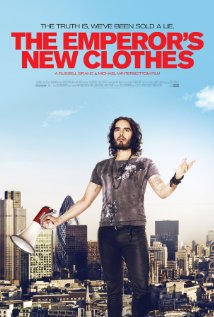
emperors new clothes Greetings again from the darkness. I’m not one of those who subscribe to the belief that documentary films should present all sides to the story in a “just the facts, ma’am” style. In fact, I respect a filmmaker who is so passionate about a topic that he/she enthusiastically attempts to overwhelm the viewer with “proof” that their opinion is the definitive truth and no further debate is needed. Here, renowned director Michael Winterbottom (The Trip, 2010) supports comedian/actor/activist Russell Brand in his agenda to educate the masses on the evil of big banks and rich people, and the need for re-distribution of wealth.

Now that agenda may seem a bit odd coming from an admitted rich guy, but in fact, Brand’s professional success lends some credibility to his argument … or at least it’s a different approach than having a group of people living in poverty talk about how they got screwed by “the man”.

To say that Brand dumbs-down his explanation is certainly an understatement. To emphasize this, there are a couple of segments where he utilizes elementary level students to differentiate between rich and poor – what’s fair and what’s not. Concentrating mostly on the British economy, while also noting the similarities to the United States 2008 crash, Brand makes the argument that the turning point was approximately 35 years ago as Margaret Thatcher assumed power and Free Market Capitalism took over. It’s a bizarre point coming from a native of a country whose Monarchs (not known for their “fairness”) date back for centuries. However, this is an example of the keep-it-simple approach in getting the masses to join his quest.

Borrowing a page from Michael Moore’s long-successful script, Brand presents the big banks and the super rich as the villains of society. It’s a common theme and one that’s pretty easy to agree with … the banks were bailed out, and then proceeded to pay their upper management huge bonuses. The viable argument is, why don’t they pay “us” back? Brand attempts to follow Moore’s lead again (while referencing Joseph Campbell) by walking into the banks and asking to see the CEO’s. These attempts fall flat, and leave us with Brand wise-cracking while bystanders try to figure out if it’s all a prank.

The most effective sequences involve Brand walking the streets of Grays London where he was raised. His discussions with the locals are real, and infinitely more enlightening than his storming into bank lobbies. The statistics don’t lie – the rich are getting richer, while the rest of society struggles. George Carlin said it best … the poor are needed to keep the middle class motivated to work so the rich can benefit. Brand also rails against legal tax evasion via offshore accounts – especially in Grand Cayman. He lobbies for those accounts to be taxed and the money returned to the country of origin.

Most of Brand’s mission is preaching the importance of fairness, and the claim is made that by definition, capitalism is the inequality of power. Whether you agree with him or not, Brand is to be respected for using his celebrity status for a cause much more important than the best table in a restaurant, or courtside seats to a game.  His simple-is-best approach carries right through to the end where he does offer up his list of recommendations to create a more fair system.  If his simple and sometimes funny approach allows more people to enter into discussions, then his cause is worthwhile, even if his recommendations are a bit lacking in substance and depth.

watch the trailer:


ORION: THE MAN WHO WOULD BE KING (2015, doc)

December 3, 2015

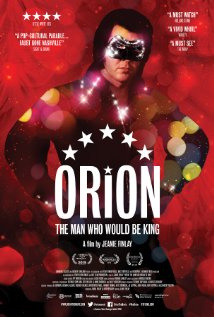
Orion Greetings again from the darkness. “Believe it or not”. That’s the catchphrase that Ripley’s used for its books, TV shows and museums, and it could just as easily describe this latest from award-winning documentarian Jeanie Finlay (The Great Hip Hop Hoax, 2013). When Elvis Presley died in 1977, legions of his emotionally distraught fans refused to believe he had truly left the building forever. This is the crazy story of how one music industry huckster cashed in on the opportunity by taking advantage of talented nice guy who just wanted to sing.

If you can play golf like (pre-scandal) Tiger Woods or throw a fastball like Nolan Ryan, then you have a chance to create a name for yourself. However, if you sing like Elvis (and even favor him physically), your music options are mostly relegated to being a sideshow act as an impersonator. That option was twisted a bit in 1979 by music producer Shelby Singleton, who had purchased Sun Records from Sam Phillips and relocated it to Nashville. Singleton contracted with Jimmy Ellis, a nice young man from rural Alabama whose singing voice was eerily similar to that of Elvis. But rather than impersonate Elvis, Ellis donned a bedazzled eye mask and assumed the public stage name of Orion – the title and character of Gail Brewer-Giorgo’s novel that explored what might have happened if Elvis had faked his own death to escape the claws of celebrity. Orion became a fantasy experience for those Elvis fans who wanted to believe their King was still alive.

Ms. Finlay’s film exposes yet another example of how cruel the music industry can be. Talent is no guarantee of success. Mr. Ellis definitely had talent, but his ambition and trusting nature allowed him to be exploited (along with Ms. Brewer-Giorgo) by Singleton, who paid him no royalties despite a hand full of charting singles, and some albums that found a market. To her credit, the filmmaker doesn’t dwell on the ugliness, instead using archival audio interview from Ellis (and plenty of his songs) and numerous talking head interviews from his son and those who were associated with the time period, to create a biography of a man who just wanted to sing and live a good life. Ellis may not have been The King, but he was the kind of guy it seems we would all like to call a friend … and listen to him sing as often as possible.

watch the trailer:


KILLING THEM SAFELY (2015, doc)

November 28, 2015

killing them safely Greetings again from the darkness. “Don’t tase me, bro”. In 2007, an incident at The University of Florida became a humorous viral sensation when a student, after asking John Kerry a question, was forcibly removed by police. His pleading became a catchphrase, but didn’t prevent his being hit with the Taser. Now comes this documentary from director Nick Berardini, and he pulls back the curtain on the ethics of Taser International Corporation, the safety of tasers, and the protocol and use of this weapon by police officers.

We learn Jack Cover invented the taser in 1969, and it was the Smith brothers (Rick and Tom) who founded the Taser International company in 1993, increased the voltage output, and began marketing heavily to police departments as a safe alternative to firearms. The Smith’s claim the taser is “the biggest revolution in law enforcement since the radio”, though they spend the bulk of the movie giving evasive answers to variations of the question, “Is the taser safe or potentially deadly?”

Director Berardini documents tragic events where police use of tasers ended with suspects dying. Doctors and lawyers chime in, but it’s the testimonies of Tom and Rick Smith themselves that provide a level of creepiness that would complement most any horror film. Actual video footage is shown of not just the Smith brothers numerous depositions, but also of some of the actual events. Two of the most devastating are a man at the Vancouver airport, and a young man stopped for speeding directly across the street from his own house. The latter died after being tased … while his parents looked on. Neither appeared to be an immediate threat to the police officers. The film recounts incidents where kids as young as 6 years old, and women in their 80’s have been hit with police tasers.

Reports show that more than 17,000 Law Enforcement Agencies utilize tasers, and one of the more interesting case studies is that of the Warren, Michigan Police Department. One of the early adopters of the weapon, this police department dropped the taser from use by their officers after a tragic incident. Since then, they have seen no increase in police injuries or shootings, drawing into question the company claim of a safer alternative.

At a minimum, the film should instigate further debates on two key issues: the safety of the weapons, and the training techniques and best use for police officers. The key concern seems to be a direct hit to the chest area which can immediately impact the victim’s heart. It’s frightening to think that police could be Taser-dependent or Taser-happy in using a weapon that may not be safe. We see some fascinating video of macho tough-guy cops being dropped immediately by one second (or less) tasers, but it’s the events with multiple prolonged zaps that seem to cause the biggest concern. Again … this research is necessary and should be done immediately, given the widespread use of Tasers.

As a side note, Taser International is still in the taser business, but their biggest revenue source is now police body cameras. Say what you will, but the company is certainly opportunistic.

watch the trailer:


THE BLACK PANTHERS: VANGUARD OF THE REVOLUTION (doc, 2015)

November 19, 2015

black panthers Greetings again from the darkness. Black lives matter. We hear the phrase frequently these days, and director Stanley Nelson (Freedom Summer) takes us back 49 years to the beginning of the Black Panther Party, and then walks us through the rise and fall. Rather than the usual textbook approach that focuses on the famous photos of angry black men wearing leather jackets and berets while toting firearms, this is a much more comprehensive look at the complexities of the organization and its members.

The familiar names of the Black Panther leaders include Huey Newton, Bobby Seale, Eldridge Cleaver, Kathleen Cleaver, Elaine Brown and Fred Hampton. Despite the fact that first hand interviews weren’t possible with the big three – Newton and Cleaver are no longer living, and Seale declined the opportunity, there are some fabulous video clips and photographs, many of which have been rarely seen.

It’s the interviews with former Black Panther members that provide the most insight. Their stance is that the original plan was a non-violent approach to bring attention to police brutality and the lack of equality in Black America. Many social programs were started to assist kids and the poor, but things turned more aggressive when the passive approach didn’t yield the desired results. Newton studied the laws and realized open carry was permitted on public property, and that’s where most of the famous photos originated.

The segment on J Edgar Hoover’s counterintelligence plan for the FBI to do what was necessary to prevent the expansion of the Black Panthers is one of the film’s best. Hoover even described them as “the greatest threat to the internal security of the country” (yes, this was during the Vietnam War). He was especially concerned about the rise of a “messiah”, and that led to what most consider the assassination of Illinois chapter leader Fred Hampton while he slept.

Oakland is widely accepted as the central hub of the Black Panthers, and it was surprising to learn that “most” members were teenagers and a majority were female. The interviews with the former members are fascinating and void of any pomp or bluster … just matter-of-fact recollections. What really stands out is just how media savvy the leaders were. They understood how to get headlines and bring attention to the issues.

We also learn that Jane Fonda hosted fundraisers and meetings, and we see a clip of Marlon Brando supporting the Black Panthers. These celebrities brought legitimacy to the organization, but didn’t stop the fracture that occurred when Huey Newton and Eldridge Cleaver began feuding over the best direction. Seeing clips of Bobby Seale running for Mayor of Oakland in 1972 certainly brought a contemporary feel, as the black voter registration drives continue to this day.

As one of the former members states “making history” was “not nice and clean”. We learn that more than 20 former Panthers are still in prison today, and the parallels between the mid-60’s and the movement for equality today are undeniable. Director Nelson offers an informative education without preaching or romanticizing the Black Panthers.

watch the trailer: