EATING ANIMALS (2018, doc)

June 18, 2018

 Greetings again from the darkness. Our food supply and sources have become a deserved focal point of interest over the past few years, and director Christopher Quinn brings the 2009 best- selling book by Jonathan Safran Foer to the big screen to ensure we are paying attention. What began as a project looking at how animals were raised to fulfill the demand for edible meat, evolved into an analysis of traditional farming methods versus today’s prevalent factory/big corporation farming. We learn that the growing demand for affordable and convenient food in the 1970’s really kicked off the factory farming industry, and now it’s roughly 99% of the market. Only 1% of farmers resisted and survived (as farmers).

We eat meat not because of how it’s produced, but in spite of it.” Consumers demand delicious, affordable and convenient food, and the film looks at beef, chicken, turkey, pigs and dairy. We are told that factory farming began accidentally thanks to an overshipment of baby chicks several decades ago. Farming and our food supply haven’t been the same since. There is some rare behind-the-scenes footage from factory farms that is difficult to watch. Narrator and Producer (Oscar winning actress) Natalie Portman talks us through the disgusting “pink lagoons” of hog poop, as well as how the raising of animals for food is said to be responsible for up to half of climate change, and for having a significantly negative impact on air pollution and water quality.

Of course most people, when asked, are against animal abuse and geological degradation so what goes on “inside” the barns remains confidential and secure. Going behind the doors of Confined Animal Feeding Operations, we witness conditions and actions that we would prefer not to see. We are informed that 80% of the anti-biotics being produced go towards farm factory animals, and the goal is to modify normal growth size and speed by 4 times. With this approach comes increased risk of pandemics, superbugs, and flu viruses. That’s our tradeoff for the delicious, affordable and convenient demands.

The USDA comes under attack here as well. The agency is accused of silencing the whistleblowers who are doing the job the agency was created to do. They are now ‘protecting the fox, not the hen house’. This is all tracked back to politics and money from the big corporations affiliated with or benefitting from factory farming. Some old clips of Col Harland Sanders (of KFC fame) proves even he was concerned about this many years ago.

Emotion comes into play here as the connection of traditional farmers to their animals is contrasted to the mass production of farm factories. Industry secrecy and protection is presented as a red flag, and the independent farmers are shown as good guys while the giant corporations remain faceless and (mostly) nameless. Only towards the end of the film do we gain some insight into the research being conducted on meat replication through plant-based systems. It’s brilliantly compared to the early days of “gas light substitute” as a name for Edison’s electricity. We are told that India and China now combine to total almost 3 billion people, and their diets are trending towards that of the U.S. – leading to more pressure for faster and cheaper food. Traditional farming isn’t even taught in school these days, and the film barely touches on the always on-going debate between “humanely” raising animals for food vs. veganism. The film succeeds in showing us the problems, but doesn’t offer much in the way of solutions or even a better way … although it’s clear one is needed.

watch the trailer:


WON’T YOU BE MY NEIGHBOR? (2018, doc)

June 8, 2018

DALLAS INTERNATIONAL FILM FESTIVAL 2018

 Greetings again from the darkness. Is it too good to be true? We often ask that question in life, but when it comes to Fred Rogers of “Mr. Rogers’ Neighborhood”, director Morgan Neville’s documentary proves the answer is no … he was good and true. Fred Rogers hosted the children’s TV show on PBS for more than 30 years, starting in 1968. The terrific (and surprisingly emotional) film provides the background of the show, and more importantly, profiles a wonderful man.

Director Neville (BEST OF ENEMIES: BUCKLEY VS VIDAL, 2015) has produced numerous biopics on musicians ranging from Keith Richards to Muddy Waters to Johnny Cash to Brian Wilson. His subject this time out was known for his singing the show’s familiar opening number, and his lyrical legacy was his substantial impact on many generations of children. Mr. Rogers was an ordained minister and, in the early days of television, recognized that violent cartoons were not appropriate programming for the formative childhood years. Even in the early years, he was an outlier with sincerity and wholesomeness in entertainment. He never shied away from tough topics – not even death – whether it was the assassination of Robert Kennedy or a dead fish in the aquarium on set. He spoke directly to children in a voice and language they understood.

There are interviews with fellow cast members, long timer crew members, and relatives, including his wife Joanne. We hear Francois Clemmons (Officer Clemmons on the show) discuss how Mr. Rogers addressed Clemmons’ homosexuality and race, adding poignancy to the shared televised foot bath. Archival footage takes us back to the early years, and we see Lady Aberlin and Daniel Tiger in both black and white and color segments. We learn that the puppet Daniel most resembled the personality of the host himself … a quiet, patient, compassionate being who cared about others.

We see footage of Fred Rogers testifying in front of a Senate sub-committee to prevent funding for PBS from being eliminated, and we see numerous cardigan sweaters and tennis shoes. Mostly we see the approach of a man who built a legacy on kindness and human decency … a lifetime pursuit of uniting that led to struggles with depression. His obsession with 143 – both his weight and his code for “I love you” provides some insight into his personality, and mostly we hear others speak of his lasting impact.

Rather than comedy and pranks, Mr. Rogers was intent on making kids feel safe and secure in a scary world. Sure he educated – often subtly – but it was his innate ability to comfort that kept kids coming back. There are naysayers who say he is responsible for generations of entitled kids who grew into entitled adults, but the film addresses this by showing Roger’s commencement address where he clearly explains the “special” label. His final show was in 2000 and he died in 2003. His legacy is simple yet powerful. We can each do better. We can each be better. We can each be better neighbors.

watch the trailer:


POPE FRANCIS: A MAN OF HIS WORD (2018, doc)

May 18, 2018

 Greetings again from the darkness. Director Wim Wenders has had a varied and diverse career dating back 50 years with both narrative and documentary films. He is probably best known for PARIS TEXAS (1984), WINGS OF DESIRE (1987), and PINA (2011). As a filmmaker, he seems to excel at finding a slightly different way of looking at a subject or topic, and because of this, some of his projects are better received than others. This time out he is granted remarkable one-on-one access to Pope Francis, as well as some terrific archival footage obtained from the Vatican.

Jorge Mario Bergoglio from Buenos Aires, Argentina became Pope in 2013, and he chose Francis as his papal name. Director Wenders spends much of the movie making the connection and correlation to his namesake St Francis of Assisi – some 800 years ago. Wenders’ artistic flair comes through in the black and white dramatization sequences, which are meant to send us back to the time of Assisi so we can grasp the parallels.

This is no sales pitch for Catholicism, but rather an introduction to the man, his vision and approach. It seems clear that this “reformer” is what was needed after the ultra-conservative Pope Benedict “retired” (an unprecedented step). Rather than harp on the prior missteps, the film focuses on this most engaging and sincere man who is devoted to the causes of poverty and immigrant rights. He believes we should follow the Law of Nature: we should all live in harmony; and that we are all responsible for the world and community in which we live. Pope Francis tells us of his 3 T’s: terra (land), trabajo (work), and techo (housing), and how those are the foundation of a future named “hope”.

Beyond those elements, this is no sound bite film. It is quite humbling to listen to a man so universal in thought. He has zero tolerance for pedophilia inside the church or out, and he firmly believes in the rewards of listening – yet another dot Wenders tries to connect with St Francis of Assisi. The camera (and hence, us) travels the globe with the Pope – Africa, Brazil, Greece, the United States, Israel and more. So many countries, religions and races are touched. He even symbolically washes the feet of the less fortunate.

There is a good deal of talking head interviews with the Pope himself, and he never shies away from a question … leading us to the single criticism of the film. Wenders, acting here as narrator and facilitator, simply doesn’t push hard enough on some of the difficult topics that could lead to real insight and debate. So we are left to ponder if this wonderful man can mitigate change within a Church that is not much known for it (check out the demographics of the group of Cardinals Francis addresses). Wenders delivers an affectionate glimpse of the man, and we leave with a bit more admiration and hope – not such a bad thing.

watch the trailer:


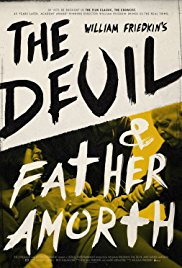
THE DEVIL AND FATHER AMORTH (doc, 2018)

April 20, 2018

 Greetings again from the darkness. In 1971, William Friedkin directed one of my all-time favorite films, THE FRENCH CONNECTION. He won the Oscar for Best Director. But of course that’s not the movie which entrenched him as a cinematic legend. Two years later he directed THE EXORCIST, a film that, 45 years later, still regularly appears at or near the top of most “Best Horror film” lists.

For most of his adult life (he’s now in his 80’s), Mr. Friedkin has been associated with exorcisms, and he kicks off this documentary by confessing that he will be attending his first ever actual exorcism … and will be filming the ceremony. It’s a ritual very few of us have ever witnessed, and we learn that more than 500,000 Italians seek exorcisms from a priest each year. The director seems very anxious to take us along on his journey.

We get interviews and footage from multiple associated folks: Jeffrey Burton Russell, author of “The Prince of Darkness” and other satanic novels; William Peter Blatty, author of “The Exorcist”; a young Los Angeles priest who simultaneously expresses skepticism while stating he wouldn’t want to get that close to the devil;  and a couple of Neurosurgeons and some Psychiatrists. There are also interviews with a brother and sister recalling her experience of having a liberating exorcism performed on her, and the titular Father Gabriele Amorth – one of the most beloved figures in the Catholic Church. He was Head Exorcist for the Diocese of Rome for more than 30 years.

Whether the movie works for you or not (whether you believe it’s real) likely depends on the interview we neither see nor hear. Mr. Friedkin’s build up is to the exorcism he attends as Father Amorth performs the 9th exorcism on ‘Cristina’. It’s May 1, 2016 and there are perhaps 12-15 people in the room, including Cristina’s parents and boyfriend. She has struggled with “demonic possession” for years, and the footage is quite startling – especially the audio of the guttural voice from such an innocent looking lady. It’s also Father Amorth’s 91st birthday and he literally thumbs his nose at the devil. It’s after this ceremony where Friedkin claims he was to interview Cristina in a local church. Inexplicably, he doesn’t have his camera, so we only hear him tell of the horrific events.

Mr. Friedkin directs the film (co-written with noted film critic Mark Kermode) and also acts as our guide through the rituals and beliefs associated with exorcisms. There is a bit of a “Dateline” vibe to the production, though it’s a bit surreal to hear Father Amorth proclaim to the evil spirits, “You are banned forever”. As has been the tradition for years, religion and science are at odds with the subject. Neurosurgeons label it “delirium”, while Psychiatrists call it “Disassociate Trance Disorder”. Is it merely a placebo effect caused by religious beliefs, or does Satan exist? Perhaps author Jeffrey Burton Russell says it best: “stay away from this stuff”.

watch the trailer:


HE LIED ABOUT EVERYTHING (2018, doc)

February 24, 2018

 Greetings again from the darkness. We have learned through books, movies, and especially real life, that evil can arrive in many forms and often strikes when we are at our most vulnerable. Such is the remarkable and personal story told here by Benita Alexander. As an Emmy winning Producer for NBC News, she proclaims that she should be the last person who should fall victim in the way that she did. Whether seizing the professional opportunity to tell a fantastic story or going through the process as a form of therapy, Benita guides us through a maze of deceit that rocked the medical world, as well as her personal life.

Home video from a honeymoon suite in picturesque Santorini Greece in 2014 is how Benita initiates her confession of having fallen fast and hard for Dr. Paolo Macchiarini, a world renowned surgeon. In what can best be described as a whirlwind romantic fairy tale, Benita describes love at first sight (at a 2013 interview), Cinderella-type wedding plans featuring world leaders and the Pope, and the crushing emotional angst when it all came crashing down.

Benita utilizes her investigative reporting skills to present her story in a way that helps us understand how all of this could have happened. The doctor swept her off her feet with lavish gifts and jet-setting trips, and then charmed her friends and family – all while receiving accolades for his revolutionary work with artificial trachea transplants. The film takes us to New York City, Rome, Barcelona, London and Russia, as Benita’s high and low points are revealed.

Steven Spielberg’s movie CATCH ME IF YOU CAN told the story of charlatan Frank Abignale, and though he stole money and broke trust, Abignale’s tale possesses none of the evil or madness of Dr. Paolo Macchiarini. His were no pranks. This was no episode of “Punk’d”. This doctor’s cruelty goes far beyond. We hear words like Frankenstein and murder to describe him and his reprehensible actions that left patients dying excruciating deaths. Benita tries to balance the story with her shattered dreams and the medical scandal, but seriously, it’s difficult to muster much sympathy for someone getting caught up in the social lives of the elite. It’s the doctor’s inexcusable medical fraud that is most overwhelming to us as viewers and caring human beings.

Benita is denied the ribbon on her story package as her final phone conversation leaves her lacking an answer to “Why?”  Her emotions and pain are minimized to us when she admits to being “conflicted”. This viewer found no reason for conflict, only anger and disgust. Dr. Paolo Macchiarini may have been “selling hope”, and falling for his act may be forgiven, but once the fraud is exposed, there is no room for mercy or conflict.

The documentary is scheduled to stream on Investigation Discovery starting February 14. Valentine’s Day is either the best or worst day for this airing, depending on your perspective.


THE MILLIONAIRES’ UNIT (2018, doc)

February 16, 2018

 Greetings again from the darkness. Imagine, if you will, a world where the one-percenters view their privileged life as carrying more responsibility towards civic duty, not less. While that’s difficult to conceive these days, the film takes us back 100 years to the beginning of WWI, and introduces a group of Yale students who believed exactly that. Co-directors Darroch Greer and Ron King provide the best kind of history lesson – one told through personal stories.

WWI, “the war to end all wars”, lasted about 4 years and featured new technology such as machine guns, tanks, and airplanes (Wright brothers first flight was 1903). Though U.S. President Woodrow Wilson stated the country would remain “neutral”, a young visionary named Trubee Davison saw things a bit differently. Trubee was a student at Yale University and the son of HP Davison, a powerful JP Morgan executive. Trubee was also a natural-born leader and inspired a group of his classmates to join the First Yale Unit … a flying club dubbed The Millionaire’s Unit by the media.

The film tracks their training and subsequent call to service during the war. They became the first Naval aviators in WWI, and the Naval Reserve Flying Corps actually preceded the US Air Force. We see spectacular clips from the era, along with reenactments (dogfights!), photos, and letters/correspondence to/from the men. Actor Bruce Dern enthusiastically narrates, and it’s interesting to note that he is the grandnephew of one of these Yale pilots.

Profiles of a hand full of these men are remarkably well done and help us understand that each were defined by their service and dedication to the cause and to each other. Much of the focus is on Trubee, a fascinating guy who later spent time as Assistant Secretary of Defense and Director of Personnel at the CIA; however, we also get to know Robert Lovett, Kenney MacLeish, “Di” Gates, and Dave Ingalls – each an interesting story, and in combination, stunning in that so few of us have been exposed to their courage.

The 2006 book, “The Millionaire’s Unit”, written by Marc Wortman, was the basis of this documentary that took longer to complete than WWI actually lasted. These young men were volunteers who, despite their elite social and financial standing, believed so strongly in “fighting for the ideals we hold sacred”, that they risked it all – some paying the ultimate price. As you might expect, after the November 11, 1918 Armistice was signed, most of these Elis continued serving their beloved country in some capacity. Theirs is a story that deserves to be told with the respect and personal aspect afforded by the film.

watch the trailer:


POOP TALK (2018, doc)

February 16, 2018

 Greetings again from the darkness. Poop. Poo, doodie, s**t, feces, excrement, doo-doo, dung, dookie, defecate, bowel movement, and number 2. Director Aaron Feldman threatens to waste (pun) our time by opening on comedians dumping (another one) their various forms of scatological humor. Instead he leaves us a special surprise (!) by creating some kind of docu-comedy on poop that also serves as a bit of an awkward sociological case study.

The surprise here is that the comedians from the opening never stop. They ARE the movie. It’s actually 75 minutes of comedians riffing on poop. They tell us their jokes, but more interestingly, they tell us the motivations for this line of humor. Indelicacies and embarrassment are what drives comedy, and I counted 39 different folks providing some insight here. Rather than a rant, it’s more of a case study on the realities of why we draw such a hard line between our public persona and the regular (hopefully) occurrence in the privacy (also hopefully) of a bathroom/toilet. Even that last part isn’t a given, as the process in other countries like Korea and India is detailed.

The Sklar brothers are Executive Producers and also provide some terrific on screen segments, but the list is too long to name all of the participants – most of whom you will recognize. I’ve seen some documentaries that might best be labeled as turds, but never one who focuses on that topic. Why is it taboo?  Are there differences in how men and women tend to treat this (definitely yes)? The laughs are aplenty and its flush (the last one) with insight from comedians. That’s enough reason to sit through this one … and you won’t even need a magazine!

watch the trailer:


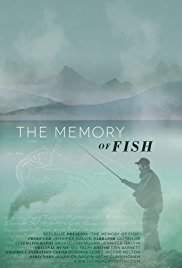
THE MEMORY OF FISH (2018, doc)

January 18, 2018

 Greetings again from the darkness. Nutritionists consistently advocate for the consumption of more salmon for a healthy diet … wild salmon, specifically. It’s one of the few dietary recommendations that hardly anyone bemoans. Most of us really enjoy a tasty grilled salmon, and the fact that it’s “good” for us puts it in the rare food category of ‘yummy and healthy’ (not an officially recognized category).  It’s what would be a perfect plan, were it not for the challenges in tracking down true wild salmon at the local supermarket. Salmon habitat and breeding grounds have been compromised and even destroyed through encroachment, and for the needs of the human race.

It’s exactly this situation, and the decades-long efforts of one man, that are the focus of this documentary from co-directors Jennifer Galvin and Sachi Cunningham. Dick Goin lives on the Olympic Peninsula in the Pacific Northwest, and he is especially connected to the Elhwa River. The film opens with his recorded voice from 1983 as he discusses his memories of the river packed with 50-60 pound salmon taking advantage of the gravel river bottom, and then how they basically disappeared when the two giant dams were built to supply power to the area.

Mr. Goin describes the river as being broken from 1911 through 2014 when the dams were in place. He emotionally describes his personal conflict at working for one of the mills being powered by the dams … even as he was fighting for their destruction in order to free the river. Working at the mill was a choice necessary for life – a difficult decision that required compromise. The dams, though engineering marvels, were the enemy of nature.

Clearly passionate, the elderly Mr. Goin speaks with humble respect and awe of the “madhouse” river. The underwater photography is effective, especially when blended with the archival footage from previous interviews Mr. Goin conducted. The video clips of the dams being destroyed are fascinating, but not nearly as gut-wrenching as the once vital Mr. Goin slowly and unsteadily makes his way back to the river, after the dam destruction, so he can personally witness the return of the salmon. As he describes the efforts of a struggling salmon as having done what she was here for … we can’t help but acknowledge the parallels with Mr. Goin’s own life.


SECRETS OF SPANISH FLORIDA (PBS doc, 2017)

December 26, 2017


Greetings again from the darkness. Most of us have been spoon-fed the same basic history of the first settlements in the United States. Sure, you’ve heard mention of the Vikings, but it’s more probable your textbooks referred to the Plymouth Rock landing and the British settlement of Jamestown as “the beginning”. This latest entry in the PBS series “Secrets of the Dead” explores the relatively recent information that has been compiled in regards to the role of Spain, France, Britain, and the Native Americans in the state of Florida some five decades prior to the Pilgrim landings.

St. Augustine, Florida has long been recognized as the oldest city in the United States, and it’s only recently that more of the details of its place in history have been discovered. It occupies a central role in the story told here by Historians, Archaeologists, and Archivists as they guide us through a timeline of events that should definitely be taught to U.S. students. It seems clear we have inherited the British version of American history, which ignores the importance of Spain and the melting pot of nationalities that first settled.

The documentary kicks off in September 1565 and carries us through the American Revolution, the War of 1812 and into the mid-19th century. We are informed of such key figures as Pedro Menendez de Aviles, Jean Ribault, Sir Francis Drake, and the most fascinating story of Francisco Menendez. The realities of British slavery vs Spanish slavery is detailed, specifically the first settlement of free Africans which occurred 125 years prior to the Emancipation Proclamation.

One of those interviewed refers to this as American History “Revised”, and it should more likely be referred to as American History “Corrected”. With so much attention and action occurring in Florida, we should all be educated on how the various battles and settlements played a role in establishing the foundation of this country. In this two hour window, PBS provides an enormous amount of new information … presented in a manner that makes sense for most anyone old enough to understand the importance.


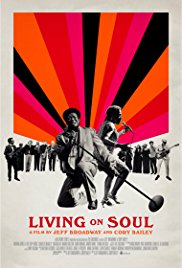
LIVING ON SOUL (2017, doc)

December 3, 2017

 Greetings again from the darkness. Barely a year after the 1969 Woodstock festival, both Jimi Hendrix and Janis Joplin were dead. Fortunately, the movie cameras were rolling to capture their electrifying performances for generations to come. A few years later, director Martin Scorsese (an assistant director on WOODSTOCK) was there to capture on film the final live performance of The Band (and many famous friends) in THE LAST WALTZ. Jump ahead to 2014 and co-directors Cory Bailey and Jeff Broadway were at the historic Apollo Theater to capture the 3 night sold out shows honoring Daptone Records.

The Harlem venue and stage has seen many memorable performances from icons such as James Brown, Ella Fitzgerald and Billie Holliday, but even according to historian Billy “Mr. Apollo” Mitchell, this was an event for the ages. Among those delivering the highest level of soul, funk, gospel and R&B music were The Dap-Kings, Charles Bradley, Naomi Shelton, Como Mamas, Antibalas, The Budos Band, and of course, the great Sharon Jones.

In addition to the energetic and energizing performances, the film mixes in some back story for many of the artists, plus insight from Daptone Records co-founders Gabe Roth (aka Bosco Mann) and Neal Sugarman (they know plenty about funk!). If the on stage dynamics weren’t so amazing to watch, we might wish for even more history being told, but not much can compete with Sharon Jones kicking off her shoes for a rousing rendition of “Get Up and Get Out”.

I promise you’ve never heard a cancer-free proclamation like the one from Ms. Jones, who was also front and center in the 2015 documentary MISS SHARON JONES!. Unfortunately, the cancer returned and she passed away a year after the Apollo shows. It should also be mentioned that Charles Bradley, a centerpiece of Daptone Records passed away just a couple of months ago (September 2017). We can celebrate their performances just as much as the mixture of black and white who perform together on stage, while the cheering and dancing in the crowd comes from a surprising blend of the same. It’s a stark reminder of how music can unify even while most of society fragments.

watch the trailer: