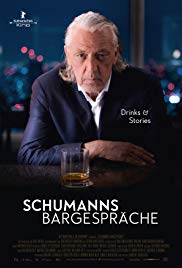
BAR TALKS BY SCHUMANN (2018, doc)

December 13, 2018

 Greetings again from the darkness. Learning from those at the top of their game is always fascinating, regardless of what their game, industry, business, or talent is. We want to hear what ‘the best’ has to say. What was their path to the pinnacle? What was their formula for success? Director Marieke Schroeder focuses her lense on Charles Schumann, the world famous bar owner, mixologist, and author.  It wouldn’t be wrong to refer to him as the guru of bars.

Mr. Schumann cuts a dashing figure with his shock of long gray hair and his colorful custom suits. His reputation precedes him as he visits world class bars in Munich, New York City, Paris, Havana, Tokyo and Vienna. Schumann has disciples throughout the industry – those that have learned the bar industry from one of his publications (including “Schumann’s Bar Book”), or by studying his own Munich establishment, Schumann’s bar.

As we travel along on his globetrotting-bar-hopping trek, it’s very interesting to see the differences and similarities in bars located thousands of miles from each other. We also get a bit of a history lesson as cocktails are tracked back to 1803, and the evolution of NYC bars from prohibition to disco to today’s more intimate neighborhood bar is noted. There are interviews with barkeeps, bar owners, a cocktail historian and a journalist, and the most interesting segments are the exchanges with Schumann himself – especially with a female bar owner who seeks his respect and acceptance.

We visit Hemingway’s Bar in Paris and learn of the namesake’s family connection, and a trip to Havana educates us on how crucial Cuba became as a U.S. supplier during prohibition. As a bonus, we learn the purity and tradition of creating Cuban rum. The Tokyo segment is quite unusual in that the best bars might have seating for less than 10 people, and the precision ice block-cutting is a rare skill to behold. Another observation from the numerous bar stops is that each bartender has their own style when it comes to the vigorous shaking of certain cocktails.

Charles Schumann is dedicated to the industry and the craft, and is now an influential spokesperson and consultant, in addition to being a well-known bar owner and mixologist.  Director Schroeder changes the music for each locale, and leaves us with a message that seems impossible to argue against: cocktails are a pleasure to drink AND create.

watch the trailer:


FREE SOLO (2018, doc)

December 4, 2018

 Greetings again from the darkness. Free Solo rock climbing is defined as climbing without use of ropes or safety gear and without a partner. The death rate is off the charts, and it’s difficult to avoid the word ‘crazy’ when describing the act. This film follows renowned free soloist Alex Honnold and his pursuit of Yosemite’s 3000 foot El Capitan wall … one of the most awe-inspiring natural rock formations in the world.

You might assume Alex is one of the “dude” spouting, gnarly-haired, free-spirited types we’ve come to associate with extreme sports, and if so, you’ll be surprised to discover a relatively quiet, kind of geeky, socially awkward thirty-something with a charming smile and reserved personality that leans towards analytical. His success has brought him enough money and recognition that he started a non-profit foundation that brings technology and facilities to impoverished areas around the globe. Alex is an unusual guy who lives in a van and eats meals right from the pan.

Despite the relatively straight-forward goal of accomplishing one of the greatest feats in rock climbing history, there is actually a lot going on in the film. We get familiar with Alex by learning some about his childhood, hearing directly from his mother, listening to his exchanges with climbing legend Tommy Caldwell (himself the subject of the upcoming documentary THE DAWN WALL), and witnessing his first real relationship with Sanni McCandless, whom he met when she attended one of his book signings. There is also a segment on Alex’s MRI where the doctor explains his amygdala requires extraordinary simulation to register on the graph. In other words, his fear factor is mostly non-existent.

The most fascinating segments include his preparations for the climb, and the conflicts about whether he wants the cameras present. Alex and the filmmakers (Jimmy Chin and Elizabeth Chai Vasarhelyi) are equally concerned about whether cameras will distract – will they cause him to make a move he might not otherwise make? The slightest error could lead to instant death, as we learn that dozens of other known climbers have perished in the last few years.

Alex’s preparations are methodical and detailed. Every nuance of El Capitan’s Free Rider path is etched in his mind and his notebook. He is armed only with a bag of rosin, tight-fitting shoes, freakish finger strength, and an other-worldly sense of balance. And of course, his laser-focused mission of perfection … anything less leads to tragedy.

National Geographic is distributing the film, and even those with a certain fear of heights or nausea should be fine watching. The camera crew, who themselves find it difficult to watch Alex in action, captures some amazing shots – whether by wrestling with a camera as they dangle from climbing rope, or perched on the ground with a powerful telescopic lense. Nature is stunning and Alex’s presence brings tension and awe. His existential accomplishments and goals are not for publicity or glory, but simply because that’s how he’s made. The film succeeds in making this point, although we can’t help but utter “crazy” at least a couple times during his momentous climb.

watch the trailer:


MARIA BY CALLAS (2018, doc)

November 29, 2018

 Greetings again from the darkness. These days, it’s inconceivable for anyone under 40 years old to think there was a time when the general public knew very little of the private life of celebrities – even those of whom they were dedicated fans. Today, it’s not uncommon for celebrities to pre-package their life, delivering behind-the-scenes details that far too many people care about. Madonna, Justin Bieber, Taylor Swift and Jennifer Lopez are just a few that have simultaneously tried to appease and manipulate fans into a feeling that they really know the person behind the superstar facade – and perhaps fulfill a fantasy of some common ground. Even more prevalent are the biopics, either in the form of a documentary (WHITNEY: CAN I BE ME) or dramatization (RAY).

Filmmaker Tom Volf realizes that the great Opera singer Maria Callas was known for two things: being a world class soprano/actress and for being difficult to work with … the ultimate diva, one might say. Working with narrator and noted mezzo-soprano Joyce DiDonato, the film expertly reinforces those two traits, and even adds a new label: narcissist. It does so by using (as the title suggests) Maria Callas’ own words taken from interviews, letters to friends, and personal diary entries.

The Greek-American Opera singer/actress was born in Brooklyn to Greek immigrants, and, as a teenager, moved to Athens with her mother and sister after her parents’ marriage fell apart. Director Volf uses a BBC TV interview with David Frost to provide a framing structure to the film, but there are also clips of other interviews shown, and of course, Ms. DiDonato’s readings of the personal Callas writings. We learn Maria was originally controlled by her mother, and then by agents and her husband. Maria attempts to explain how the “difficult” label undeservedly stuck to her for decades due almost entirely to her vocal issues/illness at one sold out performance at the New York Metropolitan. Her own words later contradict, or at least cast much doubt on the accuracy of this simplification.

Archival footage of her life … her mostly glamorous life … is shown throughout, including bits with Aristotle Onassis, filmmaker Vittorio De Sica, actor Omar Sharif, filmmaker Pier Pablo Pasolini, Grace Kelly, and renowned soprano Elvira de Hidalgo, who became Maria’s voice coach. Maria’s fairy tale life is on display: chauffeurs, standing ovations, worshipping fans, and her incredible wardrobe that made her a fashion icon of the times. Her words convey the unhappiness and loneliness she felt, even during the “good times”.

It’s the stage performances that made her famous and took her to the top, so Mr. Volk includes several full-length numbers from Verdi, Bellini, Bizet and others … her glorious talent on full display and surely to inspire awe from any first timers. So while her singing provides a welcome respite from her words, it’s those words … her own words … that seem to solidify her reputation as a diva. Though she claims to have been controlled by others, she managed to take extended breaks throughout her career, and every opera fan and director understands that vocal issues arise periodically, so it’s quite doubtful anyone would hold an extended grudge over such an occurrence.

A substantial portion of the film deals with Maria’s long-term affair with Aristotle Onassis, and how shocked she was, and betrayed she felt, when he married Jackie Kennedy without so much as a word of warning. And when his marriage to Jackie crumbled, he came scurrying back to Maria, who openly welcomed him … a sure sign of just how lonely she had been for most of her life, despite the glamour and adulation. We can debate whether the legacy of Callas might have been better off had her personal thoughts remained buried, but there is little doubt that we are sometimes better off simply enjoying the work or art of a rare talent, rather than getting to know them as a person.

watch the trailer:


UNDER THE WIRE (2018, doc)

November 15, 2018

 Greetings again from the darkness. With release dates so close together, this documentary from director Christopher Martin makes a superb companion piece to director Matthew Heineman’s film, A PRIVATE WAR – the Marie Colvin biopic with an excellent performance by Rosamund Pike. Heineman’s film really helps us understand what drove Ms. Colvin to become the most courageous and well-known war correspondent of her time, while Martin’s doc provides an incredibly up-close look at the dangerous environment that inspired her reports.

In February 2012, Ms. Colvin and photographer Paul Conroy were smuggled into Syria (journalists were prohibited at the time) and found their way to Baba Amr, an area of Homs, Syria. What they discovered was horrific. What the Assad regime was doing to its own people, its own children, was not what Marie and Paul had known as war. Instead they described it as slaughter. They were determined that “the world must see”, and for the next few days, they discovered “The Widows Basement” where women and children were trapped. They watched a relentless Dr. Mohamed desperately try to stitch the injured back together in a makeshift clinic with minimal supplies.

The film is based on the book of the same title by Paul Conroy. On the day the bombing killed Marie and French photographer Remi Ochlik, and many other civilians, it was Paul and French correspondent Edith Bouvier who survived, despite serious injuries. Mr. Conroy acts as our commentator as much of the footage he shots plays on screen. He admits to carrying the weight and responsibility of telling not just Marie’s story, but also the truth about what they witnessed … it’s a brutal war that continues today.

Some reenactments are blended with Conroy’s footage, and we fully understand the terror they felt in entering the drain pipe that acted as the artery to Baba Amr. The infamous clip of the dying baby shown on Anderson Cooper’s CNN interview with Ms. Colvin is no less devastating now. Paul admits that some described Marie as “scarier than the war we are covering”, but no one doubted her courage and drive to tell the stories of those who were being forgotten. As the Sunday Times war correspondent recognizable by her eye patch, Marie’s work with Paul is the best defense possible for our need for truthful and full journalistic coverage … it should be our protection against forces motivated to mislead or misdirect. Paul’s commentary of his extraction from Syria reinforces what courage is required not just to rush to the story, but also to find a way to tell it.

watch the trailer:


THE RECKONING: HOLLYWOOD’S WORST KEPT SECRET (2018, doc)

November 8, 2018

 Greetings again from the darkness. The #MeToo and #TimesUp movements are in full force, and if you somehow missed “what happened”, director Barry Avrich’s film will fill you in and get you caught up. As an expose’, it’s a bit late to the party, but as a look at how we got here, it’s pretty much right on the nose. The film opens with a proverbial cold slap to the face of viewers. We hear the Howard Stern interview where movie mogul Harvey Weinstein denies any type of sexual malfeasance exists in Hollywood. Weinstein, of course, is the poster boy for sexual misconduct in the movie industry. He’s a man who has kept the “casting couch” alive for three decades; although as we’ve learned, it certainly wasn’t Weinstein acting alone (unfortunately).

Much of the film is focused on Weinstein, and justifiably so. He is described as talented AND a monster – also as cunning, witty, brilliant, and devastating. This man was such a megalomaniac that he structured his business around two things: making money on independent films and using his position of power and influence to put women in compromising and unsafe situations. He went so far as to utilize “honey pots” – female assistants who could gain the trust of the actresses and help lure them to his web of sleaze. One of these former assistants, Zelda Perkins, is interviewed and sheds light on the process.

Many others are interviewed for the film. Writers, reporters, agents, lawyers, a psychologist, and actresses all tell their stories and insight. Weinstein is not the only name that’s named. The film also touches on: Donald Trump, Bill Clinton, Bill Cosby, Bill O’Reilly, Woody Allen, Louis CK, Aziz Ansari, Olympic Doctor Nassar … and even Pepe Le Pew (from Looney Tunes). A segment is dedicated to the audacity and despicable actions of director James Toback (known as the dream killer), and Tippi Hedren and Joan Collins talk about “that’s the way it’s always been”. We learn Mack Sennett is credited as being the founding father of the casting couch (in the early 1900’s), though numerous studio heads, producers and directors have since preyed on the ambitions of wannabe starlets.

In an awkward segment, acting legend Meryl Streep admits “I’m taking some hits” after having been targeted by street artist Sabo with #SheKnew posters. If nothing else, this underscores just how difficult it has been for women to speak up … at least until now. Dozens and dozens of women have come forward with their stories, leaving us hopeful that this blight on the industry might be over for good. Leonard Cohen’s biting song “Everybody Knows” is put to good use here.

When one of his victims recalls the story where he gifted her a copy of Fitzgeralds’ “The Last Tycoon”, and Weinstein bluntly stated, “that’s me”, we begin to understand that this monster was not just about control … he was out of control. He lost his barometer on right and wrong, and it became about what he was entitled to in his position at the top of the movie making world. Thanks to some courageous women, he no longer has that power position, and with forums like this film from director Avrich, it’s likely no other predator in this industry will ever again be able to abuse the power to the extent we’ve seen from Harvey Weinstein.

watch the trailer:


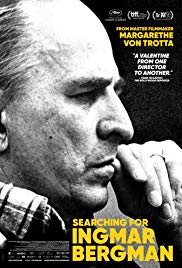
SEARCHING FOR INGMAR BERGMAN (2018, doc)

November 2, 2018

 Greetings again from the darkness. Despite his being one of the most productive and influential filmmakers of all-time, it’s understandable if you are concerned that a biopic of Ingmar Bergman might be a bit dry or difficult to connect with … you know, kind of like his movies. The happy truth is that Margarethe von Trotta, Felix Moeller, and Bettina Bohler have collaborated on this very interesting dig inside the mind and process of this remarkable Swedish artist.

Mr. Bergman’s best known films include: THE SEVENTH SEAL (1957), WILD STRAWBERRIES (1957), PERSONA (1966), CRIES AND WHISPERS (1972), SCENES FROM A MARRIAGE (1973), FANNY AND ALEXANDER (1982). It’s likely you have either seen all of these or none, but either way, as long as you have some interest in the history of cinema, you’ll be hooked on the multiple interviews and clips provided here.

Among those interviewed are actress Liv Ullman (she turns 80 this year), who appeared in 10 (she says 11) Bergman films. She cheerfully recalls the first time she met the director and how it led to their first collaboration, PERSONA. We also hear insight and personal stories from director and fellow Swede Ruben Ostlund (director of the terrific FORCE MAJEURE), Swedish documentarian Stig Bjorkman, and two of Bergman’s sons, Daniel and Ingmar Jr. On the personal side, we learn the legendary filmmaker was son to the Parson of a local church, married 5 different women and fathered 9 children via 6 women (his 5 wives plus Liv Ullmann), and that he wasn’t close to any of his children. He was described as viewing childhood through his own, rather than that of his kids. On his 60th birthday, there was an unusual gathering of all 9 children, many who had never previously met.

Maybe some of this is explained by Bergman’s own definition of art as “therapy for the artist”. This makes sense as so many discuss his insecurities and his own concerns with never being good enough. This despite a career of 50 plus films (many of which are studied in film classes) and nearly three times that many stage productions. Being wrongfully accused of tax evasion in 1976 affected his health and career, as well as his love of homeland Sweden. He moved to Germany before living out most of his life on the island of Faro – where he also filmed many movies.

The interviews presented here by Ms. Von Trotta (herself an accomplished filmmaker and actress) are each informative, though additional interviews from Max von Sydow, Bibi Andersson (each appeared in 13 Bergman movies), and Woody Allen (the American filmmaker most closely associated with Bergman) would not just have added flavor, but were also kind of expected. The end result is that we view Bergman as the ultimate brooder, and one who had much respect and admiration for actors. Though he passed away in 2007 (the same day as director Antonioni), we are now even more convinced that Ingmar Bergman was a master of both the written word and on screen imagery.

watch the trailer:


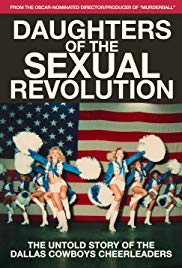
DAUGHTERS OF THE SEXUAL REVOLUTION: THE UNTOLD STORY OF THE DALLAS COWBOYS CHEERLEADERS (2018)

November 1, 2018

 Greetings again from the darkness. The story kicks off (at least according to legend), at a 1967 Dallas Cowboys home game, with adult entertainer Bubbles Cash walking down the aisle holding her cotton candy and catching the eye of many at the game … including team president Tex Schramm. This was a mere 4 years after the assassination of President Kennedy made Dallas the most hated city in America. Ever the opportunistic salesman and promoter, Schramm took note and decided a shift from high school and college cheerleaders might prove beneficial.

Director Dana Adam Shapiro was nominated for an Oscar for his 2005 documentary MURDERBALL, and here he provides a multi-faceted film: a biopic of Suzanne Mitchell, a forum for former cheerleaders to tell their story, and a socio-political look at a bygone era – one with some connective tissue to the modern day world.

Suzanne Mitchell was Tex Schramm’s secretary, and the director of the Dallas Cowboys Cheerleaders (DCC) from 1976-1989. She has been described as a den mother and dictator, one who ran a tight (almost militaristic) ship and also cared very much for the ladies in her organization. Although she has passed away, we get many clips of her interviews over the years. By the end, we believe we know just who this woman was and what she stood for. She was committed to making sure the DCC were proper ambassadors for the Dallas Cowboys organization, while also making sure they were on the right path as people.

This was the ultimate blend of sex appeal and feminism. Every former cheerleader interviewed here makes it clear they were proud of their time with DCC, and that the team and Ms. Mitchell had been a positive influence on their lives. What makes this so fascinating is we are also provided recollections of the pushback the team received from religious groups (it is the bible belt after all) and feminists … claiming exploitation and degradation. It’s not so different than today where so many try to thrust their opinions and beliefs on others – jumping to conclusions about what harm is being done either to the individual or society as a whole.

In addition to the interviews with Ms. Mitchell and the cheerleaders, two knowledgeable writers provide more insight: Mary Candace Evans, author of “A Decade of Dreams: Dallas Cowboys Cheerleaders, and Joe Nick Patoski, author of “The Dallas Cowboys: The Outrageous History of the Biggest, Loudest, Most Hated, Best Loved Football Team in America”. These two share much of the research for their books, and also provide perspective on the era, and just what an impact DCC had on the team, the league and TV entertainment in general. Also interviewed is long time local sportscaster and former Dallas Cowboys announcer Dale Hansen. He provides the local flavor, as well as a personal story about crossing Ms. Mitchell, known as “The Iron Butterfly”.

We learn that CBS made the conscious decision to feature the cheerleaders during the Super Bowl X telecast, and the infamous on screen “wink” is credited with creating the explosion of interest in DCC. What followed were TV appearances (including “The Love Boat”), charity events, other promotional events, USO tours, and many hospital visits to the bedsides of sick children. All of this occurred under the burden of numerous rules created and enforced by Ms. Mitchell. She and Tex Schramm were committed to ensuring this was an inclusive and diverse organization for women of all backgrounds and race. At the same time, the rules regarding weight and body shape were tough and challenging, and the pay was minimal.

TV shows, magazine covers, posters, and calendars all contributed to the mystique and popularity of the cheerleaders – the perfect mixture of innocence and sex appeal. Perfect that is, until the organization was exploited by the porn industry (DEBBIE DOES DALLAS) and Playboy magazine. Lawsuits became prevalent.

Ms. Mitchell’s ability to hold steadfast to her beliefs and standards for what the DCC represent is quite impressive and easy to respect … a respect that grows even stronger when we learn she walked out only 4 months after Jerry Jones bought the team. A new culture arrived and it was one she, and a number of cheerleaders, refused to be a part of. You may think you know the story … you may think you know the cheerleader “types” … but director Shapiro’s film is likely to teach you a few things. But whatever you do, don’t chew gum!

watch the trailer:


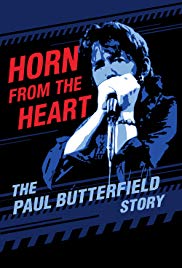
HORN FROM THE HEART: THE PAUL BUTTERFIELD STORY (2018, doc)

October 21, 2018

 Greetings again from the darkness. Even the grainy concert footage and somewhat muffled audio of the opening clip do nothing to offset the raw energy and power of Paul Butterfield and his blues harp. If you are a blues lover, you are already familiar with his music, and you’ll likely learn more about the man. If the blues aren’t your thing, it’s still fascinating to see someone so talented and committed to their art.

Documentarian John Anderson does a nice job of blending interviews from family members and band members with video clips and historical data, mostly in chronological order. Mr. Anderson also acted as editor of “The Super Bowl Shuffle” video of the 1985 Chicago Bears, as well as numerous projects with Brian Wilson of The Beach Boys. This time out, he captures the essence of a musical genius not nearly enough people have tuned in to.

Broken into segments (1942-65, 1966-71, 1972-1987), the film takes us through Butterfield’s childhood in the Hyde Park area of Chicago, and through his final on stage appearance just a couple of weeks before his death. Along the way, we hear from bandmates like Elvin Bishop and Nick Gravenites, Paul’s two sons and his brother Peter, as well as his former wife Kathryn, who describes him as the love of her life. One of Paul’s sons shows us the now-vacant lot where the club once stood in which a teenage Paul played with the likes of Howlin’ Wolf. It helps us understand where his love for the blues developed, how he formed one of the earliest integrated bands (with Jerome Arnold and Sam Lay), and how the great Muddy Waters became his life-long mentor and friend.

We get to hear the earliest known recording of Butterfield from 1962, and then footage of him at Newport Folk Festival in 1965, Monterrey Pop Festival in 1967 (where he debuted a horns section), and of course, Woodstock in 1969. It’s the 1965 story that is perhaps the most interesting, as it took an impassioned plea from Peter Yarrow (of Peter, Paul, and Mary) to get Butterfield a spot in the festival, and then he and his band electrified (pun intended) the folk audience with powerhouse blues. This is the same festival where Bob Dylan shocked the audience by “going electric” (with Butterfield’s band as back-up). The music landscape shifted from the messages of folk music to a more rebellious and harder sound.

Other interviews include David Sanborn, Al Kooper and Bonnie Raitt … each more effusive than the other when discussing Butterfield’s talent and stage presence. We see Butterfield’s own high school yearbook quote, “I think I’m better than those trying to reform me”, and we hear a clip from his “Blues Harmonica Master Class” recorded in 1984 (released in 1997).  It was 1976 when Butterfield joined The Band’s farewell concert for “The Last Waltz” (movie and album), and we hear about Paul’s continued and numerous efforts to find the right sound and band in the second half of his career.

Legendary Producer Paul Rothchild, known for his work with The Doors and Janis Joplin, certainly recognized greatness in Butterfield and helped with some of his best recordings. Sadly, the 1980’s brought about severe peritonitis which led to various stomach and intestinal surgeries for Butterfield, which in turn, led to alcoholism and drug abuse. We get a clip of Butterfield on stage with Stevie Ray Vaughan in 1987, mere days before Paul died of a heroin overdose at age 44. Fortunately for us, the musical recordings live on for a man often described as a force of nature on the blues harp.

watch the trailer:


LIVING IN THE FUTURE’S PAST (2018, doc)

October 2, 2018

 Greetings again from the darkness. Director Susan Kucera and producer/narrator Jeff Bridges are smart enough to avoid cramming another preachy, guilt-laden, ‘destroying the world’ documentary down our movie-going throats (which is where popcorn belongs). Instead, they deliver a thought-provoking look at who we are, where we have come from, and where are we headed based on our actions and decisions of today.

Breath-taking photography is on display throughout the film – much of it in the beautiful National Geographic style we have become spoiled with over the years. Some of it is even more dramatic and impactful. There are images of the ocean, the earth and of space. When Bridges’ familiar and warm voice tells us “The sky itself is not the limit”, we realize this movie is something different than expected.

Many experts are paraded out, and they come from various segments of society: Ecological writer and researcher Timothy Morton, former NATO Supreme Allied Commander General Wesley Clark (if I messed up that title, I hope he forgives me), Ethnobotanist (had to look that up) Mark Plotkin, Astronaut Piers Sellers (since deceased), Physicist Leonard Mlodinow, as well as other scientists, politicians, and professors. The conceptual links between evolution and energy are a bit esoteric at first, but explanations and examples bring clarification.

Perhaps the most interesting aspect of the presentation is the blend of the scientific with the philosophical. The theory that what we “need” or “desire” drives our motivation on decisions and actions seems more than plausible. It is explained that we are “cultural beings” and our inherent need for group identity leads to the mass consumerism of society.

The difference between adapting to our environment versus controlling it, is made clear by the comparison of bees and ants to our own mega-growth cities. Mr. Bridges’ long time home was recently destroyed by the Montecito mudslides, but that fact is not part of the film. Ms. Kucera’s film is not a lecture about climate change or how humans are ruining the planet, although it is certainly intimated. Instead, this is more about humanity – what makes us tick and what environmental challenges do we face now and in the future? How do we shift our decision-making from based on our own comfort and convenience to long term sustainability of our species (and others)? The film is presented well, thought-provoking, and yes, quite beautiful to look at.

watch the trailer:


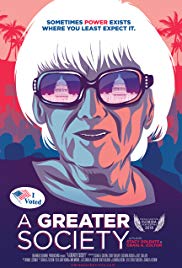
A GREATER SOCIETY (2018, doc)

September 22, 2018

 Greetings again from the darkness. President Lyndon Johnson used the term “The Great Society” to describe the series of domestic programs designed to minimize poverty and racial discrimination, and offset the medical obligations of seniors (through Medicare and Medicaid) in the U.S. It was compared to FDR’s “The New Deal” (including the Social Security Act of 1935). Co-directors Craig Colton and Stacy Goldate titled their film as a twist on these programs, because the focus is the actions of some senior citizens who fight for the programs that are needed to protect their demography.

The Wynmoor Retirement Community in Broward County, Florida was developed in 1973, and marketed to seniors in New York and the entire northeast as a wonderful place to live out those golden years in warm weather and with modern amenities. A funny thing happened along the way … the residents of Wynmoor changed the politics of the area. And therein lies the most important message of the film: senior citizens can wield substantial political power through organization and commitment. Keep in mind that many of these folks are more than 90 years old. One of the most interesting that we meet is Rose. She was born in 1916 during Woodrow Wilson’s term in office.

Those we meet range from children of the depression era to children of the 60’s, and though that’s quite a diversity in sociological upbringings, it’s clear that they embrace the need to engage politically … even, and perhaps especially, these days. The cameras follow these men and (mostly) women as they strive to “get out the vote” for the 2014 midterm elections and the Florida gubernatorial race between Rick Scott and Charlie Crist.

Most of those we get to know are hardcore democrats, but there is one conservative gentlemen thrown in for contrast. Despite his being well spoken and educated on the issues, he gets little camera time. Co-directors Colton and Goldate are both highly successful editors, mostly on TV projects. Their expertise in how to put a movie together is obvious, as even though it’s slowly paced, that pace seems to mirror the process of these volunteers so dedicated to the political cause.

Broward County Public defender Howard Finkelstein offers recurring commentary during the film, but it’s really the Wynmoor residents who are the most interesting. We see the generational changes occurring within the community as new residents replace the older ones. The New York Jewish community is fading while there is an increased Latino presence. The challenge is for Wynmoor to retain the political power and dedication that has long defined it. In what is really a tribute to their efforts, the film acts as a kind of “how to” in gaining community involvement; though it’s Rose who gets the last word by reminding us of the message of “My brother’s keeper”.

watch the trailer: