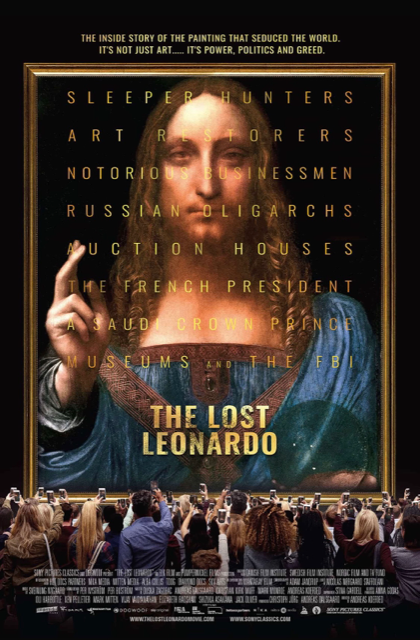
 Greetings again from the darkness. This is an unusual documentary from Andreas Keofoed. The first part examines the attempts to solve the origin mystery of a discovered painting, while the second half takes us inside the mysterious money side of the collectible art world. Both mysteries are fascinating on their own, and they blend together to track the 15 year history of a painting that may have come from the brushes of Leonardo da Vinci more than 600 years ago. Or it may not have.
We first meet Alexander Parish, a self-described “Sleeper Hunter” – one always on the lookout to purchase undervalued artwork. “That’s what I do”, states Parish. He’s the one who found the Salvator Mundi painting at a 2005 New Orleans art auction. He and his partner, Robert Simon, paid $1175 for the painting, though they had no idea what they were getting. Director Keofoed spoils any surprise, by delivering an opening credit graphic that traces the painting’s international travels over the next dozen years by itemizing the sales: $1175 in 2005, $83 million in 2013, $127.5 million in 2013, and $450 million in 2017.
Part 1: The Art Game focuses on the examination, investigation, and restoration of the painting. On one hand we have restorer Dianne Modestini meticulously working her magic to discover what she believes is without question, a da Vinci painting. On the other hand we have noted art critic Jerry Salz who is less skeptical and more mocking in his conclusion that not only is it not from da Vinci, it’s not even a ‘good’ painting. A great deal of effort goes into formulating the painting’s provenance – the family tree of ownership. This is crucial to the process in establishing whether it belongs with one of the 15 known Leonardo paintings, or perhaps, at best, from the work of his pupils.
Beginning with Part 2: The Art Game, the film shifts focus from the origin of ‘The Male Mona Lisa’ (as it was dubbed) to its sale and subsequent flip, and the associated investigation by the CIA into possible money laundering. It’s at this point where we meet Yves Bouvier and learn of his purchase and flip to Russian Oligarch Dmitry Rybolovlev, who is none too happy once he puts the pieces of the transaction together. The use of Freeports by the rich is also discussed. These high-security fortresses allow the owners to avoid taxes by maintaining a state of “in transit”. It’s also in this section where the role of Christie’s auction house comes into play and we learn of the brilliant hype/marketing of ‘The Lost da Vinci’.
When spending $450 million on an object, most of us would likely verify the item’s authenticity. But then most of us aren’t the Crown Prince of Saudi Arabia. Part 3: The Global Game details how the authenticity of the painting might not even matter when the purpose is to move or protect money. A “dark transaction” allows the purchase to remain anonymous, and when the identity is discovered, it’s clear that the art world is now about money, not art.
For some purists, the question of authenticity remains for the Salvator Mundi, and restorer Modestini remains haunted by her conclusion. The art of the deal is clearly less about the art and more about the deal. Leonardo da Vinci’s legacy is not impacted by this debate, but the impact of the painting on many other folks is undeniable … and it has served a purpose as an eye-opener and economics lesson for the rest of us.
Opens in select theaters on August 27, 2021


 Posted by David Ferguson
 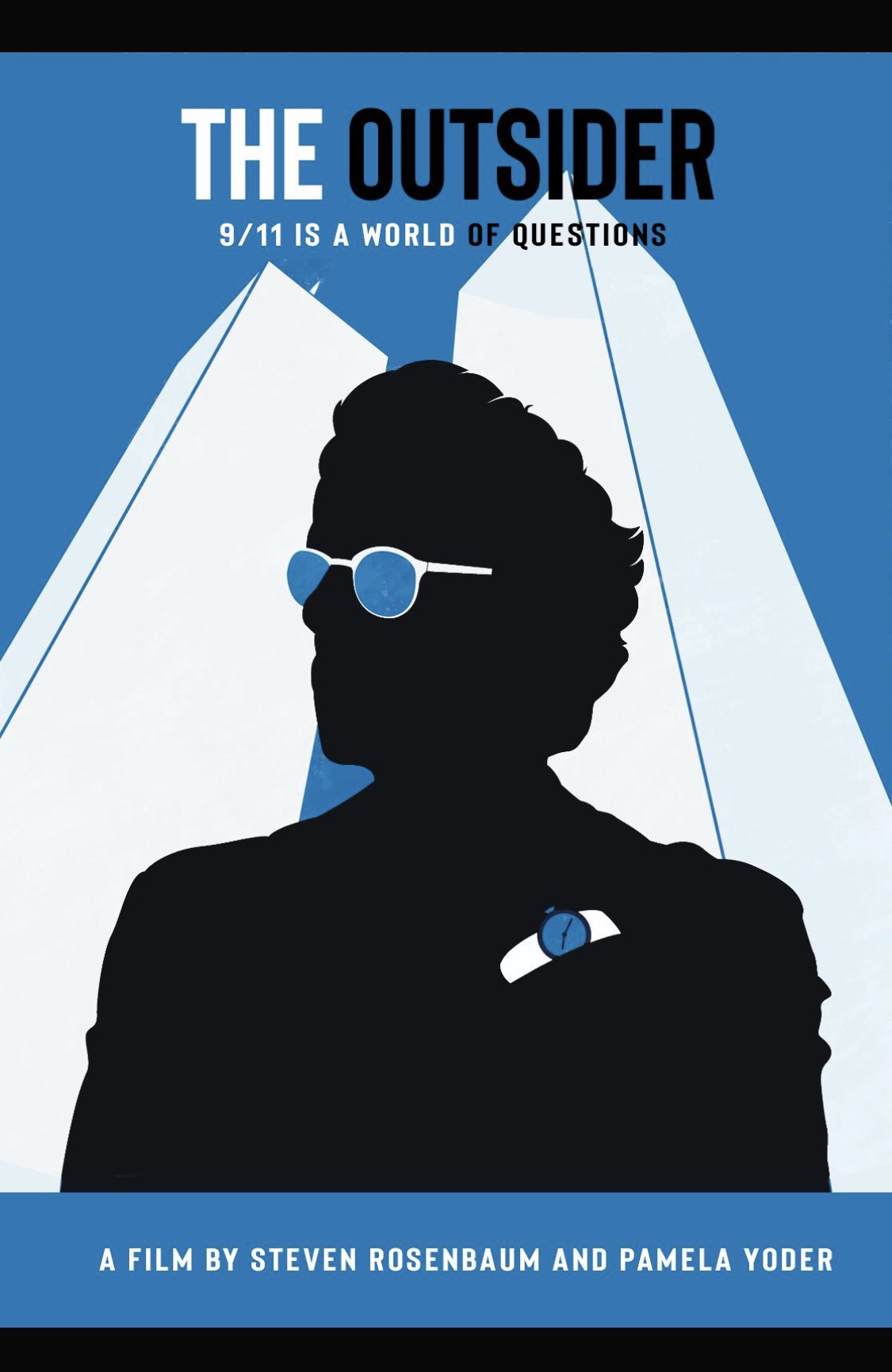 Greetings again from the darkness. September 11, 2001 was “a blue sky day” in New York City. Until it wasn’t. Co-directors Pamela Yoder and Steven Rosenbaum previously collaborated on
  Greetings again from the darkness. Nicholas Bruckman provides an intimate profile of a fascinating man, Ady Barkan, a brilliant and relentless advocate for health care rights. Barkan’s ALS diagnosis and commitment to cause is interesting enough to carry the film, but by following Barkan, the film serves a dual purpose of educating us on activism and political maneuverings.
 Greetings again from the darkness. The Holocaust and Nazi Germany. No subjects are likely even close in regards to the number of documentaries on topic. Yet somehow, there always seems to be more to mine. Co-directors Peppa Epperline and Michael Tucker have based their project on the 1978 book by Sebastian Haffner. The objective is to pull back the curtain on the self-conceit at the center of the cult of Hitler. How did this happen? How has it been repeated? How do we expose this without adding to the fascination of Hitler? It’s quite a conundrum, and one not easily navigated.
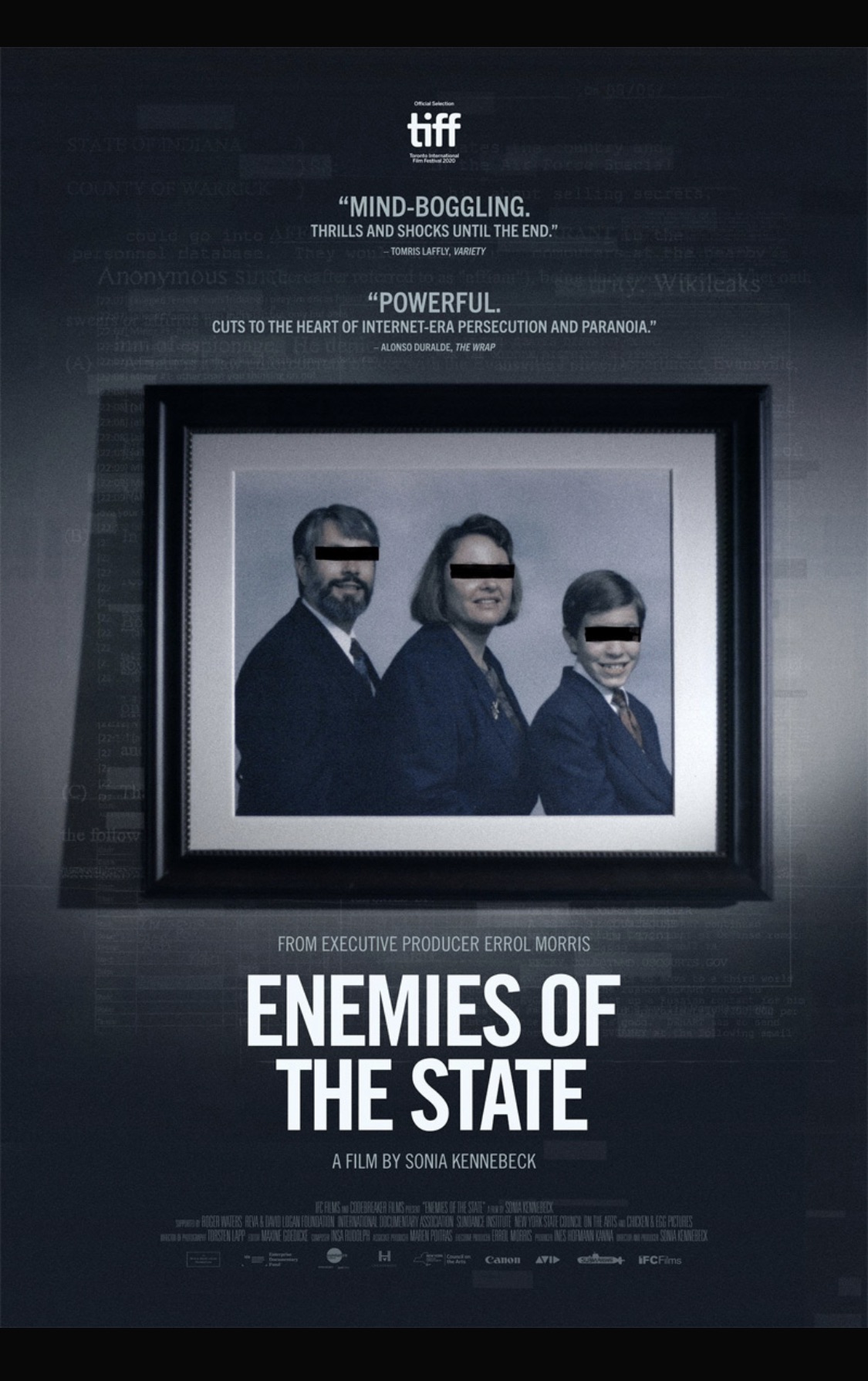 Greetings again from the darkness. True Crime documentaries have flooded the market, yet the best ones are still enthralling. Toss in a wicked conspiracy theory, a family with a military background and strong religious beliefs, and accusations against the federal government, well then, you’ve now attained a whole new level of twisting and turning intrigue. Documentarian Sonia Kennebeck opens her film with the Oscar Wilde quote: “The truth is rarely pure and never simple”. By the end, neither ‘simple’ nor ‘pure’ will be words you use to describe the saga of Matt DeHart.
 Greetings again from the darkness. Character is revealed in the most unexpected places, and often at a time when one has a bit more freedom than usual. Like the mosh pit at a music festival. You may wonder why I’m disgusted and saddened at what stuck with me after this documentary. Unfortunately, it wasn’t the music. Instead the takeaway from Woodstock 99 is that far too many young men easily succumbed to aggressive and animalistic behavior, and worse, seized the opportunity to abuse women who were simply trying to have a good time. Of course, this was 22 years ago. Maybe we feel better about young men today.
 Greetings again from the darkness. Remember when … in 1993 … Chris Farley
  Greetings again from the darkness. As the film begins, we understand there will be no happy ending. Anthony Bourdain committed suicide by hanging in 2018 at the age of 61. As it was reported, everyone was shocked. Oscar winning documentarian Morgan Neville (
 Greetings again from the darkness. The old adage goes, “There’s someone for everyone.” Even for the outsiders and misfits. But what if there is only one? First heard by Navy research in 1989, “the Loneliest Whale in the World” has been named “52” due to his unique 52 Hertz call. He has never been seen and his song was last heard in 2003 … so there is no guarantee he’s still alive. Director Joshua Zemen has long been fascinated by the legend of 52 – a majestic creature assumed to be living in isolation since no other whales can hear his call.
 Greetings again from the darkness. Will the real murdering Carlos please come forward? Unfortunately it’s too late for the other one. Store clerk Wanda Lopez was murdered in Corpus Christi, Texas one night in 1983. The recording of her 911 call is brief, but documents her identifying the assailant as Hispanic, and noting that he was brandishing a knife … the knife the man would use to take her life.
 Movie Reviews from the Dark