TITANIC (1997, 3D-2012)

April 8, 2012

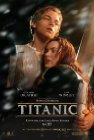
 Greetings again from the darkness. Of course I saw this one a couple of times when it was first released in 1997. Having only watched it once since, I was happy to hear it would get a re-release on its 15th anniversary … even if the marketing hook was the post-production 3D. My thought was with James Cameron working his technical magic, the 3D would be fine, and maybe even add to the spectacle of the sinking ship. After all, he was the mastermind behind Avatar, which with Hugo, are the only two films (in my opinion) that haven’t been weakened with 3D technology.

Unfortunately, I can’t overstate my disappointment in the 3D for Titanic. The colors and lighting are destroyed. When we first see young Rose (Kate Winslet) arrive to board the majestic ocean liner, her lavender hat appears almost gray through the 3D glasses. And later, the stunning crimson Renault, where Rose and Jack (Leonardo DiCaprio) get to “know” each other, appears dull and darkened. Additionally, so many face shots are darkened, rather than illuminated by the beautiful fixtures that adorn Titanic. I was so saddened to see such dullness on top of such greatness. Sure, there were a couple of times where the 3D gave a boost to a special effect, but the film is so beautifully made and such a technical marvel, that the impact is minimal to the positive.

What I will say is that despite my frustration with the technology, I do hope a new generation is introduced to the film. Personally, I am no fan of the love story between Jack and Rose. However, it is such a delight to see the young, eager versions of Little Leo and Kate as they go about their antics. They were 22 and 21 respectively during filming, and we now know them as mature actors and major movie stars. That wasn’t the case when Titanic first premiered.

The real genius of this film is two fold: the story-telling and the technical achievement. Gloria Stuart stars as 101 yr old Rose and she is used to perfection in telling the personal story of Titanic. Her love story with Jack allows director Cameron to show off the amazing ship from all angles … first class, third class, dining rooms and engine rooms. She also allows the viewer to connect with the characters on a personal level. The technical aspect is even more astounding. Sets, models, CGI, and documentary footage are all blended to form a cohesive presentation of one of the most dramatic events of the past 100 years.

Here are a few notes of interest regarding the movie and those involved. The movie was number one at the box office for 15 consecutive weeks and grossed more than $1.8 billion … a record that stood until Cameron’s Avatar eclipsed it. Cameron was already an established sci-fi director with Terminator I & II and Aliens, but he almost had the plug pulled by the production company due to cost overruns. Matthew McConaughey was the producer’s first choice for Jack, but (fortunately) Cameron held firm for DiCaprio. The elderly couple hugging each other in bed as the ship sinks were based on the Strauss’ who owned the Macy’s department store chain. And yes, there were Astor’s and Guggenheim’s onboard when it went down.  Kate Winslet (Best Actress) and Gloria Stuart (Best Supporting Actress) received nominations for playing the same character (Rose). If you have seen the movie before, pay particular attention to the secondary characters … the wardrobes and acting are tremendous: Frances Fisher as Rose’s mother, Kathy Bates as the “Unsinkable” Molly Brown, Billy Zane as the fiancé, David Warner as his henchman, Bernard Hill as the Captain, Victor Garber as the architect, and Jonathan Hyde as the sleazy ship owner. Also catch Suzy Amis in one of her last acting jobs before becoming Mrs. James Cameron … she plays the granddaughter to “old” Rose.

This is an historic film version of an historic event and should be seen by all movie lovers. Some of it is a bit hokey, but if you doubt the technical achievement, compare it to A Night to Remember, the 1958 version of the Titanic story.  And depending on your taste, crank up the closing credits and listen to Celine Dion belt out the Oscar winning Best Song.  She is, after all, “the greatest singer in the world” (an SNL gag).

watch the trailer for “the ship of dreams”:


THE KILLING (1956) revisited

March 9, 2012

 Greetings again from the darkness. What a treat to see this one on the big screen, some 56 years after its release. This is famed director Stanley Kubrick‘s first real feature-length film and is a quasi-film noir near the end of that genre’s run. You undoubtedly know Kubrick’s more famous work on 2001: A Space Odyssey, A Clockwork Orange, and The Shining, among others. His amazing eye with the camera is on full display here, but this provides quite a different look from his later works.

Sterling Hayden stars as Johnny, the leader of a gang who plans to rob a racetrack of 2 million dollars. At its core, this is a traditional heist film, but it is presented in anything but a traditional manner. The non-linear timeline and constant flashbacks and flash-forwards influenced many future filmmakers such as Quentin Tarantino and Christopher Nolan. For the era, this was incredibly unique and a bit experimental. In fact, the studio forced Kubrick to add the narrator post-production to make it easier for the viewer to follow. The narrator is Art Gilmore, a prolific voice actor, who was heard in numerous movies, TV shows and previews.

 Support work is provided by many familiar character actors that we all recognize. Elisha Cook is best known for his work in The Maltese Falcon and Vince Edwards gained fame as TV’s “Ben Casey”. There are two actresses of note here. Marie Windsor plays the scheming, double-crossing wife/girlfriend whom Hayden’s character claims has a dollar sign right where her heart should be. Ms. Windsor also appeared in Swamp Women, director Roger Corman‘s directorial debut. Coleen Gray plays Hayden’s loyal girlfriend. Ms. Gray had a long, prolific career as an actress, but never achieved the stardom that many predicted.

 As viewers, we are included in most of the strategy involved in the heist and recognize many of the details as they occur. One of the more fascinating scenes is a bar fight featuring Kola Kwariani. This is a very unusually staged fight and is actually quite humorous today, with a touch of The Three Stooges. This was Mr. Kwariani’s only film appearance and it’s quite memorable for a professional wrestler! Another sequence that really stands out features Timothy Carey as a sharpshooter. His speech pattern is a bit bizarre, but we never doubt his commitment to the cause. Carey’s character has a very daring exchange with a race track security guard that is even uncomfortable so many years later.

Kubrick was groomed as a still photographer and his expert eye is obvious in each of his films. His approach to filming the horse racing scenes is spectacular, and stands in contrast to his love of stressed faces in close-ups. Supposedly Rodney Dangerfield appears as an extra during the bar fight, but I missed him. Probably need the DVD for that! This one is certainly worth checking out for a glimpse into early Kubrick and the screen magnetism of Sterling Hayden … who 16 years later (as Sgt McClusky) would break the jaw of Michael Corleone with a single punch, and later be the victim of one of Hollywood’s all-time mob hit scenes in Louis restaurant.

SEE THIS MOVIE IF: you are interested in what early Kubrick looks like compared to his later hits OR you want to see Sterling Hayden in prime form

SKIP THIS MOVIE IF: the gangster and heist films of the 40’s and 50’s aren’t to your taste

see the original trailer:


THE GODFATHER (1972) revisited

March 3, 2012
 Black screen. Cue the lone trumpet’s haunting opening notes of Nino Rota‘s theme.  Close up of a suffering man.  “I believe in America.” That, my friends, is a powerful opening to a truly great film.
 
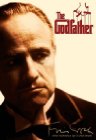
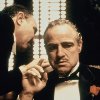
It’s been 40 years since it’s original release, and this latest remastering looked and sounded amazing on Cinemark’s largest screen. Following those opening moments, we get our first look at Marlon Brando as Vito Corleone. On this screen, it was almost like seeing him for the first time … a disquieting figure that oozes power and commands respect.
 
There is no need for another review of this truly classic American film.  Instead, this will offer a few observations (possible spoilers) and notes of interest … combined with the highest possible recommendation to watch this one again!
 
At its core, author Mario Puzo‘s story is about power, loyalty, trust and family.  We witness what happens when one is viewed as having too much power. Loyalty is rewarded, and disloyalty brings the harshest possible penalty.  Trust is gained over time, but lost in a flash. And family is the most complex subject of all.
 
 Over the years, there have been a few movies with more star-studded casts, but it’s difficult to imagine a more perfectly selected cast: Marlon Brando, James Caan, Robert Duvall, Al Pacino, John Cazale, Sterling Hayden, Richard Conte, Diane Keaton, Talia Shire, Abe Vigoda.  Each of these actors have graced the screen in numerous roles, but for this three hour film, they become Corleones, associates, enemies, etc.  
 
There were a few things that jumped out at me during this viewing.  The use of oranges (the fruit) contradicts the health benefits preached by the medical profession. Every time we see a bowl of fruit, a fruit stand or someone peeling, eating, or selecting an orange, a scene of doom (usually quite violent) is soon to follow.  Carlo is even wearing an orange suit when Sonny (James Caan) shows up and paints the sidewalk with him. Don’t miss the billboard featuring oranges that Sonny drives by just before he pulls up to the toll booth. Brando’s final scene is preceded by him playfully scaring his grandson with an orange peel.  I understand the importance of Vitamin C, but I think I’ll stick with supplements!
 
 It’s very interesting to note the camera angles throughout the movie.  In an unusual approach, director Francis Ford Coppola uses an “eye-level” camera almost exclusively.  This gives the viewer the feeling of being part of the scene, especially during the small group meetings within Corleone’s dimly lit office.  The few exceptions are the overhead shot of Corleone being gunned down, the Los Angeles cityscape, and a couple of shots at the wedding to emphasize the scale of the event.
 
The famous “Mattress Sequence” was put together by George Lucas (Star Wars fame) for his friend Coppola.  This is the segment after the Louis Restaurant shooting where we get a montage of B&W crime photos and newspaper headlines. These are real life crime photos and one of the shots is of Frank Nitti, Al Capone’s trusted enforcer.
 
It’s quite fascinating to recognize how many “classic” lines of dialogue sprung from the movie, especially when you notice the minimalistic approach to dialogue used by Puzo and Coppola.  Much of the communication is non-verbal body language, glances, nods and shrugs … Brando, especially, is a master at this.
 
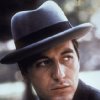
 One of the more remarkable facets of the film is the transformation of Michael (Al Pacino).  We first see him as a dashing war hero relaxing at the wedding with his girlfriend (a baby-faced Diane Keaton). He is very laid back and kind of cocky with the thought that he can rise above the dirty family business. He sees himself as better than that. Watch the subtle changes in his appearance … his hair, his posture, his eyes, even his hat!  As great as Brando is as the Don, it’s Pacino’s performance that really takes the film to an unprecedented level.  It’s really fun to compare Michael’s even-keeled, calm processing approach to the high-strung, act-now-think-later approach of his brother Sonny.
 
 The final note involves actor John Cazale. Here (and in part 2) he plays Fredo as a frightened, insecure puppy who is desperate to find his place.  Imagine your father being Vito Corleone and your brothers are Sonny and Michael.  It’s to be expected that you might be overlooked and overpowered in conversation. The really interesting note about Cazale is that this was his feature film debut.  He went on to make 4 more films before cancer took his life in 1978.  Cazale made 5 films and all 5 were nominated for Best Picture (both Godfather films, The Conversation, Dog Day Afternoon, The Deer Hunter).  He was engaged to Meryl Streep at the time of his death.
 
So the real point here is that if you ever doubt the magic and power of movies … shut off your phone, close the blinds, take the cannoli, and let The Godfather absorb your thoughts.  While you are at it, remember … it’s not personal, it’s business (only you shouldn’t really believe that).
 
Thanks to Cinemark for making me an offer I couldn’t refuse.

KISS ME DEADLY (1955) revisited

February 12, 2012

 Greetings again from the darkness. This one showed up near the finish line of the classic Film Noir era, and has some features that make it stand out: unusual female characters, a quasi-parody feel, and a twisty ending unlike others from the genre. Based loosely on the Mickey Spillane pulp novel, the screenplay comes from A.I. Bezzerides, who is best known as the creator of the TV series “The Big Valley”. The biggest impact comes from director Robert Aldrich.

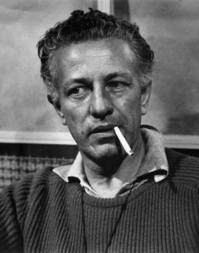
Aldrich (pictured below) is a bit under-appreciated in Hollywood history having also directed Whatever Happened to Baby Jane; Hush, Hush, Sweet Charlotte; The Dirty Dozen; and The Longest Yard (the good one). Here he turns up the intensity on the Private Investigator story by having Mike Hammer (a terrific Ralph Meeker) be quite a bit more forceful and aggressive than Marlowe, Spade and the other famous movie PI’s.

The film starts quite abruptly with one of the more fascinating beginnings in all of cinema. A panicky woman is running barefoot down a highway at night, wearing nothing but a bathrobe. That woman is Cloris Leachman (her screen debut) and she nearly causes Hammer to wreck his pristine Jaguar. Their relationship doesn’t end well, but it leads to a very unique torture scene that is almost entirely out the viewer’s sight line. Still, we quickly realize Hammer is in some deep trouble and he’s not the kind to let it be.

Two other very interesting female characters are part of the story: Gaby Rodgers plays Lily Carver as a conniving trickster, and Maxine Cooper (pictured below with Meeker) is outstanding as Velda, Hammer’s trusty assistant and maybe more. Ms. Rodgers and Ms. Cooper have other common ground. They soon disappeared from Hollywood films as both married powerful men in the business. Rodgers married the famous songwriter Jerry Lieber, who wrote many Elvis Presley hits. and Cooper married an Oscar nominated writer, Sy Gomberg.

 The cast features many prominent and recognizable actors of the time including Albert Dekker, Paul Stewart, Wesley Addy, Nick Dennis, Jack Elam, and Jack Lambert. There is also a Butch Cassidy and the Sundance Kid connection. Strother Martin has a brief scene as does Percy Helton (as the Medical Examiner). In the Butch Cassidy movie, Martin is the colorful Bolivian payroll supervisor who hires the boys, and Helton is “Sweetface” who gives away their hiding place. Another note on Helton: he had one of the longest acting careers in history 1915-1978 (which was 7 years after his death).

If you love films from the 40’s and 50’s, then this is a must see. It certainly has a place in Film Noir lore (say that three times quickly), and also has numerous other points of interest. Keep in mind that it was filmed at the height of the Atomic Bomb era … when scare tactics were the norm.

watch the trailer:


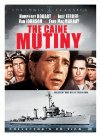
THE CAINE MUTINY (1954) revisited

January 17, 2012

 Greetings again from the darkness. This film was nominated for seven Academy Awards (no wins), including Best Picture. Watching it today, it seems clear that the courtroom scene with Humphrey Bogart in the chair as Lt. Cmdr. Queeg drove this film to the heights it reached. That few minutes is as powerful as anything Bogart ever did on screen. Unfortunately, he would pass away (esophagal cancer) less than three years later.

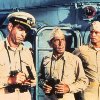
The first part of the film is solid enough as we meet newly graduated (mama’s boy) Ensign Willie Keith (Robert Francis). His first Navy assignment is aboard a minesweeper (junkyard Navy) and the veteran officers quickly note his disappointment at not being stationed on a more prestigious carrier. Those veteran officers are played by quite a list of actors: Van Johnson plays no-nonsense Lt. Steve Maryk, Fred MacMurray plays the cynical wannabe novelist Lt. Tom Keefer, and Tom Tully plays Cmdr. DeVriess, who irritates young Willie with his laid back approach to command. We also see Lee Marvin and Claude Akins as part of the ship’s rag-tag crew.

 A shift occurs once Queeg replaces DeVriess. Queeg brings a tough old school Navy approach to the ship and is easily thrown by the sight of an untucked shirt. Over a short amount of time, the officers begin taking note of the odd behavior of Queeg. MacMurray’s character acts as an armchair psychologist, and more importantly, an instigator for the other officers. He is convinced Queeg is unstable and unfit for duty. The climax occurs during a typhoon and Lt Maryk (Johnson) takes the abrupt step of relieving Queeg of his duties … an action that’s never actually occurred aboard a Naval ship.

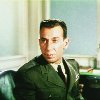
Soon Maryk and Willie are brought up on charges of mutiny. At about the 90 minute mark, their attorney makes his first appearance. Jose Ferrer plays Lt. Greenwald, the only naval attorney who would take the case against the highly decorated Commander. Watching Queeg (Bogart) on the stand is just about as good as acting gets. Ferrer is exceptional as well.

 This film is about the character of men and their reactions to situations in which they are trained to act otherwise. It’s based on the Pulitzer Prize winning WWII novel by Herman Wouk, and the screenplay is by Stanley Roberts. The film is directed by Edward Dmytryk, who you may know as one of the “Hollywood Ten”. Dmytryk spent time in prison for his lack of cooperation with HUAC, and his previous involvement with the communist party. The score is outstanding and was composed by the famous Max Steiner, who was also responsible for a couple of other films you may have seen: Casablanca and Gone with the Wind. It should also be noted that this was the second of five total films made by Robert Francis (Ens Willie Keith) and the 25 year old up-and-coming actor was killed in a plane crash the year after this film was made.

*noteEdward Dmytryk retired from filmmaking and for a few years taught film theory at the University of Texas.  I was fortunate enough to be a student in a couple of his classes.  His insight was remarkable.

*note – an aspiring young actor named Maurice Micklewhite was so inspired by the movie and Bogart that he changed his name to … Michael Caine

*note – pay special attention to the number of ticks/quirks that Queeg display (his use of Chinese Baoding Balls for stress, his use “K” as a form of communication, his facial contorts in moments of indecision, etc)

here is the original trailer (the volume level is very low):


PICKUP ON SOUTH STREET (1953) revisited

January 14, 2012

 Greetings again from the darkness. Thanks to The Dallas Film Society and movie critic Chris Vognar, we were lucky enough to watch this on the big screen from a 35mm print! If you enjoy the pulp thrillers from the 1950’s, this is one you must track down. For a little 80 minute B-movie, it packs a wallup for interesting discussion points.

Directed by Samuel Fuller (The Big Red One,1980), we get a real taste of his “man’s man” approach. Not only was Fuller a well-known war correspondent, he also served in WWII, including Omaha Beach on D-Day. This movie provided him with a stellar cast: Richard Widmark as Skip, Jean Peters as Candy, Thelma Ritter as Moe, and Richard Kiley as Joey. It is a story of the times and begins when a small-time pickpocket Skip, works his magic fingers on Candy’s purse while they are facing each other on the subway.

 The real fun begins as we watch the police, the feds and the communists all trying to hunt down Skip. The reason? He unknowingly stole top secret US information that was being passed to the commies. This film noir has some really tough elements. Heck, Skip even punches Candy right in the jaw! The lighting, score and fight scenes are all no-nonsense and direct. It’s really fun to watch the eye movements of the key players. It’s obvious none of the characters are comfortable in the situation, no matter how smooth they try to be.

The great Thelma Ritter runs off with each of her scenes. She plays Moe, the local stool pigeon who plays everyone for a buck. Ms. Ritter was nominated for an Oscar for her role (one of four in a row for her), but it was another in her long line of 6 nominations and no wins. This may be her best work. Another of my all time favorite character actors makes a brief appearance as one of the commies: Willis Bouchey. And don’t miss Milburn Stone as a detective. Mr. Stone would go on to star as Doc on “Gunsmoke” for twenty years.

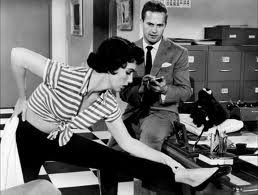
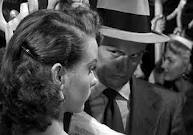
 The film features some terrific lines. One of my favorites is “Everybody likes everybody when they’re kissing.” Another is “I would rather have a live pickpocket than a dead traitor.” Fun stuff. Should also mention that Jean Peters (pictured in a scene from this movie) went on to become the wife of Howard Hughes and her acting days abruptly ended. After their divorce, she made a couple of TV appearances, but was unable to recapture the magic of these early years. Should also note that this film was re-made (weakly) in 1969 as The Cape Town Affair.

*note – I couldn’t find the original trailer or a clip that didn’t give away the ending.


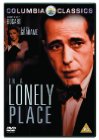
IN A LONELY PLACE (1950)

December 10, 2011

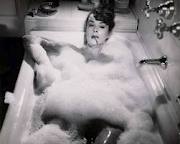
 Greetings again from the darkness. Was very anxious to see this one on the big screen for the first time. It’s a mystery why this film doesn’t get the same love and respect as some of the others from this era. It is one of Humphrey Bogart’s finest performances and one of director Nicholas Ray‘s (Rebel Without A Cause) first films. It also has a terrific performance by Gloria Grahame, who most know as Violet from It’s a Wonderful Life.

 Andrew Solt wrote the screenplay based on the novel by Dorothy B. Hughes. With numerous changes to the source material, we get Bogie in quite a unique role. He plays Dixon Steele, an aging writer accused of murder. His alibi is his beautiful new neighbor (Grahame, left) who may or may not be telling the truth to the police. Of course, Steele himself may or may not be telling the truth. In fact, he has such a history of flashing a violent temper, that after he punches a director, his friends just laugh it off saying “oh, that’s just Dix”.

 The scenes with Grahame and Bogart are tremendous and we certainly see that both of their characters have secrets, as well as difficulty in accepting happiness. Support work is provided by Frank Lovejoy as Det Brub Nicolai. His wife Sylvia is played by Jeff Donnell, who went on to a long run on General Hospital. Martha Stewart (no not that one) plays Mildred, the perky murdered girl … well, perky before the murder. Art Smith plays Steele’s long suffering agent and only true friend.

 The film skirts film noir traits, but is equal parts murder mystery and tragic love story. The ending is quite different than the first one Ray (left) filmed, but it is one of the most powerful, emotional endings we have ever received from Hollywood. Some of the behind the scenes scoop make this one even more fascinating. Ray and Grahame were still married during filming, but they no longer lived together. Their marriage ended formally soon after, when Ray caught her in bed with his son. Her stepson! They eventually married (Woody Allen wasn’t the first!).

If you are a Bogart fan, you need to see this one for his performance. He goes much deeper than in his earlier roles, and watching him teeter between charmer and jerk is spellbinding. His demeanor leaves us doubting not whether he is capable of murder, but rather if he committed THIS one.

note: this movie has one of my all-time favorite scenes … Bogart describes “how it could have happened” as Lovejoy and Donnell act it out.  There is a brief clip of that scene in the trailer below

SEE THIS MOVIE IF: you want to see one of the best from Humphrey Bogart, Gloria Grahame, and Nicholas Ray OR you want to watch one of the most powerful endings of any Hollywood film

SKIP THIS MOVIE IF:  you aren’t much into Bogart OR you prefer your murder mysteries to be a bit heavy on detective work

watch the original trailer:


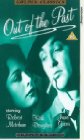
OUT OF THE PAST (1947)

December 4, 2011

 Greetings again from the darkness. Finally caught back up to this one after close to 30 years. I have always listed it among my favorite Film Noir movies and now I remember why! The story is not dissimilar to many of the detective films from the 40’s and 50’s, but this one is based on Daniel Mainwaring‘s brilliantly titled novel “Build My Gallows High”. It stars ultra-cool Robert Mitchum and an up-and-coming actor named Kirk Douglas, in just his second film.

 As with any Film Noir, there must be a “dame” stirring up trouble for the men who just can’t seem to think clearly around them. Here we get two fabulous women who can’t be trusted: Jane Greer and Rhonda Fleming. We also get some of the most creative lighting you will ever see in a movie. I am guessing the production budget was very small, but the shadows and darkness work very well for the story. The next best part of this one is the stream of classic lines. Some are funny and others are quite jolting, given the seriousness with which they are delivered.

The movie is directed by Jacques Tourneur, who also directed Cat People just a few years prior. His best scenes here involve Mitchum, Greer and Douglas playing cat and mouse with dialogue, but I also enjoyed Rhonda Fleming’s brief but impactful appearance.

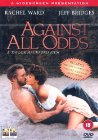
 A couple of interesting notes on those involved. Jane Greer was discovered by Howard Hughes and has some pretty frightening things to say about their time together. She was a very young bride to Rudy Vallee, but Hughes broke up the marriage pretty quickly. Ms. Greer also appeared in Against All Odds in 1984. That film was basically an updated remake of this one. In that film, she played the mother of Rachel Ward‘s character. Since this was Kirk Douglas’ second film, you can really see how little range he had at this point. Very interesting to compare this to some of his later work.  If you enjoy the noir genre, this is a must see.

check out 39 seconds of one scene and you’ll get a feel for the shadow effects:


DOUBLE INDEMNITY (1944) revisited

November 12, 2011

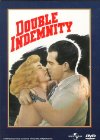
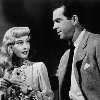
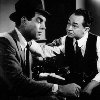
 “I wonder if you wonder.”  Every time I hear Walter Neff say those words to Phyllis Dietrichson as their intial encounter concludes, I smile and settle in for another round of Double Indemnity (1944).  Chris Vognar, Film Critic for the Dallas Morning News kicked off his Fall Film Noir Series (co-sponsored by Dallas Film Society) with one of my all-time favorites.  Though I have seen it many times over the years, this was my first time on the big screen … and from a 35mm print!  So much of the subtle filmmaking becomes apparent – the variance of lighting, the intensity of shadows, and the vividness of close-ups.  This reinforces my belief that we should never miss an opportunity to view good films in a theatre setting … just as the director intended.

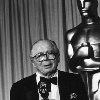
 Since this film was released 67 years ago, I won’t bother about noting “SPOILERS“.  If you haven’t seen it and plan to, you might stop reading here.  If you would like a little insight, then let’s keep going.  Billy Wilder (left) directed the film and his place as a Hollywood legend is quite secure.  He was nominated for 21 Oscars (Director, Writer, Producer) and had 3 wins.  Some of his classics are: The Lost Weekend, Sunset Blvd, Witness for the Prosecution, Some Like it Hot, The Apartment, The Front Page.  Many think of Wilder as a comedic filmmaker and he certainly had success in that genre, but if you watch closely, even his comedies have a dark element to them.

Double Indemnity is based on the novella by James M Cain, who also wrote Mildred Pierce and The Postman Always Rings Twice.  Wilder was a fan of Cain’s book, but knew the dialogue wouldn’t work well on screen.  So together with Raymond Chandler they wrote a screenplay filled with crackling lines and a constant feeling of dread and pending doom.  As great as the script is, it is heightened by a wonderful cast that includes Fred MacMurray, Barbara Stanwyck, Edward G Robinson, Porter Hall, Jean Heather, Tom Powers, Richard Gaines and Byron Barr.

For me, MacMurray’s performance is what brings the words to life and jumps the film to the “must see” category. He is playing against two Hollywood heavyweights in Stanwyck and Robinson, but we are somehow sympathetic to this not-so-bright guy who gets played like a fiddle by the villainous, wily woman he lusts after.  Even as he is recording his confession, a part of us understands how he got drawn into MURDER!  Not just any murder, but one for money and love … only there is no money, and there is no love.

 Ms. Stanwyck is perfectly cast as the femme fatale who weaves her web of deceit and destruction.  She quickly spots the vulnerability of MacMurray’s character and uses her assets just enough to hold the leash tight.  It is a testament to her screen presence that she can pull off the sultry siren while sporting a less-than-desirable blonde wig.  At the time, the wig was so controversial that the producers compared it to George Washington and wanted it trashed.  However, filming was too far along and now it’s impossible to imagine her looking any other way.  Besides, MacMurray only seems to notice her anklet!

 Edward G Robinson made a name for himself as a tough-guy actor … cop and mobster all rolled into one.  Here he plays the insurance investigator with a sixth-sense for fraudulent claims.  He is a hard-nosed, dedicated employee who takes his responsibility very seriously and has no sympathy for those who cheat his cherished system.  He has a soft spot for co-worker MacMurray, even though he is one of the back-slapping salesmen he so loathes.  Their relationship in the film is one of respect and about as close as two professional men could be, given the era.  When Robinson goes off on his rant about suicide research, he is a joy to behold.  This guy could flat chew scenery.

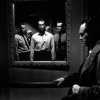
 In addition to the infamous wig, you might also notice that MacMurray is wearing a wedding band throughout the film, even though his character is clearly a single man.  Wilder and MacMurray stated many times over the years that was simply a mistake and not “caught” until post-production.  Expect a chuckle when MacMurray, as the narrator, enviously describes a Spanish style Los Angeles home as costing $30,000 … probably less than the property taxes would be on that house today.  The film originally was to end with MacMurray in the Gas Chamber and Robinson looking on (inset), but this was deemed inappropriate.  One last little nugget: early in the film, MacMurray walks out of Robinson’s office and past a man sitting on a hallway chair reading a paperback book.  That man?  Raymond Chandler, in his only on screen appearance.

The film is often described as quintessential Film Noir.  Another prime example of Film Noir would be The Big Sleep (1946), based on a Raymond Chandler novel, directed by Howard Hawks, and starring Humphrey Bogart and Lauren Bacall.   While Film Noir might not be an easily definable term, there are certain elements that must be present.  Lighting is key.  Shadows must be prevalent.  Some type of detective story is usually at the center, and we typically get some poor schlub of a guy being yanked around by the femme fatale.  The right “mood” is essential … as a viewer we know things are headed down the wrong path, but we just can’t save the characters from their own poor choices.  But neither can we look away.  That helpless feeling is a strong indicator that you just watched a terrific Film Noir.

watch the original trailer:


JAWS (1975) revisited

July 15, 2011

 Greetings again from the darkness.  Ba-dum.  Two of the more recognizable notes from any movie musical score are courtesy of 5-time Academy Award winner (45 nominations!), composer John Williams.  A truly great score plays a vital role in the emotional connection that a viewer makes with a movie.  In some movies, we barely notice the music.  Not so with the Jaws theme.   In 1975, it signaled an immediate jump in our blood pressure and has since glided right into becoming part of our societal lexicon – musical slang for “danger is on the way”.

You are probably wondering why I am writing about a 36-year old movie … especially one that revolves around shark attacks.  Haven’t we had more than our share of monster and disaster flicks?  Well, my friends, it’s time for you to re-discover the wonderment, joy, anxiety, humor and humanity of Jaws.  I did just that last evening at a screening provided by the Dallas Film Society, Dallas Morning News and film critic Chris Vognar.

 When Jaws was first released in 1975, I saw it three times over three consecutive days.  I couldn’t get enough!  It was, after all, the first “summer blockbuster”.  At the time, I was the ultimate beach lover, and along came a movie that was so frightening, it convinced people to stay out of the water!  Over the years, I have watched it quite a few times on cable/tape/DVD, but not until last evening was I able to re-live that theatrical experience from the summer that changed movies forever.  Last night the theatre was full, and nearly a third of those in attendance claimed to have never before seen the movie.  So my hope is that you will make time for this classic film … whether it’s your first time, or your twentieth.  Introduce it to your kids, grandkids, nieces and nephews (if they are ready).   Talk about what makes it great, and about all the movies it has since influenced.

Rather than “review” the movie, I will point out some interesting details on how it was made, its legacy and even some of my favorite moments from the movie.

Director Steven Spielberg was 28 years old when the movie was released.  He had already made some noise as a filmmaker with Duel and Sugarland Express, but it was the success of Jaws that labeled him wunderkind.  The now-legendary Spielberg went on to direct such classics as Close Encounters of the Third Kind, three Indiana Jones movies, The Color Purple, the first two Jurassic Park‘s, Schindler’s List, and Saving Private Ryan.  He is also listed as Producer on more than 120 other projects.  He is the ultimate ‘mover and shaker’ in Hollywood.   But Jaws was his last movie where the burden of expectations and box office results were minimal.  Jaws went on to gross almost a half billion dollars worldwide … an unheard of level at the time (movie tickets cost about $2.oo each in 1975).

 The story is based on the first novel by Peter Benchley, who would later write “The Deep” and “The Island“.  Mr. Benchley also appears briefly in the film version of Jaws as a reporter on the Amity beach.  The novel was a best seller, but much darker in tone than the Spielberg film.  Spielberg turned the book’s key characters into less abrasive personalities, while maintaining the colorful attitudes.

 Speaking of characters, many people tend to focus on Roy Scheider‘s Martin Brody,  Chief of Police on Amity Island.  He really does a nice job as the no-nonsense non-islander attempting to fit in without poking too much fun at the “problems” of the locals.  Others are drawn to the performance of Richard Dreyfuss as Oceanographer Matt Hooper.  Dreyfuss is far and away the most energetic of the actors, and his cocky, know-it-all, rich boy makes for a terrific contrast with the other more subdued characters.

The guy to really watch in this movie is the great Robert Shaw as Quint, the crusty local fisherman who vows to kill the shark for a huge fee.  Spielberg originally wanted Lee Marvin for the role, but it’s difficult to imagine anyone other than Shaw as the tough-as-nails Quint.  His sililoquy regarding his USS Indianapolis ordeal is mesmerizing and fascinating … and that scene alone should have won him the Best Supporting Actor.  Yet somehow, he wasn’t even nominated in the year that had, yes, George Burns winning for The Sunshine Boys.  Shaw’s character comes across as true salt of the sea, and watching him co-exist on a small boat with Scheider and Dreyfuss for the entire second half is movie-watching glory.  As they compare scars and enjoy an adult beverage, we are afforded a brief laugh outloud moment.  And don’t miss Scheider giving momentary consideration to flaunting his appendix scar.

 Much has been written over the years about the animatronic shark.  It was nicknamed Bruce, after Spielberg’s attorney.  Bruce gave the filmmakers a great deal of trouble and, because of that, the film works even better.  We don’t glimpse the shark until well into the movie, giving tension and anticipation much time to build.  Until the last few minutes, we really don’t get a full-on view of the shark, but it SEEMS like we do!

The Mayor of Amity is played by Murray Hamilton.  Mr. Hamilton is well remembered as Mr. Robinson … husband to THAT Mrs. Robinson … in The Graduate (1967).  In that movie, he refused to shake Dustin Hoffman‘s hand.  Here, he refuses to close the beaches, for fear of losing tourist revenue.  He only has a hand full of scenes in Jaws, but each is quite memorable.  Watching him speechify to the cameras, politicize to the citizens, and nearly break down while smoking in the hospital, adds depth and intensity to the film.

The trivia associated with Jaws is abundant.  What’s really important is that this is an incredibly well made movie that holds up extremely well today.  When you watch it, notice how you immediately understand the feelings of the locals at the town hall meeting, the desperation of the deputy, the shame of the Medical Examiner, the bravado of the fishermen and the confusion of Brody’s wife.  Notice the camerawork as it varies between the viewpoint of the shark, the viewpoint of a character, or interested onlooker to the beach happenings.  Check out the masterful film editing with three characters battling for space aboard the Orca.  Great stuff.

Jaws was nominated for Best Picture, but lost out to One Flew Over the Cuckoo’s Nest.  It did win for Best Editing, Best Sound, and Best Music (score).  Its lasting impact includes the genius of Spielberg, turning Summer into Movie time, and that iconic score.  Ba-dum.  Stay out of the water!

Check out the original trailer from 1975: