DIFF 2015 – Day 1

April 11, 2015


DALLAS INTERNATIONAL FILM FESTIVAL 2015

Day 1 – Friday April 10

I missed the Opening Night Gala at the Majestic Theatre last night, but took in three films on the first full day of this year’s festival.

Below is the day’s recap, and a reminder that I seek out the deep cut indies and documentaries that may or may not gain mass market distribution.


RED ON YELLA, KILL A FELLA (2015)

DIFF – Texas film series
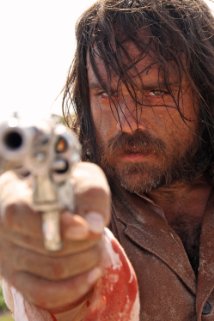
Red on yella Co-writers and co-directors Duane Graves (from San Antonio) and Justin Meeks manage to hit all extremes with comedy, violence and drama as they trek across some of the roughest Texas terrain. Tongue-in-cheek westerns are rare, and this one never falls into true parody, but instead uses hyper-dramatic music and dialogue delivery to balance the gun play and hardened outlaw activities.

Mr. Meeks also stars as Claude “Sweet Tooth” Barbee, who is leading his band of outlaws across Texas in an attempt to re-claim the gold from a previously botched train robbery. The character name is from a real life outlaw and the actions are loosely based on real life train robber Sam Bass. Meeks is clearly having a ball playing the type of colorful bad guy that actors dream about.

Screen veteran Pepe Serna has a brief but memorable role, and one that is crucial to story development. He too, seems to relish the chance to play a nasty guy. The rest of the cast, many of whom were present at the screening, all seem to have bought into the vision … whether their character is quickly filled with lead or manages to eke out a line or two or three. Every movie lover will quickly recognize the actor playing the Doc as Michael Berryman from The Hills Have Eyes (1972).

The ringing of a bell, a young ventriloquist, twins, prairie land nightmares, a hooker with an ulterior motive, and family revenge all play a role as this group of outlaws is hunted by more than just the Sheriff as they make their way to the coast. With unusual lines of dialogue such as “Shut that puppet up”, and a misleading sign that reads “Lodgers Welcome”, Graves and Meeks deliver an unusual look at the old west and those that inhabited this rugged land.


RAIDERS! THE STORY OF THE GREATEST FAN FILM EVER MADE (2015, doc)

DIFF 2015
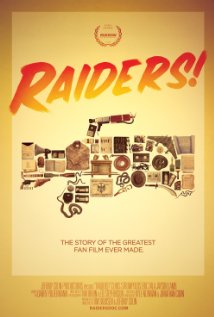
raiders! Most documentaries are pretty simple to recap: A filmmaker makes a movie about a topic or person. However, simplicity just doesn’t fit here. Filmmakers Jeremy Coon and Tim Skousen made a movie about the making of a movie that is a movie re-made in honor of a movie that was already made.  This isn’t Coppola’s Hearts of Darkness which portrays his difficulty in making Apocalypse Now. Far from it. This is a modern day look back at two/three geeky eleven year old boys making a shot-for-shot remake of Steven Spielberg’s classic Raiders of the Lost Ark.

Coon and Skousen catch up with forty-somethings Eric Zala, Chris Strompolos and Jayson Lamb as they are trying to put together the financing and logistics to film the final scene of their unfinished movie Raiders of the Lost Ark: The Adaptation. These are the same boy that started the process in 1982 and filmed each of the next seven summers until they graduated from high school.

If you are a total film geek, you have probably heard of their film and know that it has been an underground film favorite for years. But you may not know the real life details behind it and certainly not the modern day drama of Eric and Chris as they try to complete it. How about some interviews with their mothers? How about the real world possibility that Eric risks losing his job to complete this thirty plus year old kid’s summer project? How about the personal struggles of Chris over the years, or the fallout with Jayson as he is left out of this final chapter?

Director Eli Roth was instrumental in spreading the word of this film project throughout Hollywood, and the boys even got invited to meet with Spielberg. Mostly we are left with the fascination that young boys can have such passion and persistence over so many years. When asked about whether they missed out on their childhood, Chris responds “We filmed childhood”. A true and fitting response, that doesn’t tell the whole story. Fortunately, Coon and Skousen do.


THIS ISN’T FUNNY (2015)

DIFF 2015

Yes, it is funny. And it’s also not funny. This little relationship gem breaks down into 3 chapters … conveniently and obviously noted with title placards: Before, Together, After.

The story follows Juice Bar manager Jamie and stand-up comedian Eliot as their worlds literally collide in a chance meeting that doesn’t, on the surface, set the stage for love ever after. Director and co-writer Paul Ashton plays Jamie and co-writer Katie Page plays Eliot, and their natural onscreen rapport comes courtesy of their real life relationship (as they disclosed in the post screen Q&A).

Don’t mistake this for some simple rom-com. There is a lot going on here and it swirls around not just their budding romance, but also their individual lives. It’s very interesting how the story offers commentary on such topics as how young adults still use their parents as an excuse for their own lack of career success and/or happiness. In an interesting twist, it also allows us to view those same parents (including Mimi Rogers and David Pasquesi) as real people with their own issues, rather than just a drag on the “kids”. And speaking of parenting, Jamie and Eliot go through some rather unique soul-searching on the topic.

If that’s still not enough subject matter for you, we also witness Eliot’s struggles with anxiety. Her trips to a therapist are a battleground for medication levels – Eliot wants to be free of them, and wonders if they are a crutch or actually help. No judgments here, just wonderful material for further discussion.

On top of all that, we are treated to some sterling stand-up from Beth Stelling and Ahmed Bharoocha who are both extraordinarily talented comics. Plus Ms. Page more than holds her own at the microphone, as she brings Eliot’s personal life (and poor Jamie’s mishaps) to her material.  You should also be prepared for the most outrageous performance of Anthony LaPaglia’s career. He’s a riot.

It’s a joy to see an indie with such depth, insight and commentary on what relationships are like in today’s ever-changing world.


OSCARS recap (2015)

February 23, 2015

oscars6 Greetings again from the darkness. “Stay weird and stay different” is the main takeaway from this year’s Oscars presentation. Not only was that the heartfelt and emotional plea to kids made by Adapted Screenplay winner Graham Moore (The Imitation Game), but it also describes Best Picture winner Birdman Or (The Unexpected Virtue of Ignorance).

The Academy seems to suffer from a multiple personality disorder in trying to decide what to do with the ceremony. Is it a formal and dignified event to honor the nominees? Is it a celebration of the artistic and historic sides of cinema? Is it an opportunity to entertain the tens of millions of TV viewers who tune in each year? Not knowing the objective makes it very difficult to be successful, which leads to a too-long mish-mash of all three approaches further muddled by the 30-second political statements offered up by millionaires whose words probably carry less weight than they believe, but more than they should.

As a movie lover, what draws me to the telecast is the celebration of cinema, so my favorite segments included: the brilliant opening number entitled “Moving Pictures” as performed by emcee Neil Patrick Harris, with an assist from Anna Kendrick, Jack Black, numerous costumed dancers, some terrific special effects, and clips from many iconic movies; the beautifully sung melody by Lady Gaga as a tribute to the 50th anniversary of The Sound of Music – with an appearance from Julie Andrews; and the first time ever that each movie nominated for Best Picture (all 8 of them) went home with at least one Oscar.

Of course there were also segments which I did not enjoy so much: an ultra-creepy John Travolta pawing at Idina Menzel’s face a year after butchering her name on stage; a lackluster Birdman parody by Neil Patrick Harris that paled in comparison to the recent work of Fred Armisen (Indie Spirit Awards) and Sesame Street (with Big Bird); the cut away shots to Michael Keaton chomping his chewing gum like a junior high kid; and the multitude of lame jokes (and absurd pre-show predictions) by Mr Harris that could have been excused if not for the poorly timed zinger directed at the dress choice of an award winner who had just moments before disclosed the suicide of her child.

Emotions always run high in a room full of artists, and the live performance of “Glory” from Best Picture nominee Selma was quite impressive … from the infamous bridge setting, to the vocals of Common and John Legend, to the dozens of folks who joined them onstage (Note: they were given much more time than the other live performances of nominated songs). Also registering high on the emotional meter were: Patricia Arquette’s call for pay equality, Eddie Redmayne’s pure joy at winning Best Actor, and the excitement, pride and perspective shown by Ida director Pawel Pawlikowski  towards his home country of Poland.  On the other end of the emotional spectrum, how does it make sense that sourpuss Sean Penn tries to crack wise with an ill-timed joke, while “comedian” Eddie Murphy reads the list of nominees like he is checking inventory at Home Depot?

On a personal note, my favorite film of the year was Boyhood, and while I am not upset that my second favorite film of the year won Best Picture, I do wish director Richard Linklater had received more accolades for his unique and extraordinary project. It was nice to see two screen veterans and professionals like Julianne Moore and JK Simmons take home their first Oscars, and I was ecstatic to see so many awards go to Wes Anderson’s beautiful The Grand Budapest Hotel and the frenetic Whiplash. We should all welcome the notice given to international talents like Emmanuel Lubezki, Alexandre Desplat and the previously mentioned Eddie Redmayne.

Alejandro Inarritu was the big winner of the night for his ground-breaking work on Best Picture winner Birdman Or (The Unexpected Virtue of Ignorance) and on one of his trips to the stage he articulated a point of which I fully agree. He talked about how in the world of art, “works can’t be compared”, and when he has completed a project, it is that moment when he feels like he has succeeded. That is the heart of why the Academy remains confused about how to treat this event. The work of one actor cannot be objectively compared to that of another. No movie can fairly be determined superior to another. By their nature, works of creativity and art impact each of us differently, and the real test is … were we moved? Were we touched? Did the work cause us to think? Each of these things is more important than a shiny statuette … unless it’s one of those Lego Oscars, which, regardless what was contained in the $160,000 swag bags, were the absolute coolest item given away at the Dolby Theatre!

oscars7


OSCAR PREDICTIONS (2015)

February 18, 2015

oscars6 Greetings again from the darkness. With apologies to those who have depended on me to help with office Oscar pools, and even to my fellow movie lovers who have simply enjoyed arguing over the years, I am opting to put an end to my annual Oscar prediction column, effective immediately.

My track record of accurate predictions is significantly better than most of the big media experts, so this decision was not made due to fear of failure. Instead, my annoyance with the “headlines” and “top stories” related to the Oscar nomination process has soured me on the whole thing.

Every year, rather than celebrate the nominees, we are inundated with articles and TV reports focusing on “snubs” and “politics” and an “out of touch Academy”. I take movies about as seriously as anyone, yet fully understand that Academy voting does not take place in some bubble or vacuum. New voters are invited each year, and they maintain voting rights until death or incapacitation. It’s no secret that the Academy demographics skew older – white – male, and to assume these voters would vote in a manner that doesn’t involve their own personal tastes and preferences would be to ignore human nature. Just take a look at Olympic judges for figure skating, diving, gymnastics, etc.

As for the politics involved, would we really expect voters to not support those who have influenced their own careers, or might in the future? Isn’t self-interest a part of most decisions we make? Aren’t we able to acknowledge that when voting for the President of the United States, many votes are cast FOR or AGAINST a particular candidate based on a perceived personal connection (or bias) on details as fundamental as religion or skin color? If that decision-making process is utilized for electing the leader of the free world, perhaps it’s understandable that a similar process occurs for something as relatively minor as Best Actor or Best Director of a freaking MOVIE.

Mathematics also plays a role here. Due to the outcry over so many “worthy” films not receiving Best Picture nominations, the Academy responded a few years ago with a rule change which allows as many as ten (10) pictures to receive a nomination. None of the other major categories were affected, including Best Director, which remains at 5 nominations. This year eight (8) movies received Best Picture nominations, and immediately the ridiculous cries of “I suppose that movie directed itself” rung out.  Simple math tells us at least 3 directors of Best Picture nominated movies would not receive a Best Director nomination. Additionally, and more importantly, it should be noted that these are two distinct categories (Picture and Director). It’s certainly feasible, and highly likely, that some of the best work by directors was not accomplished on films nominated for Best Picture. An easy comparison is with Major League Baseball. The Manager of the World Series winning team may or may not have done the best coaching job amongst all the coaches in the league, which is why the World Series trophy and the Manager of the Year are two distinct and separate awards.

I do understand the emotions that follow movies. Everyone has their “favorite”, and often can’t understand why all their friends and movie critics and Oscar voters don’t feel the same way. But the accusations of racism and politics as related to Oscar voting seems to imply that the Academy has the power and responsibility to change society mores … even when these same traits are ever-present in elections from school boards to civic leaders and even our nationally elected officials. Perhaps we should expect more from the Academy, but it seems we should each look in the mirror before passing this buck.

Movies certainly have value in society. They entertain and inform and tug at our emotions, and the best ones generate lively debate and discussion. They re-tell history, introduce us to fascinating characters, educate us on different cultures, and teach us how to relate to each other. The Oscars, despite all the hoopla surrounding designer dresses and 6 figure $ earrings, are simply a celebration of an art form that is easily accessible to the masses. The “best” are not determined by a scientific formula, but rather a small group of people who have many of the same flaws and personality quirks as you and I. And while they may not always agree with our movie tastes, we should know they vote with a combination of heart and head … a messy combination that rarely results in perfection.

Just to be clear, I most certainly have my Oscar predictions and preferences in mind, but for the foreseeable future, will not be contributing to the morass of heavy-handed judgment that is all too prevalent at Oscar time. Though soured by the media fallout, I will just sit back, watch the presentation, and be thankful that Rob Lowe will never again perform with Snow White.

spoiled milk


MIKE NICHOLS (1931-2014) remembered

November 20, 2014

mike nichols When a giant from the Entertainment world passes away, I take the time to read of the few of the tributes and reminisce about the person’s impact on me and the industry. Periodically, and for varying reasons, I am motivated to write my own words about the person and their career.

As one of only twelve (12) EGOT’s (a winner of Emmy, Grammy, Oscar, Tony), Mike Nichols’ legacy and impact are obvious. He is not just the old guy married to Diane Sawyer. Rather, he is a visionary who impacted entertainment for more than 50 years as a performer, stage director, film director, producer and writer.

Some will recall his ground-breaking comedy work with Elaine May from the mid-50’s through the early 60’s (see the video below). Others know him as the Oscar winning director of the classic film The Graduate (1967), and other films such as Who’s Afraid of Virginia Woolf, Carnal Knowledge, Silkwood, and Working Girl. He was also instrumental in the original stage productions of such well-known and long running plays as “Barefoot in the Park“, “The Odd Couple” (Art Carney and Walter Matthau), and more recently “Spamalot“. From the mid-60’s through this year, he bounced professionally and expertly between Hollywood and the stage. Mr. Nichols’ final film was Charlie Wilson’s War (2007), and he won his final Tony Award directing Arthur Miller’s “Death of a Salesman” (2012).

While the career and awards are long-lived and impressive, what’s more notable is how those in the industry refer to him. You will read and hear words like leader, mentor and visionary. Nichols was a collaborator who could inspire artists to their best work. For me personally, I always admired his ability to be funny-smart … or maybe it’s smart-funny. He made us laugh while making us think, and that’s quite something to treasure.


ROBIN WILLIAMS remembered

August 12, 2014

O Captain! My Captain! (Walt Whitman)

robin williams There have already been many beautiful tributes written for the immensely talented Robin Williams, so mine will be brief. Additionally, I recommend reading what his peers from the entertainment world have to say. And those fans whose lives he touched.  They speak of a very warm and generous man … even when he was mired in the darkest moments of his life.  Of course he was an inspiration to many stand-up comedians and actors, but he also worked tirelessly for the homeless and underprivileged children. He was also quite forthcoming in discussing his battles with drugs, alcohol and depression.

Williams, along with Andy Kaufman and Steve Martin, transformed stand-up comedy.  Comedy became more insightful, and not always in a positive way.  He flashed attitude at breakneck speed … sometimes he spoke so fast, he offered us little time to laugh – in fear we would miss the next cultural prod. When he took his talent to TV, it seemed only right that his character was from another planet … none of us knew anyone like this!

What really set Robin Williams apart was his ability to thrive in two worlds: the childlike and the profane.  He somehow balanced his “Sesame Street” appearances with a role as a wise-ass military disc jockey who refused to be silenced.  He balanced his effervescent vocals as a giant blue genie with a role as a somewhat rebelious, yet passionate educator of young men. Who else could pull off a cross-dressing dad so desperate to spend time with his kids; and a bitter, insightful psychologist trying to crack the shell of a young genius; and the ultimate childlike Peter Pan?

It seems too simple to say, but the words are quite heavy … Robin Williams will be missed.

Many know his stellar work from such popular movies as Dead Poets Society, Good Morning Vietnam, Mrs Doubtfire, Good Will Hunting, Aladdin, and of course the Night at the Museum franchise.  In addition to those, I have three others to recommend if you want to see just how serious he was about the art of acting. One of his early films was Moscow on the Hudson, directed by Paul Mazursky.  It’s from 1984 and his unusual character is certainly worth checking out. The Fisher King was directed by Terry Gilliam (of Monty Python fame) in 1991, and stars Robin Williams and Jeff Bridges. It’s an underappreciated gem. Finally, for a glimpse at just how dark and creepy Williams could go, see 2002’s One Hour Photo.  Those three films over an almost 20 year span will show you the depth and range of a man who could be so silly and so outrageous, while also opening our eyes.

Robin Williams from Dead Poets Society (Carpe Diem)


Robin Williams on “Sesame Street”


JAMES GARNER remembered

July 20, 2014

garner Awoke this morning to the sad, but long-expected news that actor James Garner had passed away.  Mr. Garner was 86 years old and had been mostly out of the public eye since suffering a stroke in 2008.  It’s difficult to find another performer whose work appealed to “the greatest generation” (his work in “Maverick“), the maturing flower power generation (“The Rockford Files“) and Gen X and Y (The Notebook).

Born in that state just north of Texas, Garner dropped out of high school to join the Merchant Marines … a career cut short by his sea-sickness.  He later joined the Army and served 14 months in the Korean War, earning two Purple Hearts. His acting career really took off with the 1957 series “Maverick“, where Garner played a card shark whose quick wit often got him out of the trouble that the same quick wit had gotten him into.  Garner then made the transition to movies, and during his career starred with such female leads as Doris Day (Move Over, Darling; The Thrill of it All), Julie Andrews (The Americanization of Emily, Victor Victoria) and Sally Field (Murphy’s Romance) … culminating in his teaming with Gena Rowlands to play the elder characters of Ryan Gosling and Rachel McAdams in The Notebook (2004).  Scattered in between were other memorable films such as The Great Escape (1963), Grand Prix (1966), and Space Cowboys (2000), as well as TV movies Heartsounds (1984), My Name is Bill W (1989), and Barbarians at the Gate (HBO, 1992).

Obviously the role Garner is most identified with is Private Investigator Jim Rockford in the TV series “The Rockford Files” from 1974-80.  He was the reluctant hero who was always in hot water with the police, but managed to save the day in his patented clumsy style by the end of the hour.  Garner stacked the cast with his friends Joe Santos, Stuart Margolin and Noah Beery, Jr. This group would work together again in the 1990’s on the Rockford TV movies.  Who among us didn’t want to be Rockford … living in a trailer on Malibu beach, zipping around L.A. in a Firebird and solving criminal cases for the cops!  When I spoke briefly with Mr. Margolin last year at the Little Rock Film Festival, he had nothing but fond memories of working with Garner on the show.

As if conquering TV and Movies wasn’t enough, James Garner and Mariette Hartley teamed to make more than 300 Polaroid commercials in the late 1970’s through the early 1980’s. Their sprited banter led many to believe the two were real life spouses, and had retail customers requesting “the James Garner camera”. Garner and Hartley were of course not married.  In fact, Garner and his (surviving) wife Lois had been married for 56 years at the time of his death … a long term marriage being yet another thing setting Garner apart from most others in the Hollywood world.

The words most often used to describe James Garner are amiable, likable, handsome, witty and charming.  Mostly, he was a very talented guy who made it all look pretty easy on whatever screen he happened to appear … he was a guy we could relate to and felt like we knew – or could know.  There is not another actor who found success in the rare Western Comedy genre, as well as Rom-Coms, a POW film, Race Cars, Police series, and Business drama.  With his Oakland Raiders fanatacisim and his stake in the expansion NBA Dallas Mavericks (1980), he was connected to the real world without making tabloid headlines. James Garner is to be most admired as a professional who entertained us on screen while not embarrassing himself off.   Perhaps he was so likable on screen because he brought so much of himself to his roles.

garner2


OAK CLIFF FILM FESTIVAL (2014)

June 24, 2014

It’s not your mother’s Oak Cliff.

ocff14 Of course with so many current Dallasites being from some other place, the odds are pretty good that your mother wasn’t originally from Oak Cliff. Mine was. In those days, Aunt Stelle’s Sno-Cones were the pinnacle of area culture. Today, Aunt Stelle’s is still serving up the syrupy frozen delights, and the OC is booming with commercial re-development, residential renovation, and an ever-expanding number of cultural options. A significant part of this is The Oak Cliff Film Festival … now in its third year!

Three years is an extremely “young” film festival (Cannes Film Festival began in 1946), however, if the age were not advertised, most attendees would never know. Full credit to the four co-founders: Barak Epstein, Eric Steele, Adam Donaghey and Jason Reimer … they also run the historic Texas Theatre (historic because it’s old and because of Lee Harvey Oswald). Recognition also goes out to Mary Katherine McElroy, the Festival Coordinator (and a whirlwind of energy). Normally, my film festival recap would not mention the people who run it, but this isn’t a “normal” film festival. It’s run by people who love all aspects and all types of film – they are obsessed with movies, not money.

Rather than reviewing specific films shown, let’s look at my 8 critical elements of Film Festivals, and how OCFF stacks up:

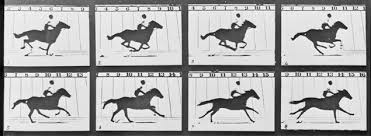
  1. SELECTION OF FILMS: This is the make-or-break category for festivals. The approach of OCFF is the deeper the cut, the better. The more independent, the better. A respect of film history is evident, as is the driving force of showing films that haven’t really had a shot yet. The historical element was on display with the repertory (and 35mm print) screening of Dog Day Afternoon (followed by The Dog documentary on the real life bank robber John Wojtowicz); The Talking Heads’ Stop Making Sense; Director Michael Powell’s Peeping Tom and the 1975 documentary Eadweard Muybridge, Zoopraxographer. While history plays its part, the real value of this festival comes courtesy of the widely disparate selection of shorts, documentaries and narratives from extraordinarily passionate filmmakers.
  2. VENUES: My schedule limited my viewing to the Texas Theatre, the art-deco Kessler Theatre (normally a live music venue), and the new Bishop Arts Theatre Center. The first two have been restored and are a visual treat to explore, while BATC is more modern and very comfortable – though it’s “no food or drink” policy is borderline torturous for a festival. Saturday night’s screening on the Jefferson Tower rooftop offers some insight into the creativity of the OCFF group. All events and parties were held at area locales known for their unique flavor, including the historic Turner House.
  3. THE CROWDS: There is nothing more disheartening at a festival than standing in a long line and still not being admitted to a screening of interest. The number of venues and the overlapping schedule prevented this from being an issue at OCFF, though my understanding is the rooftop screening was at full capacity. The Texas Theatre lobby did get pretty tight at times as the sound/picture checks took place, but the inconveniences were brief. Another thing that helped, was that most of the attendees were there for films, not just to be seen at the scene (I’m talking to you L.A.)
  4. TRANSPORTATION: Unfortunately, the three main screening venues required driving for access, and there was no van or bus service provided. This was a minor issue as street parking was readily available most of the time. For out-of-towners, this could be a minor challenge.
  5. SPECIAL GUESTS: Given the type of films on the schedule, this category is crucial for the success of OCFF, and oh how they delivered! These deep cut film projects beg for Q&A and production backstory. A very high percentage of the screenings allowed for personal interaction with the passionate filmmakers. This is a treat for the viewer and a nice reward and opportunity for the filmmakers. Thom Anderson, the director of the 1975 Muybridge documentary spent quite a bit of time onstage, as did director AJ Edwards for his Sundance film The Better Angels. Especially interesting was PF Kluge, who wrote the original “Life Magazine” article that inspired Dog Day Afternoon. However the most fun was hearing from the first time filmmakers and learning of their inspiration and struggles. No matter where their careers lead, they will always have shown their finished project to a live audience.
  6. FESTIVAL VOLUNTEERS: There was no shortage of volunteers and they were friendly and available to assist. There did seem to be some issues tracking the badges as doors opened for screenings, but that was very minor.
  7. LOCAL FLAVOR: While the perfect set up would allow for walking distance between all screening venues and sponsor restaurants and cafes, the driving distance was only a few minutes between a very wide choice of local spots … these aren’t chain restaurants, but rather the independent spirit of the Bishop Arts District, which corresponds nicely to the OCFF. This entire festival is about flavor … especially local flavor.
  8. PERKS FOR FESTIVAL ATTENDEES: Swag was non-existent, but there were creative and unique events and parties, and even an online video contest to win a bicycle. The marketing plan for OCFF is to make sure all attendees want to tell their friends about the films, the venues, the music and the parties. It’s not a festival for the masses, but this group is exceptional at what they do.

muybridge Personally, I absolutely love the odd combination of history and cutting edge offered up by the Oak Cliff Film Festival. Learning more about familiar films (Dog Day Afternoon), while having our senses challenged by new material (Yakona), is about as good as it gets for movie lovers.

As you might expect, I spent a great deal of my time with documentaries – both the shorts and feature lengths. The two stand-outs both won Grand Jury Awards: A Man without Words (doc short by Zack Godshall) and Yakona (a beautifully photographed doc feature by Paul Collins and Anlo Sepulveda). My personal connection to both of these films led to warm and colorful conversations with the filmmakers.

Director Michel Gondry’s latest visual feast Mood Indigo featured other-worldly art design and set design, and the choice of The Better Angels as the festival’s closing film was spot on. The Terrence Malick influence on director AJ Edwards is unmistakable and the artsy look at Abe Lincoln’s childhood in Indiana left me wanting more. Because of all this … I can’t wait for OCFF number 4!

If you are in the Dallas area, check out The Texas Theatre:

http://thetexastheatre.com/

Learn more about The Oak Cliff Film Festival:

http://oakclifffilmfestival.com/

texas theatre


Adm. McRaven – Commencement Address (Univ of Texas, 2014)

June 18, 2014

mcraven This is not a typical posting for my site, and I certainly would not post a 19 minute video if I did not believe these words need to be heard by as many people as possible.  In May 2014, Naval Admiral William McRaven delivered a concise speech filled with wisdom and real-world (not political) advice for the graduating class of The University of Texas in Austin.  Yes, I am a UT alum, but that has little to do with why I believe Admiral McRaven’s message is important.  In fact, a tip of the cap to reader Doug Beck (Oklahoma roots and all) for making me aware of this.  I hope you will take 19 minutes for the message, and be inspired to pass along to others.

**NOTE: If you are a subscriber, the link to the video may not show up on the email version.  You can go directly to my site  https://moviereviewsfromthedark.com/ or to YouTube and search for “University of Texas 2014 Commencement Address – Admiral McRaven”


LAURA (1944) revisited

April 27, 2014

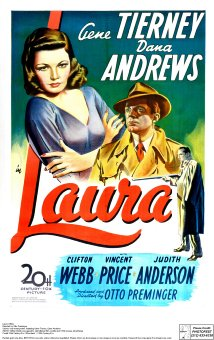
laura Greetings again from the darkness. Some movies from the 1940’s remain fun to watch for mostly nostalgia reasons. Others still hold up well today and can be enjoyed for the story, script, acting and production value. Director Otto Preminger’s Laura falls easily into the latter category. This quasi-film noir, murder mystery, creepy love story is based on the novel from Vera Caspary is probably more respected today than when it was released … 5 Oscar nominations, but not one for Best Picture.

To fully appreciate the film, it helps to know the tortured back story. This was always Otto Preminger’s baby, but Daryl Zanuck initially chose a different cast, a different director and a different ending. In the end, Preminger (Anatomy of a Murder) won all of his battles – directing Gene Tierney with the ending he wanted (thanks to Walter Winchell). TCM’s Robert Osborne correctly states that the film has one of the best opening lines: “I shall never forget the weekend Laura died“. The line is spoken by narrator Waldo Lydecker (great screen name) played by the elegant Clifton Webb.

Playing out as mostly a murder investigation led by the detective (Dana Andrews), we are treated to a stream of unusual story choices and only one scene at the police station … a terrific interrogation scene. Instead, we spend the entire movie on the turf of rich, high society types. There are at least four credible murder suspects and they are strung along by a mostly monotone detective, who only flashes personality on his date night with the dead girl’s portrait (well, that’s how it plays!) and when he is messing with a pocket baseball toy.

gene tierney Gene Tierney plays the titular Laura, and every time she appears on screen her startling beauty distracts us … just as it does the other characters in the film. Tierney was only 23 years old when this was filmed, and a couple years later she had a romance with young John F Kennedy (though she became a long time supporter of Richard Nixon). Her tragic personal story was the basis for Agatha Christie’s novel and movie The Mirror Crack’d. In the 1950’s a suicidal Tierney was treated with shock therapy in a sanatorium, and though she recovered, she struggled for the rest of her life. Her second husband was Houston oil man W Howard Lee, who had previously divorced actress Hedy Lamarr … another of the all-time screen beauties, who also turned down the lead role in Laura. Lucky guy.

The spirit of the movie comes courtesy of the magnificent performance of Clifton Webb as Waldo Lydecker. He is mesmerizing in his ability to take over every scene. This was Webb’s first “talkie” feature film – he left for the stage 15 years prior. The 30 year age difference between Waldo and Laura only works because Webb plays it as her society mentor, though it’s obvious he is obsessed.

Some of the best scenes and banter occurs with Webb and Vincent Price, who plays Laura’s fiancé. If you are only accustomed to Vincent Price in horror films, you will certainly get a kick out his odd role here as the virile, insecure fiancé. He also has some very good and uncomfortable scenes with the great Judith Anderson, who clearly lusts after the Price character.

The aforementioned portrait of Ms. Tierney was also used in 3 other films, and it’s interesting that Tierney and Andrews made 5 total films together. David Raskin’s haunting “Laura’s Theme” plays throughout the film in various fashions, and Joseph LaShelle won the film’s only Oscar – best black & white cinematography. This is certainly one of the best from the 1940’s and holds up very well today … enjoy the many facets of quality filmmaking.


**NOTE: None of the available online trailers are of acceptable quality, so I have decided not to post one


OSCARS recap (2014)

March 3, 2014

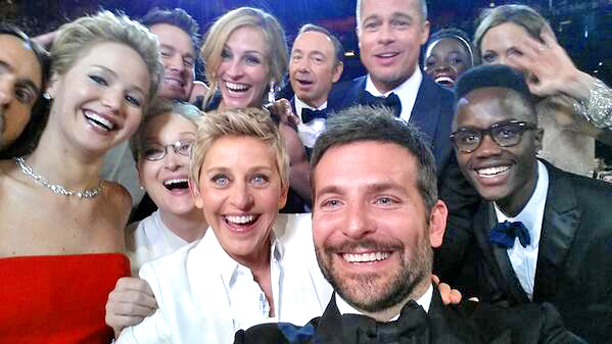
oscar twitter The 86th Academy Awards are over … after a mere 3 ½ hours!  Ratings and viewership were at a 10 year high, so ABC is thrilled.   Ellen DeGeneres is clearly a popular draw as host.   The nature of awards shows make them ripe for criticism, and sometimes the Oscars just makes it too easy.  But first, the good stuff.

If you follow my Oscar predictions, you know that I correctly predicted 21 of 24 winners. While that’s impressive, it’s clear that luck played a huge role. As I previously stated, many of the categories could have gone two or three or four different ways, but the  Gravity roll I was banking on did in fact happen … it finished the night with 7 Oscars, easily the most of any movie. What it couldn’t do was get past 12 Years a Slave for Best Picture, creating the rare “split” between director and picture.  The day after has been filled with much noise from the experts who felt strongly that Gravity was the best movie of the year. As I’ve said, I found it to be a visual feast in 3D IMAX, but can’t imagine it will have much staying power on home TV.

The 3 categories I missed were Costume, Live Action Short, and Animated Short.  My personal preference won two of those categories, and in quite a shocker, Disney’s Get a Horse didn’t finish as the top Animated Short.  Three of the four acting awards went to first time winners, and all acting winners gave very sincere acceptance speeches (Jared Leto and Lupita Nyongo’s were particularly terrific).  This is a good time to recognize Meryl Streep’s phenomenal 18th Oscar nomination during her 36 year career.  To put that in perspective, this was Bruce Dern’s second nomination … 35 years since his first one!  American Hustle was 0 for 10 in this year’s Oscars, narrowly missing the record of 0 for 11 held by both The Color Purple (1985) and The Turning Point (1977).  Even more startling, of the 32 nominated feature films (not counting foreign language, documentary, or shorts), only 7 films walked away with a statue.

There were many frustrating (for me) points during the ceremony. The seemingly endless gags on pizza and Twitter (picture, above) were a silly waste of time and caused many East Coast viewers to stay up much later than necessary.  Also confusing was the decision to have Bette Midler sing the tribute song AFTER the slideshow honoring those who have passed away since last year’s ceremony. Having her sing during the slideshow would have been more touching and saved 3-4 minutes.  Ellen’s cruelest joke of the evening was directed at Liza Minnelli … and inexcusable in my book. Ms. Minnelli and her sisters were invited guests for the 75th anniversary of their mother’s (Judy Garland) classic 1939 hit The Wizard of Oz.  To be hit with such a cruel comment just minutes after the show opened must have been humiliating.

The cringe-inducing moments did not stop there.  How about the parade of less-than-perfect plastic surgery results?  The most obvious and difficult to look at were John Travolta, Kim Novak, and Goldie Hawn.  And if the fake hair and face weren’t enough, Mr. Travolta botched his introduction of singer Idina Menzel by inexplicably calling her “Adele Dazeen”.  At the other end of the spectrum, 67 year old Sally Field is the poster child for aging gracefully.  For me, the most uncomfortable moments came courtesy of the rift between “Slave” director Steve McQueen and writer John Ridley.  An historic night for both of them should have allowed for a respectful sharing of the moment, rather than the icy cold shoulders and petty acceptance speeches.

The highlights of the evening helped offset the negative.  I found all of the musical moments to be really enjoyable: Pharrell Williams managed to get the stodgy crowd up on their feet, Karen O’s ballad was short and sweet, U2 unplugged added a touch of rock’s elite, and Broadway star Idina Menzel showed off her extraordinary voice singing the winning “Let it Go”. Pink elegantly performed the “Oz” tribute, and 75 year old Darlene Love brought down the house with her powerful pipes while singing her acceptance speech.

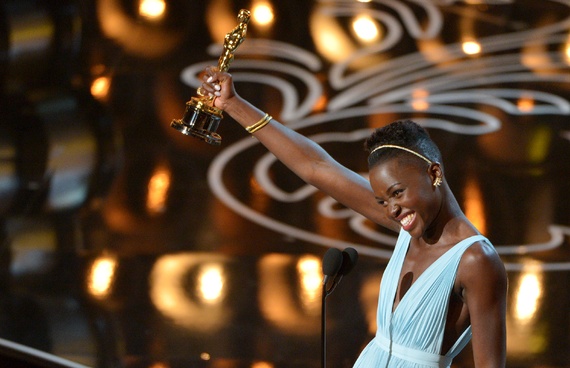
We also witnessed the youngest and newest member of EGOT, as Robert Lopez’ Best Song Oscar finished off his Emmy, Grammy, Oscar, Tony collection.  So after all the predictions, good and bad jokes, musical interludes and pointless hero montages, the single best moment of the night for me was the speech delivered by Best Supporting Actress Lupita Nyong’o, including the inspirational final line, “No matter where you’re from, your dreams are valid.”  In a room full of egos, it’s that line that sticks.

lupita oscar