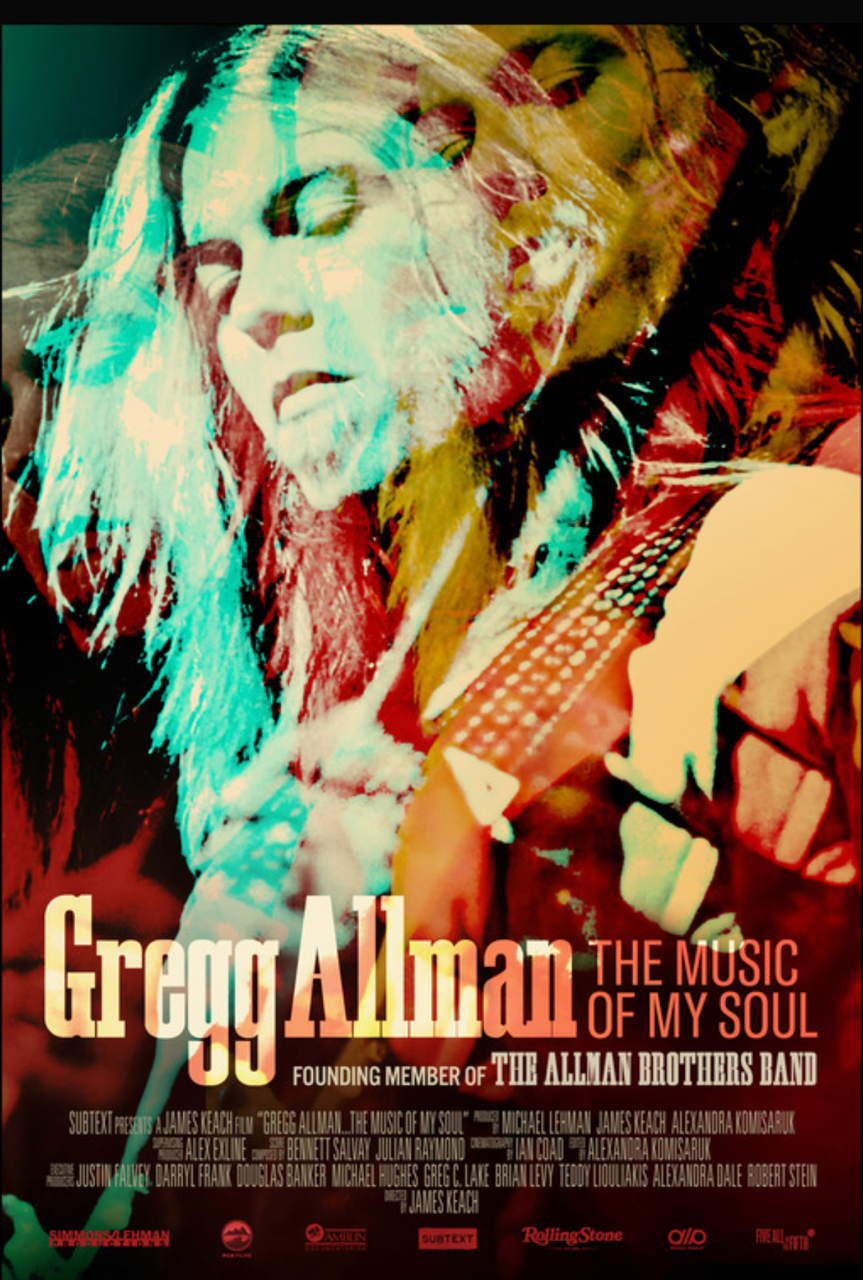
 Greetings again from the darkness. The songs are part of music history: “Whipping Post”, “Midnight Rider”, “In Memory of Elizabeth Reed”, “Melissa”, and “Ramblin’ Man”. Their album, “Live at Fillmore East”, is considered one of the best live albums of all time. The Allman Brothers paved the way for a couple of hugely Southern rock bands, Lynyrd Skynyrd and the Marshall Tucker Band, and they were influential to the work of countless other bands and musicians. Of course, a documentary about Gregg Allman must include much about the band, yet documentarian James Keach does tremendous work here maintaining the focus on the man. Mr. Keach is mostly retired from a long acting career, yet he’s continued to take on directing gigs across the past thirty-plus years – including a couple of other documentaries on musicians: LINDA AND THE MOCKINGBIRDS (2020) and GLEN CAMPBELL: I’LL BE ME (2014).
Keach used a 2014 interview given by Gregg as the foundation for this profile. Sure, it’s unusual to have such a reluctant rock star, but if somehow nothing else shines through as you watch this, you’ll certainly come away recognizing the Gregg Allman was a shy and sensitive man who dodged the spotlight when not on stage. Wait a minute (you might say) – didn’t he marry Cher at the height of her pop star career (not exactly low key)? The answer is yes, and as Cher notes here, they separated just a few days after the vows – turns out Gregg was not willing to live his life as a full-blown celebrity. The point of all this is that the rarely seen 2014 interview offers the only glimpse of himself that we get from Gregg. The rest comes from those he knew, those he married, the kids he fathered, and musicians he played with and influenced (Chuck Leavell, Jackson Browne).
Gregg was prolific at two things: songwriting and getting married (7 wives). But he was only really good at the former. His distinctive singing voice tears into the guts of “Whipping Post”, while capturing the bluesy longing of “Melissa” (a song Gregg wrote as a homesick 17 year old). We learn that even though Gregg was first to play guitar, big brother Duane took it over and Gregg began a love affair with a Hammond organ. Duane went on to become a legendary session man and then the leader of the Allman Brothers band. Keach includes some terrific photos of young Duane and Gregg together, and we hear the childhood stories – including the murder of their father.
As you would expect for a band creating a new sound, things were not easy. Band names (Allman Joys, Hour Glass) preceded Allman Brothers, as Gregg was the last to join. It was their 1971 live album, “At Fillmore East”, that rocketed the brothers and the band to fame. Tragically, a motorcycle accident killed brother Duane shortly thereafter. He was only 24. The band managed to stay together, but the shock deeply affected members of the band, especially Gregg (drugs and alcohol became a problem) and bassist and founding member Berry Oakley (also from a motorcycle accident).
We hear stories from some of Gregg’s wives and daughters, as well as his musician son, Devon. The humanity of the man is crystal clear as those closest to him recount his life – one in which he ultimately got sober. In 2014, Gregg and others collaborated on the “All My Friends” benefit concert after Gregg revealed he had liver cancer. He and another founding member of the band, Butch Trucks, died in 2017, while Dickey Betts passed in 2024. Drummer Jaimoe is the only surviving member of the Allman Brothers band formed in 1969 Jacksonville, Florida. Documentarian James Keach has delivered a stellar profile of Gregg Allman the man, while also paying tribute to the band, the songs, and the family.
Opens in theaters on June 17, 2026

