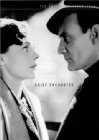
BRIEF ENCOUNTER (1945)

July 5, 2012

 Greetings again from the darkness. The Magnolia Theatre in Dallas included this one in its Summer Classic series and it drew a decent sized audience, even though the one-night-only showing was on the same evening as many of the local fireworks shows for Independence Day. If you are unfamiliar with this film, you should know that it garnered director David Lean his first of seven Oscar nominations. In contrast to this “little” film, Lean went on to direct such epics as The Bridge on the River Kwai, Lawrence of Arabia, and Doctor Zhivago.

Marital infidelity has long been a favorite topic in Hollywood … umm … I mean on screen. Rarely is it treated with such respect as it is here. The story is based on a short play from the great Noel Coward. With numerous scenes added for the film version, it never feels forced or over-written. What really makes this one standout is that the two lead characters are basically happily married people who just stumble into each other and a bond forms … despite their level-headed acknowledgments that it’s not a good idea.
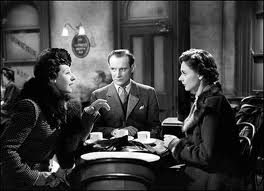
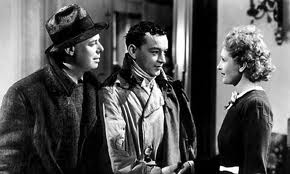
 Laura (Celia Johnson) and Alec (Trevor Howard) are just going about their daily routines when circumstances bring them together at the hectic train station. We learn this in the opening scene (pictured left) through the internal-dialogue (narration) coming from Laura. See, the bulk of the movie is a flashback as we are really starting at the end. This opening scene is brilliant as we can all relate to the frustration Laura feels as her yappy, but well-meaning friend, unwittingly crashes the going-away party. We see the torture on the faces of Laura and Alec, but it takes the rest of the movie for us to get the full story.

 The setting of a train station adds a time-sensitive element to the rushed time together. While they bond through tea, food and movies, the train whistle is the reminder that the precious moments are at the mercy of a schedule that won’t allow for flexibility. This is no Meet-Cute of which films today seem to think is a required element. No, these are two real adults who have not before noticed an element missing in their lives. Perhaps Coward is saying that nothing must be missing for two kindred spirits to connect, but that the real choice continues to lie within each of us … loyalty, fidelity and judgment are on constant alert.

 It should be noted that Celia Johnson’s performance really carries the film. She was nominated for an Oscar and is just brilliant in her emotional roller coaster ride. Trevor Howard, a strong character actor, makes a terrific partner for her. They strike us as real people, not movie stars, caught in a real life dilemma. To prevent an over-wrought emotional wringing, we get the comedic balance of conductor Stanley Holloway and his flirtatious ways with prim and proper shopkeeper Joyce Carey. Their playful (yet similar) relationship counteracts the upper-crust complexity of Laura and Alec.

The film and its players offer up a few interesting side notes. Celia Johnson was not a fan of acting. She was seduced into playing the role after her friend Noel Coward personally read the script to her. Celia was married to Peter Fleming, older brother of Ian Fleming – he of James Bond fame. Noel Coward had a multi-faceted career that included playwright, actor, songwriter and singer, novelist and even director. Mr. Coward personally selected the Rachmaninoff piano concerto that so wonderfully accompanies the movie’s happenings. The bookstore shown in the film was later spun off from Boots Pharmacy, which only this year was purchased by Walgreens. Lastly, the film was originally banned in Ireland for showing marital infidelity in such a positive light. Though released in 1945, it wasn’t shown in the United States until 1946, thereby pushing the Oscar nominations to 1947.

** Note: don’t mistake the 1974 TV version featuring Richard Burton and Sophia Loren for this far superior David Lean version

watch the trailer:


THE RULES OF THE GAME (La regle du jeu, FR, 1939)

July 4, 2012

 Greetings again from the darkness. What a thrill to see both of director Jean Renoir‘s masterpieces on the big screen within a couple of weeks of each other. The other is Grand Illusion and the two could not be less similar. In this film, Renoir presents a farcical display of societal “rules” of the time, and even draws a parallel between the upper crust and working class when it comes to love and lust.

The film was not well received upon its initial release because, times being as they were, very few enjoyed laughing at themselves. The film was seized by both the French government and later the Nazi’s. Both labeled the film dangerous to society. The original negatives of the film were destroyed and the film was pieced back together in the 1950’s and now, with technical advancements, we get to watch a beautiful print as Renoir intended. Today, however, it is quite fun to see how Renoir was poking and prodding and very precise with his aim.

 The story begins with the heroic landing of French aviator Andre Jurieux (Roland Toutain) after his solo trans-Atlantic flight. Once you realize this is 10 years after Lindbergh’s flight, you start to understand why the French were not pleased with the film. To make it worse, Jurieux acts like a teenager as he pouts in public when he realizes the woman he loves didn’t come to welcome him home. Nevermind that Christine (Nora Gregor) is married!

 Circumstances bring many to the country estate of Christine and her husband Robert de la Chesnaye (Marcel Dalio) for a hunting expedition. What we actually have is a gathering of wives, husbands, mistresses, lovers, house servants, and French ruling class in a tangled web that obviously influenced Robert Altman for his classic Gosford Park. Robert’s mistress (Mila Parely) is there and though Robert has promised Christine the affair is over, a wonderful scene finds her lowering binoculars to spot the two kissing in the distant. This leads Christine to be a more open to the advances of Andre the aviator.

 To bring in a bit more fun and action, we see the working class mirror the actions of their bosses. Lisette (Paulette Dubost) is married to the gamekeeper Schumaker (Gaston Modot) who doesn’t take kindly to poacher Marceau (Julien Carette) making advances on Lisette. During the shenanigan’s, Octave (Jean Renoir himself) alternates as both an entertaining clown/bear and peace-keeper to ensure that he is continued to be welcome into Robert’s home. He is a bit of a hanger-on.

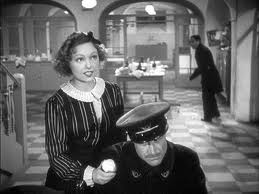
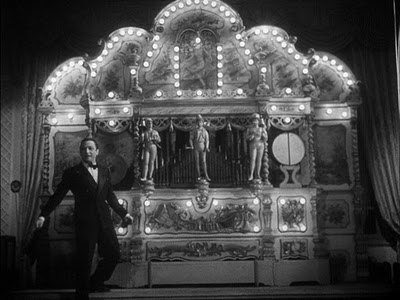
 There is little plot per se, though we do get a surprising, erroneous murder, and that event brings even more unclear thinking to the group. The key to the film is the wonderful direction of Renoir. So much is going on simultaneously that your eyes must stay sharp and alert. Few directors of the time used such depth in the action … pay attention to the foreground and background or you’ll miss something! My favorite scene is when Robert unveils his latest find – a mechanical musical gadget (pictured left) that runs on precision. It’s in stark contrast to the party and the lives of these people.

** Note: Marcel Dalio and Julien Carette appear in both The Rules of the Game and Grand Illusion

watch the trailer:


ANDY GRIFFITH remembered (1926-2012)

July 3, 2012

 It was announced today that Andy Griffith (1926-2012) had passed away.  Tributes that come too late are kind of sad, but it’s important to discuss what a multi-talented, beloved and influential performer he was for over 57 years.  Very few entertainers are talented enough and fortunate enough to have success in one category, much less many.  Andy (it just feels right to call him that) had success in comedy, with music, on Broadway, in movies, and of course, on TV.

 Thanks to syndication, most everyone recognizes him as Mayberry Sheriff Andy Taylor in “The Andy Griffith Show”, which ran from 1960-68.  Not only was the theme song iconic … you are probably whistling it now … but Andy taught life lessons to many of us through his folksy, down home wisdom.  He was a surrogate father for us as he taught his son Opie (played by Ron Howard, the successful movie director) right from wrong, and how to treat people.  Andy also recognized the comic greatness of Don Knotts’ Deputy Barney Fife (one of TV’s best ever characters), so he made the artistic decision to play the straight man as Knotts received the accolades.  The show (itself a spin-off from “Make Room for Daddy”) was responsible for numerous spin-offs and Griffith remained lifelong friends with both Howard and Knotts.  Howard is one of the few surviving actors from the show, along with Betty Lynn (Thelma Lou), Jim Nabors (Gomer), and Clint Howard (Ron’s brother).

The other TV show many know Andy from is “Matlock”, which ran from 1986-95.  He played the titular character, who was a colorful, folksy, frumpy old time attorney who had an amazing ability to win cases against all odds … all while sporting a wrinkled, sky-blue seersucker suit.  The ratings were huge as viewers embraced the man who seemed to have a knack for justice … doing the right thing.  Sound familiar? This persona is why Griffith was always so popular.  He made us believe we knew the real him … that’s an audience connection most performers never experience.

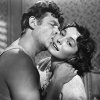
 What many don’t know is that Andy got his start with music and stand-up comedy on early TV shows like “The Steve Allen Show” and “The Ed Sullivan Show”.  His comic routine “What it was, was Football” was an early comedy classic and had success on the charts.  He also was a Tony nominated performer on Broadway for “No Time for Sergeants”.  He later reprised his role for the film version, and on the set is where he first met Don Knotts.  Griffith’s film debut was for A Face in the Crowd (1957, pictured left), directed by Elia Kazan (A Streetcar Named Desire, On the Waterfront, East of Eden).  Many who see this film for the first time are stunned at the Griffith performance.  The familiar folksy style that we immediately recognize, actually hides a power-mongering personality that was used to highlight the power and danger of TV, when used by the wrong people (still an issue all these years later). I believe TCM will include this film in its day of tribute to Andy Griffith later this month, so if you haven’t seen it, please give it a look.

 Andy Griffith once said that Sheriff Andy Taylor was “a better man than I am”.  This humble statement sells himself and his influence quite short.  Most of his career was spent playing characters whom we could trust and learn from.  We trusted him so much that when he told us everything tastes great on a Ritz cracker, we believed him… and sales spiked.  The ultimate test of a man is his loyalty to his friends.  Despite his own personal challenges, Griffith found his way clear across the country for one last visit with his friend Don Knotts, before Knotts passed away in 2006.  While it’s an unfair burden to place on anyone, I will remember Griffith as a very talented performer, but more importantly, as one who taught me some basic tenets in being a better man.

There were just too many classic scenes to choose from, so will close with this:


SEEKING A FRIEND FOR THE END OF THE WORLD (2012)

July 2, 2012

Greetings again from the darkness. First time director Lorene Scafaria is best known for her wonderful script for Nick and Nora’s Infinite Playlist. Directing her own script here, we are left wondering if the gaps are in the writing or directing, but it’s clear Ms. Scafaria loves long titles. Matilda, a giant asteroid, is headed towards Earth and life will cease to exist in 3 weeks. Upon hearing this news, Dodge’s wife Linda (played by Steve Carell‘s real-life wife) takes off running away from him and supposedly into the arms of her secret love affair partner.

Dodge (Carell) has little reaction to the bailing of his wife or even to the impending Armageddon. In fact, he strikes us as the guy who has had little reaction to much in life and has no idea who he really is. While he does have some acquaintances and a predictably boring job at an insurance company, Dodge shows no inclination to join in the festivities of excess (drugs, sex, religion, riots) enjoyed by others, and instead offers up a lame, sure-to-fail suicide attempt to go with his droopy demeanor and overall lethargy.

It takes little time for Dodge to be saddled with an abandoned dog named Sorry and a crying neighbor named Penny (Keira Knightley). This part of the film is actually its best feature. We get the forced partnership of this odd couple and a road trip that allows for some interaction with others. The others include standout scenes with William Peterson, Bob Stephenson and TJ Miller (below, left, the host at Friendsy’s, a TGIF themed diner that devolves into a lovefest that neither Dodge nor Penny care to partake.

 The road trip does have the outline of a purpose. Dodge wants to re-connect with his high school sweetheart and Penny wants to get home to England in time to say goodbye to her parents. However, it’s pretty clear that the main reason for the road trip is to allow Dodge and Penny to fall in love. Just another apocalyptic rom-com.

I totally get the “opposites attract” approach, but I found Knightley to be far beyond quirky (John Cale and Leonard Cohen vinyl) and closer to her mentally unstable character in the first hour of A Dangerous Method. As for Dodge, he may be the nice guy that Penny sees, but mostly his life force hovers just above zero, while wearing sweaters that would fit right into Mr. Rodgers’ neighborhood. It’s not until he visits his estranged dad (Martin Sheen) that he shows signs of a pulse.  It’s kind of interesting to pay attention to the names in the film.  Dodge is ironic given what’s headed toward Earth.  Penny may or may not be lucky depending on your interpretation.  A survivalist named Speck, who doesn’t get that his preparations make no difference.  And, of course, a dog named Sorry.

2011 brought us two fascinating end-of-the world films in Melancholia and Another Earth.  This one avoids the manic depression of one or the science fiction of the other. While I never really bought into the heightened attraction of these two who miraculously become kindred spirits thanks to the time constraints, their relationship does provide fodder for thought. What would you do if you knew things were ending in 3 weeks? Would your true self finally make an appearance? If so, what are you waiting for? The message really is … our time is limited so don’t waste it.

SEE THIS MOVIE IF: you wouldn’t mind a little Herb Alpert with your apocalypse OR you need a primer in the greatness of vinyl records, even if the knowledge won’t help once the asteroid hits

SKIP THIS MOVIE IF: a hyper, twisted-faced Keira Knightley is not your ideal partner at the end regardless of the pristine condition of her John Cale and Leonard Cohen albums

watch the trailer:


TED (2012)

July 1, 2012

 Greetings again from the darkness. Upon watching the trailer, it would be easy and understandable to simply write off this movie as a ridiculous piece of junk produced merely to capitalize on the popularity of Seth MacFarlane (“Family Guy” creator). That would be a mistake. While much of what Ted has to say will burn your ears, the insight that goes into his lines is often unmistakeably brilliant.

The movie opens with terrific narration from Patrick Stewart. It’s done in A Christmas Story style, only with a caustic and deadpan irreverence that will jolt you before the opening credits have even rolled. We learn the story of 9 year old John Bennett, a social outcast who receives a teddy bear for Christmas. First, what parent buys their 9 year old a teddy bear??? Anyway, that night, under the covers, young John wishes that he and Ted could be lifelong friends. In the morning, he awakes to find a sweet, lively teddy who startles everyone.

 The talking bear becomes an instant celebrity and is even booked on the Johnny Carson show … the first of many 1980’s pop culture references. As in the case of Corey Feldman (pointed out by the narrator), celebrity often fades. Flash forward 25 years and John (Mark Wahlberg) and Ted are living together with John’s girlfriend (Mila Kunis). The boys spend most of their time smoking pot and watching TV re-runs and worshiping the 1980 Flash Gordon cult movie. It’s a typical man-child existence except that one of them is a vile, 4 letter-word spewing teddy bear, and there is no logical reason that the beautiful Kunis hasn’t walked away from the four year relationship with the hapless floater John.

 Mr. MacFarlane’s true talent lies in laughing at our societal norms and encouraging us to laugh at ourselves. He does this through Brian, the pet dog on “Family Guy“, and now here with a talking teddy bear. He holds little back in ripping our obsession with celebrity, our near-clinical anxiety towards all things Politically Correct, and the villainous ways of entitled corporate types (played here by Joel McHale). Luckily the same rules don’t apply for talking teddies, so we hear things that we aren’t even allowed to think. Because he can, MacFarlane mixes in his love of the 80’s with numerous references and we even get odd cameos from Tom Skerritt, Nora Jones and Ryan Reynolds. The most bizarre reference takes up a substantial part of the movie … Sam Jones, the star of Flash Gordon, appears as an aged party animal, teaching the boys some new tricks. Most of this will be dead time to those unfamiliar with the 1980 movie … and evidently few of us have been impacted by it like MacFarlane.

 Ted is a mash-up of John Waters, Bad Santa, Jackass and just about every stereotypical slacker-buddy movie from the past 25 years. It’s all of that and none of that at the same time. Depending on your viewpoint, Ted is either a crass, irreverent, totally inappropriate waste of movie time, or it’s a comical, insightful observation on where we are as a society right now. Only you can decide … just please don’t take your kids.

SEE THIS MOVIE IF: you always wished your teddy bear would come alive OR you have a freakish attraction to Flash Gordon

SKIP THIS MOVIE IF: your preference in comedy leans towards the sweet and innocent (two words that have no place near this movie)

watch the trailer: