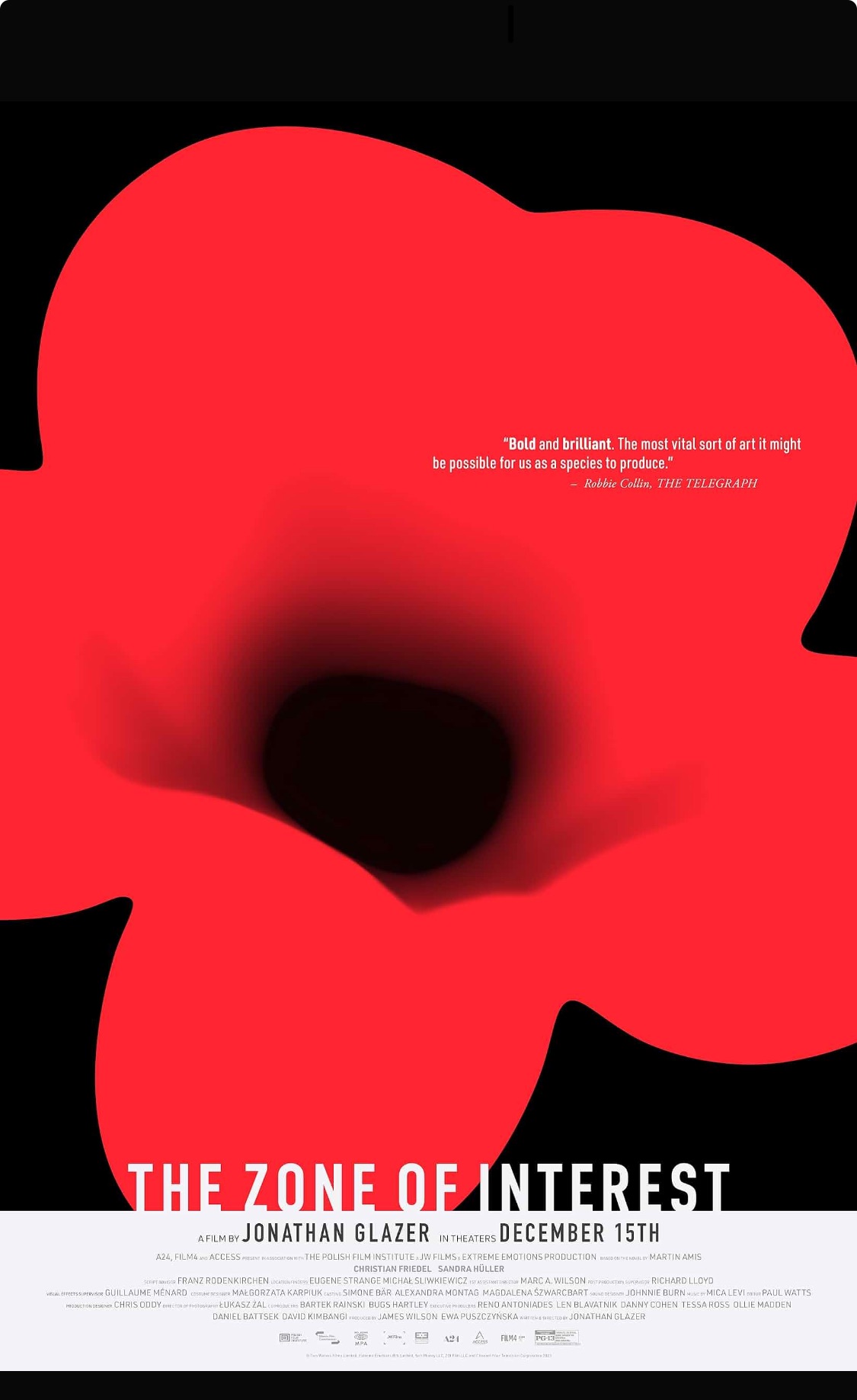
 Greetings again from the darkness. I’ve always had an issue with movies that portray the human or “normal” side of Nazis. Of course, we understand these were human beings – many caught in a no-win situation of self-preservation; however, we just find it so difficult to accept that decent people could carry out these orders of atrocities. Writer-director Jonathan Glazer (UNDER THE SKIN, 2013, SEXY BEAST, 2000, and numerous music videos) has loosely adapted the screenplay from the 2014 novel by Martin Amis, who passed away the same day the movie premiered at Cannes.
Glazer opens the film with a totally black screen. It lasts 2-3 minutes, and feels longer. He purposefully sets us up to fine tune our listening skills for his film that is every bit as much about sound as it is visuals. As the picture comes into focus, we find a family enjoying a day of sun and swimming at a river. When the dad stumbles on something, he immediately gathers up the kids and everyone heads home to bathe.
The man is Rudolph Hoss (played by Christian Friedel), the commandant of Auschwitz concentration camp in Poland during WWII. He and his wife, Hedwig “Heddy” Hoss (Sandra Huller, who also stars in ANATOMY OF A FALL, another outstanding film this year) are raising their kids in a beautiful home with a backyard that borders the wall of Auschwitz. While their servants clean and cook, Hedwig tends to her lush garden while the kids play in and out of the house. Once I realized this family was living an ordinary life in this extraordinary setting, a knot formed in my stomach … a knot that took a couple of days to subside, and has returned as I write this review.
Background sounds include periodic screams of terror and pain, as well as distant gun shots blending with the sounds of kids chirping and women chatting. When cinematographer Lukasz Zal (IDA, 2014) shoots a certain angle, we see the smokestacks rising above the wall, though we don’t venture inside the camp gates, even for Rudolph’s birthday when the other Nazi soldiers pay their respects to him. Hedwig is seen picking through items seized from those slaughtered mere feet from her front door. She takes pride in her nickname, “the Queen of Auschwitz”, even as she readily nabs a luxury coat.
Plot and drama are not big players here. We briefly see Rudolph in meetings with Nazi officials as they brainstorm on methods of improving efficiencies of mass extermination. The closest thing to family drama occurs when Rudolph is promoted to Berlin, and Hedwig refuses to go, claiming “This is our home.” It’s an incredible statement highlighting the mental block (or acceptance?) she has of the proximity to horrific actions, and the fact that evil and cruelty is the family business.
The sound design from Johnnie Burn (NOPE, 2021) and score from Mica Levi (JACKIE, 2016) play vital roles in setting and maintaining the atmosphere in a movie that rarely shifts tone and is never in a rush. By offering a different perspective, director Glazer provides a haunting film that will stick with you. He ends things with a glimpse inside the Auschwitz-Birkenau Museum where we see piles of shoes, suitcases, etc. The whole film is chilling, and painfully contemporary despite its WWII setting.
Opens in theaters on December 15, 2023


 Posted by David Ferguson
 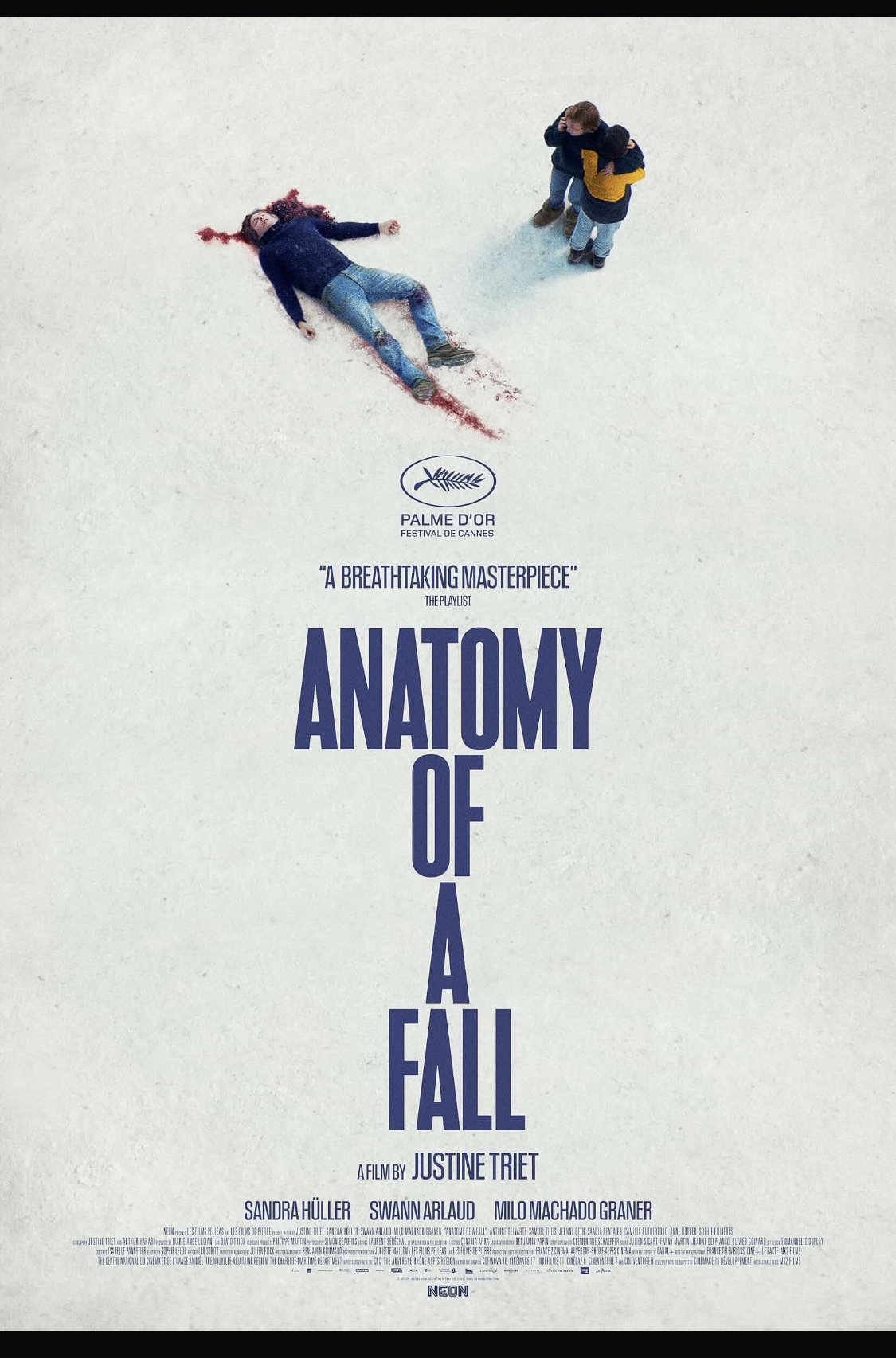 Greetings again from the darkness. It’s not really possible to combine a murder trial with divorce proceedings, but this year’s Palme d’Or winner at Cannes comes about as close as we can imagine. Writer-director Justine Triet and co-writer (and husband) Arthur Harari wrap a ‘did she or didn’t she’ murder mystery in a relationship drama that plays out in a gripping courtroom drama. As for the title, there is an actual fall which leads to the dissecting of the slow fall of the marriage, as well as the emotional fall of having one’s entire life laid bare in a public setting.
 Greetings again from the darkness. The thing about humans is that we are always looking towards the future to see how we can make things easier, better, or more exciting. This is often with an eye towards more fuel-efficient cars, smaller and more powerful computers, and more effective medical treatments. Writer-director Maria Schrader and co-writer Jan Schomburg have adapted the short story from Emma Braslavsky and turn the lens to relationships and love. Is it possible to advance inter-personal relations to the point of perfection? Would that even be desirable or preferable to the messiness that’s gone on since the beginning of time?
 Greetings again from the darkness. It seems reasonable to ask why someone didn’t take it upon themselves to stop Hitler before things went so far. Of course we now have 80 years of hindsight to benefit our thoughts, but surely there were those who recognized the reign of terror brewing. The 2017 international best-selling novel, “Munich”, by Robert Harris, has been adapted for the screen by writer Ben Powers, and is directed by Christian Schwochow. It has the look and feel of a political spy thriller, right down to the clandestine meetings, smoking jackets, and heavy mahogany furniture in the conference rooms.
 Movie Reviews from the Dark