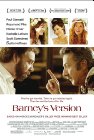
 Greetings again from the darkness. Ordinarily, a film with Rosamund Pike and Bruce Greenwood in key roles would be sufficient for me to stay home and watch The Weather Channel. However, Paul Giamatti and Dustin Hoffman, as son and father, in a story based on Mordecai Richler’s novel was motivation enough for me to buck up and give this one a shot. And what a pleasant surprise this film is.
Giamatti has mastered the role of cynical, self-absorbed, frumpy schlub and his Barney is every bit that. The story is told through extended flashbacks after we learn a detective has written a book accusing Barney of killing his best friend (Scott Speedman). No charges were brought and it’s not until the end, in an extremely creative reveal, that we understand what really happened that day at the lake. Unfortunately, we aren’t sure if Barney ever understands, but that’s a whole different topic.
Barney’s first marriage comes about because his girlfriend gets pregnant. This one ends in tragedy and betrayal and drives Barney to spend much of his life on the path of cynicism, alcoholism and cigar-chain-smoking. He is no pretty sight – from inside or out. He stumbles into his second marriage, this one to Minnie Driver. Ms. Driver is wonderful as the Jewish princess with a Master’s Degree. How do we know? She continually reminds us of both facts. Ever known anyone that just constantly reminds you of how smart they are? How this marriage ends leads to the whole suspicion of murder and loss of best friend for Barney.
The real key to the story occurs at his wedding. Instead of worshiping his new bride, Barney watches hockey, does shots with his Dad (Dustin Hoffman) and experiences love at first sight … not with his bride, but with a guest played by Rosamund Pike. This encounter puts Barney on a singular mission of winning over Ms. Pike, despite his marriage to Driver. Can’t really give anything away here other than the story is very clever in how it handles the pursuit, failed marriage and subsequent true love story.
 The only thing is, Barney never really “gets” what true love is. Pike has a wonderful scene where she explains that life and love are in “the seconds, the minutes, the routines”. Barney nods but is clearly in over his head in so many ways. Part of the genius in the script is that we somehow find ourselves pulling for Barney, despite his long list of faults and none-too-impressive quirks.
The other thing I really appreciate about this story is how there are so many relationships that seem to spring from reality … people we know in situations we’ve been in. The title, of course, refers to Barney’s version of reality. How he sees things. We could each replace his name with ours for a movie on our life. Do we see reality, or is reality how we interpret these seconds, minutes, routines? The answer seems pretty clear.
 The film is directed by Richard J. Lewis (not the comedian) but is really a product of the amazing story and talented cast led by the extraordinary performance of Giamatti. Dustin Hoffman’s scenes are all excellent, and his real life son Jake, plays his grandson in the film. Don’t miss the quick scenes featuring standout directors Atom Egoyan, David Cronenberg and Ted Kotcheff. It’s also character actor extraordinare Maury Chaykin‘s final film. And I certainly can’t omit mention of the fabulous, spot on soundtrack featuring T-Rex, JJ Cale, Donovan and others. Leonard Cohen‘s “I’m Your Man” plays over the closing credits so don’t leave early!
SEE THIS MOVIE IF: you thrill to well told stories that are extremely well acted OR you just want to admire Giamatti’s god-awful posture.
SKIP THIS MOVIE IF: you need a “good guy” lead character OR you are concerned that the sight of Paul Giamatti in boxers could lead to nightmares.


 Posted by David Ferguson

 Movie Reviews from the Dark