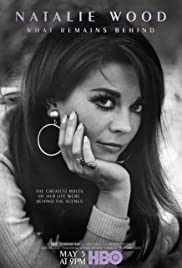
 Greetings again from the darkness. Natasha Gregson Wagner recalls hearing that the body of her mother, actress Natalie Wood, had been found near Santa Catalina Island. It was November 21, 1981 and Natasha was 11 years old. Now she’s a producer of this documentary, as well as providing her own perspectives, and conducting some of the interviews, in particular the one with her stepfather Robert Wagner. If you are looking for a definitive answer to one of Hollywood’s unsolved mysteries, you won’t find it here (or anywhere). Instead, it’s a dive into the life and career of one of our brightest stars through the words of her friends, family, and co-workers; plus some clips, personal home movies, previously unseen photographs, and Natalie’s own words.
Natalie Woods’ on screen luminescence lasted nearly forty years, which is remarkable considering she died at age 43. It’s noted that generations (plural) watched her grow up. She delivered memorable roles at all stages of her career: as a child actor playing the Santa Claus skeptic in MIRACLE ON 34th STREET (1947); as an angsty teenager opposite James Dean in REBEL WITHOUT A CAUSE (1955), as a blossoming young woman in SPLENDOR IN THE GRASS (1961); as a 1960’s swinger in BOB AND CAROL AND TED AND ALICE (1969); and in her final role (released posthumously) in BRAINSTORM (1983). She was nominated for 3 Oscars by the time she was 25, and is also remembered as Maria in Best Picture winner WEST SIDE STORY (1961), as famed stripper Gypsy Rose Lee in GYPSY (1962), co-starring with Steve McQueen in LOVE WITH THE PROPER STRANGER (1963), co-starring with Robert Redford in THIS PROPERTY IS CONDEMNED (1966), and opposite George Segal in the comedy THE LAST MARRIED COUPLE IN AMERICA (1980).
Clearly, given the films and roles listed above, Natalie Wood was the epitome of a movie star. She was beautiful, talented, and lived a life that kept her in the fan magazines (known today as tabloids). The film is structured in an unusual manner for a biographical documentary. A loose outline would start with the personal life (husbands, kids, love interests), then move into the career, and wrap up with her death, the aftermath of her death, and the impact she had on loved ones. Of course, there are many overlaps, but the key takeaway is that this is a very personal look by those who were connected to Natalie.
Laurent Bouzereau is a documentarian who has specialized in shorts and “making of” (behind-the-scenes) projects for 25 years. He’s also an author, movie buff, and known collector of movie memorabilia. Here he delivers a nice tribute to Natalie Wood, though one gets the feeling that Natasha had much to do with the final presentation. We see her interview Daddy Gregson and Daddy Wagner, the only names she ever remembers having for her biological father, British Producer-Agent Richard Gregson, and her stepfather Robert Wagner. Gregson, afflicted with Parkinson’s disease, died in August 2019, while Wagner is now 90 years old. Both interviews are personal to Natasha, though it’s the Wagner session that packs the most emotional punch.
Even when we hear about Natalie’s film career, it seems most want to talk about how likable and talented she was. This includes interviews with Robert Redford, Richard Benjamin, Mia Farrow, George Hamilton, and Mart Crowley. Mr. Crowley was a screenwriter and close friend who died recently (March 2020), and had met Natalie on the production of SPLENDOR IN THE GRASS. So while Ms. Woods’ career is important, even more time is spent on the personal side. Natasha and her sisters recall time with Willie Mae, their nanny who was like part of the family. We also learn of Natalie and Wagner’s (aka RJ) first date on her 18th birthday, as well as their two marriages to each other – with her marriage to Gregson, and relationship with Warren Beatty nestled between.
One of the more fascinating segments comes from Natasha reading excerpts from an unpublished first-person article Natalie had written for “Ladies Home Journal” in 1966. It reads like a diary and provided Natasha and us with personal insights we couldn’t have known. Natalie’s parents were Ukrainian immigrants, although not much time is devoted to Natalie’s stage mother or the strained relationship the family now has with Natalie’s sister (and actress) Lana Wood. Instead, the focus is mostly upbeat. Plus we all came for the Wagner interview to hear him speak about the night of Natalie’s death. It’s surprisingly emotional.
Natalie’s oft-reported “fear of dark water” is hit head on, and there is even mention of her overdose and mental struggles. But this is mostly a positive recounting of her life, and owes a great deal to Manoah Bowman’s biography “Natalie Wood: Reflections on a Legendary Life.” Bowman is also a producer on the film. Natalie Wood is one whose mysterious and much too early death has overshadowed her work, and as daughter Natasha says, the person she was.
The documentary premieres on HBO Tuesday May 5, 2020
watch the trailer:


 Posted by David Ferguson
 Movie Reviews from the Dark