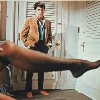
 Greetings again from the darkness. It’s the 45th anniversary of this film’s release and it was awarded a limited theatrical re-release, which I took advantage of last evening. Unlike so many films, the big screen doesn’t really bring anything special here, but then, it really doesn’t require any assistance. I fall into the category of those who consider this one of the all-time best films. Not only is it off-the-charts entertaining, the dialogue is brilliant, the performances are pitch perfect, and the camera work and soundtrack are highly complimentary.
 As my number of viewings have increased over the years, I have become a true admirer of the performance of Anne Bancroft as Mrs. Robinson. It is heart-breaking and emotional. The first glimpse of her always makes me smile … she is in the background as Ben (Dustin Hoffman) pinballs through the party trying to avoid the clutches of his parents’ friends. In her scene in bed when she tells Ben about her college background in art and how her dreams came crashing down, her voice and facial features are filled with pain. Watch the movie from Mrs. Robinson’s point of view and my guess is you too will have a renewed understanding.
Of course, the age differences of the lead actors breaks all of my “movie pet peeve” rules. Dustin Hoffman was 30 at the time and he is playing a soon to turn 21 year old Ben. Anne Bancroft has a line to Ben where she says she is “twice your age“. Actually, she was only 36 at the time, and Katharine Ross (Elaine) was 27. Also, William Daniels who plays Ben’s dad, was only 10 years older than Hoffman.
 The movie is based on the Charles Webb novel and the screenplay was written by Buck Henry, who also plays the hotel clerk with whom Ben has an ongoing dialogue. Calder Willingham is also credited thanks to a lawsuit brought after the fact. The director, Mike Nichols has had a terrific career, and was also a co-founder of Chicago’s Second City Improv. He is also one of only 12 EGOT’s: winners of an Emmy, Grammy, Oscar and Tony. One of Mr. Nichols’ most famous collaborators is Elaine May, who plays the roommate delivering the note to Ben … and is the target of a most interesting camera angle.
There are so many iconic moments and shots from the film. Everyone is aware of Mr. McGuire’s “Plastics” advice to Ben, and we see Norman Fell as Ben’s landlord who has no appreciation for “agitators“. It’s also fun to note that we see a glimpse of a young Richard Dreyfuss who says he’ll “get the cops“, and Mike Farrell (from “MASH”) makes his film debut as a bellhop at the hotel. It’s also the final screen performance for Alice Ghostley, who many know from “Bewitched”. One of the most famous film posters in history shows Dustin Hoffman photographed through the leg of Mrs. Robinson. Actually, that leg belongs to Linda Gray, who went on to fame as Sue Ellen Ewing in the “Dallas” TV series. It should also be noted that the pivotal Taft Hotel in the film is actually the very famous Ambassador Hotel, which of course, is where Presidential candidate Robert F Kennedy was assassinated in 1968. The hotel was later demolished in 2005.
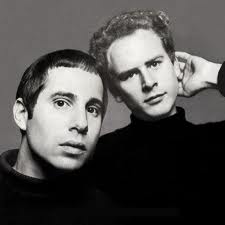 On a personal note, some of my favorite moments in the film include the shot of Mrs Robinson reflected in the glass top table as she arrives for her first night with Ben. Also, director Nichols allows the camera to linger on a furious and disgusted Bancroft as Hoffman shows up for his date with Elaine. And yes, it should be mentioned that Katharine Ross became the “dream girl” of the 1960’s thanks to this role and her role in Butch Cassidy and the Sundance Kid. As for the Simon and Garfunkel music, the most interesting piece is the unfinished “Mrs. Robinson” song that Nichols selected, even though Paul Simon presented it to him as “Mrs. Roosevelt” (as in Eleanor). Singing only the chorus and relying on acoustic guitar and an endless supply of Di-di-di’s, the unfinished version is a perfect fit for Ben’s pursuit of Elaine. One of my guilty pleasures from the film is courtesy of Murray Hamilton who seems to just choke on his lines as he spits them out to Ben – in both of their key scenes together. Hamilton went on to be Mayor of Amity in Jaws, but his career peak was in not shaking hands with Ben.
Though it’s not technically the final shot, the faces of Elaine and Ben on the bus is one of the most memorable endings in movie history … the cherry on top for one of my absolute favorite films.

Mrs Robinson opening up her personal life for Benjamin:


 Posted by David Ferguson



 Movie Reviews from the Dark