 Greetings again from the darkness. For those who think of Sydney Sweeney as just an attractive model for blue jeans or eye-candy on the red carpet, this is a movie that will change your mind. She plays tough. OK, not as tough as boxing champ and domestic violence survivor Christy Martin, whom she portrays here … but tough, nonetheless.
In a perfect world, writer-director David Michod (ANIMAL KINGDOM, 2010) and co-wrtiers Mirrah Foulkes (also Michod’s spouse) and Katherine Fugate would tell the uplifting story of the first great female boxer of the 1990’s and the first female boxer to make the cover of “Sports Illustrated” and fight on Mike Tyson’s undercard. While they do tell that part of the story, there is also the much darker aspect of Christy’s life. It’s actually a story of survival – and honestly, since I was not a boxing fan at the time, it’s the 2010 headlines of her surviving a vicious attack by her husband that come to mind when I hear her name. Michod and his cast handle both aspects very well.
It’s 1989 in rural West Virginia. Christy gets her first taste of boxing and takes to it immediately. However, her mother (Merritt Weaver, “Godless”) and meek father (Ethan Embry, “Sneaky Pete”) are humiliated by the rumors that Christy is hanging out with Rosie (Jess Garbor “Shameless”), a lesbian. When they threaten to send her to a priest for curing, Christy seizes the chance to pursue boxing. Trainer Jim Martin (Ben Foster) initially wants nothing to do with her, but he quickly realizes she could be his ticket to the big time.
The story follows Christy’s rise in boxing, while at the same time showing us the dark side of a relationship. Jim is an expert manipulator and controller, and Foster’s searing blue eyes deliver his patented icy and intimidating stare (in spite of that awful haircut) on more than one occasion. Shadowboxing in legendary promoter Don King’s (Chad Coleman, “The Wire”) office gives Christy the opportunity she needs in 1995. He labels her “The Coal Miner’s Daughter” and her pink outfits become a trademark.
Christy’s story has many parallels with the tragic Dorothy Stratten story. Her time as a Playboy model and violent fallout with her scumbag husband became the basis for Bob Fosse’s film STAR 80 (1983). In this film, when Michod finally shows the despicable act of Jim Martin on Christy, it’s stunning and memorable. We can’t help but think how unfortunate and tragic it was for Christy to battle both her husband and mother. Towards the end, we see the actual Christy Salters (she took back her maiden name) as a security guard who fist bumps the fighter on the way to the ring. It’s a nice touch. And kudos to Sydney Sweeney for taking on such a challenging role (physically and emotionally).
In theaters beginning November 7, 2025


 Posted by David Ferguson
  Greetings again from the darkness. For the sake of her friends, family, and self, I do hope Lynne Ramsay’s movies do not reflect her real-life persona. Don’t get me wrong … she’s an extraordinary filmmaker, but to put it mildly, her films are not what we would label ‘uplifting’. Proof of these two descriptions can be found in WE NEED TO TALK ABOUT KEVIN (2011) and YOU WERE NEVER REALLY HERE (2017), and now again in her latest. The 2017 English translated novel by Ariana Harwicz has been adapted by Ms. Ramsay, Enda Walsh (HUNGER, 2008) and Alice Birch (THE WONDER, 2022). It’s an absorbing film featuring what is likely the year’s best and most haunting performance.
 Greetings again from the darkness. Skipping the many films based on and around WWII and the Holocaust is understandable. Even the uplifting stories of heroism and survival are unsettling and tough to watch. However, so many lives lost in the name of a power-hungry madman means these stories must continue to be told – as a reminder to folks how dangerous and tragic it can be to blindly follow an authoritarian. Writer-director James Vanderbilt’s (TRUTH, 2015) second time directing is based on the writing of Jack El-Hai in “The Nazi and the Psychiatrist”.
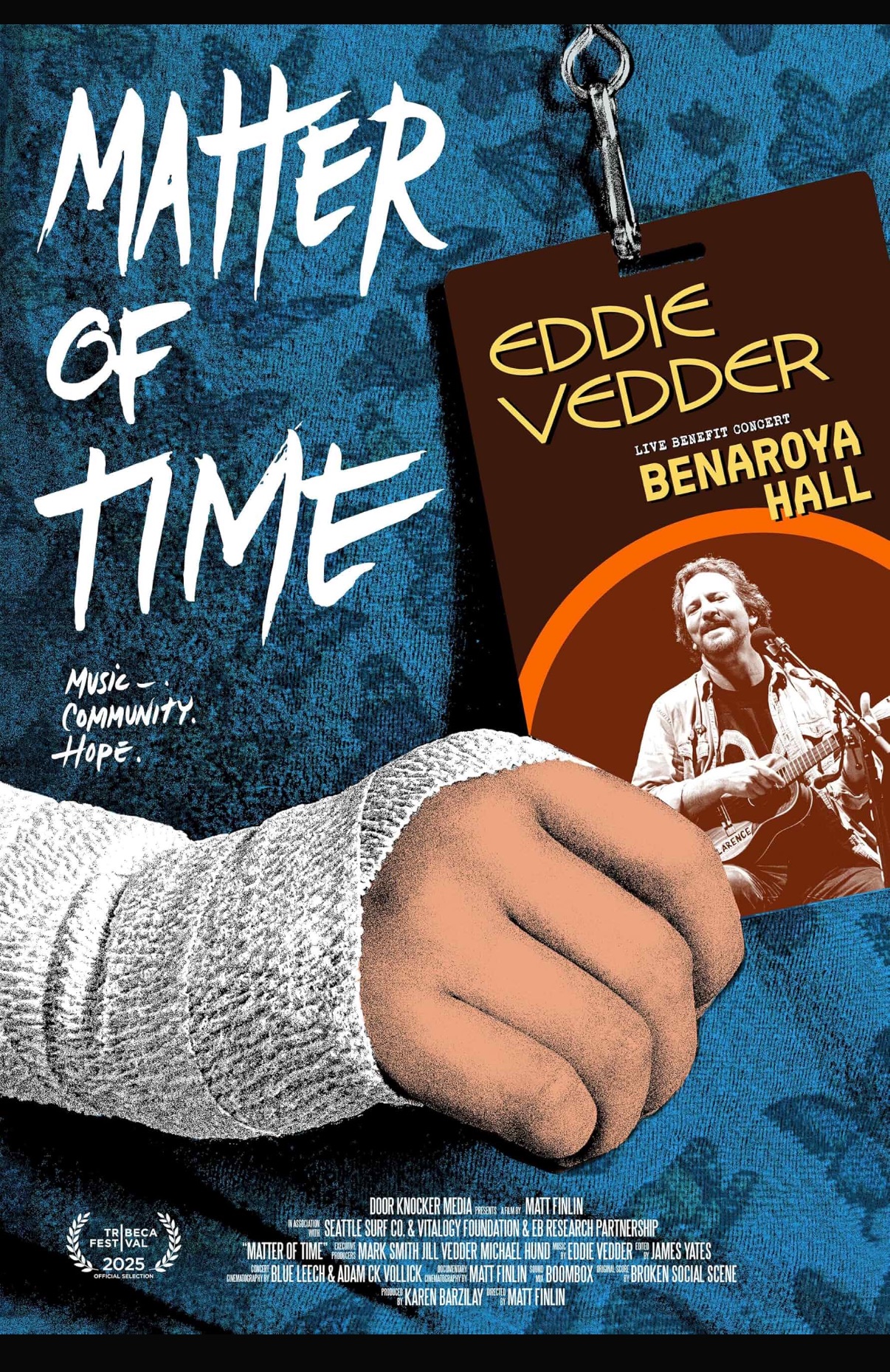 Greetings again from the darkness. Epidermolysis bullosa (EB) has been labeled as “the worst disease you’ve never heard of.” After watching this documentary from Matt Finlin, it’s safe to say EB is now one of the worst diseases I have heard of. Watching anyone suffer is torturous, and when those suffering are young and simply drew a short straw in genetics, the difficulty is even greater. The excruciating disease causes the blistering of skin and is typically visually apparent to all, requiring delicate and frequent bandaging to minimize further damage.
 Greetings again from the darkness. “How was your day?” It’s a question we have each asked and been asked thousands of times. In 1974, writer Linda Rosenkrantz thought the answer to the question would make a fascinating book … considering her plan was to talk to her New York City artist friends. She had already written her best-selling book “Talk” (1968), and her idea with this new project was to discover how people fill up their day.
 Greetings again from the darkness. Brace yourself for one of the first films to take on the societal and political changes occurring within the United States. This is an exceptionally well-made film with a stellar cast and an eye-opening cautionary message from writer-director Jan Komasa (Oscar nominated for the excellent CORPUS CHRISTI, 2019) and co-writer Lori Rosene-Gambino. It features a deep and talented cast and would make a formidable double-feature with last year’s CIVIL WAR (directed by Alex Garland).
 Greetings again from the darkness. It’s not Las Vegas. It’s not Monte Carlo. Somehow even more gamblers head to Asia, specifically the gambling capital of Macau … and that’s where this film from director Edward Berger (Oscar nominated for CONCLAVE, 2024) is set. Rowan Joffe (son of Roland Joffe, who directed THE KILLING FIELDS, 1984) has adapted the 2014 novel by Lawrence Osborne. That may be the last part of this that makes any sense.
 Greetings again from the darkness. Are you a good person? It’s really not that difficult to determine … although it does require a bit of honest self-reflection. The debut feature film from writer-director Rachel Wolther (co-written with Jesse Millward) is clearly meant to be comical satire, and even more clearly does not include me in the target audience. It seems to me the window for putting whiny, entitled complainers in the spotlight has closed, and these folks are more sad and annoying than funny. Still, since I’m likely in the minority, I’ll strive for objectivity here.
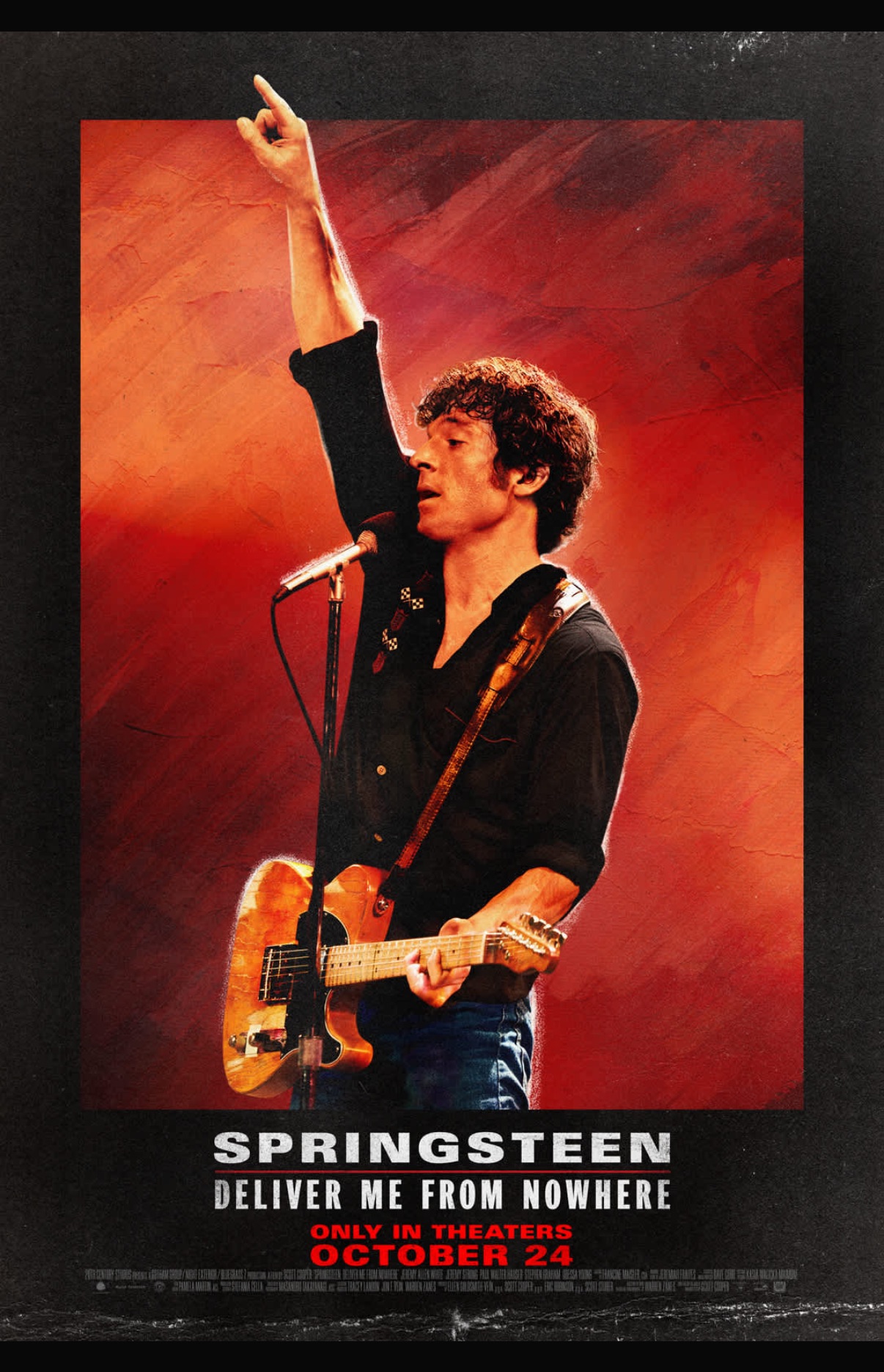 Greetings again from the darkness (on the edge of town). My connection to Bruce Springsteen’s music dates back more than 50 years and includes hitchhiking (from San Antonio) to a gig at the Armadillo World Headquarters in Austin. As much as I loved the early tunes from his first two albums, it was the 1975 release of the “Born to Run” album that spoke to me on a mystical level. His storytelling and anthems on that instant classic, as well as the next two albums, “Darkness on the Edge of Town” and “The River”, had a way of drawing us in for a pure escape. By 1981, Springsteen’s albums were huge and his live performances were legendary and exhilarating. It’s the time period just after that serves as the basis for this film from writer-director Scott Cooper, based on the 2023 book, “Deliver Me From Nowhere: The Making of Bruce Springsteen’s Nebraska” by Warren Zanes.
 Greetings again from the darkness. We all love a thrilling whodunit murder mystery. The best ones offer a magical blend of creative story, interesting setting, and fascinating characters. Writer-director Simon Stone (THE DIG, 2021) has delivered a film adapted from the best-selling 2016 novel by Ruth Ware. Frequent writing partners (SEBERG,2019) Joe Schrapnel and Anna Waterhouse collaborated with Stone to adapt the novel into a movie that looks great, and for the most part, fulfills the above listed requirements.
