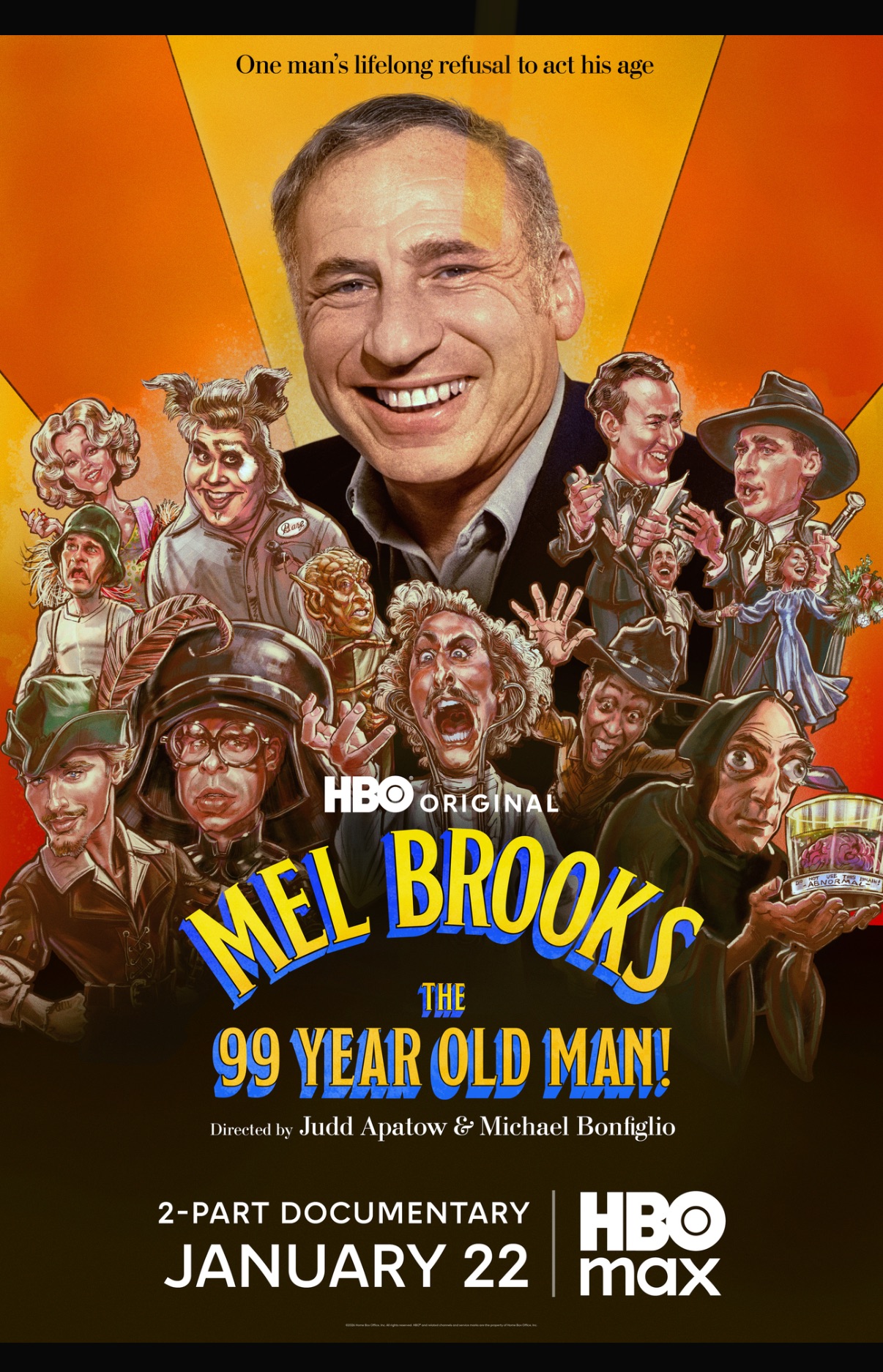
 Greetings again from the darkness. “Laughter is the best medicine.” Proof comes in the form of filmmaker Mel Brooks and this two-part HBO Documentary from two Emmy award winning directors: Judd Apatow and Michael Bonfiglio. The title is a take-off on Brooks’ age and his decades-long-running gag, “The 2000 Year-Old Man”. This is a film for anyone who is a fan of any of Mel Brooks’ eleven feature film comedies, his long track record of comedy writing (TV, film, Broadway), or a general history of the comedy forum. Two parts cover the familiar pieces of his career, while also putting his work into historical perspective, and offering insight into his personal life, his inspirations, and his romance and friendships.
A modern-day (quite candid) interview with Brooks provides the structure, and it’s fascinating to see a man who will hit the century mark very soon be so engaging as he recalls life moments – and even specific jokes that he wrote decades prior. The two-part presentation is generally in chronological order; however, a generous inclusion of archival clips and TV interviews and talk shows with Brooks provide not just valuable insight, but also extreme entertainment. We learn he and his brothers were raised by an optimistic mother who provided hope, despite their poverty in Brooklyn. When he was of age, he enlisted in the Army and fought in WWII. It’s no surprise that his comedy sense was influenced by Charlie Chaplin, Buster Keaton, and the Marx Brothers, yet Brooks is sure to include the Ritz Brothers as well. Much of his comedy work touched on his being Jewish … topics not always easy to laugh about in a post-war world. One of his great quotes: “If you don’t get killed in the Army, you learn a lot.”
The big break came when Sid Caeser hired him ‘off the books’ as a writer for “Your Show of Shows”. It was here where he worked with Neil Simon, Larry Gelbert, and Carl Reiner, the latter who would become a lifelong friend (and the straight man on “The 2000 Year Old Man” gag). By the mid-1960’s Brooks and Buck Henry would collaborate to create the TV hit “Get Smart”, a James Bond parody. The show’s success allowed Brooks to write his first screenplay for THE PRODUCERS (1967), which featured the now iconic comedy musical satire, “Springtime for Hitler” – and won him an Oscar. Brooks discusses his feeling of pride as a Jewish man being able to make fun of Hitler. It’s these moments that really hit hard in this documentary. Brooks felt a responsibility to poke fun at life’s inequities. It was with BLAZING SADDLES (1974) where he lampooned racism. It’s in this segment where Brooks discusses his professional teaming with Gene Wilder, and how (shockingly) Gig Young was originally cast as The Waco Kid.
Part Two of the documentary kicks off with Brooks’ classic (and my personal favorite) YOUNG FRANKENSTEIN (1974), which he co-wrote with the film’s star, Gene Wilder. His beautiful answer to the question of why he filmed in black and white: it is “a valentine to James Whale”, the director of many classic horror films, including FRANKENSTEIN (1931). The film goes through Brooks’ next films SILENT MOVIE (1976) and HIGH ANXIETY (1977), and what I found to be the most touching moment occurred as Mel Brooks watched a clip of his beloved wife, Anne Bancroft, in a scene from SILENT MOVIE. Love, admiration, and sadness are all visible on his face as the clip plays and he takes in this intimate memory. Although his HISTORY OF THE WORLD: PART 1 (1981) was not a hit, another clip reminds us of the immense talent of another actress, the late great Madeline Kahn (one of my all-time favorites). Brooks discusses what he viewed as the importance of bonding art with the power of comedy. We also learn of Brooks’ production company backing such prestige projects as THE ELEPHANT MAN (1980) and THE FLY (1986). Although he directed and acted in more films, the next great Mel Brooks achievement was taking “The Producers” to Broadway in 2005. The production won a record 12 Tony’s (second place is “Hamilton” with 11).
The career is truly unparalleled, and Mel Brooks laid the foundation for contemporary film comedy, yet what sets this documentary apart is the personal aspect. It’s clear Apatow (a very successful filmmaker himself) reveres Brooks and provides the forum for Mel to relay any bits he’d like to pass along. Sure, we hear the important role Brooks played for other Jewish entertainers like Adam Sandler, Sarah Silverman, Jerry Seinfeld, Nick Kroll, Ben Stiller, and Barry Levinson, yet beyond that, it’s the friendships with Norman Lear, Sid Caeser, and especially Carl Reiner that accentuate the life of the man. Having seen the “60 Minutes” segment, many of us know that elderly Reiner and Brooks would spend most evenings watching “Jeopardy”, yet it’s so touching to learn (from Rob Reiner) what happened after Carl passed away. We hear from Brooks’ sons and his granddaughter, and we hope they recognize the wisdom and life lessons presented here. One of Brooks’ best quotes and a driving force of his work: “I think I can say anything serious if it’s funny.” Brooks’ best advice: “Be kind”; and possibly his best joke: when asked, boxers or briefs? … Brooks answers “Depends”.
Part 1, January 22, 2026 HBO
Part 2, January 23, 2026 HBO


 Posted by David Ferguson
  Greetings again from the darkness. A terrific opening sequence finds Captain Jackie Velez (Lina Esco, “S.W.A.T.”) being ambushed by a couple of masked men. She manages to send a text as she returns fire. It’s her final text. This film from writer-director Joe Carnahan (THE GRAY, 2011; SMOKIN’ ACES, 2006) and co-writer Michael McGrale (“CSI: Miami”) was inspired by true events within the Miami Police Department.
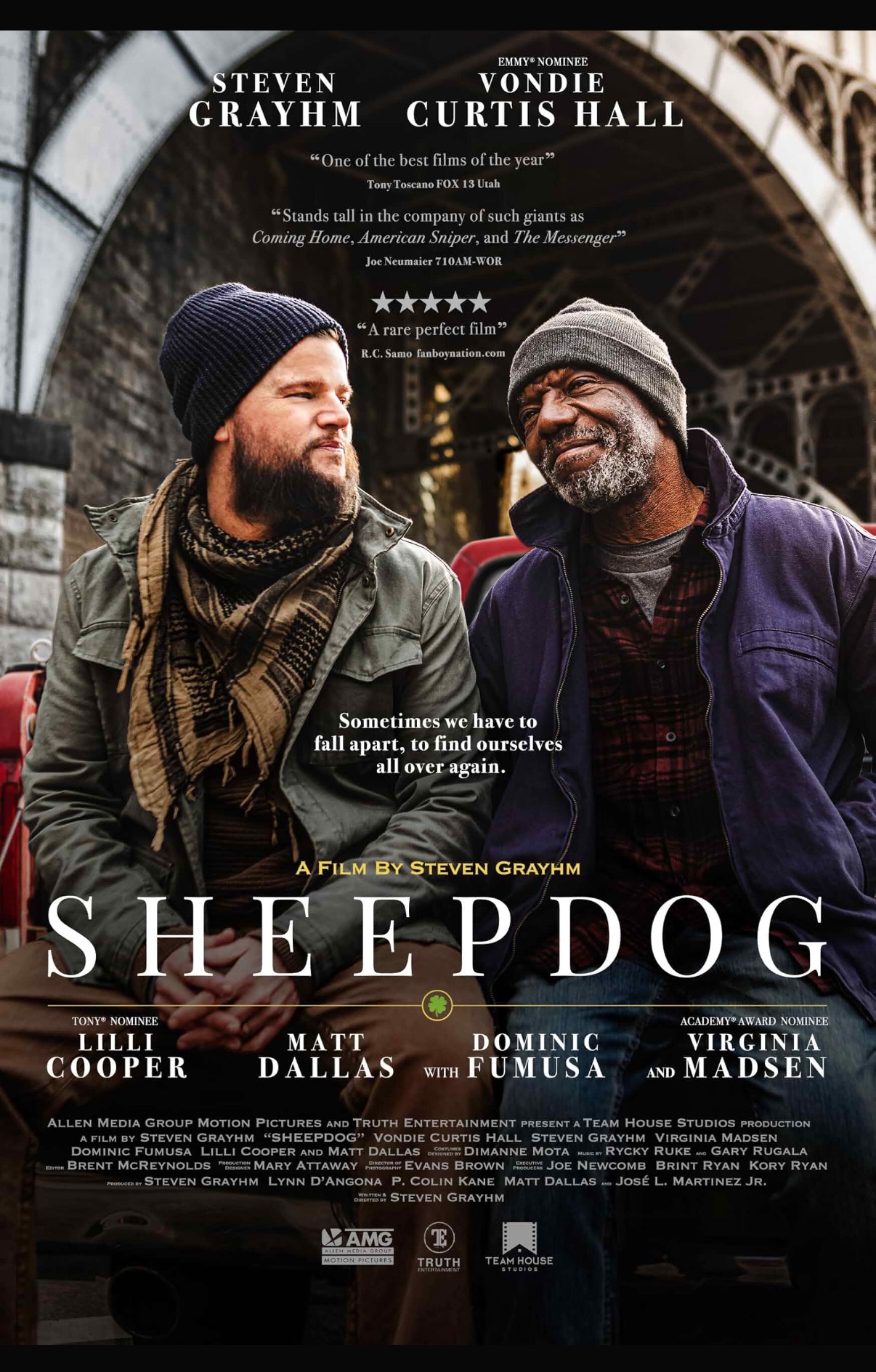 Greetings again from the darkness. We expect movies to entertain us, and the really good ones also carry a message or educate us on some important topic. This film from writer-director Steven Grayhm opens our eyes to the difficulties military veterans face when they return from war. Of course, numerous other films have taken on PTSD, and filmmaker Grayhm is sensitive to this history as he portrays the emotional, physical, and societal challenges that must be dealt with.
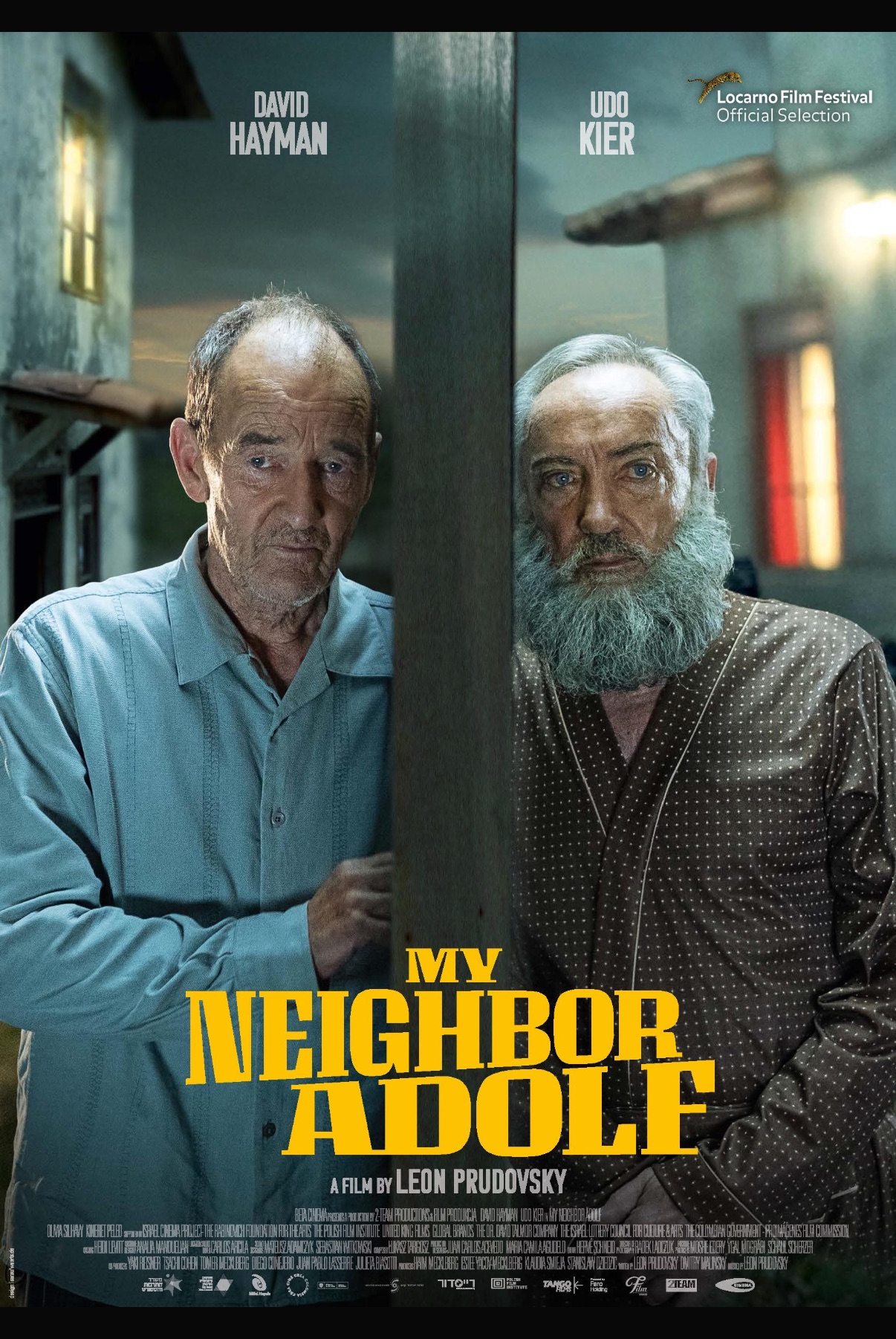 Greetings again from the darkness. We can pick our friends, but not our family or neighbors. However, we can (and do) speculate on and judge our neighbors – and that’s what occurs in this smart little film from writer-director Leon Prudovsky and co-writer Dmitri Malinsky. The premise of the film may initially seem absurd to some, but the final version is touching and quite entertaining.
 Greetings again from the darkness. Let’s get this out of the way upfront. My only issue with this sequel is that it exists at all. It’s pretty much the definition of a money grab. Why should a successful stage production that lasted about three hours be turned into two films totaling almost five hours? There are only two possible answers: either more story to tell (nope, not here), or more money to make (yep!). Now, I have nothing against studios cashing in on a good thing – especially these days, when tickets are difficult to sell. So, my one issue with the film, really isn’t much of an issue at all … in fact, I really enjoy the spectacular visuals and could watch Cynthia Erivo as Elphaba any time.
 Greetings again from the darkness. What is true human nature? Is there even such a thing? Are we preprogrammed to do the right thing, or is it our nature to hold grudges, seek revenge, and take advantage of every situation? This superb film from Iranian filmmaker Jafar Panahi explores the topic, and it’s important to know that he was inspired to write the story after being imprisoned for creating propaganda against the regime.
 Greetings again from the darkness. Well, we can’t really call this a feel-good movie. After all, the first segment (which is really the third) deals with what appears to be the early stages of the end of the world. Plus, it’s adapted from a Stephen King novella/short story and it’s directed by Mike Flanagan, who is best known for DOCTOR SLEEP (2019) and “The Haunting of Hill House” … not exactly the genes of a happy-go-lucky film experience. Still, beyond those points, it’s a terrific film that leaves us with an inspirational and life-affirming message.
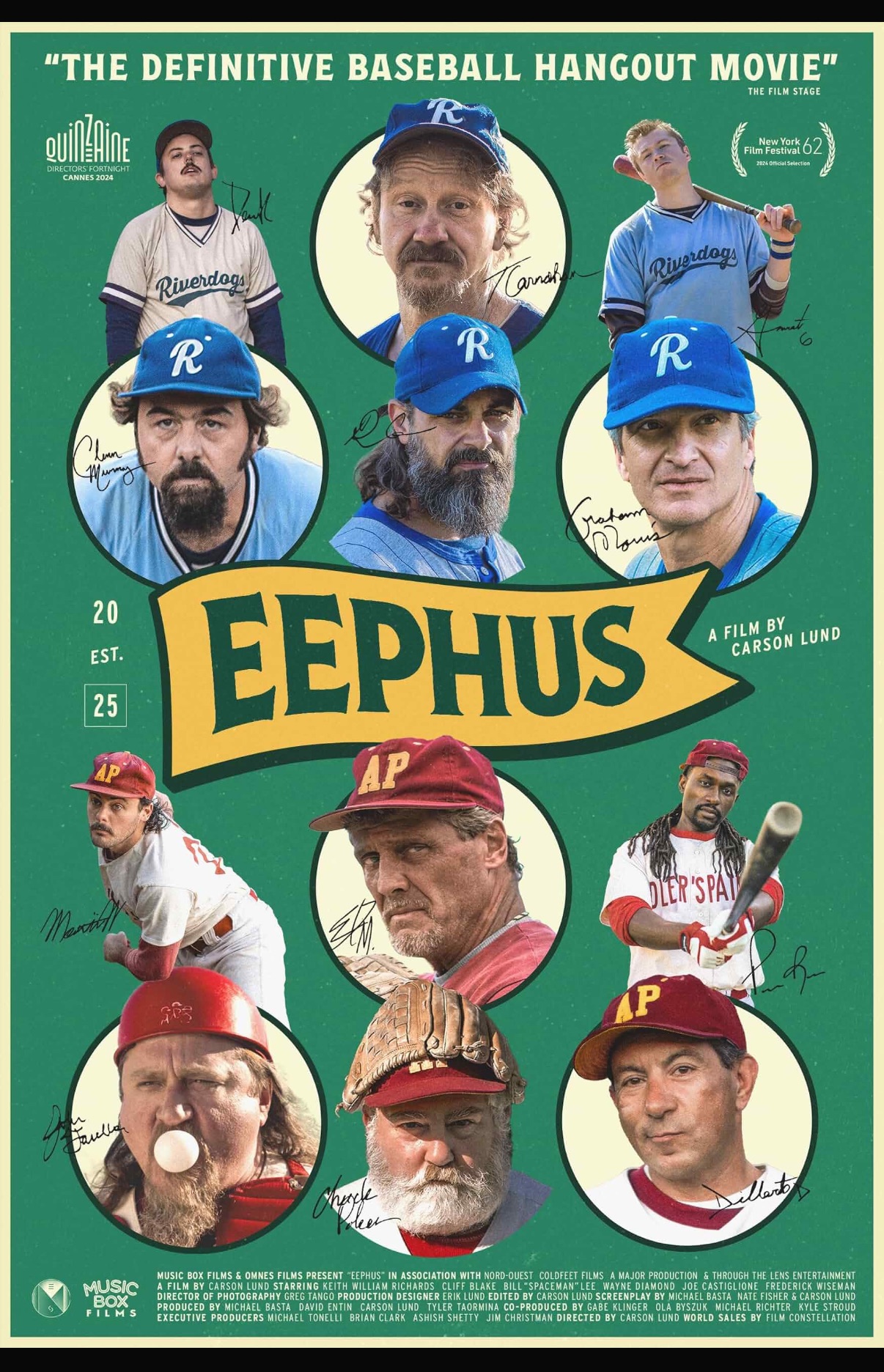 Greetings again from the darkness. You don’t have to be a baseball fan to enjoy this one. You don’t need to be an old man either. Since I am both, you can only imagine the appreciation I have for writer-director Carson Lund and his co-writers Michael Basta and Nate Fisher as they deliver a nostalgic and humorous look at how men deal with glory days of old and a rapidly changing landscape that looks to erase the past and their memories.
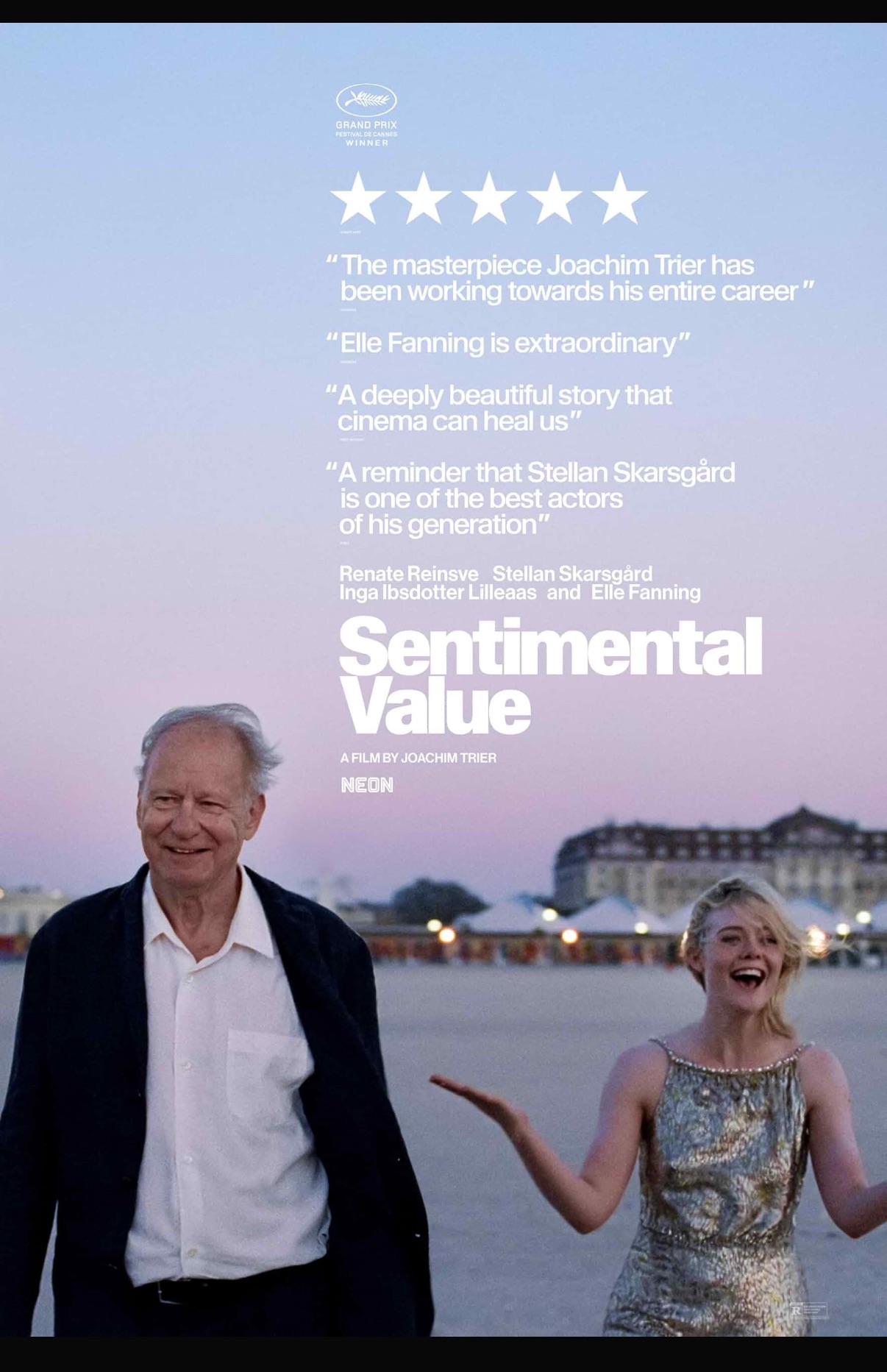 Greetings again from the darkness. Dysfunctional families are frequently at the center of movies – often used for comedic effect. But this latest family drama from writer-director Joachim Trier (THE WORST PERSON IN THE WORLD, 2021) is something different. It’s something much more powerful. Trier delivers a film of characters struggling with the real effects of the tangled web of emotions that occur when family dynamics take the inevitable twists and turns.
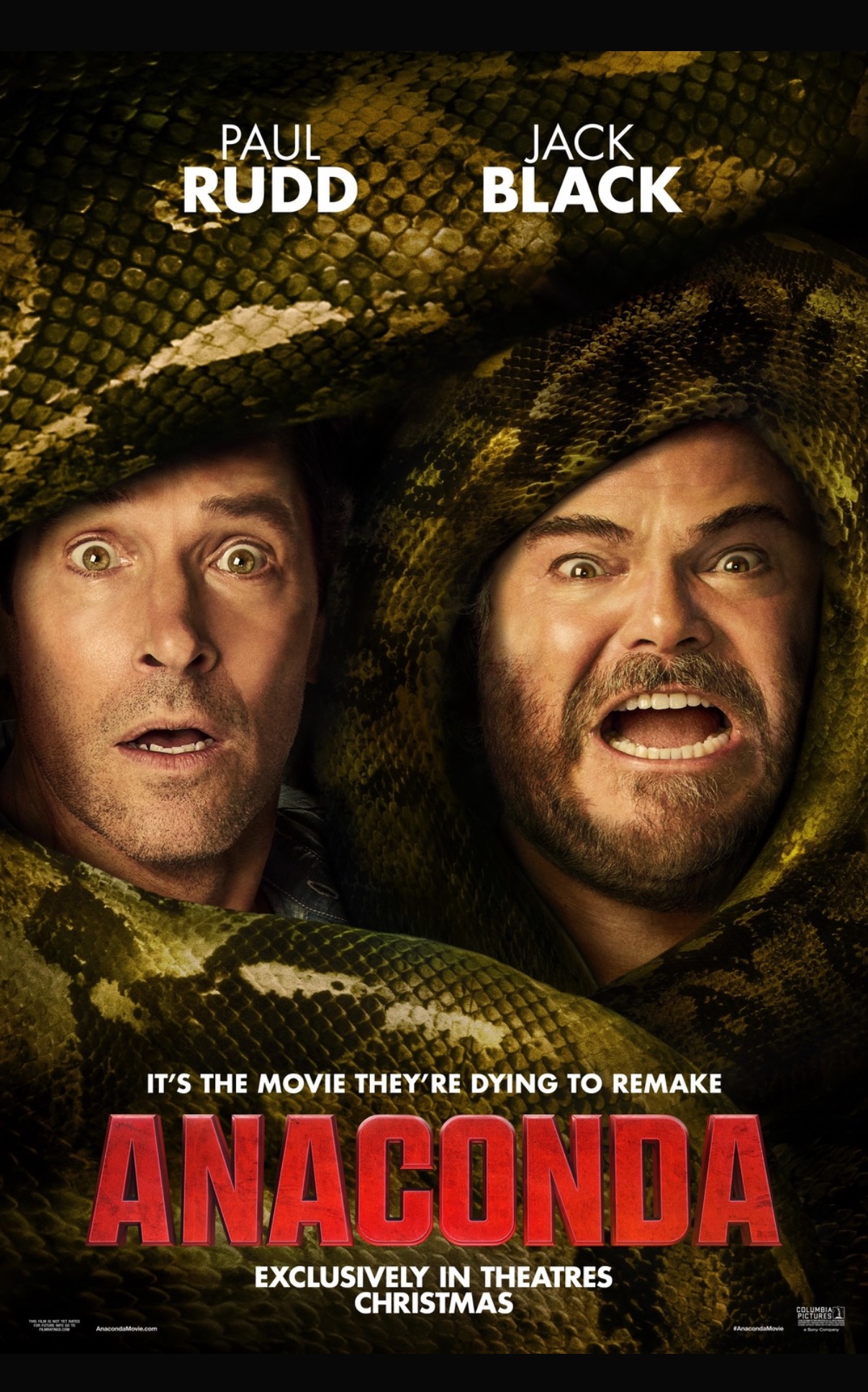 Greetings again from the darkness. Longtime movie lovers usually cringe with announcements regarding movie remakes. Of course, some work out pretty well: A STAR IS BORN (2018), THE THING (1982), TRUE GRIT (2010); while others deserve backlash: PSYCHO (1998), ROLLERBALL (2002), THE TEXAS CHAINSAW MASSACRE (2003). When the news hit that writer-director Tom Gormican (THE UNBEARABLE WEIGHT OF MASSIVE TALENT, 2022) was going to remake ANACONDA (1997), it wasn’t so much a cringe reaction as it was a giant question mark … Why remake a movie that on its best day could only be labeled a fringe cult favorite? Once the leads of Jack Black (after Nic Cage dropped out) and Paul Rudd were announced, it made much more sense. This was to be a comedic take on an original film that featured quite a few accidental comedy elements.
 Movie Reviews from the Dark