PAWN SACRIFICE (2015)

September 17, 2015

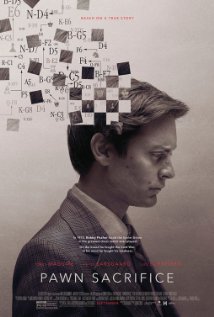
pawn sacrifice Greetings again from the darkness. Being such a fan of the expert documentary film Bobby Fischer Against the World (2011), I found it a bit challenging to clear my head and accept a dramatized approach to the story. This was after all, one of the most fascinating reluctant public figure during one of the most energizing signature events of the Cold War between Russia and the United States … it was even described as World War III on a chess board.

Director Edward Zwick (Glory, Blood Diamond) and writer Steven Knight (Locke, “Peaky Blinders”) wisely focus the story on the infamous World Chess Championship match in 1972 between American Bobby Fischer and Russian Boris Spassky. This was 8 years prior to the “Miracle on Ice” when the USA Olympic hockey team upset the powerhouse Russian hockey team, but this chess match caused every bit as much media frenzy and national pride as that day in Lake Placid. This international attention is as important to the story as the psychological state of Bobby Fischer and his genius-level chess skill. And it’s the media and citizenry reactions that provide the contemporary comparison to what we see too often these days thanks to social media … icons are born, chewed up, and forgotten.

Tobey Maguire plays Fischer, and despite lacking the height and physical presence of the real chess champion, he expertly conveys the paranoia, fear, and arrogance that burdened the man and created even more suspense for those of us keeping a watchful eye at the time. Liev Schreiber (“Ray Donovan”) plays Boris Spassky, and even speaks his lines in Russian. Schreiber captures the iciness for which the Russians were known, but also interjects subtle personality and insight in a story where his adversary is constantly over-the-top. Chess strategy isn’t so much the story here, as are these two men from different worlds forced together on a stage in Iceland – with the full attention of the world.

Supporting work is varied, but exceptionally strong. Robin Weigert plays Bobby’s mother, and we get glimpses of why he later suffered from Mommy issues – in no small part to her intimate gatherings of Communist friends. Lily Rabe is touching as Bobby’s sister and possibly the only person who ever had his best interest at heart. However, the real intrigue comes in the form of Peter Sarsgaard as Father Bill Lombardy, and Michael Stuhlbarg as Paul Marshall. Lombardy was Fischer’s coach and confidant, and seemed to be the only one who grasped the severity of Bobby’s mental state. Marshall, a well known attorney in the Music industry, is a shady fellow who seems connected to the government, and is really the driving force behind getting Fischer to play Spassky. More background and the motivation for these two gentlemen would have been welcome and filled a gap. The soundtrack of the era compliments the tone and is used smartly throughout.

The story of the tortured genius always makes entertaining fodder – think Van Gogh, Mozart, and John Nash. Bobby Fischer certainly fits that description, but his story is frustrating because we just don’t understand the mental issues that caused him to evolve from teenage chess prodigy to World Champion to literal anti-social outcast spewing hateful words (watch the end credit film clips). This film is a worthy primer for the man and the times, and a reminder that we are always searching for the next hero … the next person to hoist up on the pedestal, only to be replaced soon after with another, and then another. Perhaps the film says as much as about us as a people, as it does about Bobby Fischer as a person.

watch the trailer:


BLUE JASMINE (2013)

August 15, 2013

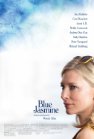
blue j1 Greetings again from the darkness. Writer/director Woody Allen returns to the United States for his latest and examines a topic he knows much about … how to handle a public life that gets blown apart. Jasmine (Cate Blanchett) and Hal (Alec Baldwin) are living the extreme life of NYC power and luxury. It all crashes down around them when Hal is exposed and arrested as a Bernie Madoff type Ponzi-scheme white collar criminal, and Jasmine is tossed to the curb with no money or prospects.

Disoriented from this whirlwind personal tragedy, Jasmine heads west to San Francisco to live with her sister Ginger (Sally Hawkins), a blue collar single mom. The sisters haven’t been close for a couple of reasons. First, Hal scammed Ginger and her husband at the time (Andrew Dice Clay) out of their lottery winnings. Second, they are both adopted and Ginger constantly claims Jasmine got the “good genes” so it’s expected that she gets the breaks blue j2in life.

We quickly realize that Jasmine is bouncing between her fantasy of re-capturing her life of luxury and the harsh reality of her situation. She is not handling it well and falls back on things like going “back to school” to become an interior decorator. Additionally, she vocally disapproves of Ginger’s choices in men and poisons her thoughts that she (Ginger) can do much better than Dice or her current boyfriend (Bobby Cannavale). That leads to an expected turn of events featuring Louis C.K.

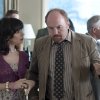
While Jasmine is absolutely unpleasant as a person or character, Ms. Blanchett does a fine job of keeping us tuned in to this slow-burning breakdown. Her scenes with Michael Stuhlbarg are awkward and excellent. It’s impossible not to be reminded of Blanche in A Streetcar Named Desire, and even Gena Rowlands’ remarkable performance in A Woman Under blue j3the Influence (1974). Is Jasmine a monster who refuses to face reality or a severely damaged soul incapable of thinking clearly? Our opinion varies from scene to scene.

The best and most insightful line of the movie comes courtesy of Ginger when she says “Jasmine has always had a way of looking in the other direction.” Her way of handling reality is to look away and pretend it doesn’t exist. The disgust at her sister’s working class environment and lack of empathy has us as viewers wishing someone would just slap her. Ms. Hawkins somehow manages to shine here despite the massive presence of Blanchett’s Jasmine. Woody Allen leaves us wishing we were all as strong as Hawkins’ character and thankful that we have no connection to a Jasmine.

SEE THIS MOVIE IF: you believe the richest people deserve any and all possible comeuppance OR you never thought Andrew Dice Clay could recover from The Adventures of Ford Fairlane

SKIP THIS MOVIE IF: you have no interest in seeing a spoiled princess make no effort to live like the rest of us

watch the trailer:

http://www.youtube.com/watch?v=FER3C394aI8


HITCHCOCK (2012)

December 5, 2012

hitch Greetings again from the darkness. Here goes: John J McLaughlin wrote this Hitchcock screenplay based on Stephen Rebello‘s book “Alfred Hitchcock and the Making of Psycho”, which was based on the filming of the Psycho screenplay from Joseph Stefano, which was loosely based on Robert Bloch’s book, which was based on the grizzly real life crimes of Ed Gein. Whew!

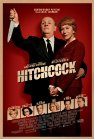
It’s kind of interesting that Alfred Hitchcock is hot again some 36 years after his final movie.  His Vertigo recently displaced Citizen Kane as the all-time greatest film. HBO is still running their recent production of The Girl, which is based on Hitchcock’s making of The Birds and his unhealthy connection to Tippi Hedren. And now, we get this Hollywood production, supposedly based on the master of suspense. I say supposedly, because this film plays like it was written by the heirs of Alma Reville, Hitch’s long time wife and collaborator. We all knew she worked on his films and hitch2contributed ideas, but the film wants us to believe she was the real genius behind the public genius.

The movie is entitled “Hitchcock” and is based on the making of Psycho, but in fact, it’s more the story of Alma and her husband. While there is nothing wrong with that story … in fact, it is quite interesting and entertaining … it’s also a bit of false advertising.

Helen Mirren portrays Alma, and instead of the mousy woman who usually faded into the background, we see a fairly strong and talented woman who goes toe-to-toe with Hitch in her best scene. Sir Anthony Hopkins dons some facial appliances and a fat hitch3suit and does a solid job of capturing the odd, creepy, leering, disturbed, insecure genius we recognize as Alfred Hitchcock. He comes across as louder and more in-motion than what we have previously seen. And while director Sacha Gervasi makes it clear that Hitch is not a “normal” guy, he doesn’t dwell too much on the blond fixations.

The emphasis on the skills and importance of Alma would be fine were it not so exaggerated. Surely every great director and writer and artist has a muse and/or support system; and, there is no question Alma was a very talented lady, but her strength here bordered on distracting to the overall picture. Especially needless was the storyline of Alma being attracted to screenwriter Whitfield Cook (Danny Huston), who wrote Strangers on a Train for Hitchcock.

hitch4 The Hitchcock humor is allowed to shine through (“call me Hitch, hold the cock”) and his battles with Paramount Studio head Barney Balaban (Richard Portnow) and the censorship board (Kurtwood Smith) are excellent. Hopkins finds the humanity under the fat suit and is especially good in his work with Scarlett Johansson (as Janet Leigh) and Jessica Biel (as Vera Miles). I also got a kick out of James D’Arcy as the affected Anthony Perkins and all his quirky mannerisms.

Though this barely qualifies as a story on the making of Psycho, it was chilling to watch the addition of Bernard Herrmann’s iconic score added to the shower scene. In fact, Danny Elfman does a nice job of subtly adding a Herrmann-type score to this film. I’m not sure if the film will play well with all Hitchcock aficionados, but if you can forgive the Alma slant, it’s actually quite interesting and entertaining and kind of a sweet film at its core.

SEE THIS MOVIE IF: you want to see what would happen if Alfred Hitchcock took personal advice from serial killer Ed Gein OR you want to see two great actors (Mirren, Hopkins) having a really good time OR you want to see Scarlett Johansson play Jamie Lee Curtis’ mother.

SKIP THIS MOVIE IF: you expect to learn much about the making of Psycho

watch the trailer:

http://www.youtube.com/watch?v=3rQuRLERl6A


SEVEN PSYCHOPATHS (2012)

October 14, 2012

Greetings again from the darkness. When a writer/director sets a standard with a film like In Bruges, the anticipation for the follow-up is palpable, especially from those of us with the demented sense of humor necessary to watch that film over and over. Martin McDonagh is a writer firs (shorts, features and plays), and a self-taught filmmaker second. He again shows his talent for interesting characters in unusual situations, and an extraordinary blend of black comedy, violence and personal struggles with morality.

This film is a smart (but dark) comedy about characters who aren’t nearly as smart as they see themselves. It’s quite self-referential and at its best is a self-parody. Colin Farrell plays a writer who is blocked after creating the perfect title … “Seven Psychopaths”. Sam Rockwell plays his best friend who runs a crafty little dog-napping business and feeds Farrell possible story lines. He even goes as far as to run an ad asking real life psychopaths to come tell their story. Yep, this plan is just running smoothly until Rockwell kidnaps the dog of a local gangster played by Woody Harrelson.

What we quickly figure out is that we are watching Farrell’s writing process unfold on screen. The bigger challenge is trying to figure out which parts are really happening and which parts are fantasy or part of the creative process. The writing and acting are very skillful. Christopher Walken plays Rockwell’s partner and delivers what may be his best performance in years. It’s very offbeat and irregular … in other words, typical Walken.  Though there are many excellent scenes, the best ones involve Walken.

The script pokes fun at the weak female characters – Abbie Cornish as Farrell’s girlfriend, and former Bond girl Olga Kurylenko as Harrelson’s less-than-loyal girlfriend. The film also features some of my favorite character actors. In addition to Walken, we get the great Tom Waits as a bunny loving psychopath, Harry Dean Stanton as a Quaker, Zeljko Ivanek as a henchman, and an opening scene with “Boardwalk Empire” alums Michael Pitt and Michael Stuhlbarg.

 As wonderful a writer as McDonagh is, we can’t help notice the influences of Quentin Tarantino and the spaghetti westerns – especially The Good, The Bad and The Ugly. His comedic tendencies wrapped in violent sequences really challenge us as viewers. Trying to find the good in those who aren’t necessarily so good adds an element and complexity as the film throws violence in our face as the characters are confronting their deeper feelings on morality. Since Farrell’s character is a writer named Martin, we are probably safe in assuming that McDonagh is working through some of these same issues himself (especially the unnecessary violence and weak women characters).  McDonagh proves again to be one of the most intriguing and talented filmmakers working, and even though this one is a tick below his last one, I anxiously await his next.

SEE THIS MOVIE IF: you saw In Bruges and appreciated the dark comedy and philosophical nature OR you don’t want to miss a classic Christopher Walken performance

SKIP THIS MOVIE IF: you prefer your comedy to be light-hearted in nature OR you can’t appreciate the character who brings a flare gun to the final shootout in the desert

watch the trailer:

http://www.youtube.com/watch?v=OOsd5d8IVoA


MEN IN BLACK III (2012)

June 3, 2012

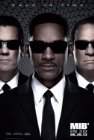
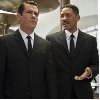
 Greetings again from the darkness. Uninspired sequels often prove quite annoying for a true movie fan. However, dedicated followers of a franchise often overlook the flaws and are just happy to see their familiar heroes back on screen. Back for a third time in 15 years, Agents J (Will Smith) and K (Tommy Lee Jones) show they can do this in their sleep … actually I think Mr. Jones really did doze off a couple of times.

Fortunately there are a couple of things that make this one entertaining enough. Josh Brolin‘s spot on imitation of Tommy Lee Jones may be better than the real thing. Brolin seems to be enjoying himself and realizes he is the featured attraction here. There is also a very creative segment that takes place at Andy Warhol’s Factory … with Bill Hader pulling off the Warhol look and voice quite well.

 Obviously with the Warhol segment, time travel is involved. That’s the real disappointment here. Outside of the Apollo 11 segment and listening to Status Quo play “Pictures of Matchstick Men”, the trip to 1969 is really a wasted opportunity for plot and humor. Also scarce is the use of aliens that were so prevalent in the first two. This time around, we get an overdose of Boris the Animal played by the always interesting Jemaine Clement (“Flight of the Conchords”).

Also back is Emma Thompson in a couple of brief scenes as Agent O. In addition to Brolin, we get new life from Alice Eve (a young Agent O) and Michael Stuhlbarg as Griffin … a less annoying version of Joe Pesci from the Lethal Weapon series. Director Barry Sonnenfeld has stuck with this franchise for all three entries. Let’s hope it’s now allowed to rest in peace.

SEE THIS MOVIE IF: you are a huge fan of the MIB franchise OR you want to see Josh Brolin’s impersonation of Tommy Lee Jones

SKIP THIS MOVIE IF: you were hoping after 15 years, there might be something new … heck, even Will Smith looks exactly the same!

watch the trailer:


HUGO

November 29, 2011

 Greetings again from the darkness. This latest from Martin Scorsese can be fitted with multiple labels and each would be correct: a tribute to the birth of movies, a case for film preservation, a children’s fable, a special effects/3D extravaganza, a family movie with touches of Dickens. Very few directors would tackle such an ambitious project and succeed in producing such a magical experience.

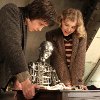
Based on Brian Selznick‘s (relative to the film giant David O. Selznick) children’s book “The Invention of Hugo Cabret”, this is a story of redemption and fulfillment. Asa Butterfield plays Hugo, made an orphan when his watchmaker father (Jude Law) dies in a fire. Hugo gathers up the project he and his dad had been working on, and  moves in with his drunkard Uncle Claude (Ray Winstone). They live in the walls of a 1930’s Paris train station and maintain all the clocks, ensuring accurate time for travellers. When his uncle disappears, Hugo carries on the daily mission unseen by passengers and station staff. He steals the occasional croissant and milk to survive, all while continuing the mission of repairing the fantastic automaton his dad salvaged. Hugo is convinced there is a hidden message from his father that will be revealed when the automaton is fully functioning.

 Hugo gets cross-ways with a station toy vendor named Georges, played by Sir Ben Kingsley. Georges is a bitter old man and has no time for Hugo the urchin. Chloe Moretz plays Isabelle, a ward unto Georges, and she and Hugo strike up a friendship. Hugo introduces Isabelle to the world of cinema … previously off-limits to her thanks to Georges. She returns the favor by awakening Hugo to the power of books in a store run by the mysterious, and always great, Christopher Lee. All this is happening while Hugo tries to evade the grasp of the oddly dedicated and slightly twisted station inspector played by Sacha Baron Cohen.

 The kids’ research and automaton revealed hint lead them to a film history book written by Rene Tabard (Michael Stuhlbarg). It’s here that they discover Georges is really George Melies, the famous pioneer of film who developed the first special effects and studio system. If you know much of film history, then you recognize Melies as the one who brought us the 1902 A Trip to the Moon. It is here that Scorsese delivers a quick recap of the origination of film, including the Lumiere Brothers, the famous clock stunt by Harold Lloyd and other silent film classics like Buster Keaton and Charlie Chaplin. The best portion is dedicated to recreating the creative community  used by Melies to produce films with his wife in a make-shift studio.

 It is here that we are allowed to remember just how magical movies can be and how the best ones fill us with a sense of wonderment. The lines between what we feel and what Scorsese is showing us becomes so blurred it no longer matters. As Isabelle is overwhelmed in the theatre, that same feeling sweeps over us. How interesting that Scorsese’s first special effects film features the man who originated film special effects. We even get a re-creation of the famous Lumiere Brothers’ oncoming locomotive clip that caused audiences to jump. We get it in 3D in Hugo’s own station!

 I have been extremely critical of 3D and its misuse in movies these past couple of years. It rarely adds to the movie and always dims the colors and brightness. Scorsese is a firm believer in the technology and set out to show what can be done and how it can compliment the story. While more impressive than any 3D since Avatar, I still have my doubts about the benefits. What I do know is that if you can overlook the story that drags a bit and the possibly unnecessary 3D effects, you will probably find the film to be extremely entertaining and fun to watch. Howard Shore‘s score plays a vital role and supporting work comes from Emily Mortimer, Richard Griffiths, and Helen McCrory. It’s not for the youngest kids, but it will make you feel like a kid … while reminding you that movies are the stuff that dreams are made of.

Note: with a budget of almost $170 million, there is almost no chance that this film turns a profit, but for full effect, I would encourage you to see this on the big screen.

SEE THIS MOVIE IF: you can enjoy a tribute to film history wrapped in a family film designed to flaunt the power of 3D OR you have a pretty smart kid aged 8 or older who could appreciate the most impressive movie prop of the year (automaton).

SKIP THIS MOVIE IF: you lean towards a cynical mindset and are unlikely to open up for a big budget children’s fable making a case for film preservation

watch the trailer: