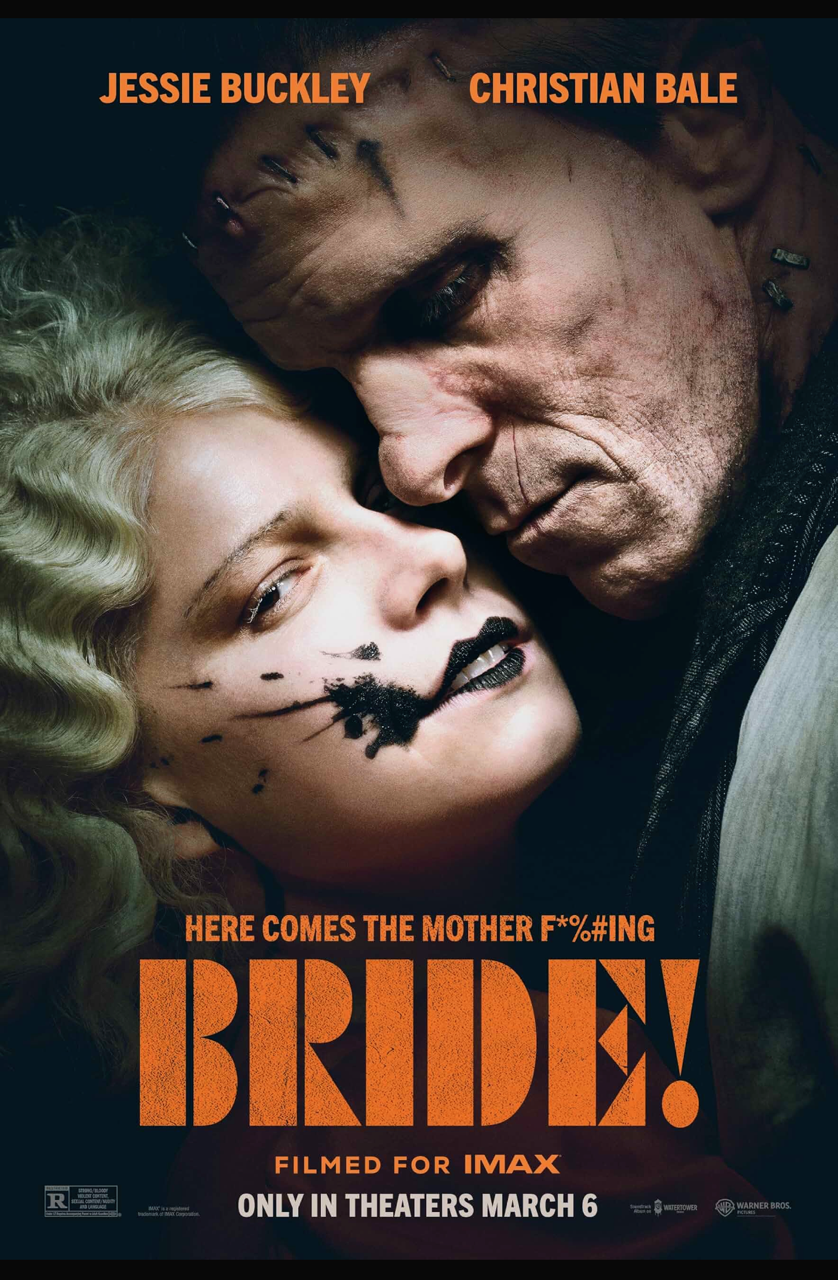
 Greetings again from the darkness. I became a Universal Monsters fan as soon as I reached the age where my parents would let me stay up to watch the later horror movies on Fridays and Saturdays. That love for the films and the stories and the monsters has only grown over the years, so you can only imagine the excitement I held for this film … especially on the heels of last year’s impressive FRANKENSTEIN from visionary Guillermo Del Toro. When my movie hopes and expectations reach this level, disappointment often follows; however, not this time!
You likely know Maggie Gyllenhaal from her superb acting in such films as SECRETARY (2002), THE DARK KNIGHT ((2008), and CRAZY HEART (2009). You may not know that her feature film directorial debut was the excellent THE LOST DAUGHTER (2021), for which she also adapted the screenplay from the novel. The success of that ‘little’ film gave her the clout to create her dream project: a reimagining of James Whale’s 1935 classic, BRIDE OF FRANKENSTEIN. For this one, Ms. Gyllenhaal directs her own incredibly creative and innovative tale, two adjectives that also describe her stunning and original script.
A big-time project requires a top-notch cast, and the filmmaker secured two of the best working today for her leads: Jessie Buckley and Oscar winner Christian Bale. The supporting cast is also impressive, and includes (5-time Oscar nominee) Annette Bening, Peter Sarsgaard (Maggie’s real-life husband), Oscar winner Penelope Cruz, Jake Gyllenhaal (Maggie’s brother), and John Magaro (SEPTEMBER 5, 2024). The number of crossovers and intersections in the careers of these actors and Maggie are too many to list, but it speaks to the admiration these talented folks share for each other.
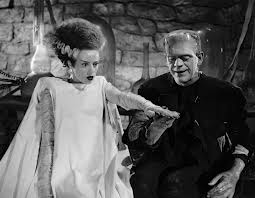
Obviously, Ms. Gyllenhaal’s inspiration was borne from James Whale’s two films, BRIDE OF FRANKENSTEIN (1935) and FRANKENSTEIN (1931), as well as the 1818 novel, “Frankenstein; or the Modern Prometheus”, written by Mary Shelley. Certain touches within her new movie pay homage to all three, plus a bonus tip of the top hat to Mel Brooks’ YOUNG FRANKENSTEIN (1974). Ms. Gyllenhaal opens the film in mob-filled 1930’s Chicago with a truly fantastic prologue sequence that introduces us to Ida, the first of three characters played by Ms. Buckley. Her performance in this segment is nothing short of mesmerizing, and it’s capped off by the ingenious inclusion of the deceased Mary Shelley … a type of spin on the iconic opening scene of BRIDE OF FRANKENSTEIN. Soon after, we find ‘Frank’ (Mr. Bale) making his plea to Dr. Euphronius (Ms. Bening) and her intriguing assistant Greta (Jeannie Berlin) to reinvigorate a life partner that can cure his many years of loneliness.
As you would surmise, Dr. Euphronius is successful, and soon Frank and Penny (Ida’s new name) have paired up and carve their way through society – often making headlines ala Bonnie and Clyde. Their road trips create moments of tenderness, longing, sensuality, and violence … yes, plenty of violence. A radical women’s social movement is started as a result of one of Penny’s key feminist moments. Despite a blank memory, Penny understands the power of women. Movie musicals featuring hoofing star Ronnie Reed (Mr. Gylenhaal) play a crucial role in Frank’s life, though it’s not until later in the story that the reason is revealed. All this time, two detectives (Mr. Sarsgaard and Ms. Cruz) are tracking Frank and Penny, and we note the soft spot one of them holds for The Bride.
The film is a majestic triumph for Maggie Gylenhaal as a filmmaker, and surely will open many doors for future projects. Visually, the film is stunning to watch. The Bride and Frank are both magnificent creatures, yet every set and every scene are a feast for the eye and ears (yes, the sound is equally superb). The actors have all delivered their A-game, yet somehow Jessie Buckley continues to stand out (she’s Oscar nominated this year for her memorable performance in HAMNET). It’s not just her shock of white hair or stained face (explained in the film). No, the performance is much deeper and multi-faceted. Without spoiling anything, Ms. Buckley must adjust to the requirements of each scene, as well as the wide realm of emotions her roles demand. For fans, we do get the left-hand twitch, and as for viewing this film only once … “I prefer not to.”
Opens in theaters March 6, 2026 (see it on the big screen!)


 Posted by David Ferguson
 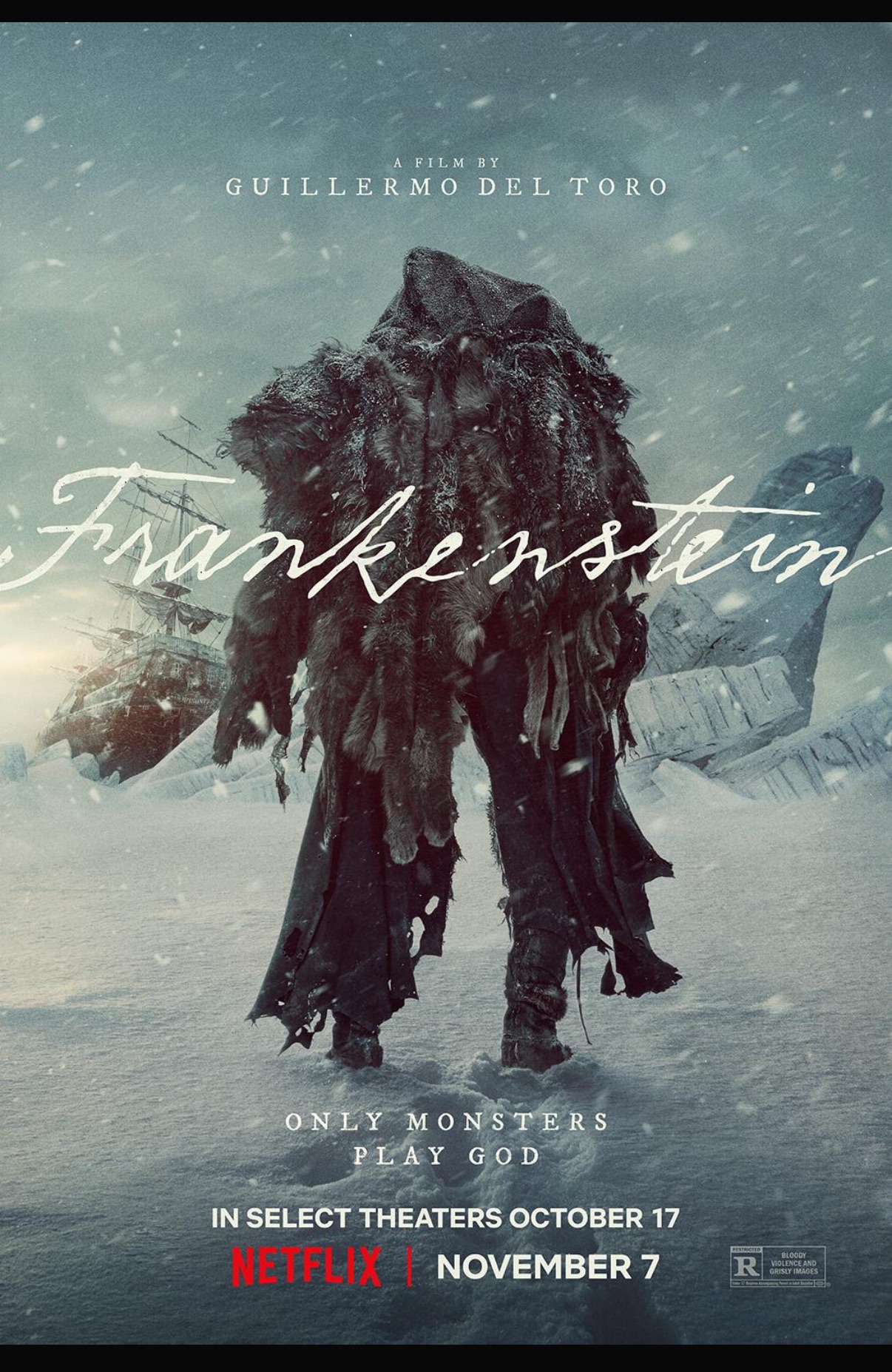 Greetings again from the darkness. As a lifelong lover of cinema, I tend to latch on to the works of those who so obviously feel the same. Among those who have achieved some level of mainstream success are Martin Scorses, Quinton Tarantino, Steven Spielberg, and Christopher Nolan. Another filmmaker who definitely belongs in the group, and it may surprise some, is Guillermo del Toro (an Oscar winner for PINOCCHIO, 2022, and THE SHAPE OF WATER, 2017). Other gems in his oeuvre include CRIMSON PEAK (2015) and PAN’S LABRYNTH (2006). The esteemed director has long claimed that his “dream project” is a film version of Mary Shelley’s 1818 novel, “Frankenstein: Or, The Modern Prometheus”.


 Movie Reviews from the Dark