Greetings again from the darkness. As one who readily admits to watching too many movies each year, I always welcome the unanticipated joy in being pleasantly surprised by one that exceeds expectations. Doing just that is the first feature film from writer-director Nicholas Maggio and co-writer Rob Healy – a neo-noir thriller that takes place in a small rural community down south.
Now you might initially cringe (I did) at the thought of John Travolta carrying a big gun and wearing a cowboy hat as slow-talking Sheriff Bodie Davis in this small town, but I’m happy to report he never overplays his hand and delivers a truly respectable performance. However, despite the poster, his marquee name, and the gravitas he carries, Travolta is not the main focus here. Instead, Shiloh Fernandez plays Shelby Conners, a greasy-haired, drag racing, local truck driver and mechanic who shares a daughter with his town beauty wife, Caroline (Ashley Benson). The family is struggling to make ends meet in this town where drug overdoses barely raise an eyebrow.
Caroline’s brother and Shelby’s friend, Trey (Kevin Dillon), drags Shelby into a get-rich-quick scheme derived from desperate times. A local clinic is the front for a drug-dealer, which means piles of cash on hand, with not enough security. Shelby reluctantly agrees and, of course, things go sideways. Only it gets much worse when Clayton Minor (Stephen Dorff) shows up and informs the boys that they ripped off the New Orleans mafia, and as the fixer/enforcer, he’s there to set things right.
Many times we have seen local boys looking for an easy score. Rarely are the scores easy, and never are they without consequences. Trey doesn’t last long, but a strange connection occurs between Shelby and Clayton. Now he’s been doing this for a while and he’s very good at his job, but Clayton is struck by Shelby’s sincerity. Empathy may be a stretch, but he’s at least paying attention to the humanity of the situation, despite threatening Shelby’s wife and daughter. It does present an unfamiliar dilemma for Clayton, serving as the crux of the story.
As you know, in small movie towns, everyone knows everyone else, so smooth-talking Clayton in his shiny black Caddy stands out like the proverbial sore thumb. Sheriff Brodie is suspicious and cautious and worried about his nephew Shelby, but there’s not much he can do to keep up with the gangster. Travolta and Dorff have a couple of nice scenes together, and the film’s opening sequences establish the contrast between their characters.
But it’s Shelby and Clayton who spend the bulk of the film together. Dorff has most of the best lines, and Fernandez holds his own. Mr. Dorff has always been a personal favorite, and I’ve often wished he was cast in better movies. Mr. Fernandez was once considered a rising star, and seems to have settled into his acting career just fine (sans spotlight).
Devlin McCluskey sings a terrific and unusual version of “House of the Rising Sun” during the film, and Jason Dodson (the Maldives) plays a wonderful song over the credits, and both songs fit with the look and feel and tone and style of the film … something that doesn’t always happen. There is nothing about the film that gives the impression of ‘first time director’, so we will sit anxiously awaiting the next one from Nicholas Maggio. In the meantime, hopefully someone will give Stephen Dorff another perfect role.
Strutting, Smiling, Smirking, Sulking. This was a young John Travolta at his best. It was also director John Badham at his best, as he and screenwriter Norman Wexler adapted a New York Magazine article written by Nik Cohn entitled “Tribal Rites of the New Saturday Night”. Their work, along with Travolta’s dance moves, changed the way young adults spent their weekend nights.
Given his recent disturbing mentions in the news, it might be difficult to imagine, but in the mid-1970’s, Travolta as Vinnie Barbarino on “Welcome Back Kotter” was idolized (and lusted after) by just about every teenage girl on the planet. At the peak of that TV show’s popularity, Travolta exploded onto the big screen as Tony Manero, the king of the disco dance floor. It wasn’t long before every guy’s wardrobe included multi-colored polyester shirts and maybe even a white 3 piece suit. This movie now serves as a time capsule of the disco era. But it’s also much more.
Saturday Night Fevercan be viewed from a couple of different perspectives. Many view it as a snapshot of the short-lived disco era, replete with the clothes, music, drugs and preening. I have always found it even more effective as a coming-of-age story for working class youngsters trying to make sense of the world as they head into adulthood. Tony realizes he won’t fit in much longer living with his family, but the tough love and advice provided by his paint store boss (Sam Coppola) falls on deaf ears. When Stephanie (Karen Lynn Gorney) starts spouting off her “whole other world” stories from Manhattan, Tony realizes brawling with his buddies is no answer to life’s mysteries.
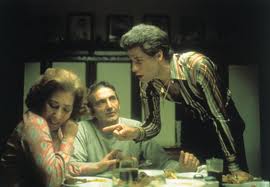
Tony is a 19 year old living at home with his traditional Italian parents. His mother, played by Julie Bavasso, is a religious woman who takes great pride in her eldest son Frank Jr (Martin Shakar) being a Priest. His father, played by Val Bisoglio, is a recently unemployed emotional man who takes his anger out on the family by lashing out. Their family meals are loud and aggressive events filled with pride, physicality and hurtful words. Tony’s joy in receiving a raise at work is quickly shut down thanks to the belittling reaction from his father. Dancing at 2001 Odyssey is Tony’s escape from the realities of his world … and the only place where he is admired for being something special. It’s a feeling he relishes and one everyone should experience.
As viewers, we recognize that this little world of Tony’s threatens to lead him down an obvious path where he will wake up 20 years later as a bitter 39 year old, not so different from his father. Hanging out with his friends, each searching for their own path while trying not to appear desperate, provides momentary escape but no promise of a brighter tomorrow. When Stephanie enters the scene, Tony sees her as a guiding light to a new world. As viewers, we easily see her insecurities and faux-cultural maturity, but to Tony she offers a ray of hope. A way out.
Tony’s buddies are entertaining in their own ways. Joey (Joseph Cali) and Gus (Bruce Ornstein) are just good, solid guys. Double J (Paul Pape) is the quietly aggressive one. He’s the guy that views every day as a chance to seek revenge on anyone who might have done him wrong, even if accidently. Mr. Pape went on to become a prolific voice actor (more than 500 credits). That’s a bit ironic since he is the quiet one of the group. Bobby C (Barry Miller) and Annette (Donna Pescow) are the ones who break your heart. Bobby’s girlfriend is pregnant and he is desperate for a magical solution, while longing to be as cool as Tony … or at least not invisible. Annette is a sad creature who just wants to be loved. She misreads Tony’s signs and covers her grief with booze, drugs and regrettable sexual activity.
John Badham was mostly a TV director when he assumed the helm for Saturday Night Fever. He had some Hollywood success the year before with a Negro League baseball comedy featuring Richard Pryor and James Earl Jones called The Bingo Long Traveling All-Stars & Motor Kings. Mr. Badham, the brother of Mary Badham (Scout in To Kill a Mockingbird), went on to have some box office success with War Gamesand Stakeout, but in 1997, he returned to TV projects and has remained there since. The film is also known for launching the hugely successful soundtrack, which was the top selling album of all-time until passed by Michael Jackson’s “Thriller” in 1983. Many of the Bee Gees songs are still played on classic stations today, and “Stayin’ Alive” became the title for the film’s sequel. The 1983 movie followed Tony’s attempt to break through on Broadway and was directed by Sylvester Stallone. It received brutal reviews and has since faded into oblivion. In another example of how small the Hollywood community is, Stallone’s girlfriend in Rocky was played by Talia Shire. Ms. Shire’s first husband was David Shire, who composed the score for Saturday Night Fever. When they divorced, Mr. Shire married Didi Conn, who co-starred with Travolta in Grease.
Travolta is clearly the most interesting story here. Seemingly at his peak, his career took another leap forward when Saturday Night Fever producer Robert Stigwood hired him for the musical Grease the following year. In 1980, Travolta was again front and center in a cultural shift as his turn in Urban Cowboyshifted focus from disco dancing to the Texas Two-Step, and the subsequent trend towards mainstream “country” music. Travolta’s career then went quiet until his first comeback with Look Who’s Talking in 1989. His second comeback came thanks to Quentin Tarantino casting him in Pulp Fiction. What many don’t know is that while filming Saturday Night Fever, Travolta’s love interest, actress Diana Hyland died of cancer. Ms. Hyland had appeared as Dick Van Patten’s wife in season one of “Eight is Enough” and upon her death, his character was presented as a widower.
It’s interesting to note that a substantial number in the cast were making their feature film debuts. That includes Fran Drescher (“The Nanny”) who plays local girl Connie. Her dancing skills, or lack thereof, lead Tony to make assumptions about her other talents. Also making quick appearances are Travolta’s sister Ann (as the pizza girl) and his mother Helen, who scolds him in the paint store for making her wait so long. The posters in Tony’s room include Al Pacino in Serpico, Stallone in Rocky, and the iconic Farrah Fawcett swimsuit poster. Travolta had a key role in the horror classic Carrie, and just missed out on being cast as Meadows in one of my favorite movies The Last Detail. Randy Quaid was ultimately cast. The great film critic Gene Siskel always said Saturday Night Feverwas his favorite all-time movie and he even purchased and displayed Tony’s white suit from the film’s climax.
Regardless of how you view it, this little film certainly has its place in Hollywood lore. It launched the film career of John Travolta, changed the cultural nightlife for a generation, taught us not to play on bridges, to take only your allotted time when sharing the backseat, to always chew your food, and whether you are feeling up or down … it helps to strut.
Greetings again from the darkness. I guess this qualifies as director Oliver Stone returning to his dark side. Based on Don Winslow‘s novel, it certainly has the foundation to be a complex, down-and-dirty, twisted plot, double-crossing, love triangle, ultra-violent, drug-dealing smörgåsbord. And while it possesses all of those elements, it still manages to come across as some slick Michael Mann cable TV project.
The film begins with narration from O (Blake Lively) who tells us that just because she is telling us this story, doesn’t mean she is alive at the end. Huh?? She also tells us that she is love with two drug-dealing buddies. Yes, both of them. Chon (Taylor Kitsch, John Carter) is the ex-Seal and muscle in the business. Ben (Aaron Johnson, Kick-Ass) is the gifted botanist who turns the magic Afghan seeds into the most potent pot in southern California. Oh, and Ben is also the ultimate philanthropist drug dealer. He builds schools in third world countries and invests in clean energy. After what felt like an eternity, the narration finally ended and I could stop yelling “Shut up, O” at the screen.
One day the boys receive a video via email. It’s an invitation to a business meeting with the Mexican Baja Drug cartel. Suffice to say that the video contained no balloons or party animals. It was more of a visual warning about what happens if you choose not to do business with them. The cartel front men are played by Demian Bichir (fresh off A Better Life) and Benecio Del Toro (MIA since The Wolfman). The queen of the cartel is Elena, played by Salma Hayek. Throw in a corrupt DEA agent, playing both sides against each other, portrayed by John Travolta, and all the pieces are in place for real fireworks once O is kidnapped (it’s in the trailer).
The rest of the movie is pretty much the war you would expect with some poor negotiation skills, torture and back-stabbing tossed in for fun. Overacting is the word of the day, especially from Travolta, Ms. Hayek and Emile Hirsch (money man). Still not sure what to make of Ms. Lively (The Town). The camera certainly loves her but it’s too early to tell if she has staying power as an actress. The only character that is really fun to watch is Lado, played by Del Toro. He is truly a frightening guy who also happens to have a deceptive mind on how to take over from the weak.
The whole good versus evil story line really only works if one side is good and one side is evil. If the good side (Ben) is a drug-dealer in a love triangle with his best friend, it’s much more difficult to muster empathy. Otherwise, when the necessary hostage/money exchanges occur, we really aren’t invested in the characters … and the action takes center stage. That’s the sign of a forgettable movie with no real heart.
SEE THIS MOVIE IF: you want to see beautiful people playing drug dealers OR you want to see Benecio Del Toro at his sleazy best
SKIP THIS MOVIE IF: you are expecting a gritty, down and dirty drug dealing drama with the political extremism we have come to expect from director Oliver Stone
 Greetings again from the darkness. As one who readily admits to watching too many movies each year, I always welcome the unanticipated joy in being pleasantly surprised by one that exceeds expectations. Doing just that is the first feature film from writer-director Nicholas Maggio and co-writer Rob Healy – a neo-noir thriller that takes place in a small rural community down south.


 Posted by David Ferguson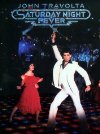





 Movie Reviews from the Dark