 Greetings again from the darkness. What a thrill to see both of director Jean Renoir‘s masterpieces on the big screen within a couple of weeks of each other. The other is Grand Illusion and the two could not be less similar. In this film, Renoir presents a farcical display of societal “rules” of the time, and even draws a parallel between the upper crust and working class when it comes to love and lust.
The film was not well received upon its initial release because, times being as they were, very few enjoyed laughing at themselves. The film was seized by both the French government and later the Nazi’s. Both labeled the film dangerous to society. The original negatives of the film were destroyed and the film was pieced back together in the 1950’s and now, with technical advancements, we get to watch a beautiful print as Renoir intended. Today, however, it is quite fun to see how Renoir was poking and prodding and very precise with his aim.
 The story begins with the heroic landing of French aviator Andre Jurieux (Roland Toutain) after his solo trans-Atlantic flight. Once you realize this is 10 years after Lindbergh’s flight, you start to understand why the French were not pleased with the film. To make it worse, Jurieux acts like a teenager as he pouts in public when he realizes the woman he loves didn’t come to welcome him home. Nevermind that Christine (Nora Gregor) is married!
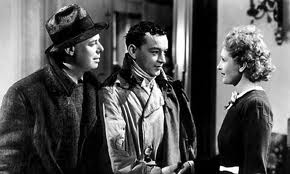 Circumstances bring many to the country estate of Christine and her husband Robert de la Chesnaye (Marcel Dalio) for a hunting expedition. What we actually have is a gathering of wives, husbands, mistresses, lovers, house servants, and French ruling class in a tangled web that obviously influenced Robert Altman for his classic Gosford Park. Robert’s mistress (Mila Parely) is there and though Robert has promised Christine the affair is over, a wonderful scene finds her lowering binoculars to spot the two kissing in the distant. This leads Christine to be a more open to the advances of Andre the aviator.
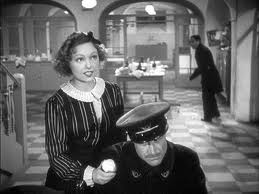 To bring in a bit more fun and action, we see the working class mirror the actions of their bosses. Lisette (Paulette Dubost) is married to the gamekeeper Schumaker (Gaston Modot) who doesn’t take kindly to poacher Marceau (Julien Carette) making advances on Lisette. During the shenanigan’s, Octave (Jean Renoir himself) alternates as both an entertaining clown/bear and peace-keeper to ensure that he is continued to be welcome into Robert’s home. He is a bit of a hanger-on.
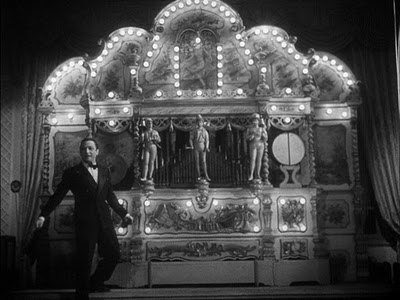 There is little plot per se, though we do get a surprising, erroneous murder, and that event brings even more unclear thinking to the group. The key to the film is the wonderful direction of Renoir. So much is going on simultaneously that your eyes must stay sharp and alert. Few directors of the time used such depth in the action … pay attention to the foreground and background or you’ll miss something! My favorite scene is when Robert unveils his latest find – a mechanical musical gadget (pictured left) that runs on precision. It’s in stark contrast to the party and the lives of these people.
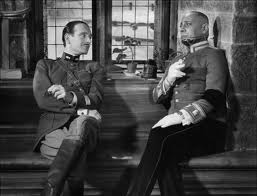
** Note: Marcel Dalio and Julien Carette appear in both The Rules of the Game and Grand Illusion
watch the trailer:


 Posted by David Ferguson


 Movie Reviews from the Dark