BOGART: LIFE COMES IN FLASHES (2024, doc)

November 14, 2024

Greetings again from the darkness. In 2022, Kathryn Ferguson released a documentary on singer and activist Sinead O’Connor. It was Ms. Ferguson’s first feature-length documentary, after a few shorts and videos. This time out, her focus is on renowned actor Humphrey Bogart. Now, opening on your subject’s funeral might be an unusual way to begin a profile, but the star-studded service drives home the point that Bogart’s life touched many. He was true Hollywood royalty.

One would expect the profile of one of the biggest movie stars of all time to provide a chronological rundown of his films. Although his film resume is certainly not short-changed, the director takes a more personal approach by structuring Bogie’s life according to how the five most influential women impacted him. Those five are: his mother, Maud Humphrey, and his four wives (in order), Helen Menken, Mary Philips, Mayo Methot, and of course, Lauren Bacall. We are guided through each of these relationships, with neither good nor bad being withheld.

Much of the time is spent with narrator Kerry Shale reciting Bogart’s own words from writings, journals, letters, etc. Shale offers neither a mimic of Bogie’s distinctive voice nor a smooth sound for our ears. Still, there is heft and meaning to Bogart’s words, especially when they are synchronized with an incredible bounty of archival footage, film clips, and photographs. Numerous interviews are included from son Stephen Bogart, directors Howard Hawks and John Huston, and actress Kathryn Hepburn, as well as others. There is also plenty from Lauren Bacall, who famously met Bogart when she was a 19-year-old actress on the set of TO HAVE AND HAVE NOT (1944). The two were married from 1945 through 1957 (his death). It was a true love story, and not nearly as tumultuous as his time with third wife Mayo Methot, who shot at him and stabbed him!

There is a segment on Bogie’s first career – a baby model – and his own words describe this relationship with his mother as he looks back at his childhood. We hear about his time in the Navy, as well as his love of chess and the water … especially time spent sailing on his boat, Santana. We also hear about his quick temper and his alcoholism, and it’s fascinating to learn that it was actress Greer Garson who heard his cough and insisted that he see a doctor – a visit that resulted in a cancer diagnosis.

After years as a contract player in the studio system, it was HIGH SIERRA (1940) that set him on the road to superstardom. Bogart’s career included such iconic roles as Sam Spade (THE MALTESE FALCON, 1941), Rick Blaine (CASABLANCA, 1943), Philip Marlowe (THE BIG SLEEP, 1946), and Lt Commander Queeg (THE CAINE MUTINY, 1954). One of my personal favorites was his role as Dixon Steele in Nicholas Ray’s IN A LONELY PLACE (1950) with Gloria Grahame. When they hear the name Humphrey Bogart, many movie fans picture the trench coat, hat, and cigarette … or the broken love story that begins a friendship. But there was much more behind the scenes. After directing Bogie to his only Oscar in THE AFRICAN QUEEN (1951), director John Huston delivered the eulogy at the funeral for his friend, also putting the final touches on this in-depth profile.

Opens in select theaters on November 15, 2024

WATCH THE TRAILER


CASABLANCA – 70th Anniversary

November 26, 2012

 Leonard Maltin calls it a “perfect” movie. It appears on most all-time “Best of” lists and it had its world premiere 70 years ago today on November 26, 1942 in New York City.  Casablanca went on to win 3 Oscars for Best Picture, Best Director, and Best Screenplay. The cast defined “stellar”: Humphrey Bogart, Ingrid Bergman, Paul Henreid, Sydney Greenstreet, Claude Rains and Peter Lorre. Dooley Wilson, who plays Sam the piano player, was in real life a drummer and couldn’t actually play piano (but that is him singing).   Director Michael Curtiz finished with more than 170 directing credits, and had some other acclaimed films (White Christmas, Mildred Pierce, Yankee Doodle Dandy), but this was clearly his career pinnacle.  There is so much more to say about the film, but I’ll save it for another time.  Just remember … “a kiss is just a kiss” …  “oh yes, the world will always welcome lovers, as time goes by“.


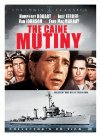
THE CAINE MUTINY (1954) revisited

January 17, 2012

 Greetings again from the darkness. This film was nominated for seven Academy Awards (no wins), including Best Picture. Watching it today, it seems clear that the courtroom scene with Humphrey Bogart in the chair as Lt. Cmdr. Queeg drove this film to the heights it reached. That few minutes is as powerful as anything Bogart ever did on screen. Unfortunately, he would pass away (esophagal cancer) less than three years later.

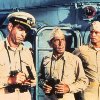
The first part of the film is solid enough as we meet newly graduated (mama’s boy) Ensign Willie Keith (Robert Francis). His first Navy assignment is aboard a minesweeper (junkyard Navy) and the veteran officers quickly note his disappointment at not being stationed on a more prestigious carrier. Those veteran officers are played by quite a list of actors: Van Johnson plays no-nonsense Lt. Steve Maryk, Fred MacMurray plays the cynical wannabe novelist Lt. Tom Keefer, and Tom Tully plays Cmdr. DeVriess, who irritates young Willie with his laid back approach to command. We also see Lee Marvin and Claude Akins as part of the ship’s rag-tag crew.

 A shift occurs once Queeg replaces DeVriess. Queeg brings a tough old school Navy approach to the ship and is easily thrown by the sight of an untucked shirt. Over a short amount of time, the officers begin taking note of the odd behavior of Queeg. MacMurray’s character acts as an armchair psychologist, and more importantly, an instigator for the other officers. He is convinced Queeg is unstable and unfit for duty. The climax occurs during a typhoon and Lt Maryk (Johnson) takes the abrupt step of relieving Queeg of his duties … an action that’s never actually occurred aboard a Naval ship.

Soon Maryk and Willie are brought up on charges of mutiny. At about the 90 minute mark, their attorney makes his first appearance. Jose Ferrer plays Lt. Greenwald, the only naval attorney who would take the case against the highly decorated Commander. Watching Queeg (Bogart) on the stand is just about as good as acting gets. Ferrer is exceptional as well.

 This film is about the character of men and their reactions to situations in which they are trained to act otherwise. It’s based on the Pulitzer Prize winning WWII novel by Herman Wouk, and the screenplay is by Stanley Roberts. The film is directed by Edward Dmytryk, who you may know as one of the “Hollywood Ten”. Dmytryk spent time in prison for his lack of cooperation with HUAC, and his previous involvement with the communist party. The score is outstanding and was composed by the famous Max Steiner, who was also responsible for a couple of other films you may have seen: Casablanca and Gone with the Wind. It should also be noted that this was the second of five total films made by Robert Francis (Ens Willie Keith) and the 25 year old up-and-coming actor was killed in a plane crash the year after this film was made.

*noteEdward Dmytryk retired from filmmaking and for a few years taught film theory at the University of Texas.  I was fortunate enough to be a student in a couple of his classes.  His insight was remarkable.

*note – an aspiring young actor named Maurice Micklewhite was so inspired by the movie and Bogart that he changed his name to … Michael Caine

*note – pay special attention to the number of ticks/quirks that Queeg display (his use of Chinese Baoding Balls for stress, his use “K” as a form of communication, his facial contorts in moments of indecision, etc)

here is the original trailer (the volume level is very low):