Oscar Nominated Live Action Shorts 2019
Top-to-bottom, this is the strongest shorts category I can recall. The quality of each is such that winning the Oscar would be well-deserved for any of the nominees. Four of the five are tension-packed, while the fifth is just as emotional – only in a more intimate manner. That being said, I have listed these in order of my preference. However, should you ask me tomorrow, the order might change. All five films are that strong. Just a reminder, these are not Oscar predictions, just personal opinion.
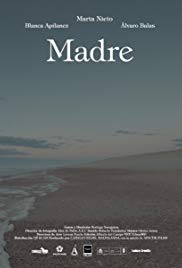 MADRE (Spain) 19 min
Greetings again from the darkness. Filmmaker Rodrigo Sorogoyen begins his film with a long, slow pan shot across a deserted beach until we see the waves rhythmically rolling in and out. It appears to be a most peaceful setting, but instead it’s actually the set up for one of the most intense and emotionally shattering short films ever.
Marta Nieto and her mother Blanca Apilanez are hanging around the apartment on what’s a typical day for them. When Marta’s answers a call, an unimaginable horror unfolds via cell phone. On the other end is her 6 year old son. He’s on holiday with his father, Marta’s ex. Only her son tells her, as his cell phone battery is dying, that dad left him and now he’s alone on a beach … he thinks it’s France, but could be Spain.
Marta and her mother juggle cell phones as they try to track down the father, while keeping the young boy as calm as possible. It’s a captivating and stunning performance by Marta Nieto, and a brilliant piece of filmmaking from Mr. Sorogoyen. It may be the most unsettling 19 minutes of movie I’ve seen, and if it had gone any longer, it might have become truly unbearable.
 DETAINMENT (Ireland) 30 min
Greetings again from the darkness. Evil personified. That is the only possible way to describe 10 year old boys Robert Thompson and Jon Venables. In February 1993, the British boys skipped school and spent the day doing typically mischievous activities around the local shopping center. Typical that is until they abducted 2 year old James Bulger.
This is writer-director Vincent Lambe’s 4th short film, and it’s based on the disturbingly true story of the abduction-torture-murder of toddler James by the two young boys. The film draws directly from the actual tapes of interviews/interrogations once the boys were identified from the grainy security footage. This dramatization includes the pleas of innocence from the boys, as well as the reactions of both their parents and the police officers. The scenes depicting the questioning of the boys is powerful, and the scenes of the 3 boys together is more than most of us can bear, despite little of the crime being shown (thankfully).
Young actors Ely Solan (Jon) and Leon Hughes (Robert) are both extraordinary in their performances. Director Lambe deftly applies judgment in what is shown on screen and what instead corrupts our thoughts. It’s heart-breaking to see what the parents of these boys must endure, but it’s beyond our comprehension to imagine what Baby James Bulger’s parents must have endured. The boys were tried as adults in 1993, and both subsequently released from incarceration and given assumed identities for their own protection. If somehow Lambe’s short film isn’t disturbing enough, it’s pretty simple to get the full report of what the boys inflicted on that poor child. Evil personified.
 FAUVE (Canada) 19 min
Greetings again from the darkness. Two young boys, obviously good friends, are spending the day just hanging out and exploring the area on the outskirts of town. They are engaged in an ongoing game of one-upmanship as they spontaneously compete over a string of mindless pranks to see who is the bravest or toughest.
Director Jeremy Comte places Tyler (Felix Grenier) and Benjamin (Alexandre Perreault) in common situations that most of us (at least from my generation) easily recognize. A vacant lot or deserted train car are easily turned into a playground as the mischievous boys deal with their unchaperoned independence. We find ourselves chuckling at their harmless teasing … well, harmless until it’s not.
Even with a run time of only 14 minutes, director Comte doesn’t rush the set up. It’s just a lazy, care-free day until the boys make their way into an open-pit mining zone. For someone with a quicksand-phobia (thanks to those early Tarzan movies), the shift in tone delivers an emotional gut-punch. A terrific final scene caps off a powerhouse short film that deserves the festival accolades it has received. From Canada with French dialogue, expect this one to receive even more award consideration.
 MARGUERITE (Canada) 19 min
Greetings again from the darkness. It was after the Oscar nominations were announced that I tracked down this one, the last of the 5 nominated live action shorts in the category that I’ve watched. While the other 4 nominees are tension-packed, this beautiful 18 minute film from writer-director Marianne Farley is serene and both heart-warming and heart-breaking.
Beatrice Picard began her acting career in the 1950’s, and here she is extraordinary in the titular role. Marguerite is a lonely elderly woman in the final stage of life. Understanding that her time is near, she has refused the daily dialysis recommended by her doctor. A window in her living room is literally her window to the world. As her body slowly fails, she is a captive in her home. Her time is spent anxiously awaiting the daily arrival of her in-home caregiver Rachel (Sandrine Bisson), a patient and compassionate woman who provides care, as well as Marguerite’s only human contact.
Bathing Marguerite, shampooing her hair, helping her get dressed, and applying lotion are part of Rachel’s routine. The importance of these moments is obvious by Marguerite’s face. One day she overhears a brief phone conversation between Rachel and her partner, which leads to an innocent question … the answer which ignites a memory in Marguerite that causes much reflection.
Forbidden love left unrequited and unmentioned highlights the generational and societal differences between these two women in ways we don’t often consider. It also brings them closer together. The wound that won’t heal on her foot is truly insignificant to the decades-long pain Marguerite has carried in her heart. Making peace with her past allows her final stage to play out thanks in part to the tender compassion shown by Rachel.
Marianne Farley is a French Canadian known mostly as an actress, yet this, her second short film as director creates a deep connection despite minimal dialogue between the two women. Cinematographer Marc Simpson-Threlford expertly uses lighting, color and framing to guide us through. C’est beau.
 SKIN (USA) 20 min
Greetings again from the darkness. Bestowed with an Oscar nomination for Best Live Action Short Film, this story from Israeli director Guy Nattiv, who co-wrote the script with Sharon Maymon, is stunning and frightening in how much of a punch it packs into 19 minutes. The influence parents have on their kids is at the heart of this devastating tale.
Jackson Robert Scott (Georgie from IT) stars as Troy, the young son of Jeffrey (Jonathan Tucker, “Justified”) and Christa (Danielle Macdonald, PATTI CAKE$). The film opens with dad Jeffrey taking the shears to Troy’s hair on the front porch. Then all 3 hop in the car with friends, singing a horribly inappropriate song on the way to shooting guns at beer bottles. Later, Troy convinces his dad to take him “surfing”. Of course, there are no waves in sight … you just have to see it to believe it.
Two things are abundantly clear: these are stereotypical hillbillies, and Troy loves his dad very much. Soon we learn something else. Dad is a white supremacist. While at the grocery store, a black man (Ashley Thomas) offers a friendly greeting to Troy, and dad snaps into vile racist mode. Seemingly out of nowhere, Jeffrey’s fellow gang of racists join him in violently pummeling the friendly black man. The vicious beating takes place in front of the man’s frantic wife, daughter and son (roughly the same age as Troy). It’s a family that mirrors Troy’s, with one exception – skin color.
It’s not long before a group of African-Americans take revenge on Jeffrey, albeit in a less violent, yet more permanent and clever manner. Bronny (Lonny Chavis, “This is Us”) is allowed to watch as the revenge plays out. The tables have been turned on Jeffrey, and the shocking ending proves that hate only leads to more hate … and sometimes hate is blind. Racism is a self-perpetuating culture that survives only when passed from one generation to the next. Filmmaker Nattiv and his producing partner-wife Jaime Ray Newman remind us that we reap what we sow. They have a feature length film being released later this year based on the true story of Bryon Widner – a story that likely influenced this impactful short.
 Greetings again from the darkness. Given the turmoil around the globe, being the first film co-directed by an Iranian filmmaker and an Israeli filmmaker makes this one even more impressive … both on screen and behind it. The co-directors are Zar Amir Ebrahimi (who also stars) and Guy Nattiv (who also co-wrote the screenplay with Elham Erfani). Nattiv previously won an Oscar for his superb short film SKIN (2018).


 Posted by David Ferguson
 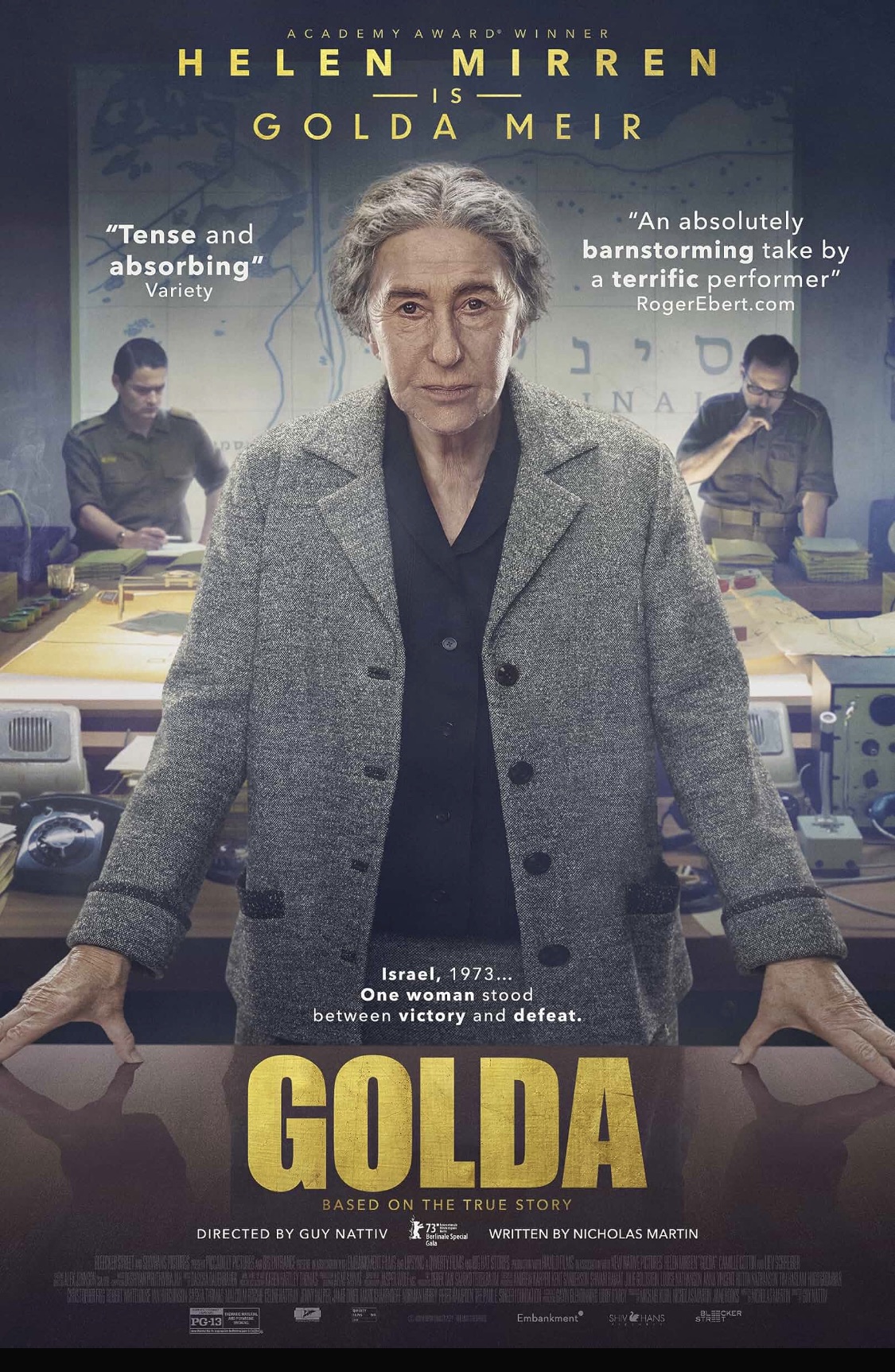 Greetings again from the darkness. More than forty years have passed since the great Ingrid Bergman portrayed Israel Prime Minister Golda Meir in the TV miniseries, A WOMAN CALLED GOLDA (1982). Fighting through cancer during filming, it was Ms. Bergman’s final role, and she won a posthumous Emmy for a performance that left quite a mark on this young (at the time) viewer. Guy Nattiv won an Oscar for his excellent short film, SKIN (2018), and here he takes on a narrow, yet vital window in the term of Golda Meir … a time when the survival of her country was in jeopardy. The screenplay was written by Nicholas Martin (FLORENCE FOSTER JENKINS, 2016).
 Movie Reviews from the Dark