THE FOUNTAINHEAD (1949)

February 18, 2014

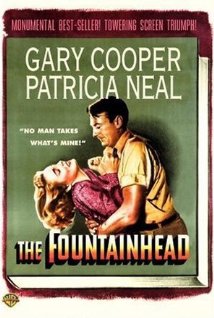
fountainhead Greetings again from the darkness. Russian-American writer/philosopher Ayn Rand is best known for her novels The Fountainhead and Atlas Shrugged. She is the founder of Objectivism (as opposed to collectivism) which has become the foundation for the Libertarian Party in the U.S. Both novels make for fascinating and thought-provoking reading, and numerous other writings and interviews featuring Ms. Rand will question your beliefs and today’s society. Unfortunately, her words and thoughts have just not translated well to the silver screen.

Ms. Rand was hired to adapt her own novel for this film version, and her stubbornness led to the two main weaknesses: the casting of Gary Cooper and the too long and too convoluted final courtroom speech. Cooper, a Hollywood legend and already a four time Oscar nominee by this time, was simply too old to play the idealistic architect Howard Roark. His stilted acting, such an advantage to High Noon a few years later, really bogged down many scenes in this one.

Newcomer Patricia Neal (22 years old) was cast and she brings much needed energy to the story, though her inexperience shows in a couple of crucial moments. Contrast her performance here with her Oscar winning performance in Hud (1963), where she was in complete command. Sadly, Ms. Neal had a series of strokes in the mid-1960’s and her recovery caused her to turn down the iconic role of Mrs. Robinson in The Graduate (1967).

Other support work in the movie is quite effective. Raymond Massey (so great in East of Eden) is terrific in the William Randolph Hearst-inspired role of powerful newspaper publisher, and Robert Douglas is expertly conniving as the self-centered villain and architecture critic. King Vidor, a 5 time Oscar nominee as director, does his best to overcome the challenges provided by Cooper and Ms. Rand’s script, and for the most part, the film is interesting and enjoyable enough to watch. It’s a bit frustrating to think what might have been.

Howard Roark’s final courtroom speech/closing was at the time the longest soliloquy yet seen on a movie screen. Supposedly, Mr. Cooper didn’t really understand it and his delivery makes that pretty easy to believe. Refusing to compromise on one’s beliefs and talent, and the theory that all we have are our convictions and integrity is simple enough to understand. The arguments ensue when the collectivists state that society depends on the creations of man, and these creations are owed to society, and the most talented of us should serve others. The film’s method of making this point probably won over very few people with it’s theme:  “To want nothing. To expect nothing. To depend on nothing.”

watch the trailer:

http://www.youtube.com/watch?v=swOxKu80JpU


FRIENDLY PERSUASION (1956)

December 29, 2013

friendly p Greetings again from the darkness. Released in 1956, this William Wyler film holds up today because some of the debate and dilemmas touched on remain unresolved 57 years (and numerous wars) later. The film takes place in 1860’s Indiana as the Civil War rages. The story is told from the perspective of a pacifist Quaker family and is based on the 1945 book by Jessamyn West.

The patriarch of this Quaker family is played by Gary Cooper, who was four years past his Oscar winning performance in High Noon, and five years from his death due to cancer. His wife, the Minister Eliza, is played well by Dorothy McGuire, who the following year would play the mother in Old Yeller. The film’s best performance comes from young Anthony Perkins (his second film) who of course made cinematic history as Norman Bates in the 1960 classic Psycho. Both of these Perkins characters share mommy issues and complicated decisions of conscience, and in this one he has a remarkable scene when he crosses that line.

The opposition to war and violence is the main theme here, and there have been many interpretations over the years. Is it religious belief or fear that prevents the men from joining the cause? At least Perkins’ character is honest enough to wonder. Cooper kind of plays against type here since he was so often a man of movie action, but in reality his strength of character and belief allows him to maintain his strong leading man image.

Comedy relief is at hand given the youngest son’s ongoing battle with Samantha the Goose, a family pet with devious attack modes. Daughter Mattie, played by Phyllis Love, falls madly in love with a soldier played by Peter Mark Richman. See, every character has their own personal battles and decisions regarding conscience and violence.

The great Margaret Main has a sequence as a single mother of three daughters (every one a gem!). The daughters introduce Cooper and Perkins to the joys of music … forbidden by the Quaker church. One of the daughters is played by Marjorie Durant, whose father was a writer and assistant to Charlie Chaplin. Her grandmother married EF Hutton, so Ms. Durant could have spent a great deal of time researching her only family stories.

While it’s difficult to understand these days, screenwriter Michael Wilson was not originally credited for his work. He was on the Hollywood Blacklist, and his screen credit was not reinstated until 1996. William Wyler was one of the most successful directors in Hollywood history and his resume includes Jezebel, Mrs Miniver, The Best Years of Our Lives, and of course, Ben-Hur. Though this movie was nominated for 6 Academy Awards, it didn’t win any and lost out to Best Picture winner Around the World in 80 Days.

**NOTE: This was Ronald Reagan’s favorite movie and he presented a copy to Mikhail Gorbachev in hopes the message would prove perspective and alternatives to a war between the super powers.

watch the trailer:

https://www.youtube.com/watch?v=xmK3iPSNtCQ

http://www.youtube.com/watch?v=xmK3iPSNtCQ


HIGH NOON (1952) revisited

September 26, 2012

 Greetings again from the darkness. Thanks to the Cinemark Classic Series, seeing this one on the big screen became a summer highlight. Often rated as one of the all-time best, and easily one of the best from the western genre, the film was written (by Carl Foreman) as an allegory to Hollywood blacklisting brought on by Sen. McCarthy’s red-baiting crusade. The cowardly townspeople represent those who wouldn’t stand up against the wild and often false accusations.

The film won four Oscars, including Gary Cooper as Marshal Will Kane. The character is often compared to Atticus Finch from To Kill a Mockingbird. Both are shining examples of men doing the right thing in very difficult circumstances. It’s been noted that Gary Cooper’s constant look of pain during the film might not have been excellent acting after all. He reportedly was suffering from a bleeding ulcer and severe back during filming (though he was apparently strong enough to carry on an affair with his beautiful co-star).

Originally filmed in “real” time with the numerous clock shots to prove it, the film was re-edited prior to release, nullifying the effect. The Tex Ritter (John’s father) version of “High Noon (Do Not Forsake Me)” is heard throughout, and will stick in your head for some time after viewing. This was the first major motion picture for both Grace Kelly and Lee Van Cleef. Ms. Kelly plays Kane’s new bride, who doesn’t understand his need to stay and face Frank Miller. Mr. Van Cleef flashed his beady eyes here and went on to have a long career as a top notch movie villain.

 The film was directed by Fred Zinnemann who also directed From Here to Eternity, Oklahoma!, and A Man for All Seasons. Zinnemann lost the Oscar to John Ford, and film lost to The Greatest Story Ever Told. It’s considered one of the greatest Oscar upsets in history. Floyd Crosby was the cinematographer … he is the father of singer David Crosby (Crosby, Stills, Nash and Young).

Other supporting work is courtesy of Thomas Mitchell (Uncle Billy from It’s a Wonderful Life), Katy Jurado (excellent as Helen Ramirez), Lon Chaney, Jr, Harry Morgan (later Col Potter in “MASH“), and Sheb Wooley (later known for singing “The Purple People Eater”), and of course, Lloyd Bridges as Harvey, Kane’s ambitious, and not so loyal, deputy (and father to Beau and Jeff).

Cooper is at his most dominant in this role and it’s difficult to believe that just about every other Hollywood leading man of the time was offered the role prior to him. Cooper’s Will Kane is the epitome of the strong, silent type … and a real stand-up guy.

** watch the opening credits … featuring the opening shot of Lee Van Cleef and Tex Ritter singing the Oscar winning song:

http://www.youtube.com/watch?v=QKLvKZ6nIiA&feature=related


WINGS (1927)

May 3, 2012

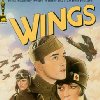
 Greetings again from the darkness. This film holds the prestigious position of forever being the answer to a favorite Academy Awards trivia question: Name the first Best Picture winner. Of course, there should be an asterisk attached as the film officially won Most Outstanding Production. There was no Best Picture award that first year. It was also the first and last Silent Film to win the award until The Artist won this year (2012).

Rarely have a film and director been so perfectly matched. William Wellman was known as “Wild Bill” thanks to his actual WWI flying experience and his penchant for fighting and partying in Hollywood. Wellman handled some of the stunt flights in the film and is also seen as the dying soldier near the end who shouts the “buzzards” line. Much of the film was shot at Kelly Field in San Antonio, and its popularity was certainly assisted by the patriotism of the time and the recent aviation excitement created by Charles Lindbergh‘s transatlantic flight.

The story is based on the WWI Army Air Corps and features some stunning aerial photography and combat flying missions, with an incredible-for-the-times 3500 soldiers, 65 pilots and 165 aircraft. The lead actors are Richard Arlen (David) and Charles “Buddy” Rogers (Jack). They are local rivals battling over the heart of the same woman played by Jobyna Ralston (Sylvia). It’s a pretty interesting love story as Jack thinks Sylvia loves him, Sylvia loves David and David knows it, and Mary loves Jack, and Jack has absolutely no clue.

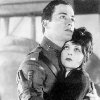
 Mary is played by the always outstanding Clara Bow (pictured left with Rogers). She truly lights up the film and screen in her scenes. Not only does she have the expressive eyes necessary for silent films, her physical presence is wonderful for such a tiny lady. Other interesting cast members include El Brendel as Herman Schwimpft. His German sounding name and somewhat effeminate manner are constant sources of comic relief. Hedda Hopper plays Jack’s mother. You might recognize her name as the founder of Hollywood gossip columns … she started out doing some acting.

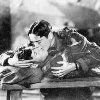
 Beyond the “Wild Bill” fun, there was also some romantic shenanigans on set. Richard Arlen and Jobyna Ralston ended up getting married after meeting during filming. Also, Clara Bow started an affair with a new actor named Gary Cooper. Yes, THAT Gary Cooper (pictured below, standing). It is startling to see such a young Cooper when he makes his first appearance. It’s a small, but vital role in the film. There has been an ongoing debate in the film world about the homosexual undertones between Jack and David. In the famous death scene, we get the first on screen man-on-man kiss on lips. Quite shocking for the times.  From a technical aspect, the Handschiegl Color Process was used for the flames and explosions – dramatic splashes of color in the aerial combat scenes. This was also Costume Designer Edith Head‘s first film. She went on to become the most famous Hollywood costume designer and worked on hundreds of films.

 The theatrical re-release of the film coincides with its 85th anniversary and celebrates 100 years of Paramount Pictures. The opening credits provide a time lapse view of the numerous Paramount logos through the years. There are many reasons to see this film: its ground-breaking action scenes, the history it addresses, its place in Hollywood lore, and of course, if you want to see the inspiration for Betty Boop (Clara Bow). What I won’t do is mention that the love story was copied by Michael Bay in the less-than-stellar Pearl Harbor film. Forget I even mentioned it.

*note: a bit more trivia … the film was released the same year Babe Ruth hit 60 home runs.  That’s the record Roger Maris would break 34 years later.  Also, this film is one of only three to ever win Best Picture without also receiving a Best Director nomination.  The other two films are Grand Hotel (Edmund Goulding, 1932) and Driving Miss Daisy (Bruce Beresford, 1989)

watch a one minute trailer: