 Greetings again from the darkness. I’ve never really understood the artistic benefit to filming a biography after a spectacular documentary on that person has already been produced, made the rounds, and racked up awards. But then, I guess the point has little to do with art, and more to do with economics (documentaries are historically a money losing venture). Renowned director Oliver Stone brings us the story of Edward Snowden just two years after filmmaker Laura Poitrus won the Oscar for Best Documentary for her Citizenfour.
Much of what Ms. Poitrus documented in real time at the Mira Hotel in Japan is re-enacted here as one of the three core storylines in Mr. Stone’s film. To his credit, he fills in much of the backstory and Snowden’s resume by starting with a failed attempt at joining Special Forces (tumbling off the top bunk is automatic disqualification if it shatters one’s leg).
Joseph Gordon-Levitt mimics Snowden’s low key mannerism and measured vocals, while also fiddling with his eyeglasses during key moments. As a sought-after role for an actor, Snowden ranks a few rungs below, say Howard Hughes or Franklin Roosevelt or most any other person who has had an impact on America … just not much personality to work with – though his actions have created some of the most interesting discussions over the past few years.
Joining Snowden in the hotel room are Melissa Leo as Ms. Poitrus, Zachary Quinto as journalist Glenn Greenwald, and Tom Wilkinson showing off a Scottish accent as journalist (from The Guardian) Ewen MacAskill. The second storyline takes us through the initial recruitment and subsequent rise through the CIA and NSA, as we see how Snowden continually uncovered more about how the government was spying on citizens. His interactions along the way – such as Rhys Ifans as his CIA mentor Corbin O’Brian and Nic Cage as disgruntled agent Hank Forrester – provide a spark of energy on screen. The third piece of the pie revolves around Snowden and his politically-polar-opposite girlfriend Lindsay Mills, played by Shailene Woodley.
Since it’s an Oliver Stone movie (he co-wrote the screenplay with Kiernan Fitzgerald), we fully expect his political views to be on full display. It’s clear he is sympathetic and fully supportive of Snowden’s actions, and does his best to paint him as a patriot who had no choice but to go public with his belief that the spying had nothing to do with terrorism, but was instead a form of social and economic control. Based on the books “The Time of the Octopus” by Anatoly Kutcherena and “The Snowden Files” by Luke Harding, the film portrays Snowden as increasingly disenchanted and disappointed, beginning in 2003 and moving through 2013.
Stone’s feel for visuals come into play as we track Snowden through Virginia, Geneva, Hawaii, Japan and finally Russia. Along the route, familiar faces pop up in almost every new scene – Timothy Olyphant, Scott Eastwood, Lakeith Stanfield (Short Term 10), Logan Marshall-Green, Ben Chaplin, Ben Schnetzer, and Joely Richardson. There are a couple of sequences in which Stone applies his stamp … a party with drones hovering overhead (until they aren’t), and an impactful full wall Skype with Rhys Ifans’ face looming larger than Snowden’s entire body.
Whistleblower or turncoat? Hero or traitor? Most people fall pretty clearly on one side of the debate, and there’s no doubt where Stone stands. Just prior to the voice of Peter Gabriel over the closing credits and clips of the real Ed Snowden, there is a fancy edit where Stone shows him at his computer in his current home in Russia. Stone’s movie makes a nice companion piece to Citizenfour, but if you are only going to see one, choose the documentary.
watch the trailer:


 Posted by David Ferguson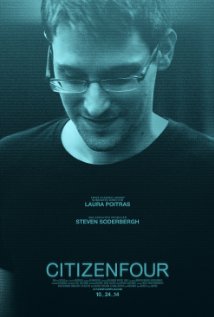
 Movie Reviews from the Dark