 Greetings again from the darkness. You don’t have to be one of the 60 million who, between 1951 and 1957, tuned in each week to watch the latest episode of “I Love Lucy” to feel like you know Lucy, Desi, Ethel, and Fred. Most of us have watched the syndicate re-runs over the past 70 years, and that fact added challenges to this project for writer-director Aaron Sorkin – not the least of which was casting the role of Lucille Ball. Everyone had an opinion, and when you go to cast a true icon, it’s a slippery slope.
I’m happy to report (even though it’s not surprising) that Oscar winner Nicole Kidman is truly exceptional as Lucy. Perhaps a better choice could be made if this were a remake of the “I Love Lucy” sitcom, but although the film dips in and out of that show’s production, this is an Aaron Sorkin movie; so the focus is less on comedy and more on the intricacies of social and political issues. Now you might ask, what issues could a beloved star like Lucy have? How about these: the media is reporting her husband is cheating on her, the sponsors don’t want her appearing on air while pregnant, internal battles over a particular scene with the director and writers, and she’s just been publicly called out for being a communist.
You’ve surely detected by now that this is no comedy about Lucy. Instead, it’s a pretty heavy drama about pressures at the top of a profession, and the eternal difficulties in cultivating a successful marriage. Adding heft is the era in which this occurs. It was rare for a woman to wield Lucy’s power, and the social mores of the time forced big time debate over showing a woman during pregnancy – even if that woman was married! Filmmaker Sorkin utilizes an odd structure for the film. It appears to be happening during the show’s second season, but we are actually looking back years later through the eyes of the show’s writers and producer. And then beyond that, we get flashbacks from the flashbacks to Lucy’s time at RKO, and the early flirtations that led to Lucy and Desi.
Oscar winner Javier Bardem plays Desi Arnaz. Although he bears little physical resemblance to the Cuban bandleader, Bardem expertly captures the essence of Desi as a businessman, actor, musician, lover of Lucy, and lover of life. For me, it was as thrilling to watch Desi’s shrewd negotiations with the network and Philip Morris executives as his energized bongos while performing “Babalu” at Ciro’s. Sorkin makes it clear that both Lucy and Desi were brilliant at what they did. Together they formed Desilu Productions, and he handled much of the business side, while her perfectionism and comedy instincts pushed the show to limits never before reached.
But what would the Ricardos be without their neighbors, landlords, and friends, Fred and Ethel Mertz? Nina Arianda (a Tony winner) plays Ethel/Vivian Vance, while Oscar winner JK Simmons plays Fred/William Frawley. The set is not the warm and fuzzy cocoon one might imagine. Vivian’s well known frustration was with Lucy mandating Ethel’s frumpy and dowdy look, while it’s clear Vivian and Frawley’s bickering carried on after the lights dimmed … due in no small part to Frawley’s alcoholic ways. That said, Ms. Arianda is terrific in the role, and Mr. Simmons epitomizes the grumpy old man we know as Fred.
Due to the flash-forward recollections, we get Tony Hale and John Rubinstein as the younger and older producer Jess Oppenheimer, Jake Lacy and Ronny Cox as the younger and older writer Bob Carroll, while Alia Shawkat and Linda Lavin play the two versions of writer Madelyn Pugh. It’s Ms. Lavin who describes Lucy and Desi’s relationship as, they were either “tearing each other’s heads off, or tearing each other’s clothes off.” It’s debatable whether Sorkin’s choice to structure the multiple time lines adds to the film’s depth, but it does allow for more talking … something Sorkin never shies away from. This is his third directorial effort after MOLLY’S GAME (2017) and THE TRIAL OF THE CHICAGO 7 (2020), and he won his Oscar for the adapted screenplay of THE SOCIAL NETWORK (2010).
Despite all the other aspects, this is the story of Lucy in crisis mode. She is pregnant with the child of a husband who is likely cheating on her. Her show and company are in jeopardy, and because of something she did many years ago, her status as a beloved American icon could be lost. Her show transcended all other forms of entertainment at the time and was must-watch TV when not every home had a TV (much less 3 or 4). The film mostly covers one week in time, though Sorkin does give us a look back at a time when the industry simply didn’t know what to do with her talent. For the fans, we do get a mention of Vitameatavegin, and a wonderful recreation of the infamous stomping of grapes. It’s a delight to see such fine actors fully engaged in roles they know will be picked apart by many. This is not the Lucy movie we would typically expect, but it’s one that pays tribute to the real person and real people and what they accomplished.
In theaters on December 10, 2021 and streaming on Amazon Prime beginning December 21, 2021


 Posted by David Ferguson
 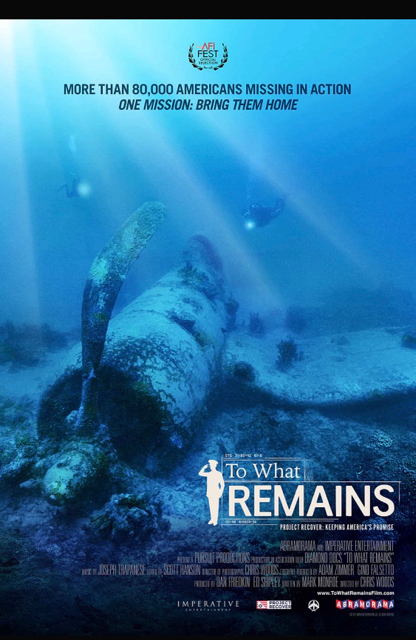 Greetings again from the darkness. Sometimes it feels pointless to write about a film, while sometimes it seems that the right words escape me. I don’t have the right words for this documentary from Chris Woods, yet I do know that it should be seen by as many folks as possible. As the divisiveness of our country continues to fester, this story about real people takes us to a time when heroes fought for freedom against real enemies, while so many families sacrificed for the benefit of all. Millions lost their lives in World War II, and Woods focuses on one small organization doing everything possible to bring closure to the especially brutal Battle of Peleliu.
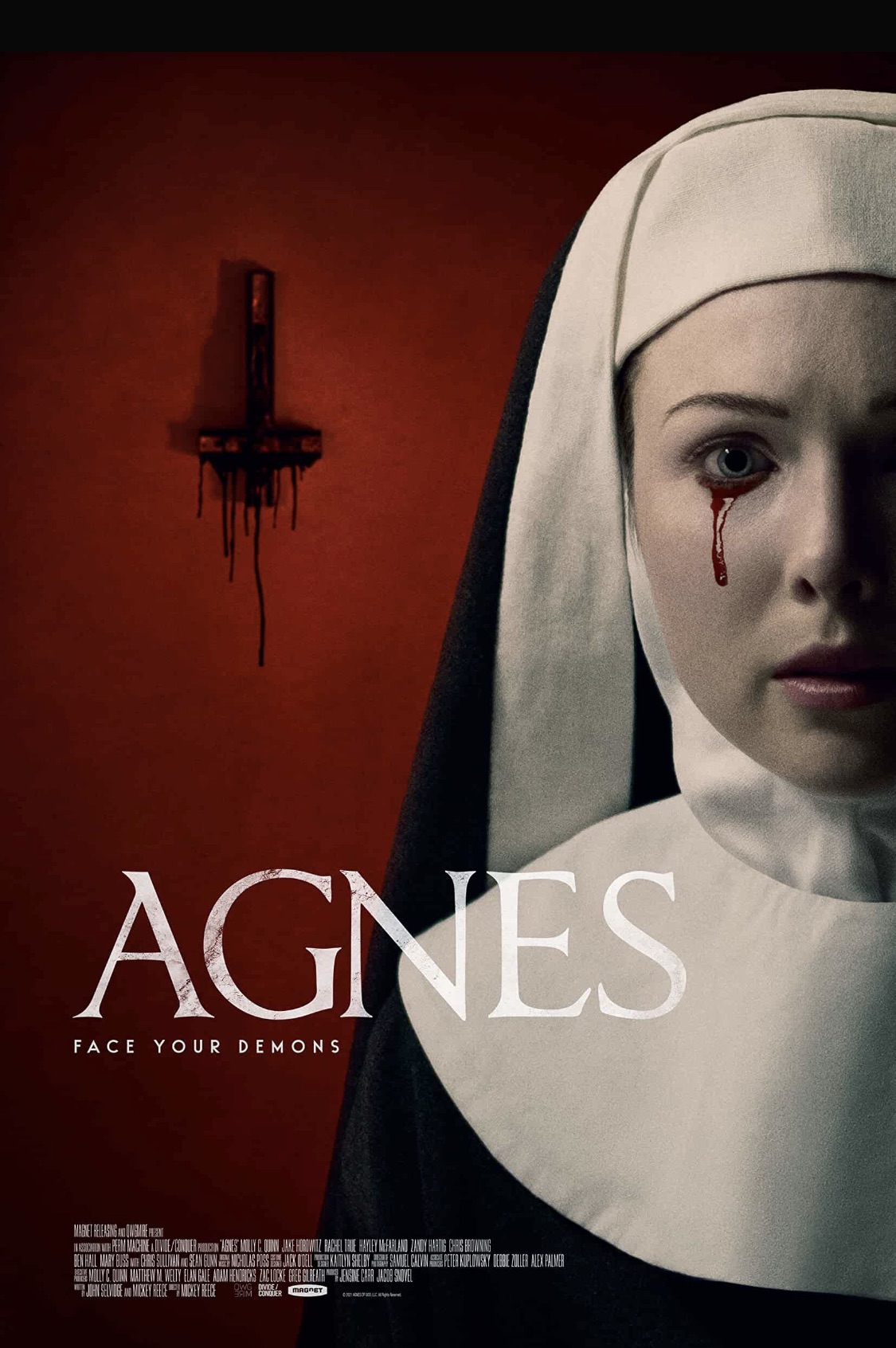 Greetings again from the darkness. William Friedkin’s 1973 movie THE EXORCIST, adapted from William Peter Blatty’s novel, shook the movie world at the time. It even garnered 10 Oscar nominations, winning two (Best Sound, Best Adapted Screenplay). Over the nearly 50 years since, there have been five sequels in the franchise, and it has inspired countless genre movies, including parodies and knock-offs. Writer-Director Mickey Reece and co-writer and frequent collaborator John Selvidge deliver a set-up that leads us to believe we are in for yet another faith-based horror film focusing on demonic possession. Instead, what follows is more like two distinct stories.
 Greetings again from the darkness. Capturing a kid’s attention is difficult enough, but these days, it’s a real challenge to hold that attention for 90 minutes. You best offer something extremely entertaining, which is exactly what first time (co-) directors Harry Cripps and Clare Knight have done. Ms. Knight previously worked as the Editor on the MADIGASCAR and KUNG FU PANDA movies, and is married to actor Wayne Knight (Newman from “Seinfeld”). Mr. Cripps previously wrote the screenplay to THE DRY (2020) and here he co-wrote the script with producer Gregory Lessans. Of course making animals the center of a kids’ story is nothing new, and neither are the central topics of respect and family, yet this is quite an entertaining way to do so.
 Greetings again from the darkness. My ‘old school’ nature causes me to cringe at the thought of classic films being remade. Why mess with something that’s already beloved? However, since we know this happens (and will continue to happen), let’s at least breathe a sigh of relief that a true lover of cinema and one of our legendary filmmakers, Steven Spielberg, is responsible for this one. Teaming once again with screenwriter Tony Kushner (MUNICH, LINCOLN), the love and admiration of the 1957 stage production, its music, and the 1961 film (by Robert Wise) shine through in this beautiful presentation. It’s Spielberg’s 35th movie, yet it’s his first musical. You will note a few changes from the stage production and 60 year old movie, but the timing of a couple of songs, more realistic brawling, and additional on-location scenes all blend seamlessly into this lovely version.
 Greetings again from the darkness. Don’t mess with the smart ones, as brains often outlast brawn. I’m conflicted on how best to describe this film. Perhaps … It’s nuanced storytelling at its finest. Jane Campion won an original screenplay Oscar for THE PIANO (1993), while also becoming only the second woman to receive a nomination as Best Director. This is her 8th feature film to direct, and the first since the underrated BRIGHT STAR (2009). Ms. Campion is such a smooth filmmaker, and her latest is so expertly crafted and so beautifully filmed, that some may find themselves not recognizing the underlying tension between characters. I urge you to remain diligent and take note of the subtle gestures and facial expressions, as the emotions run deep.
 Greetings again from the darkness. Growing up, I loved watching Jimmy Connors and John McEnroe play tennis. Their talent was unmistakable and they had a certain flair for dramatic moments. But even as a kid, I was more drawn to the personalities of Bjorn Borg and Arthur Ashe – two champions who carried themselves with a quiet dignity and respect for the game and their opponents. They acted like grown-ups, not petulant kids. It wasn’t until later that I really understood the obstacles Ashe faced, and co-directors Rex Miller and Sam Pollard expertly handle this remarkable man’s story.
 Greetings again from the darkness. Filmmaker Paul Verhoeven has long made his cinematic living on the fringes: the brutality of the Middle Ages in FLESH + BLOOD (1985), the violence and thirst for power through technology in ROBOCOP (1987), the buried dark side (and other uses of ice picks) of our personality in BASIC INSTINCT (1992), more thirst for power combined with a baffling lack of sex appeal in SHOWGIRLS (1995), and the unbridled desire for revenge in ELLE (2016). This latest displays his mastery of ‘nun-on-nun’ eroticism and the duplicity of religious faith. Verhoeven’s usual goal is to provoke, and along with his co-writer David Birke, this ‘based on true events’ story (adapted from the 1986 Judith C Brown book, “Immodest Acts: The Life of a Lesbian Nun in Renaissance Italy”), is a natural fit.
 Greetings again from the darkness. It’s all in the terminology you opt to use. Secret rescue mission or kidnapping. Protective or paranoid. Alien invasion or mental illness. By opening on a meteor flashing across the night, and following that with National Geographic-style shots of bugs in nature, parasites attacking hosts, and news clips of violent rioters, we can’t help but assume that writer-director Michael Pearce (BEAST, 2017) and co-writer Joe Barton want us to believe the end is near.
 Greetings again from the darkness. We all know that gender identity, and identity in general, are topics receiving a great deal of attention these days. Writer-director Nathalie Biancheri latches on to the discussion by bringing up Species Identity Disorder, also known as Otherkin. These are folks who identify as something other than human, typically a type of animal. It’s easy enough to connect the dots to gender dysphoria, but it also walks a fine line between mental health and sadness (and if we are being honest, a bit of humor – at least as presented here).
 Movie Reviews from the Dark