 Greetings again from the darkness. “What goes up, must come down” … those are the opening lyrics to “Spinning Wheel”, a huge hit for the brass-rock band Blood, Sweat & Tears. The lyrics are meant to convey the cycles of life, but they also reflect the meteoric rise and fall of the band itself. John Scheinfeld is a knowledgeable and passionate documentarian behind profiles of such acclaimed musicians as Herb Alpert, Brian Wilson, Sergio Mendes, Bing Crosby, Frank Sinatra, John Lennon, Harry Nilsson, Bette Midler, Rick Nelson, Rosemary Clooney, John Coltrane, Andy Williams, and Dean Martin. He’s a natural choice to provide the answers to the titular question.
A 9-piece jazz-rock band hitting the charts big time is not something that could have been predicted in the late 1960’s. Scheinfeld opens the film with clips of the band live on stage in Bulgaria in 1970 as David Clayton-Thomas belts out “Spinning Wheel”. We learn they were the first American rock band to perform behind the Iron Curtain, and we also learn there is more to the story. Much more. At the time, the United States was in the Vietnam War and social and political unrest and upheaval were occurring regularly. There is every indication that the State Department invoked a strategy of using a popular band to ease tensions in communist countries. It was the legal and visa issues of Canadian singer Clayton-Thomas that provided the opening the State Department needed to pressure the band to undertake the tour with the goal of softening the U.S. reputation as a bullying military force.
Ultimately, it was a tour that turned most everyone on all sides against the band. Romanian concert goers initially enjoyed the ‘freeing’ aspect of the band’s music, but soon the police used dogs to break up the crowds and end the celebration. When the band returned home, the counterculture couldn’t forgive them for the tour in communist territory, and the conservative right couldn’t forgive them for being against the Vietnam War. Everyone was upset at Blood, Sweat & Tears.
We get a bit of the band’s history in that it was founded by Al Kooper in 1967 when they introduced a new sound, however, after the first album, it was determined a new singer was preferred and a very brief audition from Clayton-Thomas secured the job for him. The rest of the band consisted of Jim Fielder on bass, Bobby Colomby on drums, Steve Katz on guitar, Dick Halligan multiple instruments, Jerry Hyman on horns, Fred Lipsius on sax, and trumpeters Chuck Winfiled and Lew Soloff. For the most part, the band members were not politically outspoken. The exception was Steve Katz who was adamantly opposed to the foreign land tour. It was the band’s second album that changed everything. Three huge hits – “And When I Die”, “You’ve Made Me So Very Happy”, and “Spinning Wheel” – helped them win Album of the Year over the now classic Abbey Road from The Beatles.
Scheinfeld solves another mystery when he explains why, listed as headliners, the band was not featured in the “Woodstock” documentary. Not surprisingly, the answer involves money, and of course, the band members now look back on their manager’s decision with some regret. But there is more to the story of the band’s faded glory than the communist block tour. An early Las Vegas residency, though a much sought-after gig these days, garnered the label “square” for the band … this despite performances at the Fillmore and MSG. Although the band never regained the popularity of that second album, they did have subsequent hits that included “Hi-De-Ho” (written by Carole King) and “Go Down Gamblin’”. Perhaps most shocking is that more than 65 hours of concert footage was shot on the Iron Curtain tour, yet the State Department shelved the documentary project, likely for political reasons given the police and military activity against concert goers. Bonus points to Scheinfeld for solving a couple of long-term musical mysteries here, and also for including some “Bullwinkle” clips.
Abramorama will release the film in theaters beginning March 24th.


 Posted by David Ferguson
 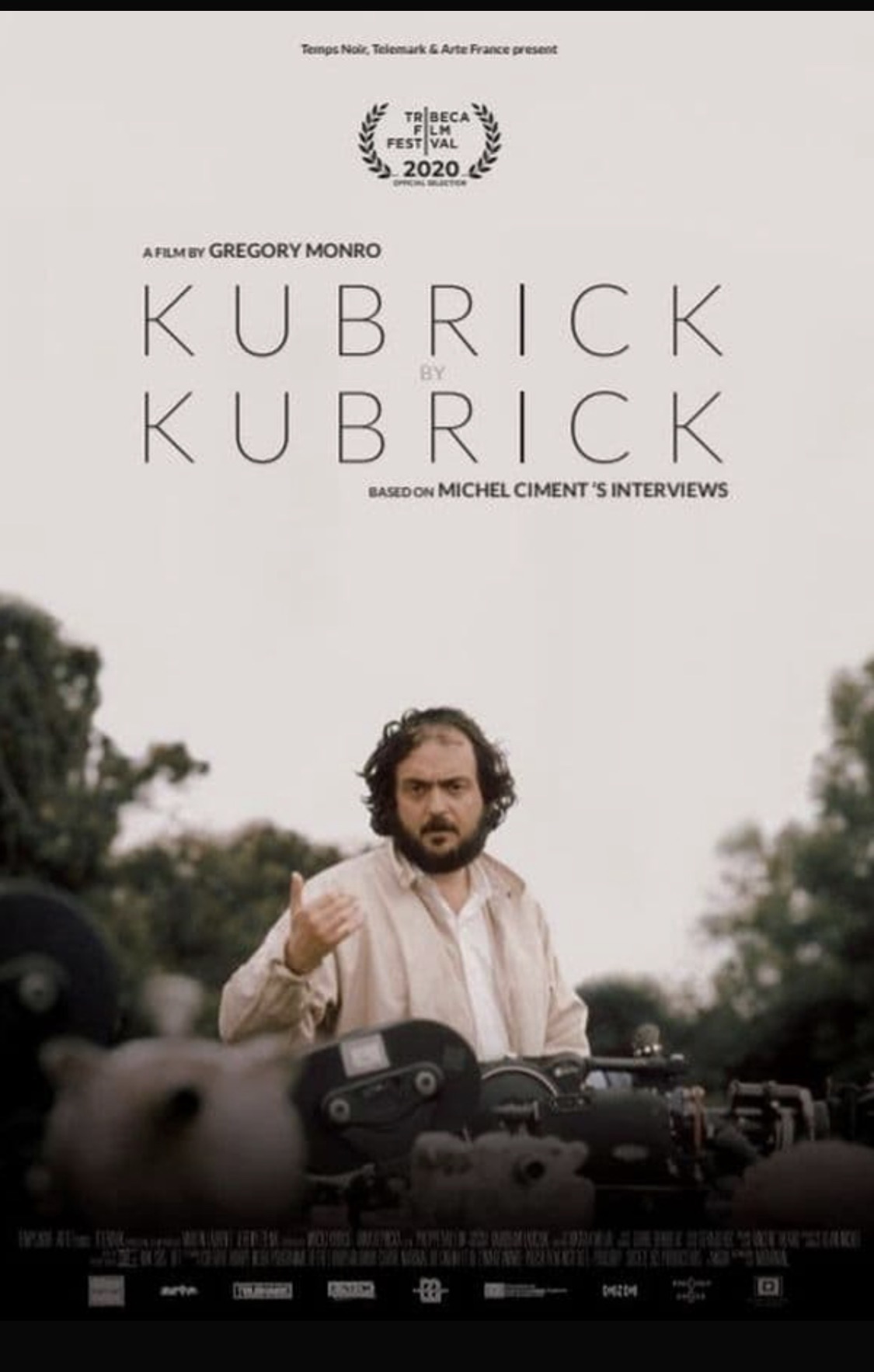 Greetings again from the darkness. The throngs of us who are not artistic geniuses ae always fascinated with insight and analysis from those few who are. And when said genius is renowned for eschewing interviews and most any chance to discuss the work, we become all the more intrigued. Such is the case with Oscar-winning director Stanley Kubrick. Although he passed away in 1999, Kubrick’s filmography features many classics that are studied in film schools today: THE KILLING (1956), PATHS OF GLORY (1957), SPARTACUS (1960), LOLITA (1962), DOCTOR STRANGELOVE: OR HOW I LEARNED TO STOP WORRYING AND LOVE THE BOMB (1964), 2001: A SPACE ODYSSEY (1968), A CLOCKWORK ORANGE (1971), BARRY LYNDON (1975), THE SHINING (1980), FULL METAL JACKET (1987), and EYES WIDE SHUT (1999).
 Greetings again from the darkness. We’ve seen movies about isolation, and we’ve seen movies with survival stories. However, as best I can remember, this is the first survival story about a guy isolated and trapped in an ultra-luxury Manhattan penthouse apartment. Ben Hopkins wrote the screenplay from an idea of director Vasilis Katsoupis. The best idea was casting the always interesting Willem Dafoe in the lead (and almost the only role), while the worst idea was wedging in a forced statement on the one-percenters.
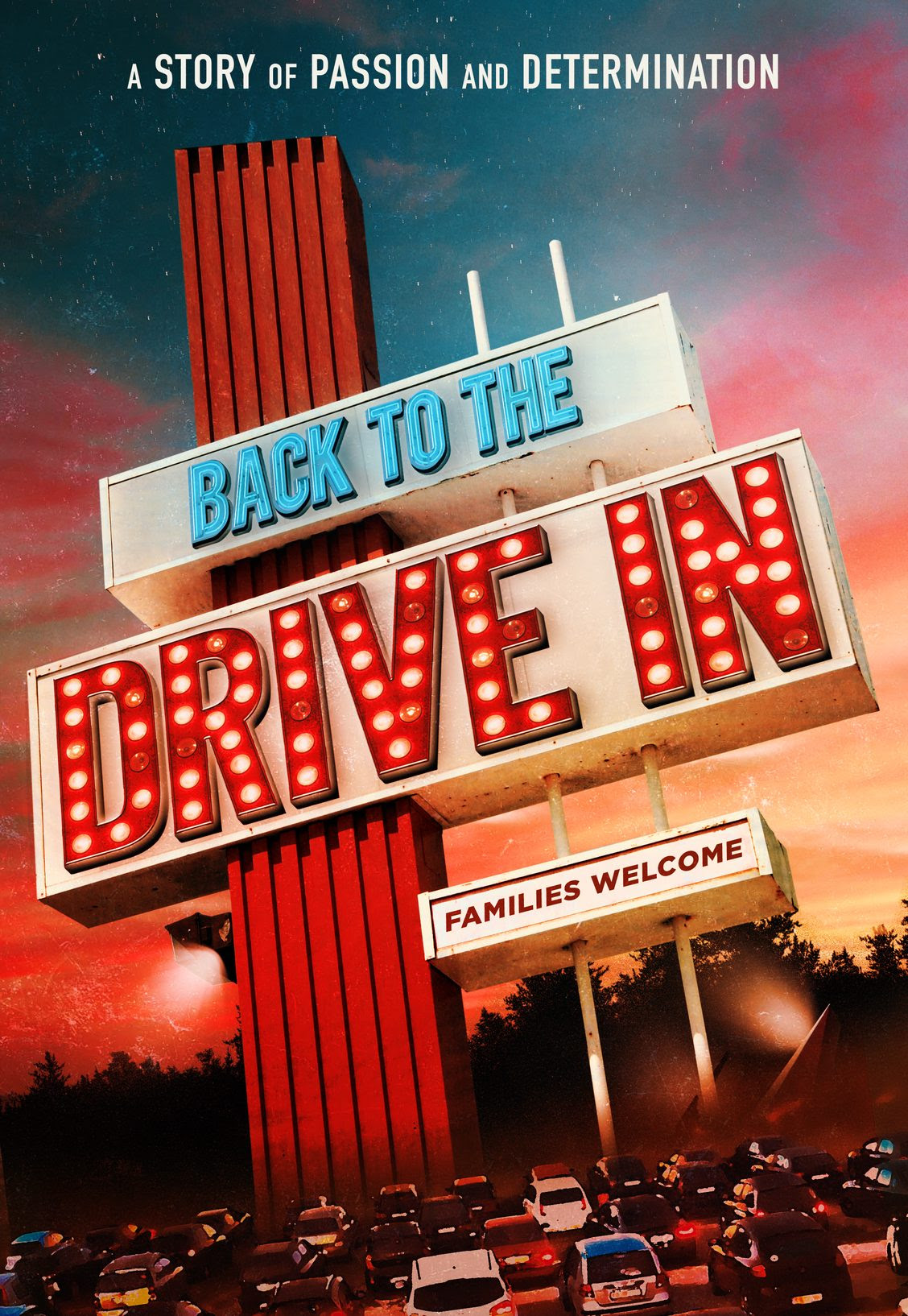 Greetings again from the darkness. As one who spent many evenings in my childhood and teen years lounging in a vehicle as the clunky metal speaker hung from the car window crackling with the dialogue and sound effects from that night’s movie, I was anxious for a dose of the nostalgia that April Wright’s documentary was sure to inspire. However, rather than a feel-good flashback to better days, Ms. Wright deals head-on with the challenges faced by those devoted few brave souls keeping the drive-in tradition alive.
 For movie lovers, the Academy Awards ceremony is usually a fun night designed as a celebration of the art form, with recognition for some of the best work released the previous year. This year’s presentation marked the 95th ceremony, and as always, provided cynics ample opportunity to cast aspersions, while for the rest of us, there were many moments to treasure – some even falling into the category of ‘history-making.’
 Director Kartiki Gonsalves introduces us to Bomman and Bellie, indigenous Kattunauakans working together to care for Raghu, an elephant rescued as an injured orphan in Tamil Nadu, India in 2019. The elephant preserve where they live and work is run by the Forest Department, and Bomman’s hut is right next to the stall where Raghu sleeps.
 For the first few minutes, we aren’t sure what we are watching. Maxim is huddled in a rustic cabin on the shore of the Russian Arctic. He eats canned good (from the can), boils his water, and recycles his cigarettes. One morning he awakens to the grunting and groaning noises occurring outside. What follows is a stunning and spectacular shot of tens of thousands of walruses huddled on the beach by his hut.
 We must admire Jay Rosenblatt’s foresight as a father. It’s a simple idea, yet brilliant in it’s lasting impact. Beginning on his daughter Ella’s second birthday, Mr. Rosenblatt maintained a tradition of videotaping an “interview” with her each year. This tradition, or ritual, continued through her 18th birthday. The result bounces between predictable, stunning, sad, joyful, and touching … all in a condensed 29-minute run time.
 Fifty years have passed, yet the Watergate scandal continues to provide us with stories. Co-directors Anne Alvergue and Debra McClutchy turn their attention to one of the fascinating figures of the era in this 40 minute short. Martha Mitchell was the wife of Richard Nixon’s campaign manager and subsequent Attorney General, John Mitchell. Outspoken Martha was a colorful personality and characterized as “a menace” by Nixon himself.
 Should you ever doubt that kindness and understanding can make a difference, please watch this film from director Joshua Seftel (WAR, INC, 2008). The 29 minute run time may just rejuvenate your faith in human beings to change their attitude and be accepting of those they once distrusted.
 Greetings again from the darkness. It’s pretty obvious these times are quite tumultuous when it comes to political views, as well as social and religious beliefs. Of course, differences of opinions have always existed, however the focus by media attention has created new types of monsters … the vocal types who yell into microphones and cameras about how anyone who disagrees with their extreme view is a danger. Most of us understand that the real danger lurks in the things that get decided ‘quietly’ … legislation that impacts people just trying to live their lives and do their jobs.
 Greetings again from the darkness. Dorothy Gale from Kansas may have been worried about ‘Lions and Tigers and Bears”, but even with a wicked witch and flying monkeys chasing her, she never faced anything as fierce as Cocaine Bear! The story is inspired by true events in 1985 when a plane load of cocaine was inadvertently dropped over a national forest in Georgia. Screenwriter Jimmy Warden takes that premise and imagines what would happen if a ferocious bear had ingested mass quantities of the drug and then rampaged while on the ensuing high. Elizabeth Banks, known mostly for her acting (THE HUNGER GAMES), adds this to her growing list of directorial outings (CHARLIE’S ANGELS, PITCH PERFECT 2), and her latest is sure to find a place in cinematic lore.
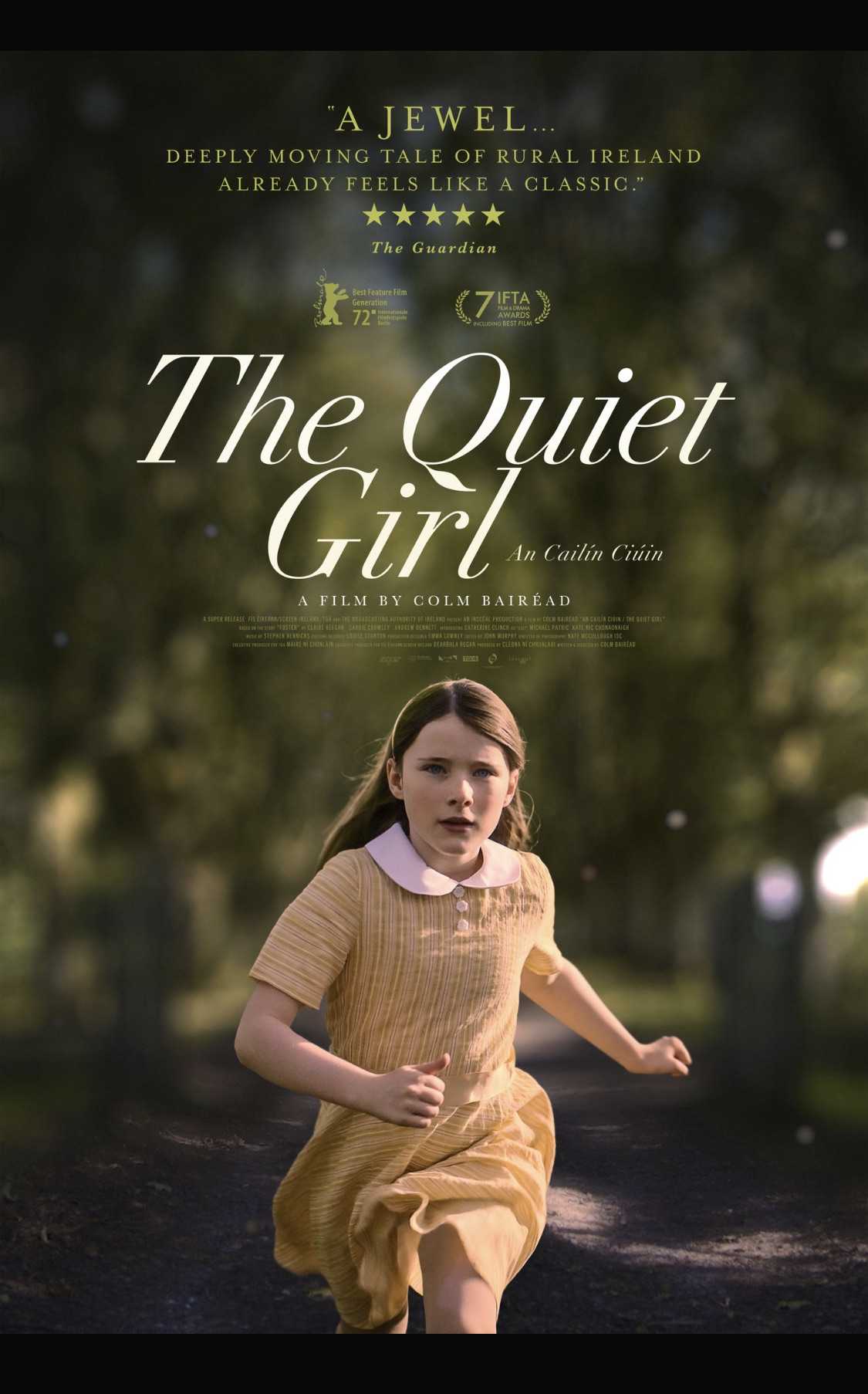 Greetings again from the darkness. What a treat to watch a film that doesn’t drown us in the obvious or spell out each character’s precise thoughts. There are no explosions or action sequences, and these folks are ever so believable and grounded in life. With the depth of emotions relayed, and the unhurried pacing, it’s remarkable that this is a first feature film. Writer-director Colm Bairead has based his debut on “Foster”, a story by Claire Keegan.
 Greetings again from the darkness. A tale as old as time. No, this first feature film from writer-director Matthew J Seville is not a new spin on ‘Beauty and the Beast’, however it is a story that has a familiar feel, and one made more meaningful through terrific acting and expert cinematography. We are engaged through characters rather than plot, and in fact, we grow to care about two of these people after initially finding both a bit abrasive.
 Movie Reviews from the Dark