 Greetings again from the darkness. True stories are often at the heart of many movies each year. However, there are true stories and then there is the story of the Paiva family. Marcelo Rubens Paiva has written two books, which along with numerous interviews with family and friends, serve as the basis for this film from famed Brazilian director Walter Salles (THE MOTORCYCLE DIARIES.2004). The screenplay comes from co-writers Murilo Hauser and Heitor Lorega.
Unless you are a history scholar, it’s highly unlikely you can recite the various Latin America dictatorships and military coups over the past decades. Yet you surely know they have happened, and that many innocent people and families have been victimized. The Paiva family is one example, and their story is gut-wrenching. The film begins in Rio de Janeiro in 1970 when military rule was in place. Director Salles affords us plenty of time to get to know architect Rubens Paiva (Selton Mello), his wife Eunice (Fernanda Torres), and their five kids. Theirs is a happy family living a pleasant and comfortable life … gatherings on the beach, music and dancing, family meals and photos. In one moment, the happiness fades and things change forever.
A group of men show up to escort Rubens (a long-ago local Congressman) in for a deposition. He smiles and tells the family that he will be back soon. The saga of this family is torturous to watch. Eunice and her oldest daughter are soon taken in and held for questioning in what appears to be some type of prison or military facility. They learn Rubens is accused of being a communist. Eunice’s return home is a beautifully filmed sequence, as it’s nighttime and the kids are sleeping.
The next morning’s reunion is touching, yet now the reality has hit for the older daughters. Eunice kicks into strong woman mode to protect her “babies”. The story shifts significantly here since the wage earner is gone. Eunice sells the house and the family moves to Sao Paulo. Eunice handles the extreme stress, continues caring for her kids, and never stops trying to find out about Rubens.
The journey of Eunice could easily fill a movie, however, Salles chooses to jump ahead 25 years (to 1996) and then again to 2014, when the family is together and wheelchair bound and Alzheimer’s stricken Eunice is played by 95-year-old Fernanda Montenegro (Oscar nominated for CENTRAL STATION, 1998), the real-life mother of Fernanda Torres. During these segments, we figure out what an impressive woman Eunice is and how much she has accomplished through determination. It’s likely a death certificate has never been more valued or more pursued than the one Eunice finally receives. We also see her son Marcelo is now physically disabled, yet becoming famous as a writer.
Director Walter Salles knew the Paiva family quite well when he was young, and his personal connection shines through in this ode to a family shattered by political turmoil. Fernanda Torres delivers a stunning performance with more emotional depth than just about any other acting performance we’ve seen this year. Salles details that more than 20,000 citizens were tortured and held captive over these years, and via the closing credits he runs archival photos and a recap of history. Seeing the stress and turmoil of a previously happy family is not an easy watch, yet perhaps the accomplishments of Eunice help offset some of the pain.


 Posted by David Ferguson
  Greetings again from the darkness. Realistically speaking, there should be more words for ‘friendship’, designating the multiple levels on which ‘being friends’ can occur. If Financial Advisors can have “A” (like Warren Buffett), B, C, and D (like me) clients, then wouldn’t it be reasonable for us to have levels of friendship for those we entrust with our kids and a house key versus those we meet periodically for happy hour, or those we acknowledge in the grocery store with a wave and a smile? OK, so while the viability of friendship by ranking is not likely, this latest from Josh Greenbaum (BARB AND STAR GO TO VISTA DEL MAR, 2021) introduces us to a friendship we can all strive for.
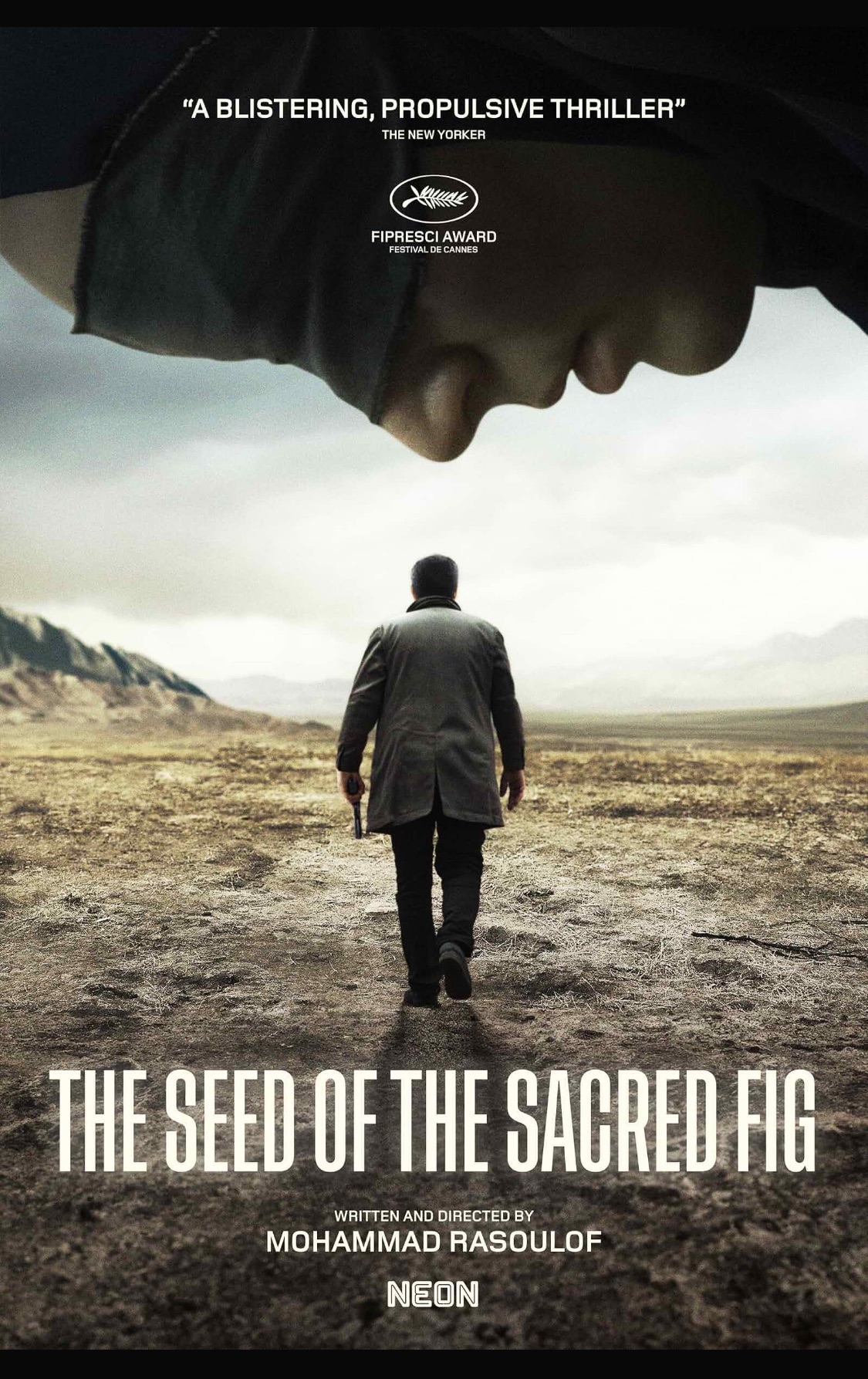 Greetings again from the darkness. In the year of long movies, this is one of the longer ones at two hours and forty-eight minutes. Also, in the year of only a few great movies, this is one of them. Writer-director Mohammad Rasoulof was arrested and sentenced for criticizing the Iranian government. He subsequently escaped and fled the country, only to show up for his film’s premiere at the Cannes Film Festival. This is Germany’s submission for the best Foreign Language Oscar.
 Greetings again from the darkness. I don’t recall a more unusual opening seven or eight minutes for a film (even including Terrence Malick). Slightly disorienting fragments of scenes from odd angles are made more obscure through nearly indistinguishable dialogue. The surreal images form a dreamlike montage of a playground, a sale on color TV’s, Martin Luther King’s speech, and more. A few more minutes pass before we get an actual look at Elwood, whose story we are about to follow.
 Greetings again from the darkness. I get that many would quickly toss this one aside without so much as a second thought. After all, Pamela Anderson hasn’t been featured much in the last decade (or two), and most only recall her from “Baywatch” in the 1990’s and, umm, perhaps an infamously intimate video. My advice would be to reconsider. She’s now 57 years old and is absolutely terrific in this film from director Gia Coppola (granddaughter of legendary director Francis Ford Coppola; her big screen debut was as baby Zoe in NEW YORK STORIES, 1989). The screenplay is from TV scribe Kate Gersten (“Mozart in the Jungle”).
 Greetings again from the darkness. Mike Leigh has long been one of the most interesting filmmakers working. His projects vary greatly and include such gems as HIGH HOPES (1988), VERA DRAKE (2004), HAPPY-GO-LUCKY (2008), ANOTHER YEAR (2010), and MR TURNER (2014). His actors always seem at the top of their game in his films, and this latest is no exception. Marianne Jean-Baptiste tears into her role as Pansy, one of the most chronically agitated women you’ve ever experienced.
 Greetings again from the darkness. There may have been a movie that surprised me more than this one during 2024, but off the top of my head, I can’t think of one. My expectations were low for a film based on the true story of a British boy band pop star whose music I wasn’t too familiar with … oh, and he’s played by a human-sized CGI chimp. Robbie Williams is the pop star, and though he has little popularity or recognition in the United States, his story is quite interesting … and certainly presented in a creative and entertaining manner by writer-director Michael Gracey (THE GREATEST SHOWMAN, 2017) and co-writers Simon Gleeson and Oliver Cole.
 Greetings again from the darkness. Almost all little kids imagine themselves as Superman, a larger-than-life figure who accomplishes incredible things … while flying through the air! Filmmakers Ian Bonhote and Peter Ettedgui collaborate again, this time to tell the story of the man who became Superman on screen for a new generation, and then, after a horrible accident, became a real-life inspiration and advocate for so many folks around the world. We also note that it’s impossible to tell the Christopher Reeve story without also gaining insight into his equally determined wife and caregiver, Dana Reeve.
 Greetings again from the darkness. The 1972 Olympics are remembered for a few highlights. Swimmer Mark Spitz set seven world records on his way to seven gold medals. Belarusian gymnast Olga Korbut won three gold medals (although not in the all-around). The United States and Russia played one of the strangest and most controversial games in Olympics history. And most importantly, the 1972 Munich Olympics are remembered for the tragedy surrounding 10 members of Israel’s team being taken hostage by a masked Palestinian militant group.
 Greetings again from the darkness. Apologies in advance for any improper labels or descriptions included here. This documentary dates back fifty years to when the term “gay lifestyle” was acceptable. Further to the point, the focus is on Studio One, a West Hollywood disco for gay men. It took a while for the doors to open for other persuasions in what is now referred to as LGBTQ+. Filmmaker Marc Saltarelli really delivers a history lesson – not just for a landmark building, but for an era when gay men were sometimes arrested for simply walking down the street together.
 Movie Reviews from the Dark