Greetings again from the darkness. Sometimes I just know immediately that I’m going to be out of touch with popular opinion on a movie, and this historical-romantic-biopic from director Amma Asante (Belle) and screenwriter Guy Hibbert (Eye in the Sky) is one of those times.
It’s a crowd-pleaser featuring David Oyelowo and Rosamund Pike in a real life story with some similarities to last year’s Loving (the chronicle of Richard and Mildred Loving’s interracial marriage). Mr. Oyelowo plays Seretse Khama, a 1947 university student in London when we first meet him. Ms. Pike is Ruth Williams, a local Londoner working clerical at an insurance company when the two meet at a local dance. The attraction is immediate.
Not long after, Seretse discloses to Ruth that not only is he in love with her, but he’s also the King-in-waiting for Bechuanaland in Africa. The marriage is met with dissent from all fronts: family (racism), Seretse’s people (cultural and societal reasons), and Great Britain (mostly concerned with appeasing its ally South Africa and the growing notion of Apartheid). Seretse and Ruth believe their true love is strong enough to win over those dissenters. The backlash is much worse than anticipated.
A very cool element with the film is the use of the actual house Ruth and Seretse lived in, and the locals were more than willing to contribute. While the strength of these two individuals remains inspirational to this day, the film falters in a few ways. Both Jack Davenport and Tom Felton are stuck playing British foils in the overwritten manner in which we would expect from a 1940’s movie on TCM. Again acknowledging my out of step opinion, Ms. Pike simply lacks the range for such a role. Her deer-in-the-headlights go-to facial expression is a slap to the courageous woman she is portraying. However, the biggest issue with the film is its lack of continuity … its choppiness, if you will. So many scenes abruptly end right as the substance is beginning. Multiple times we are left hanging, wondering why we don’t get to finish a conversation or finalize a conflict. There are some terrific moments that are torn apart by the numerous butchered scenes, though the strong performances of Oyelowo and Terry Pheto (Tsotsi) as his sister shine through.
This is a terrific and interesting piece of history that deserved a better film. In 1966, Bechuanaland gained its independence and became what’s known today as Botswana, and the story of Seretse and Ruth is one that needs to be told. Most viewers likely won’t be bothered by the things that irritated me, and that’s probably a good thing.
Greetings again from the darkness. The feature film debut of writer/director Anne Hamilton may cause Aesop to turn over in the grave, but it also supports the adage that desperate times call for desperate measures. Just how desperate is really the point here, and the moral line in the sand is drawn by an 11 year old girl named Gitty (short for Gertrude).
Gitty (an outstanding Peyton Kennedy) lives on a farm with her pregnant mother Sarah (Marci Miller), bullying brother Martin (Gavin MacIntosh), and beloved father Abe (Kip Pardue). Gitty is the kind of kid who loves stories with happy endings, has a pet chicken named Happy, and loves exploring the surrounding countryside with her friends … a dried water well, abandoned house, and lighting bugs are all part of their daily adventures. Only a remote silo is considered off-limits per her father.
It’s the 1980’s and times are tough for family farms. Making ends meet is incredibly challenging and the sagging economy has resulted in many sell-offs of generational farms and the subsequent suicides of farmers who simply can’t face the failure. Gitty blindly trusts her dad when he promises they won’t lose their farm. Doubt only enters her mind when she discovers a battered man (Richard Schiff) in business attire locked in that off-limits silo. The captive man tells her not to tell her dad, and instead asks her to bring food and books. Even an 11 year old cloaked in innocence begins to suspect something isn’t right.
We see the story unfold through the eyes of Gitty, and her fantasies, dreams and visions remind us just how the world looks to a kid. Her openness, curiosity and imagination all act as a kind of sixth sense that lead to the judgment of a child … what is right and what is wrong. Knowing Gitty is the source of our insight helps explain the near cartoonish evil perpetrated by Martin – an overanxious kid who sees himself as some type of “warrior” (an image bestowed by the mysterious Vera). Zuleikha Robinson plays Vera in the mold of a fairy tale witch influencing others … in this case, Gitty’s dad … to do her dirty work.
The film is beautifully shot by cinematographer Wyatt Garfield, and at various times recalls Pan’s Labyrinth, The Fall, and the camera work of Terrence Malick. Gitty’s character is easily compared to Scout from To Kill a Mockingbird, but her “Honest” Abe dad is no Atticus Finch. Richard Schiff is excellent as the captive man, while Peyton Kennedy reminds of a young Elle Fanning (very high praise indeed). Kids have an amazing ability to see the black and white of right and wrong despite all the extraneous noise going on in their young uncorrupted heads. It’s a shame it all turns to gray as we grow older. It’s a nice first film from Ms. Hamilton.
Greetings again from the darkness. Fantasizing about owning and running your own Winery is perfectly natural, and impossible to avoid, while on a weekend escape to Napa Valley, California. Director Nicholas Kovacic opens with a helicopter tour of the 30 mile long area courtesy of Heidi Barrett, winemaker extraordinaire, and wife of Bo Barrett (of Chateau Montelena and Bottle Shockfame). The terrain below is so beautiful, that when it’s combined with the industry it supports, a romantic vision is understandable.
The patchwork quilt of individual parcels falls in a geologic epicenter with near perfect conditions for growing the grapes that lead to the marvelous wine. Of course, Mother Nature is still in control, and that’s one of the points to the film (which could have been titled “Starting a Winery for Dummies”). Of course, Ms. Barrett is no dummy, and neither are any of the other winemakers we meet during the course of what’s probably a too long 82 minutes. These folks pour love, sweat, worry, and money into a once per year product that can go wrong at any of the numerous steps prior to having a glass poured as you settle in for a juicy steak of plate of pasta.
Much of the time is devoted to Texan Mike Martin as he shops for a new winery, and settles on one in Coombsville. His Italics Winegrowers makes the point, that it’s probably wiser to buy an existing enterprise, than wait the 4 to 5 years for the first crop if starting from scratch. The established Reynolds Family Winery provides another example of the complexity to this business; and just how much nurturing goes into farming and production, and the incredible variances experienced from year to year.
Napa Valley is described as still in the “Wild West” stage since the tradition goes back only a couple of decades (instead of centuries like in Italy and France). Creativity abounds as new winemakers thrill us with the discovery of new blends and varietals. A perfect example is Ms. Barrett’s 6L 1992 Screaming Eagle, which nabbed a record $550,000 for a single bottle at the 2000 Napa Valley Wine Auction (now called Auction Napa Valley).
The film does a nice job of talking about how the industry has evolved to one that pays attention to farming the vines and the full process … not just what happens when it hits the barrels. There is even mention of how branding plays a key role these days, yet is still sometimes overlooked. Beautifully filmed, with some gorgeous shots of the area, Mr. Kovacic’s project is bit more artistic than most documentaries, but might have benefited from a shorter run time … or better personal connection to the players.
Greetings again from the darkness. When the feel-good movie of the bunch revolves around a Holocaust survivor, you know there aren’t many chuckles to be had for this block of Oscar nominated Documentary Short Films. However, if you can deal with being ultra-serious and devastated for 2 ½ hours, you will find high quality filmmaking focused on topics that are not just timely, but exceedingly important and vital. Below, in order of personal preference, are the nominated 2016 releases.
4.1 MILES(USA/Greece, 26 min)
From 2015 through 2016 more than one million people were desperate enough to flee Syria, Afghanistan, and other war-ravaged areas by risking their lives in small boats launched from Turkey. The 4.1 miles to Greece, and hopefully freedom, is fraught with danger (more than one thousand have drowned). Director Daphne Matziaraki introduces us to a Greece Coast Guard Captain from the small island of Lesbos, as the captain and his crew remain diligent and dedicated to rescuing mothers, children and others so desperate for a new life. The camera work is a bit rough, but that’s to be expected given the harsh conditions of wind, waves, rain and frantic actions … when every minute counts.
JOE’S VIOLIN(USA, 24 min)
If anyone deserves to be a little bit selfish, it’s a Holocaust survivor. Instead, 91 year old Joseph Feingold donated his beloved violin to Mr. Holland’s Opus Foundation – an organization that distributes musical instruments to inner city schools. Mr. Feingold tells the story of “purchasing” the violin after the war in 1947. When 12 year old Brianna is selected to receive the gift, we learn her story and how the violin and Mr. Feingold’s history profoundly affects her. Director Kahane Cooperman ties together a Siberian labor camp, the dreams of a bright, enthusiastic young girl, and an appreciative elderly gentleman to remind us of the power of music and how it can transcend generations, race, economic status and culture. It’s an inspirational story from two quite different perspectives.
THE WHITE HELMETS(UK, 41 min)
In what would be viewed as an inspirational story … if not for the tragically violent environment of Aleppo City … this film from director Orlando von Einsiedel takes us to the front line with the civilian volunteer group known as The White Helmets. Numbering 2900 strong, these brave folks run directly into the buildings that have been bombed mere minutes before. We get interviews and discussions with some of the volunteers, but the most awe-inspiring moments come during the rescue missions, as they comb through rubble looking for signs of life. One of the most amazing sequences you’ll ever see on screen occurs during the rescue of a one week old “miracle baby”. Up to 200 raids per day have resulted in more than 400,000 deaths over the past five years, yet the volunteers have sayings like “To save a life is to save all humanity”. They provide hope to a place that has little, and possess a human spirit dedicated to helping.
EXTREMIS (USA, 24 min)
Highland Hospital in Oakland, California is the setting for a first-hand look at the emotional and ethical complexities involved in end of life decisions. We witness the perspective of dedicated ICU doctors, terminally ill and confused patients, and the emotional families often burdened with making the final call between hoping for a miracle and allowing their loved ones to die with dignity. Director Dan Krauss introduces Dr. Jessica Zitter who takes a compassionate yet direct approach in her discussions with patients and families. Her goal is to provide the information that helps them make the most difficult decisions they will ever be faced with.
WATANI: MY HOMELAND(UK, 39 min)
Is there anything more frighteningly surreal than watching kids playing with guns as actual bombs are going off in their neighborhood, tanks are rumbling down their streets, and the constant sound of gunfire is present? Welcome again to Aleppo City. Directed by Marcel Mattelsiefen, we meet the father of four kids who is working hard to protect his city. We then flash forward one year and learn that the father has been taken by ISIS and the family is headed to Germany, seeking a safer life … new home, new friends, and a new school. Though they long to return to their original home, it’s a reminder that home is really where you are, not where you are from.
Shorts HD now sponsors the annual theatrical run for the block of Oscar nominated Short Films. For those of us who love movies, it’s a much appreciated opportunity to see what once were the most difficult categories of nominated films to watch prior to the awards ceremony. I would encourage everyone to make this an annual event, and experience a variety of stories and styles from filmmakers around the globe.
Below are my comments for this year’s nominees (released in 2016), and they are listed in order of personal preference for each category, Animated and Live Action.
ANIMATED
BLIND VAYSHA(Canada) – Far from light-hearted and feel good, this one not only has the most substantial story, it also features the most original look and style of any in the category. It’s directed by Theodore Ushev and adapted from a short story by Bulgarian writer Georgi Gospodinov. The story centers on “the blind girl”, who remarkably sees only the past through her brown left eye, and only the future through her red right eye. Through her eyes, no present exists. It’s a remarkable fable about how we look at the world, and one of the few short films that lends itself to a good debate.
PIPER (USA) – Pixar, through co-directors Alan Barillaro and Marc Sondheimer, delivers what may be the most realistic CGI we’ve seen to date. Easily the most seen of all short films since it played in theatres with Finding Dory, it tells the story of a mother Sandpiper teaching her baby how to scavenge and feed itself. The baby is reluctant to give up being spoon-fed, but soon overcomes his fear of water and embraces life … thanks to the lessons of some local sand crabs.
BORROWED TIME(USA) – An old, weathered sheriff revisits the spot on the cliff where a tragic mistake changed the course of his life. The event has obviously haunted him ever since he was a kid. The animated pocket watch looks real at times, and ends up playing a vital role not once, but twice for the man. It’s a side project from Pixar animators Co-dir Andrew Coats and Lou Hamou-Lhadj, with a score from two-time Oscar winner Gustavo Santaolalla, and a reminder that living with regret is no way to live.
PEARL (USA) – Playing like little more than an animated music video or commercial, this one nonetheless taps into the emotions of a father-daughter relationship over the years … and the role a car and tape recorder might play as they come full circle. “There’s no wrong way home” is a simple little song that works fine in this short from director Patrick Osborne (Feast).
PEAR CIDER AND CIGARETTES(Canada and UK) – By far the longest entry at 35 minutes, this one has the feel of an animated documentary or at least an animated diary. The narrator reminisces about his thrill-seeking friend Techno, and the difficult road travelled by the once care-free and talented youngster. Alcoholism, drug addiction, bad luck, poor health and poor decisions all play a role here, but it’s mostly about non-conditional friendship. Directed by Robert Valley, it’s quite a sad story, though not dissimilar to one many friends have experienced in real life.
LIVE ACTION
MINDENKI (“Sing”, Hungary) The new girl in school can barely control her excitement at joining the renowned school choir. Poof! Her joy is gone in a scene that proves just how quickly a teacher can destroy a child’s spirit. Directed by Kristof Deak, we see how misplaced priorities of those in charge, can drive the student to become the teacher. The philosophical aspect here is quite interesting … in order to remain part of the group, one must surrender the thing that motivated them to join the group in the first place.
LE FEMME ET LE TGV(“The Woman and the TGV”, Sweden) Jane Birkin adds stardom to an otherwise earthy story of a small town woman who, for 32 years, has been waving her flag at the high-speed train that blows past her window twice each day. A letter of appreciation from the train’s engineer arrives one day, and it inspires the woman to re-join life and stop living in the past. Ms. Birkin gives a nice performance in this commentary on growing old in a fast-changing world. Timo von Gunten directs this story inspired by true events (he actually interviewed the real flag-waving woman).
TIMECODE (Spain) – In what is easily the best use of security cameras and dancing parking lot guards, director Juanjo Gimenez Pena delivers a very entertaining 15 minute film. With minimal dialogue, the day and night guards barely cross paths, but share a secret talent that’s exposed in a most humorous way with a killer punchline.
SILENT NIGHTS(Denmark) – A good-hearted Salvation Army volunteer makes friends with a man from Ghana who has immigrated to Denmark, seeking a better life. She is kind to the man and a romantic attraction develops leading to a look at racism, desperation, and the ramifications of deceit. Directed by Aske Bang and produced by two-time Oscar winner Kim Magnusson, the film teases us with optimism, only to frustrate us before giving way to an unexpected life lesson.
ENNEMIS INTERIEURS(“Enemies Within”) – The most blatantly political of all entries, it’s also the most relevant. A man from Algeria is interrogated by a government official in hope of obtaining his French citizenship. Questioned on his religion and neighbors, we see how any situation can be twisted to seem suspicious … especially in this age of fear of terrorists. Directed by Selim Azzazzi, it seems to tell us that if we try to find something wrong, we likely will.
Greetings again from the darkness. The pitch for this movie might have come across as blending a Greek tragedy with a romance novel, and then adding a dash of revenge. Fortunately director Paula Ortiz’s vision for the Federico Garcia Lorca play “Bodas de sangre” is more poetic and lyrical than such an overview would suggest.
Love triangles are the core of many stories and movies, but it’s the opening sequence here that clues us in that the trouble has already occurred, and though it removes some of the suspense of “what”, it certainly sets the stage for an interesting “how” and “why”.
Inma Cuesta plays Novia (billed only as the titular bride) who is engaged to Asier Etxeandia (billed only as Novio, the groom). The abundance of family stress (on both sides) has little to do with the wedding plans, and more to do with Leonardo (Alex Garcia). Leonardo is more than the local hunk who is always lurking about on horseback; he’s also the third wheel who can’t let go of his desire for Novia … in spite of his young child and pregnant wife. To make things messier, Novia seems to answer his heightened desire for her with her own uncontrollable passion for him.
It’s Yin and Yang. Safe and Dangerous. The bride’s conflicted choice leads the groom’s mother (Goya winner Luisa Gavasa) to be a foreboding presence throughout, and keeps most of the village on edge. Additionally, there is an element of mysticism as Maria Alfonsa Rossa appears periodically as the figure of death – and we are never quite sure of the motivations behind her advice.
Goya winner Miguel Amoedo provides beautiful cinematography that balances between fantasy, harsh realities, and the romance of the moment. There are many intimate close-ups, as well as some stunning desert wide shots of Leonardo riding the horse. The score and soundtrack are terrific, including Soledad Velez with a haunting version of Leonard Cohen’s “Take this Waltz”.
The concept of destiny vs. choice hovers over most scenes, and the twisted family and childhood histories give the film a Shakespearian feel. Last year, the film received numerous Goya nominations (including Ms. Cuesta, Ms. Ortiz, Mr. Garcia) are resulted in the wins for Ms. Gavasa and Mr. Amoedo. It may not make the best Valentine’s Day date movie, but it is an interesting watch from the romance-tragedy-revenge-horseback genre.
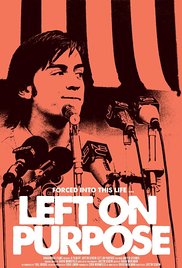
Greetings again from the darkness. A film about a guy with an aversion to wearing pants would not typically hold much appeal for me, but this is no typical documentary and Mayer Vishner is no typical subject. Co-directors Justin Schein and David Mehlman raise a couple of philosophical questions here: should a person have the right to take their own life, and what responsibility does a documentarian have towards their subject when faced with an ethical dilemma?
Very few younger than 50 (maybe even 60) will recognize the name Mayer Vishner. He worked closely with those who founded the radical 1960’s group called the Yippies (Youth International Party) – Abbie Hoffman, Paul Krassner, Jerry Rubin (also an early Apple investor and stockbroker), and musician Phil Ochs. A self-described Forrest Gump, Mayer states he helped them be “giants”. The Yippies challenged authority and the system at every turn and were quite proud to create the label counter-culture.
Five decades later, Mayer remains holed up in his same Greenwich Village apartment not far from MacDougal St and the Gaslight Café, where much of the Yippies action took place. The small apartment is in total disarray and Mayer now lives in squalor, getting through most days with absurd amounts of alcohol and pot, and apparently very little human interaction outside of director Schein’s visits.
It’s here where things get fuzzy. Schein set out to make a film about a man who was right in the middle of one of the most tumultuous times in US history, but seemed to make the ultimate documentarian mistake of becoming too close … even friends … with his subject. It’s this line-crossing that puts Schein in the cross-hairs of a moral dilemma when Mayer states, “If this film happens, it will be about a film about suicide”. Should he keep filming? Should he get help for Mayer? Should he walk away from the project and let nature take its course?
What follows is an up close and personal look at a man who is still very articulate, though suffering bouts of depression due to a life of loneliness and solitude. He sees no reason why he shouldn’t be able to end his life on his own terms and in front of a camera. We also see Mayer’s periodic surges of energy … whether it’s the Occupy Wall Street movement (I’ve “been here before”), seeing his brothers, or a visit with Diane, his friend of 35 years who helps with therapeutic gardening. Of course, these surges are short-lived and each followed by a hard crash.
Along the way, we see a video clip of 16 year old Mayer just beginning his lifelong journey of questioning authority. We also see the 3 pallets of memories being stored in a warehouse prior to being purchased by the University of Michigan, and we learn that Mayer was once the editor of “LA Weekly”, though fired for his alcoholism. Mayer’s own notes describe himself as an anarchist, pacifist, gardener, poet and dozens more. He clearly had a purpose in life and ultimately, in death. The film is tough to watch at times both because of Mayer’s self-destructive mode, and for the interesting and debatable issues raised by continuing with filming. Perhaps the film will have you questioning your own beliefs, though the hope is you never find yourself in this situation with a friend. A well made documentary should educate and inspire discussion, and there’s no shortage of either with this one.
Greetings again from the darkness. It might seem peculiar for the director of the Pirates of the Caribbeanfranchise, The Lone Ranger, and the Oscar winning animated Rango to be the driving force behind an atmospheric Gothic mystery-thriller, but Gore Verbinski seems to ignore any attempt to generalize or label his films. In fact, this latest film (written with Justin Haythe) attempts to challenge genre conventions by cloaking us in familiar themes and expecting us to be surprised by the late twist.
Dane DeHaan has established himself as an actor with no boundaries. He has played characters as diverse as James Dean in Life, and Cricket in Lawless. This time he dons a business suit as Lockhart, an ambitious, young, morally flexible, workaholic financial hotshot. By bending a few FCC regs, Lockhart has maneuvered himself into a plush corner office on Wall Street, and is now strong-armed by senior management into taking on the less-than-appealing task of traveling to a “wellness spa” in Switzerland in order to bring back the CEO whose signature is necessary to complete a lucrative merger.
The cinematography of Bojan Bazelli is gorgeous throughout, and it’s literally breathtaking as we view the Manhattan cityscape, and then follow Lockhart’s train streaming through the Swiss Alps mountains and tunnels. These are the “wow” shots, but the camera finds beauty even once the story takes us inside the sanitarium with the dark history … and confounding present. The building’s history seems somewhat sinister, but its current day secrets are every bit as creepy. What exactly is the sickness that “the cure” is treating? Why does no one ever leave? What’s with the eels? What’s with the water? Why are teeth falling out? Why are the townfolks so off-put by those on the hill? What answers do the puzzles bring?
Shutter Islandoffers the most obvious comparison with its similar tone and atmosphere, but others that come to mind include The Island of Dr. Moreau, One Flew Over the Cuckoo’s Nest, and especially, Hitchock’s Rebecca. Verbinski makes marvelous use of sound throughout – whether it’s Lockhart’s creaking crutches, the squeak of doors, the drip of ever-present water, or the metallic whir of machines. The look, sound, and feel create the tension necessary to prevent viewers from ever really relaxing, even if we wish the movie wasn’t so darn long.
Filmed at Castle Hohenzollern in Germany, it’s a perfect example of how on filming on location adds an element that no soundstage can hope to achieve. Support work comes from some familiar faces like Jason Isaacs as Dr. Volmer, Celia Imrie, Carl Lumbly, Ivo Nandi, Harry Groener, and Adrian Schiller. However, it’s Mia Goth (Everest, 2015) who has the biggest impact on screen outside of DeHaan. Her unusual look and slightly-off mannerisms are perfect for the role of Hannah, who is so crucial to the twist.
Spanning two-and-a-half hours, the film abruptly flies off the rails in the final 15 minutes. It acts as a release for the stress it has caused, and as a reminder that director Verbinski likes to have fun with his films. It’s quite possible that the film will struggle initially to find an audience, but later find success as a cult favorite and/or midnight movie. Whether you deem it silly or creepy, love it or hate it, you’ll likely appreciate the look of the film and the creative surge of Verbinski. At a minimum, it will generate some talk about Big Pharma and how we seem to always be searching for a “cure” of the latest societal ailment … or you may just have nightmares about eels in your bathtub!
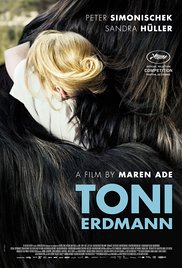
Greetings again from the darkness. A list of the best German movies of all time would likely feature very few comedies. It’s not a country or culture that tends to laugh much at its history (for good reason) or itself. A case could be made that this latest little gem from writer/director Maren Ade belongs on such a list, and although it features several laugh out loud moments, whether it should be labeled a comedy is certainly worthy of debate.
Winfried (Peter Simonischeck) has been a mostly absentee dad, but now he is deservedly concerned about his daughter’s well being. He is intent on trying to get Ines (Sandra Huller) to let go of her uptight, high stress corporate persona and enjoy life a bit. It’s the kind of advice only those who have really lived can rightfully offer up … though you’ve likely never seen advice administered in such a creative and cringe-inducing manner.
Winfried’s alter-ego is Toni Erdman, a shaggy wig and false teeth wearing goofball who manages to insert himself into the most inconvenient and awkward moments for Ines and her business. His pranks are designed to illustrate just how ridiculous the workaholic treadmill is and how little joy accompanies such a work-a-day life.
Having been nominated for a Best Foreign Language Oscar, it’s easy to crown this as the frontrunner in the category. Ines’ birthday party shines a new light on the phrase “birthday suit”, and that sequence alone might have generated more laughter than I heard in a theatre all year. Yet despite the laughs and Toni’s shenanigans (and there are many), at its core, this is a film about loneliness and the emptiness of life without happiness. Perhaps you could call it a philosophical comedy, but it’s downright chilling to see the raw emotion of Ines as she belts out Whitney Houston’s “Greatest Love of All”, or finally strips herself (literally) of all pretense.
NOTE: it was recently announced that Jack Nicholson will come out of retirement and join Kristen Wiig in an American remake. As exciting as that seems, don’t let it stop you from seeing this original.
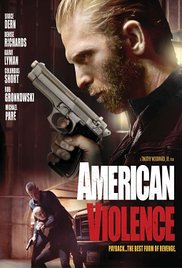
Greetings again from the darkness. Making a political statement is nothing new for movies; however, if a filmmaker takes a stance on a controversial issue, the final product needs to be insightful and compelling in order to make a difference. Seemingly intent on making a mockery of the death penalty, director Timothy Woodward Jr delivers little more than a B-movie with a hyper-serious tone, but a script that is at times laughably off the mark.
Even before the opening credits roll, we get our first brutal murder … just moments after persnickety Bruce Dern belittles his wife over the sandwich she made for him. Next up, Dr. Amanda Tyler (Denise Richards) is being asked by the Assistant District Attorney to consult on the case of a death row inmate, to determine if a stay of execution should be granted. See, Dr. Tyler is a criminal psychologist. Yes, she’s played by Denise Richards. If this causes you frightening flashbacks to Ms. Richards’ role as a physicist in The World is Not Enough, then you begin to have some idea what this movie is like.
The inmate is Jackson Shea (a formidable Kaiwi Lyman-Mersereau) and as he tells his life story, we are provided scenes that explain how he got to this point. It’s a pretty interesting backstory starting with sleazy Uncle Mike, an alcoholic mother, and a seemingly endless array of circumstance that might have formed the basis of a better movie.
You will note many familiar faces along the way: Michael Pare as Shea’s partner, Patrick Kilpatrick as a criminal kingpin, Johnny Messner as a fellow criminal, and Emma Rigby as Shea’s love interest. For you football fans, you’ll likely reminisce about Brian Boswell when you witness Rob Gronkowski as a gun-toting bodyguard.
All of this could have been good criminal fun if we weren’t being incessantly slapped upside the head with the anti-Death Penalty message … how trading death for death isn’t appropriate, and for tilting the scales to show how criminals are basically good guys who accidentally end up in a bad spot thanks to a broken system and culture of violence. It’s all a bit too heavy-handed and self-righteous, taking away some of the joy in chuckling at Ms. Richards playing it straight as an intellectual idealist.
 Greetings again from the darkness. Sometimes I just know immediately that I’m going to be out of touch with popular opinion on a movie, and this historical-romantic-biopic from director Amma Asante (Belle) and screenwriter Guy Hibbert (Eye in the Sky) is one of those times.


 Posted by David Ferguson