Greetings again from the darkness. Their mother amassed quite the collection of whale-related items from eBay prior to her recent passing. The brother needs the inheritance to continue his self-discovery course, which may or may not answer the question of whether or not he is gay. The estranged sister apparently abandoned her young daughter for fear of being a lousy mother. He admits to being ‘lost’, and she admits to being ‘broken’. Self-loathing is on full display in director Sean McEwen’s first feature film.
Tom Felton (Draco from the Harry Potter movies) plays Brandon Walker, and Tammin Sursok (“Pretty Little Liars”) plays his older sister Star Walker. They reunite for the reading of mom’s will, which includes the outlandish requirement for Brandon and Star to dispose of mom’s ashes in the belly of whale in order to receive their inheritance. Needing the money, they hop in mom’s old Winnebago for a 48 hour road trip to a public aquarium that houses the closest whale to Iowa.
The emotional impact of a story about a brother and sister finding common ground on a forced road trip boils down to two things: the chemistry between the two actors and the script. Mr. Felton and Ms. Sursok seem to be committed to the cause, and there are a couple of moments that strike the right chord, but overall the script is what prevents us from connecting to either the characters or the story. The attempts to inject humor tend to be in poor taste, while the dramatic elements either repeat themselves or don’t work because we simply don’t care enough about Brandon or Star.
Having the running gag of Brandon proclaiming “I’m not gay” while Star relentlessly peppers him on the topic comes across as not just dated, but also quite sad – seeing as Brandon is a thirty-something year old man. And worse than that is the stop over at Aunt Jackie’s (Wendi McLendon-Covey, BRIDESMAIDS, “The Goldbergs”) and Uncle Randal’s (David Koechner) house. This sequence of social commentary meant to bash extreme right-wing conservatives is simply embarrassing to watch. I actually felt terrible for the actors in these scenes. Comedy around homosexuality and racism must be handled with grace … whether it’s subtle or cartoonish.
The script was co-written by director Sean McEwen and his leading lady (and real life wife) Tammin Sursok. Respect is due to independent filmmakers who find a way to realize their project, but we do wish more time had been spent on the script. In fact, the whole production felt rushed and unpolished, leaving us with the most dreaded question any movie watcher might ask … how much longer?
Greetings again from the darkness. One might think that the only thing less interesting than watching someone read a book would be watching them talk about a book they are buying and not intending to read. Director-Editor-Producer DW Young somehow manages to make the topic quite engaging … due in no small part to the stream of bibliophiles and antiquarian booksellers we meet. The philosophy of the film is best expressed through one of the many spot-on quotes sprinkled throughout: “Books are a way of being fully human.”
It’s either cheating or hedging one’s bet when a director secures an interview with the eloquent Fran Lebowitz for a documentary. If the documentary is about books, well that’s even better. She perfectly describes the joy in “crawling around” bookstores in search of just the right one. She recalls the days when bookstores lined 4th Avenue, in what had been labeled “Book Row.” These days, only one remains – The Strand, which was founded in 1929. We learn that in the 1950’s, there were 358 bookstores in New York City, and now your search for a good read is limited to 79. The oldest remaining NYC bookstore is the stunning Argosy on E. 59th, and it’s being operated by the three daughters of Louis Cohen who opened the store in 1925. Ownership of the building is key to the bookstore remaining open for nearly 100 years.
Director Young takes us inside the beautiful and historic Park Avenue Armory for the NYC Antiquarian Book Fair. It’s here where we see a Fidel Castro doll (I guess everything is collectable!), and more importantly get a feel for how the rare book trade works. These collectors are obsessive about their books and compulsive in their mission of the next rare discovery. We see warehouses, apartments, offices, and stores jam packed with books, and to cap it off, we hear from the folks who have made this their passion. Not just bibliophiles like Ms. Lebowitz, Gay Talese, and Susan Orlean, but the boots-on-the-ground booksellers and collectors. There is even a segment on Martin Stone, the legendary book scout or bookrunner, who was also a rock ‘n roll guitarist.
“The internet killed the hunt.” A perfect example is given on how the world wide web changed book selling and collecting. In the old days, a collector could spend years assembling a full collection of Edith Wharton books, whereas today, a credit card and an afternoon on the internet would yield the same results. This is ‘buying’ contrasted with ‘collecting’, and the old school collectors have either adjusted or are struggling. Even auctions have changed, and Bill Gates’ purchasing Leonardo Da Vinci’s “The Codex Leicester” via phone … for $28 million … is an example.
Movies about book dealers are discussed, including THE BIG SLEEP and UNFAITHFUL, and we see a clip of Larry McMurtry’s speech championing book reading and bookstores. It should also be noted that Mr. McMurtry is a long time book seller and collector from Archer City, Texas. One of the industry’s new celebrities is the ultra-charming Rebecca Romney, who became famous for her stints on TV’s “Pawn Stars” as the resident book expert. Ms. Romney is leading the new wave of collectors, and her passion as a glass-half-full type is contagious.
Author Maurice Sendak said “There’s so much more to a book than reading.” Here, we learn about the importance of book jackets and special bindings, and how these rare books are actually historical evidence … artifacts of culture. This explains why ‘book burning’ has the history it does as both symbolizing and physically accomplishing the destruction of certain segments of society. We also learn those in this business don’t think highly of Kindle. The words may be the same, but the experience certainly isn’t.
The film is billed as a behind-the-scenes look at the New York rare book world, but it spends more time exploring the folks who make-up this business/industry/lifestyle. Their passion, and one might even call it a fetish, is quite interesting. The argument can be made that their work is quite important in preserving history. Smooth jazz accompanies the story, and it’s only fitting that I learned a new word: Incunabulum, which is an early printed book. These collectors express concern about their legacy, so hopefully the film will spur even more people to understand the historical relevance of books in our cultured society.
Opens in Los Angeles virtual cinema on April 17, and nationally on VOD (Apple/iTunes, Amazon, and cable, satellite and digital platforms) on June 5, 2020
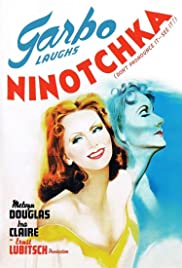
Greetings again from the darkness. It’s been too far long since my last “revisited” piece. These are meant to be a combination of movie review and historical perspective on a particular classic movie that I’ve watched yet again. My choice this time is NINOTCHKA, nominated for 4 Oscars (including Best Picture nominees) in what is widely considered one of cinema’s greatest years, 1939.
The roster of director, writers, producers, cinematographer, composer, set director, set decorator, editor, costume designer and actors reads like a “Who’s Who” of Hollywood. The director-producer was Ernst Lubitsch, whose career included 3 Best Director Oscars for HEAVEN CAN WAIT 1943, THE LOVE PARADE 1929, and THE PATRIOT 1928. He also directed THE SHOP AROUND THE CORNER (1940) which was later adapted into YOU’VE GOT MAIL (1998 with Tom Hanks and Meg Ryan). Lubitsch made a successful transition from silent films to talkies, and also directed 3 other films (a total of 6) that were Oscar nominated for Best Picture, including NINOTCHKA. He died of a heart attack at age 55 in 1947.
There are four credited writers for the film, each of which received an Oscar nomination. The original story was written by Hungarian writer Melchior Lengyel, and was adapted by Billy Wilder, Charles Brackett, and Walter Reisch. Mr. Wilder was nominated for 21 Oscars in his career, winning 6. Of course, he went on to become one of Hollywood’s most successful directors with classics like DOUBLE INDEMNITY (1944), THE LOST WEEKEND (1945), SUNSET BLVD (1950), WITNESS FOR THE PROSECUTION (1957), SOME LIKE IT HOT (1959), and THE APARTMENT (1960). Co-writer Mr. Brackett scored 9 career Oscar nomination, including wins for THE LOST WEEKEND (1945), SUNSET BLVD (1950), and TITANIC(1953), the first two of which he shared with Mr. Wilder. Wilder and Brackett had quite a professional relationship, as they wrote 14 movies together, and on an odd personal note, Brackett’s second wife was the younger sister of his first wife (who had died). Mr. Reisch, a 4-time Oscar nominee, shared the TITANIC Oscar with Mr. Brackett, and also wrote the still-popular GASLIGHT (1944, directed by George Cukor).
Greta Garbo plays Nina Ivanovna Yakushova, better known as the titular Ninotchka. Ms. Garbo was born in Sweden, and became more than a movie star … she was an icon. She was a 4-time Best Actress nominee, including one for NINOTCHKA. This was her first U.S. comedy, which was such a big deal, that MGM used the tagline, “Garbo laughs!” (a riff on “Garbo Talks!”). This was her penultimate film, as after TWO-FACED WOMAN (another comedy with co-star Melvyn Douglas), she walked away from acting in 1941 at age 36 (imagine if Meryl Streep had retired after OUT OF AFRICA). Ms. Garbo lived in seclusion in New York City, cultivating the infamous “Garbo Mystique”. She never married, though John Gilbert standing all dressed up at the alter certainly thought she was going to! For other standout Garbo performances, see ANNA KARENINA (1935), CAMILE (1936) and QUEEN CHRISTINA(1933).
Melvyn Douglas plays Count Leon d’Algout, a debonair charmer who incites a (passive-aggressive) rivalry between Ninotchka and Grand Duchess Swana. Douglas’ character is one we more frequently expect from William Powell or Cary Grant (both were offered the role), but it would be a mistake to think Lubitsch “settled” on Douglas. He’s considered one of the finest actors ever, and one of the few to have won a Tony, an Emmy, and an Oscar (he won two). Douglas has played the on screen dad to both Paul Newman (HUD, 1963) and Robert Redford (THE CANDIDATE, 1972), as well as Gene Hackman’s dad (I NEVER SANG FOR MY FATHER, 1970) and Peter Sellers’ quasi-mentor in BEING THERE (1979). Mr. Douglas is the grandfather of well-known actress Illeana Douglas (TO DIE FOR, 1995; STIR OF ECHOES, 1999), although, to this day, he is best remembered as the actor who made Greta Garbo laugh!
While Ms. Garbo and Mr. Douglas dominate the screen time, the cast features some other interesting and talented players. Ina Claire plays the exiled Grand Duchess Swana. Ms. Claire was a young Vaudeville performer and part of Ziegfeld Follies before building a reputation as a sophisticated comedy stage actress. She was briefly married to John Gilbert after he was jilted by Garbo, and she only appeared in 7 “talkie” movies before retiring from acting in 1943. Bela Legosi appears as Commissar Razinin, and of course he is best remembered as Count Dracula from Tod Browning’s 1931 DRACULA for Universal. Legosi was a charter member of the Screen Actors Guild (SAG), and died flat broke after his affiliation with schlock-director Ed Wood. He appeared alongside fellow Monster Universe icon Boris Karloff in numerous films (including THE BLACK CAT, 1934; THE RAVEN, 1935), and was buried wearing one of his Dracula capes (not the one from the film). The 3 bumbling Russian envoys who so quickly adapt to western ways are played by actors who fled their homeland and emigrated to the U.S. due to war. Sig Ruman was a German who appeared in several Marx Brothers films, Felix Bressert was a German who had a medical practice as a “side gig”, and Alexander Granach was Hungarian, and also appeared in FW Murnau’s 1922 NOSFERATU. Lastly, Edwin Maxwell, who plays jeweler Mercier, appeared in 13 Best Picture nominees (4 winners) in a 15 year span.
Although the story is not a complicated one, it’s important to note the era. The world had not yet stabilized after WWI and was on the verge of WWII. Joseph Stalin was the leader of the Communist Party in the Soviet Union, and one of the most feared men on the planet. That may not sound like the foundation for a comedy, and it’s important to note that the film is comedy, satire, and political commentary rolled into one. Three Russian envoys are sent to Paris to sell the jewels seized from Grand Duchess Swana during the Russian Revolution. They book the Royal Suite at a posh hotel (partly) because it has a large in-room safe for the jewels. As they are meeting with local jeweler Mercier to finalize the sale, Count Leon barges in to scuttle the sale and trick the envoys into returning the jewels to their rightful owner, the Grand Duchess. Soon, Ninotchka, a no-nonsense Russian, is dispatched to expedite the sale and send the first 3 envoys back home. Ninotchka and Count Leon meet by happenstance, and he’s immediately smitten with her, while she initially views him as little more than a curiosity.
The Eiffel Tower segment is pure brilliance in writing and acting. The dowdy Russian (Ninotchka) is interested in the global landmark for its technical achievement, while Count Leon shifts his charm into overdrive. Her line telling him to “suppress” his flirting is really our first glimpse of Garbo comedic timing … though it’s certainly not the last. The segment serves as a contrast in personalities – the face of communism versus the face of capitalism. Of course, it’s the “Garbo laughs!” moment in the café that most remember. Count Leon bumbles through joke after joke to no reaction, and once she cracks, she really lets loose. It’s a thing of beauty to watch.
As previously mentioned, it’s not just Lubitsch and Garbo and Douglas that make this a classic. The full production crew have a place in cinematic lore. Cinematographer William H Daniels won an Oscar for THE NAKED CITY (1948), and lensed 21 Garbo films. Editor Gene Ruggiero won an Oscar for AROUND THE WORLD IN 80 DAYS (1956), and composer Werner Haymann was a 4-time Oscar nominee. Set-Art Director Cedric Gibbons was a one-time Edison Studios staffer, and won 11 Oscars over 26 years, eclipsing the 8 Oscars won by Set Director Edwin Willis. Adding to the intrigue is Costume Designer Adrian (married to actress Janet Gaynor) who is still revered as one of the best all time with over 250 movies in 30 years, though he’s even more famous for his designs outside of cinema.
1939 is arguably the greatest of all movie years since it also gave us: GONE WITH THE WIND, THE WIZARD OF OZ, STAGECOACH, MR SMITH GOES TO WASHINGTON, GOODBYE MR CHIPS, GUNGA DIN, THE HOUND OF THE BASKERVILLES (the first of the series starring Basil Rathbone), OF MICE AND MEN, WUTHERING HEIGHTS, and LOVE AFFAIR. Though it didn’t win any Oscars (4 nominations), film schools still study NINOTCHKA’s sardonic dialogue, and the way the ‘decadent’ western ways seduce the Russians. It’s clear why film history books refer to the “Lubitsch touch” – a comical and witty approach to serious topics. Beyond that, the MGM marketing department certainly knew how to capitalize on a guffawing Garbo. As with the best classic films, there is much to study, much to learn, and above all, much to enjoy.
Greetings again from the darkness. I watch a lot of short films, yet post very few of those reviews on this site. For this special film, I am not offering up any type of review other than to encourage you to take 14 minutes and watch this documentary short.
Filmmaker William Lorton’s Great Uncle was Jim Savage, who was an Air Force field surgeon during WWII. When he died, Lorton discovered some untouched footage his Great Uncle had shot at an airbase. One sequence in particular caught his eye: a wheels up landing in a grassy field by a Spitfire, followed by some airmen huddled up afterwards. After some research, Lorton tracked down the pilot, (retired) Lt Col John Blyth, who agreed to meet with Lorton and his crew.
The film clips are fascinating, but it’s 83 year old Blyth recalling his missions that is truly captivating. Blyth flew reconnaissance missions in a British Spitfire retrofitted with extra fuel tanks and cameras. What was missing? Guns. Blyth actually flew over Germany with no guns or escort! Lorton films Blyth as he views the clip for the first time. It’s quite something to behold.
You can watch the documentary short here (thanks to Sundance, and a friend of a friend for sharing):
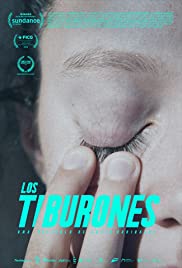
Greetings again from the darkness. Uruguayan writer-director Lucia Garibaldi has seemingly designed her first feature film specifically for film critics at festivals (it was well received at Sundance). I can’t recall a coming-of-age film with a less-accessible lead character, nor one that displayed that awkward phase between child and adult in a harsher manner. Watch that emotional step – it’s a doozy!
First time actress Romina Betancur plays 14 year old Rosina. The opening finds her running from her angry father right into the sea. It’s at this point she spots the dorsal fin of a shark. Of course no one believes her because sharks are not known to swim around this fishing village in Uruguay. We also learn that Rosina has recently caused an eye injury to her sister Mariana (Antonela Aquistapache), and Rosina claims it was an “accident.” It becomes apparent that her actions are not always the result of wise planning.
Rosina begins working on one her father’s labor crews as the town prepares for the summer visitors. Also on the crew is Joselo (Federico Morosini), an older boy in whom Rosina shows an interest. After their unconventional “date”, Joselo bores of the youngster, while she is rendered both curious and confused. Rather than a sexual awakening, Rosina seems to experience internal prods of which she is unsure how to handle. This transition phase is shown through the perspective of an awkward 14 year old girl who seems to handle everything with a constant stone-face … the envy of any poker player.
Once Joselo’s interest level shifts to others, Rosina fights back in what apparently is her dark nature. Some could call her a psychopath, as her instincts prove ill-advised at best, and possibly even flat out dangerous. Her quiet predator similarities to the shark are obvious, even as the question of ‘shark or no shark’ cloaks the community. Life in this area is not easy. Water is scarce, and these folks have no time to wrestle with Rosina’s twisted ways. Her mother is opening a new salon, and even a pregnant dog has a role in Rosina’s revenge plan.
Uruguay’s rocky coastline and wooded forests make for a picturesque background, and Ms. Garibaldi and cinematographer German Nocella take full advantage. The many tight shots of Rosina are meant to emphasize her isolation and separation, but at times it felt like this shot was used a bit too frequently. The electronic music was often distracting, and the slow pace certainly could have worked if the character development of Rosina had allowed us to better grasp her emotions and thoughts. Instead, the film is either restrained or dull, depending on your taste … although the flashes of humor certainly help. Director Garibaldi may relate to Rosina, but we never do. We are left thinking this could have been an extraordinary short film.
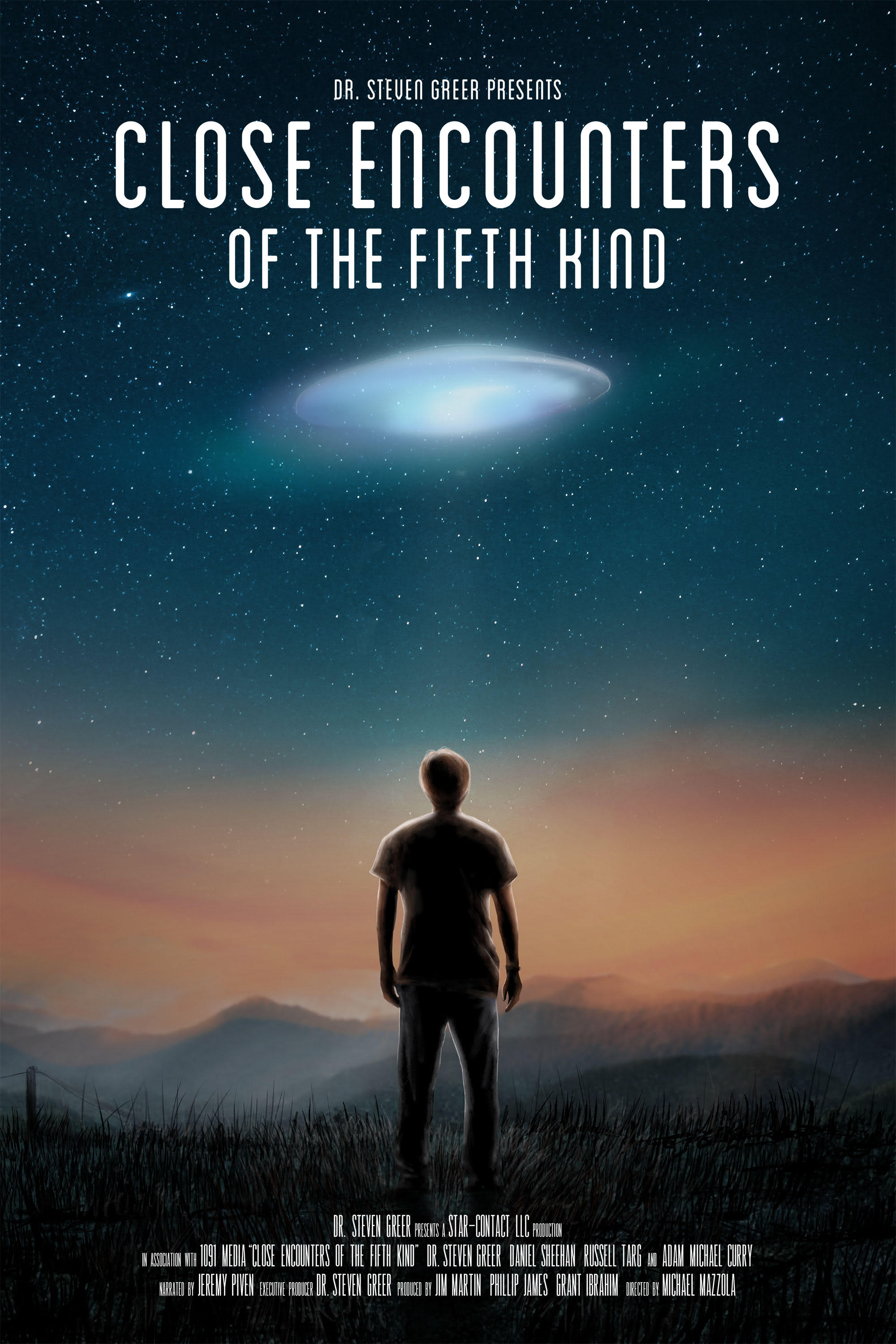
Greetings again from the darkness. Whether you’re a believer or a skeptic, one must respect the dedication to the mission of Dr. Steven Greer. His documented research into extraterrestrial activity dates back more than 25 years, and he has briefed every president since Bill Clinton on the topic. This is the third documentary for Dr. Greer, including SIRIUS (2013) and UNACKNOWLEDGED (2017), the latter of which was directed by Michael Mazzola – also the director of this current film.
Mr. Mazzola divides the film into 3 chapters: Blood and Treasure, The Crossing Point of Light, and A New World. However, the film’s structure matters little, as this is mostly another opportunity for Dr. Greer to present his research, his beliefs, and allow others to comment. Dr. Greer is the founder of the Center for Study of Extra Terrestrial Intelligence (CSETI), and he was also behind the 1993 Disclosure Project, which persuaded the government to release previously classified documents pertaining to UFOs and extraterrestrials.
Of course, Steven Spielberg’s 1977 double Oscar winner CLOSE ENCOUNTERS OF THE THIRD KIND remains quite popular today, and the title to Mazzola’s film refers to what CSETI categorizes as the 5th kind of alien encounter: proactive human communication with an extraterrestrial. In support of this, Dr. Green spends a good amount of time explaining his group events, where believers gather to experience these encounters. It’s at this point where much of the film focuses on Universal consciousness (ESP, meditation, etc.). The parameters of pure heart and peace are said to be necessary for group meditation cohesion. It’s very similar to the idea of “attraction” – if we think about something, that thing is more likely to appear or happen.
A quote from a physicist opens the film, and numerous quotes are highlighted throughout courtesy of intellects, scientists, and spiritualists. Scientific analysis is provided and we hear from some brainy talking heads, including Dr. Edgar Mitchell, a former astronaut. Attorney Daniel Sheehan gets plenty of screen time as well, and does his part to fit right in with the line-up of articulate, knowledgeable experts who offer up their commentary. These are not the wild-eyed types we see on local news or lesser documentaries. These are folks with actual experience backed by video and photographic evidence.
Dr. Greer asserts that since “no human has ever been harmed”, we can assume the extraterrestrials are not here to cause damage – an easily debated point. He also claims that these aliens are up to a billion years ahead of us, though he never explains the math on that. Actor Jeremy Piven seems an odd choice as narrator, given his propensity for roles as a fast-talking smart-aleck, but a montage of video from around the globe (the most recent from December 29, 2019) lends credence to Dr. Greer’s claim that the collective conscience has a relationship to the physical world. He has also accepted that skeptics will always exist, and that he will be ridiculed for his work and beliefs. If nothing else, perhaps the film will open up a few minds to the possibility.
Greetings again from the darkness. Waldo James Mysterious Dwyer is a hefty name for a huge baby (13.5 pounds) born in 2014 to parents Brian and Danielle. When we first meet Brian, he’s a partner at Pizza Brain, a quaint neighborhood place to pick up a slice in Philadelphia. Waldo is their first child, and it’s clear from the beginning that these are loving, doting parents. He’s a spirited and active child, and at 6 months, a stunning diagnosis of eye cancer (Retinoblastoma) staggers the couple.
If you are a parent, you know with absolute certainty that you would do anything for your kid … especially if they are in pain. When Waldo has a severe reaction to chemotherapy, Brian takes the advice of his friends Larry and Mike, and begins researching cannabis as an alternative treatment. Since it’s illegal in Pennsylvania, Brian travels cross-country to California where medicinal cannabis is legal. The next thing we know, he’s been advised by “Dr Dina” and is boxing up a care-package disguised as birthday party goodies. He’s able to purchase an 8 month supply, and the next day, Waldo is getting his first dose. Immediate results bring smiles (and hope) to Brian, Danielle, and Waldo.
Much of the footage we see was shot by Brian on a video recorder he received at a baby shower. Tommy Avallone (THE BILL MURRAY STORIES: LIFE LESSONS LEARNED FROM A MYTHICAL MAN, 2018) turns the footage into a story, and better yet, a love letter/video journal from father to son. Brian and Danielle are devoted parents, but it’s Waldo who will steal your heart. His smile will lift you up, and his dancing will have you beaming.
We learn that in April 2016, Pennsylvania passed a bill legalizing medicinal cannabis; however, since the process of bringing it to market was going to last a couple of year, Brian and Danielle packed up Waldo and headed to the west coast. To categorize their plan as non-existent would not be an understatement, yet they knew this was necessary for their son’s health. You might cry a little. You’ll certainly smile plenty. And hopefully, we’ll all be a bit more empathetic and understanding towards parents … we don’t always know what they’re dealing with. Never underestimate what parents will do for their kids.
Greetings again from the darkness. Movies that put youngsters in peril can go one of two directions: the story can feel contrived to the point of manipulation, or it can be real and heartfelt with commentary on society. Filmmaker Eliza Hittman proved her mettle with BEACH RATS (2017), and she proves yet again, that her instincts translate to the screen in stories and characters that hit a nerve.
It’s stunning to discover that this is the first screen credit for Sidney Flanigan who plays 17 year old Autumn. We first see her onstage at her school talent show singing a soulful rendition of “He’s Got the Power”, a 1963 song by The Exciters. Her performance stands in contrast to the mostly generic acts from her classmates, though it’s our first hint at how she is perceived. Autumn is one of those teens who seems to be naturally burdened with more than she can carry. A bloated belly leads her to take a pregnancy test at the local clinic, where she is informed that “a positive is always a positive” – a brilliant line than doesn’t hold true for all interpretations.
The clinic worker shows Autumn an anti-abortion video, which leads her to Google do-it-yourself abortion, and finally to the realization that because of Pennsylvania’s requirement for parental consent, she’ll have to travel to New York City for the procedure. Fortunately for Autumn, she has a trusted and resourceful friend/cousin/co-worker in Skylar (Talia Ryder, who will appear in Spielberg’s upcoming WEST SIDE STORY remake). The girls skim from their cash registers at the grocery store they both work at, and then hop on the bus towards the city.
Their time in the city is an adventure unto itself. By this time we’ve seen some of the everyday obstacles faced by teenage girls, including thoughtless teenage boys, a loathsome stepfather (Ryan Eggold), and a sleazy store manager. All of this is in addition to the challenges brought on by being a sexually active minor. On the trip, they meet Jasper (Theodore Pellerin, “On Becoming a God in Central Florida”), a fellow bus traveler who strikes up a conversation. Is he a good guy or not? Can he be trusted or not? Again, these are situations that the teens must navigate through instincts not yet fully developed.
A questionnaire administered at the Planned Parenthood clinic provides the film’s title, as well as one of its most powerful scenes. Ms. Flanigan is exceptional as this simple form requires her to face her situation and her life as she answers questions regarding her sexual and personal history. Ms. Ryder is also tremendous in making Skylar such a strong young woman and friend. This film and these actresses show more than they tell. The minimal dialogue contrasts to the many movies who portray gabby teens. Writer-director Hittman seems to make movies more appreciated by critics than mainstream audiences, but it seems her time is coming. She makes her political belief quite clear, but does so by focusing on the real world that teenage girls face. It’s a dramatic work of art with extraordinary camera work by Helene Louvart (the excellent INVISIBLE LIFE, 2019).
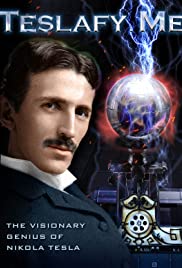
Greetings again from the darkness. I’ve been trying to think of other examples of famous people known for one thing, when they deserve to be remembered for something else. Hedy Lamarr, considered by many to be the most beautiful actress ever (she played Delilah in SAMSON AND DELILAH), also invented a frequency hopping process used today in WIFI and military defense satellites. Marcel Marceau was a world famous mime who also helped save thousands of children during WWII. Johnny Weissmuller, who played Tarzan in many movies during the 1930’s and 40’s and created that iconic Tarzan yell, also was a 5 time Olympic Gold medal swimmer. Surely there are many others with similar stories, but maybe none more remarkable than Nikola Tesla … known today as the make of a popular electric car, but his backstory is vital not only to history, but also to our current way of life.
Slovenian filmmaker Janja Glogovac delivers a very informative and highly polished documentary that takes us through Tesla’s life (Serbian roots, raised in Croatia, moved to United States), including his dealings with such well known luminaries as Thomas Edison, George Westinghouse, and JP Morgan. Ms. Glogovac utilizes interviews with intellects, including Tesla’s nephew William Terbo (a NASA engineer), and also many creative graphics, simulations, and animation.
Do you consider Steve Jobs a visionary? Would you be surprised to learn that Tesla imagined the cell phone more than a century ago? He dreamed of Utopia where energy was clean, rather than dependent on fossil fuels which would negatively impact climate and the earth’s natural vibrations. Tesla detailed how his ideas came to him as flashes of light, and very specific. For you engineers and scientists, don’t worry, some segments go fairly deep on his inventions and what they were meant to accomplish.
Tesla came to America in 1884, and after a brief stint with Edison (who put much into trying to discredit Tesla), was funded by George Westinghouse. Tesla’s commitment to his electro-magnetic motor (alternating current) elevated his rivalry with Edison and the direct current option. When Tesla and Westinghouse “lit up” Chicago, the industrial revolution was ushered in. Tesla’s hydro-electric power from Niagara Falls earned him the title of Father of Renewable Energy, and led to the Wardenclyffe Tower construction in 1901. It was an experimental wireless transmission tower that ended up with a similar fall from grace as Tesla himself.
Can the story of Nikola Tesla be told in an 80 minute documentary? Hardly. But the purpose seems to be reigniting an interest in a forgotten genius – a man whose work with radio, wireless, and electricity is still being utilized today. Elon Musk chose his brand name wisely, and we can’t help but wonder if Tesla’s ideas for clean energy had been supported rather than squashed, would we have avoided some of today’s issues. Learning that J. Edgar Hoover had Tesla followed, and that Tesla died broke, leaves us wanting more information … he deserves to be known as something more than the badge on an sleek electric vehicle.
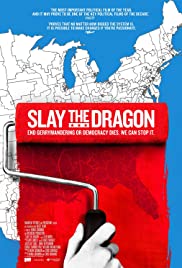
Greetings again from the darkness. It’s no wonder our faith in democracy is waning. The list of reasons and the targets to point fingers are both numerous. Heck, one of the last-standing Presidential hopefuls has spent most of his life believing and preaching that there is a better way. This documentary from co-directors Chris Durrance and Barak Goodman ensures gerrymandering remains on the list of reasons. They weave together three stories from Michigan, North Carolina, and Wisconsin to demonstrate how a party can invoke a strategy of gerrymandering, and what the long-term impact can mean.
We’ve long understood the basics of gerrymandering. It is when one political party works to carve up the voting districts in order to benefit one party or handicap the other. The film educates us on the fine art of “packing” and “cracking.” Packing involves concentrating the opposing party’s voters into a few districts, while cracking involves spreading out (diluting) that party’s voters amidst many districts. Both are designed to render opposition votes meaningless. We even learn how gerrymandering got its name … a link to Elbridge Gerry, a former Governor of Massachusetts and Vice President to James Madison.
The “star” of the Michigan segment is Kate Fahey, and we see how her 2016 Facebook post led her directly into political activism, and the formation of “Voters Not Politicians” (VNP). Because she is so energetic and engaging, it’s clear why the filmmakers devoted so much time to this segment. Ballot initiatives, petitions, speeches, interviews, the Michigan Supreme Court, and ultimately, voting day … this is her journey and we get to come along for the ride.
North Carolina and Wisconsin offer more details on the fights against gerrymandering, but neither of these stories go quite as in-depth, although we do follow the Wisconsin case all the way to the U.S. Supreme Court, where Justice Kennedy’s retirement changes everything. There is a very informative segment on the Republican’s national strategy after Obama was elected. Survival of the party was in jeopardy, and behind-the-scenes strategists like Chris Jankowski and Tom Hoeffler were specialists brought in to focus on the best approach to re-districting across the country … something called the Redmap Project.
There are a lot of moving parts included in the film by Durrance and Goodman: tracing the 2014 Flint water crises to the 2010 elections, insight into ALEC (American Legislative Exchange Council), discussions of Lobbyists writing bills, details on voter suppression, and input from journalists, radio talk show hosts, political consultants, and attorneys. David Daley, author of the 2016 book “Ratf**ked” comments throughout with his opinions on specific examples of gerrymandering. The grass roots movement to end gerrymandering in Michigan was fascinating to watch, and there is mention that both parties have used gerrymandering to their advantage over the years. The difference makers these days are Big Data and Big Tech … highly complex analytical tools that turn this into a science. “Independent committees” drawing district lines is offered as a solution, but if the last decade has taught us anything, it’s that most everyone has an agenda and true independent thinkers are a rare breed. Whether calling this an “assault on Democracy” is accurate or not, it seems quite obvious that there must be a better way … and a better way is needed.
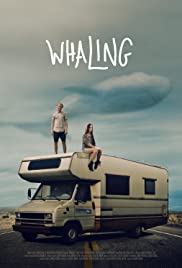 Greetings again from the darkness. Their mother amassed quite the collection of whale-related items from eBay prior to her recent passing. The brother needs the inheritance to continue his self-discovery course, which may or may not answer the question of whether or not he is gay. The estranged sister apparently abandoned her young daughter for fear of being a lousy mother. He admits to being ‘lost’, and she admits to being ‘broken’. Self-loathing is on full display in director Sean McEwen’s first feature film.


 Posted by David Ferguson



 Movie Reviews from the Dark