RITA (2024, Guatemala)

November 22, 2024

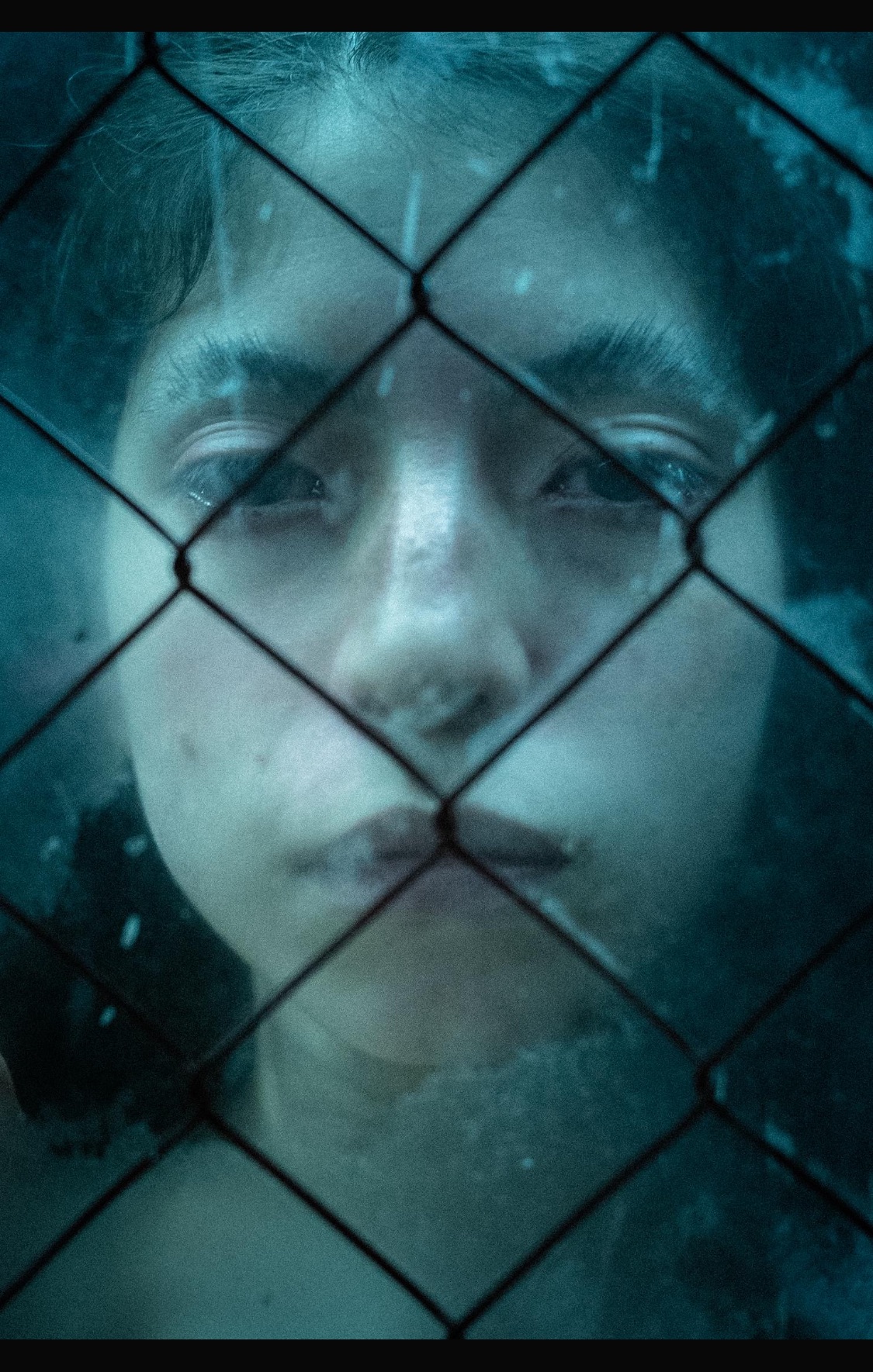
Greetings again from the darkness. This would be a tough film to watch even if it wasn’t inspired by true events. Guatemala-born writer-director Jayro Bustamante w-d, Guatemala-born (LA LLORNA, 2019) serves up a fictionalized version of the 2017 tragedy at the Virgen de la Asuncion Safe House where 41 girls burned to death while protesting the abusive environment of the home and actions of the staff. The reality of the story elevates it from “tough to watch” to heartbreaking and anger-inducing.

Thirteen-year-old Rita (newcomer Guiliana Santa Cruz) escaped from a home situation where she and her younger sister were being abused. An incident puts her in the hospital, and from there the authorities escort her to a government-run safe house. It’s basically a quasi-prison facility for troubled kids. The adult caregivers look and act more like guards than guardians. As she re-tells her story, Rita admits upfront that this is her version of how she remembers it. We understand the memories and perception of a young girl may be slightly skewed, and it gives the filmmaker a bit of leeway, while making it more palatable for the viewers.

Fairy tales, fantasy, magic, and mystical beings come into play as Rita is dumped into the facility. Factions exist and are divided into groups called Angels, Stars, Wolves, Rainbows, etc. Rita, though initially hesitant to don the wings, becomes an Angel. The girl leaders in the home include Sulmy (Angela Quevedo) and Bebe (Alejandro Vasquez). It’s unsettling to see what the girls do to make do in the surroundings, and Rita holds firm to her belief that she doesn’t belong there and should be released. Margarita Kenefic plays Social Worker Ernestina with a look that could be a villain straight from a Guillermo Del Toro movie. She is downright creepy.

The girls plan a form of revolution, but sometimes revolutionists are forced into a group pee, followed by group cleanup. The climax involves a planned escape that goes sideways, followed by a harrowing situation that turns tragic thanks to poor decision making by all. Special recognition goes to cinematographer Inti Briones for camera work that adds realism to the odd elements presented here. The film is well made and anything but light-hearted entertainment, although the actual tragedy did (thankfully) lead to reform.

Will stream on Shudder beginning November 22, 2024

WATCH THE TRAILER


THE DEVIL’S BATH (2024, Austria)

November 13, 2024

Greetings again from the darkness. If you simply have too much happiness and joy in your life right now, filmmakers Severin Fiala and Veronika Franz (GOODNIGHT MOMMY 2014, THE LODGE 2019) have an elixir for you. Their film, based on historical records from 1750 in Upper Austria, is just about as bleak as any movie I can recall. It has the look and feel of a folk horror, but it’s more about a slow trek to madness by way of depression.

If you haven’t stopped reading yet, you should know that the film looks gorgeous thanks to cinematographer Martin Gschlatt (GOODNIGHT MOMMY 2014, REVANCHE 2008). The color palette and camera work bring a texture to the film that is rarely seen on screen. But enough optimistic chatter. The opening sequence finds stressed out new mother Ewa (Natalia Baranova) carrying her screaming baby through the woods to the top of a stunning waterfall near the Austrian Alps. We next see Ewa at the church confessing, “I’ve committed a crime.” It’s what’s known as ‘suicide by proxy’ so that one’s sins may be forgiven prior to execution. The ultimate loophole.

We next see Agnes (musician Anja Plashg) as she prepares for her wedding. In fact, this may be the only glimpse of happiness in the entire film … at least as I recall. Of course, my initial description of the film would not be accurate if Agnes’ joy lingered. Her mood turns quickly at the reception as she spots her new husband Wolf (David Scheid) leering longingly at another man, and then making things worse with his actions in their wedding night bed. This is after he blows all of their money on a house Agnes doesn’t much like. Wolf chose it since it’s close to his mother’s house. Maria Hofstatter plays one of the most intrusive mothers-in-law one could be stuck with.

The rest of the film is us following the slow descent of Agnes, as each day’s misery builds upon the previous. Trips to “the Barber” are horrific, and Agnes desperately searches for a way out of the situation. The practical effects here are excellent, combining with the cinematography, acting, and direction for a technically stellar film. However, it does feel like a celebration of suffering, and it’s likely more for cinephiles than it is for the average movie goer. It opens with a tragically violent act, soon followed by another. Then we are subjected to Agnes’ helplessness in a hopeless situation, until we finally end with more violence. Enjoy Austria’s Oscar submission for Best International Film!

Re-releasing in select theaters on November 13, 2024 and streaming on Shudder.

WATCH THE TRAILER


MEMOIR OF A SNAIL (2024, animated)

November 7, 2024

Greetings again from the darkness. If you believe that animated films should be whimsical fairy tales developed for children, Adam Elliot would like a word. Actually, he would like about 90 minutes of your time to introduce you to an entirely different approach with stop-motion animation. Elliot won an Oscar for his animated short HARVIE KRUMPET (2003) and also developed the excellent animated feature MARY AND MAX (2009). Not one to shy away from grown-up topics, Elliot’s latest is a gem filled with most every emotion.

Relying heavily on narration, the story is told by Grace Pudel (voiced by Sarah Snook, “Succession”). It’s her own life story, but contrary to what the film’s title would have you believe, Grace is a person, not a snail (at least not a shelled gastropod). However, she is telling her story to her favorite pet snail, Sylvia. It’s OK if that sounds a bit strange, because Grace and her story will draw you in and have you caring very much. The story starts at the beginning … with Grace’s premature birth ahead of her twin brother Gilbert (Kodi Smit-McPhee).

Grace chaperones us through her early years. These were not easy years as mom died early on, and dad was an alcoholic paraplegic with sleep apnea. Mostly we learn about Grace and her collection (hoarding) of snails she kept in a glass jar with Vegemite for their nutrition. She tells us about her beloved brother Gilbert’s love of animals, reading, magic, and fire. When their dad dies, Child Services sends Grace and Gilbert to separate foster homes in different parts of Australia. It’s not just geography that makes a difference. Grace is fostered by a couple of self-help gurus who are also swingers (it’s not a movie for kids). Gilbert is sent to live with a harsh religious cult family demanding work while offering no love.

The twins maintain contact through letter-writing, and Grace fills in some of the details for us. Her story includes a romance with Ken, a neighbor who loves his leaf blower and has a certain fetish that takes Grace a while to uncover. She also forms a special bond with Pinky, and older lady (voiced brilliantly by Jacki Weaver) who teaches Grace to relish life. While Grace often lives inside a shell, much like her pet snails, she does treasure her time with Pinky, whose final letter is touching.

This is an all-too-ordinary life told exquisitely (that’s me trying to avoid saying ordinary and extraordinary in the same sentence). The emotions are overflowing and range from grief to sadness to frustration to anger to hope. Elliott includes nods to literature, roller coasters, Parisian street performers, guinea pigs, and nudist camps (possibly a first in the animated world). We also see the dark side of religion and the importance of friends and family. Grace truly lives the circle of life, as she learns that snails have no choice but to live in the shell under which they are born, but she does have a choice. The score from Elena Kats-Chernin is beautiful and fitting, and Elliot leaves us with this thought: “Life can only be understood backwards, but we have to live it forwards.” So get busy living!

In theaters on November 8, 2024

WATCH THE TRAILER


CABRINI (2024)

November 4, 2024

Greetings again from the darkness. ‘Where there’s a will, there’s a way.’ That famous saying should be known as a “Cabrini”. For anyone whose impression of nuns is that of irascible old women swatting misbehaving students with rulers during school hours, filmmaker Alejandro Monteverde (SOUND OF FREEDOM, 2023) and co-writer Rod Barr have just the biopic for you.

Cristiana Dell’Anna stars as Mother Francesca Cabrini, the most stubborn and persistent nun you’ll ever see, and one’s whose accomplishments deserve to be known by all. The film opens by informing us that between 1889 and 1910 more than two million Italian immigrants came to the United States. Lest you believe the image of immigrants has never been worse than it is today, the film portrays the extreme racism and bigotry of the times. On top of that, Cabrini faced vile misogyny and the hatred that accompanied it. So what was her sin? Well, her vision was to create orphanages and hospitals so that immigrants, especially kids, would have a decent place to live and a community that could care for them. Imagine the nerve.

Not just nerve, but backbone, guile, and the strength to not accept “no” for an answer from the men in power. This is the true story of the early days of Cabrini’s mission. After being told in Italy to “stay where you belong”, Pope Leo XIII (Giancarlo Giannini) refuses to allow her to go to China; however, she accepts his compromise of New York City. Arriving in the Five Points area, she witnesses poverty and squalor for Italians, yet is initially rebuked by Archbishop Corrigan (David Morse), a man who doesn’t want to ruffle the feathers of Mayor Gould (John Lithgow).

The story is remarkable and the acting solid. Also deserving of mention is the look of the film. Production Design is superb and the cinematography of Gorka Gomez Andreu gives the film the beautiful throwback look of yesterday’s masterworks. If there’s a flaw here, it’s that we are never really certain how much time has passed as Cabrini goes toe-to-toe with various power brokers and moves from one project to the next. Still, we understand that the film covers just the early stages of her work, not the complete story. More than two dozen books have been written on Cabrini’s achievements before her death at age 67. She was remarkable and accomplished so much for one who was told to remain bedridden as a youngster. All of this was on borrowed time.

Her story is inspirational, as she built a charitable empire worldwide run by women. The film features a song by Virginia Bocelli and her father Andrea Bocelli over the end credits. It should also be noted that the religion aspect here is not overplayed. Instead, it’s the story of a woman (later canonized as a Saint) who believed, “Begin the mission and the means will come.”

Available on streaming services

WATCH THE TRAILER


THE LAST OF THE SEA WOMEN (2024, doc)

October 9, 2024

Greetings again from the darkness. They consider themselves “the guardians of the sea”. My guess is that most of us have never heard of the haenyeos, the women divers on Jeju Island in South Korea. Director Sue Kim introduces us to these remarkable women who are carrying on a tradition that dates back to the 14th century.

We learn the haenyeo practice sustainable seafood harvesting. They dive “with their own air”, which means no air tanks – just their lungs. Their equipment is limited to a wetsuit, a hook, and a net basket. The underwater photography is spectacular and has us diving alongside these women who admit to disliking sea urchins, which require intensive labor to get to the good part. Director Kim dedicates separate segments to a few of the women, and what we immediately realize is that every haenyeo is a tough woman living a tough life.

What we also recognize is the passion, commitment, and camaraderie. Not only are they talented divers and fisherwomen, they have a community of respect and friendship. However, the picture is not all rosy. Their tradition is being threatened on many fronts. The divers have been pushed out to deeper water due to trash in the water. They have also noted a distinct shortage of sea life from their younger days, and attribute this to the warmer water from climate change. Beyond these threats, the women are facing generational differences. Most divers are in their 60’s and 70’s, and very few younger women care to carry on this tradition. The haenyeo numbers peaked in the 1960’s with 30,000 divers, whereas now the count is fewer than 4000.

The most recent threat to the sea and the haenyeo comes from Japan and the proposal to dump nuclear wastewater from Fukushima into the sea to minimize radioactivity. The fear is the danger to all sea life for the foreseeable future. This threat inspired one of the elder divers, Soon Deok, to travel to Switzerland and deliver a personal statement to the Human Rights Council, followed by official protests.

In addition to the group of elderly divers, director Kim introduces a couple of thirty-somethings who have joined the haenyeos, and have utilized YouTube and TikTok to document the sea changes and generate some attention for the profession. Haenyeos have been recognized by UNESCO, and their work is as fascinating as the personalities of the women. However, the long list of threats cannot be overlooked, and perhaps the notoriety this film will bring can make a difference. One of the producers is renowned activist Malala Yousafzai and it’s distributed by A24.

Releasing on Apple TV+ on October 11, 2024

WATCH THE TRAILER


Short Films (October 2024)

October 6, 2024

SHORT FILMS – a recap of some recents (2024)

Greetings again from the darkness. With so many short films being released each year, I usually try not to devote too much time to them until the Oscar short list is announced. That’s the point when the narrowing down has occurred and there is a manageable list to work through. A number of film festivals act as ‘qualifiers’ for short films, and in the years where I attend a few festivals, I always try to schedule in a block of shorts. The creativity displayed by these filmmakers never disappoints, and many will go on to write and/or direct feature-length films. Below is a brief recap of some of the short films I’ve recently watched:

TEA (12:37)

It’s normal to get nervous before asking someone out on a date, or even having that first conversation. One particular young man, Nick (Michael Gandolfini, THE MANY SAINTS OF NEWARK, 2021,) takes it to an extreme as he videos himself rehearsing for the big moment. When a bee stings him just as the opportunity with the dream girl arises, Nick’s severe allergic reaction leaves the girl (Olivia Nikkanen, “The Society”) initially confused by his slurred speech, and ultimately in a race against time to save his life.

Written and directed by Blake Winston Rice, the film infuses humor and tension to create an unusual short film based on the monologue (written and performed) by Isaac Lee. The setting of a parking lot behind the store is a nice touch, adding to Nick’s sense of isolation. It’s also a reminder that epi-pens should be readily available.

LUKI & THE LIGHTS (10:40)

Explaining a severe disease to kids is among the most difficult situations a parent can find themselves in. This happened to Sascha Groen and her husband Anjo Snijders, after he was diagnosed with Amyotrophic Lateral Sclerosis (ALS, still commonly referred to as Lou Gehrig’s disease). The couple collaborated with co-writer Janna Brower-Schouten and writer-director Toby Cochran in this terrific animated film that addresses a need … and does so beautifully.

Luki is a friendly, happy robot who enjoys hanging out with his friends. One day while playing soccer, his hand won’t function properly. Luki’s tests by the doctor confirm the diagnosis of ALS, a neurodegenerative disease for which there is no cure. Rather than feel too sorry for himself, Luki maintains his spirit and love of life and friends. He even builds his own ‘Rascal’ so he can get around.

It’s a story of true friendship and passion for life, and his friends stay with him until the light goes out. After that, they celebrate their memories of Luki. While we long to protect kids, circumstances sometimes require us to explain the tough breaks. This little film works wonders.

For ALS information, educational material, and more, please visit  globalneuroycare.org

ANUJA (22:11)

There is an old adage, ‘you do what you have to do’. But what if the choice isn’t easy or obvious? Such is the dilemma of nine-year-old Anuja. She has dropped out of school to work with her older sister Palak at a local (probably illegal) garment factory in New Delhi. The girls are orphaned and doing their best to get by.

Palak (Ananya Shanbhag) has a bit of a rebellious streak, and also understands that Anuja’s opportunity to test for enrollment at a boarding school is her sister’s one chance to escape a life of poverty, and will sacrifice anything to give her sister this chance. Anuja is played by Sajda Pathan, who lived on the streets of Old Delhi before finding assistance from social workers.

The burden carried by this young girl is painful to watch, as she wants nothing more than to continue her life with her sister, and certainly take no steps that would harm her. Director Adam J. Graves includes an early story about a farmer’s wife, daughter, and mongoose that sets the stage for what we see. The film was awarded the “Best Live Action Short” at this year’s HollyShorts Film Festival.

IN THE GARDEN OF TULIPS (13:38)

We immediately feel the tension between 16-year-old Cari and her father as they take a car ride through the Iranian countryside. The air lightens a bit as they stop at a roadside fruit stand for green plums, and then the two cut loose for a silly song about the plums.

The mood dramatically shifts again when law enforcement pulls the car over and begins questioning them. It’s not until the final scene that we realize this is the height of the Iran-Iraq war and we underestimated the stress and tension involved with this father-daughter road trip.

This film from director Julia Elihu and writer Ava Lalezarzadeh has been an award winner at some film festivals, and beyond that it’s a stark reminder of what’s at stake during war time. Ms. Lalezarzadeh also portrays the daughter, and excels in both writing and acting. The film was named ‘Best Live Action Short Film’ at the St Louis International Film Festival.

HIS MOTHER (13:27)

It’s probably not necessary to promote this as ‘inspired by a true story’. Writer-director Maia Scalia has perfectly captured an all-too-often-overlooked portion of an all-too-often-occurrence. A frazzled woman is working her way through traffic and desperately making phone calls.

Bethany Anne Lind (“Ozark”) plays Julie, the mother so desperate to reach her teenage son, her too-busy husband, and the Law Enforcement service too overloaded to understand the purpose of her calls. Her desperation is fed by the videos her son Harrison recently posted. When Julie gets a call from a friend “hoping” Harrison is safe since there is an active shooter at his school, the pieces all come together for us and we share the pit of the stomach turmoil with the mother.

Ms. Scalia’s film and Ms. Lind’s performance perfectly capture a parent’s nightmare, the societal concern with mental health issues, and the horror and far-reaching effects of school shootings.

TECHNICIANS (17:00)

Everyone has their own story, and by definition, “I’m just doing my job” offers a perspective through a one-sided lens. We first see David (J. Alphonse-Nicholson, “P-Valley”) as he’s taking care of his sick mother and struggling financially. He anxiously accepts a phone call offering a chance to work and earn. The writing-directing team of twin brothers Kevin Luu and Kelly Luu examine a large issue through a short film.

David has been hired to install automated manicure stations at a nail salon. The successful completion of his job will result in numerous technicians losing theirs … and he feels the scornful looks from the staff as he arrives. Befriending one of the technicians brings into focus the clash of two needs, and how the nail industry dives deep into Vietnamese culture.

With the recent conflict between the shipyard workers’ union and management over the use of technology, we certainly understand how the issue is widespread. The film finds a temporary solution, and ends on a welcome note of personal sweetness.

CALF (14:46)

After all these years, no one has yet been able to comprehend or explain or predict the behavior of teenagers. Even knowing the sometimes extreme nature displayed by teens, we can’t help but be shaken while watching Cait’s (Isabelle Connolly) reaction to an accident that occurs on her family farm in Ireland. Disturbing is the best description of this stunning film from writer-director Jamie O’Rourke … and it’s not all due to Cait.

This film grips you tightly early on, and doesn’t loosen the grip until well after it’s over. The desolate landscape and the simplicity of the family belies the hardships on the farm and within the family. Everything appears normal as one of their cows prepares to give birth in the barn. Cait carries her secret as the day progresses and she has a few interactions with her mother (Kate Nic Chononaigh), but nothing outside the norm.

Moments of suspense multiply here despite most of what we see being part of a regular day. The exceptions are extraordinary, and it’s not until the finale that we realize Cait’s behavior makes sense. This revelation heightens what has already been a gut-wrenching film to watch.  

MILDRED 4 A MILLION (21:15)

Marla Gibbs is probably best known for her role as Florence on the TV series “The Jeffersons”, which began airing in 1975. She’s now 93 years old, and still capable of carrying this short film from writer-director Kimmie P. Callaway. Here, she plays Grandma (and great Grandmother) Mildred who loves to chat with everyone (whether they asked for it or not). She can’t wait to share that her great-grandchildren are coming for a visit. She’s a lonely woman who lives for this moment of connection.

Of course, the reality is, no matter how much the silver shines or how many Snickerdoodle cookies you bake, kids are kids … great-grandmother’s house is but another playground to call their own. She’s especially excited to bond with 8-year-old Stella (Obriella Genesis Witron) as two share a middle name … Gigi. The visit ends too quickly as her granddaughter (Brie Eley) apologizes and explains, the only way to get her kids’ attention is to have a million followers on Tik Tok. So that’s exactly what Mildred sets out to do.

Now, Mildred is the type who has her cell phone hidden away in a drawer “for emergencies”. She asks her millennial postal worker (Hayley Keown) to help her get it set up, and then proceeds to go down her physical therapist’s (Julian Ashley Mitchell) checklist of nine ways to capture followers (number 8 is a sex tape!). The comedy here plays to Ms. Gibbs’ strength and she pulls off most every scene. The good time watching the film is balanced with a reminder that the world moves very fast for kids today, and sometimes grandparents just want to slow it down and concentrate on … just talking.


THE OUTRUN (2024)

October 3, 2024

Greetings again from the darkness. The best movies revolving around alcoholism usually make us feel like we are intruding on someone’s personal train wreck. Three that come to mind, each resulting in at least one Oscar, are LEAVING LAS VEGAS (1995), DAYS OF WINE AND ROSES (1962), and THE LOST WEEKEND (1945). This one is based on the 2016 memoir by Amy Liptrot, who also adapted the book for the screen with director Nora Fingscheidt (known for her festival favorite SYSTEM CRASHER, 2019).

Having already been nominated for four Oscars, there is little debate that Saoirse Ronan is one of the top actors of her generation. And this may be her best performance yet. As Rona, she captures the quiet desperation and loneliness that isn’t always so quiet. We see Rona as the unemployed, Masters-degreed, sloppy drunk party girl. We see her as the drunken victim of sexual violence. We see her as the next-day apologetic drunk who destroys a relationship. We see her in rehab and attending AA meetings. We see her relapse. We see her strained parental relations, and we see her in near isolation in hopes of kicking an addiction that she’s not even sure she wants to kick. It’s heartbreaking when she admits, “I can’t be happy sober.” We feel for those who have experienced this with loved ones.

Living in London, Rona is all about the excitement and energy of dancing and partying and socializing … and drinking. She says she likes how it makes her feel, ignoring the next day misery and regret. Her boyfriend, Daynin (Paapa Esiedu) is supportive and understanding, right up until the point where he’s had too much of her self-destructive ways. Rona finally accepts rehab and after 90 days, she heads home to Orkney – a sparsely populated archipelago off the north coast of Scotland. Rona’s parents are divorced. Her mom (Saskia Reeves) has turned to religion, while her bipolar dad (Stephen Dillane) lives in a caravan and works his sheep farm on his good days. The desolate environment lacks the constant temptations of London (though she still finds a few), and Rona hopes time in Orkney will be restorative to her health and spirit.

Filmmaker Fingscheidt makes some interesting choices. The film jumps around in time with Rona’s flashbacks to moments in her past – some going back to childhood. This jumping around reflects the mental struggles she goes through in her quest for sobriety. There is also a substantial amount of science and nature included. In voiceover, Rona details the specifics of addictive drinking, as well as the mythology of seals and selkies. Saoirse Ronan is superb throughout, yet two scenes stood out for me. The first is when she meets a stranger on the street, displaying her desperation for companionship and socialization. The second comes when she explains to her mother how seaweed is her new passion (her new addiction?) and is her focus for the future.

The only thing close to being as photogenic as Saoirse Ronan is the coastal Scottish landscape. It’s both breathtaking for us and claustrophobic at times for Rona as she fights the urges. Rona’s job with RSPB had me doing a quick Google search for endangered Corncrakes, and though most of the film left me emotionally drained, watching Rona ‘conduct the ocean’ provided a welcome jolt of joy.

*** For those who are interested in reading Amy Liptrot’s thoughts on the film about her life, I recommend this commentary she published: 

https://www.theguardian.com/books/2024/sep/22/amy-liptrot-outrun-life-as-alcoholic-on-big-screen

Opens in theaters on October 4, 2024

WATCH THE TRAILER


SUMMERLIGHT … AND THEN COMES THE NIGHT (2024, Iceland)

September 20, 2024

Greetings again from the darkness. I’ve always been enamored with movies which are paced so deliberately that it can easily seem like not much is happening, when actually we drift from dark comedy to tenderness to tragedy. It’s likely why I’ve been drawn to films from Iceland, including this one from writer-director Elfar Adalsteins (END OF SENTENCE, 2019) who has adapted the 2005 novel from renowned Icelandic author Jon Kalman Stefansson. The culture in this small village is such that folks mostly keep to themselves, and nature is a constant companion.

A three-minute opening monologue from the narrator is part poetry and part informative. We learn the village has neither a church nor a graveyard. The surrounding water and mountains provide stunning beauty around these folks living mostly simple lives. We tour the knitting factory and learn that it’s actually profitable. We get to know some of the folks in the village and see how they dutifully go about their daily lives.

Director Adalsteins structures this less as a cohesive story and more as individual vignettes that tie to a theme. Due to powerful dreams, the respected CEO of the factory studies Latin and dives headlong into Astronomy and a pursuit of metaphysical knowledge. A laborer falls victim to intense lust, and his wife holds him accountable. A career law enforcement officer (and widower) doesn’t understand his sensitive and artistic son, and goes to an extreme to have this son follow in his footsteps. A lovelorn clinical physician encourages a shy, quiet man to act. A local woman enthusiastically pursues her culinary dream. These are all pieces of a community populated by folks who don’t wear their emotions on their sleeves – in fact, stoicism is the norm.

What we find is that obsession exists even within stoicism. And so does tragedy. And so does happiness. A lecture on things that matter has much less impact than local friends forming a band for a community dance. The town’s first restaurant not only serves delicious meals, but also inspires friends to gather and support each other. Even the simplest of lives are not that simple. Emotions are brewing under the surface. And though this village seems inextricably tied to the effects of nature, what these folks share with every other corner of the universe is that happiness is fleeting, and tomorrow is not guaranteed. For those that share my appreciation for less conventional storytelling at a meticulous pace, filmmaker Elfar Adalsteins delivers.

Opens in NYC on September 20 and in Los Angeles on September 27. Nationwide release to follow.

WATCH THE TRAILER


EUREKA (2024)

September 20, 2024

Greetings again from the darkness. Part of my attraction to arthouse films is the often-unconventional path to storytelling that the filmmakers take – sometimes expending more effort on the look and style than on the characters and plot. These films once only had life in film festivals, and today many also carry on in the streaming revolution. I’ll go ahead and admit upfront that this latest from Argentinian filmmaker Lisandro Alonso (JUAJA, 2014) and co-writers Martin Caamano and Fabian Casas is a bit esoteric for my tastes … although it looks beautiful.

There are three pieces to Alonso’s film (a triptych) and they are not connected by character or location or time, but rather by spirit and the journey of indigenous people. The opening segment plays like a traditional western (filmed in black and white) with Murphy (Viggo Mortensen) searching for his daughter who has been taken by an outlaw. After catching a wagon ride from a nun in tattered habit, Murphy deals with the town’s lady boss (Chiani Mastroianni). The segment ends abruptly, and we find ourselves in modern day with Alaina (Alaina Clifford) and her niece Sadie (Sadie LaPointe). Alaina is a Sioux reservation policewoman in South Dakota and Sadie is an upbeat basketball coach at the local high school. We ride along with Alaina on her frustrating evening route, and Sadie visits her brother in jail, and makes a final call on her grandfather. A giant pelican-type bird then takes us back a few decades to a South American jungle for the final segment. A ragtag gold prospecting crew is made up of locals trying to get rich and those trying to take advantage.

No more should (or even can) be told about these three segments, and filmmaker Alonso purposefully leaves any message up to individual viewers’ perspective and interpretation. Most will agree that each segment is beautifully filmed and acted, even if a traditional story is nowhere to be found.

In limited theaters on September 20, 2024

WATCH THE TRAILER


RED ROOMS (2024)

September 9, 2024

Greetings again from the darkness. Many of us (perhaps too many) are drawn to the dark side – topics that dig into the ugly side of human nature that Mr. Rogers mostly avoided in his neighborhood. A quick look at the popularity of true crime shows provides proof of the fascination that corresponds to those who don’t subscribe to the golden rule. Writer-director Pascal Plante has a track record of film festival success and his latest fits the mold – fascinating to watch with a twist that may have viewers questioning their own assumptions.

Ludovic Chevalier (Maxwell McCabe-Lokos) is a demented serial killer on trial for the murder of 3 teenage girls, ages 13, 14, and 16. He is facing multiple additional charges including sexual abuse, necrophilia, torture, etc. He used ‘red rooms’ to film these atrocious actions and then sold the recordings for profit. The opening statement from prosecutor Chedid (Natalie Tannous) stuns us with details of crimes, as well as informing us that 2 of the 3 tapes will be shown to the jury. Suspect Chevalier sits quietly in a glass cage as the court proceedings take place. However, the serial killer is not the most interesting character in this story. Seated in the gallery as close to Chevalier as possible is Kelly-Anne (Juliette Gariepy) and Clementine (Laurie Babin). We learn that it’s common for serial killers to have groupies … not unlike rock stars, movie stars, and professional athletes.

Each day, Kelly-Anne and Clementine grab their courtroom seats and take in the show. The two form an unlikely and shaky friendship. See, Kelly-Anne is a model and high stakes online poker player. She has a sophisticated, AI voice-activated computer system in her high-rise apartment. In comparison, Clementine is a simple woman convinced that Chevalier is innocent because of his warm eyes. She feels a bond to him, and assumes Kelly-Anne shares this bond and belief.

Filmmaker Plante starts us off in a similar fashion to other courtroom dramas, however this one is also part dark web tutorial and psychological case study – not to mention a peek at cryptocurrency and hacking. Like Clementine, we assume we understand Kelly-Anne’s motives, but there is an old saying about when we assume. As the story develops, it’s the psychological aspects that hold our attention. Stone-faced Kelly-Anne only rarely offers cracks in her façade, and Plante manages to add tension to online poker and dark web auctions.

This was filmed in Montreal in French language, though we get only minimal shots of the city. Instead, much of the time is spent on close-ups of stoic Kelly-Anne and those eyes that are so difficult to interpret. Almost no gore is shown here outside of a single screen shot inside a red room, and the atrocities are wisely left to our imaginations. However, there is one quite disturbing sequence that finds Kelly-Anne in a specific costume for one day in court. I’ll admit to having to Google Kelly-Anne’s username to realize that ‘Lady of Shallot’ is a reference to a Tennyson poem. The end could be described as a twist (depending on your own previous assumptions), and yet also open-ended enough to generate plenty of analysis and debate. Pascal Plante has delivered quite a smart and complex character in Kelly-Anne.

Opened in select theaters on September 6, 2024

WATCH THE TRAILER